Affordable Housing Options: Low-Cost Homeownership Pathways
By Housey · Last reviewed 30th of May 2026
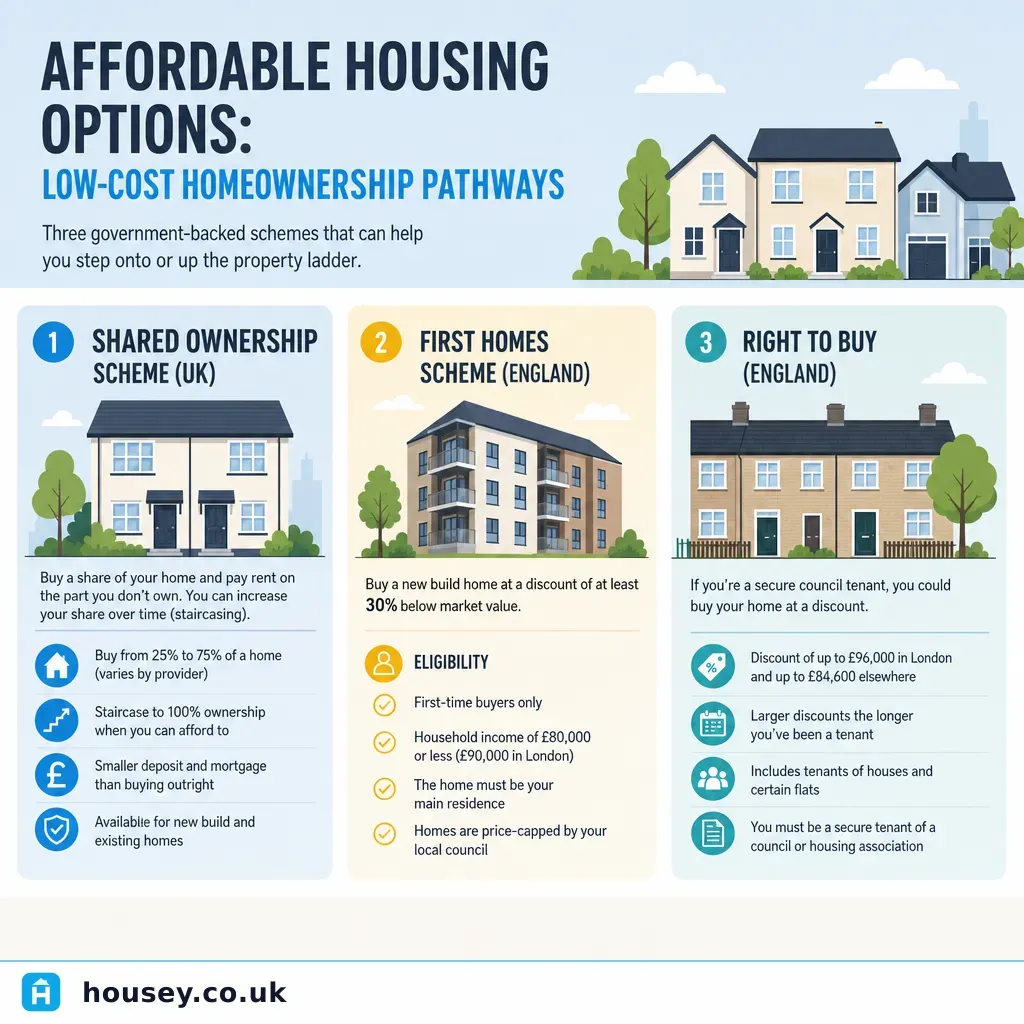
Affordable Housing Options: Low-Cost Homeownership Pathways
The gap between renting and outright home purchase closes for many people through government-backed schemes designed for those who cannot buy on the open market. Whether you are a first-time buyer on a modest salary, a key worker in an expensive city, or a council tenant who has rented for years, one of several low-cost homeownership routes may be open to you. Understanding the differences between schemes — and the eligibility rules attached to each — is an important first step before approaching a lender or housing association.
Key points
- Shared Ownership lets eligible buyers purchase between 10% and 75% of a home and pay subsidised rent on the remainder, with the option to buy additional shares later through a process called staircasing.
- The First Homes scheme offers a minimum 30% discount (up to 50% in some areas) on new-build homes for first-time buyers; homes are price-capped at £250,000 after the discount (£420,000 in Greater London).
- Right to Buy gives most secure council tenants in England with at least three years' tenancy the right to purchase their home at a discounted price; maximum discount amounts are reviewed annually — check GOV.UK for current national caps.
- Help to Buy: Equity Loan closed to new applications in March 2023 and is no longer available for new purchases in England.
- Each scheme has specific eligibility criteria covering household income, property type, ownership history, and — for First Homes — local authority priorities such as key worker status or local connection.
Which scheme suits your situation?
The right pathway depends on your household income, whether you have owned before, your employment status, and the type of property you want. No single scheme suits everyone, and some people may qualify for more than one.
Decision tree: which route to explore first
- Choose Shared Ownership if you cannot afford a standard mortgage on a suitable home, are a first-time buyer (or no longer own property), have a household income below £80,000 (£90,000 in London), and are comfortable with a hybrid rent-and-mortgage arrangement.
- Explore First Homes if you are a first-time buyer looking at a new-build development, want a discounted purchase price with a standard mortgage, and meet your local authority's income threshold or key worker requirements.
- Look into Right to Buy if you are a secure council tenant in England who has lived in your home for at least three years and wants to own the property you already occupy.
- Consider Rent to Buy if you are not yet ready to purchase and need time to save a deposit; this scheme offers sub-market rent (typically 20% below market rate) on new-build homes for up to five years before giving you the option to buy.
- Speak to an independent mortgage broker or solicitor first if you have previously owned property, have complex income arrangements, or are unsure which schemes you qualify for.
Shared Ownership explained
Shared Ownership is administered through housing associations registered with Homes England. You buy a share of the property — currently between 10% and 75% — and pay subsidised rent on the remaining portion owned by the housing association. Your monthly outgoings are a combination of mortgage repayments and rent.
Over time, you can buy additional shares through staircasing. Once you own 100%, you no longer pay rent. In some leasehold Shared Ownership properties, full staircasing to 100% may not be possible; always check the terms of the specific lease before committing.
Key eligibility criteria (England):
- Household income of £80,000 or less per year (£90,000 or less in London)
- First-time buyer, or previously owned and demonstrably unable to afford an open-market purchase
- The property must be your only home
- Good credit history and ability to afford both the mortgage and rent payments
Shared Ownership properties are leasehold. You will need a solicitor with specific experience in Shared Ownership transactions, as these leases differ significantly from standard residential leasehold conveyancing.
First Homes scheme
Launched in 2021, First Homes offers qualifying buyers a minimum 30% discount on new-build properties in England. This discount is protected in perpetuity — it must be passed on to future eligible buyers when you sell, keeping the property affordable for subsequent purchasers.
Price caps apply after the discount: £250,000 nationally and £420,000 in Greater London. Local authorities may apply additional criteria, such as prioritising key workers or buyers with a local connection to the area.
You must be a first-time buyer and must use a mortgage to purchase. Properties must be new-build homes delivered by developers participating in the programme.
Right to Buy and Right to Acquire
Right to Buy gives most secure council tenants in England the right to purchase their home at a below-market price. The minimum qualifying period is three years of public sector tenancy (not necessarily in the same property). Discount amounts increase with length of tenancy and are subject to national caps reviewed by the government annually.
Right to Acquire is a similar scheme for housing association tenants in England who moved into their home after April 1997. Discounts are smaller than Right to Buy — typically £9,000 to £16,000 depending on region.
Both schemes require a solicitor to handle the conveyancing. If you sell within five years of purchase under either scheme, you will generally be required to repay some or all of the discount.
Comparing low-cost ownership schemes
Scheme | Who it is for | Support offered | Property type | Key restriction |
|---|---|---|---|---|
Shared Ownership | First-time buyers or those who no longer own | Part-ownership; remainder rented | New-build and some resales | Leasehold; income caps apply |
First Homes | First-time buyers | Minimum 30% off purchase price | New-build only | Price cap; discount passes to next buyer |
Right to Buy | Secure council tenants (England) | Discount on current council home | Your existing council property | Repay discount if sold within 5 years |
Right to Acquire | Housing association tenants | £9,000–£16,000 discount | Your existing HA property | Must have moved in after April 1997 |
Rent to Buy | Renters saving a deposit | Sub-market rent (approx. 20% below) | Usually new-build | Time-limited; not itself a purchase scheme |
Indicative details, last reviewed 2026-05-30. Check GOV.UK and relevant housing associations for current eligibility criteria and figures.
What to check before applying
- Eligibility: confirm you meet the income, ownership history, and residency criteria for the scheme you are considering.
- Costs beyond the purchase price: solicitor fees, surveys, Stamp Duty Land Tax (which applies on the share you purchase for Shared Ownership), service charges, and ground rent if the property is leasehold.
- Mortgage availability: not all lenders offer products designed for Shared Ownership or First Homes; use a broker experienced in these schemes.
- Resale conditions: some schemes restrict your ability to sell on the open market or require you to offer the property back to the housing association first.
- Lease terms: for any leasehold purchase, review the lease length and service charge structure carefully with your solicitor before exchanging contracts.
When to get professional help
All home purchases — regardless of scheme — require a qualified conveyancing solicitor. For Shared Ownership, use a solicitor with specific experience in housing association leases. If you are considering Right to Buy or Right to Acquire, ensure you understand the discount repayment obligations fully before committing.
Red flags that mean you should seek independent legal advice before proceeding:
- You are unsure whether you qualify as a first-time buyer (for example, you have owned abroad or through a trust arrangement)
- The housing association is proposing a lease with fewer than 80 years remaining
- You have received conflicting information from a developer or housing association about the scheme's terms or restrictions
- You are being asked to pay a reservation fee before you have consulted a solicitor
How Housey can help
If you are ready to move forward with one of these schemes, our conveyancing specialists for affordable housing transactions can connect you with solicitors experienced in Shared Ownership leases, Right to Buy, and First Homes conveyancing.
Frequently asked questions
Can I apply for Shared Ownership if I previously owned a home?
Yes, in many cases. You may be eligible if you previously owned property but no longer do and cannot afford to purchase on the open market. Each housing association or Homes England-registered provider will assess your situation individually. Check the specific eligibility criteria of the scheme you are applying for before proceeding.
Is Stamp Duty Land Tax payable on a Shared Ownership purchase?
Yes. You can pay SDLT on the full market value of the property upfront — advantageous if you plan to staircase quickly — or pay on the share you purchase first and pay more as you acquire additional shares. Your solicitor can advise on which approach suits your circumstances under the current SDLT rules.
What happens to First Homes discounts when I sell?
The minimum 30% discount must be passed on to the next eligible first-time buyer. You cannot sell on the open market at full market value. This restriction is protected through a covenant registered at HM Land Registry, keeping the property permanently affordable for subsequent purchasers.
Does Right to Buy apply to housing association tenants?
Not under the standard Right to Buy scheme. Housing association tenants in England may be eligible for Right to Acquire if they moved in after April 1997, though with a smaller discount. Some housing associations participate in a voluntary Right to Buy pilot — check directly with your landlord for the options available to you.
Sources and further reading
Useful next reads
 Buying & Moving
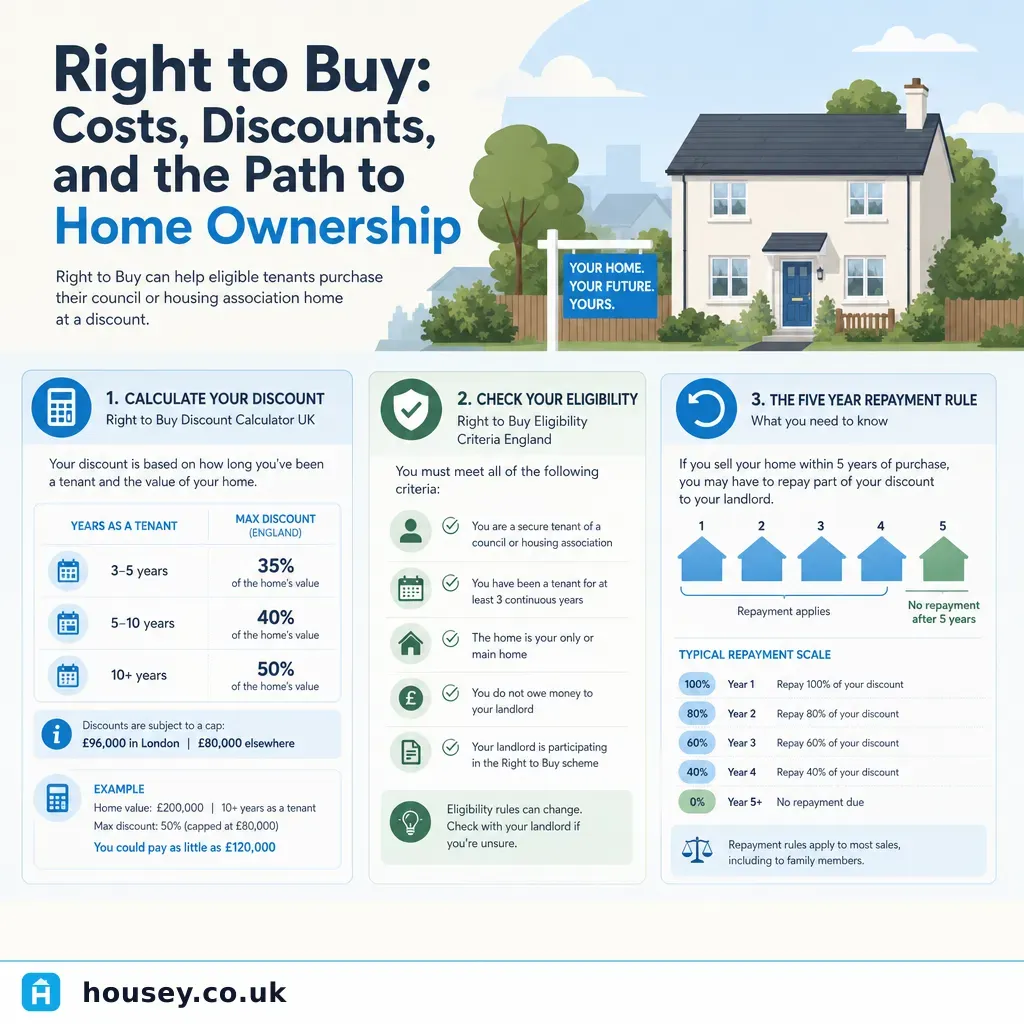
Right to Buy: Costs, Discounts, and the Path to Home Ownership
Right to Buy lets eligible council tenants in England buy their home at a government-funded discount — between 35% and 70% of its value, depending on tenancy length and property type.
 Buying & Moving
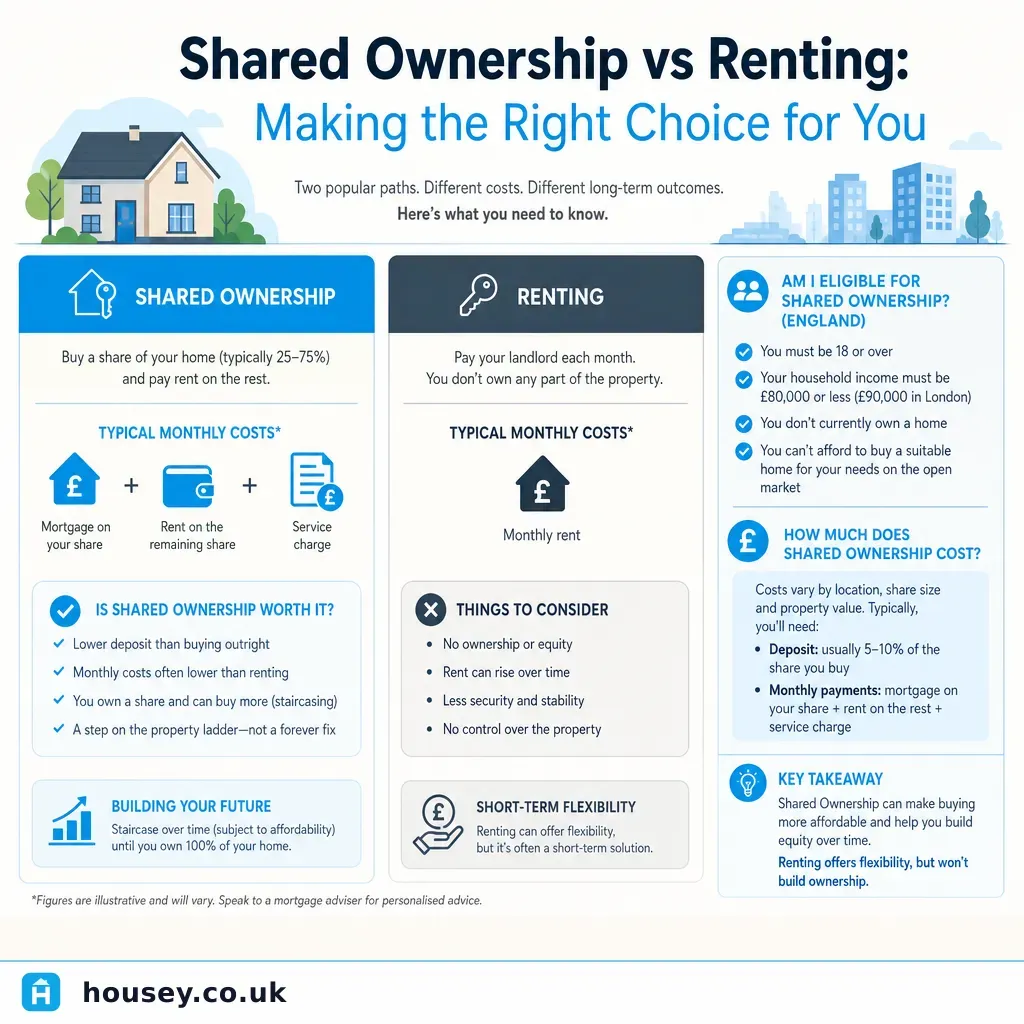
Shared Ownership vs Renting: Making the Right Choice for You
Shared ownership lets you buy a share of a property — typically 10% to 75% — and pay subsidised rent on the rest, building equity over time.
 Buying & Moving
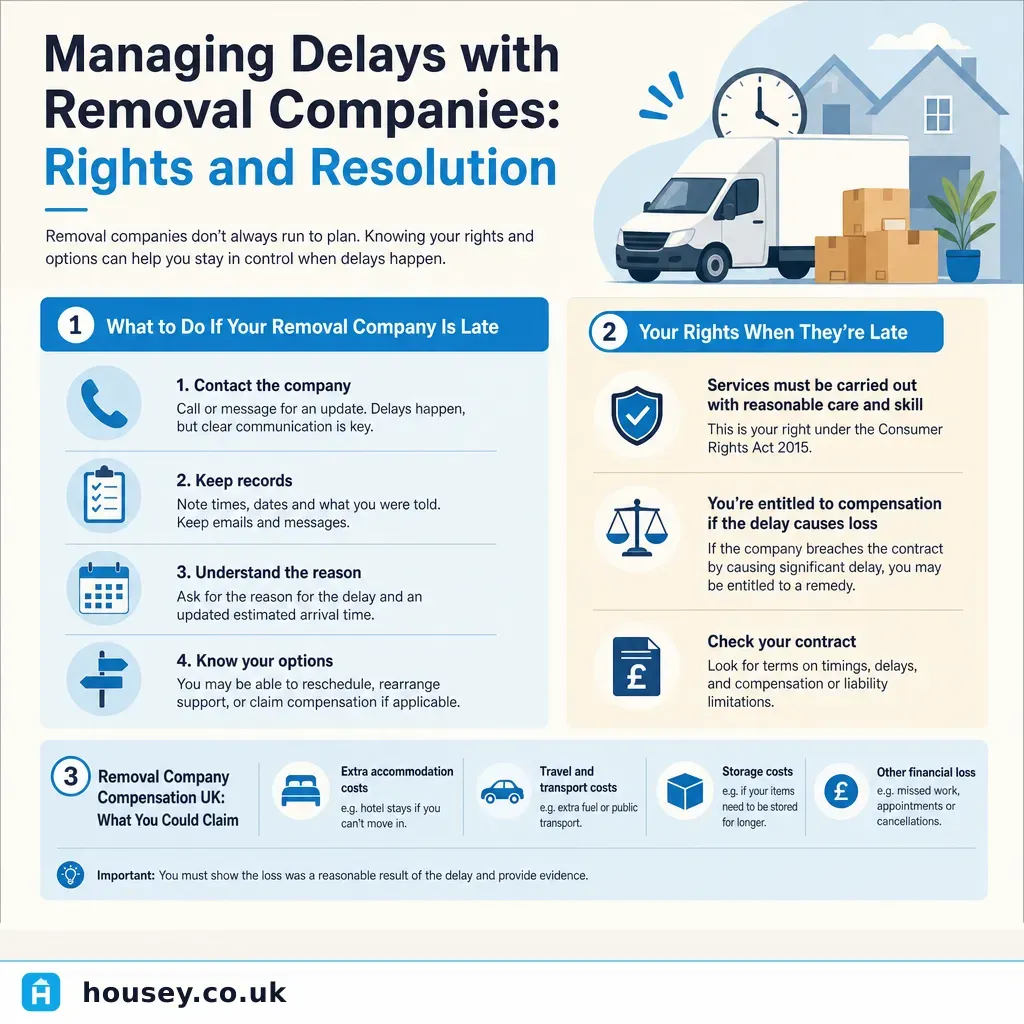
Managing Delays with Removal Companies: Rights and Resolution
If a removal company is late, your rights depend on your contract and whether the company is BAR-registered.
 Buying & Moving
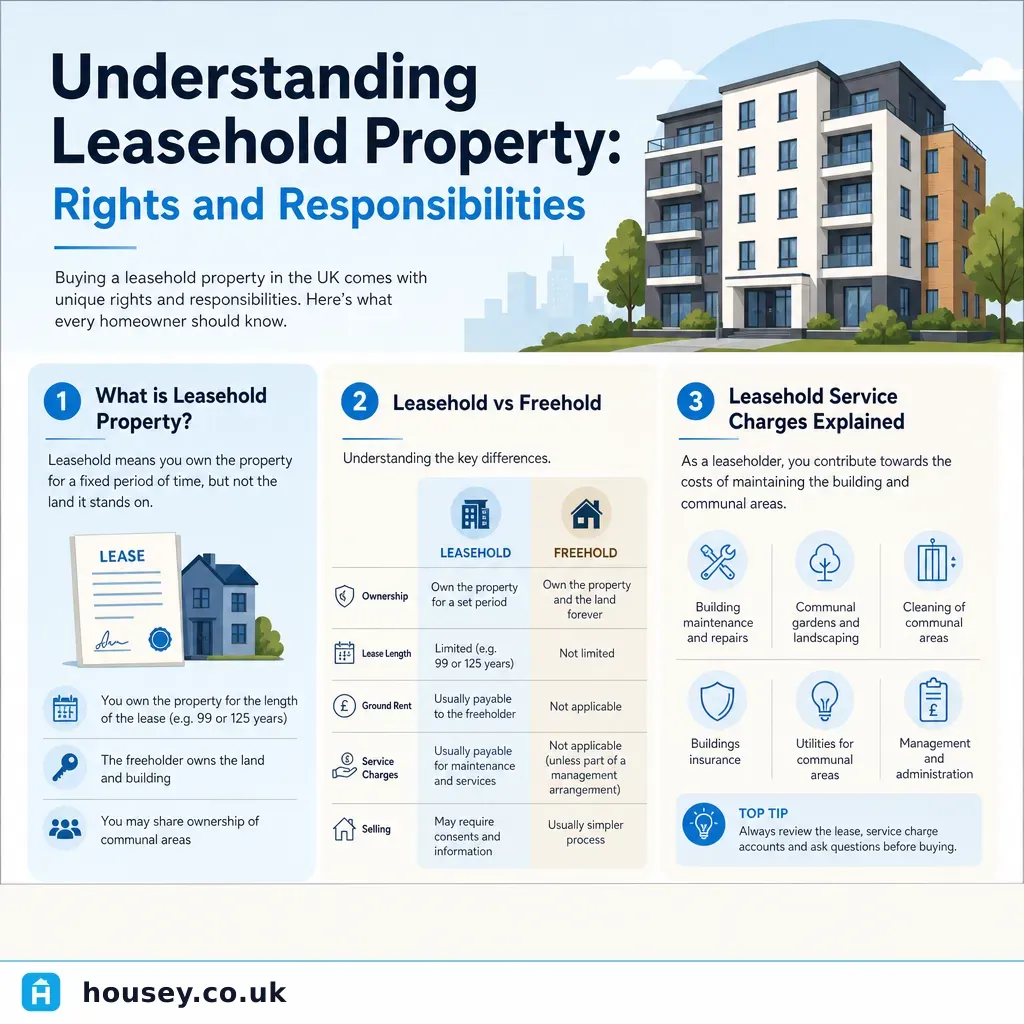
Understanding Leasehold Property: Rights and Responsibilities
Leasehold means you own a time-limited interest in a property while the freeholder owns the land and building.
 Buying & Moving
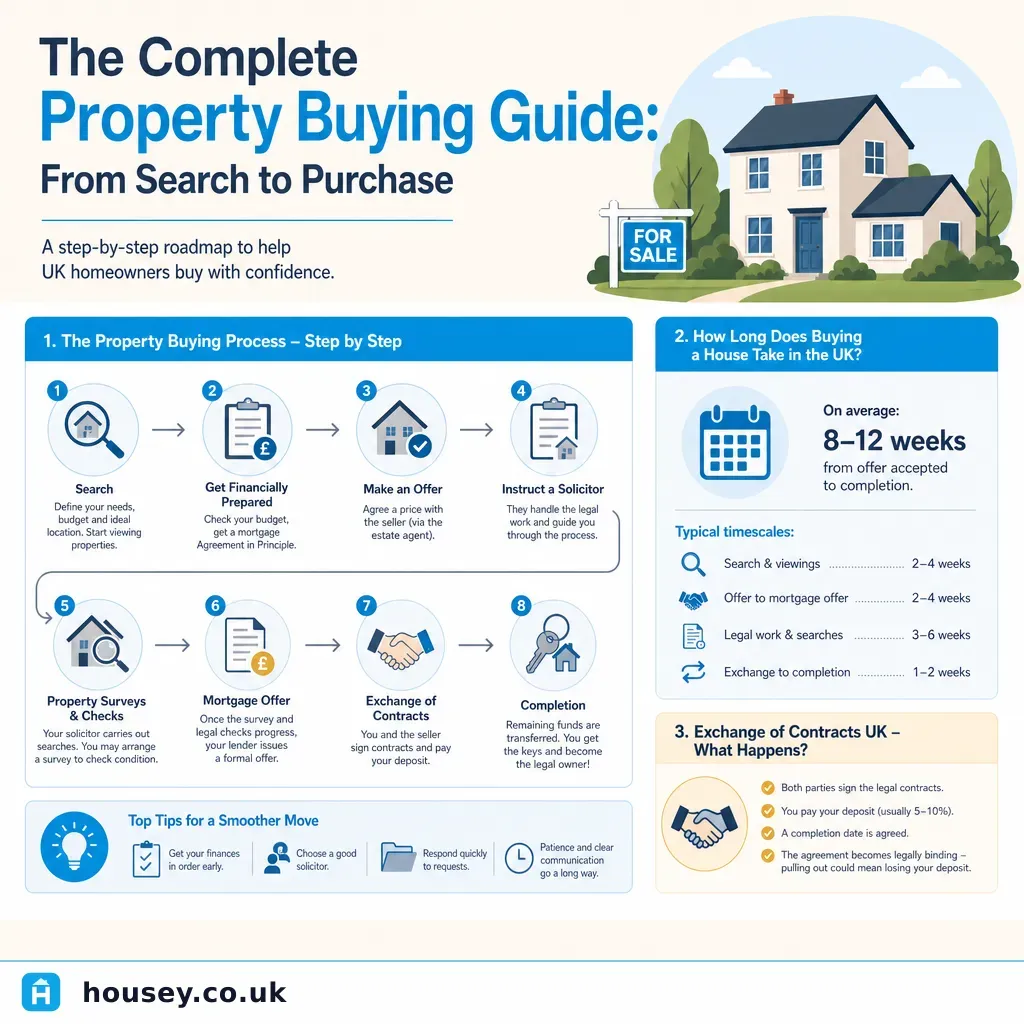
The Complete Property Buying Guide: From Search to Purchase
Buying a property in England and Wales typically takes 3–6 months from accepted offer to completion.