Shared Ownership vs Renting: Making the Right Choice for You
By Housey · Last reviewed 24th of May 2026
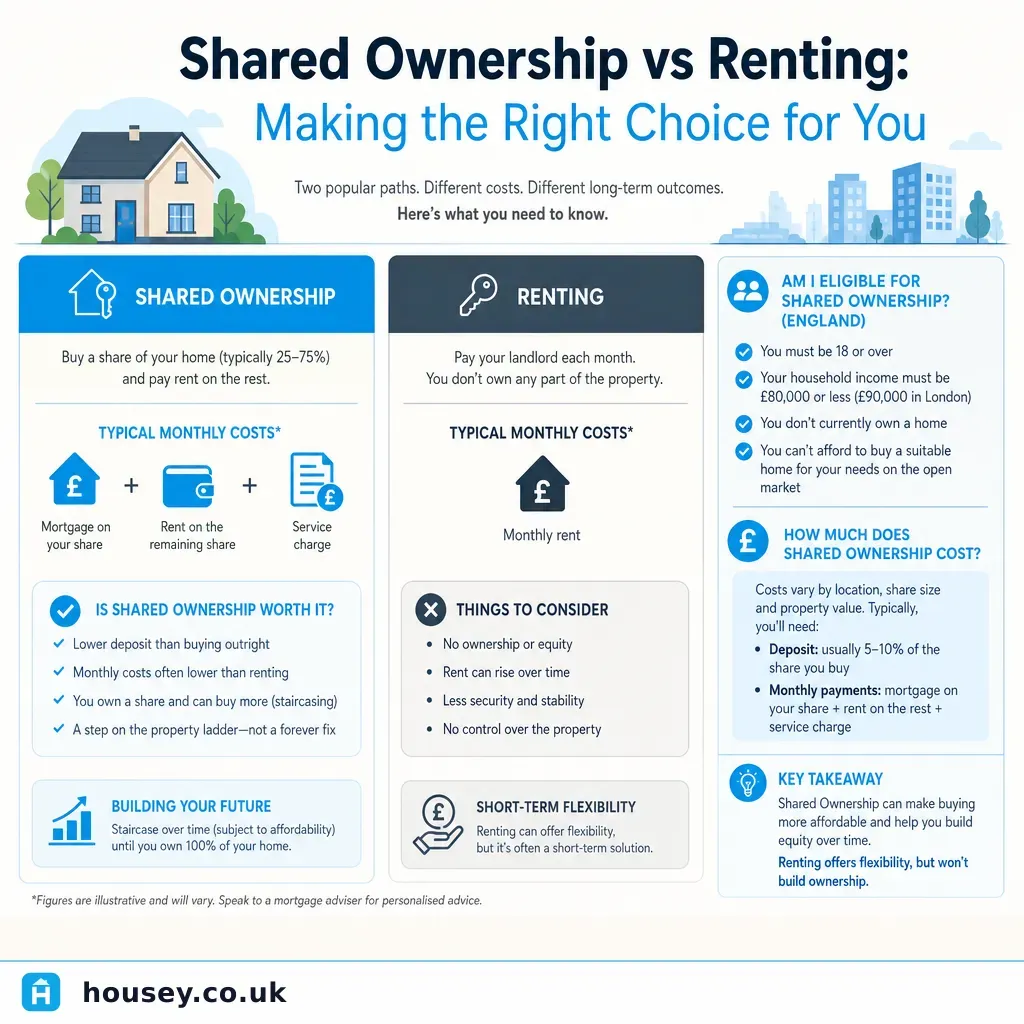
Shared Ownership vs Renting: Making the Right Choice for You
For households priced out of outright homeownership, shared ownership and private renting sit at opposite ends of the flexibility-versus-equity spectrum. They differ significantly in upfront costs, legal obligations, maintenance responsibilities, and what happens to your money over time. In England, where the shared ownership model was substantially updated under the 2021 Affordable Homes Programme, understanding these differences in detail is essential before signing either a lease or a shared ownership contract.
Key points
- Shared ownership in England requires a household income below £80,000 per year (£90,000 in London); you must be a first-time buyer or someone who previously owned but can no longer afford to buy outright.
- Under the 2021 Affordable Homes Programme, the minimum initial share you can buy has been reduced from 25% to 10% in new schemes, lowering the entry deposit requirement.
- Rent on the unsold share is set by the housing association — typically around 2.75% of the unsold share's value annually — and is usually reviewed upward each year, often linked to the Retail Price Index (RPI) plus 0.5%.
- Shared ownership properties are almost always leasehold, with service charges and ground rent; the Leasehold Reform (Ground Rent) Act 2022 prohibits ground rent above a peppercorn on new leases in England and Wales.
- The Renters' Rights Act 2025 reformed private renting in England, including changes to eviction grounds and tenancy structures; check GOV.UK for current implementation details.
How shared ownership works
Under shared ownership in England, you purchase between 10% and 75% of a property from a housing association and take out a mortgage on your share. You pay a subsidised rent to the housing association on the portion you do not own. The scheme is administered by Homes England and delivered through housing associations and some local authorities.
Over time, you can increase your ownership stake through a process called staircasing. The 2021 Affordable Homes Programme introduced 1% annual staircasing in many new-build shared ownership homes, allowing you to increase your share in smaller, more affordable steps. Eventually you may own 100% of the property, though each staircasing transaction carries its own legal and valuation costs.
Eligibility requirements (England, as of 2026):
- Household income below £80,000 per year (£90,000 in London)
- First-time buyer; or previously owned but unable to afford to buy outright
- Not currently in mortgage or rent arrears
- The property must be your only home
- Some schemes prioritise local connections, key workers, or military veterans
How private renting works in England
A private rental in England is governed by an assured shorthold tenancy (AST). The Renters' Rights Act 2025 introduced reforms to the private rental sector, including measures affecting how and when landlords can recover possession of their properties. Landlords must now rely on specific statutory grounds to end a tenancy. Check GOV.UK for the current implementation status of specific provisions.
Renters pay a monthly rent, hold no equity stake, and bear limited maintenance responsibility — landlords are legally obliged to maintain the structure, roof, heating, and key services under the Landlord and Tenant Act 1985.
Shared ownership vs renting: a direct comparison
Factor | Shared ownership | Private renting |
|---|---|---|
Upfront costs | Deposit (5%–10% of share value), legal fees, survey | Deposit (up to 5 weeks' rent), first month's rent |
Monthly outgoings | Mortgage + rent on unsold share + service charge | Rent only (landlord covers structure and key maintenance) |
Equity building | Yes — equity accumulates in your owned share | None |
Flexibility | Lower — resale involves housing association nomination period | Higher — give appropriate notice to leave |
Maintenance responsibility | Shared owner responsible for repairs to the property | Landlord responsible for structure and key services |
Annual cost changes | Mortgage relatively stable; rent reviewed upward (usually RPI + 0.5%) | Private rent can increase with market conditions |
Path to full ownership | Staircasing over time | None |
Legal complexity | Higher — leasehold, service charges, restricted resale | Lower — standard tenancy agreement |
Upside if property rises in value | Yes — your share gains proportionally | None |
Which option should you choose?
- Choose shared ownership if you have a small but workable deposit (5%–10% of the share value, not the full property price), stable employment, plan to stay in the area for at least five to seven years, and meet the eligibility criteria for the scheme.
- Choose renting if your income or deposit does not yet support a mortgage, your circumstances require flexibility to move within one to two years, or you want time to save a larger deposit for a future open-market purchase.
- Scrutinise both carefully if you are assessing a specific shared ownership resale property — lease length, service charge history, and staircasing costs will significantly affect the financial value of what you are buying.
- Speak to a solicitor and a regulated financial adviser if you have previous credit issues, if the shared ownership property is a resale with a short or complex lease, or if you want an objective comparison of the total monthly cost against local private rents.
Hidden costs of shared ownership
Shared ownership can appear more affordable than the headline share price suggests. The total monthly commitment often surprises buyers once all costs are added together.
- Service charges — for flats, these can run to several hundred pounds per month and vary significantly between developments. Ask for the past three years of accounts before exchanging contracts.
- Annual rent review — the rent on the unsold share typically increases each year. Over five to ten years this can erode the cost advantage over private renting, particularly in developments where service charges also rise.
- Staircasing transaction costs — each time you buy an additional share you pay solicitor fees, a new RICS valuation, and often a mortgage arrangement fee. Costs of £1,500–£3,000 or more per transaction are common.
- Housing association nomination period — if you want to sell, the housing association typically holds first refusal for four to eight weeks, which can slow the resale process.
- Lease extension — if the lease falls below 80 years remaining, extension costs rise sharply and many mortgage lenders will decline to lend. Factor in the current lease length when assessing any shared ownership property.
Indicative UK costs, last reviewed 2026-05-24. Costs vary; obtain your own professional quotes before committing.
Important limitations
This article provides general information about shared ownership and private renting in England and does not constitute legal, financial, or mortgage advice. Shared ownership terms vary between housing associations and individual leases. Leasehold reform and rental legislation are subject to ongoing change — rules may differ from those described above. Always consult a solicitor qualified in residential conveyancing and a regulated mortgage adviser before signing a shared ownership contract.
When this becomes urgent
Seek specialist advice promptly if:
- The shared ownership lease you are considering has fewer than 80 years remaining — extension costs rise sharply at this threshold and many lenders will not lend below 70 years.
- Service charges have increased significantly and you are struggling to meet payments — contact the housing association immediately and seek advice from Citizens Advice without delay.
- You wish to sublet your shared ownership home before reaching full ownership — most leases prohibit this, and breach of lease terms can lead to legal action by the housing association.
What to ask a qualified professional
Before signing a shared ownership agreement, ask:
- What are the current and estimated future service charges, and has there been a recent or planned major works notice?
- How is the rent on the unsold share reviewed, and by what percentage has it increased in each of the past three years?
- What are the staircasing terms — what is the minimum share I must purchase each time, and how is the property valued at each step?
- Does the lease contain any unusual restrictions on alterations, pets, or subletting?
- What is the remaining lease length, and what would a lease extension currently cost?
- Does the housing association hold a nomination period on resale, and how long is it?
- Which mortgage lenders offer the most competitive rates for shared ownership in my circumstances?
When to get professional help
Shared ownership involves interlocking legal and financial commitments that are difficult to unwind later. Always instruct a solicitor to review the lease before you proceed. Take additional professional advice if:
- You are purchasing a shared ownership resale — lease terms, service charge history, and previous staircasing records all require careful scrutiny.
- There is any ambiguity about your eligibility for the scheme or the specific property.
- The total monthly cost of shared ownership is close to or above comparable private rents in the area.
- You have any concerns about your ability to staircase or sell in the future.
How Housey can help
Housey connects buyers with solicitors experienced in shared ownership conveyancing and RICS surveyors who can provide an independent property valuation before you commit to a share price. Whether you are buying a new-build shared ownership home or reviewing a resale, getting expert legal and valuation advice early avoids costly surprises at a later stage.
Frequently asked questions
Can I buy a shared ownership home if I already own a property?
Generally, no. Shared ownership is designed for first-time buyers or people who previously owned a home but can no longer afford to buy outright. If you currently own a property, you would typically need to sell it first before applying. Some schemes have additional local eligibility conditions — check with the housing association directly.
Can I sublet my shared ownership property?
Most shared ownership leases prohibit subletting unless you own 100% of the property. If you need to move temporarily, you would usually need to staircase to full ownership first or seek the housing association's written consent. Rules vary between providers and schemes, so check your specific lease before making any plans to sublet.
What happens if I fall behind on shared ownership service charges or rent?
The housing association can take legal action to recover unpaid service charges or rent on the unsold share. In serious cases, this can lead to repossession proceedings. If you are experiencing financial difficulty, contact your housing association immediately and seek guidance from Citizens Advice at the earliest opportunity.
Is shared ownership available in Scotland and Wales?
Scotland and Wales operate their own affordable homeownership schemes. Scotland has the Open Market Shared Equity and New Supply Shared Equity schemes. Wales has Help to Buy — Wales. Terms, eligibility thresholds, and income caps differ from the English shared ownership model. Check your relevant devolved government's housing website for current details.
How long does it take to staircase to 100% ownership?
There is no fixed timescale — you can staircase at any point the lease permits. Each transaction involves legal fees, a new RICS valuation, and often a mortgage product change, so many owners wait until they can buy a meaningful additional share. Under the 2021 Affordable Homes Programme, some new-build properties allow 1% annual staircasing at a lower cost.
Sources and further reading
- Shared ownership homes: buying, improving and selling — GOV.UK
- Leasehold Reform (Ground Rent) Act 2022 — legislation.gov.uk
- Renters' Rights Act 2025 — GOV.UK
- RICS Home Survey Standards — Royal Institution of Chartered Surveyors
- Housing advice — Citizens Advice
Useful next reads
 Buying & Moving
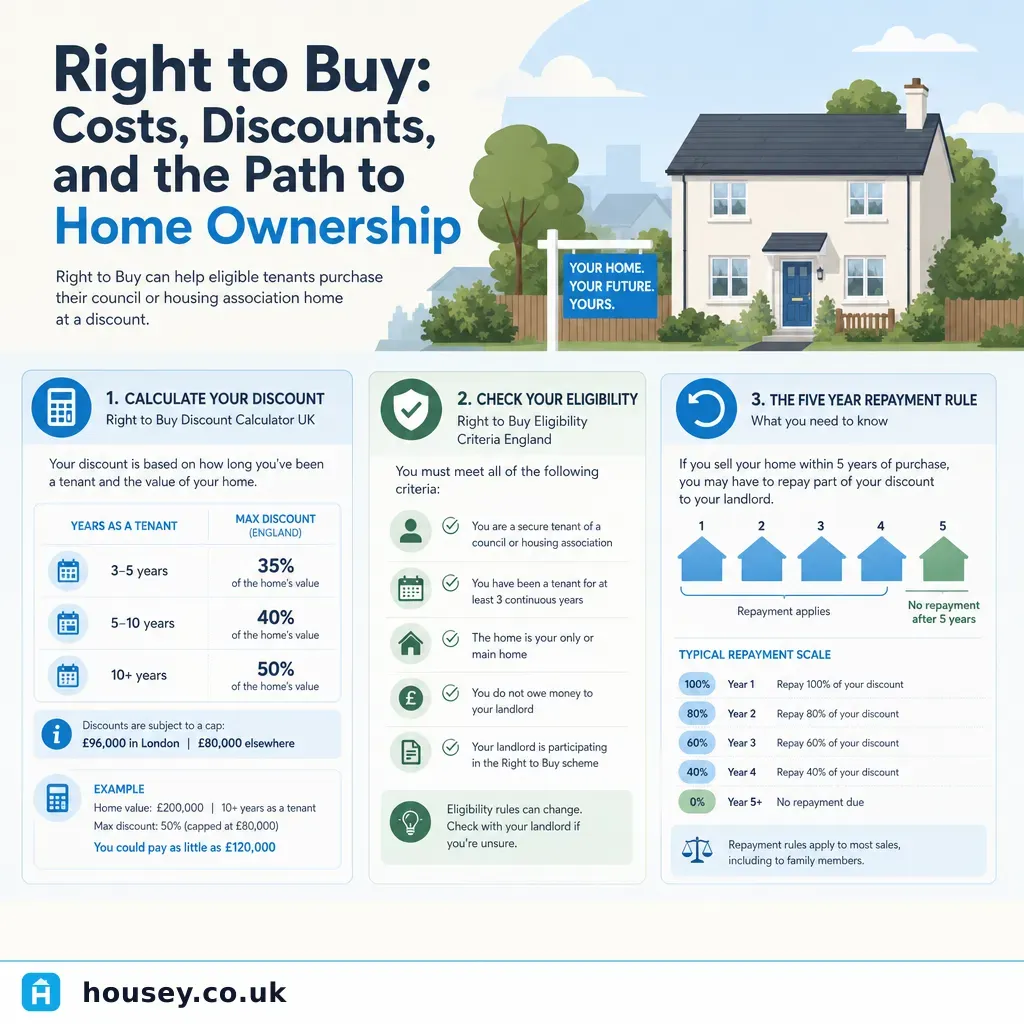
Right to Buy: Costs, Discounts, and the Path to Home Ownership
Right to Buy lets eligible council tenants in England buy their home at a government-funded discount — between 35% and 70% of its value, depending on tenancy length and property type.
 Buying & Moving
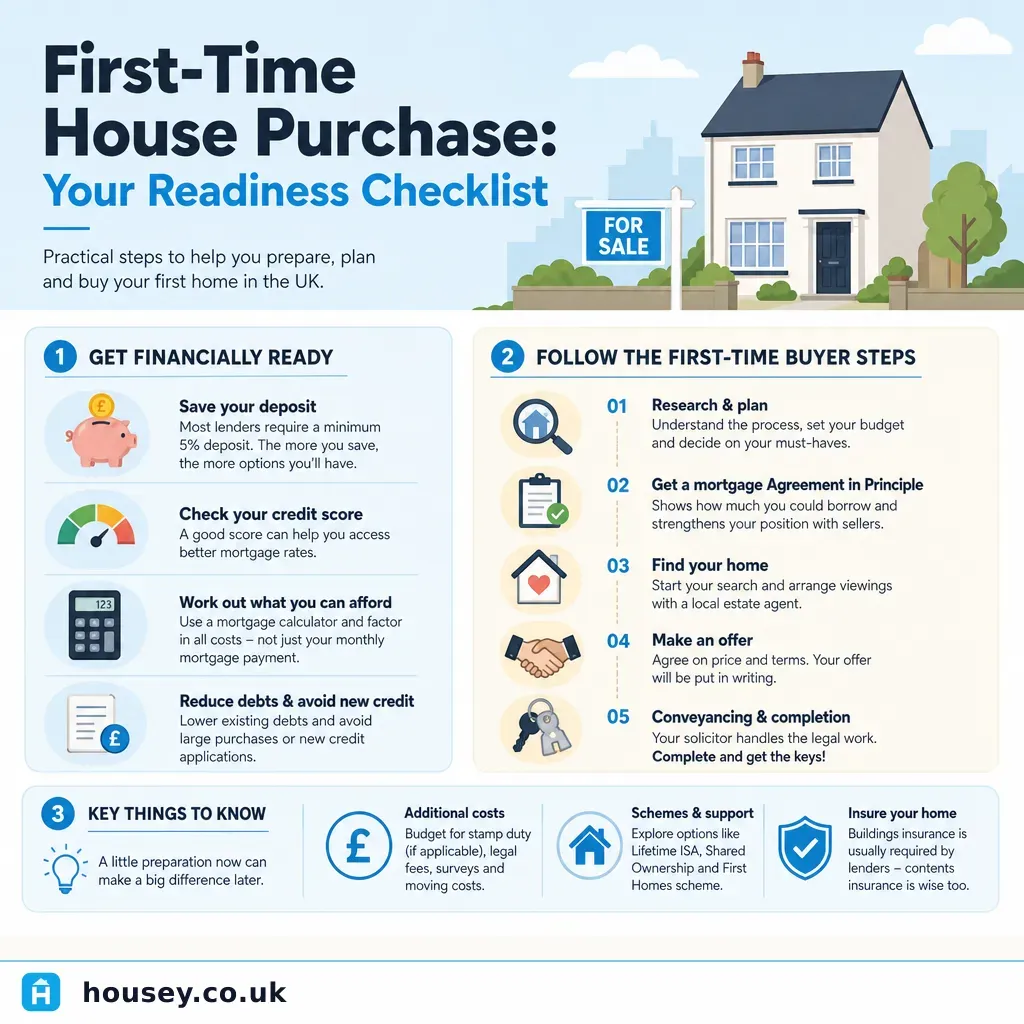
First-Time House Purchase: Your Readiness Checklist
Before making your first offer, have a mortgage agreement in principle, a deposit plus buying costs saved (allow 2–3% of the purchase price beyond the deposit itself), and a conveyancer ready to instruct.
 Buying & Moving
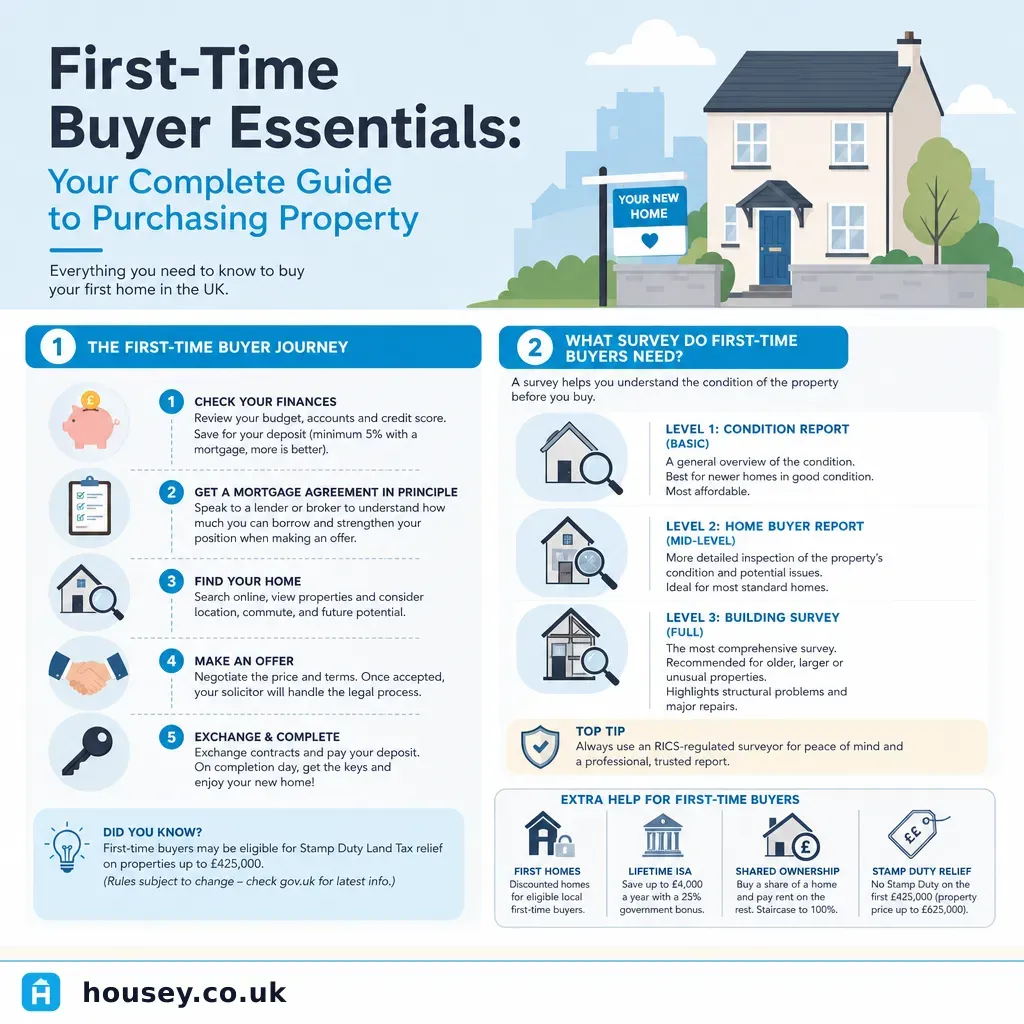
First-Time Buyer Essentials: Your Complete Guide to Purchasing Property
Buying your first UK home involves six key stages: securing a mortgage Agreement in Principle, making an offer, instructing a solicitor, commissioning an independent RICS survey, exchanging contracts (the legally binding point), and completing.
 Buying & Moving
Shared Ownership: Building Your Path To Property Ownership
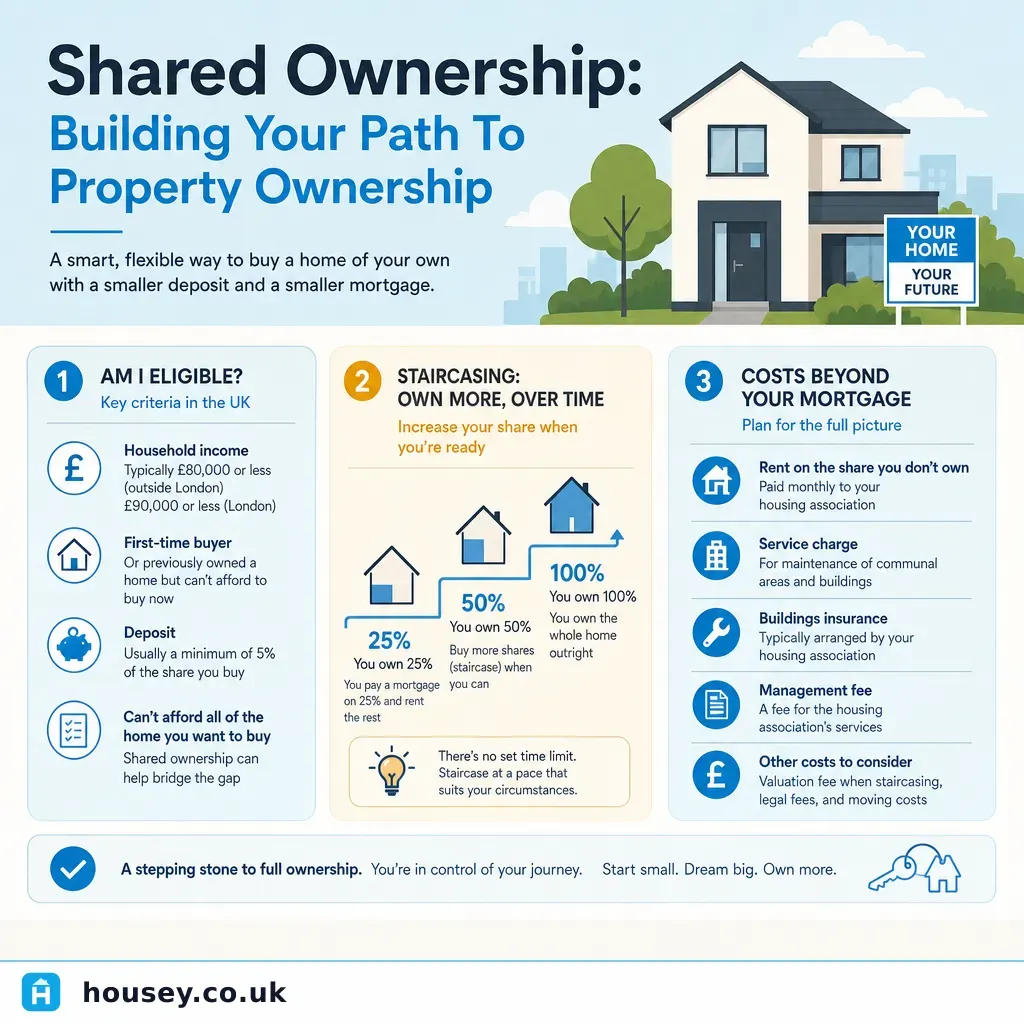
Shared ownership lets you buy a share of a home — typically 10% to 75% — from a housing association and pay subsidised rent on the remainder.
 Buying & Moving
First-Time Buyer Properties: Finding Your First Home
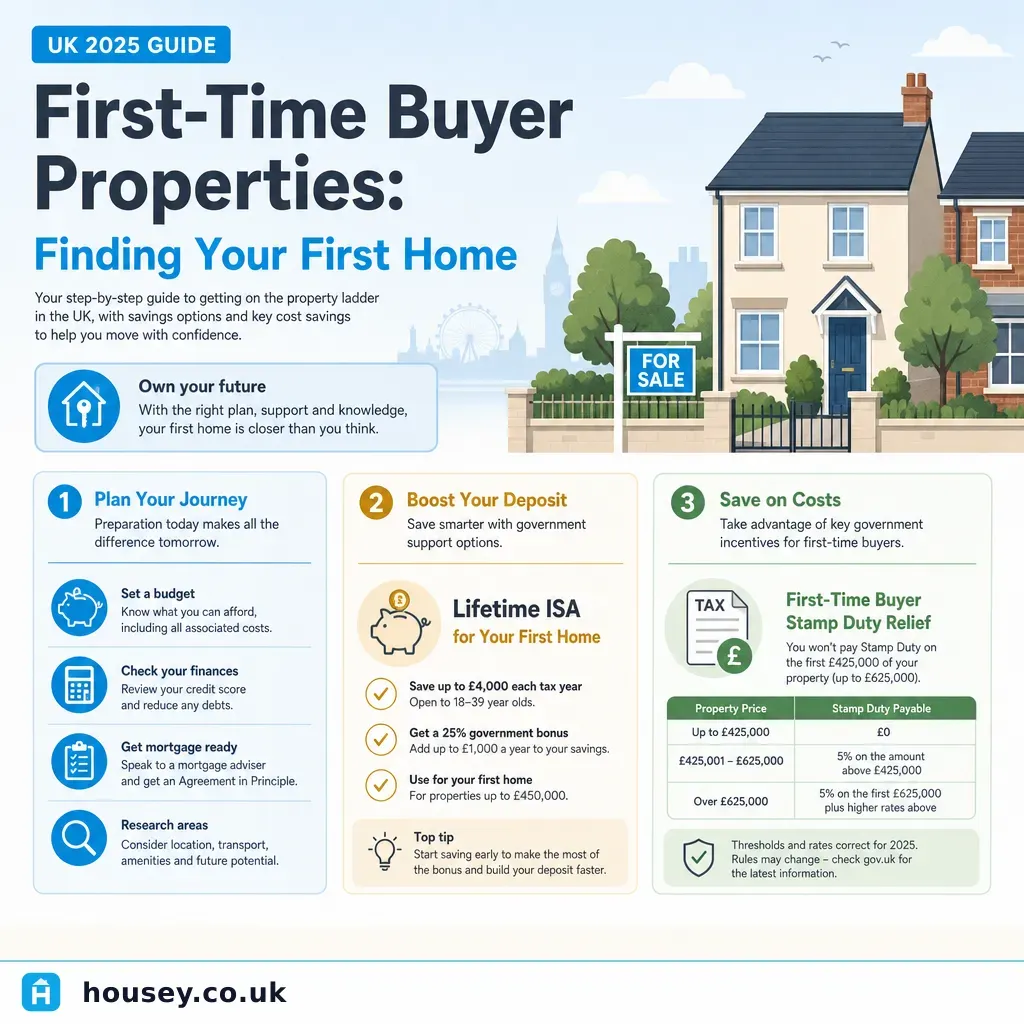
First-time buyers in the UK can access support including the Lifetime ISA, which adds a 25% government bonus on savings of up to £4,000 per year.