Air Source Heat Pump Repairs: When to Call an Electrician or Plumber
By Housey · Last reviewed 4th of May 2026
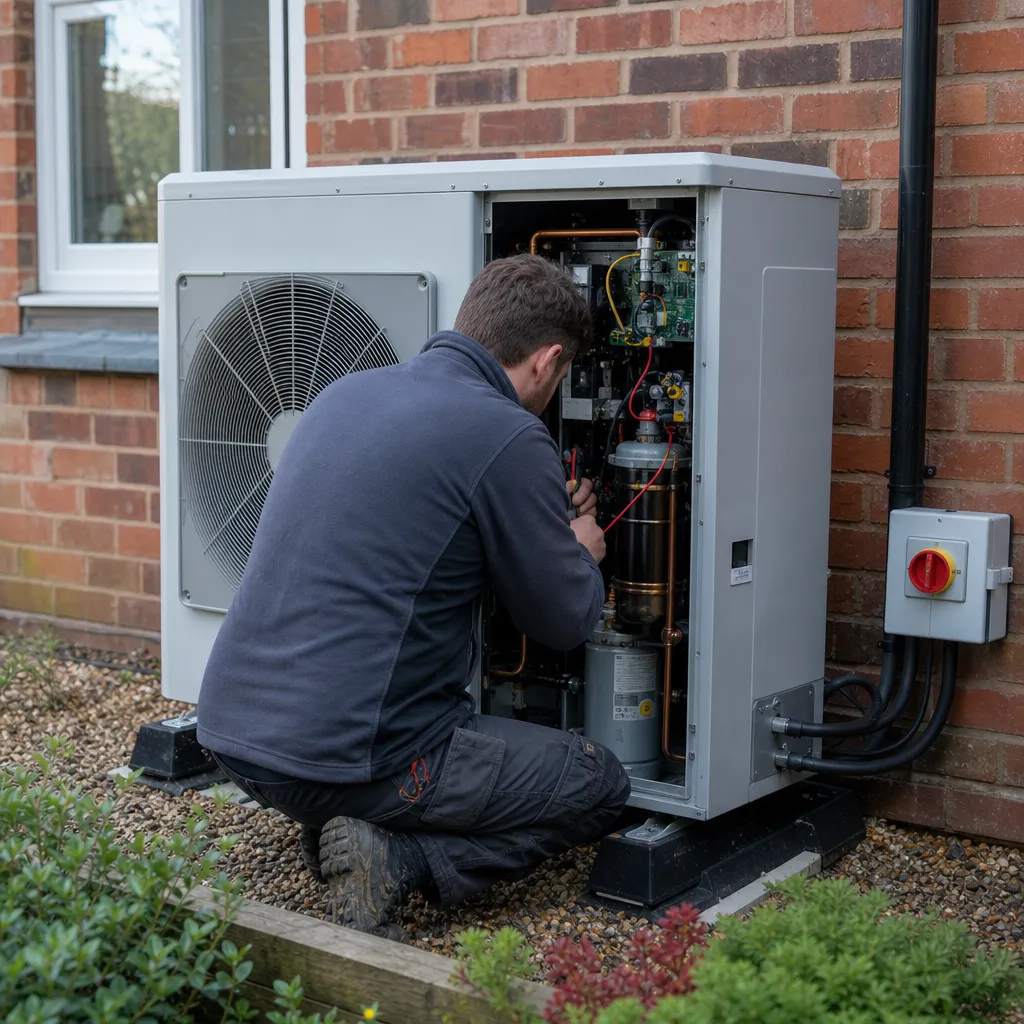
Air Source Heat Pump Repairs: When to Call an Electrician or Plumber
Air source heat pumps combine electrical controls, refrigerant circuits, and hydraulic heating systems in a single installation — which means faults can fall under the remit of three different trades. Understanding which professional to call can save you time, money, and the risk of voiding your manufacturer warranty. This question most often arises when a fault code appears, when the system stops producing heat or hot water, or during annual servicing — and the wrong choice of trade can delay repairs or leave the underlying cause unresolved.
Key points
- Refrigerant handling is legally restricted to engineers holding F-Gas certification under the Fluorinated Gas Regulations 2015; a standard plumber or electrician cannot legally touch the refrigerant circuit.
- Electrical faults — including PCB failures, sensor issues, and wiring problems — require a Part P competent person or qualified electrician; for warranty work, an MCS-certified installer is usually required.
- Many manufacturers specify that non-MCS engineers carrying out repairs will void the heat pump warranty — check your documentation before instructing anyone.
- The Boiler Upgrade Scheme (BUS) grant of up to £7,500 requires MCS-certified installation; using uncertified engineers for repairs may affect ongoing compliance.
- Most fault codes displayed on the heat pump controller are diagnostic starting points — note the code and reference the manufacturer manual before calling any trade.
Which professional repairs what?
Heat pumps have three distinct technical layers, and different faults sit in different layers.
- Electrical and controls layer — PCB, sensors, thermostats, wiring, and external power supply.
- Refrigerant circuit — compressor, expansion valve, evaporator, condenser, and refrigerant pipework.
- Hydraulic circuit — buffer cylinder, flow and return pipework, zone valves, underfloor heating loops, and circulation pump.
Which professional do I need?
Fault symptom | Most likely layer | Professional to call |
|---|---|---|
No power, tripped circuit, blown fuse | Electrical | Part P electrician or MCS heat pump engineer |
Error code: low pressure or refrigerant fault | Refrigerant | F-Gas certified engineer (often MCS-accredited) |
Icing on outdoor unit beyond normal defrost | Refrigerant | F-Gas certified engineer |
Strange noise from compressor or outdoor fan | Refrigerant/mechanical | MCS heat pump engineer |
Heating runs but rooms don't reach temperature | Hydraulic | Experienced plumber or MCS engineer |
Underfloor heating zones not responding | Hydraulic | Plumber with heat pump experience |
Hot water cylinder not heating | Hydraulic or controls | Plumber or MCS engineer depending on fault |
PCB or controller display fault | Electrical/controls | MCS heat pump engineer or manufacturer agent |
Annual service and efficiency check | All layers | MCS-certified heat pump service engineer |
The safest and most warranty-compliant option for most repairs is an MCS-certified heat pump installer, because they are trained across all three layers.
When a standard electrician or plumber may be appropriate
- A Part P electrician can investigate a supply-side electrical fault — such as a dedicated circuit fault at the consumer unit — that is clearly upstream of the heat pump itself.
- An experienced plumber can address purely hydraulic issues, such as a faulty zone valve, a blocked inline filter (Y-strainer), or an airlocked circuit, provided they understand low-temperature heating system design.
In both cases, confirm in advance that the engineer has heat pump experience. A plumber trained only in high-temperature gas systems may not understand the low flow temperature requirements of heat pump circuits.
How to find the right engineer: decision tree
- Outdoor unit completely silent with no lights? → Check consumer unit for a tripped breaker. If circuit is live but unit will not start, call an MCS heat pump engineer.
- Error code on the controller? → Note the code, check the manual, and call the manufacturer helpline or an MCS engineer familiar with that brand.
- Persistent ice on the outdoor unit that will not clear after a defrost cycle? → Refrigerant circuit issue — call an F-Gas certified engineer; do not attempt to defrost manually.
- System running but producing little heat? → If flow temperature is correct but rooms are cold, call a plumber experienced in hydraulic balancing. If flow temperature is too low, call an MCS engineer.
- Burning smell or visible wiring damage? → Switch off at the consumer unit and call a Part P electrician before any other trade.
- Hot water cylinder cold despite heat pump running? → Check controller settings; if correct, call an MCS engineer.
What qualifications should your engineer hold?
Qualification | What it covers | Issuing or registering body |
|---|---|---|
MCS certification | Design, installation, and commissioning of heat pumps | Microgeneration Certification Scheme |
F-Gas Category I | Handling, recovering, and recharging refrigerants | Environment Agency / REFCOM |
Part P competent person | Electrical installation and testing in dwellings | NICEIC, NAPIT, or equivalent |
TrustMark registration | Quality assurance for retrofit and energy work | TrustMark |
Check the MCS Installer Database at mcscertified.com to verify current certification for the relevant technology type.
Important limitations
This article provides general information to help homeowners identify which trade to contact for common heat pump symptoms. It is not a substitute for professional diagnosis. Heat pump systems vary by manufacturer, model, installation age, and heating circuit design. The correct repair approach depends on a proper fault assessment by a qualified engineer. Always confirm that any engineer holds the appropriate certifications before work begins.
What to ask a qualified professional
- Are you MCS-certified for air source heat pumps, and which brands do you work on?
- Do you hold F-Gas Category I certification for refrigerant handling?
- Will this repair affect my manufacturer's warranty?
- Do you have experience with my specific system (brand and model)?
- What diagnostic tools will you use, and will you provide a written report?
- Will you check hydraulic flow rates and system pressures as part of the visit?
- Is the call-out fee separate from the repair cost, and what happens if parts are required?
When to get professional help
Seek professional help immediately if:
- The outdoor unit is making grinding, hissing, or screeching noises (possible compressor failure or refrigerant leak).
- There is a burning or chemical smell near the indoor or outdoor unit.
- The heat pump has not produced heating or hot water for more than 24 hours in cold weather.
- Error codes persist after following the manufacturer's reset instructions.
- The electrical supply circuit is tripping repeatedly.
- Ice is forming on pipework or the outdoor unit outside of normal defrost cycles.
Do not attempt to open the refrigerant circuit, tamper with electrical terminals, or bypass safety controls.
How Housey can help
If you need a qualified professional to assess or repair your heat pump, Housey connects you with certified engineers. A heat pump survey can identify system inefficiencies and maintenance issues before they become costly faults. If your heat pump is underperforming as a whole system, a retrofit assessment can determine whether wider heating system design is contributing to the problem.
Frequently asked questions
Can a regular gas engineer repair an air source heat pump?
A Gas Safe registered engineer is qualified for gas appliances, not heat pump systems. Unless they also hold MCS certification and relevant heat pump training, they should not work on a heat pump's refrigerant or controls. Some engineers hold both Gas Safe and heat pump qualifications — always verify the relevant certifications before instructing anyone to work on your system.
How much does air source heat pump repair cost in the UK?
Indicative UK costs, last reviewed 2026-05-04. A call-out and diagnosis typically ranges from £80 to £150. Refrigerant recharges can cost £200 to £500 depending on refrigerant type and quantity. PCB replacements often range from £300 to £800 including parts. Costs vary significantly by region, engineer, and system complexity — always obtain at least two quotes before proceeding.
Does my heat pump warranty cover repairs?
Most manufacturer warranties — typically five to ten years on the compressor — require that only MCS-certified engineers carry out work on the system. Using uncertified trades can void the warranty. Check your warranty documentation and contact the manufacturer before instructing any engineer if you are unsure whether the repair will affect your coverage.
What is F-Gas certification and why does it matter for heat pump repairs?
The Fluorinated Gas Regulations 2015 restrict the handling of HFC refrigerants — used in most heat pumps — to certified personnel. An engineer must hold a current F-Gas certificate, typically Category I for split systems, to legally recover, recharge, or repair the refrigerant circuit. Undertaking this work without certification is a legal offence under UK environmental law.
How often should an air source heat pump be serviced?
Most manufacturers and the Energy Saving Trust recommend an annual service by a qualified engineer. Regular servicing maintains efficiency, checks refrigerant pressures, inspects electrical connections, and confirms hydraulic flow rates — helping to identify minor issues before they develop into costly breakdowns.
Sources and further reading
- MCS Installer Database — Microgeneration Certification Scheme
- Fluorinated Gas (F-Gas) regulations guidance — GOV.UK
- Boiler Upgrade Scheme — GOV.UK / DESNZ
- Heat pumps: how they work — Energy Saving Trust
- Approved Document P: Electrical Safety in Dwellings — GOV.UK
Useful next reads
 Energy & Retrofit
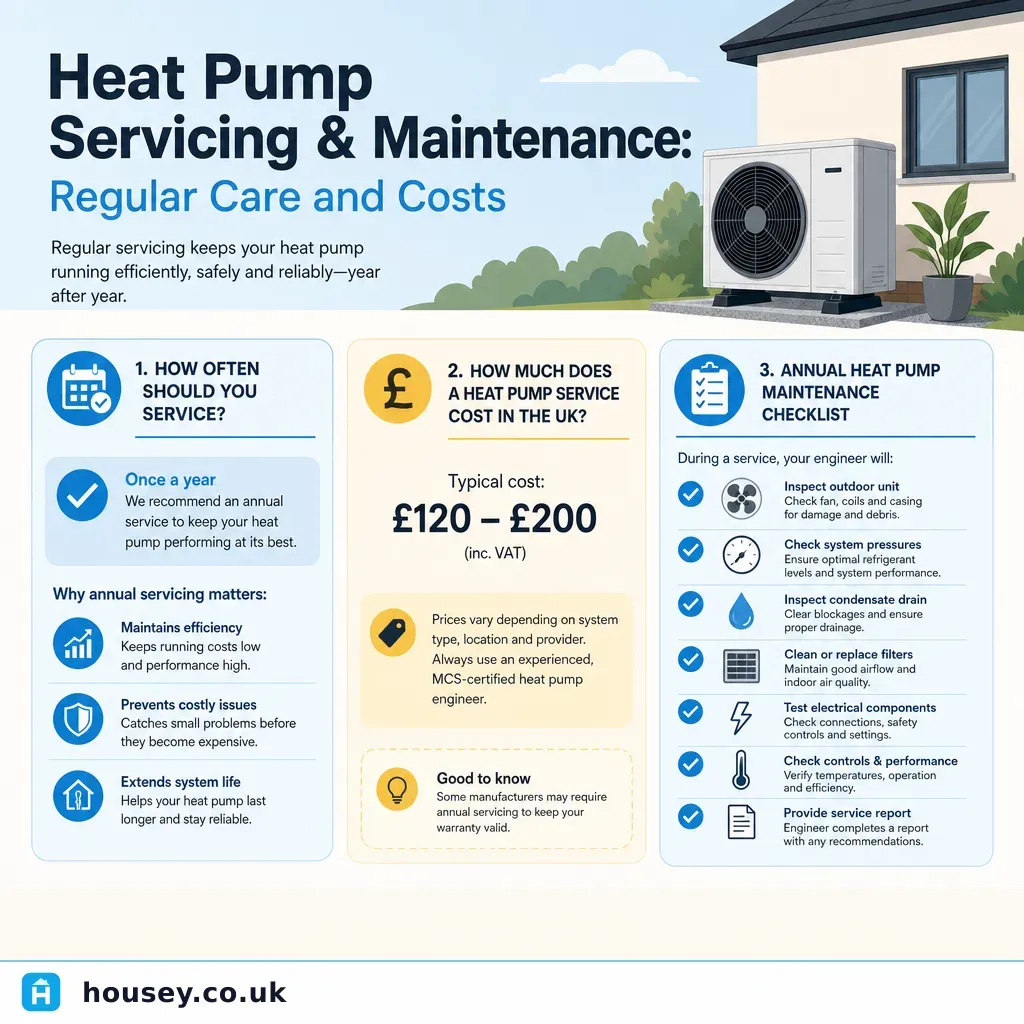
Heat Pump Servicing and Maintenance: Regular Care and Costs
Heat pumps should be serviced by a qualified engineer once a year; most manufacturers require this to keep the warranty valid.
 Energy & Retrofit
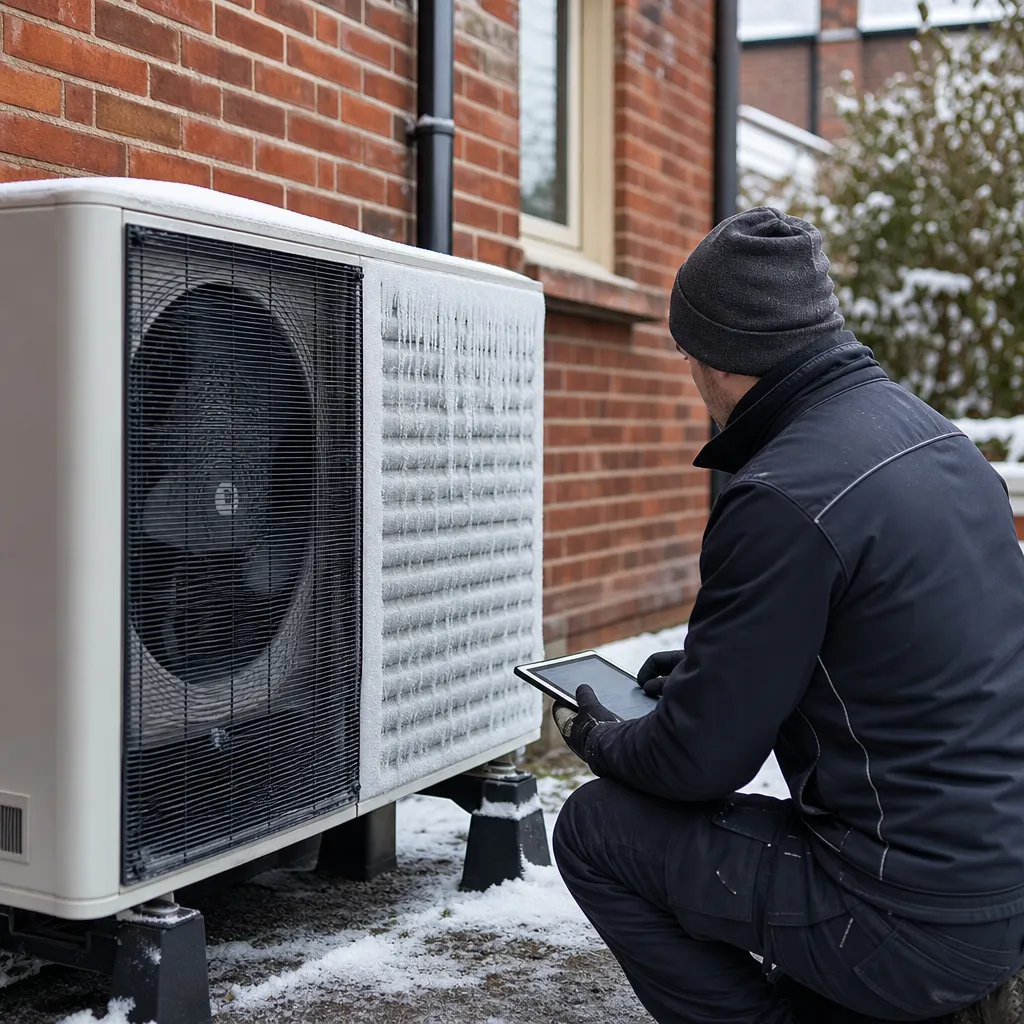
Heat Pump Coil Freezing: Causes and Troubleshooting Steps
Light frost on an air source heat pump's outdoor coil is normal in cold UK winters and clears automatically during a defrost cycle.
 Energy & Retrofit
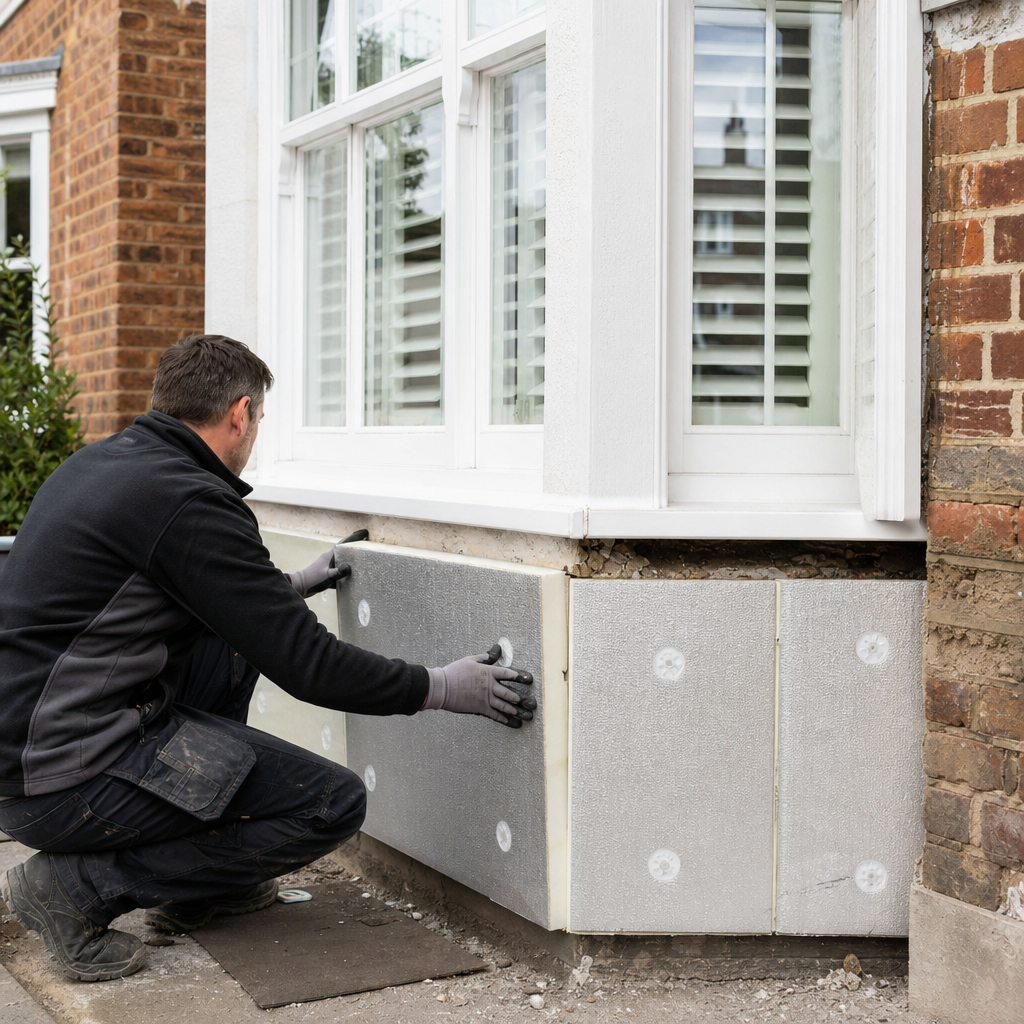
Insulating Solid Masonry Walls Under Bay Windows: Technical Guidance
Insulating solid masonry walls under bay windows requires specialist detailing at angled wall faces, window reveals, and the bay floor and ceiling junctions.
 Energy & Retrofit
Prefabricated Insulated Wall Forms: Permanent Insulation Solutions
Prefabricated insulated wall forms — including ICF and SIPs systems — deliver high thermal performance by combining permanent insulation with structural concrete or timber in a single wall assembly.
 Energy & Retrofit
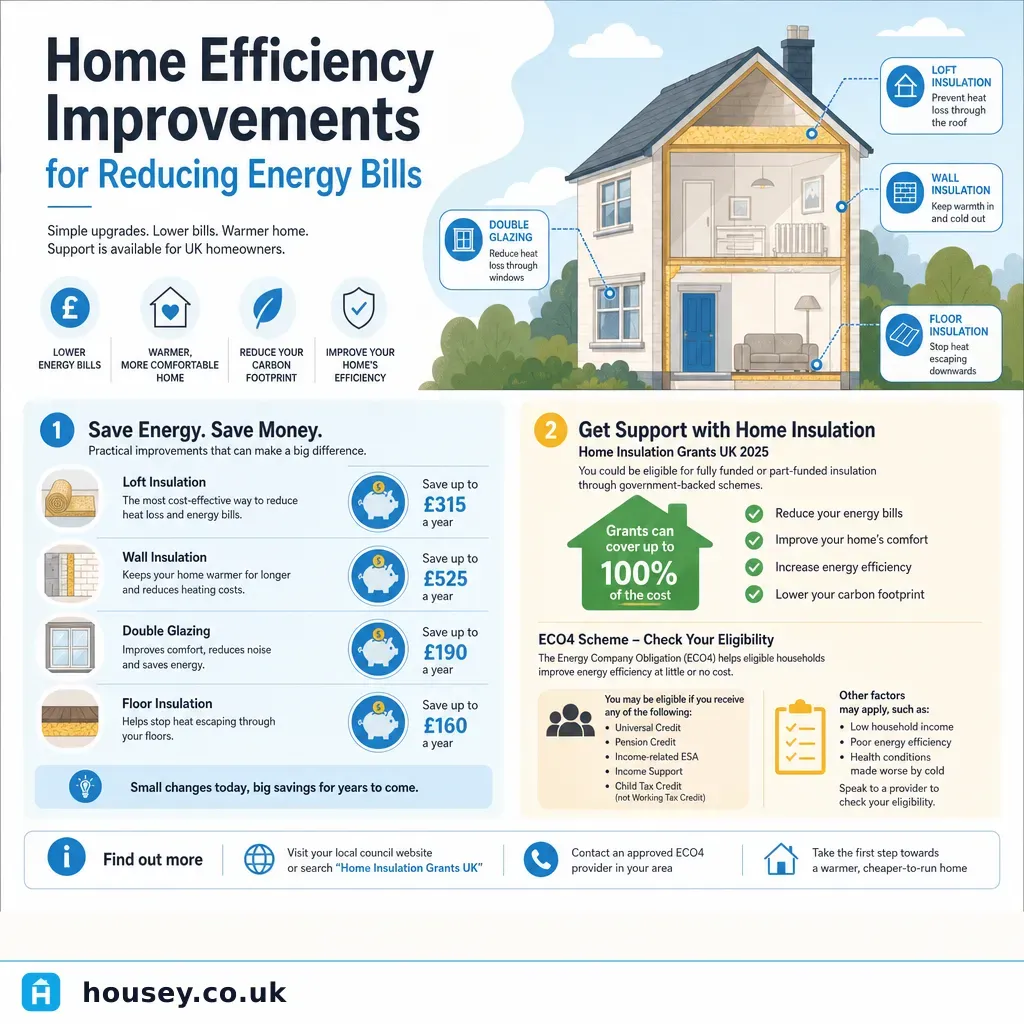
Home Efficiency Improvements for Reducing Energy Bills
The most cost-effective UK home efficiency improvements are usually loft insulation, cavity wall insulation, draught-proofing, and upgrading heating controls.