Home Efficiency Improvements for Reducing Energy Bills
By Housey · Last reviewed 11th of May 2026
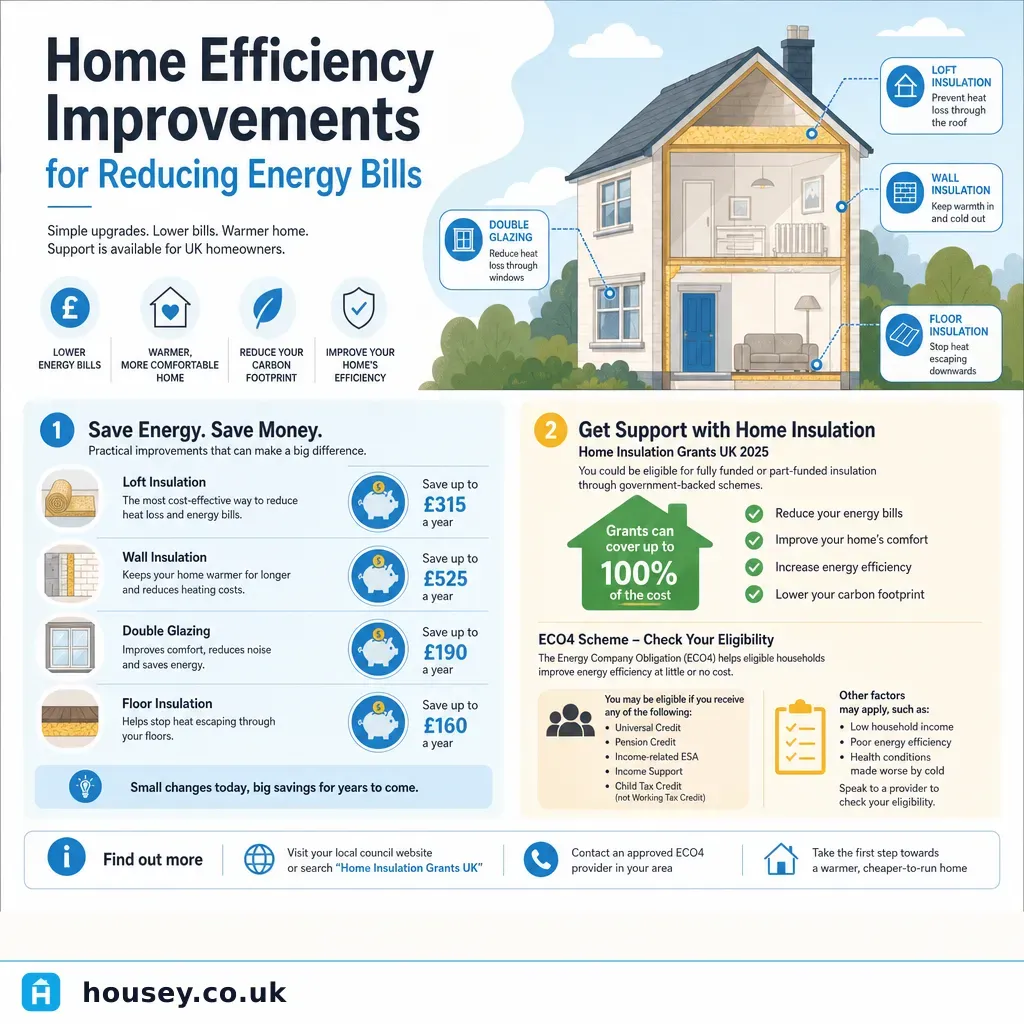
Home Efficiency Improvements for Reducing Energy Bills
Energy bills have become one of the largest household outgoings for UK families, and pressure to reduce them has intensified since the energy price rises of 2021–2022. Whether you own a Victorian terrace, a 1930s semi, or a modern new-build, most UK homes have at least one area where targeted investment can meaningfully cut energy consumption — and in many cases government support is available to reduce the upfront cost.
Key points
- Loft insulation topped up to 270 mm is among the cheapest and most effective fabric improvements; the Energy Saving Trust estimates a semi-detached house could save around £150 per year.
- Cavity wall insulation is available free or heavily subsidised under ECO4 (Energy Company Obligation, Phase 4) for eligible low-income or low-EPC households.
- The Great British Insulation Scheme (GBIS) targets homes in EPC bands D–G with a single insulation measure at reduced or no cost for qualifying households.
- The Boiler Upgrade Scheme (BUS) offers a £7,500 grant towards an air source heat pump and £7,500 towards a ground source heat pump in England and Wales, as of 2025.
- PAS 2035 is the UK standard for whole-house energy retrofit and is mandatory for ECO4 and GBIS-funded projects; it requires a licensed retrofit assessor and coordinator to oversee sequencing and moisture risk.
Where to start: prioritising efficiency measures
The most common mistake UK homeowners make is installing a new boiler or heat pump before addressing the building fabric. Heat escapes through walls, roofs, floors, and gaps — reducing that loss first means a smaller, less expensive heating system can deliver the same comfort more cheaply.
A recommended order of measures for most UK homes:
- Draught-proofing — lowest cost, fastest return; address gaps around doors, windows, loft hatches, and suspended timber floorboards.
- Loft insulation — if accessible, among the cheapest fabric measures; material and installation for a typical semi-detached house typically £300–£600 (Indicative UK costs, last reviewed 2026-05-11).
- Cavity wall insulation — for post-1920 cavity-wall properties in reasonable condition; installer should hold BBA certification or equivalent.
- Floor insulation — suspended timber floors can lose significant heat; rigid insulation boards fitted between joists from below.
- Solid wall insulation — more disruptive and expensive (£8,000–£22,000 for external wall insulation depending on house size), but may qualify for ECO4 or GBIS funding (Indicative UK costs, last reviewed 2026-05-11).
- Heating system and controls upgrade — smart thermostats, thermostatic radiator valves (TRVs), and a new boiler or heat pump once the fabric is improved.
- Renewable generation — solar PV and battery storage, once fabric and heating are optimised.
Comparison: high-impact efficiency measures
Measure | Typical annual saving | Indicative cost range | Grant available? | Best property type |
|---|---|---|---|---|
Loft insulation (top-up to 270 mm) | £100–£175 | £300–£600 | ECO4 / GBIS possible | Houses with accessible loft space |
Cavity wall insulation | £150–£300 | £700–£1,500 | ECO4 / GBIS possible | Post-1920 cavity-wall homes |
Solid wall insulation (external) | £200–£450 | £8,000–£22,000 | ECO4 / GBIS possible | Pre-1920 solid-wall homes |
Smart thermostat and TRVs | £75–£150 | £150–£500 | None currently | All gas or oil-heated homes |
Air source heat pump | Variable | £8,000–£15,000 net of BUS grant | £7,500 BUS grant | Well-insulated homes with suitable space |
Solar PV (3.5 kWp) | £350–£600 incl. export | £5,000–£8,000 | Smart Export Guarantee (revenue only) | South-facing roof, minimal shading |
Indicative UK costs, last reviewed 2026-05-11. Quotes vary by property size, region, and contractor. Check grant eligibility before obtaining quotes.
What not to assume
"My house is already well insulated." Many UK homes built before 1990 have insulation levels well below current Building Regulations Part L standards. Unless you have documentation of a recent retrofit, it is worth having levels checked before assuming the fabric is adequate.
"A new boiler will solve my high bills." A modern condensing boiler is more efficient than an older model, but if your home is poorly insulated you are still heating a leaky building — just slightly more cheaply. Fabric improvements should usually come first.
"Heat pumps don't work in older UK homes." Air source heat pumps can work effectively in many traditionally built properties, but suitability depends on the home's heat loss rate and radiator sizing. A heat pump survey will identify whether your home is a realistic candidate and what preparatory work may be needed.
"ECO4 grants are only for people on benefits." ECO4 has two eligibility routes: an income-based route for households receiving qualifying benefits, and a second route based on EPC rating combined with local authority deprivation data. Many households not receiving benefits may still qualify — check with your energy supplier or an ECO4-registered installer.
Grants and funding available in 2026
- ECO4 (Energy Company Obligation, Phase 4): fully funded insulation and heating measures for qualifying households. Check eligibility through your energy supplier or GOV.UK.
- Great British Insulation Scheme (GBIS): a single insulation measure for homes in EPC bands D–G, covering both a general group and a lower-income group.
- Boiler Upgrade Scheme (BUS): £7,500 towards an air source heat pump; £7,500 towards a ground source heat pump; £5,000 towards a biomass boiler (England and Wales).
- Home Upgrade Grant (HUG2): for off-gas-grid homes in England in lower council tax bands; availability varies by local authority.
- Smart Export Guarantee (SEG): pays households with solar PV for electricity exported to the grid; tariff set by energy suppliers.
For Scotland, Wales, and Northern Ireland, separate schemes apply. Check Home Energy Scotland, the Welsh Government Nest and Warmer Homes schemes, and the Northern Ireland Affordable Warmth scheme respectively.
Homeowner efficiency checklist
Use this before commissioning any retrofit work:
When to get professional help
Most draught-proofing and loft top-up work is achievable for a DIY-confident homeowner. However, seek professional advice when:
- You are considering solid wall insulation (internal or external), as this affects moisture dynamics and can cause interstitial condensation if poorly designed — particularly in older solid-wall homes.
- You want to install a heat pump: sizing, radiator checks, hot water cylinder requirements, and grant paperwork all require an MCS-accredited installer.
- Your home has an unusual construction type — timber frame, prefabricated concrete, or similar — where standard insulation approaches may not apply.
- You are in a conservation area or own a listed building, where some retrofit measures may require planning consent.
- You are planning multiple measures and want to ensure they work together without creating moisture or ventilation problems; a PAS 2035-compliant retrofit coordinator should oversee any whole-house project.
How Housey can help
Housey can connect you with vetted energy-efficiency consultants who can assess your home and recommend a prioritised retrofit plan, insulation assessors who can check existing insulation levels and identify the most cost-effective improvements, and heat pump specialists who can advise on suitability and help you navigate the Boiler Upgrade Scheme application process.
Frequently asked questions
How much can I realistically save by improving my home's energy efficiency?
Savings depend on how poorly insulated your home is, how you heat it, and which measures you install. The Energy Saving Trust estimates that whole-house retrofit — combining insulation, heating controls, and a heat pump — in a typical semi-detached home could cut energy bills by 40–60% versus an unimproved gas-heated equivalent. Individual measures such as loft insulation typically save £100–£175 per year.
Do I need planning permission for insulation or solar panels?
Most insulation measures are concealed or internal and do not require planning permission. Solar PV panels on house roofs are usually permitted development in England, subject to conditions including a maximum protrusion of 200 mm above the roof slope, with further restrictions for listed buildings and conservation areas. External wall insulation changes the external appearance and may require planning consent, particularly in conservation areas.
Is it worth improving insulation before replacing my boiler?
In most cases, yes. Improving insulation reduces your home's heat demand, allowing a smaller and less expensive heating system to maintain comfortable temperatures. If you are considering a heat pump, the installer will size the system to your heat loss rate — so insulating first can reduce both the capital cost of the heat pump and your ongoing running costs.
What is PAS 2035 and why does it matter?
PAS 2035 is the UK standard for whole-house energy retrofit. It requires a licensed retrofit assessor to survey the property, a retrofit coordinator to design the package of measures, and accredited installers to carry out the work. It is mandatory for ECO4 and GBIS-funded projects, and strongly recommended for any substantial retrofit to ensure measures are sequenced correctly and moisture risks are properly managed.
Sources and further reading
- Energy Saving Trust — home energy saving tips and cost estimates — Energy Saving Trust
- ECO4 (Energy Company Obligation) guidance — GOV.UK
- Great British Insulation Scheme — GOV.UK
- Boiler Upgrade Scheme — GOV.UK
- Find an energy performance certificate — GOV.UK
- PAS 2035: Retrofitting dwellings for improved energy efficiency — BSI Group
Useful next reads
 Energy & Retrofit
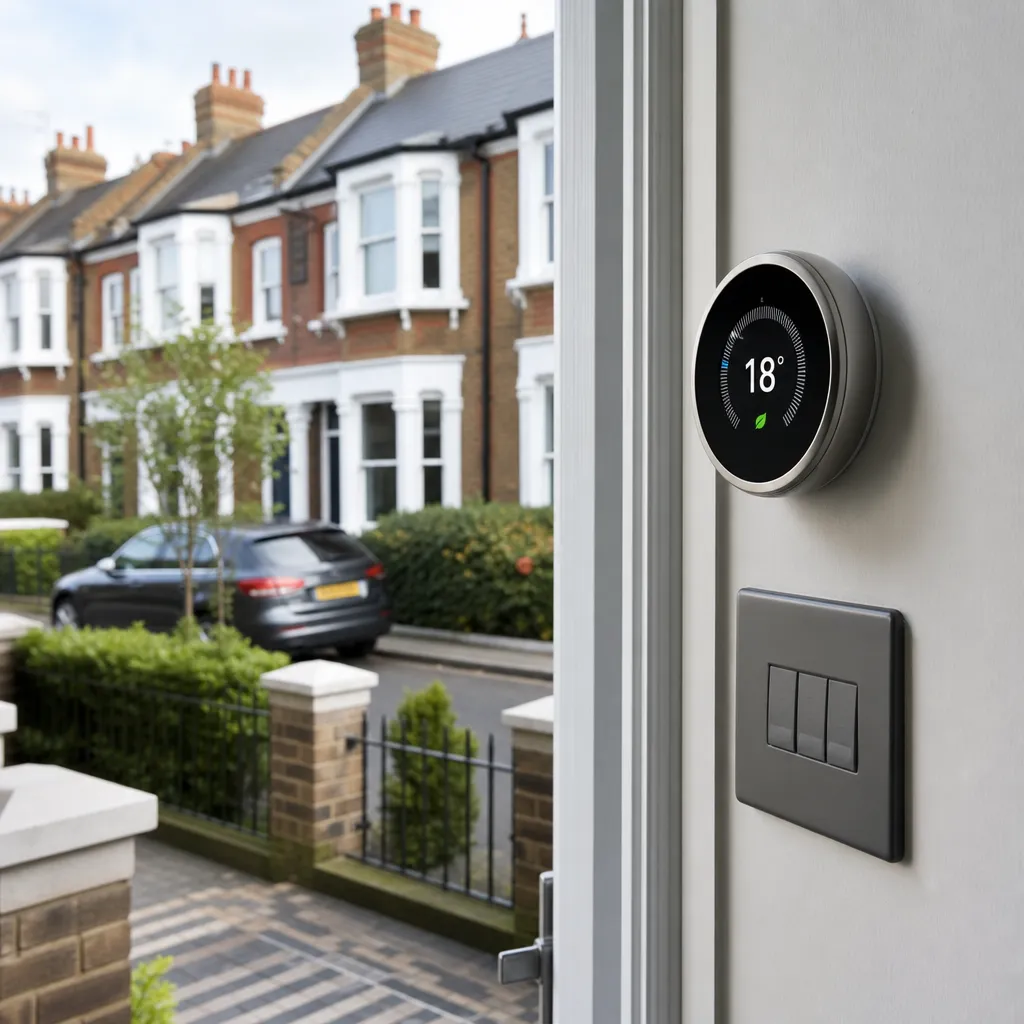
Smart Home Technology That Saves Energy: A Practical Approach To Reducing Bills
Smart home technology can reduce household energy bills by automating heating, lighting, and appliances to run only when needed.
 Energy & Retrofit
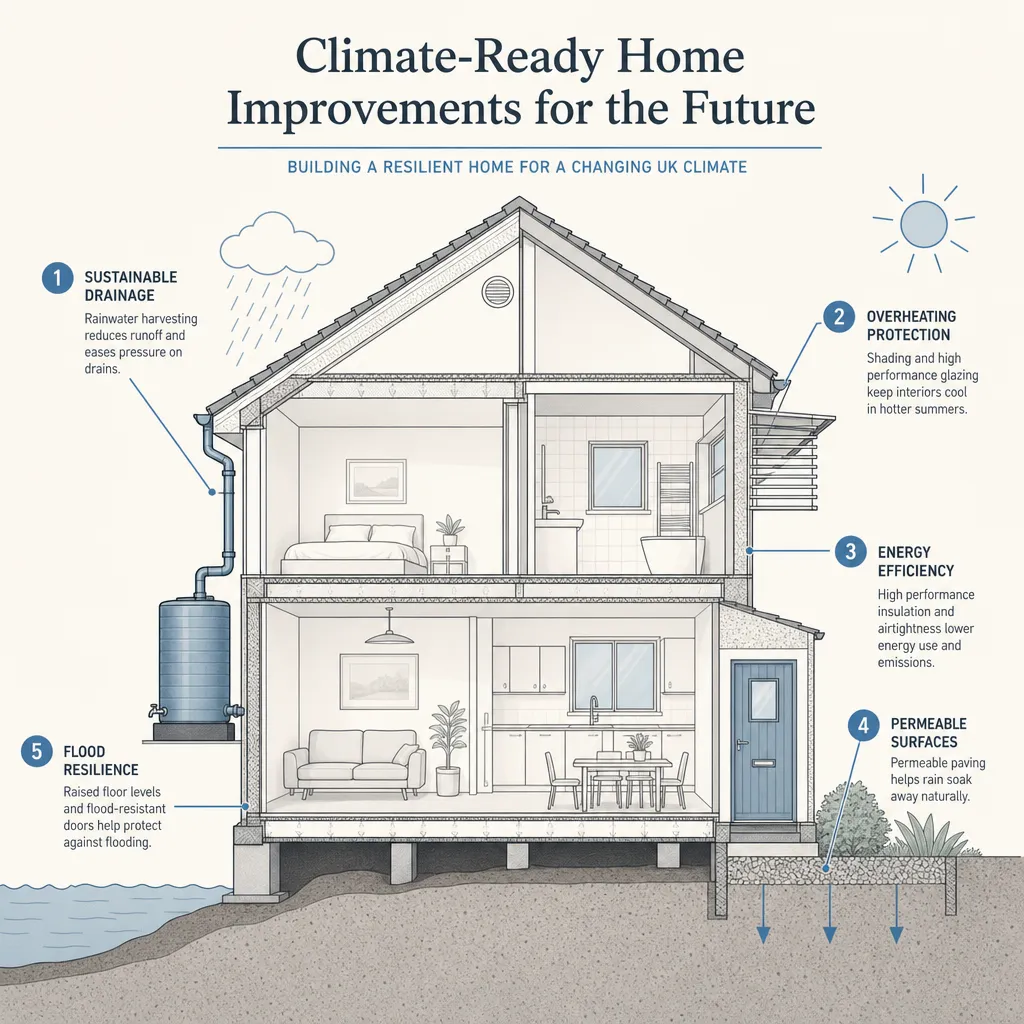
Climate-Ready Home Improvements for the Future
Climate-ready home improvements tackle four main risks for UK properties: overheating, increased rainfall and flooding, storm damage, and energy cost volatility.
 Energy & Retrofit
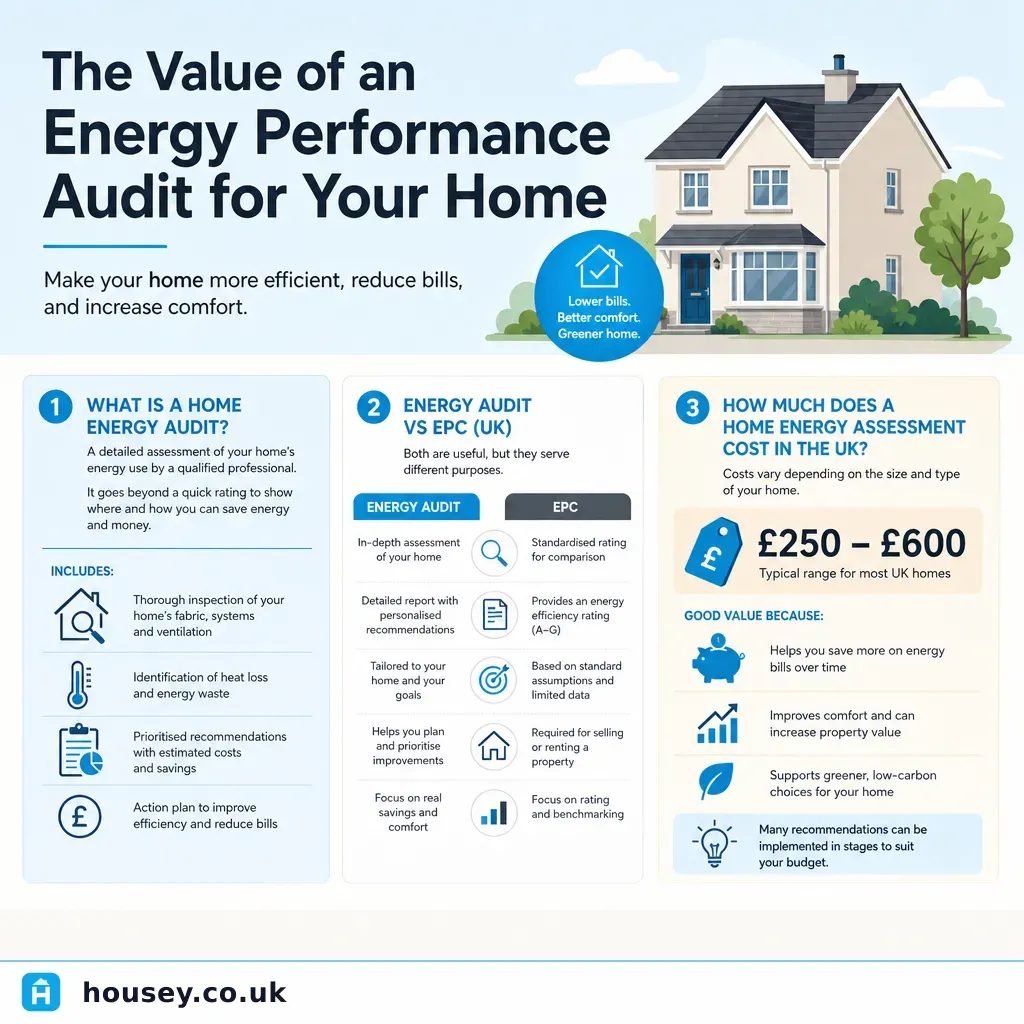
The Value of an Energy Performance Audit for Your Home
A home energy performance audit is a detailed, site-specific assessment of a property's fabric, heating, ventilation, and controls.
 Energy & Retrofit
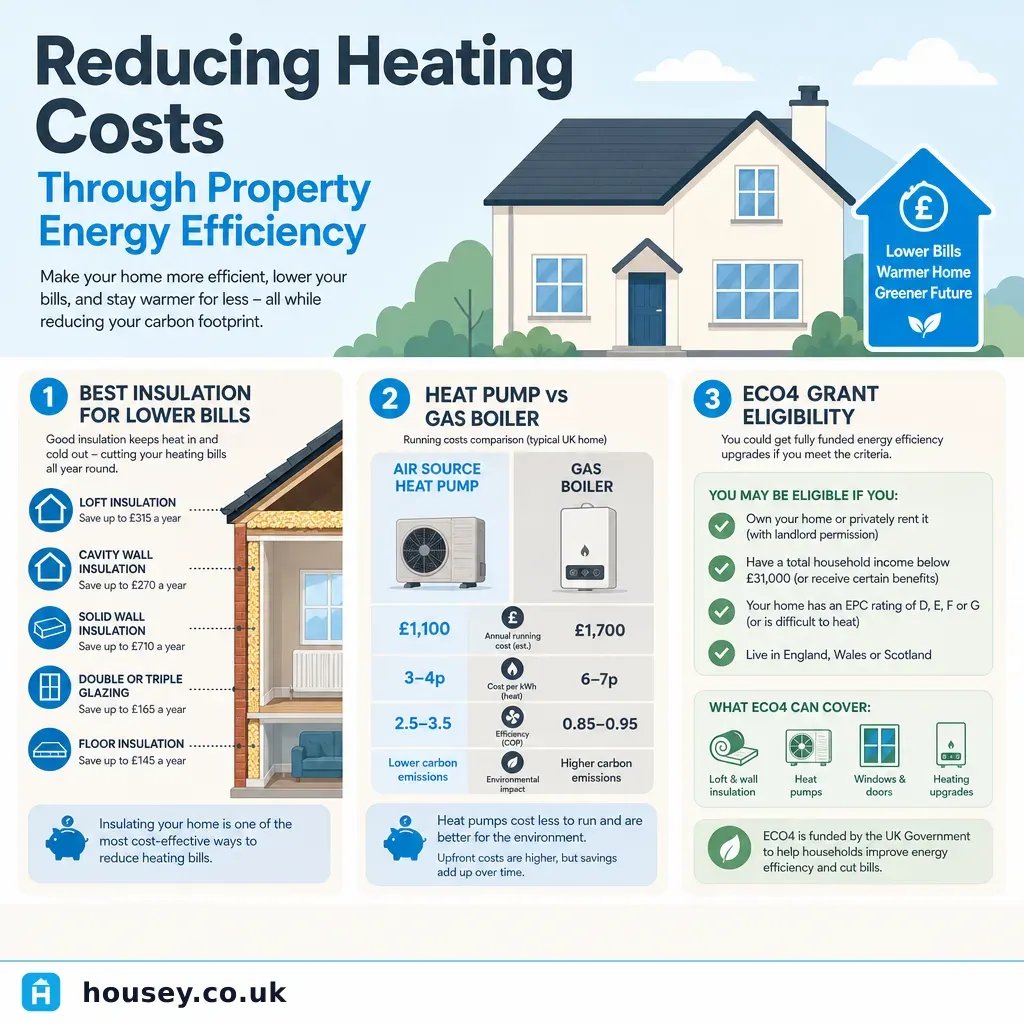
Reducing Heating Costs Through Property Energy Efficiency
Reducing heating costs starts with identifying where heat is lost — typically walls (30–35%), roof (20–25%), and windows.
 Energy & Retrofit
Practical Energy Saving Tips for Homeowners
Most UK households can meaningfully reduce their energy bills by making targeted changes: lowering the thermostat by 1°C, switching to LED lighting, and draught-proofing doors and windows.