Knowledge Base
Property advice that actually helps
Researched, UK-specific guides for every stage of homeownership — from buying and surveys to retrofit, planning and major works.
 Energy & Retrofit
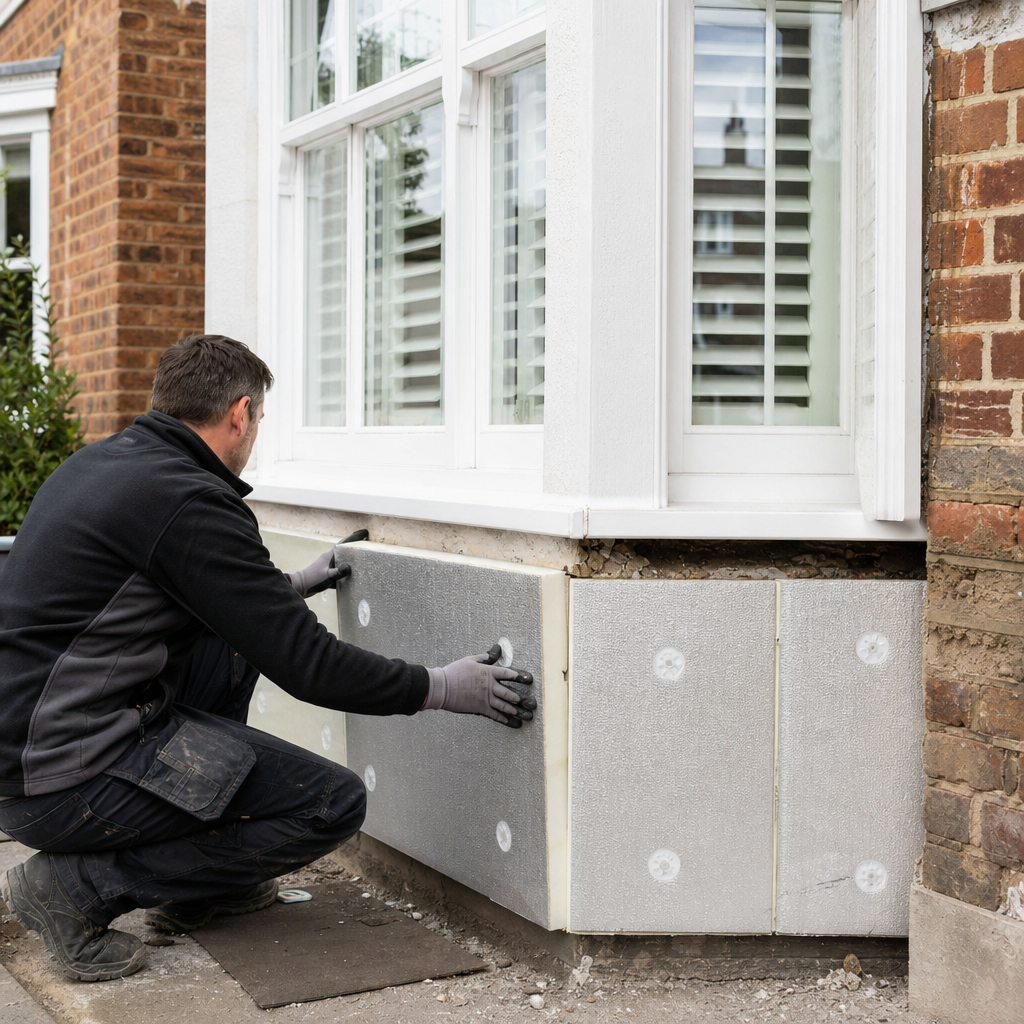
Insulating Solid Masonry Walls Under Bay Windows: Technical Guidance
Insulating solid masonry walls under bay windows requires specialist detailing at angled wall faces, window reveals, and the bay floor and ceiling junctions. Internal wall insulation reduces floor area by up to 100 mm per treated face; external insulation needs careful junction flashing. A hygrothermal assessment is essential, and PAS 2035 applies to all funded retrofit work.
 Energy & Retrofit
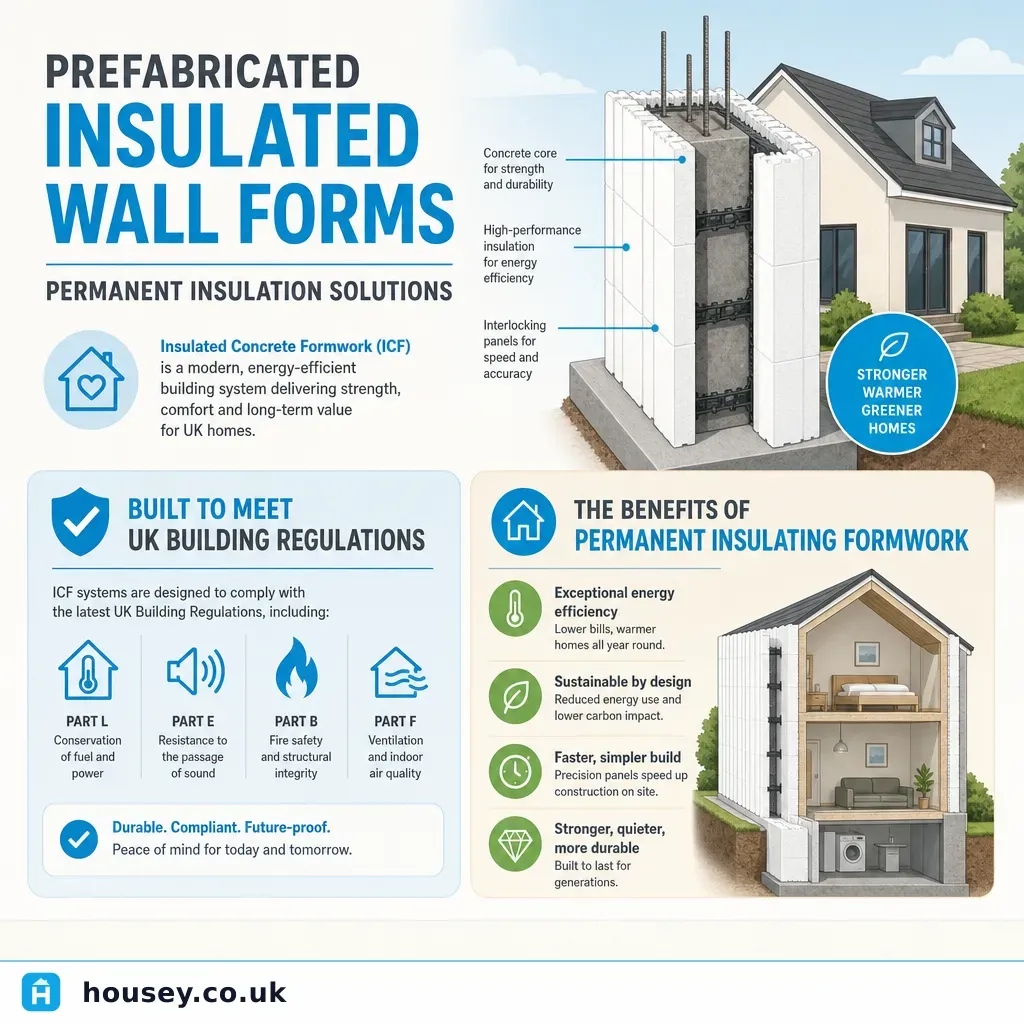
Prefabricated Insulated Wall Forms: Permanent Insulation Solutions
Prefabricated insulated wall forms — including ICF and SIPs systems — deliver high thermal performance by combining permanent insulation with structural concrete or timber in a single wall assembly. For new build they routinely achieve Part L compliant U-values. For retrofit applications to solid-wall properties, a hygrothermal moisture risk assessment is essential before any system is installed.
 Energy & Retrofit
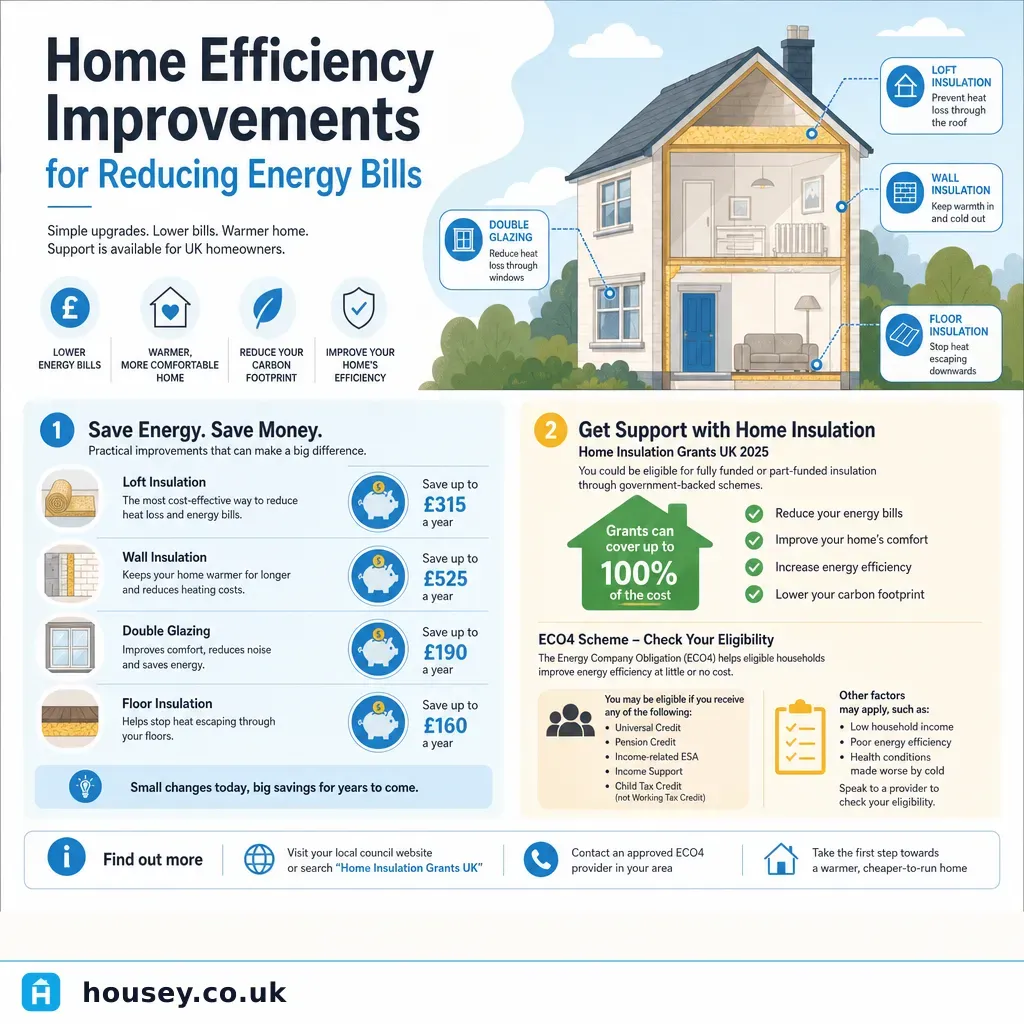
Home Efficiency Improvements for Reducing Energy Bills
The most cost-effective UK home efficiency improvements are usually loft insulation, cavity wall insulation, draught-proofing, and upgrading heating controls. Government schemes including ECO4 and the Great British Insulation Scheme may cover costs for eligible households. Start with a whole-house assessment to prioritise measures in the right order — fabric improvements generally come before heating system upgrades.
 Energy & Retrofit
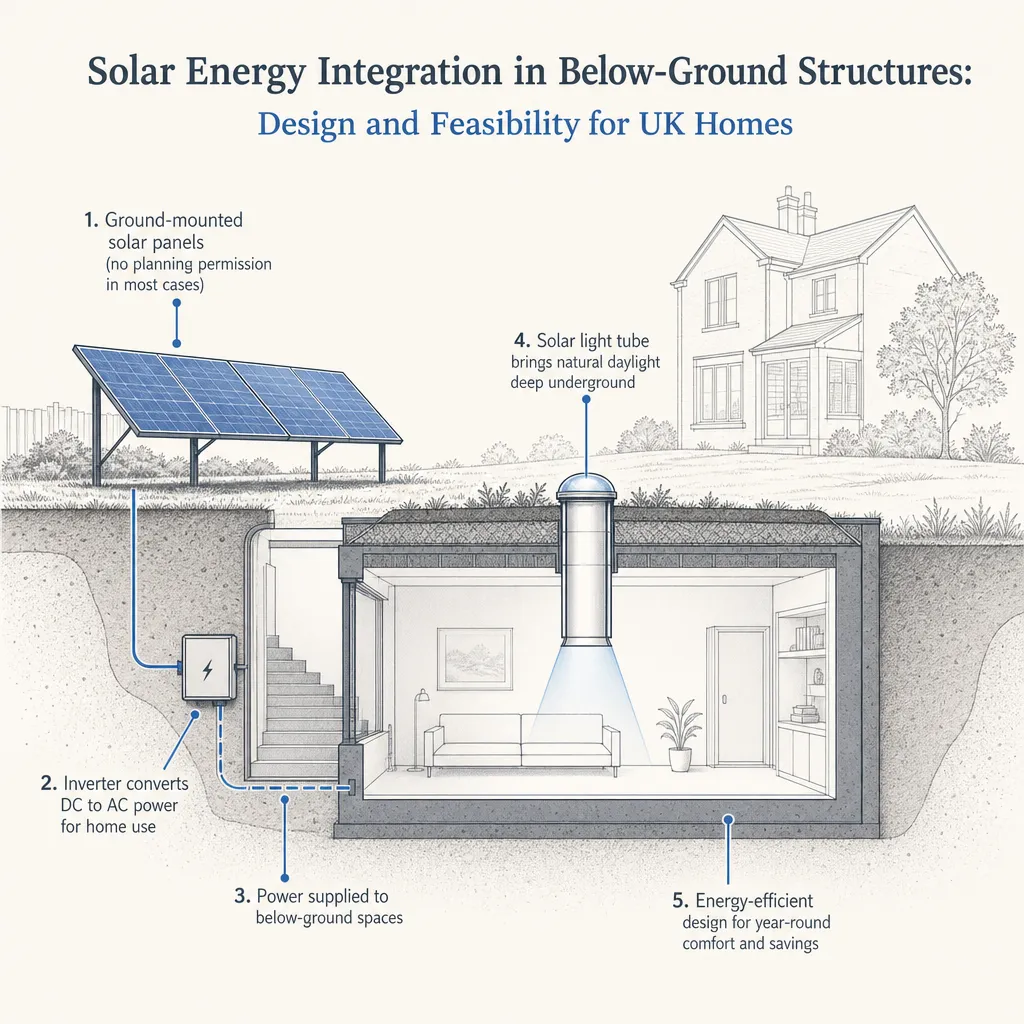
Solar Energy Integration in Below-Ground Structures: Design and Feasibility
Below-ground structures cannot host solar panels on their own roofs but can use surface-mounted panels connected via cable runs, solar light tubes for daylighting, and battery storage. Feasibility depends on available surface area, orientation, and shading. A solar survey should assess the whole site before any installation, and MCS certification is required to qualify for the Smart Export Guarantee.
 Energy & Retrofit
Climate-Ready Home Improvements for the Future
Climate-ready home improvements tackle four main risks for UK properties: overheating, increased rainfall and flooding, storm damage, and energy cost volatility. Priority measures include external shading, improved insulation, permeable paving, flood barriers, heat pumps, and solar PV. The right combination depends on your property type, location, and existing condition.
 Energy & Retrofit
Smart Glass Windows: Technology, Applications and Investment Costs
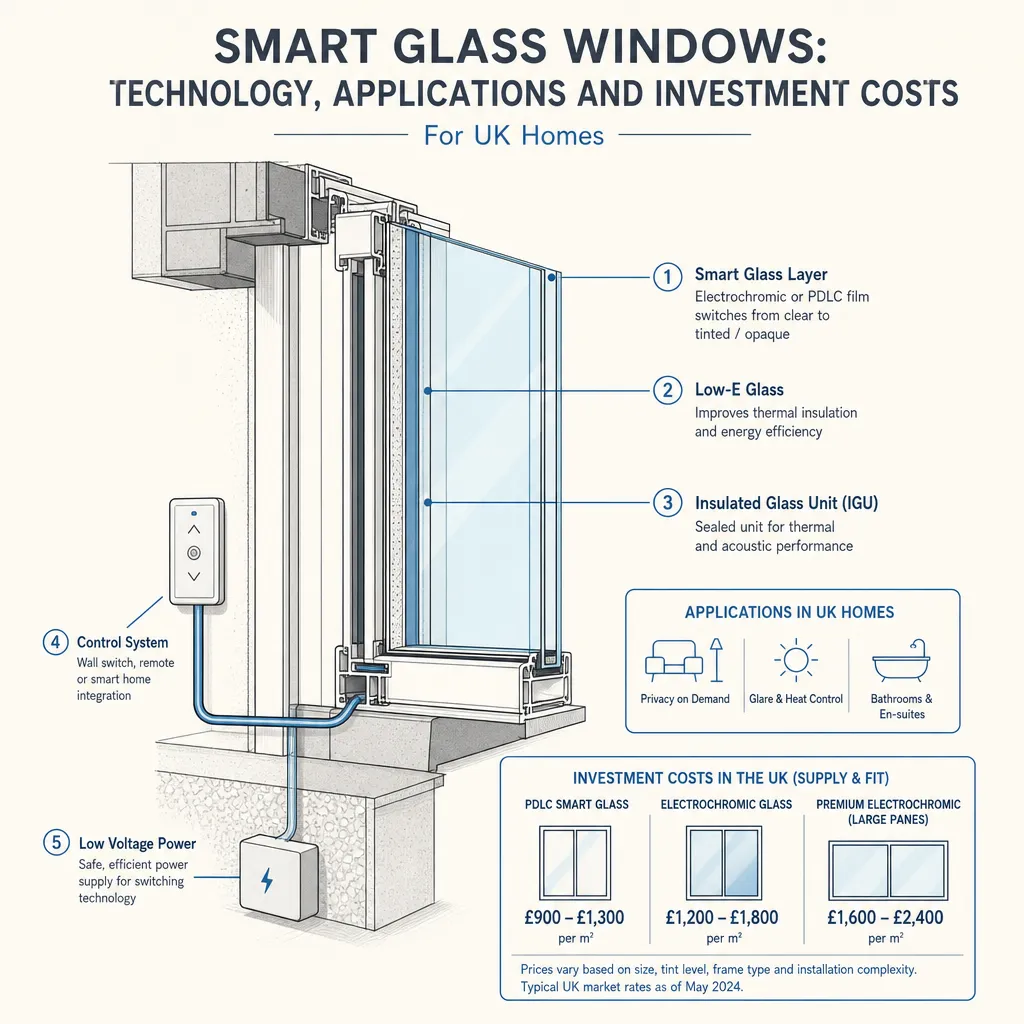
Smart glass windows switch between transparent, tinted, or opaque states using electrical signals or heat. Four main types are used in UK homes — electrochromic, PDLC, SPD, and thermochromic — each with different costs and applications. Costs range from around £300 to over £1,500 per square metre for supply and installation. No UK government grant funding is currently available for smart glazing.
 Energy & Retrofit
Home Energy Audit: Identifying Heat Loss and Improving Energy Efficiency
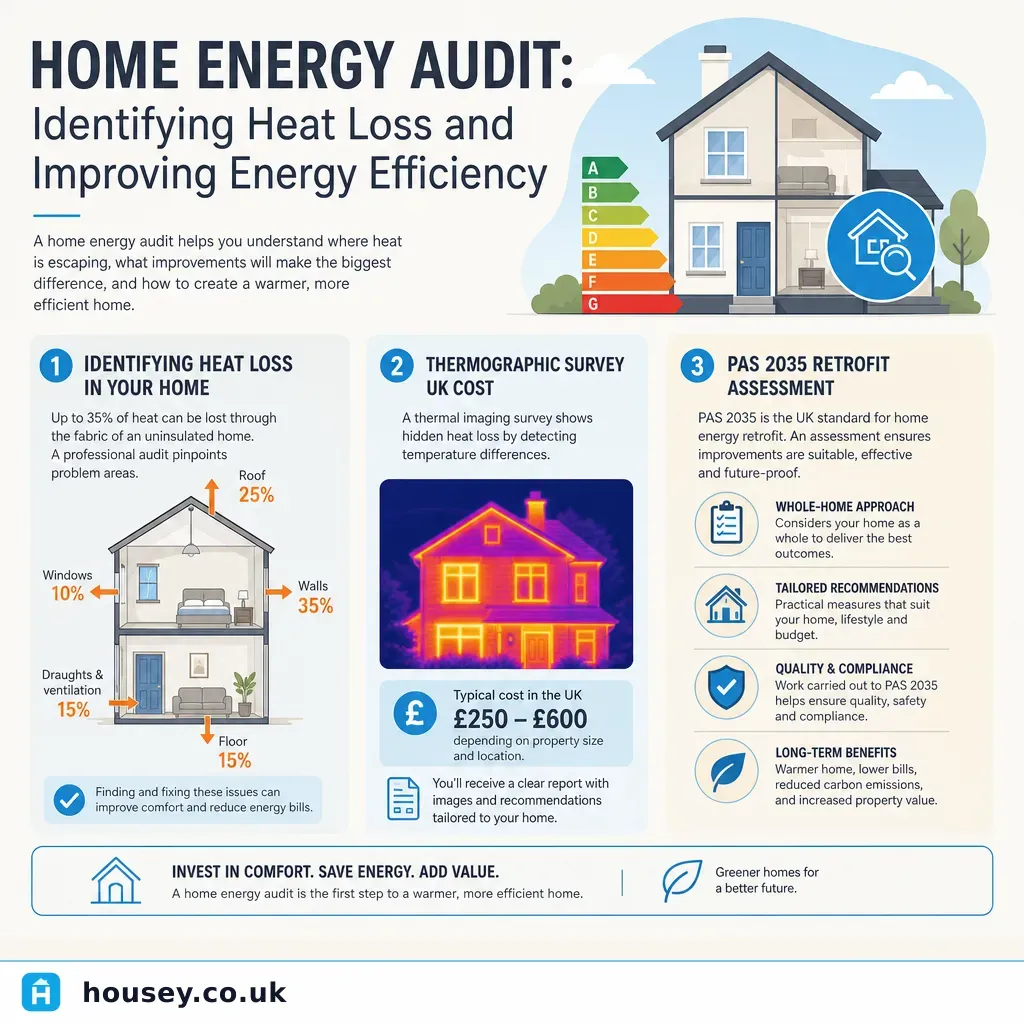
A home energy audit is a structured assessment of where your property loses heat and how efficiently it uses energy. Options range from a basic desktop review of your EPC and bills to a PAS 2035 retrofit assessment or a thermographic survey with infrared imaging. The right type depends on whether you want general guidance, a funded retrofit plan, or verification that existing insulation is performing correctly.
 Energy & Retrofit
Energy-Efficient Homes: Building Better Properties Through EPC Standards
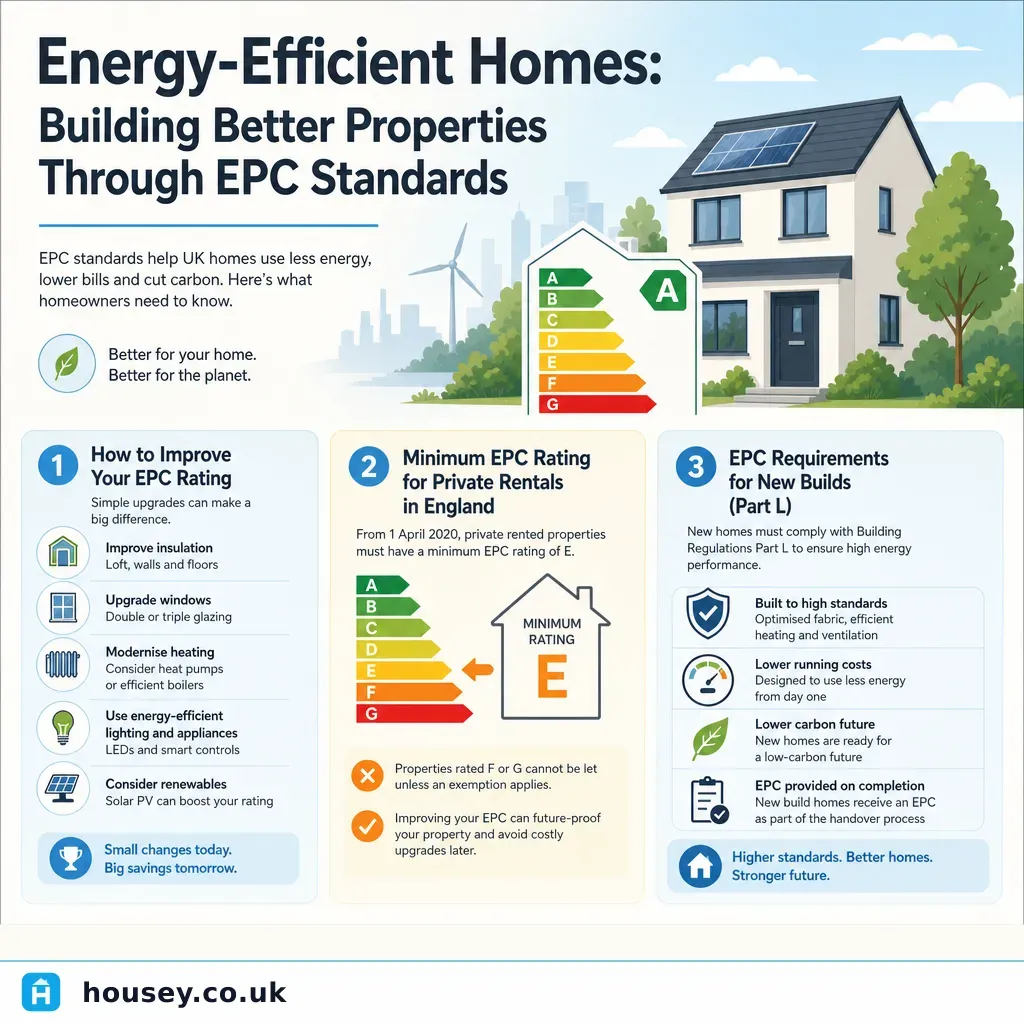
An EPC rates your home from A (most efficient) to G (least) using the Standard Assessment Procedure. New-build homes in England must reach at least EPC B under Part L of the Building Regulations. Rental properties must hold EPC E under MEES 2018. Improving your rating can reduce energy bills, support retrofit funding applications, and increase property value.
 Energy & Retrofit
How Building Regulation Changes Drive Demand for Insulation Services
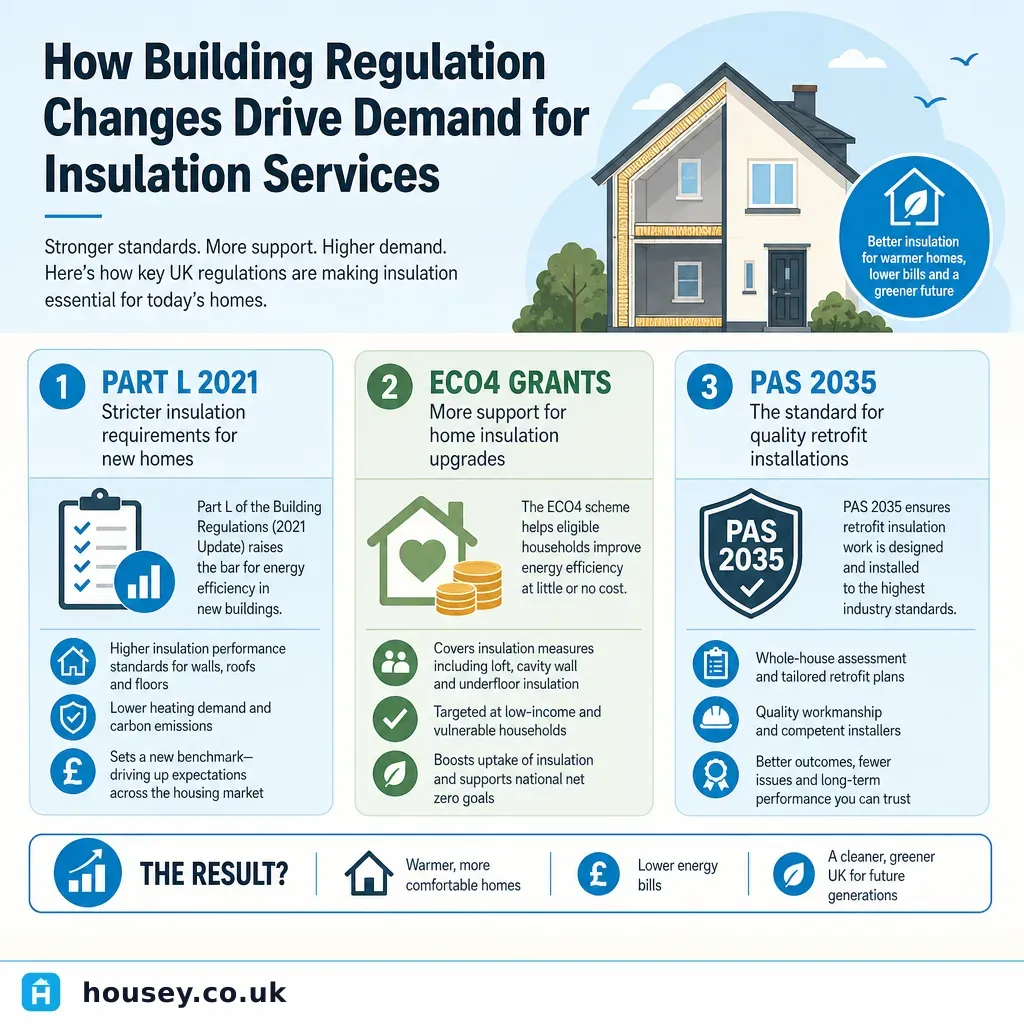
Building regulation changes — including 2021 updates to Approved Document L, ECO4 funding obligations, and proposed MEES tightening — are creating sustained demand for insulation services across the UK. New builds must meet tighter U-value standards, while privately rented homes face potential EPC C requirements by 2030. PAS 2035 governs all publicly funded retrofit, requiring accredited assessors and TrustMark-registered installers.
 Energy & Retrofit
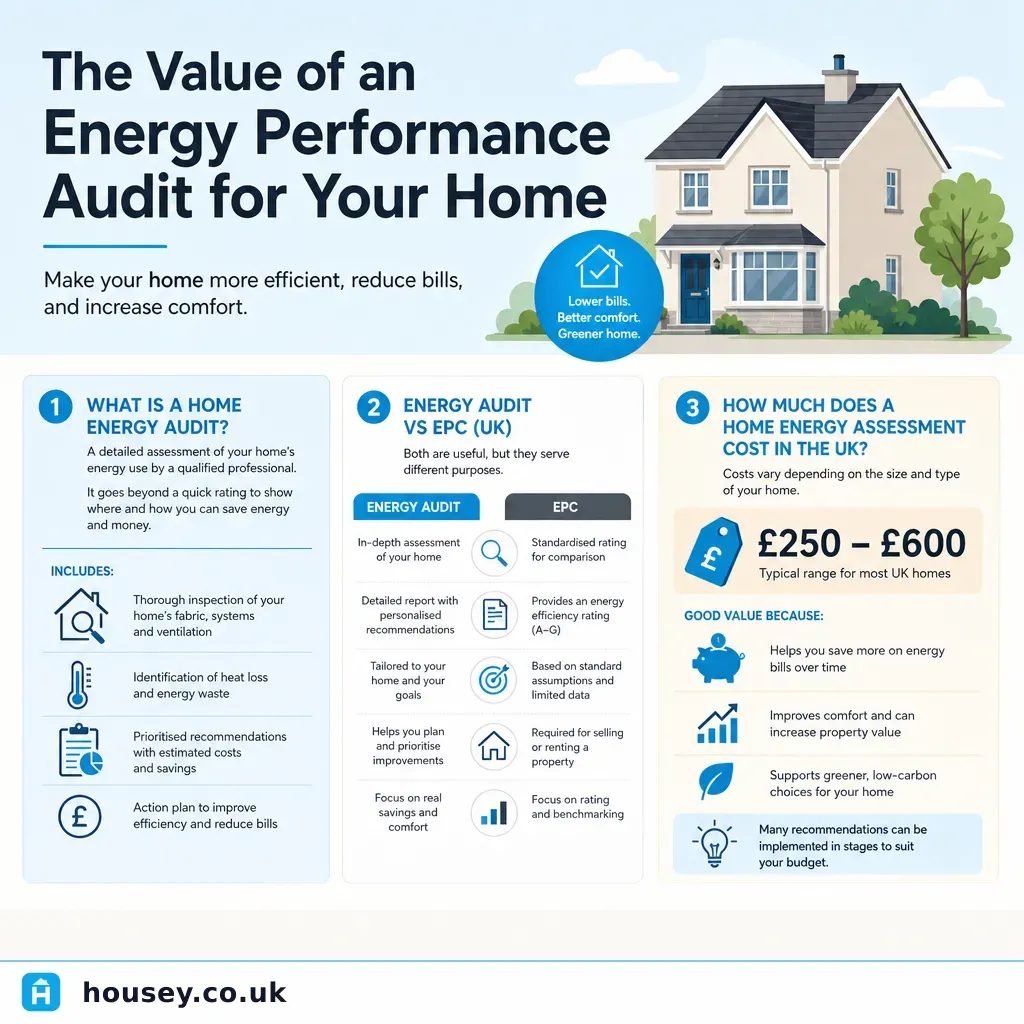
The Value of an Energy Performance Audit for Your Home
A home energy performance audit is a detailed, site-specific assessment of a property's fabric, heating, ventilation, and controls. It goes well beyond a standard EPC by identifying real heat-loss pathways, ventilation risks, and a prioritised improvement sequence. It is most valuable before a major retrofit, before switching to a heat pump, or when high bills suggest a systemic problem.
 Energy & Retrofit
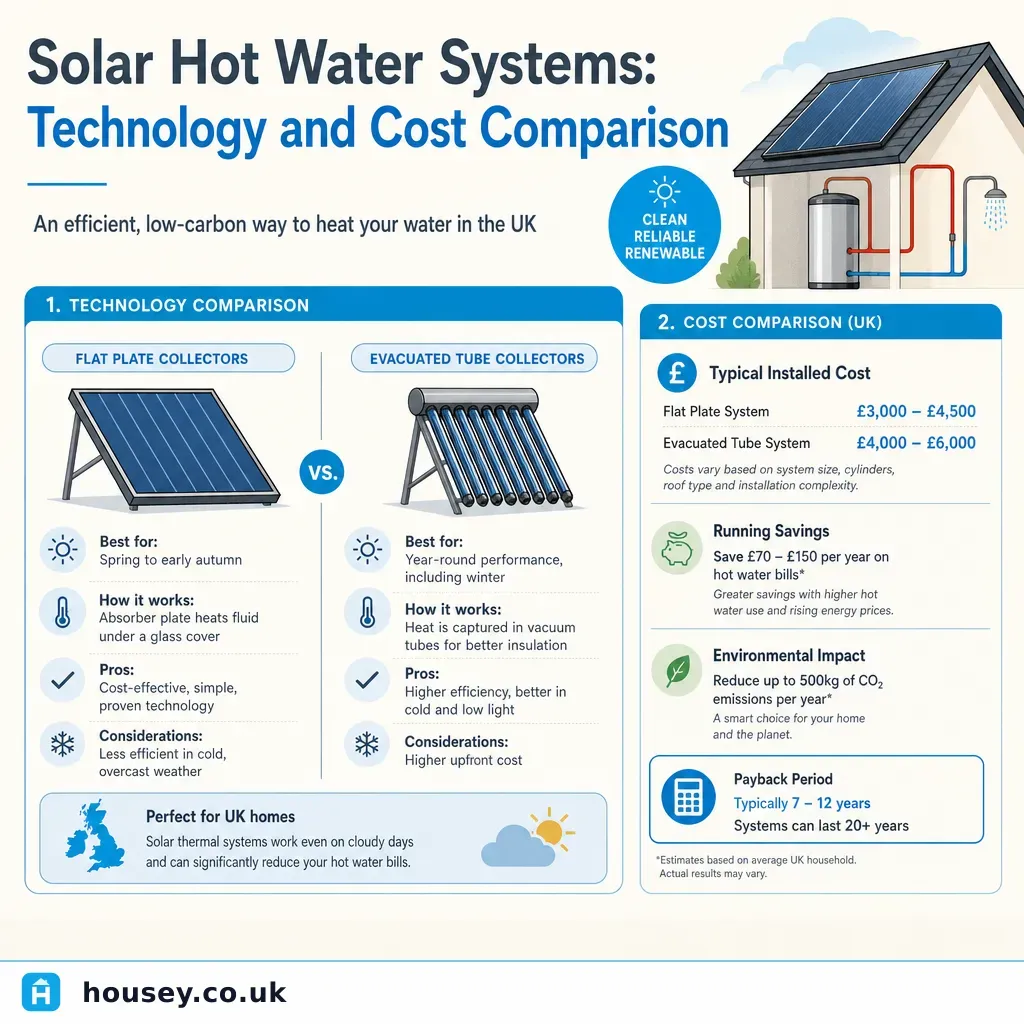
Solar Hot Water Systems: Technology and Cost Comparison
Solar thermal systems use roof-mounted collectors to heat domestic hot water via a glycol circuit and twin-coil cylinder. Flat plate panels suit south-facing roofs in moderate climates; evacuated tubes perform better in diffuse light. A well-sized system typically meets 40–60% of annual hot water demand. Systems are most cost-effective where electricity or oil currently heats your water.
 Energy & Retrofit
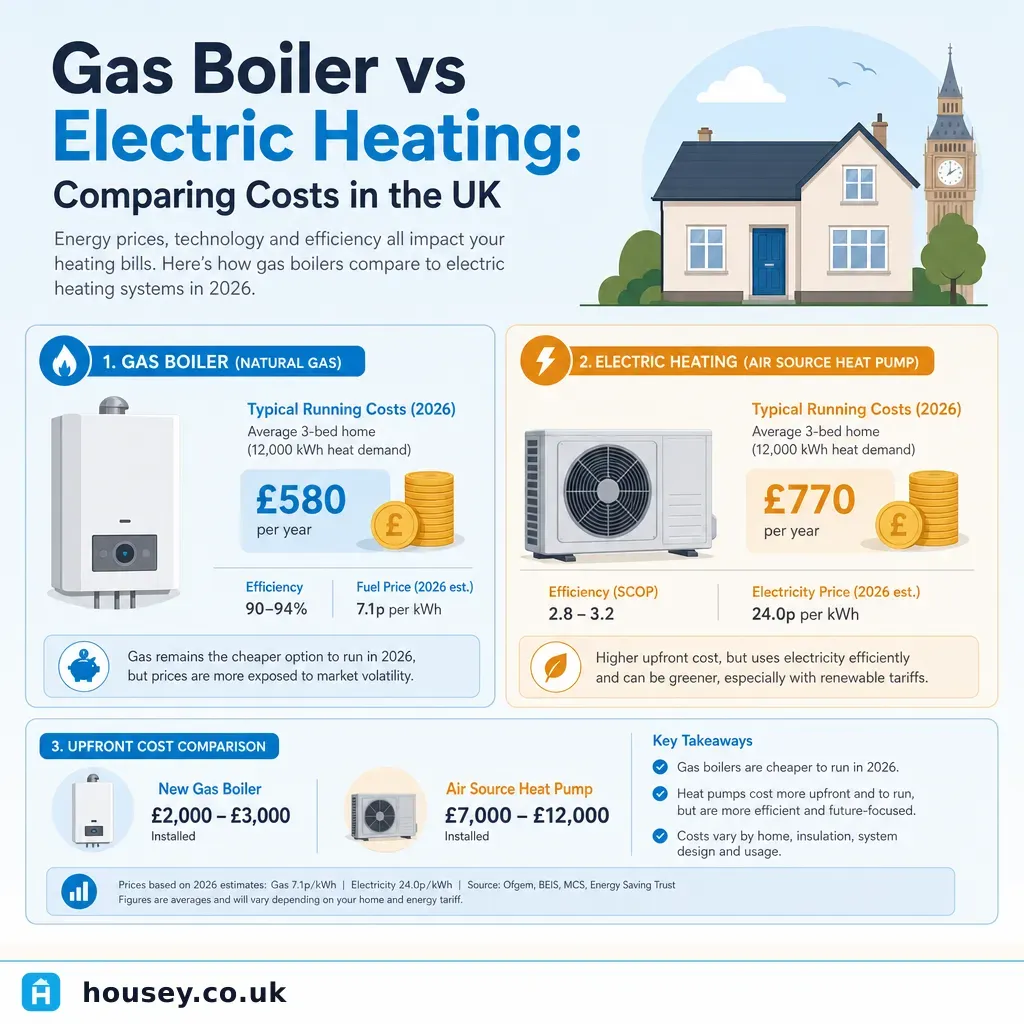
Gas Boiler vs Electric Heating: Comparing Costs in the UK
Gas boilers currently cost around 6.9p per kWh of heat at 90% efficiency. Electric resistance heaters cost around 24.5p/kWh — roughly four times more. Air source heat pumps narrow this gap by delivering 2.5–3.5 units of heat per unit of electricity, making running costs broadly comparable to gas in well-insulated homes.