Insulating Solid Masonry Walls Under Bay Windows: Technical Guidance
By Housey · Last reviewed 3rd of May 2026
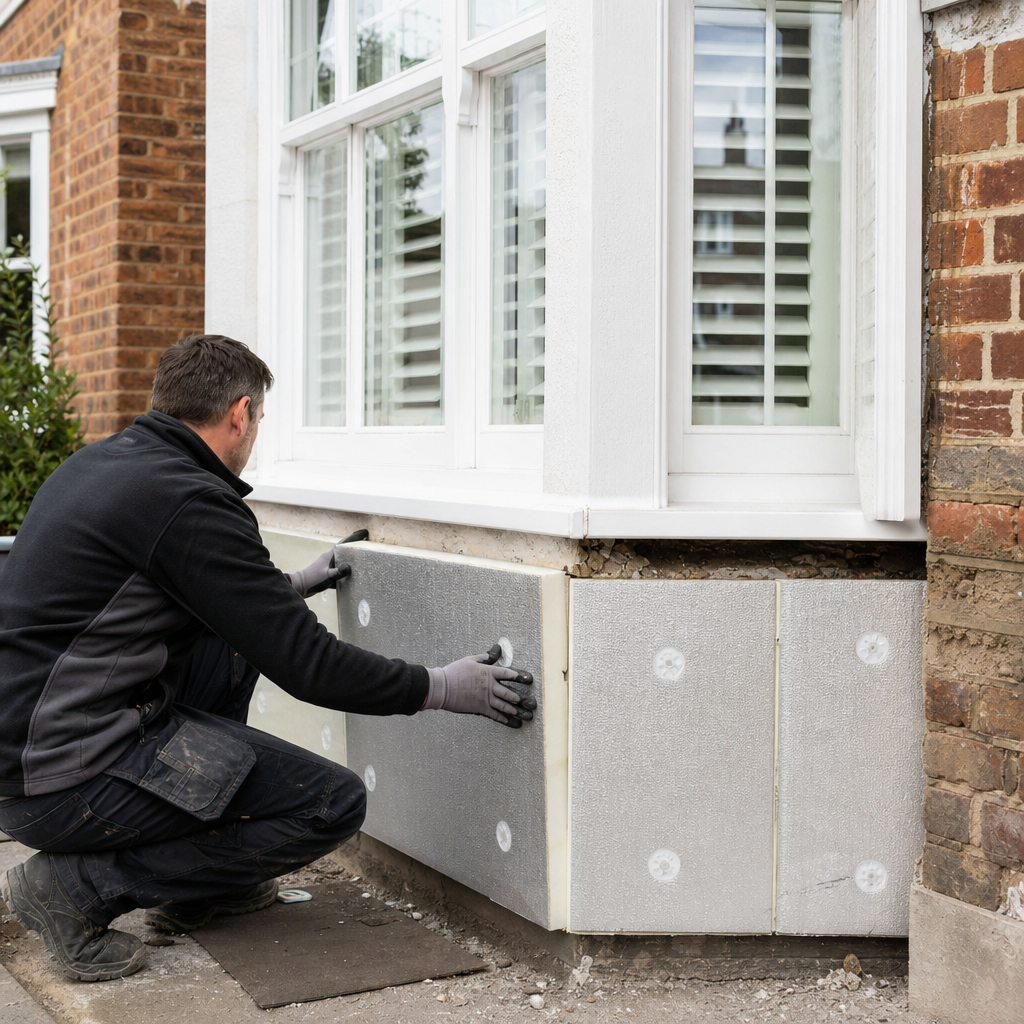
Insulating Solid Masonry Walls Under Bay Windows: Technical Guidance
Bay windows are a defining feature of millions of Victorian, Edwardian, and inter-war homes across the UK — and one of the most technically demanding areas to insulate when retrofitting solid masonry walls. The combination of angled wall faces, multiple window reveals, a projecting floor structure, and the need to preserve a room's proportions makes bay window insulation a specialist task that regularly catches out homeowners and contractors alike. The question typically arises when a householder pursues whole-house insulation funding, a poor EPC rating, or persistent cold spots and condensation in a period property.
Key points
- Solid masonry walls (typical of pre-1919 construction) have no cavity, so insulation must be applied internally (IWI) or externally (EWI) — each approach presents distinct challenges at a bay window.
- Internal wall insulation in a bay typically reduces habitable floor area by 75–100 mm per treated face, requiring new window sills, extended reveals, and careful junction detailing.
- PAS 2035:2023 governs all funded retrofit work in England and requires a Retrofit Coordinator to oversee a whole-house plan before insulation is installed under ECO4 or the Great British Insulation Scheme (GBIS).
- Interstitial condensation risk is significantly elevated at bay window junctions; a hygrothermal assessment (using software such as WUFI or GLASTA) is strongly advisable before specifying any insulation system.
- Listed buildings and properties in conservation areas may need listed building consent or conservation area consent before external or internal wall alterations — check with your local planning authority.
Why bay windows complicate solid wall insulation
Standard solid wall insulation follows a predictable geometry on a flat elevation. A bay window introduces several complications.
Multiple wall angles: A canted bay has three or five faces, each requiring insulation boards cut to angle. Panel joints are a common source of cold bridging if not detailed carefully.
Projecting floor and ceiling: The bay floor often cantilevers from the main structure; the bay ceiling projects into the room above. Both create thermal pathways that bypass wall insulation entirely if not treated as part of the system.
Reveal and sill detailing: Window reveals inside a bay are typically narrow. Internal insulation boards reduce them further, requiring replacement sills and window boards — and leaving cold spots if not detailed to match the wall U-value.
Existing joinery: Built-in seats, shelving, or radiators beneath bay windows must be removed and potentially rebuilt, adding scope and cost.
Choosing between IWI and EWI for bay windows
Factor | Internal Wall Insulation (IWI) | External Wall Insulation (EWI) |
|---|---|---|
Best for | Listed buildings; tight terraces; individual room treatment | Whole-house programmes; properties where external appearance can change |
Not ideal for | Where floor area loss is unacceptable; very narrow reveals | Overhanging bays; conservation areas; cost-sensitive single-bay projects |
Bay window challenge | VCL continuity at floor, ceiling, and reveals; interstitial condensation risk | Weathertight junction at base; recreating external mouldings; planning restrictions |
Typical thickness | 60–100 mm PIR or phenolic board; 75–120 mm mineral wool with VCL | 60–150 mm mineral wool or EPS render system |
Main condensation risk | Interstitial condensation if VCL is incomplete or penetrated | Lower at wall face; base junction requires careful flashing |
Indicative cost (whole bay) | £1,500–£4,000+ depending on complexity and region | £3,000–£8,000+ within a whole-house EWI contract |
Indicative UK costs, last reviewed 2026-05-03. Always obtain at least three quotes — costs vary significantly by region, specification, and site conditions.
Condensation risk and hygrothermal assessment
Adding insulation to the inside of a solid wall shifts the dew point further into the wall construction. If warm indoor air reaches a point below the dew point temperature, interstitial condensation forms — causing timber decay, mould growth within the construction (invisible from inside), insulation degradation, and in severe cases structural damage.
A hygrothermal assessment models moisture movement through the proposed construction under UK climate conditions before work begins. PAS 2035:2023 requires this for high-risk wall types in funded schemes; it is strongly advisable for any unfunded solid-wall bay window project.
Key detailing requirements:
- Install a continuous, well-lapped vapour control layer (VCL) on the warm side of the insulation.
- Seal all VCL penetrations — cables, pipes, fixings — with appropriate tape or grommets.
- Insulate the bay ceiling soffit and floor void where accessible to eliminate cold bridges at those junctions.
- Insulate window reveals to at least the same effective U-value as the main wall faces.
- Confirm there is no existing dampness in the masonry before insulating — never trap moisture behind boards.
Building Regulations and PAS 2035
Building Regulations Part L requires a target U-value of 0.30 W/m²K for insulated solid walls in England (or as close as reasonably practicable). Scotland, Wales, and Northern Ireland have equivalent but not identical requirements.
For ECO4 or GBIS-funded work, PAS 2035:2023 mandates a Retrofit Assessment, a Whole-House Plan overseen by a Retrofit Coordinator, and installation by a TrustMark-registered installer. For heritage properties, Historic England's Practical Building Conservation: Energy Efficiency provides guidance on approaches compatible with traditional construction.
Red flags to watch for
- Quote makes no mention of vapour control layers or condensation risk on a solid wall IWI project.
- No treatment proposed for the bay floor and ceiling junctions — treating only wall faces leaves major thermal bridges.
- Installer cannot explain reveal detailing — a common source of cold bridging and surface condensation.
- No pre-works damp investigation — insulating over existing damp accelerates timber decay.
- Insulation system not assessed for compatibility with your masonry type.
Important limitations
This article is general technical background only. Solid wall insulation at bay window junctions carries real risks of condensation damage, structural harm, and planning infringement if incorrectly specified. The appropriate solution depends on your property's specific construction, heritage status, local authority requirements, and funding route. It is not a substitute for a professional assessment of your individual property.
What to ask a qualified professional
- Will you carry out a hygrothermal risk assessment for my specific wall construction and bay window geometry?
- How will you ensure VCL continuity around the bay ceiling, floor, and window reveals?
- Are you TrustMark-registered, and does this project require PAS 2035 compliance?
- What U-value will the completed installation achieve — can you provide a calculation?
- Do I need listed building consent, conservation area consent, or building regulations approval?
- What warranty covers the system, and is it manufacturer-backed?
When to get professional help
Bay window solid wall insulation should always involve a specialist — the junctions are too complex and condensation risk too significant for a DIY approach. Arrange an insulation assessment before specifying any system, and a retrofit assessment if you plan to use ECO4 or GBIS funding.
Seek professional advice immediately if you have noticed mould or damp in the bay area, if the property is listed or in a conservation area, or if the bay has a flat or low-pitch roof.
How Housey can help
Housey connects homeowners with qualified insulation assessors and retrofit assessors who can evaluate your bay window's construction, specify the right system, and ensure funded work meets PAS 2035 requirements. When you're ready to proceed, find insulation installers experienced with solid masonry and complex bay junctions. For a broader whole-house energy strategy before committing to any single upgrade, an energy-efficiency consultant can help prioritise works.
Frequently asked questions
Do I need building regulations approval to insulate a bay window internally?
Yes. Internal wall insulation is notifiable work under Building Regulations Part L in England. Notify your local building control body before starting, or use a registered installer operating under a competent-person scheme. Scotland, Wales, and Northern Ireland have equivalent requirements — check with your local authority before proceeding.
Can I insulate just the bay window without treating the rest of the solid wall?
You can, but it is rarely advisable. Insulating one section without treating the whole elevation can create new cold bridges at the junction between insulated and uninsulated sections, potentially worsening moisture conditions there. A whole-house approach coordinated by a Retrofit Coordinator is generally preferable.
Will internal wall insulation on a bay window significantly reduce my floor area?
Yes, typically by 75–100 mm per treated face. In a canted three-face bay this can noticeably reduce the room projection and alter window sill depths. Discuss the full spatial impact with your assessor before committing to an internal approach.
Is external wall insulation possible on a bay window with ornate mouldings?
EWI can be applied, but the installer must recreate profiles within the render system or manage the thermal bridge separately — adding cost and complexity. In conservation areas or on listed buildings, consent may also be required.
How does a hygrothermal assessment differ from a standard damp survey?
A damp survey identifies existing moisture problems in the fabric. A hygrothermal assessment is a computational model predicting whether condensation will form within the proposed new construction under UK climate conditions. Both are relevant; the hygrothermal assessment specifically evaluates the risk introduced by the new insulation system.
Sources and further reading
- PAS 2035:2023 — Retrofitting dwellings for improved energy efficiency — BSI Group
- Building Regulations Approved Document L — Conservation of Fuel and Power — GOV.UK
- Solid wall insulation guidance for homeowners — Energy Saving Trust
- Practical Building Conservation: Energy Efficiency — Historic England
- ECO4 scheme guidance — GOV.UK / Ofgem
Useful next reads
 Energy & Retrofit
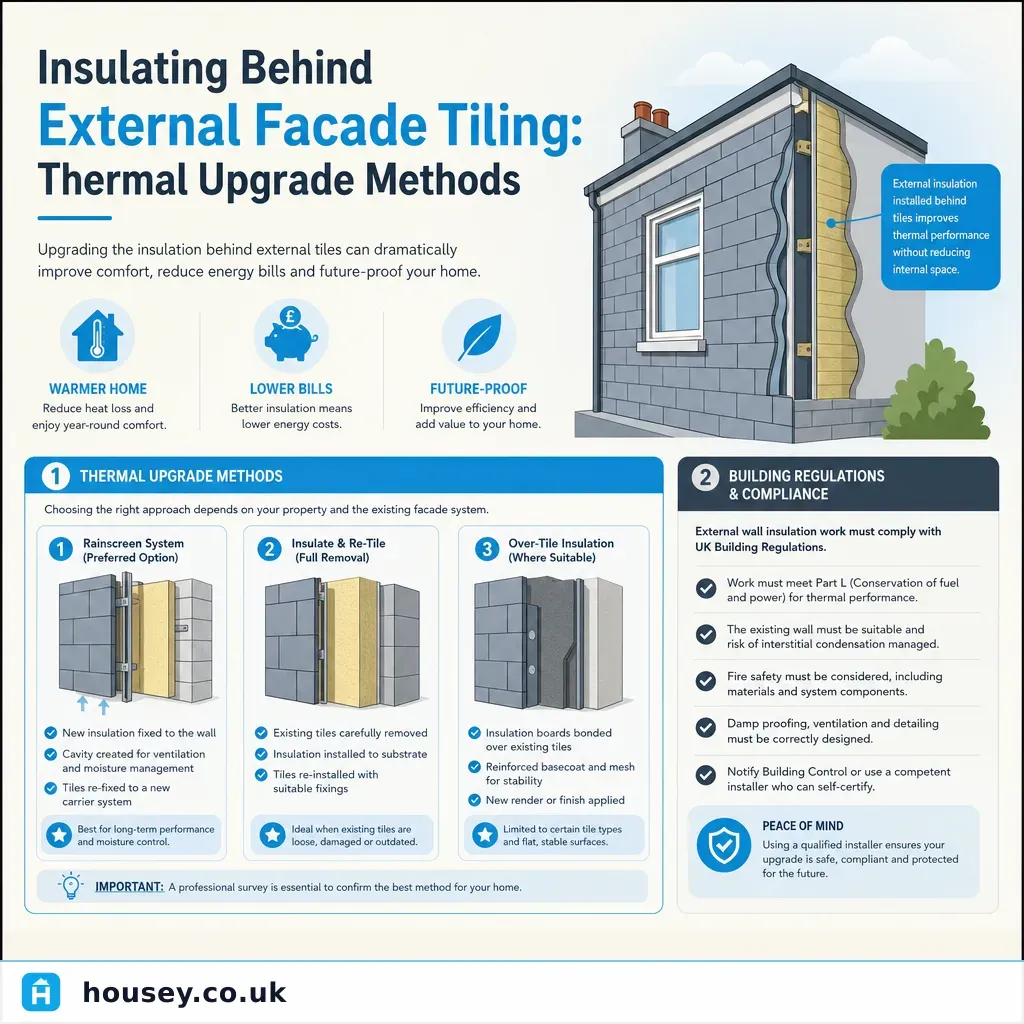
Insulating Behind External Facade Tiling: Thermal Upgrade Methods
Insulating behind external facade tiling is technically complex — the insulation layer must be compatible with tile fixings, manage moisture correctly, and comply with Building Regulations Part L.
 Energy & Retrofit
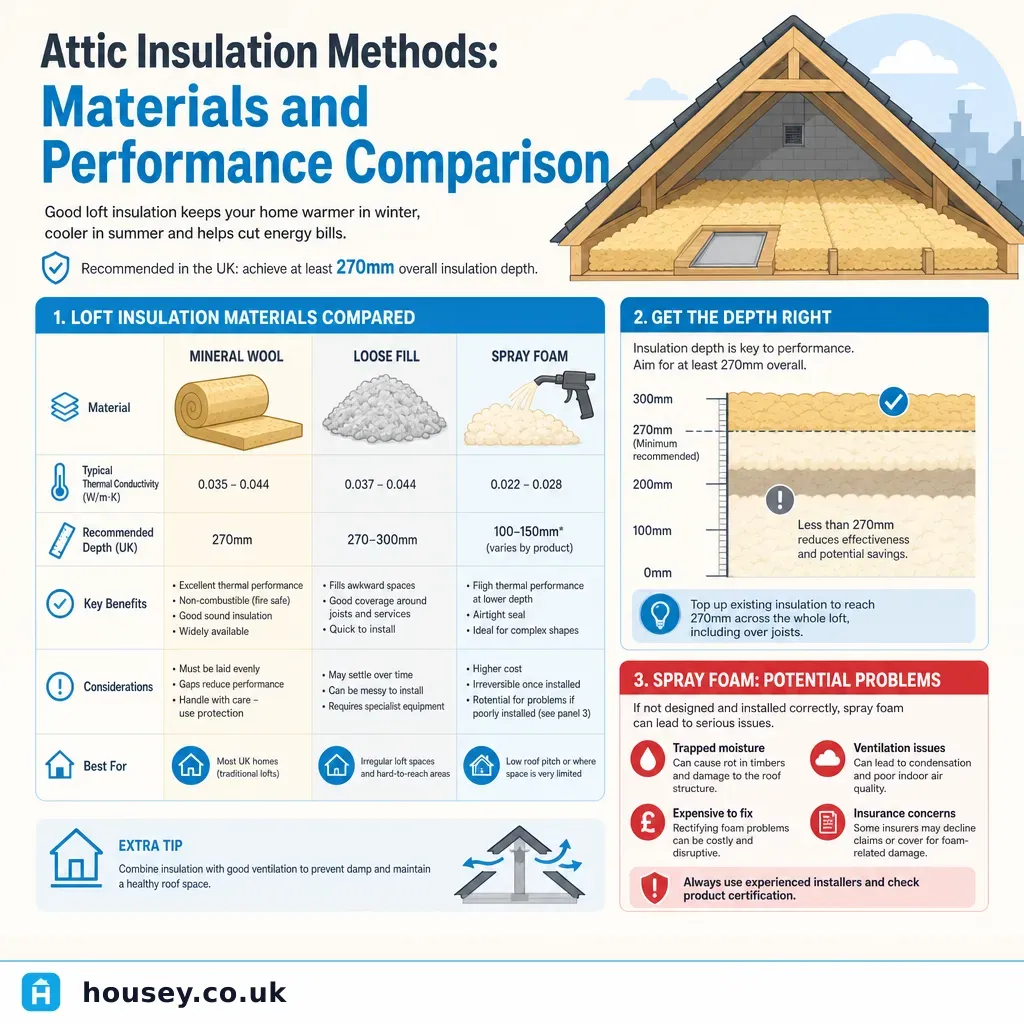
Attic Insulation Methods: Materials and Performance Comparison
UK loft insulation options include mineral wool rolls (most common and grant-funded), blown loose-fill for irregular lofts, and rigid PIR board for warm roof conversions.
 Energy & Retrofit
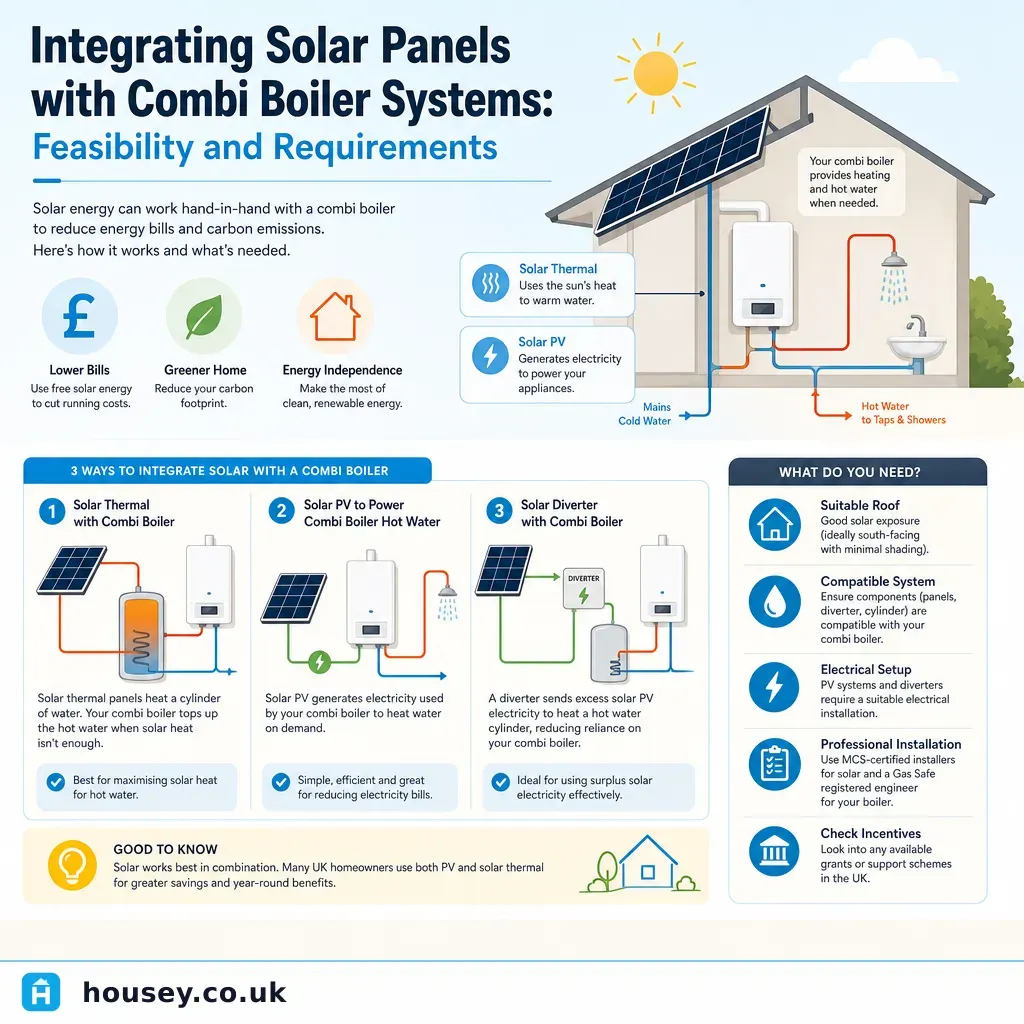
Integrating Solar Panels with Combi Boiler Systems: Feasibility and Requirements
Combi boilers heat water on demand without a hot water storage cylinder, making direct solar thermal integration impractical.
 Energy & Retrofit
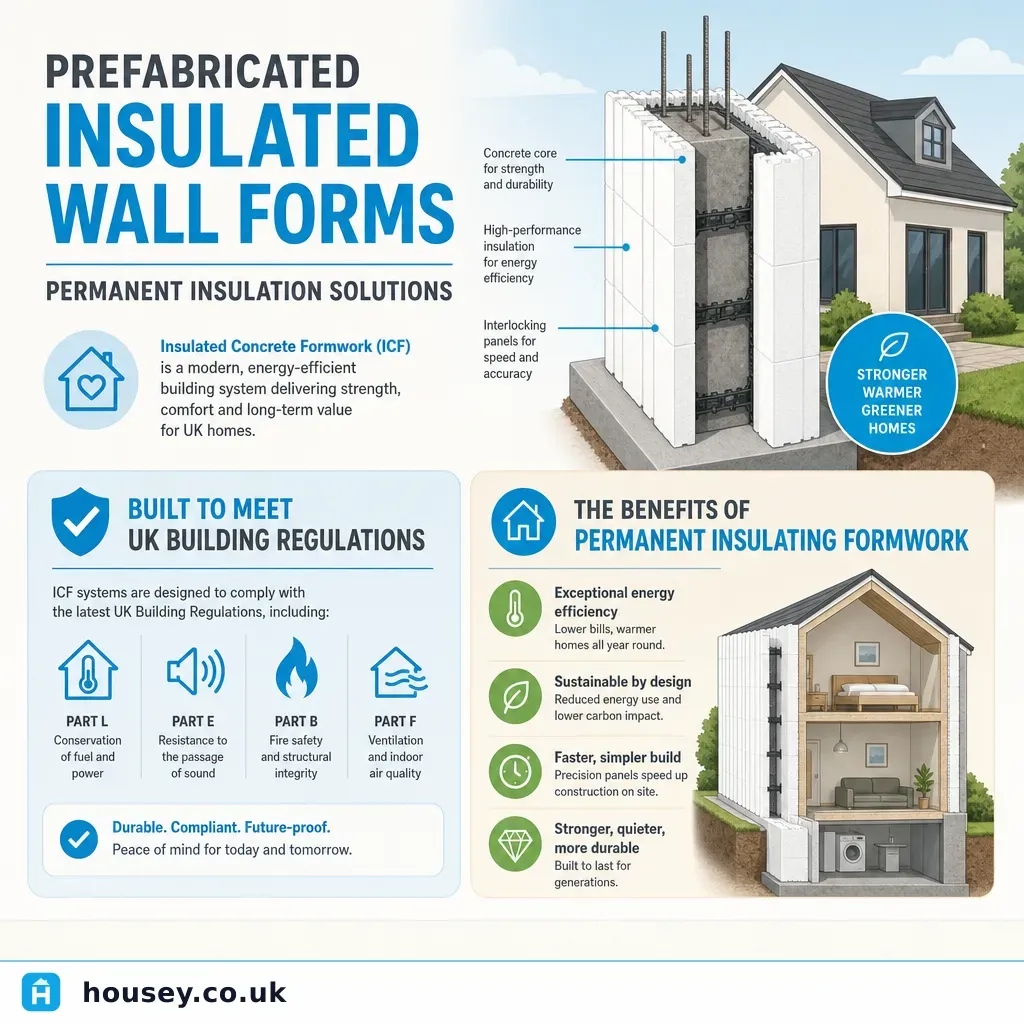
Prefabricated Insulated Wall Forms: Permanent Insulation Solutions
Prefabricated insulated wall forms — including ICF and SIPs systems — deliver high thermal performance by combining permanent insulation with structural concrete or timber in a single wall assembly.
 Energy & Retrofit
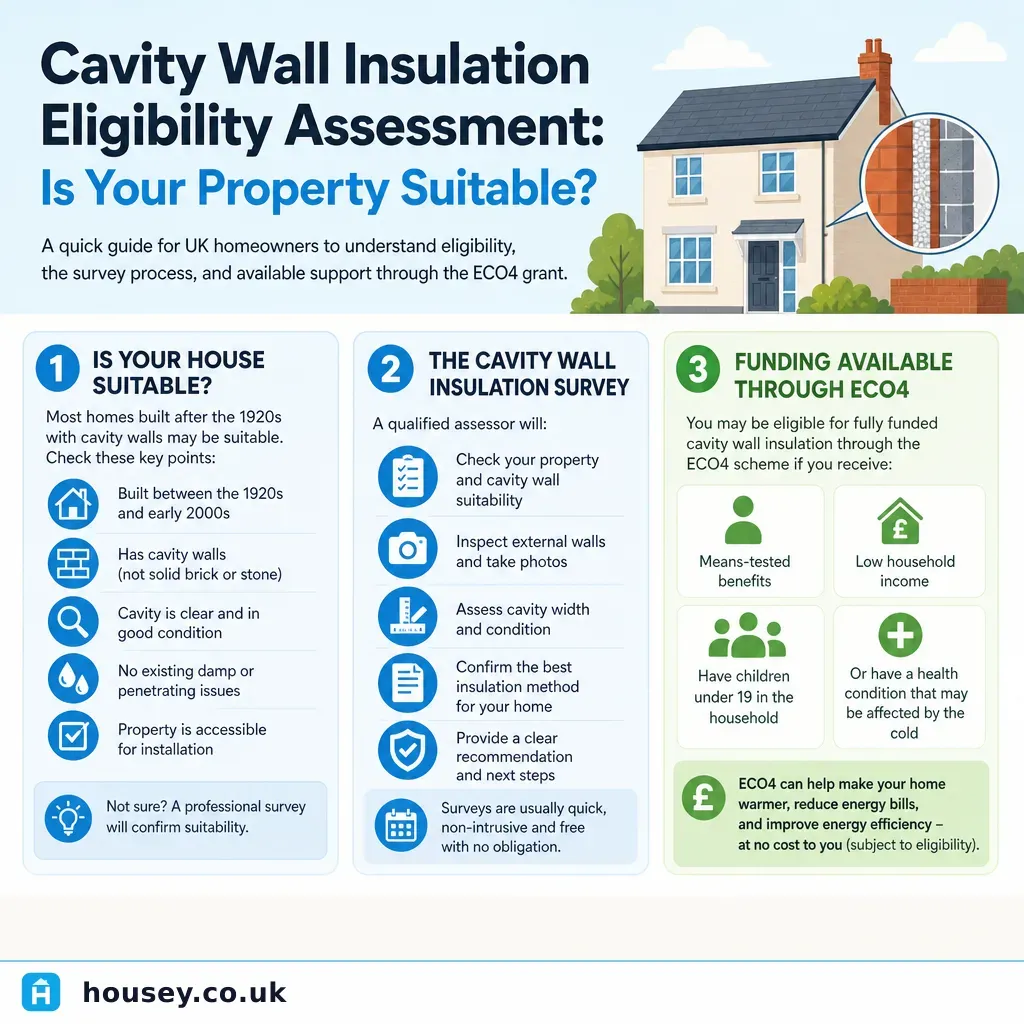
Cavity Wall Insulation Eligibility Assessment: Is Your Property Suitable?
Cavity wall insulation suits most UK homes built from around 1920 onwards with unfilled cavities at least 50mm wide in sheltered or moderately exposed locations.