Heat Pump Coil Freezing: Causes and Troubleshooting Steps
By Housey · Last reviewed 31st of May 2026
Heat Pump Coil Freezing: Causes and Troubleshooting Steps
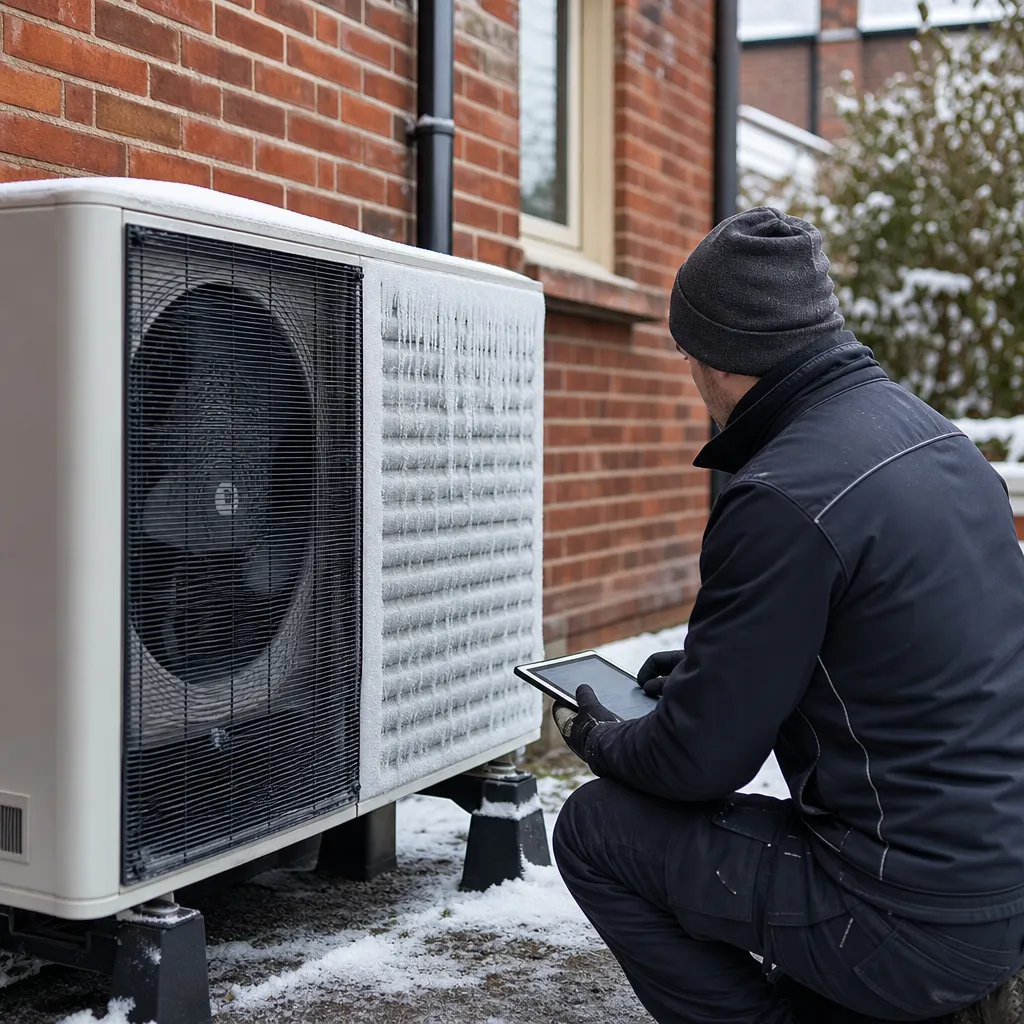
Air source heat pumps are designed to work in cold UK winters, and the outdoor unit routinely forms a light frost during normal operation — this is expected behaviour. The concern arises when ice accumulates solidly on the coil, persists through defrost cycles, or spreads to the fan blades and refrigerant pipework, indicating a fault that can reduce heating output significantly, risk compressor damage, and ultimately cost more to repair than a timely diagnosis would.
Key points
- Light frost on the outdoor unit coil is normal between approximately -5°C and +8°C and should clear automatically during a defrost cycle lasting 5–15 minutes.
- Solid, persistent icing that does not clear after two hours — or ice spreading to the fan blades or refrigerant pipework — is a fault requiring assessment by a qualified engineer.
- The most common causes of persistent coil freeze are low refrigerant charge, restricted airflow (debris, snow, or poor original siting), and a failed defrost sensor or control board.
- Refrigerant diagnosis and recharging must be carried out by an F-Gas-certified engineer; this is a legal requirement under UK F-Gas regulations.
- MCS-certified installations require a design heat loss calculation to EN 12831 — coil freeze faults can result from an undersized or incorrectly commissioned system, which may be covered under the installer's workmanship warranty.
Normal frost versus a genuine freeze fault
Understanding the difference between expected defrost behaviour and a system fault can save an unnecessary callout — and helps you describe the problem accurately when you do contact an engineer.
What is normal
- Light frost forms on the outdoor coil in cold, damp conditions, typically below 8°C.
- The unit switches to defrost mode automatically, usually every 30–90 minutes in very cold or damp weather.
- During defrost, the outdoor fan may stop, steam or vapour may rise from the unit, and a hissing sound is common.
- The defrost cycle lasts 5–15 minutes, after which normal heating resumes.
Signs of a fault
- The coil is encased in a thick block of ice that does not clear after a complete defrost cycle.
- Ice extends to the fan blades, refrigerant pipework, or outer casing.
- The system is running but producing noticeably less heat than usual.
- The heat pump displays an error code and locks out.
- Defrost cycles are occurring very frequently — every few minutes — because the system cannot complete a proper defrost.
Common causes of heat pump coil freezing
Low refrigerant charge
A refrigerant leak or an undercharge from the original commissioning causes the evaporator coil to operate at a lower pressure, dropping the surface temperature below the normal frost point. This is one of the most frequent causes of persistent freeze faults. Identifying and rectifying a refrigerant issue requires an F-Gas-certified engineer with appropriate diagnostic equipment.
Restricted airflow
The outdoor unit requires unobstructed airflow across the coil to function correctly. Common restrictions include:
- Leaves, debris, or grass cuttings compacted against the coil fins.
- Snow accumulation at the base of the unit blocking the air intake.
- Vegetation or fencing that has grown too close since installation.
- Incorrect original siting — for instance, in a confined alcove or against a wall without the manufacturer's recommended clearance distances.
Clearing obvious debris from the base of the unit is safe and sensible; do not attempt to clean the coil fins with tools or high-pressure water, as the fins are fragile and easily damaged.
Defrost system fault
The automatic defrost cycle is controlled by temperature or time sensors and a control board. A faulty defrost sensor, a failed reversing valve, or a control board error can prevent the system from initiating or completing a defrost cycle, causing progressive ice build-up. Diagnosing these faults requires specialist equipment.
Incorrect refrigerant or commissioning fault
An installation using the wrong refrigerant type, or one charged to the incorrect pressure, can behave erratically in cold conditions. This is a commissioning fault and may be covered under the installer's workmanship warranty if the system is within the warranty period.
Undersized or poorly configured system
A heat pump sized below the property's design heat loss — calculated under EN 12831 as required by MCS — will run excessively and is more prone to icing. If the system has struggled since installation rather than developing the fault gradually over time, poor sizing or commissioning should be investigated.
Decision tree: what to do when your heat pump coil freezes
- Is there a light layer of frost and the system is running normally? → Normal defrost behaviour. Monitor and check again in 30–60 minutes.
- Has the unit been solidly iced for more than two hours with no sign of clearing? → Check for obvious airflow obstructions (leaves, snow at the base). Do not attempt to de-ice manually. Contact your installer or an MCS-certified engineer.
- Is the unit displaying an error code and has locked out? → Note the error code and check your manufacturer's manual. Do not reset repeatedly without identifying the cause. Contact an engineer.
- Is ice extending to the fan blades or refrigerant pipework, or is the fan making an unusual noise? → Switch the heat pump off at the isolator switch and contact an engineer urgently — running a heavily iced unit risks compressor damage.
- Has the system performed poorly since installation or after a recent service? → Contact your original installer; this may be a commissioning fault covered under the workmanship warranty.
Red flags that need an engineer
- Solid icing that does not clear within two hours despite a completed defrost attempt.
- Any error code relating to low refrigerant pressure, defrost failure, or compressor protection.
- Grinding, rattling, or banging sounds from the outdoor unit during operation.
- The system runs but delivers only lukewarm water or significantly reduced heat output.
- Ice forming on the refrigerant pipework or at the indoor unit connections.
- Repeated system lockouts requiring manual resets to restore operation.
Important limitations
This article provides general information about heat pump coil freezing and cannot substitute for a professional assessment of your specific system, site, and installation. Heat pump behaviour varies by manufacturer, model, refrigerant type, commissioning settings, and site conditions. Any work involving the refrigerant circuit — including diagnosis of low charge — must be carried out by an F-Gas-certified engineer. DIY de-icing attempts or actions outside these guidelines may void your manufacturer's warranty.
When this becomes urgent
Switch the heat pump off at the isolator switch and contact a qualified engineer without delay if:
- Ice has reached the fan blades and you can hear a grinding or mechanical noise during operation.
- The unit has been running in a frozen or partially frozen state for several hours — this risks compressor damage.
- You notice oil staining near the unit or unusual smells close to the refrigerant pipework, which may indicate a refrigerant leak.
- Your heat pump is your primary heating source and it has locked out in cold weather — arrange temporary heating while awaiting repair.
What to ask a qualified professional
- Can you confirm the refrigerant charge is correct and provide a pressure reading?
- Is the defrost sensor, reversing valve, and control board functioning within specification?
- Does the unit have adequate airflow clearance as per the manufacturer's installation guide?
- Was the system sized using an EN 12831 heat loss calculation, and are commissioning records available?
- Is this fault likely covered under the installation workmanship warranty or the manufacturer's product warranty?
- Are you MCS-certified and do you hold F-Gas accreditation?
- What is your recommended remediation, and what are the associated costs?
When to get professional help
Any heat pump fault beyond checking for obvious airflow obstructions — leaves or snow at the base of the unit — should be assessed by an MCS-certified engineer or the original installer. Refrigerant faults, defrost system failures, and control board issues all require specialist diagnostic tools and qualifications. A heat pump survey from a qualified engineer can identify whether a recurring freeze fault stems from the original system design, an installation deficiency, or a component failure — and will give you a clear remediation plan before you authorise any repair work.
How Housey can help
If your heat pump is repeatedly freezing or producing less heat than expected, Housey can connect you with MCS-certified engineers for a heat pump survey. A professional survey can identify whether the fault lies in the original design, commissioning, or a subsequent component failure, and give you the evidence you need to make an informed decision before authorising repairs.
Frequently asked questions
Is it normal for a heat pump to ice up in winter?
Yes — a thin layer of frost on the outdoor coil is normal and expected in cold, damp conditions, typically below 8°C. The system's automatic defrost cycle should clear this within 5–15 minutes. Solid or persistent icing that does not clear within two hours, or ice extending to the fan or pipework, is not normal and requires professional investigation.
Can I pour hot water on a frozen heat pump coil?
No. Hot water can damage the delicate aluminium fins, cause thermal shock to refrigerant components, and void your manufacturer's warranty. If snow is blocking the air intake at the base of the unit, clearing that carefully is safe — but leave the coil itself to defrost through the system's automatic cycle or with professional assistance.
How often should a heat pump be serviced to prevent freeze faults?
Most manufacturers and MCS guidelines recommend an annual service by a qualified engineer. A service typically covers checking the refrigerant charge, cleaning the coil, inspecting defrost controls, and verifying system pressures — all of which help prevent persistent freeze faults from developing.
Who should I contact if my heat pump keeps freezing?
Start with the original installer, particularly if the system is within its warranty period. If the installer is unresponsive, you can search the MCS installer database for a certified engineer in your area. For urgent situations in cold weather, look for a heat pump engineer who holds F-Gas accreditation.
Sources and further reading
- MCS Standards for heat pumps — Microgeneration Certification Scheme
- Heat pumps: guidance for homeowners — Energy Saving Trust
- Boiler Upgrade Scheme guidance — GOV.UK
- F-Gas regulation guidance for equipment users — GOV.UK / HSE
Useful next reads
 Energy & Retrofit
Gas Boiler vs Electric Heating: Comparing Costs in the UK
Gas boilers currently cost around 6.
 Energy & Retrofit
Reducing Heating Costs Through Property Energy Efficiency
Reducing heating costs starts with identifying where heat is lost — typically walls (30–35%), roof (20–25%), and windows.
 Energy & Retrofit
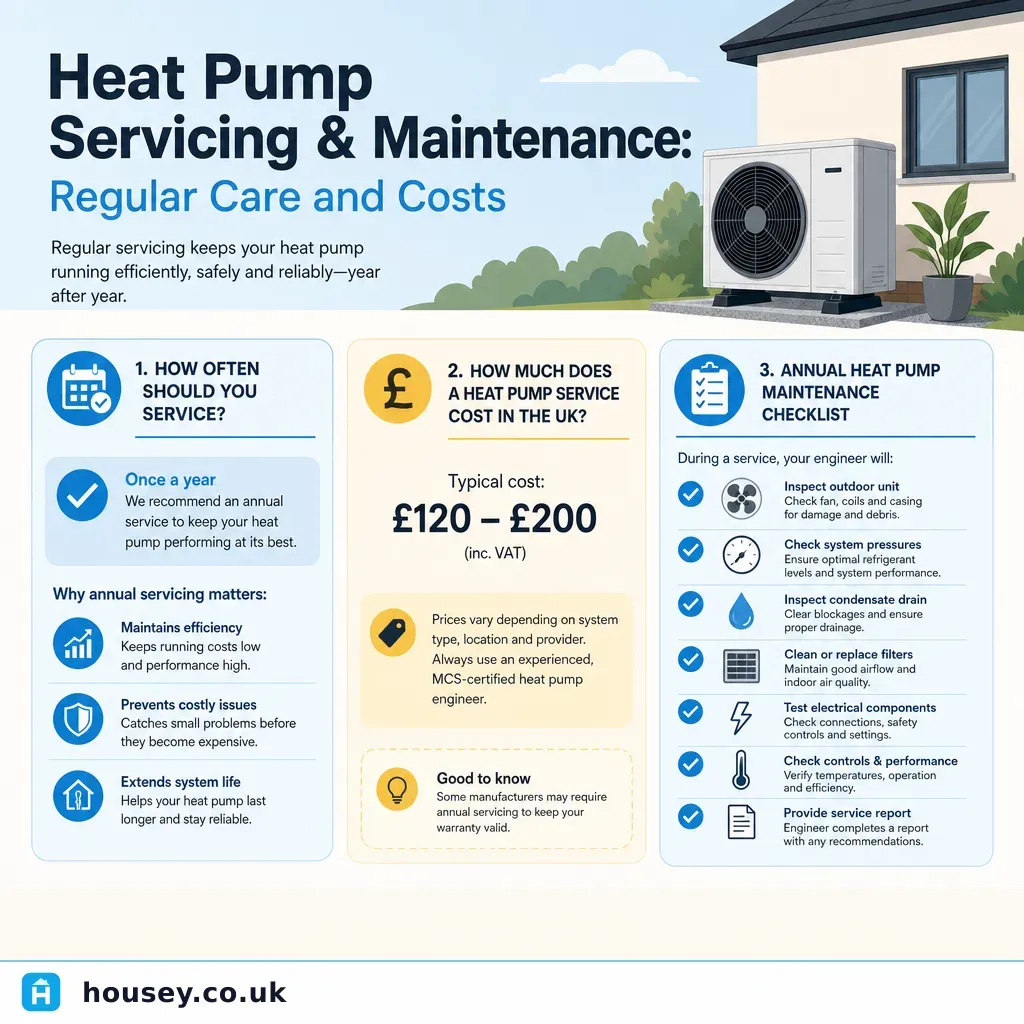
Heat Pump Servicing and Maintenance: Regular Care and Costs
Heat pumps should be serviced by a qualified engineer once a year; most manufacturers require this to keep the warranty valid.
 Energy & Retrofit
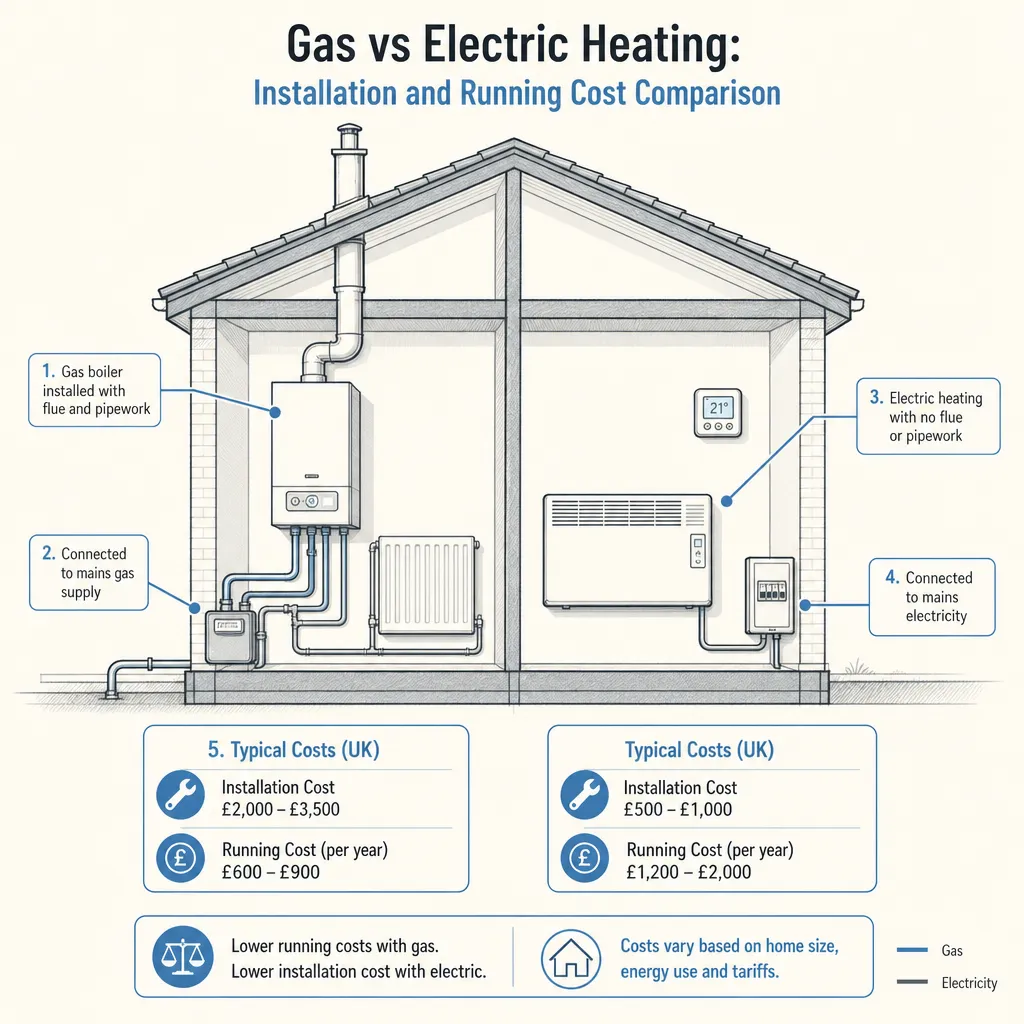
Gas vs Electric Heating: Installation and Running Cost Comparison
Gas central heating usually has lower running costs per kWh than direct electric heating in the UK, though heat pumps can change that equation.
 Energy & Retrofit
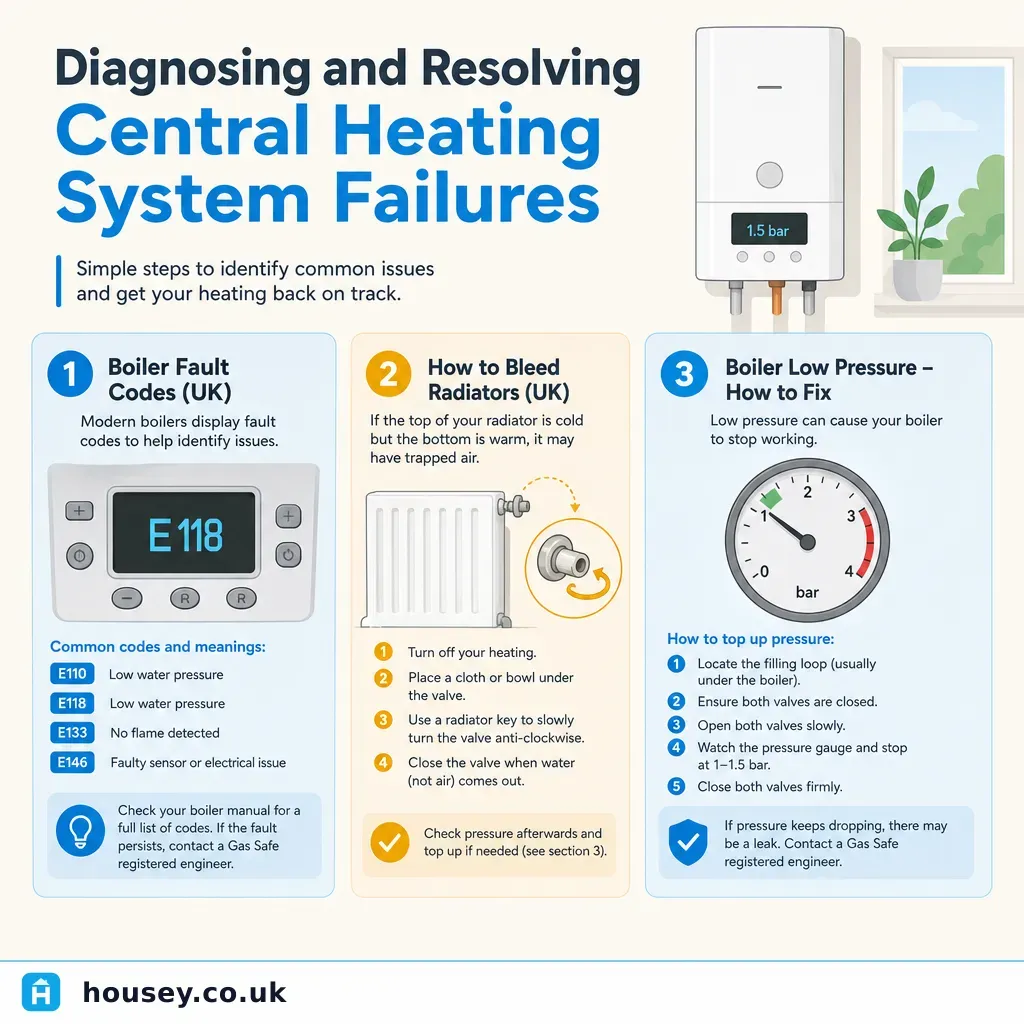
Diagnosing and Resolving Central Heating System Failures
Many central heating failures have simple causes — low boiler pressure, trapped air in radiators, or incorrect programmer settings.