Architectural Design Fees and Cost Structure
By Housey · Last reviewed 4th of May 2026
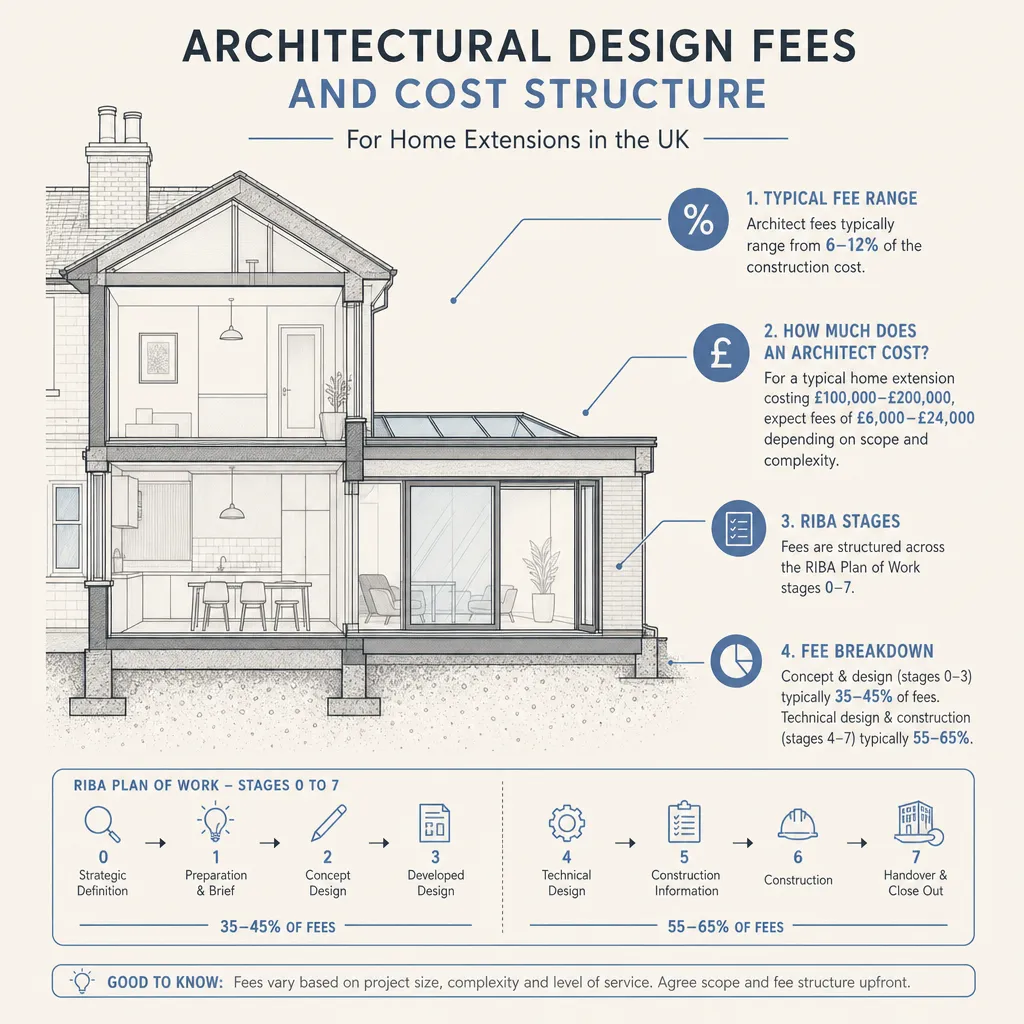
Architectural Design Fees and Cost Structure
Understanding how architects charge — and what each stage of service covers — is a practical concern for anyone planning an extension, conversion, or new build in the UK. Whether you are seeking initial sketches or commissioning full planning and construction drawings, knowing the fee structures helps you budget accurately and compare proposals on a like-for-like basis. The range of approaches architects use can make early-stage quote comparison genuinely confusing, particularly when one proposal offers a percentage and another a fixed fee per stage.
Key points
- UK architects most commonly charge via one of four methods: percentage of build cost, hourly rate, fixed fee per RIBA stage, or a lump-sum project fee — the right structure depends on project size and how defined the brief is at the outset.
- Percentage-based fees for residential projects typically fall between 7% and 15% of total construction cost, with the lower end more common on larger schemes where construction value is high.
- Indicative hourly rates range from £60 to £150 per hour outside London and £80 to £200 per hour in Greater London (Indicative UK costs, last reviewed 2026-05-04).
- VAT at 20% is payable on architectural fees — it is frequently omitted from initial proposals, so always confirm whether quoted figures are exclusive of VAT before comparing them.
- The RIBA Plan of Work 2020 divides a project into eight stages (0–7); you are not obliged to engage an architect for every stage, and fee proposals should be broken down by stage so you know what you are buying.
How architects structure their fees
The four main charging structures are not mutually exclusive — some practices use a hybrid approach, for example a fixed fee for early design stages and a percentage for construction oversight. Understanding what each structure means in practice helps you evaluate proposals fairly.
Fee structure | Best for | Less suited to | Watch out for |
|---|---|---|---|
Percentage of build cost | Medium-to-large residential projects; new builds; complex schemes | Small or budget-sensitive projects where scope is tight | Budget uncertainty at outset; fee rises if construction costs increase |
Fixed fee per RIBA stage | Single-stage commissions, e.g. planning drawings only; clients wanting cost certainty | Evolving briefs or projects with uncertain scope | Extras charged if scope changes after fee is agreed |
Hourly rate | Feasibility advice; early-stage consultation; small one-off tasks | Large projects — costs become hard to predict | Ask for an estimated ceiling before work begins |
Lump-sum project fee | Well-defined, straightforward projects such as a standard house extension | Projects with significant uncertainty or an evolving brief | May not include revisions or structural engineer coordination |
What is included at each RIBA stage
The RIBA Plan of Work 2020 sets out eight stages. Not every project requires all eight, and fee proposals should map clearly to the stages being commissioned.
Stage 0 — Strategic Definition: Clarifying project goals, feasibility, and whether to proceed. Sometimes offered as a brief paid consultation.
Stage 1 — Preparation and Briefing: Developing the project brief, site appraisal, and initial surveys. Often folded into Stage 2 fees for smaller residential projects.
Stage 2 — Concept Design: Initial design options, massing studies, and layout sketches. This is typically the first stage where substantial design work is produced.
Stage 3 — Spatial Coordination: Refined design, coordinated with structural and services engineers. Used for planning applications on more complex schemes.
Stage 4 — Technical Design: Detailed construction drawings and specifications, required for building regulations applications and contractor tendering.
Stage 5 — Manufacturing and Construction: Site visits, contractor coordination, and contract administration. Optional but valuable for clients unfamiliar with managing builders directly.
Stages 6–7 — Handover and Use: Practical completion checks and post-occupancy matters.
For a typical house extension, most homeowners commission Stages 2–4 and optionally Stage 5 if they want the architect to oversee the build.
Indicative costs by project type
These are indicative UK ranges based on published industry guidance. Actual costs vary significantly by location, practice size, project complexity, and scope commissioned. Always obtain at least three detailed quotes.
Indicative UK costs, last reviewed 2026-05-04.
Single-storey rear extension (30–40 m²):
- Planning drawings only (Stages 2–3): approximately £1,500–£4,000
- Full design including building regulations drawings (Stages 2–4): approximately £4,000–£10,000
- Full service including construction-stage oversight (Stages 2–5): approximately £6,000–£15,000
Loft conversion:
- Planning and building regulations drawings: approximately £2,000–£5,000
- Full architectural service: approximately £4,000–£12,000
Two-storey extension or substantial remodel:
- Full design service: commonly 8–12% of construction cost
New build residential (single dwelling):
- Full RIBA service: commonly 7–12% of construction cost, depending on complexity
What makes fees vary
Three factors drive most of the variation in architectural fee proposals.
Location. London-based practices carry higher overheads and typically charge more than regional counterparts. If your project is accessible to a practice outside London, this can represent meaningful savings without a quality trade-off.
Practice size and seniority. Sole practitioners often quote lower fixed fees for standard projects; larger practices may charge more but bring in-house structural, interior design, or planning expertise.
Scope of appointment. A full RIBA Stage 0–7 appointment is substantively different from commissioning planning drawings only. Confirm exactly which stages, deliverables, and services are included before comparing proposals — an apparently lower quote may simply cover less work.
What to ask before accepting an architectural fee proposal
- Which RIBA stages does this fee cover, and what are the specific deliverables at each?
- Is VAT included in the quoted figure?
- What happens if the brief changes — is there a defined change-control process with associated costs?
- Are structural engineer, party wall surveyor, or other consultant fees included or billed separately?
- How many design iterations and client meetings are included within the fee?
- If the planning application is refused, is a re-application within the same fee or is it charged as an extra?
- Who will be the lead architect on the project — a director or a junior team member?
- What formal appointment terms are used — RIBA or ARB standard conditions of engagement?
Red flags in architectural fee proposals
- A global lump sum with no breakdown by stage or deliverable — you cannot verify what you are paying for, or whether revisions are included.
- Fees that make no mention of planning or building regulations application fees, which are typically paid separately to the local planning authority and building control body.
- No clarity on whether consultant coordination (structural engineer, energy assessor, party wall surveyor) is included within the scope.
- A fee that appears unusually low for the scope described — this may indicate limited revision rounds, junior-only staffing, or scope exclusions that will later become extras.
- No reference to a formal letter of appointment or ARB/RIBA standard terms of engagement.
When to get professional help
An architect is the professional you engage for design work, but there are situations where additional specialists should be appointed alongside:
- Structural changes — removing or altering loadbearing walls or significant extensions — require a structural engineer, separate from or coordinated by your architect.
- If your property is listed or in a conservation area, verify that the architect has heritage experience; the planning rules are substantially more demanding.
- If the project affects party walls, a party wall surveyor is a separate appointment required under the Party Wall etc. Act 1996 — this is not a standard part of an architectural commission.
- If you are uncertain about VAT liability on construction work — which varies for new builds, conversions, and renovations — seek advice from a specialist VAT adviser or HMRC before finalising a budget.
How Housey can help
Housey connects you with ARB-registered architects and architectural technologists across the UK. Use our architecture services page to request structured fee proposals broken down by RIBA stage, so you can compare quotes on a consistent basis before making an appointment.
Frequently asked questions
Do I need to use an RIBA-chartered architect, or will any designer do?
The title 'architect' is legally protected by the Architects Act 1997 — only those registered with the ARB may use it. RIBA membership is voluntary but indicates additional professional commitment. Architectural technologists (MCIAT) can also produce planning and building regulations drawings. For listed buildings or complex schemes, verify that whoever you appoint has relevant specialist experience.
Can I just pay an architect for planning drawings and manage the rest myself?
Yes — a stage-limited commission for planning drawings only is common on straightforward domestic projects. You would then commission building regulations drawings separately and manage contractor procurement yourself. This reduces fees but places more responsibility on you as the client, including coordinating structural engineers and obtaining building control approval independently.
Are architectural fees negotiable?
Scope and fee structure are both negotiable. A practice may agree to a lower fixed fee if the brief is tightly defined and revisions are limited. The most effective approach is to clearly define the scope before requesting proposals, then obtain at least three comparable quotes to give yourself a realistic market reference before entering any discussion.
What is the difference between an architect and an architectural technologist?
An architectural technologist (MCIAT) specialises in the technical and construction aspects of design — building regulations drawings, specifications, and detailing. They may not offer the full creative design service an architect provides, but for projects where the design concept is already established or the focus is building regulations approval, they can be an effective and often lower-cost appointment.
How long does the design process take before work can start on site?
For a typical domestic extension: concept design usually takes two to four weeks; planning application determination eight to thirteen weeks; building regulations drawings four to six weeks; and building regulations approval around five weeks under the standard route. The full pre-construction process commonly takes six to nine months from first appointment to contractor start, though this varies by project and local authority.
Sources and further reading
- RIBA Plan of Work 2020 — Royal Institute of British Architects
- The Architects' Code: Standards of Professional Conduct and Practice — Architects Registration Board
- Planning permission: overview — GOV.UK
- Building regulations: approved documents — GOV.UK
- What is architectural technology? — Chartered Institute of Architectural Technologists
Useful next reads
 Planning & Pre-Build
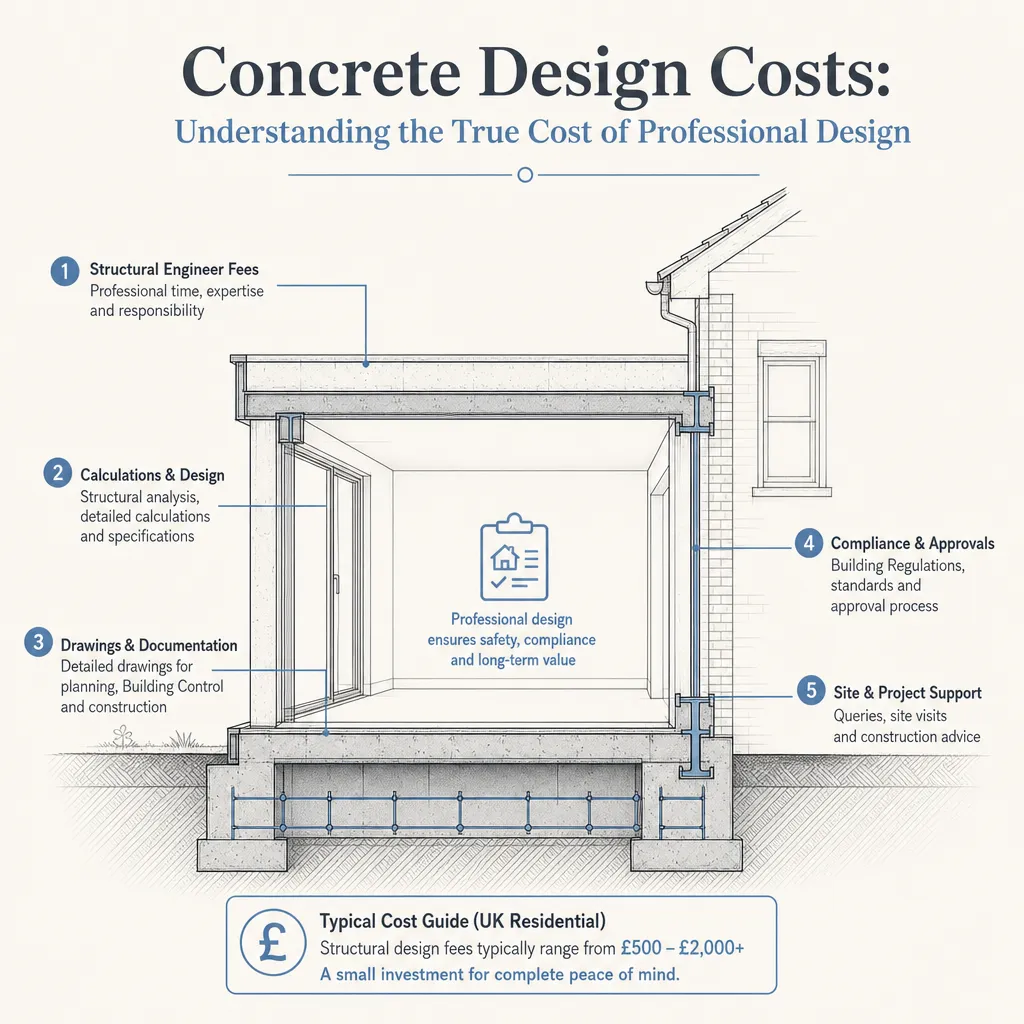
Concrete Design Costs: Understanding the True Cost of Professional Design
Professional design fees in the UK typically range from 5–12% of construction cost, or £500–£5,000+ as a fixed fee depending on scope and complexity.
 Planning & Pre-Build
Understanding Architectural Specialisms: Finding the Right Design Professional
UK design professionals for property projects range from ARB-registered architects and CIAT architectural technologists — both with defined qualifications and professional accountability — to unregulated designers.
 Planning & Pre-Build
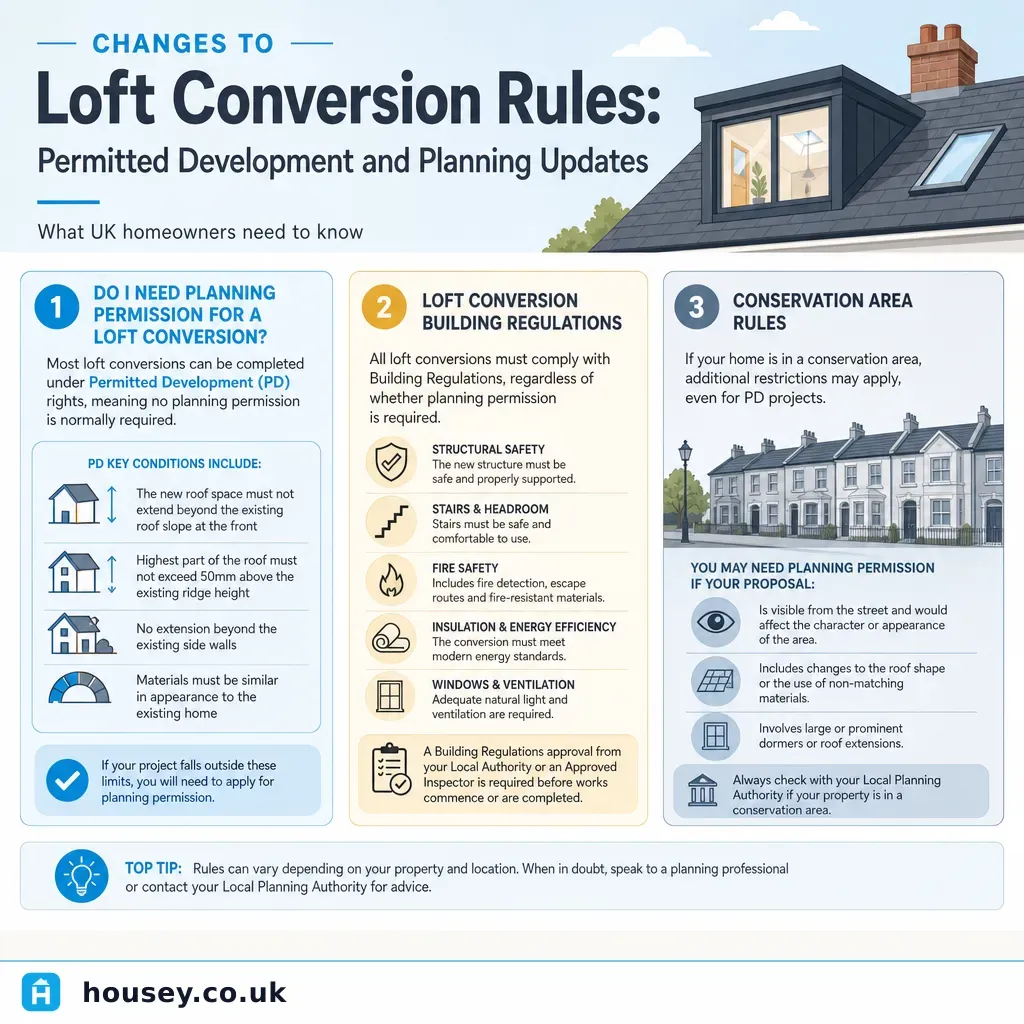
Changes to Loft Conversion Rules: Permitted Development and Planning Updates
In England, most loft conversions on standard houses qualify as Permitted Development under Class B of the GPDO 2015, allowing up to 40 cubic metres (terraced) or 50 cubic metres (detached or semi-detached) without a planning application — if conditions are met.
 Planning & Pre-Build
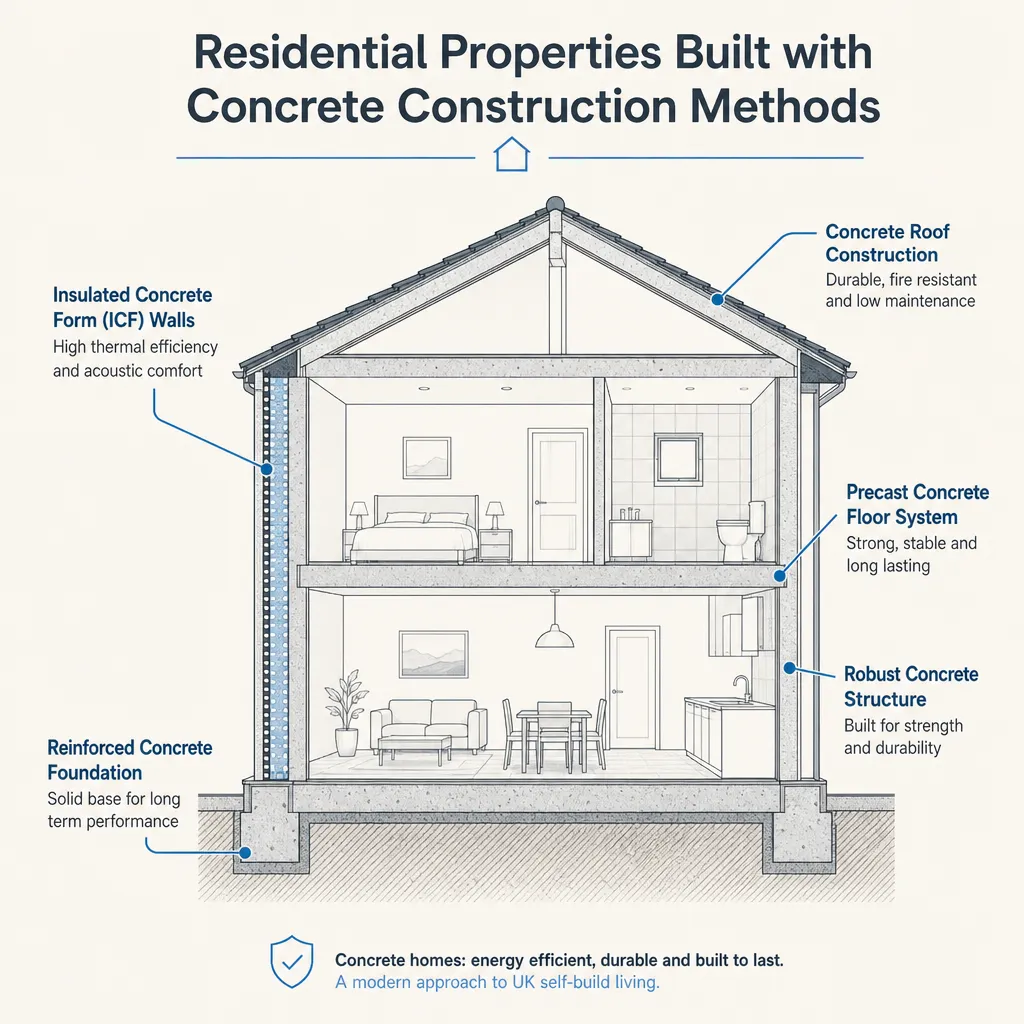
Residential Properties Built with Concrete Construction Methods
UK homes are built using several concrete methods: in-situ cast concrete, precast panel systems, insulating concrete formwork (ICF), and older non-traditional types such as Wimpey No-Fines and Laing Easiform.
 Planning & Pre-Build
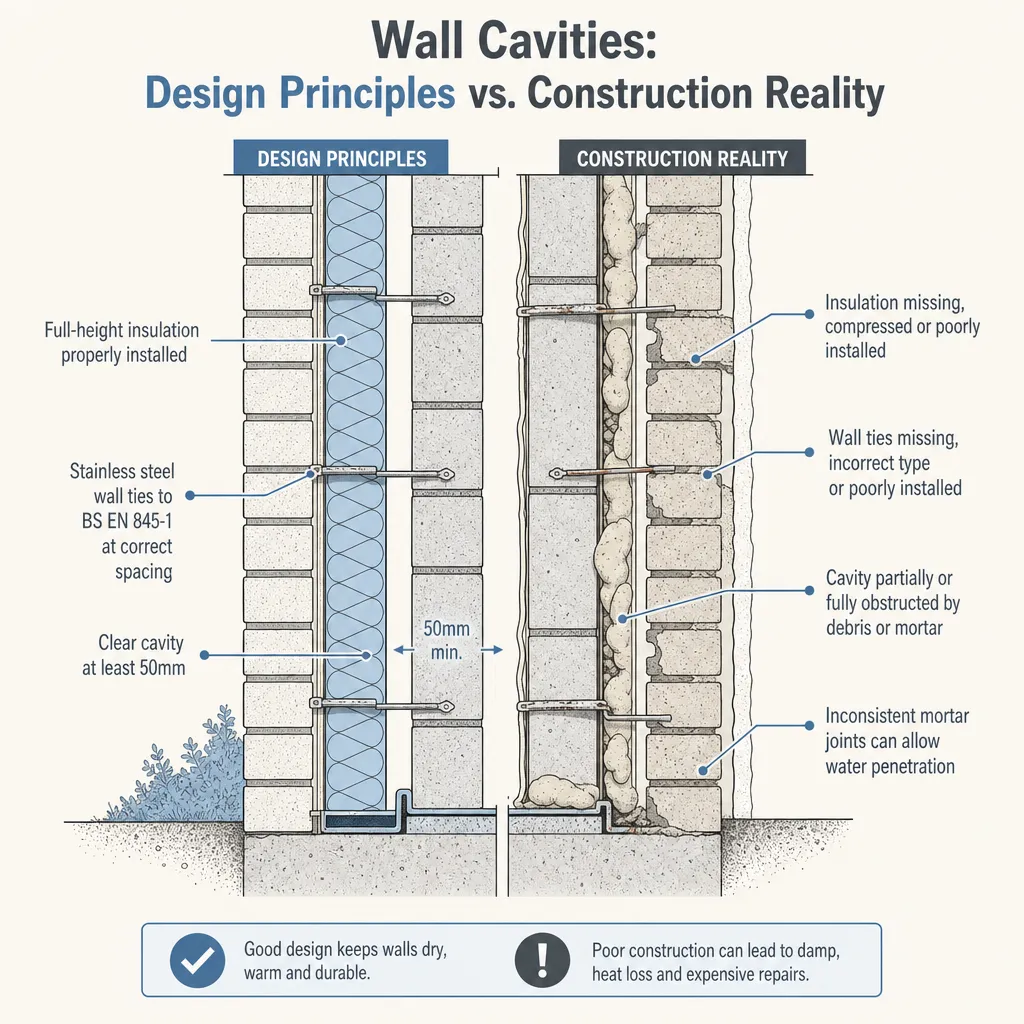
Wall Cavities: Design Principles vs. Construction Reality
A UK cavity wall is designed to resist weather, control heat loss, and structurally link two masonry leaves.