Residential Properties Built with Concrete Construction Methods
By Housey · Last reviewed 25th of May 2026
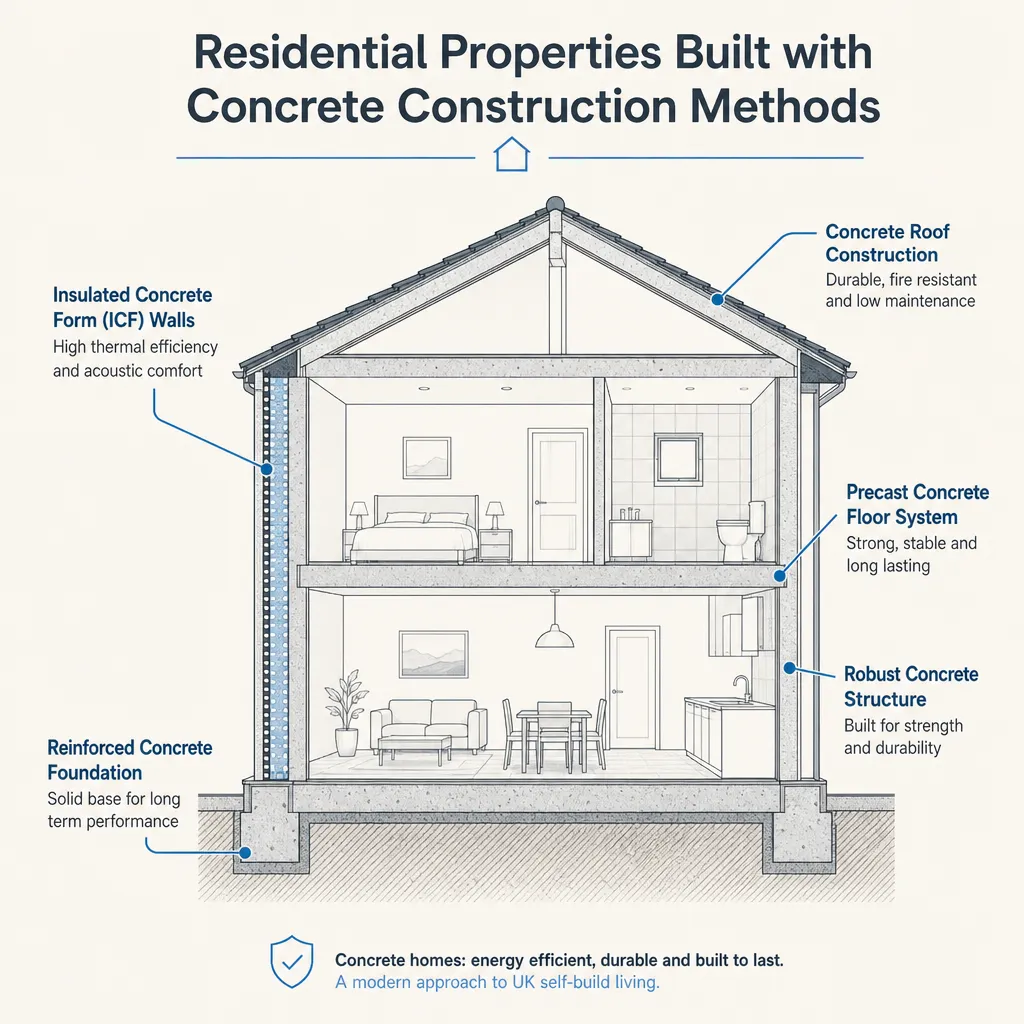
Residential Properties Built with Concrete Construction Methods
Concrete has been used to build UK homes for well over a century, but the methods, materials, and resulting building characteristics vary enormously — from the precast system-built estates of the 1950s and 1960s to modern insulating concrete formwork (ICF) self-builds that rival timber frame for thermal performance. Whether you are planning a new concrete home, buying an existing one, or extending a property using concrete construction, the specific method involved affects mortgage availability, planning strategy, structural design obligations, and long-term energy performance in ways that other material choices do not.
Key points
- The UK's post-war concrete housing legacy includes dozens of distinct system-built types — among them Wimpey No-Fines, Laing Easiform, Reema Hollow Panel, and Bison Wall Frame — many of which are classified as non-traditional construction and can restrict mortgage availability unless repaired under an approved scheme.
- Insulating Concrete Formwork (ICF) can achieve wall U-values as low as 0.11 W/m²·K without additional insulation layers and is accepted by NHBC Buildmark warranty and most mainstream mortgage lenders.
- All new concrete structural elements in UK buildings must be designed to Eurocode 2 (BS EN 1992); a structural engineer is required to produce compliant calculations for building control submission under Part A.
- Certain prestressed reinforced concrete (PRC) panel types are Designated Defective under the Housing Defects Act 1984, which affects mortgage eligibility until structural repair under an approved scheme with a current warranty is completed.
- Planning permission is required for virtually all new dwellings regardless of construction method; the external appearance and finish of a concrete build may be subject to local design guidance conditions.
Types of concrete construction used in UK residential buildings
In-situ (cast-in-place) concrete
Concrete is poured on-site into temporary formwork which is removed once cured. This method is common for foundations, basements, and some high-specification one-off houses where design freedom and structural robustness are priorities. Dense in-situ concrete walls perform poorly thermally (λ ≈ 1.7 W/m·K) and require substantial external or internal insulation systems to meet Building Regulations Part L targets.
Precast concrete panels
Factory-manufactured panels are craned into position on-site. Modern precast systems are CE-marked structural products that can incorporate insulation in a sandwich construction. Post-war social housing precast types — Laing Easiform, Bison, Tracoba, Reema — were not insulated and are now classified as non-traditional construction. Certain PRC types are Designated Defective under the Housing Defects Act 1984, which affects mortgage eligibility until structural repair under an approved scheme is completed and evidenced with a current structural warranty.
No-fines concrete
In-situ construction using large-diameter clean coarse aggregate without sand or fine material creates a permeable, open-textured wall. Widely used by local authorities in the 1950s and 1960s under the Wimpey system, no-fines concrete homes require specialist EWI systems and are classified as non-standard construction by most mortgage lenders.
Insulating Concrete Formwork (ICF)
Expanded or extruded polystyrene blocks or panels are assembled to form the wall shape, then filled with in-situ concrete. The formwork is left permanently in place, insulating both faces of the concrete core. ICF has grown in popularity for UK self-builds for several reasons:
- Wall U-values of 0.11–0.18 W/m²·K are achievable without additional insulation layers.
- High air-tightness potential supports Passivhaus and near-Passivhaus design approaches.
- Above-ground construction is typically 30–50% faster than traditional masonry.
- NHBC Buildmark warranty is available, and most mainstream mortgage lenders accept ICF construction.
Detailed design is still required at junctions, openings, and service penetrations. Acoustic performance differs from masonry, and party wall detailing needs careful specification in semi-detached and terraced arrangements.
Thin-joint and dense-block concrete systems
Dense concrete blockwork laid in thin-joint mortar provides a higher-precision masonry alternative used in some speculative new builds and self-builds. It offers good structural performance but requires cavity insulation or EWI to meet Part L compliance, as dense blockwork alone has poor thermal performance.
Which professional do I need for a concrete home project?
Stage | Professional | Qualification to look for | Why they are needed |
|---|---|---|---|
Concept and planning design | Architect | RIBA or CIAT registered | Design development, planning strategy, material selection |
Structural design | Structural engineer | MIStructE or MICE | Eurocode 2 design of concrete elements; Building Regs Part A compliance |
Building control submission | Architect or chartered building designer | ARB/RIBA or MCIAT | Prepare drawings and specification; liaise with building control body |
Energy compliance | SAP assessor | Accredited energy assessor | Design-stage SAP and as-built EPC for Part L |
ICF or precast installation | Specialist contractor | System manufacturer approved installer | Supply, install, and provide documentation for building control |
Buying non-traditional concrete | RICS chartered surveyor | RICS Level 3 Building Survey | Assess structural condition, PRC designation, and mortgage-ability |
Planning considerations for concrete homes
The construction method — concrete, timber, brick, or steel — does not in itself determine whether planning permission is required. Planning consent is needed for virtually all new dwellings regardless of material. Aspects most likely to affect concrete-built homes include:
External appearance: Local Design Codes and the National Design Guide (DLUHC, 2021) may specify character and material expectations for new residential development. Exposed or board-marked concrete finishes may require detailed design justification in traditional streetscapes; render or cladding finishes are often more readily accepted by local planning authorities.
Conservation areas and listed buildings: EWI or cladding applied to an existing building in a conservation area requires conservation area consent; works to a listed building require listed building consent. Check with the local planning authority before specifying any system that changes the external appearance of an existing concrete building.
Permitted development: Extensions and outbuildings using concrete construction follow the same permitted development rules as any other material, provided the external appearance conditions — matching or similar materials to the principal elevation — are met. Permitted development rights may be removed by planning condition on some estates; always check with the local planning authority before starting work.
Buying an older concrete home: red flags to watch for
Mortgage availability: Many high-street lenders will not lend on Designated Defective PRC types or on certain non-traditional concrete systems (Laing Easiform, Reema Hollow Panel, Unity, Cornish Unit) without evidence that the structure has been repaired under an approved scheme with a current structural warranty. Verify mortgage availability with a specialist broker before making an offer.
Survey requirements: A RICS Level 3 Building Survey — or a specialist structural survey from a chartered structural engineer — is advisable for any property identified as non-traditional concrete construction. A Level 1 or Level 2 survey may not clearly identify the construction type or adequately flag PRC designation, carbonation, or reinforcement corrosion.
Energy performance: Pre-insulation concrete homes typically carry EPC ratings of E, F, or G. Current Minimum Energy Efficiency Standards (MEES) require rental properties to achieve EPC E; government consultation has proposed raising this to C for new tenancies, which could make unimproved solid-wall concrete rental properties commercially unviable without significant retrofit investment.
Structural condition: In concrete homes over 50 years old, look for spalling (chunks of concrete falling from walls or soffits), rust staining indicating corroding reinforcement, stepped or diagonal cracking in panels, and visible carbonation. Any of these are signals that a chartered structural engineer should assess the property before purchase or before any further work proceeds.
When to get professional help
- New concrete build: Engage a structural engineer from the outset — Eurocode 2 design and building control calculations are mandatory and require professional input.
- Buying an older concrete property: Commission a RICS Level 3 survey before exchange, and confirm mortgage availability with a specialist broker before making an offer.
- Extending or altering a concrete home: Any alteration to a concrete frame, slab, or load-bearing wall must be assessed by a structural engineer before work starts.
- Retrofitting an older concrete property: Work to PAS 2035 with a TrustMark-registered Retrofit Coordinator; non-traditional concrete construction is a specialist retrofit category requiring specific expertise.
How Housey can help
Whether you are planning a new concrete build, buying an older system-built property, or extending a concrete home, Housey connects you with the professionals you need. An architect can develop a design strategy and planning application tailored to concrete construction, while a structural engineer will ensure your design meets Eurocode 2 requirements and Building Regulations Part A. When you are ready to submit, building regulations drawings help ensure a smooth building control approval process.
Frequently asked questions
Do I need a specialist survey when buying a concrete house?
Yes, in most cases. A RICS Level 1 or Level 2 survey may not identify the construction type with sufficient certainty, nor adequately assess PRC designation, carbonation, and reinforcement condition. A RICS Level 3 Building Survey — or a specialist structural survey from a chartered structural engineer — is advisable for any property built using non-traditional concrete methods, particularly post-war system-built types where structural condition and mortgage eligibility are both at stake.
Can I get a mortgage on a concrete house?
This depends on the construction type. Modern ICF homes with an NHBC Buildmark warranty are generally accepted by mainstream lenders. Older non-traditional concrete types — particularly Designated Defective PRC systems such as Laing Easiform, Wates, and Reema — are typically accepted only by specialist lenders, and only once structural repair under an approved scheme has been completed and evidenced. Always confirm mortgage availability with a specialist broker before making an offer on any non-traditional concrete property.
Does ICF construction cost more than traditional brick and block?
Indicative UK costs, last reviewed 2026-05-25. ICF construction typically costs approximately £5–£15 per m² more for the above-ground superstructure than traditional brick-and-block cavity masonry, depending on the system, specification, and contractor experience. The faster construction programme — often 30–50% quicker above ground — can partially offset this premium. The improved thermal performance and airtightness may also reduce the cost of achieving Part L compliance elsewhere in the building specification. Obtain comparative quotes from both ICF contractors and traditional masonry builders for your specific project.
What planning permission is needed for a new concrete self-build?
A new single dwelling in England requires full planning permission regardless of construction material. The process is identical for concrete, timber, and masonry builds: submit a planning application to your local planning authority with plans, elevations, a design and access statement, and any required supporting documents. The LPA will assess the application against the National Planning Policy Framework (NPPF), local planning policy, and local design guidance. Concrete construction does not trigger additional planning requirements, but the proposed external appearance and finish will be subject to normal design assessment.
Sources and further reading
- National Planning Policy Framework (NPPF, 2024) — GOV.UK
- Housing Defects Act 1984: Designated Defective dwellings — legislation.gov.uk
- NHBC Standards for innovative and non-standard construction — NHBC
- Do I need planning permission? New dwellings — Planning Portal
- Non-traditional housing guidance — Energy Saving Trust
- Non-traditional housing in the UK — Building Research Establishment
Useful next reads
 Planning & Pre-Build
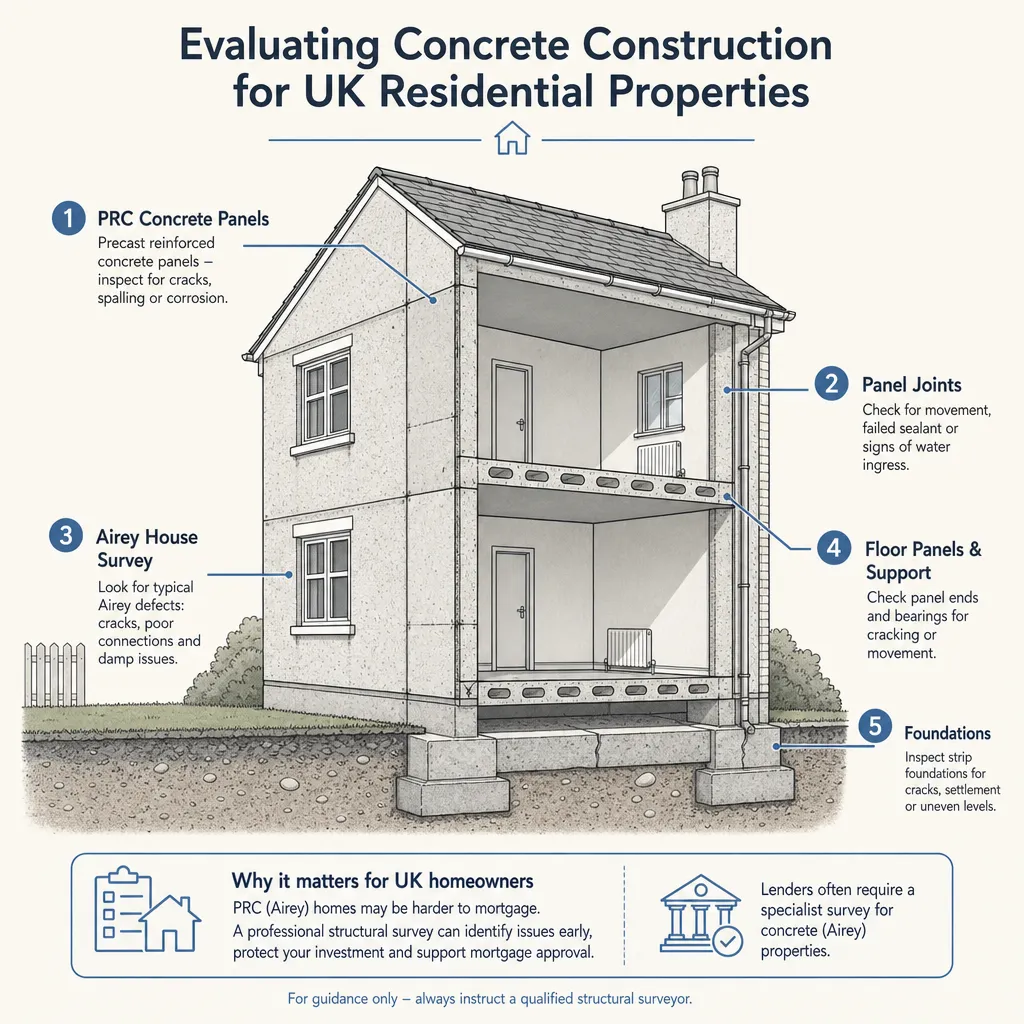
Evaluating Concrete Construction for UK Residential Properties
Concrete construction in UK homes covers post-war non-traditional housing — such as Airey and Wimpey No-Fines properties — typically classified as non-standard by mortgage lenders, and modern systems including ICF and block cavity wall, which are generally standard.
 Planning & Pre-Build
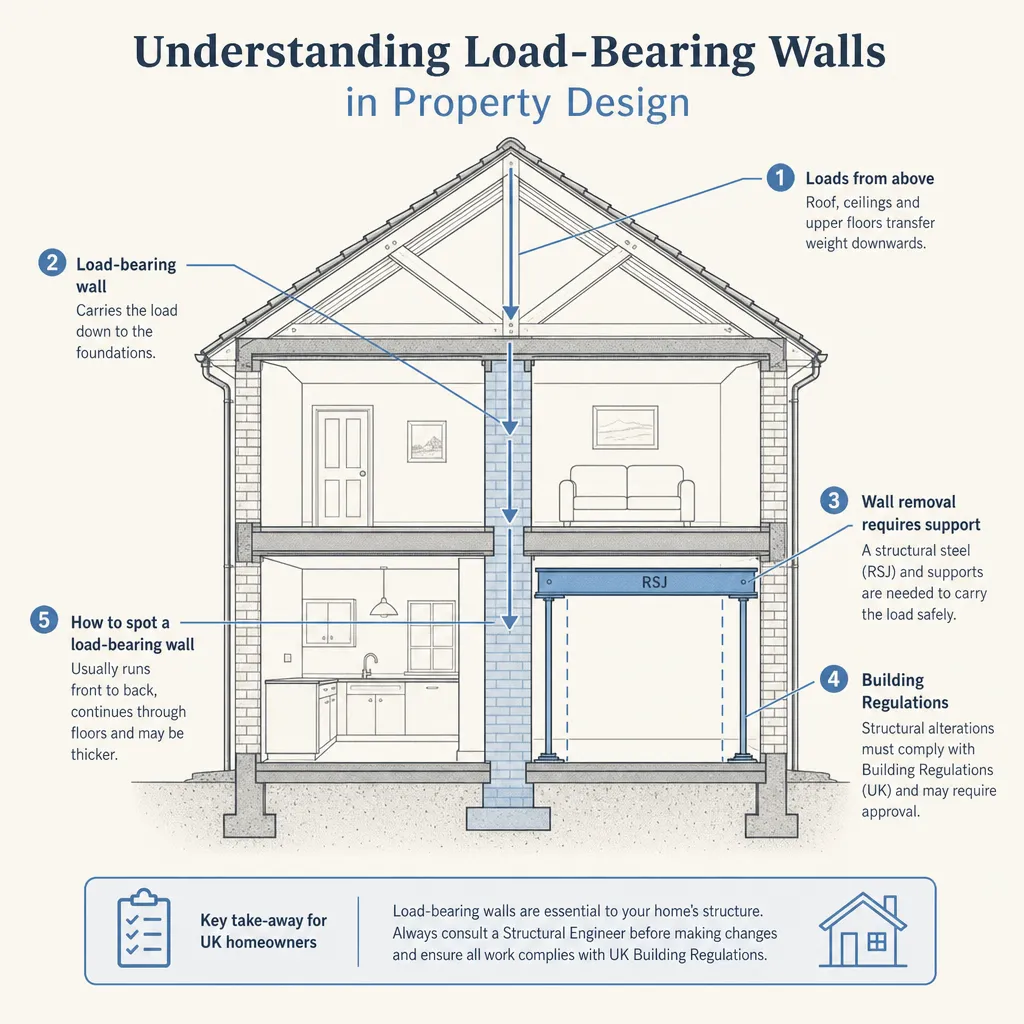
Understanding Load-Bearing Walls in Property Design
A load-bearing wall carries the weight of floors, roofs, or other walls above it down to the foundations.
 Planning & Pre-Build
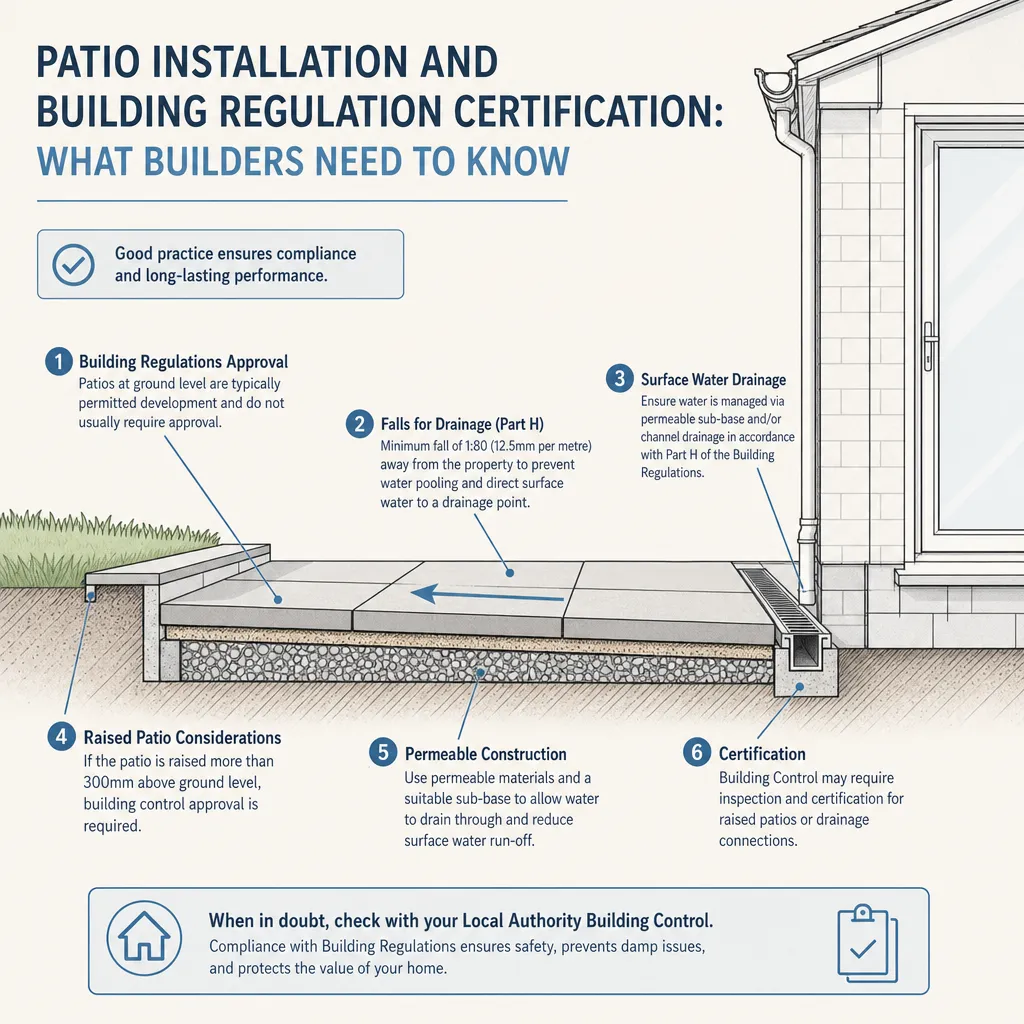
Patio Installation and Building Regulation Certification: What Builders Need to Know
Most ground-level patios in England do not require building regulations approval.
 Planning & Pre-Build
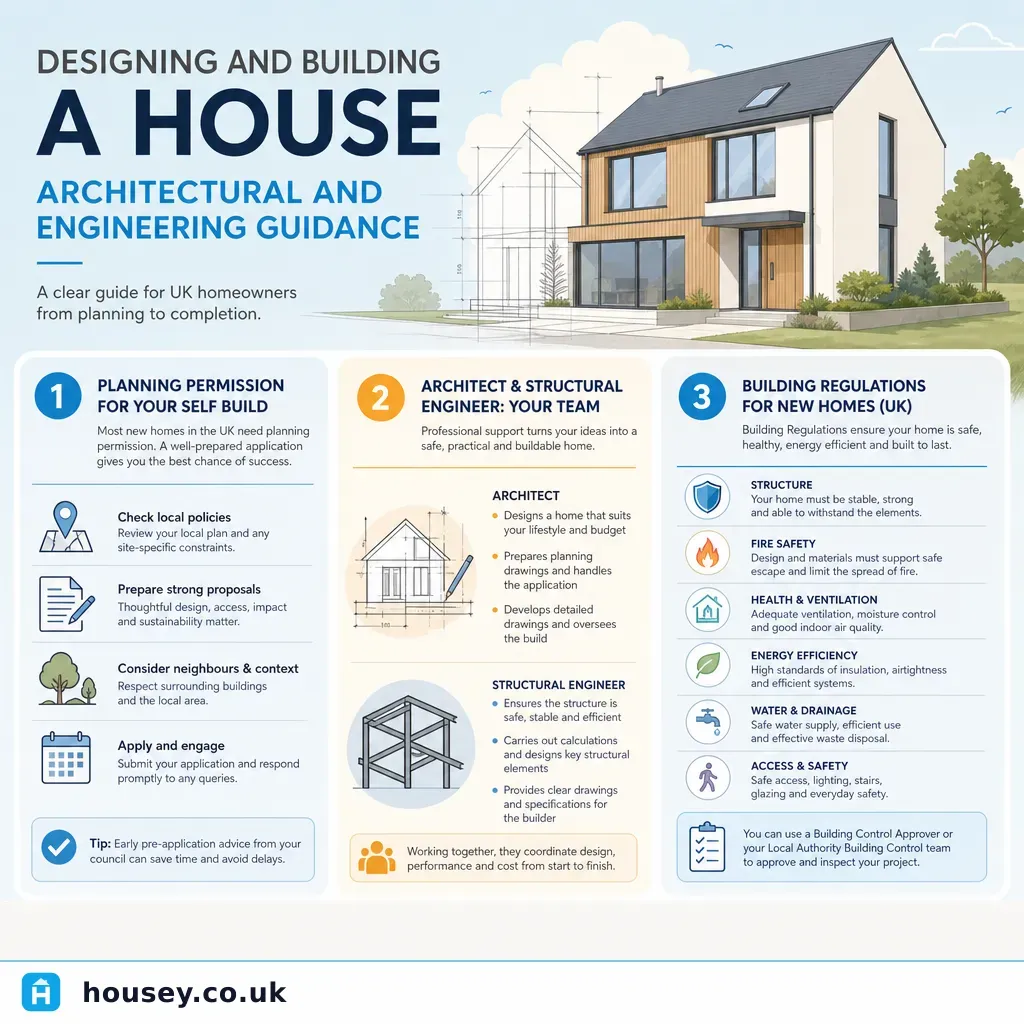
Designing and Building a House: Architectural and Engineering Guidance
Building a new house in the UK requires separate planning permission and Building Regulations approval, a professional team typically including an ARB-registered architect, a structural engineer, and often a civil or geotechnical engineer.
 Planning & Pre-Build
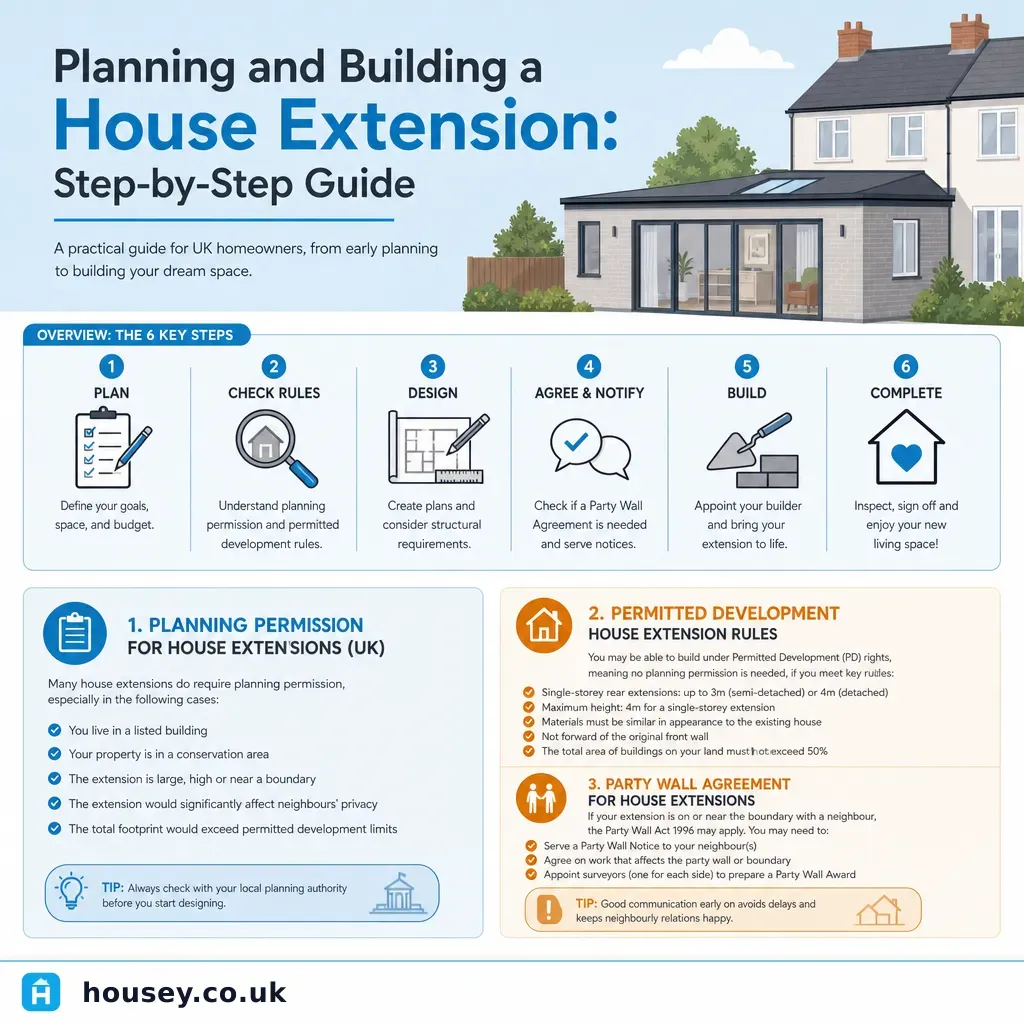
Planning and Building a House Extension: Step-by-Step Guide
A house extension in the UK usually requires either planning permission or confirmation of permitted development rights, Building Regulations approval, and — where work affects a shared wall or boundary — compliance with the Party Wall etc.