Knowledge Base
Property advice that actually helps
Researched, UK-specific guides for every stage of homeownership — from buying and surveys to retrofit, planning and major works.
 Planning & Pre-Build
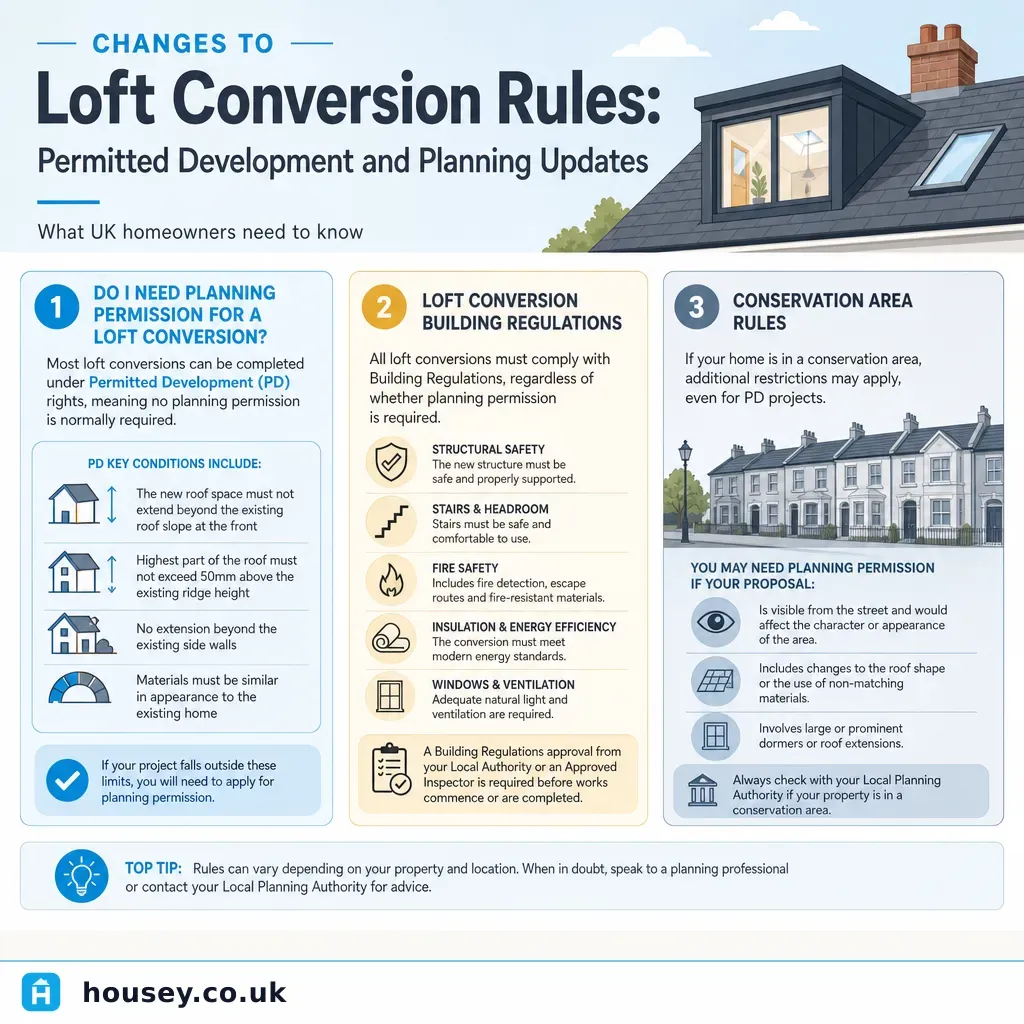
Changes to Loft Conversion Rules: Permitted Development and Planning Updates
In England, most loft conversions on standard houses qualify as Permitted Development under Class B of the GPDO 2015, allowing up to 40 cubic metres (terraced) or 50 cubic metres (detached or semi-detached) without a planning application — if conditions are met. Listed buildings, Conservation Areas, and flats are excluded. Building regulations approval is always required regardless of planning status.
 Planning & Pre-Build
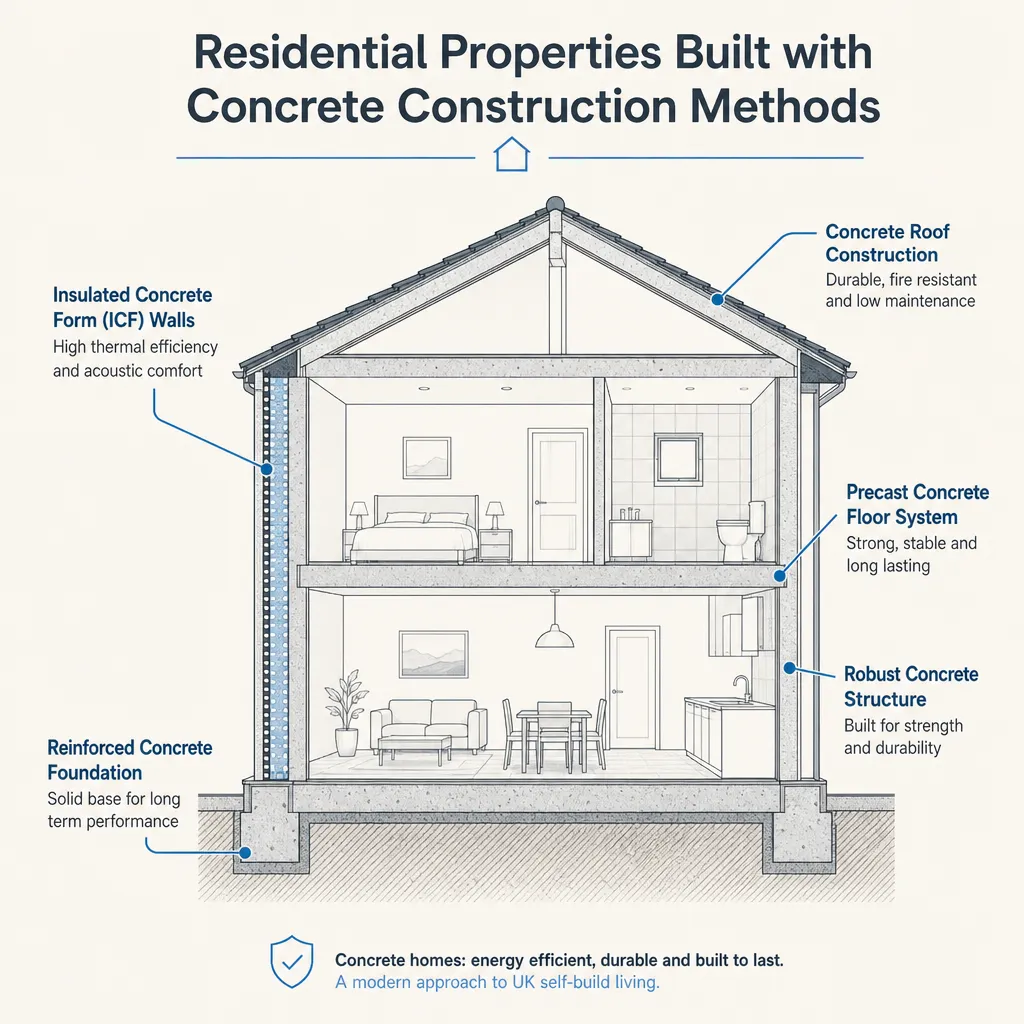
Residential Properties Built with Concrete Construction Methods
UK homes are built using several concrete methods: in-situ cast concrete, precast panel systems, insulating concrete formwork (ICF), and older non-traditional types such as Wimpey No-Fines and Laing Easiform. The right method depends on design intent, site conditions, planning constraints, and budget. Mortgage availability and survey requirements vary significantly between modern ICF builds and post-war non-traditional concrete types.
 Planning & Pre-Build
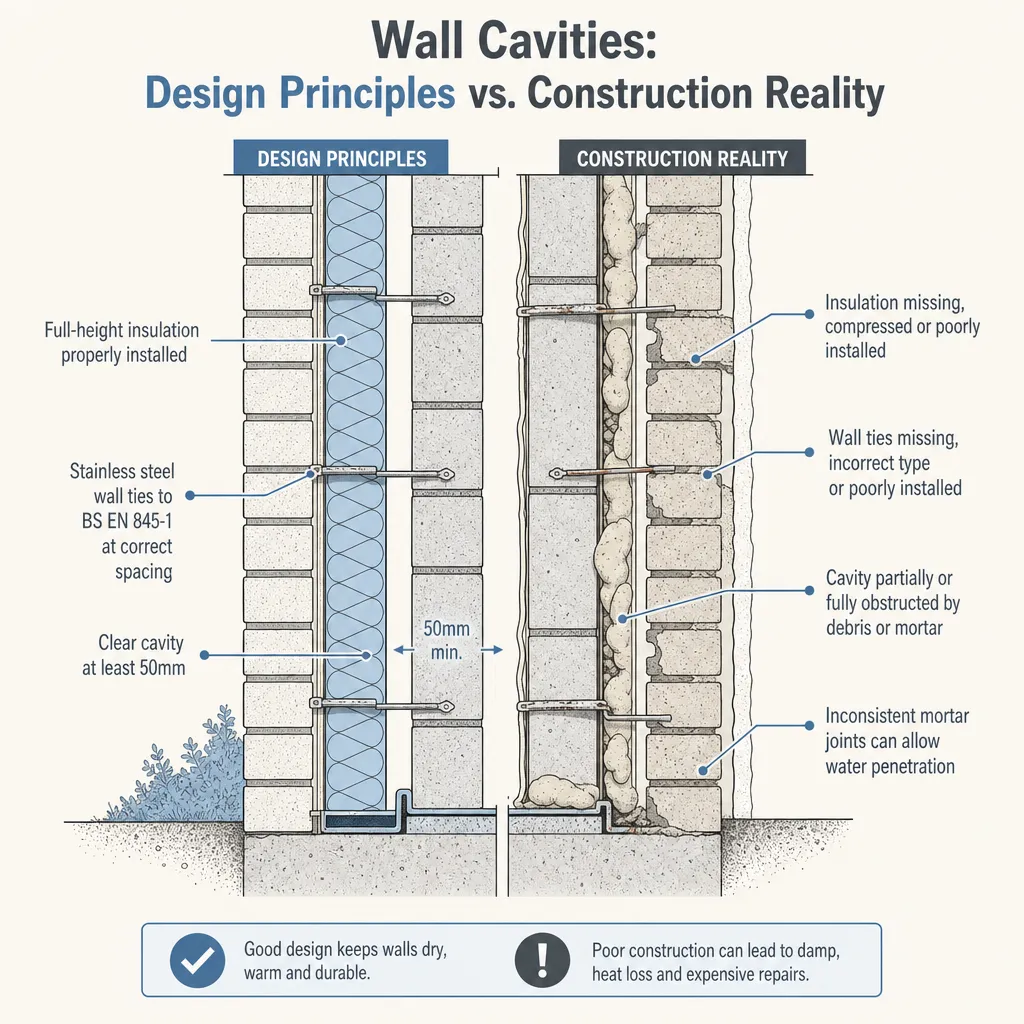
Wall Cavities: Design Principles vs. Construction Reality
A UK cavity wall is designed to resist weather, control heat loss, and structurally link two masonry leaves. In practice, mortar droppings bridging ties, gaps in insulation at junctions, and missing vertical damp-proof courses at window reveals are the most common construction defects — each capable of undermining both the thermal and moisture performance of an otherwise compliant design.
 Planning & Pre-Build
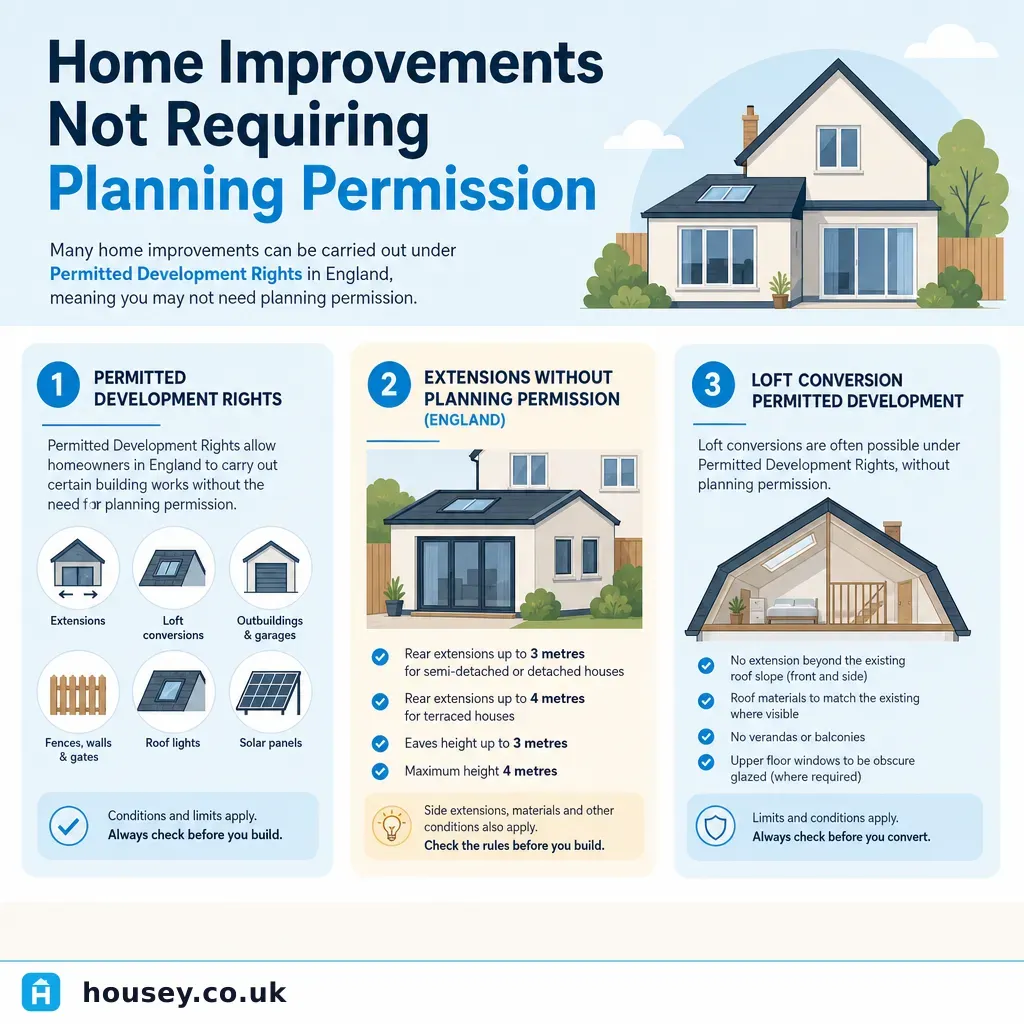
Home Improvements Not Requiring Planning Permission
Many common home improvements in England fall under Permitted Development Rights and do not require a planning application. These include single-storey rear extensions up to 4 metres on detached houses, loft conversions within set volume limits, and most garden outbuildings. Rights are restricted for listed buildings, flats, and conservation area properties — and a Lawful Development Certificate is strongly advisable before committing to significant works.
 Planning & Pre-Build
Core Drilling for Building Penetrations: Uses and Costs
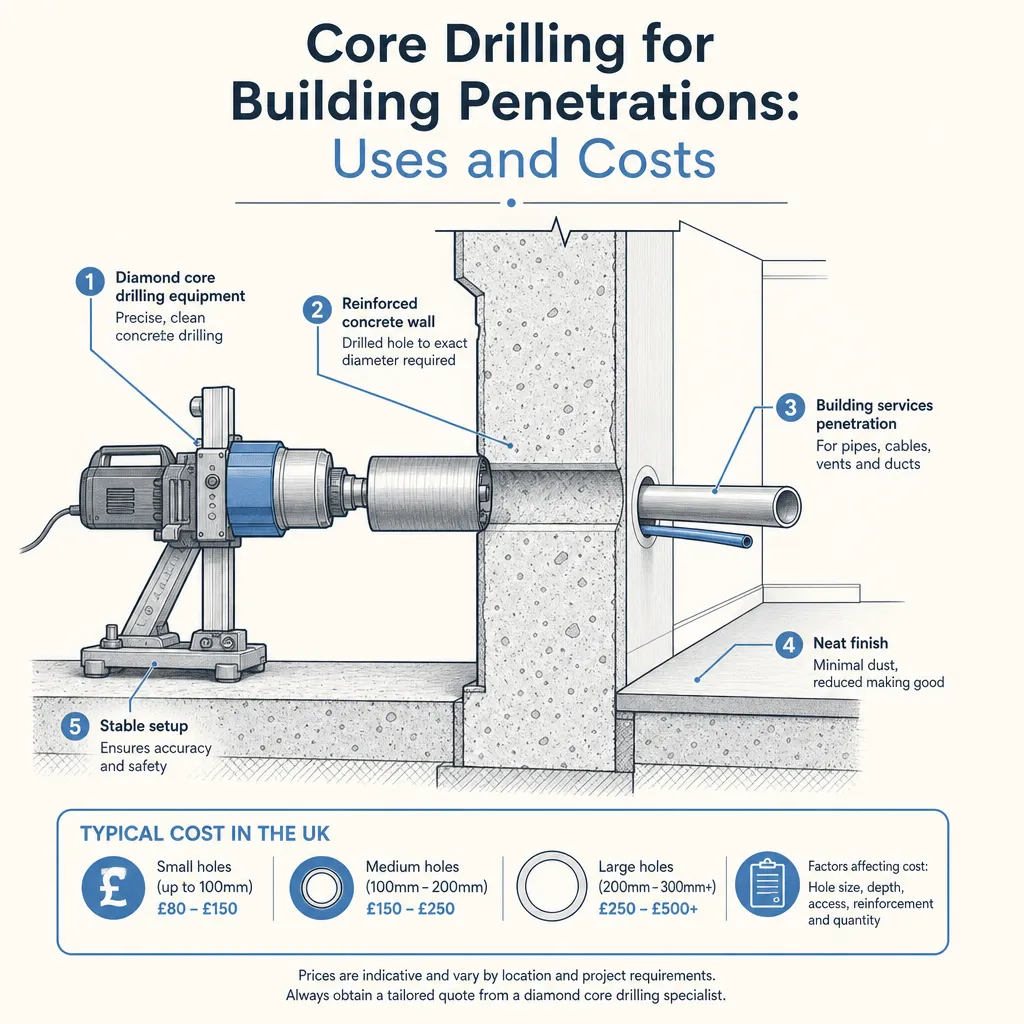
Core drilling uses diamond-tipped equipment to cut clean holes through concrete, masonry, or block for pipes, ducts, cables, and building services. In UK homes, indicative costs start at around £100–£200 per hole for standard domestic work, rising with diameter, depth, material hardness, and access.
 Planning & Pre-Build
Designing and Building Your Dream Home: Architecture and Custom Construction
Building a custom home in the UK involves a RIBA eight-stage design process, full planning permission — permitted development does not apply to new dwellings — and a team that typically includes an architect, architectural technologist, structural engineer, and project manager. Professional fees usually add 8–15% to the build cost, and the total programme typically spans three to five years.
 Planning & Pre-Build
Septic Tank Installation in the UK: Costs, Planning and Regulations
Installing a septic tank or sewage treatment plant in the UK requires registration or a permit under the Environment Agency's General Binding Rules, Building Regulations Part H compliance, and a percolation test to assess ground suitability. Costs typically range from £3,000 to £10,000 or more depending on system type, ground conditions, and site access. A drainage engineer should assess the site before any system is designed.
 Planning & Pre-Build
Evaluating Concrete Construction for UK Residential Properties
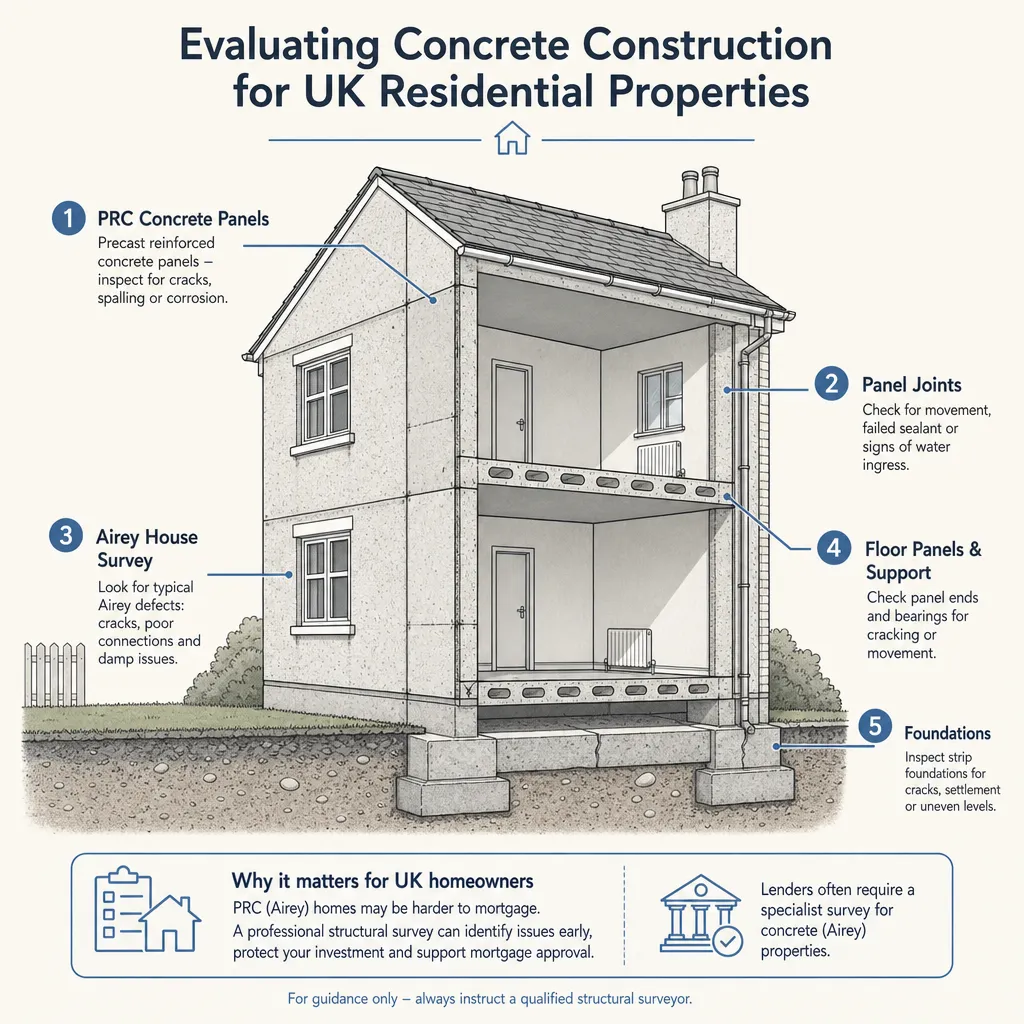
Concrete construction in UK homes covers post-war non-traditional housing — such as Airey and Wimpey No-Fines properties — typically classified as non-standard by mortgage lenders, and modern systems including ICF and block cavity wall, which are generally standard. Key considerations are structural durability, carbonation risk in older properties, mortgageability, and Building Regulations compliance for new construction.
 Planning & Pre-Build
Lighting Design Service Costs and Consultation
A lighting designer in the UK typically charges £60–£120 per hour, with full residential schemes ranging from £500 to £5,000 or more depending on property size and scope. Most designers offer a paid initial consultation of one to two hours. Commissioning a designer before first-fix electrical work gives the best value and avoids costly rewiring later.
 Planning & Pre-Build
Bay Window Underpinning and Structural Support Costs
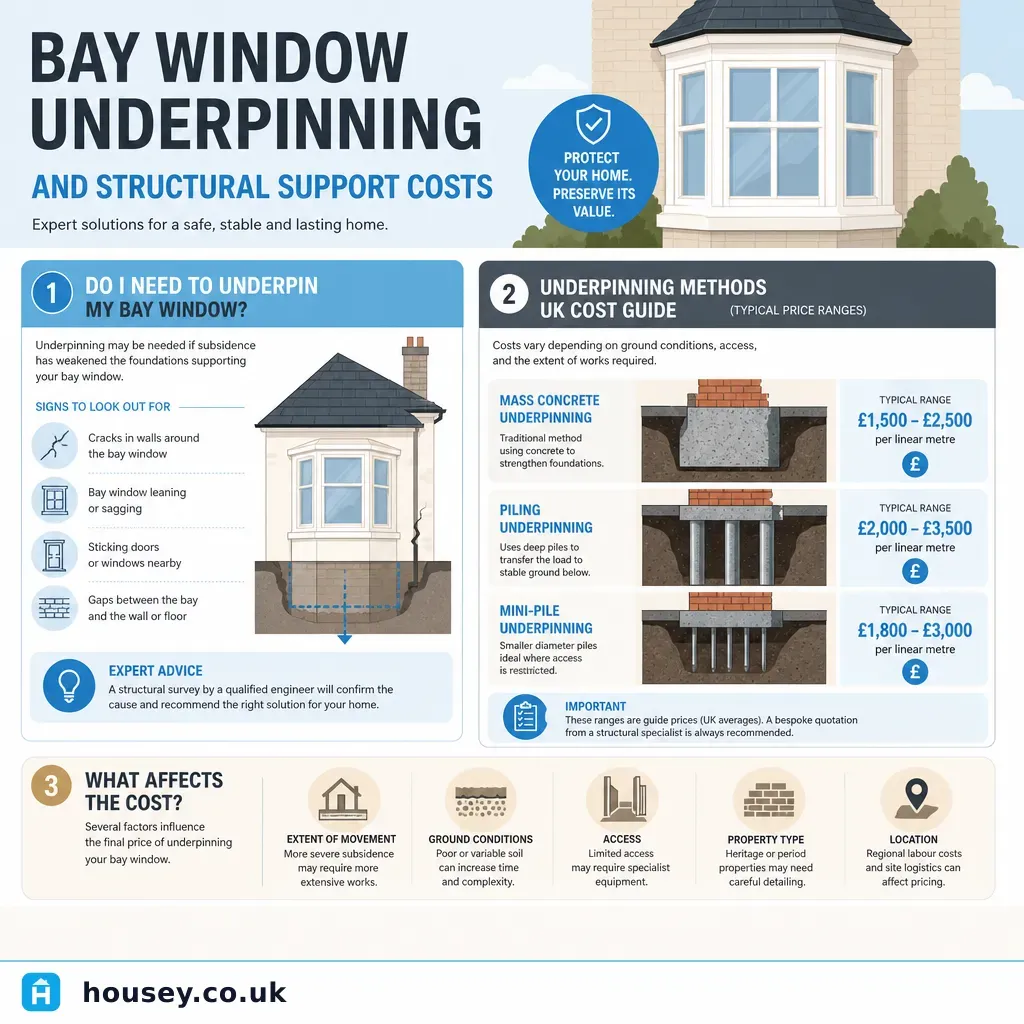
Bay window underpinning in the UK typically costs £3,000–£10,000 per bay for traditional mass concrete methods, with resin injection and mini-piling in a similar range depending on depth and site conditions. A structural engineer's assessment and ground investigation are essential before any method is specified. All underpinning requires building regulations approval, and your insurer should be notified at the first sign of structural movement.
 Planning & Pre-Build
Stone Wall Cavities: Design, Function, and Maintenance
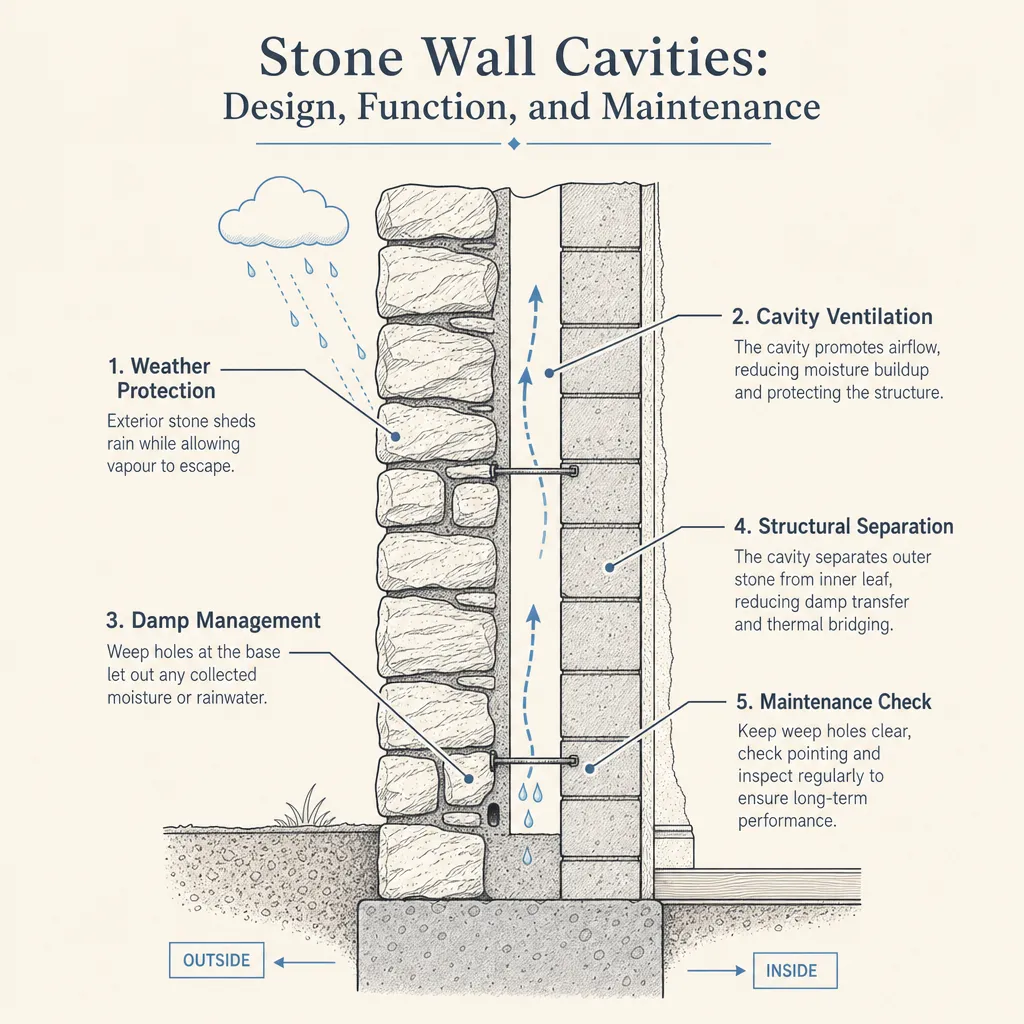
Stone wall cavities in UK construction appear in two distinct contexts: purpose-built stone-faced cavity walls common in modern construction, and traditional thick solid stone walls that achieve moisture control through mass rather than an air gap. Maintenance priorities differ markedly between the two, and listed buildings or conservation areas add further consent requirements to any repair work.
 Planning & Pre-Build
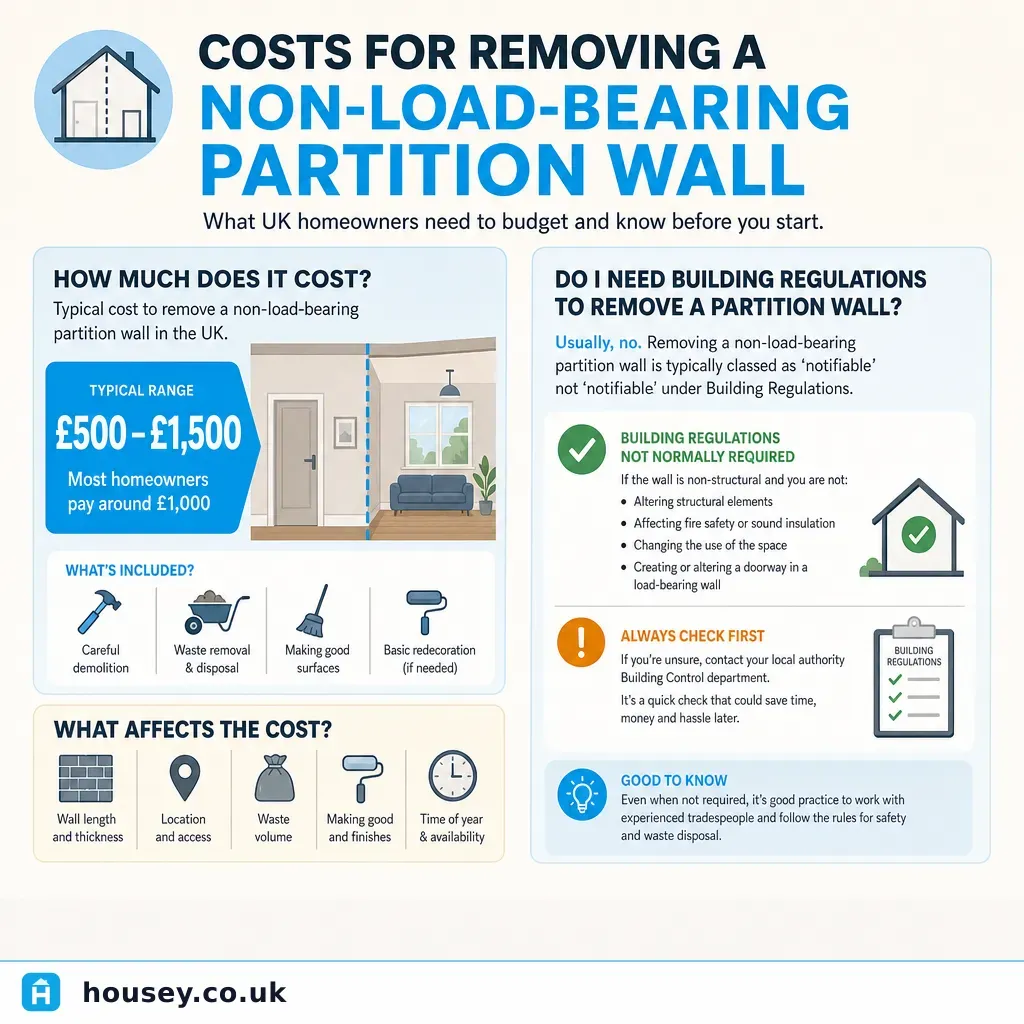
Costs for removing a non-load-bearing partition wall
Removing a non-load-bearing partition wall in a UK home typically costs £300–£1,500 in labour, plus £200–£600 or more for replastering and making good. Confirm the wall is genuinely non-structural before starting, and check whether building regulations apply — required if the wall forms a fire compartment or the property is listed.