Artificial Turf Installation: Costs and Maintenance
By Housey · Last reviewed 5th of May 2026
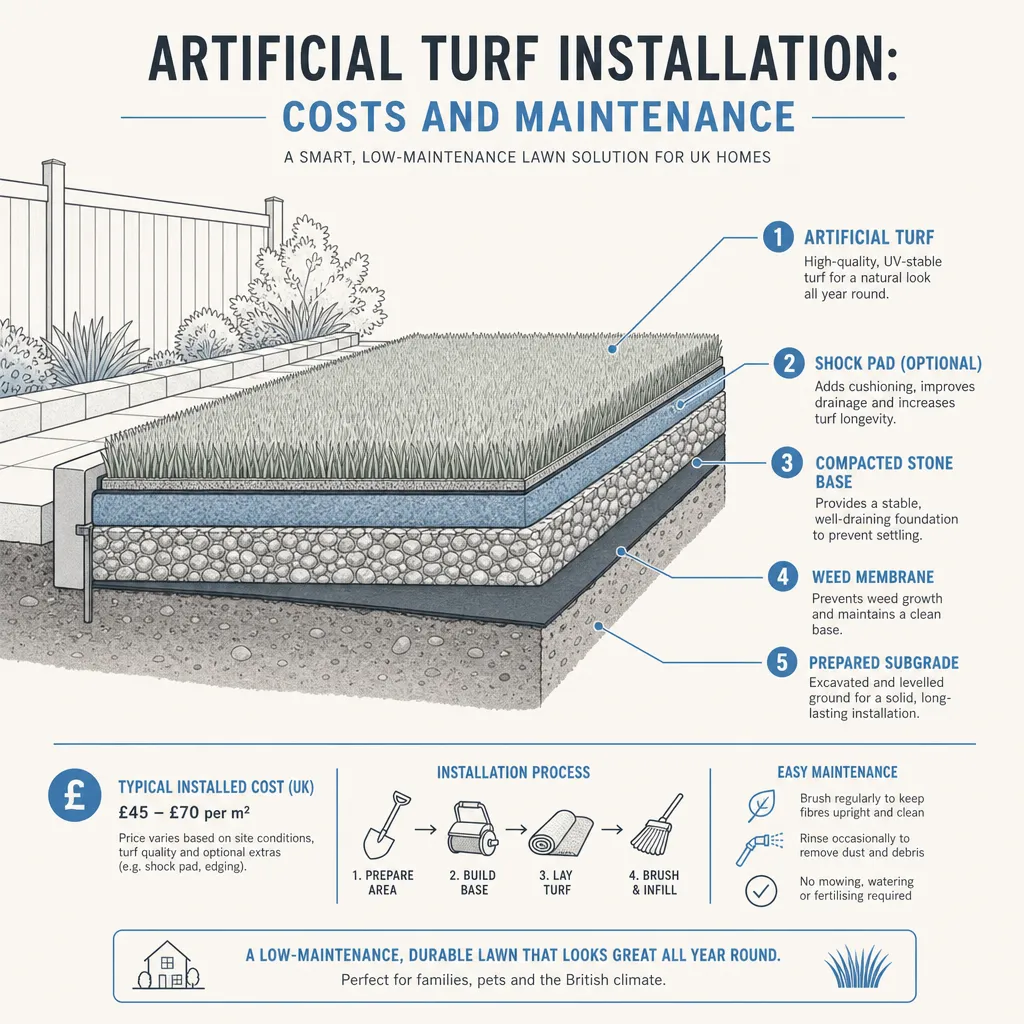
Artificial Turf Installation: Costs and Maintenance
Artificial grass has moved from niche garden feature to mainstream choice in UK homes over the past decade, particularly in smaller urban gardens, high-traffic play areas, and households where sustaining a natural lawn is impractical. If you are weighing up whether to install it, the key decisions centre on product quality, sub-base specification, realistic cost expectations, and what upkeep the surface will actually require.
Key points
- Professional artificial grass installation in the UK typically costs £50–£90 per square metre all-in, including groundworks, sub-base, edging, and infill (Indicative UK costs, last reviewed 2026-05-05).
- Sub-base quality — usually 75–100mm of compacted MOT Type 1 crushed aggregate — is the single most important factor determining long-term drainage performance and surface stability.
- Most artificial grass products carry a manufacturer warranty of 8–15 years; pile height, yarn type (polyethylene, polypropylene, or a blend), and drainage hole density vary significantly across price points.
- Artificial grass in most residential gardens falls within permitted development rights and does not require planning permission, though conservation area or listed building restrictions may apply.
- Regular maintenance — brushing every 4–6 weeks, periodic rinsing, and annual infill top-up — is necessary to maintain appearance, drainage, and hygiene.
What artificial turf installation involves
A professional installation follows a defined sequence that directly determines how the finished surface performs over its lifetime.
- Strip and excavate — existing lawn, soil, or hard surface is removed to a depth of 75–100mm.
- Install a weed membrane — laid over the excavated area to prevent growth from below.
- Lay and compact the sub-base — MOT Type 1 crushed aggregate is laid in layers and compacted with a whacker plate to create a firm, free-draining foundation.
- Optional sharp sand layer — some installers add approximately 25mm of sharp sand for additional levelling and surface drainage.
- Lay and cut the artificial turf — rolls are fitted, cut to shape, and seamed where necessary using joining tape and adhesive.
- Fix perimeter edging — a bender board, treated timber, or aluminium edging system secures the perimeter and prevents the turf from lifting.
- Apply kiln-dried silica sand infill — brushed into the pile to stabilise the fibres and improve the natural appearance.
The quality of the sub-base is the most significant determinant of how flat, stable, and long-lasting the result will be. Inadequate compaction leads to undulation, and poor drainage causes pooling and premature moss growth.
What does artificial grass installation cost in the UK?
Cost element | Indicative range | Notes |
|---|---|---|
Artificial grass (supply only) | £10–£35 per m² | Pile height, yarn type, and brand drive price differences |
Sub-base materials (MOT Type 1) | £3–£8 per m² | Depth, access, and delivery distance affect cost |
Labour (groundworks and laying) | £20–£40 per m² | Higher in London and the South East |
Edging, membrane, and infill | £3–£8 per m² | Often included in installer quotes; confirm before signing |
Total installed (all-in) | £50–£90 per m² | Higher for complex shapes, slopes, or restricted access |
Indicative UK costs, last reviewed 2026-05-05. Costs vary by region, garden condition, and product specification. Obtain at least three written quotes.
For a typical 30m² back garden, expect to pay approximately £1,500–£2,700 for professional installation. A larger garden or one with significant groundwork challenges — buried rubble, drainage problems, or restricted machinery access — will cost more.
Artificial turf versus real grass: a comparison
Factor | Artificial turf | Real grass |
|---|---|---|
Upfront cost | Higher (installation) | Lower (seed or turf laying) |
Ongoing maintenance time | Low | High (mowing, feeding, watering) |
Water use | Minimal (rinsing only) | Significant during dry periods |
Biodiversity value | Very low | Supports insects, birds, and soil organisms |
Environmental credentials | Microplastic shedding; limited recyclability | Sequesters some carbon; fully biodegradable |
Typical lifespan | 10–20 years before replacement | Ongoing with consistent care |
Surface drainage | Dependent on sub-base design | Naturally permeable when healthy |
Appearance in shade or winter | Consistent year-round | Can yellow, thin, or develop moss |
Does artificial grass need planning permission?
Artificial grass installation is generally permitted development for domestic residential gardens and does not require planning permission. However, check with your local planning authority before proceeding if:
- The property is in a conservation area — front garden changes affecting drainage or surface materials may be subject to additional restrictions.
- The property is listed — listed building consent may be required for changes to the grounds or external curtilage.
- The garden is in a flood risk area or subject to a sustainable urban drainage (SuDS) condition — replacing permeable lawn with a semi-impermeable surface may require prior assessment.
The Planning Portal on GOV.UK provides guidance on permitted development rights for householders, including householder prior approval conditions that may apply in some areas.
Maintenance: what you actually need to do
Artificial grass is lower maintenance than natural lawn but is not maintenance-free. A consistent routine preserves drainage performance, appearance, and hygiene.
Every 4–6 weeks:
- Brush the pile with a stiff broom or powered brush to keep fibres upright and prevent matting.
- Rinse with clean water to clear dust, pollen, and organic debris.
- Remove fallen leaves promptly — prolonged moisture beneath leaf cover encourages moss and algae growth.
- Clean pet waste promptly and rinse with water and a diluted enzymatic cleaning solution.
Annual tasks:
- Top up kiln-dried sand infill where it has been displaced by foot traffic or brushing.
- Check and re-fix any lifting perimeter edges.
- Apply a specialist antibacterial rinse if the area has sustained heavy pet use.
What shortens artificial grass lifespan:
- Fixed heavy furniture or planters left in position permanently — these flatten the pile irreversibly.
- Barbecue ash, cigarettes, or hot objects — synthetic fibres melt on contact.
- Solvent, oil, or fuel spills on the surface.
- Poorly designed or maintained sub-base drainage causing persistent waterlogging.
Homeowner checklist before installation
What to ask before accepting a quote
- What depth of sub-base will you install, and what material will you use?
- Is kiln-dried silica sand infill included in the quoted price?
- What grass product are you proposing, and can I see the product specification sheet?
- How long is the manufacturer warranty, and does it run through you or the product supplier?
- Where seams are required, how will they be joined and will they be visible in use?
- What happens if excavation reveals unexpected problems such as buried rubble, tree roots, or inadequate drainage?
- Is VAT included in the quoted price?
- Do you carry public liability insurance, and can I see a copy?
When to get professional help
Artificial grass installation is achievable as a DIY project for small, flat, simple areas — though sub-base compaction on anything above approximately 15m² typically requires mechanical equipment unavailable to most homeowners. Professional installation is strongly recommended where:
- The area exceeds approximately 15m².
- The ground slopes or has drainage problems requiring engineering.
- Seaming is necessary — poorly joined seams are highly visible and the most common point of failure in DIY installations.
- The garden has irregular shapes, raised borders, or features requiring complex cutting around.
- You need the surface to perform reliably for the full warranty period.
How Housey can help
If you are planning artificial grass installation, Housey can help you request quotes from qualified landscapers in your area. Compare prices, check experience with artificial turf projects, and find local professionals for your garden transformation.
Frequently asked questions
How long does artificial grass last in the UK?
Most quality artificial grass products carry manufacturer warranties of 8–15 years. With a well-compacted sub-base, correct installation, and regular maintenance, many installations perform well for 15–20 years before replacement is needed. UV resistance, fibre quality, drainage design, and the volume of foot traffic are the main factors affecting longevity in UK conditions.
Is artificial grass bad for the environment?
Artificial turf has notable environmental drawbacks. Synthetic fibres can shed microplastics, it significantly reduces biodiversity value compared to natural lawn, and most products are not readily recyclable at end of life. Surface runoff increases compared to permeable lawn. Some homeowners mitigate this by combining artificial turf with planted borders, wildlife-friendly patches, or permeable edging strips along the perimeter.
Can artificial grass be laid over concrete or existing paving?
Yes, artificial grass can be laid over solid surfaces provided drainage is adequate — either through drainage holes in the product backing or via the existing surface falls. A specialist foam underlay is typically used in place of a compacted sub-base. Ensure the underlying surface is structurally sound, level, and free of pooling areas or significant cracks before installation begins.
Does artificial grass get hot in summer?
Artificial turf can reach surface temperatures significantly higher than natural grass on sunny days — studies have recorded temperatures of 50–70°C on some products in direct sunlight. Watering the surface with a hose reduces temperature temporarily. This is worth factoring in when planning a play surface for young children, and should inform product choice when shade is limited.
Sources and further reading
- Permitted development rights for householders: technical guidance — GOV.UK
- Sustainable drainage systems (SuDS) — GOV.UK
- Artificial grass and wildlife — Royal Horticultural Society (RHS)
Useful next reads
 Improvement & Build
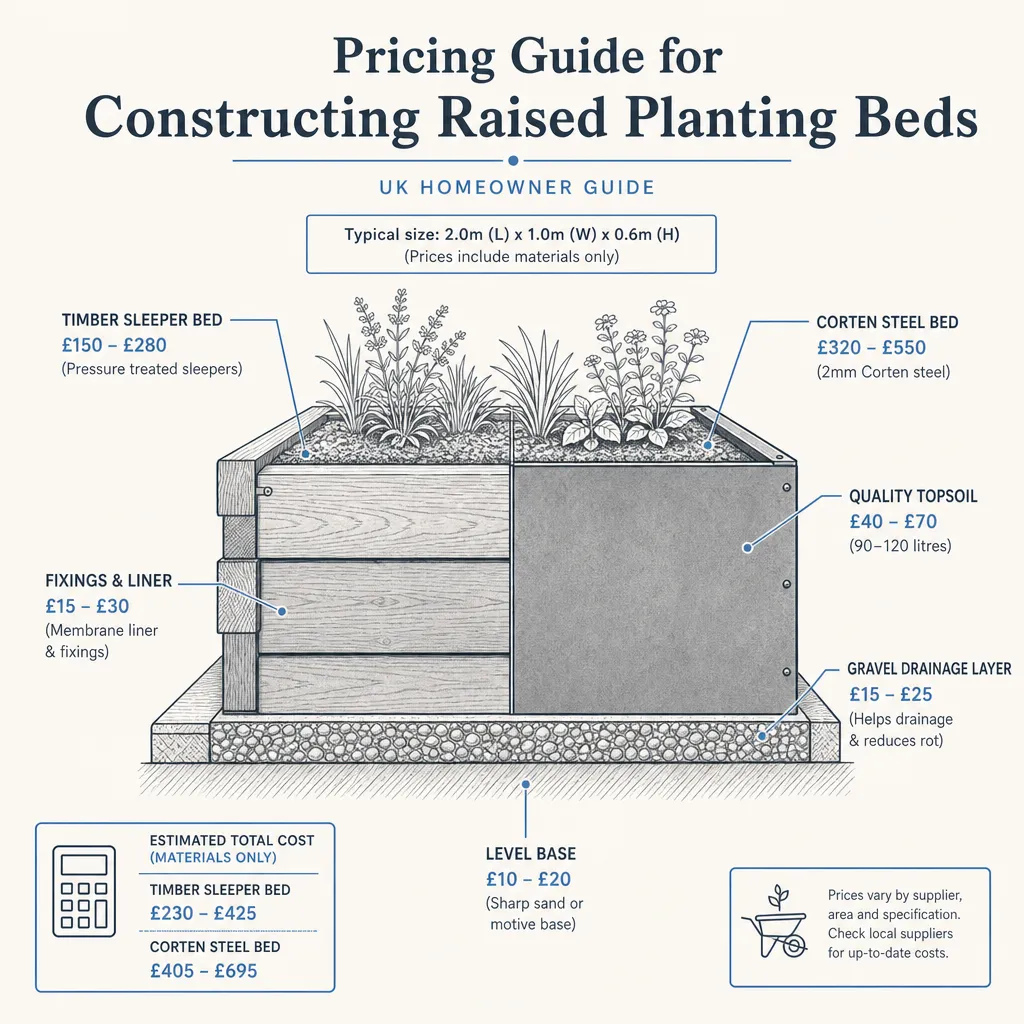
Pricing Guide for Constructing Raised Planting Beds
Raised planting beds cost from around £40 in DIY timber materials for a standard size, rising to £200–£1,500 or more for professionally installed sleeper or Corten steel beds.
 Improvement & Build
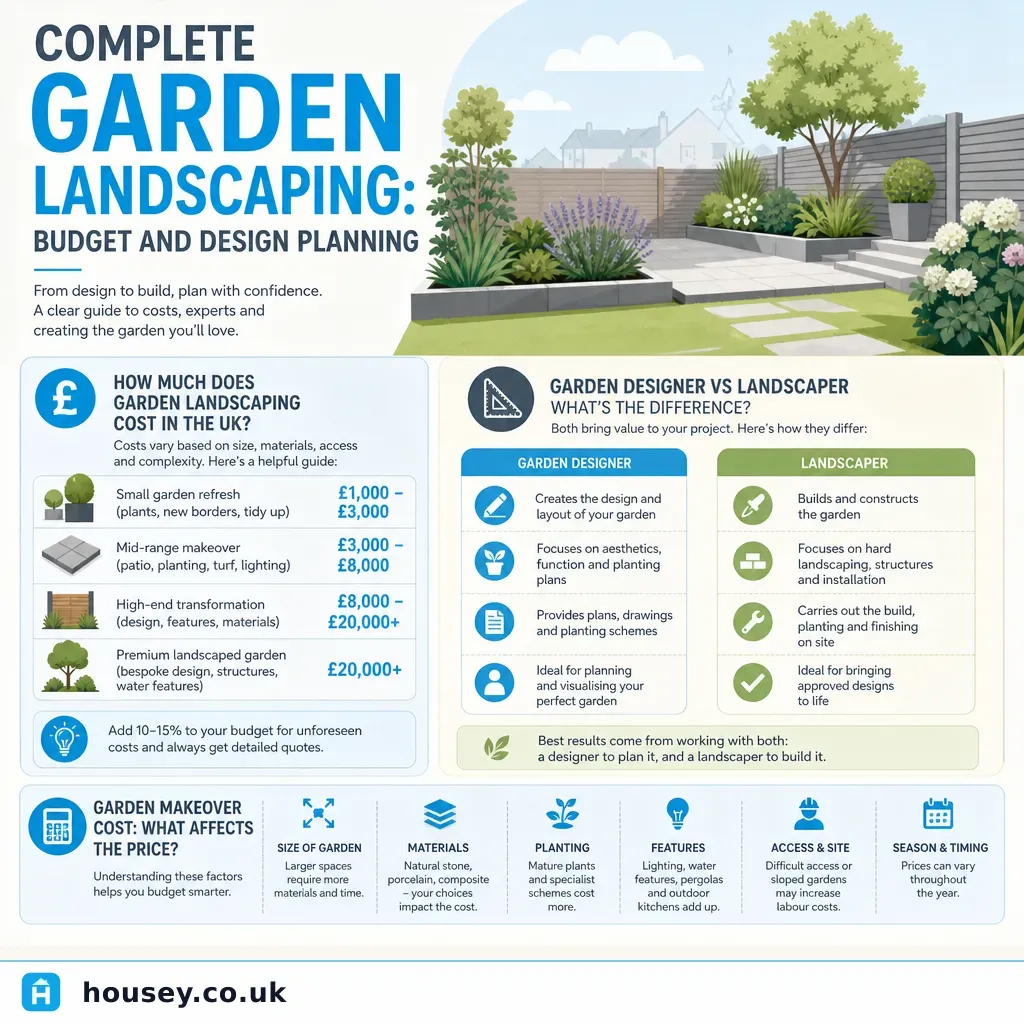
Complete Garden Landscaping: Budget and Design Planning
A mid-range garden landscaping project in the UK typically costs £75–£200 per square metre, covering design, hard landscaping, and planting.
 Improvement & Build
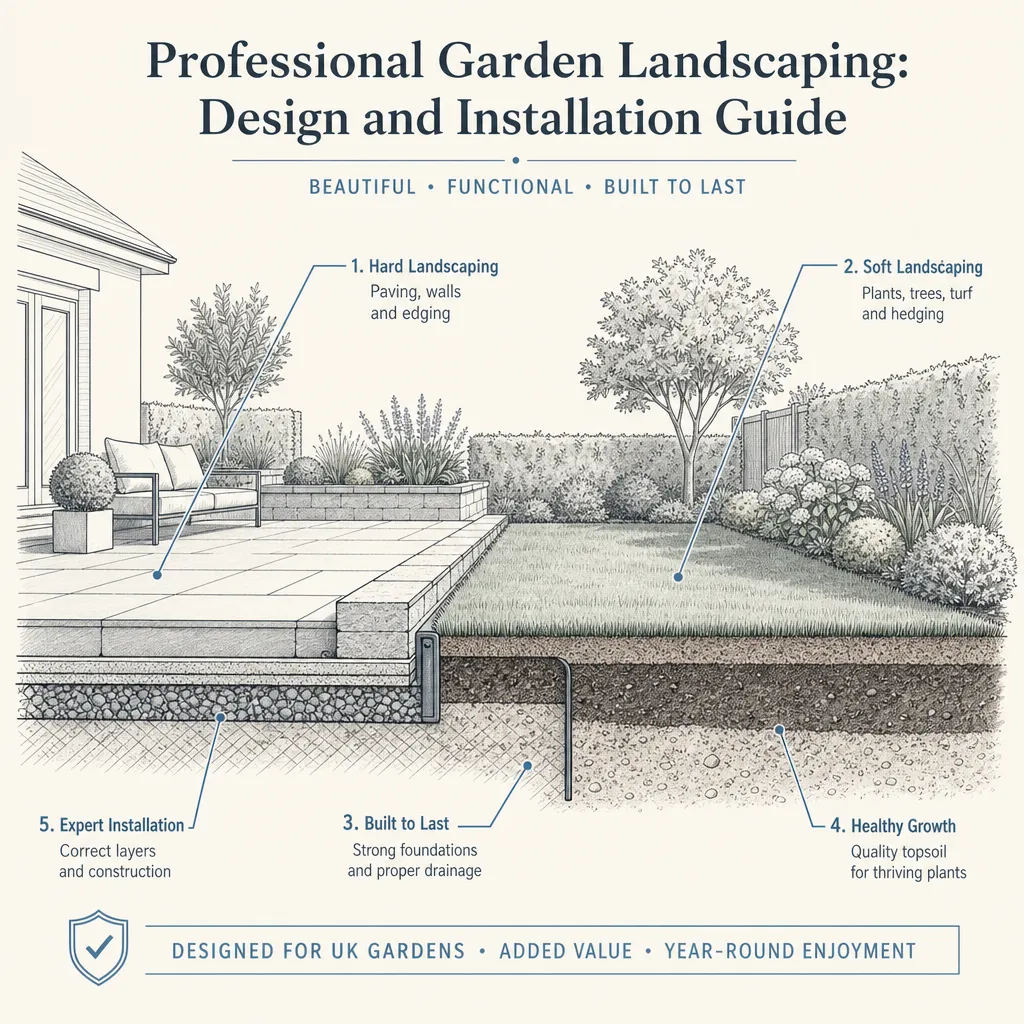
Professional Garden Landscaping: Design and Installation Guide
Professional garden landscaping covers hard elements (patios, walls, drainage) and soft elements (planting, lawn, trees).
 Improvement & Build
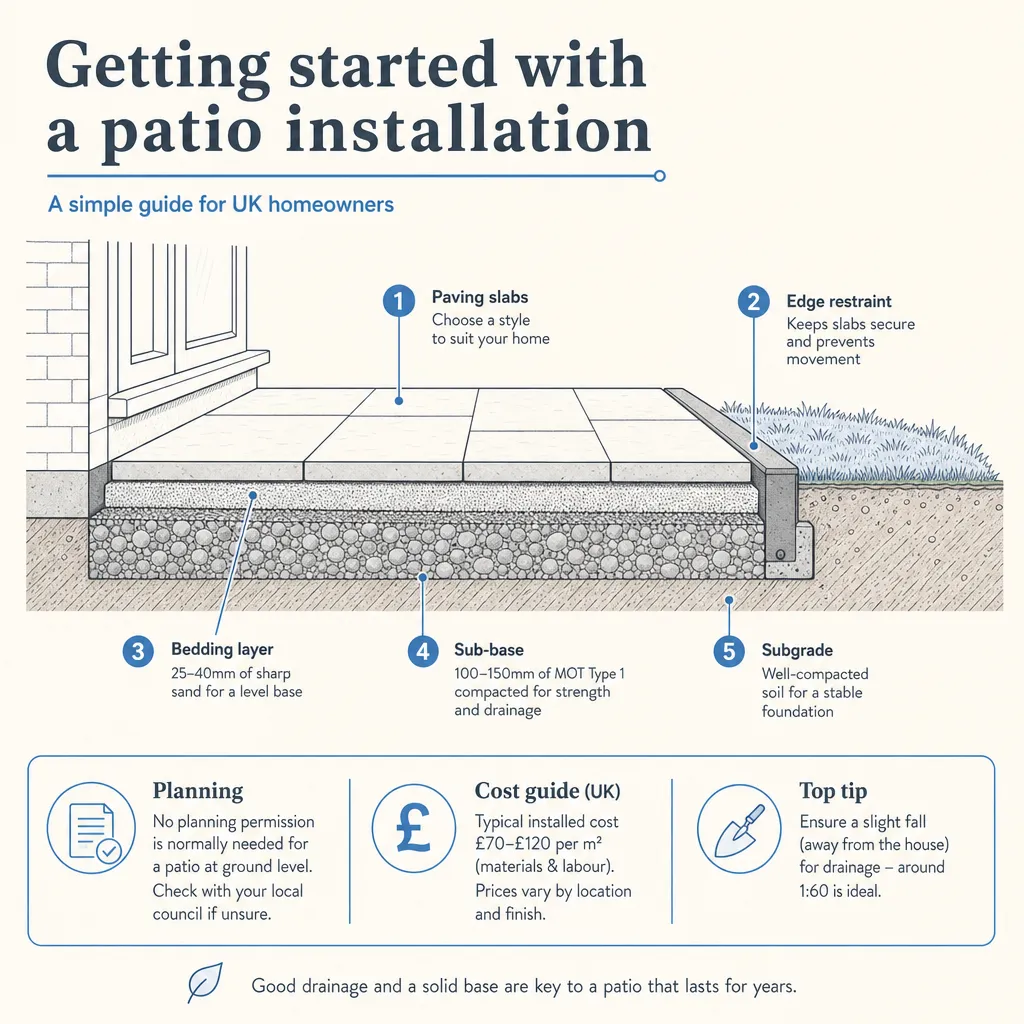
Getting started with a patio installation
Installing a patio generally does not need planning permission for rear gardens, but impermeable surfaces over 5 m² in a front garden do.
 Improvement & Build
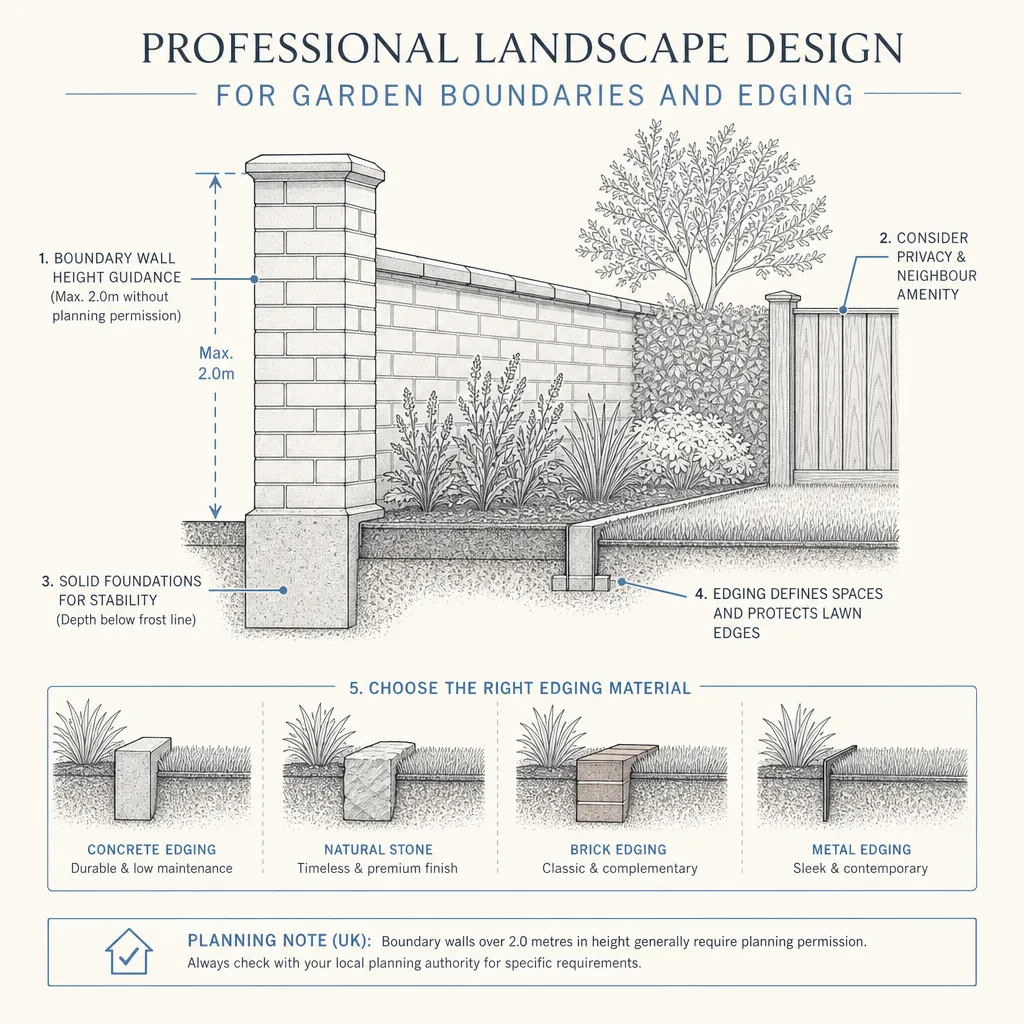
Professional Landscape Design for Garden Boundaries and Edging
Garden boundaries and edging define structure, manage drainage, and mark the legal interface between properties.