Professional Garden Landscaping: Design and Installation Guide
By Housey · Last reviewed 24th of May 2026
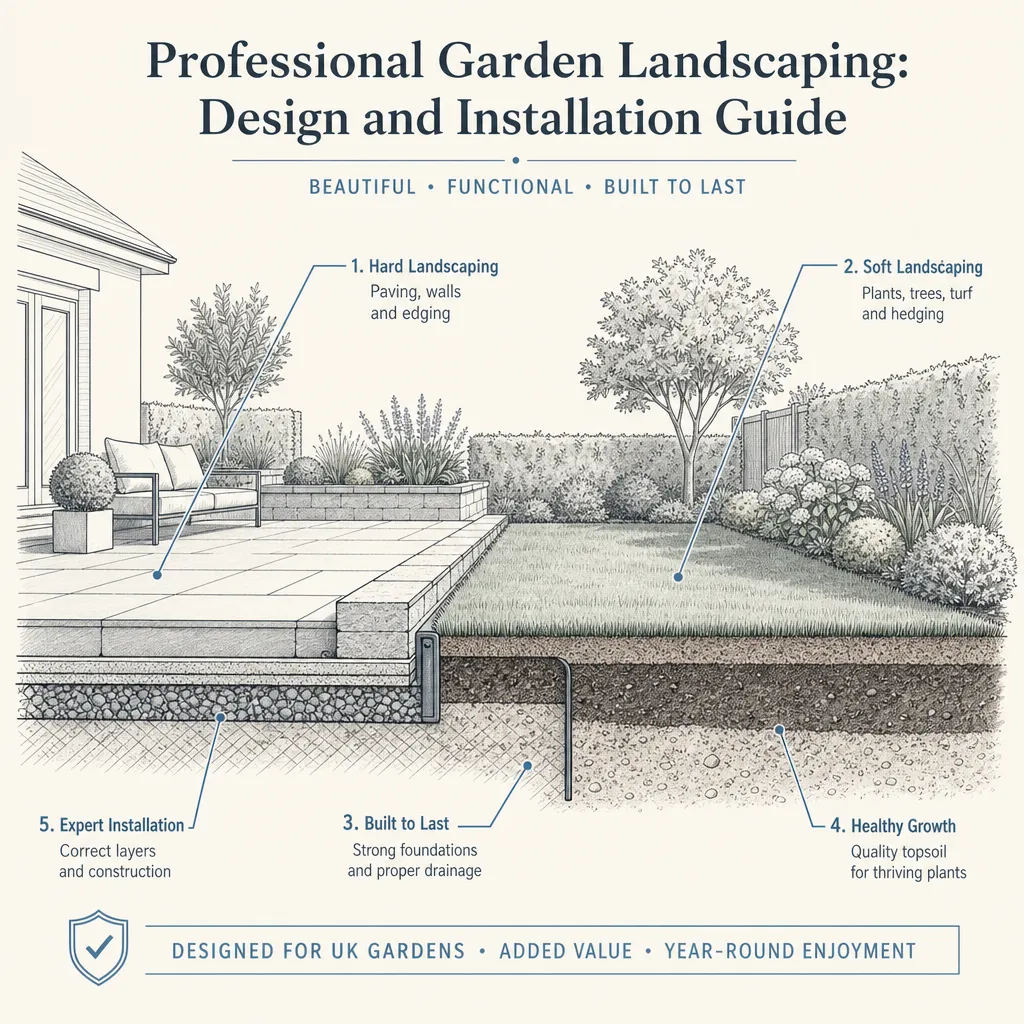
Professional Garden Landscaping: Design and Installation Guide
Garden landscaping projects range from replacing a tired patio to transforming an entire plot with raised beds, drainage systems, lighting infrastructure, and planting schemes. The question of when to use a professional — and which type — typically arises when a project moves beyond routine maintenance, involves structural or drainage elements, or needs a coherent design to add lasting value to the property. In the UK, a handful of planning and regulatory rules also apply to certain landscaping works, and missing them can be costly.
Key points
- Front garden paving over 5 m² using non-permeable materials has required planning permission since 2008 amendments to the General Permitted Development Order; permeable surfaces or drainage to a lawn or border avoid this requirement.
- Boundary walls over 1 m high adjacent to a highway, or over 2 m elsewhere, require planning permission under the Town and Country Planning Act 1990 and the GPDO.
- Trees subject to a Tree Preservation Order (TPO) or within a conservation area cannot be removed or significantly pruned without prior written consent from the local planning authority — breaches can result in an unlimited fine.
- The Association of Professional Landscapers (APL) and the British Association of Landscape Industries (BALI) both operate vetting and membership schemes; these are useful quality indicators when shortlisting contractors.
- Bare-root tree and hedging planting establishes most successfully between October and March; discuss seasonal timing with your landscaper before agreeing a start date.
Hard landscaping vs soft landscaping
Understanding this distinction helps you choose the right professional and set realistic project expectations.
Hard landscaping covers built elements: patios, decking, driveways, paths, retaining walls, pergolas, garden buildings, drainage systems, and lighting infrastructure. These are permanent or semi-permanent structures that often involve groundworks and may trigger planning or drainage consent requirements.
Soft landscaping covers living elements: planting schemes, lawn installation (turf or seed), hedging, trees, ponds, and wildflower areas. It usually follows hard landscaping and requires seasonal planning to ensure establishment.
Many landscaping companies handle both. Specialist garden designers focus on aesthetic and ecological planning; landscape contractors carry out the physical installation. Understanding which you need — or whether you need both — shapes your budget and your brief.
Comparing your main options
Option | Best for | Not ideal for | Typical output | Key consideration |
|---|---|---|---|---|
Landscape contractor | Installation-led projects with a clear written brief | Projects needing detailed design input or spatial planning | Completed hard and/or soft landscaping | Verify experience with your specific materials and plant types |
Garden designer | Redesigning layout, planting schemes, spatial planning | Large-scale civil groundworks or drainage works | Design drawings, plant lists, material specifications | May not manage installation — a separate contractor may be needed |
Design-and-install landscaper | Full garden transformation with a single point of responsibility | Budget-focused projects requiring only one element | End-to-end design, supply, and installation | Verify both design credentials and installation references independently |
Chartered landscape architect (CMLI) | Larger sites, listed settings, planning-sensitive or heritage projects | Small domestic patios or simple planting schemes | Site analysis, detailed landscape plans, planning support | Highest qualification level; higher fees; useful for complex or regulated sites |
Do you need planning permission for landscaping?
Most domestic garden landscaping does not require planning permission. The main exceptions are:
- Front garden paving: covering more than 5 m² of front garden with non-permeable materials requires planning permission. Using permeable paving, or routing drainage to a lawn or planted border, avoids this requirement.
- Walls and fencing: walls over 1 m adjacent to a highway or over 2 m elsewhere require permission. Fencing at the same heights follows the same rule.
- Garden buildings: sheds, summerhouses, and outbuildings are often permitted development if under specified footprint and height thresholds, but rules are more restrictive for listed buildings and properties within conservation areas.
- Trees: any tree with a TPO, or any tree within a conservation area, requires a written application to the local planning authority before pruning or felling — regardless of the tree's size.
Always consult your local planning authority before starting work in conservation areas, National Parks, or Areas of Outstanding Natural Beauty, where permitted development rights are commonly restricted or withdrawn.
Homeowner checklist before appointing a landscaper
What to ask before accepting a quote
- What is included in the quoted price — materials, labour, plant supply, waste removal, and skip hire?
- How will drainage be addressed, and will any connections to existing drainage be required?
- What guarantees apply to materials such as paving, decking, or timber structures, and to workmanship?
- Who supplies plants, and what is the replacement policy if plants fail to establish during the first growing season?
- Will you provide a layout drawing or planting plan before work starts?
- Are all sub-contractors — groundworkers, electricians for lighting — included in the price?
- What ongoing maintenance will be needed during the first year, and is any included?
- Is VAT included in the quoted figure?
When to get professional help
Most domestic landscaping projects are within a competent contractor's scope. However, seek specialist advice if:
- The project involves substantial drainage changes or new connections to a public sewer — Part H of the Building Regulations applies and your contractor should be aware of notification requirements.
- A retaining wall over 600 mm high is proposed — a structural calculation may be required before construction begins.
- Trees with TPOs are involved — an arborist registered with the Arboricultural Association should assess these before any works are planned.
- You are in a conservation area, within a listed building's curtilage, or in a flood-risk zone.
- Underground services — gas, electricity, water, telecoms — may cross the proposed work area; arrange a utility survey before any groundworks begin.
How Housey can help
Housey makes it straightforward to find and compare experienced landscapers and garden designers who have completed projects in your area. Submit your project brief once and receive quotes from professionals matched to your scope and location.
Frequently asked questions
Do I need Building Regulations approval for a patio or paving?
In most cases, no. Standard domestic patio and paving work does not require Building Regulations approval. However, if the project involves new drainage connections to a public sewer or a new soakaway, Part H of the Building Regulations applies. Your contractor should advise; if in doubt, contact your local authority building control before work begins.
How much does garden landscaping cost in the UK?
Costs vary significantly by scope, materials, and location. A standard porcelain patio for a medium-sized garden typically costs £1,500–£5,000 installed; a full garden redesign and installation for a larger plot can reach £15,000–£50,000 or more. Indicative UK costs, last reviewed 2026-05-24. Always obtain multiple itemised quotes and ask your contractor to explain the main cost drivers for your project.
What is the difference between a landscaper and a garden designer?
A garden designer focuses on spatial and aesthetic planning, producing drawings, planting plans, and material specifications. A landscaper or landscape contractor implements the physical works. Some companies offer both services; in other cases you will need to appoint a designer separately and tender the installation work to a contractor.
Do I need consent before removing a tree?
If the tree has a Tree Preservation Order (TPO) or is in a conservation area, you must apply to your local planning authority for consent before any pruning or felling. Carrying out works without consent can result in an unlimited fine. Check your council's planning portal or contact the council's tree officer to confirm the tree's status before instructing anyone to work on it.
Sources and further reading
- Guidance on paving your front garden (GOV.UK) — GOV.UK
- Tree Preservation Orders and trees in conservation areas (Planning Practice Guidance) — GOV.UK
- Association of Professional Landscapers — APL
- British Association of Landscape Industries — BALI
- Landscape Institute — find a member — Landscape Institute
Useful next reads
 Improvement & Build
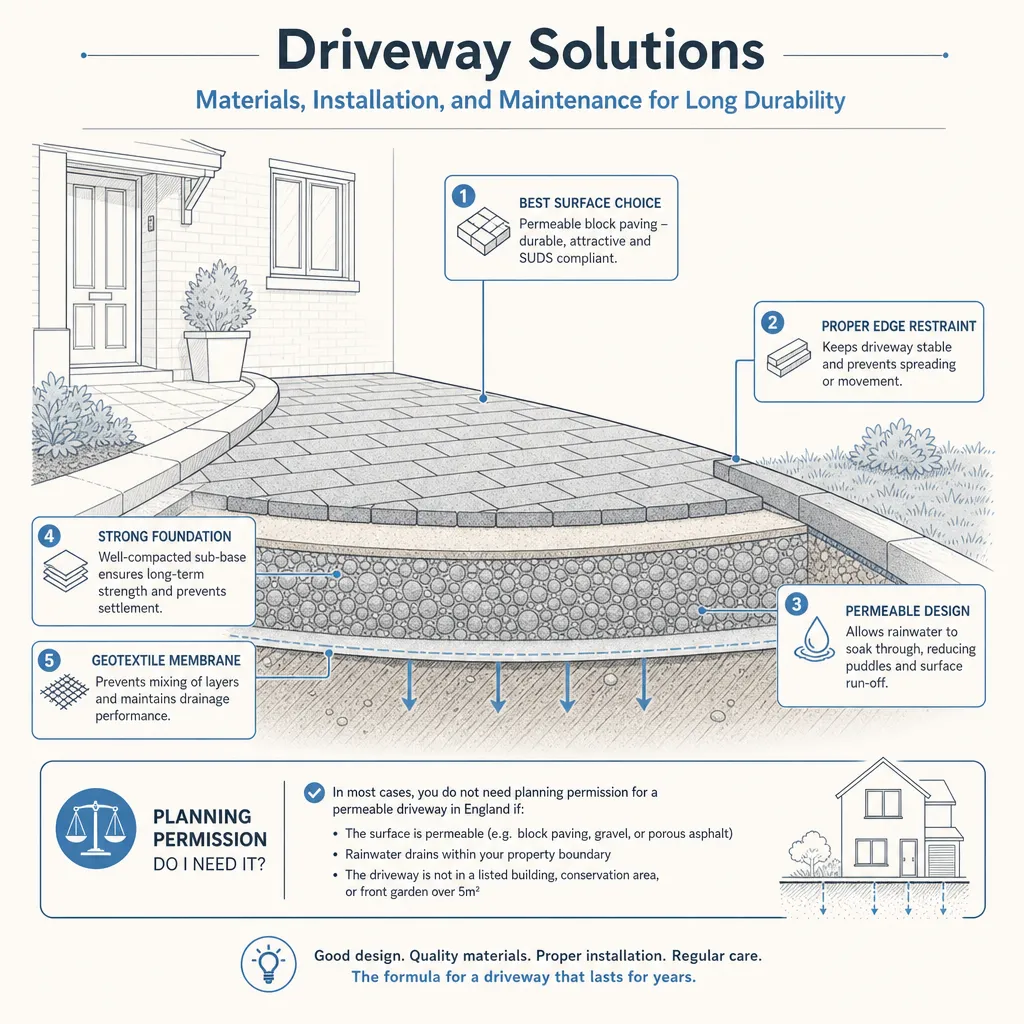
Driveway Solutions: Materials, Installation, and Maintenance for Long Durability
In England, driveways over 5 square metres need planning permission unless they use a permeable surface or drain to a lawn or border.
 Improvement & Build
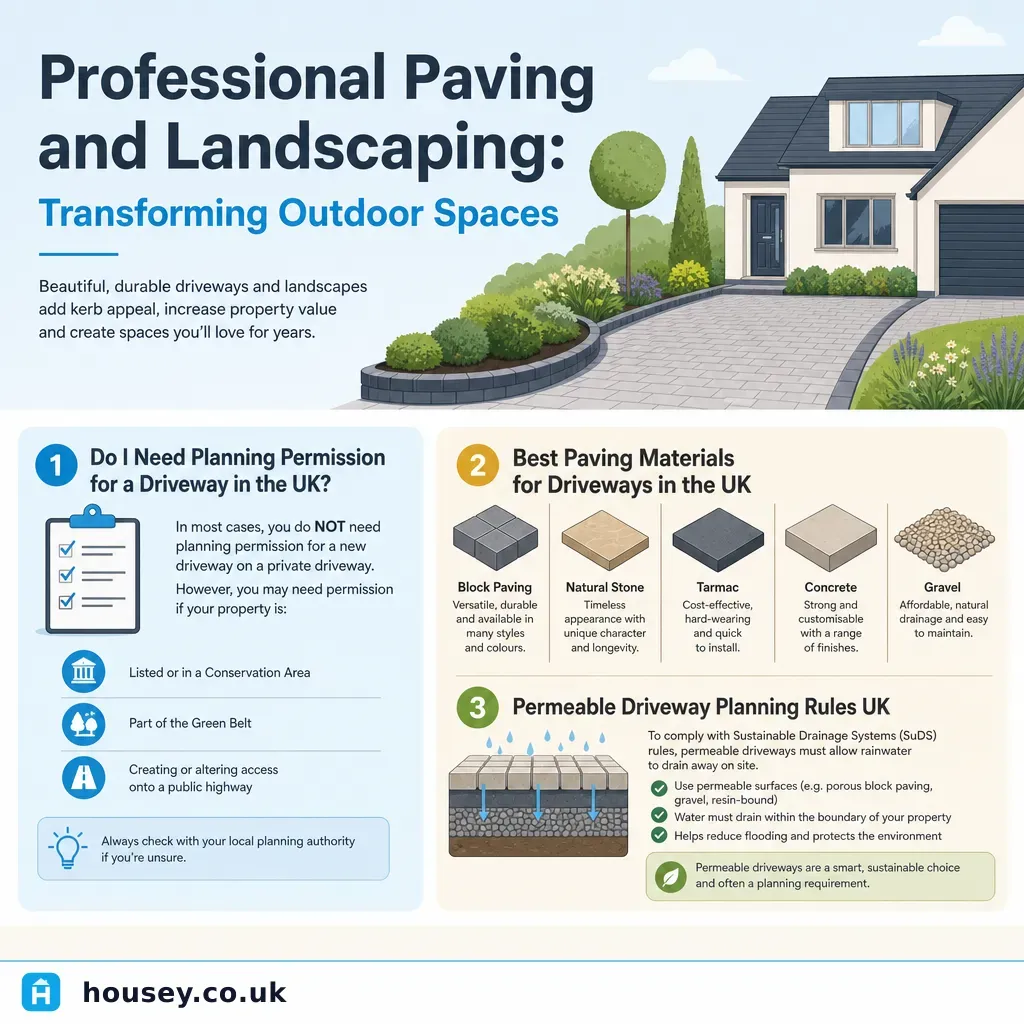
Professional Paving and Landscaping: Transforming Outdoor Spaces
Professional paving and landscaping can transform a garden or driveway, improving kerb appeal and adding usable outdoor space.
 Improvement & Build
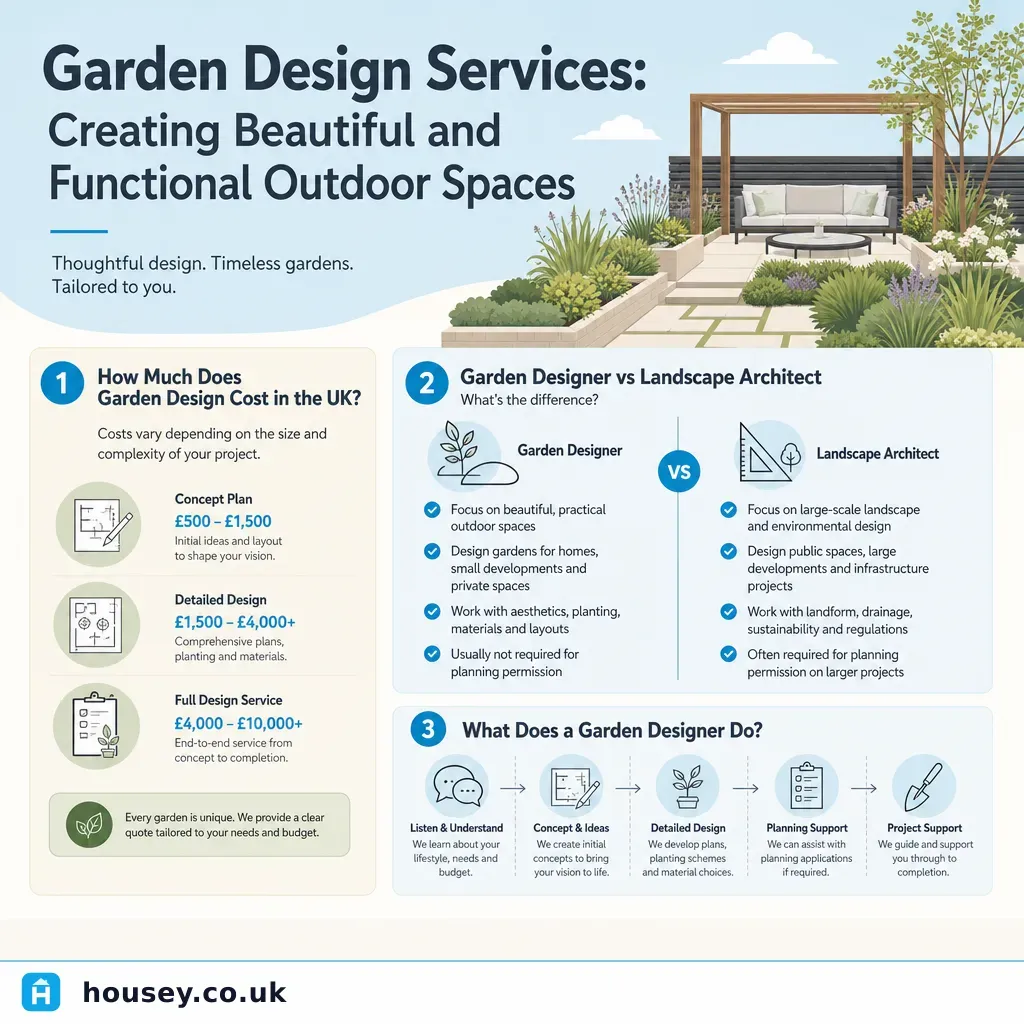
Garden Design Services: Creating Beautiful and Functional Outdoor Spaces
Professional garden design turns an underused outdoor space into a functional, attractive extension of your home.
 Improvement & Build
Seasonal Garden Transformations and Outdoor Design Ideas
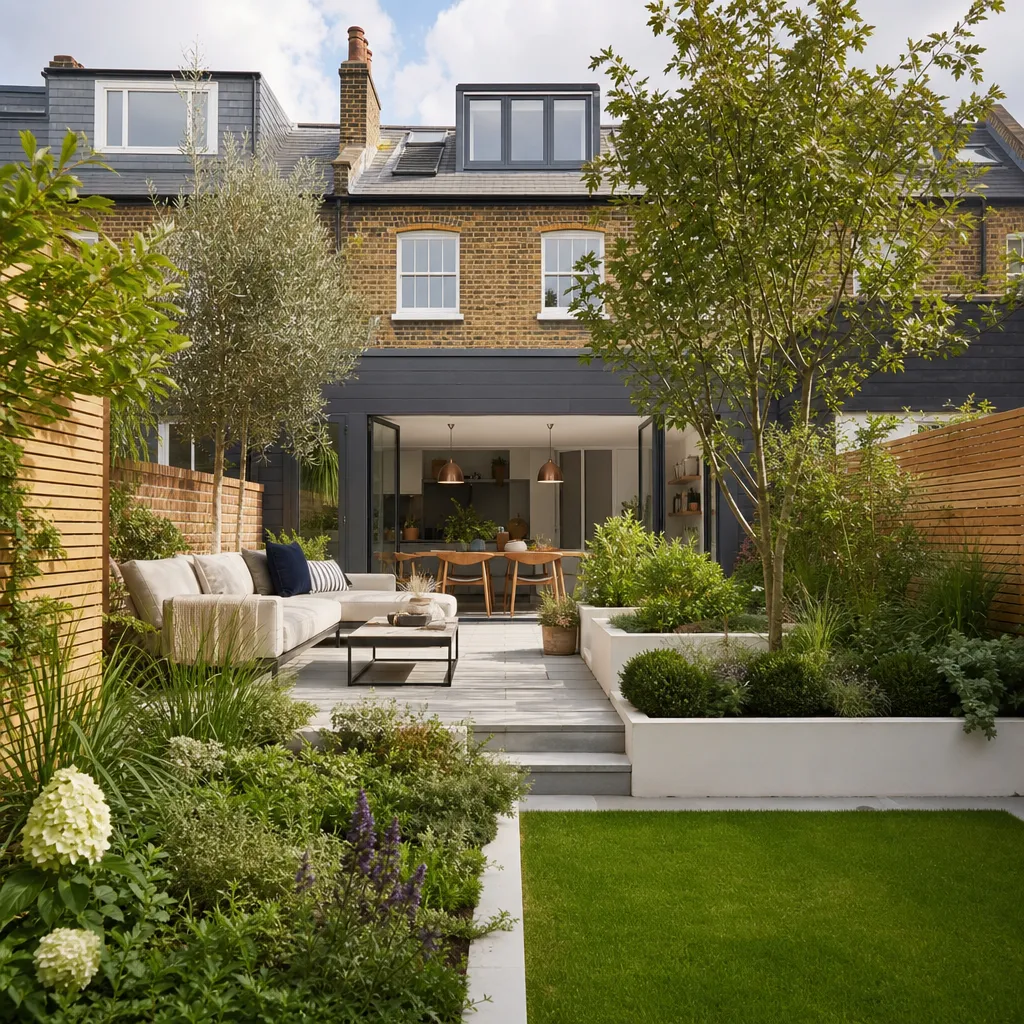
A successful garden transformation in the UK works with the seasons rather than against them — establishing structure and hard landscaping in autumn or winter, planting in spring, and enjoying the results through summer.
 Improvement & Build
Essential Steps for Driveway Installation
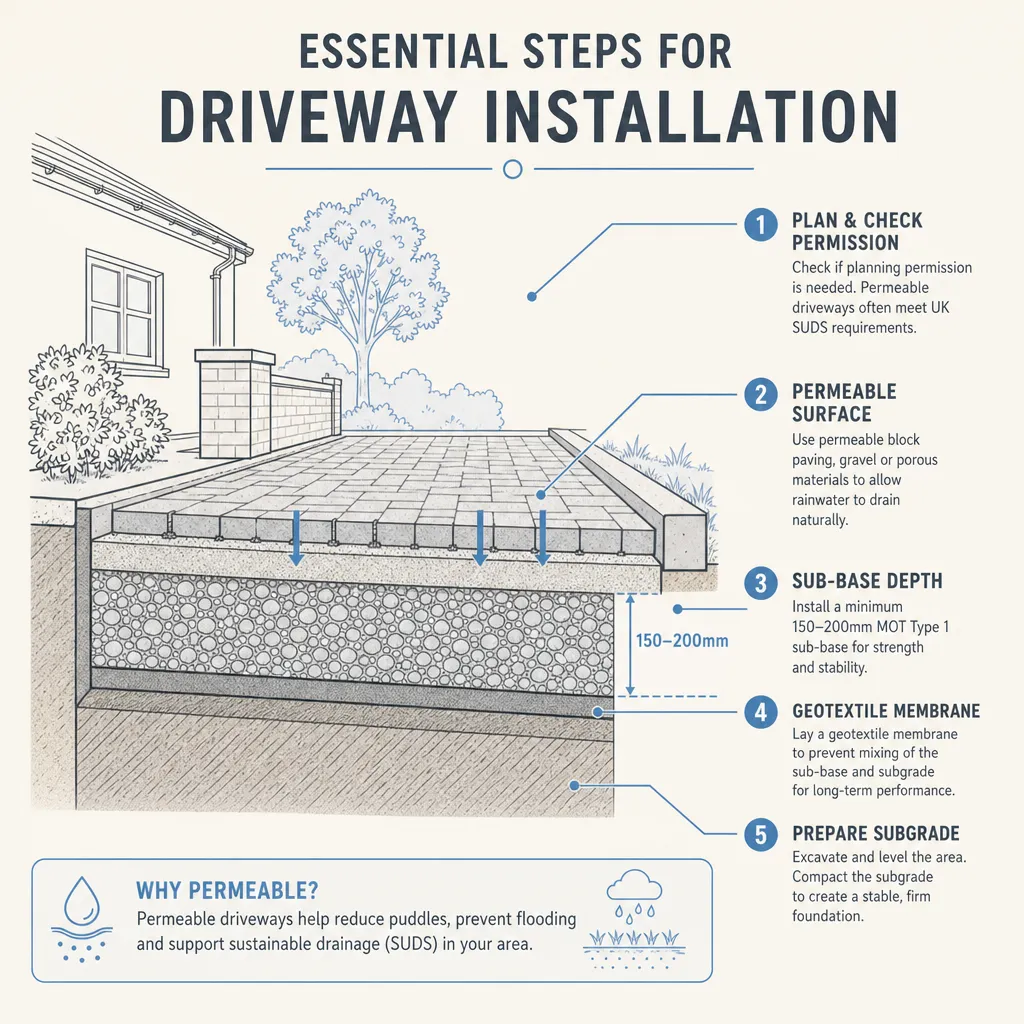
Installing a driveway in England requires planning permission only when using an impermeable surface (standard tarmac, concrete, or block paving) on a front garden area over 5 m².