Getting started with a patio installation
By Housey · Last reviewed 19th of May 2026
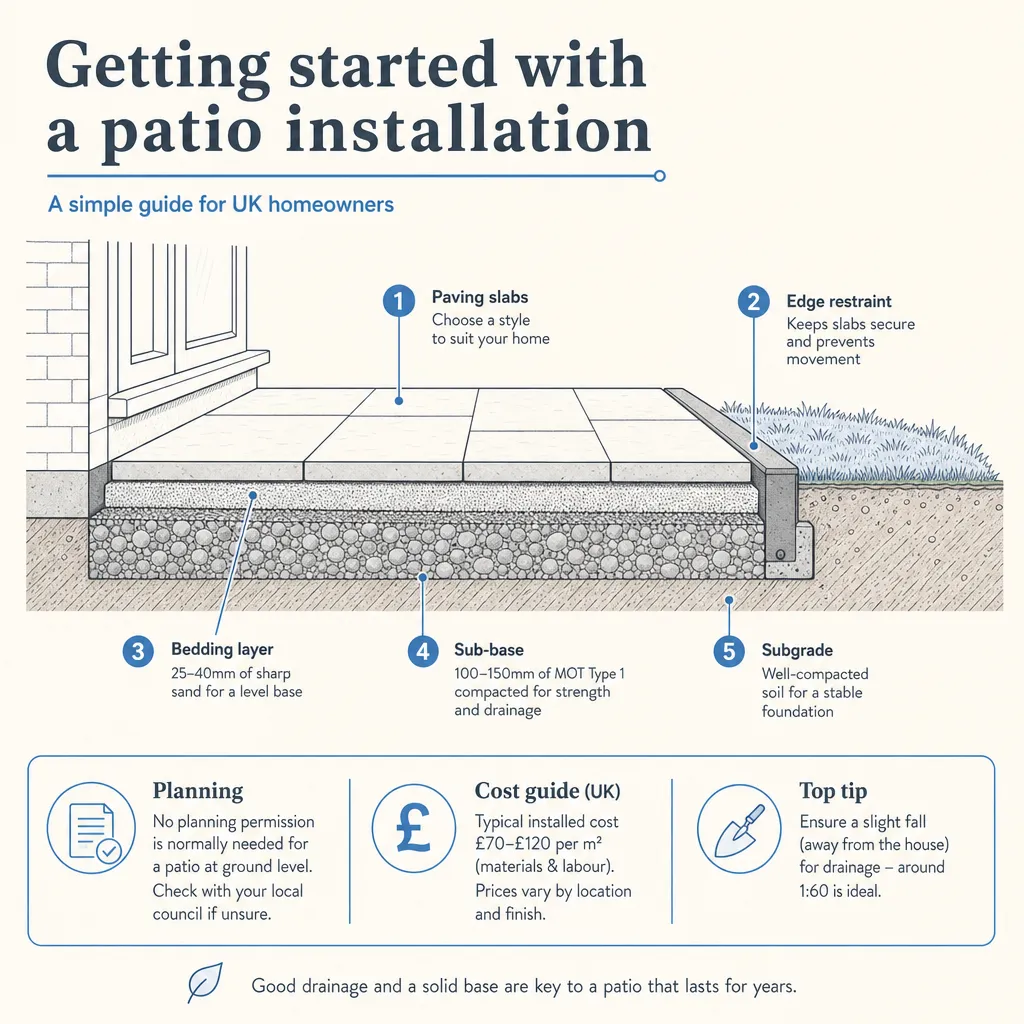
Getting started with a patio installation
A new patio can transform how you use your garden, but the difference between a long-lasting surface and one that settles, cracks, or floods after heavy rain almost always comes down to what happens beneath the slabs. Whether you are planning a simple seating area adjoining French windows or a full hard-landscaping redesign, understanding sub-base requirements, drainage obligations, material options, and relevant planning rules will put your project on solid ground from the outset.
Key points
- Impermeable patio surfaces larger than 5 m² in a front garden require planning permission unless a permeable surfacing alternative is used, under Schedule 2, Part 1, Class F of the Town and Country Planning (General Permitted Development) (England) Order 2015.
- Rear and side garden patios are generally permitted development with no size limit, unless the property is listed, in a conservation area, or subject to an Article 4 Direction.
- A compacted sub-base of at least 100 mm of MOT Type 1 crushed stone is the industry minimum for a stable patio on firm ground; 150 mm is commonly specified on clay or soft subsoils.
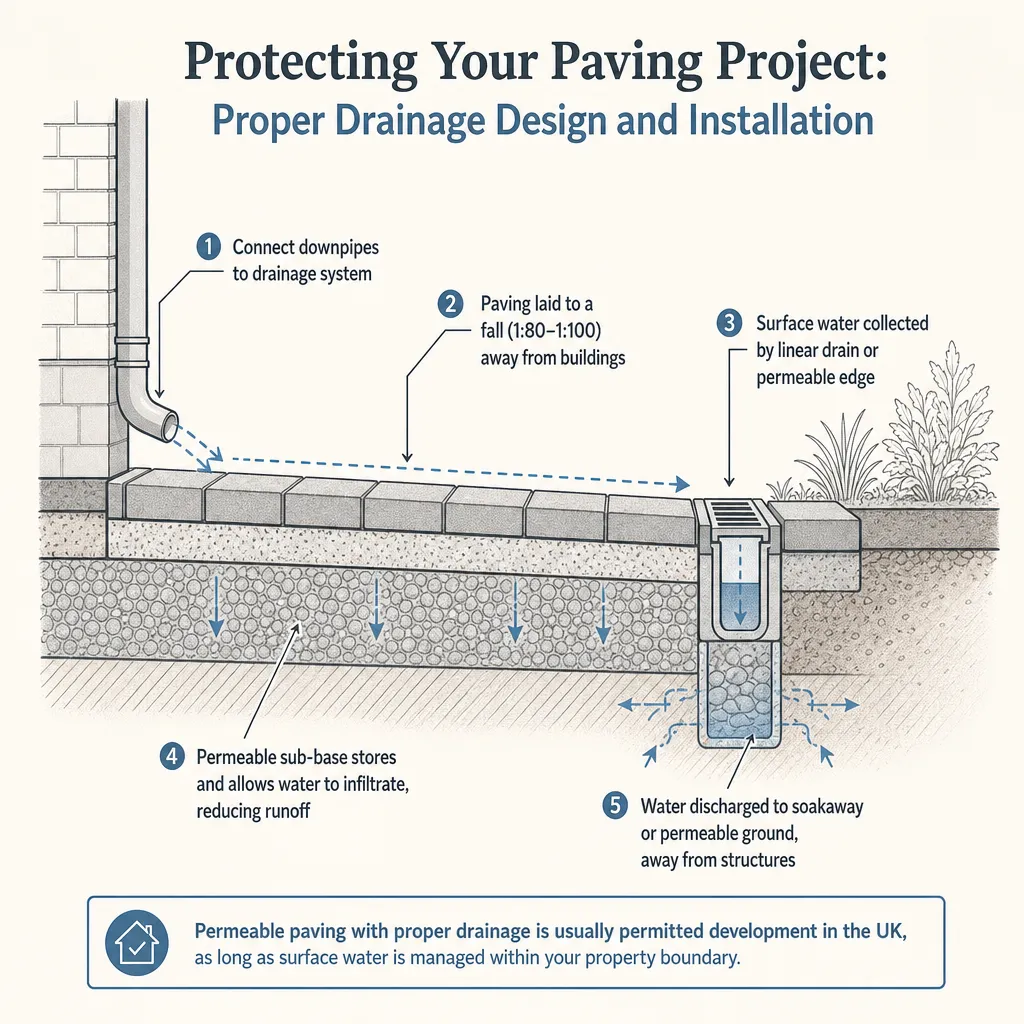
- Surface water must drain away from the house; a fall of 1:60 to 1:80 across the patio surface is typically specified to prevent pooling and damp penetration at the door threshold.
- Natural stone paving imported from India and China carries supply chain ethical risks; look for suppliers affiliated with the Ethical Trading Initiative (ETI) or carrying Fair Stone certification.
Do you need planning permission for a patio?
Planning permission is rarely required for a rear garden patio, but two situations catch homeowners out regularly.
Decision tree: planning permission for a patio
- No permission required if the patio is in the rear or side garden, the property is not listed, and no Article 4 Direction applies.
- Check permitted development conditions if the patio is in the front garden or visible from the public highway — impermeable surfaces over 5 m² require a permeable alternative (such as resin-bound aggregate, permeable block paving, or gravel) or a formal planning application.
- Consult your LPA if the property is in a conservation area, national park, Area of Outstanding Natural Beauty, or is listed — any external works including hard paving may require consent.
- Check Building Regulations Part H if drainage from the patio connects to a public sewer — this may require sewerage undertaker approval and a building control notification before the connection is made.
Building Regulations do not generally apply to garden patios. The exception is drainage: if surface water connects to a public sewer rather than a soakaway or watercourse, you must comply with Approved Document H and notify the relevant sewerage undertaker before making the connection.
Choosing your patio material
Material choice affects cost, installation method, maintenance requirements, and longevity. The table below summarises the main options used in UK residential gardens.
Material | Typical installed cost per m² | Durability | Maintenance | Best for | Watch out for |
|---|---|---|---|---|---|
Concrete flags | £40–£80 | Good | Low | Budget installs, utility areas | Can look utilitarian; prone to moss growth |
Porcelain slabs | £80–£160 | Excellent | Very low | Modern, low-maintenance gardens | Slippery when wet unless R11-rated; requires skilled installation |
Natural sandstone | £70–£150 | Good | Moderate | Traditional and cottage gardens | Porous; needs periodic sealing; ethical sourcing concerns |
Granite setts | £90–£180 | Excellent | Low | Period properties, edging details | Higher cost; hard underfoot |
Resin-bound aggregate | £50–£120 | Good | Low | Permeable front garden surfacing | Requires correct specification for level, DDA-compliant access |
Indicative UK costs, last reviewed 2026-05-19. Exclude VAT and disposal of existing surfaces. Always obtain itemised quotes.
Sub-base and installation essentials
Poor preparation is the most common cause of patio failure in the UK. Freeze-thaw cycles, clay subsoils, and high rainfall mean that a skimped sub-base will move, sink, or crack within a few seasons.
Homeowner checklist: what to confirm with your installer before work starts
Managing patio drainage
One of the most common causes of post-installation disputes is drainage that was not properly planned. Surface water must go somewhere, and directing it carelessly can cause problems for your house foundations or neighbouring properties.
Options for managing patio runoff:
- Soakaway: an excavated pit filled with rubble or a proprietary polypropylene crate system. Must be sited at least 5 m from the house and 2.5 m from any boundary; size should account for local rainfall intensity.
- Channel drain to surface water drain: check whether the drain is shared or adopted, and whether a connection requires approval from your sewerage undertaker.
- Permeable paving: allows water to pass through the surface and sub-base; suitable where underlying ground conditions support infiltration.
- Planted or gravel border: a permeable strip adjacent to the patio can absorb modest volumes of runoff and prevent water reaching the house wall.
What to ask before accepting a quote
- Is the price based on a site survey, or does it assume standard ground conditions?
- What sub-base depth is included, and what are the assumptions about existing ground?
- How will surface water drainage be managed, and is a drainage channel included in the price?
- What material is being quoted — manufacturer, slab thickness, and grade?
- Who will dispose of the existing surface and excavated material, and is this included in the price?
- Is VAT included?
- What is the programme of works?
- What warranty or guarantee is offered on the completed installation?
Red flags when hiring a patio installer
- No site visit before quoting — ground conditions vary significantly and cannot be assessed remotely.
- A quote substantially lower than others without a clear explanation of what is excluded.
- Contractor unable to explain the sub-base depth or specification when asked directly.
- No written contract or scope of works provided before work starts.
- Cash-only payment requested with no invoice or receipt.
- Materials described vaguely without specifying origin, thickness, or grade.
When to get professional help
Most patio projects are straightforward and do not require specialist input beyond a competent landscaper or groundworker. Seek additional expertise if:
- The garden has significant level changes requiring retaining walls or structures — these may need structural design input.
- The patio area is large and close to house foundations — an engineer's view on drainage and ground loading may be prudent.
- You suspect the ground has been previously filled, contaminated, or contains unrecorded drainage runs.
- The property is listed or in a conservation area and external works require formal consent before proceeding.
How Housey can help
Housey connects homeowners with vetted landscapers and groundworkers who specialise in hard landscaping. If you want to integrate your patio into a broader garden layout, garden designers on Housey can help you plan the wider scheme before installation work begins. Compare quotes, check credentials, and move forward with confidence.
Frequently asked questions
Does a garden patio need planning permission?
In most cases, no. Rear garden patios are generally permitted development in England regardless of size. Front garden surfaces over 5 m² require planning permission if impermeable, or must use a permeable alternative. Listed buildings and properties in conservation areas or designated areas may require consent for any external works, including hard paving.
How long does it take to install a patio?
A straightforward patio of 20–40 m² typically takes 2–5 days on site, including excavation, sub-base, and slabbing. More complex projects with drainage channels, steps, or raised areas may take 1–2 weeks. Allow additional time for materials to be ordered and delivered — natural stone and large-format porcelain slabs often have lead times of 2–4 weeks.
How much does a patio cost in the UK?
A typical installed cost ranges from around £1,500 to £7,000+ depending on size, material, and ground conditions. Indicative rates range from £40–£80/m² for concrete flags to £150–£180/m² for premium porcelain or granite. Always obtain at least three itemised quotes before appointing a contractor. Indicative UK costs, last reviewed 2026-05-19.
What is the best material for a low-maintenance patio?
Porcelain slabs are widely regarded as the lowest-maintenance hard paving option. They do not need sealing, resist staining, and retain their appearance well. However, they require skilled installation on a correctly prepared sub-base and must be specified with an anti-slip textured finish rated R11 or better for safe outdoor use. Natural sandstone requires periodic sealing and is more porous.
Sources and further reading
- Paving your front garden — Planning Portal
- Permitted development rights for householders — technical guidance — GOV.UK
- Building Regulations Approved Document H — Drainage and Waste Disposal — GOV.UK
- British Association of Landscape Industries — BALI
- Fair Stone — responsible natural stone sourcing — Fair Stone
Useful next reads
 Improvement & Build
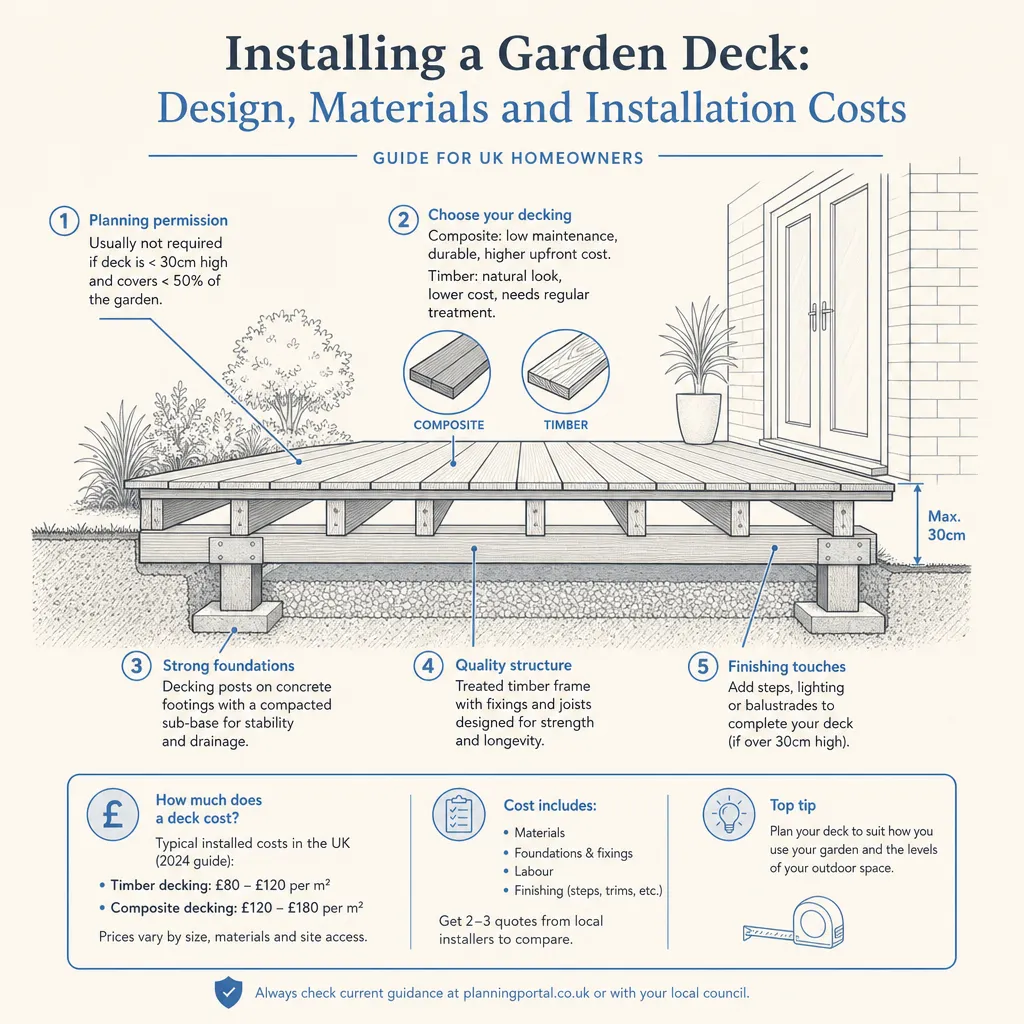
Installing a Garden Deck: Design, Materials and Installation Costs
Garden decking costs £80–250 per m² installed in the UK depending on material — softwood is cheapest, composite the most durable.
 Improvement & Build
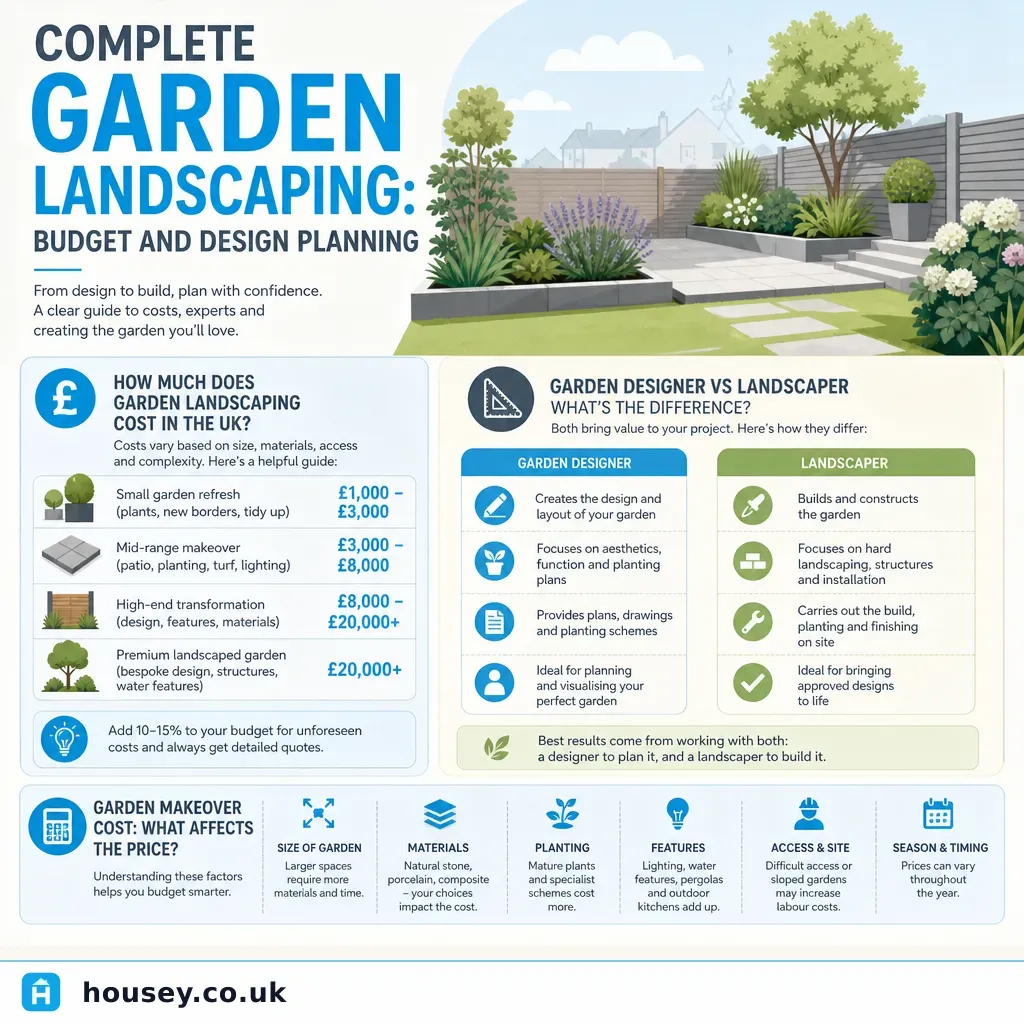
Complete Garden Landscaping: Budget and Design Planning
A mid-range garden landscaping project in the UK typically costs £75–£200 per square metre, covering design, hard landscaping, and planting.
 Improvement & Build
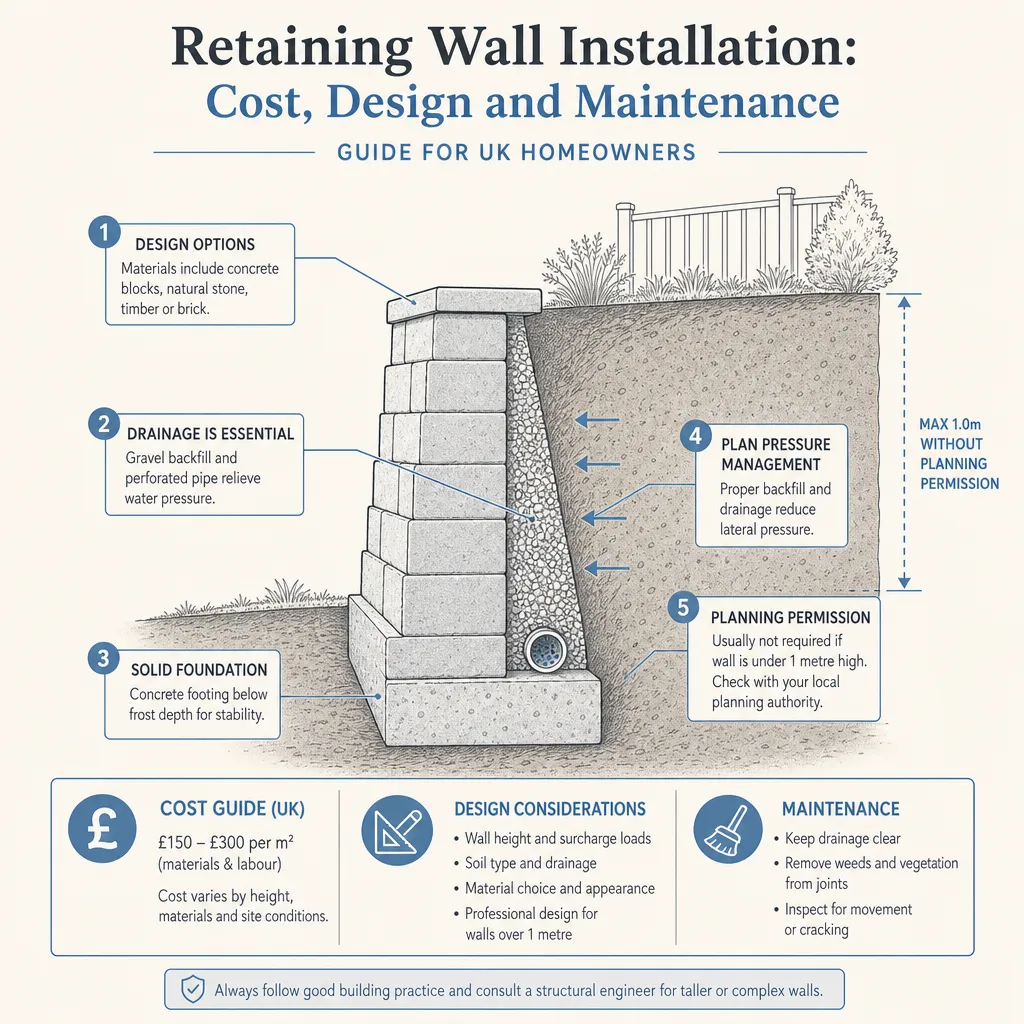
Retaining Wall Installation: Cost, Design and Maintenance
A retaining wall holds back soil on a sloped or banked site.
 Improvement & Build
Installing a Fire Pit: Garden Features and Outdoor Space Design
Installing a garden fire pit in the UK is generally permitted, but Smoke Control Area rules prohibit open wood-burning in most towns and cities.
 Improvement & Build
Protecting Your Paving Project: Proper Drainage Design and Installation
Good paving drainage starts with a minimum fall of 1:60 to 1:80 away from buildings, a correctly specified sub-base, and a clear outlet for surface water.