Professional Landscape Design for Garden Boundaries and Edging
By Housey · Last reviewed 31st of May 2026
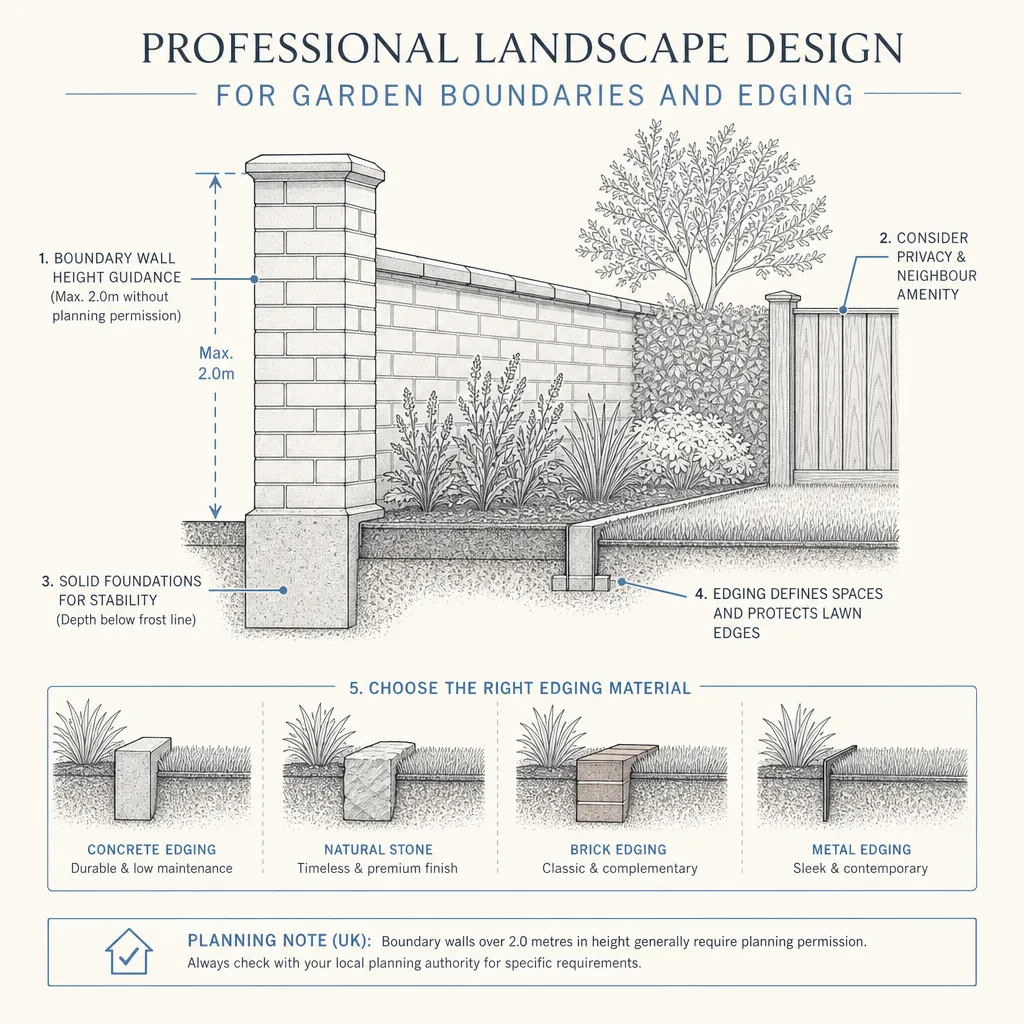
Professional Landscape Design for Garden Boundaries and Edging
Garden boundary and edging work sits at the intersection of aesthetics, drainage, legal ownership, and occasionally planning law. It typically comes up during a full garden redesign after moving in, when resolving a boundary query with a neighbour, or as part of a wider hard-landscaping project on a 1930s semi or Victorian terrace. The materials chosen and the quality of groundwork beneath them will determine how long the scheme holds up — particularly through UK freeze-thaw cycles and the wet winters common across much of England and Wales.
Key points
- Garden boundary walls or fences over 1 metre in height adjacent to a highway, or over 2 metres elsewhere, generally require planning permission under the Town and Country Planning Act 1990, Schedule 2, Part 2.
- The Party Wall etc. Act 1996 may apply if excavation for a retaining wall or boundary structure falls within 3 metres of a neighbouring building's foundation.
- Hard steel or aluminium strip edging typically carries a service life of 25–40 years; pressure-treated timber garden edging is usually rated for 10–15 years.
- A Landscape Institute (LI) member or RHS-qualified garden designer will normally carry professional indemnity insurance — ask to see evidence before instructing.
- Block paving edge restraints must be bedded in concrete haunching (not mortar alone) to resist lateral spread; this is a common failure point in self-installed schemes.
When planning permission applies to boundary work
Most boundary fencing and low edging sits comfortably within permitted development rights and needs no formal application. However, there are clear thresholds where a planning application becomes necessary:
- Any wall, fence, or gate over 1 metre in height adjacent to or within the curtilage of a highway.
- Any wall, fence, or gate over 2 metres in height anywhere else on the property boundary.
- Properties in conservation areas, on Article 4 Direction land, or involving listed buildings may face further restrictions — always check with your local planning authority before starting work.
- Front garden boundary treatments in conservation areas often need to match the existing character in material and height.
If permitted development rights have not been removed by a planning condition, you can usually erect or replace lower fencing without consent. When in doubt, use the GOV.UK interactive permitted development guidance or contact your local planning authority directly.
Choosing boundary and edging materials
The right material depends on the application — lawn edging, planted bed edging, and full boundary divisions are different problems with different answers. This table compares the main options:
Material | Best for | Typical lifespan | Main risk | Approximate installed cost |
|---|---|---|---|---|
Steel or aluminium strip | Clean lawn and bed edges, contemporary gardens | 25–40 years | Slight edge hazard if exposed above ground; higher upfront cost | £15–£30 per linear metre |
Concrete or stone kerb | Driveway edges, heavy-use paths | 30+ years | Requires concrete haunching; heavier groundwork | £20–£45 per linear metre |
Pressure-treated timber | Informal edging, raised beds | 10–15 years | Rot over time; may leach preservative near vegetable beds | £8–£18 per linear metre |
Brick or block edging | Formal gardens, period properties | 25–40 years | Mortar joints can fail; frost damage if poorly laid | £20–£50 per linear metre |
Flexible plastic edging | Budget option, temporary schemes | 3–8 years | Fades, warps, and lifts; limited aesthetic appeal | £3–£10 per linear metre |
Indicative UK costs, last reviewed 2026-05-31. Prices vary by region, site conditions, and project complexity. Obtain at least three quotes before committing.
For boundary walls and fences, brick, stone, and close-board timber fencing each carry different maintenance burdens and planning considerations. A professional garden designer or landscaper will advise on what suits the property era and local planning character.
Groundwork matters as much as the surface material
A common mistake is investing in premium edging or boundary materials whilst skimping on the preparation underneath. Key points:
- Edging that heaves after the first winter is almost always caused by insufficient depth of bedding or haunching — at least 100 mm of compacted sub-base is usually required beneath concrete edging.
- Retaining walls over approximately 600 mm must be engineered to handle lateral soil pressure; this may require input from a structural or civil engineer rather than a landscaper alone.
- Drainage behind retaining walls is critical — without weep holes or a sub-surface land drain, hydrostatic pressure will eventually crack or overturn the wall.
- Tree roots near proposed edging or boundary walls can undermine foundations over time; check proximity to any trees covered by a Tree Preservation Order (TPO) before excavating.
Homeowner checklist: planning your boundary or edging project
Before instructing a professional, work through these points:
What to ask before accepting a quote
- What groundwork preparation is included, and to what depth?
- What happens if ground conditions differ from expectations — for example, rock, made ground, or a high water table?
- Who is responsible for obtaining any necessary planning consents?
- Is the work covered by professional indemnity and public liability insurance?
- What is the maintenance requirement and the warranty period for both materials and installation?
- Is VAT included in the quoted price?
- Who will carry out the physical work — the company's own team or a subcontractor?
When to get professional help
A competent DIYer can manage basic lawn edging and low timber border strips. However, certain situations call for a professional from the outset:
- Any boundary wall over approximately 600 mm in height, particularly if it retains soil on one side.
- A full garden redesign involving changes in level, drainage, or hard landscaping adjacent to the house structure.
- Any uncertainty about the legal boundary — a solicitor or RICS chartered surveyor should confirm this before work starts.
- Conservation areas, listed buildings, or Article 4 land — the planning implications require professional advice before work begins.
- Works near trees with TPOs; consult an arboricultural consultant before planning any work within the root protection area.
How Housey can help
Housey connects you with vetted landscapers, garden designers, and groundworkers working across your area. Submit a brief description of your project, compare quotes from local professionals, and review credentials and past work before choosing the right team — whether that is a simple lawn edge or a full boundary redesign with retaining walls and planting.
Frequently asked questions
Do I need planning permission for a new garden fence?
Generally no — a fence, wall, or gate up to 1 metre high adjacent to a highway, or up to 2 metres elsewhere, is permitted development. Conservation areas, listed buildings, and properties with Article 4 Directions may have different rules. Always check with your local planning authority if you are unsure about the specific thresholds that apply to your property.
Can I move a boundary fence without my neighbour's agreement?
Legal boundaries are fixed by the title deeds and HM Land Registry title plans. Moving a fence inward onto your own land is usually acceptable, but placing it anywhere that could encroach on a neighbour's land requires agreement and potentially legal advice. Boundary disputes should be resolved through a RICS boundary surveyor or solicitor before any physical work begins.
How do I find the legal boundary of my property?
Your property's title plan at HM Land Registry shows the general boundary position. The title deeds and any attached deed of covenant contain the legal description. For precision, instruct a RICS-accredited boundary surveyor to produce a measured boundary report — particularly important if there is any dispute or you are planning work close to the boundary line.
Is steel lawn edging worth the extra cost?
For long-term installations in high-use gardens, steel or aluminium edging usually pays back its higher upfront cost through longevity and low maintenance. It holds a clean line, does not rot or warp, and sits flush with minimal disruption to mowing. Timber and plastic remain adequate for lower-budget or temporary schemes.
Sources and further reading
- Permitted development rights for householders — technical guidance — GOV.UK
- Party Wall etc. Act 1996 — legislation.gov.uk
- Tree Preservation Orders and trees in conservation areas — GOV.UK
- Landscape Institute — find a member — Landscape Institute
Useful next reads
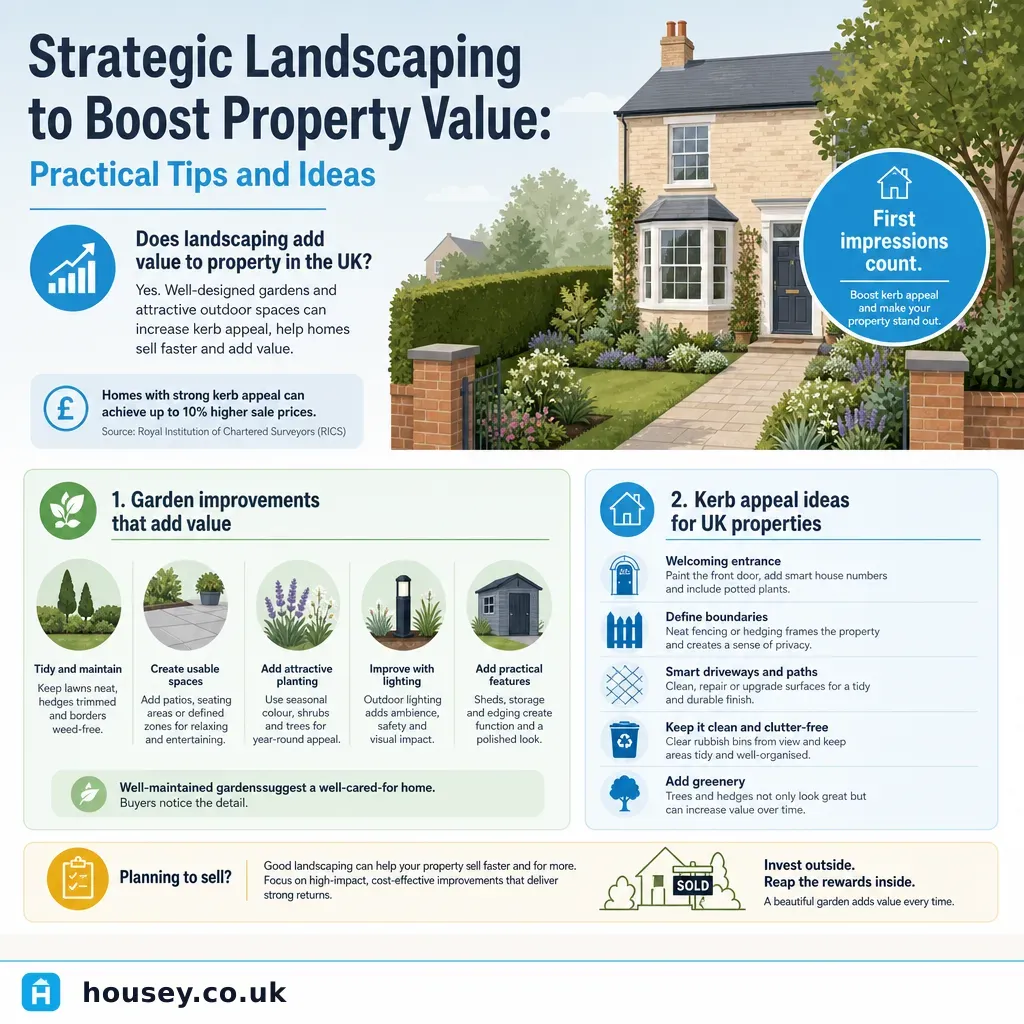 Improvement & Build
Strategic Landscaping to Boost Property Value: Practical Tips and Ideas
Landscaping can add 5–15% to a UK property's perceived value, though the return varies by improvement type.
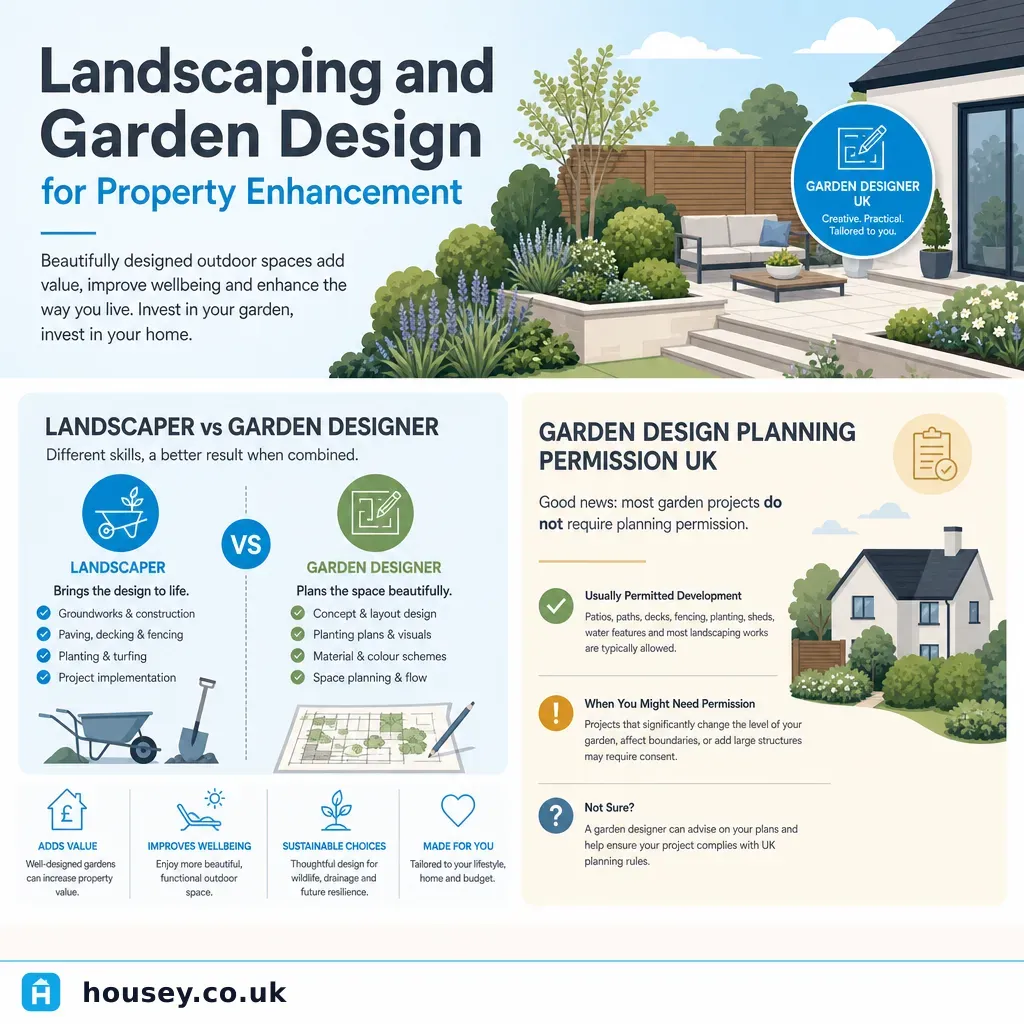 Improvement & Build
Landscaping and Garden Design for Property Enhancement
Landscaping and garden design involve planning and building outdoor spaces — from patios and raised beds to planting schemes and drainage.
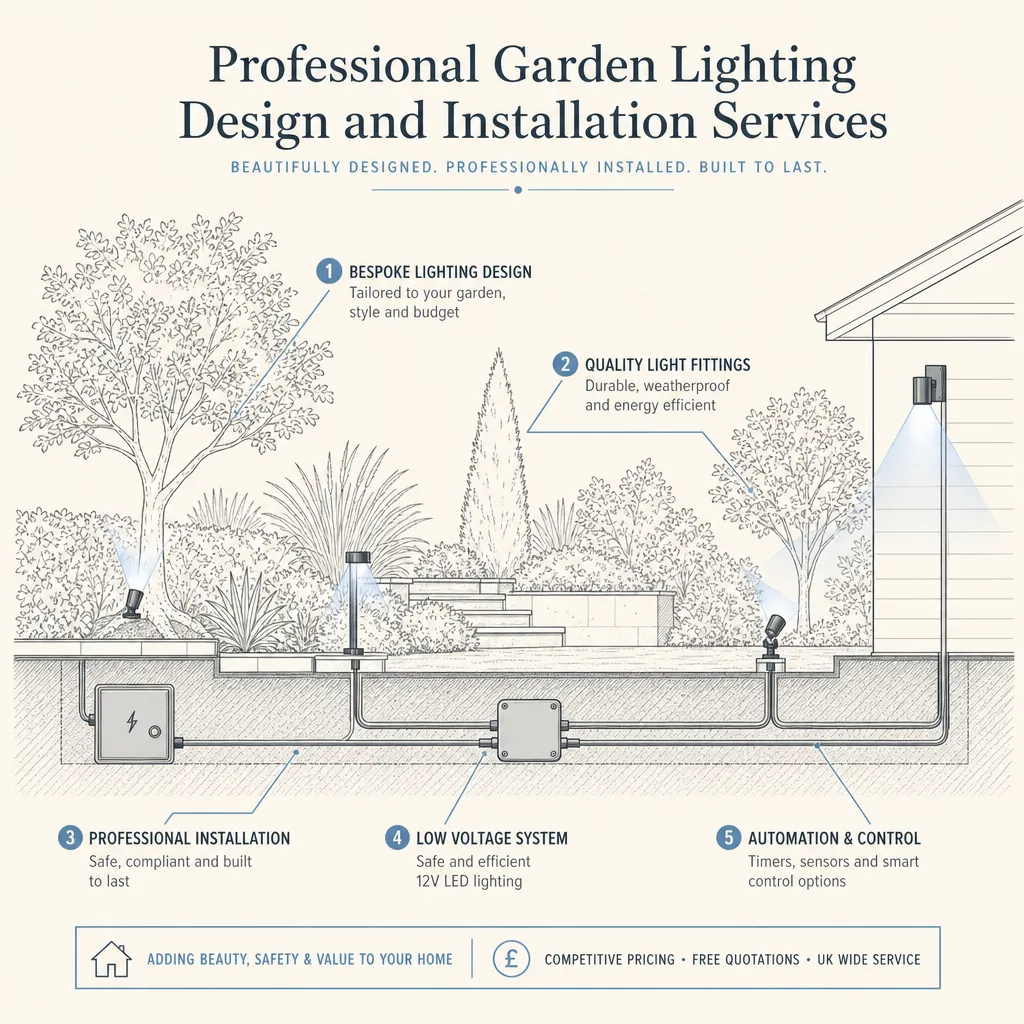 Improvement & Build
Professional Garden Lighting Design and Installation Services
Professional garden lighting design involves planning a scheme suited to your garden's layout and features, then having it installed by a qualified electrician.
 Improvement & Build
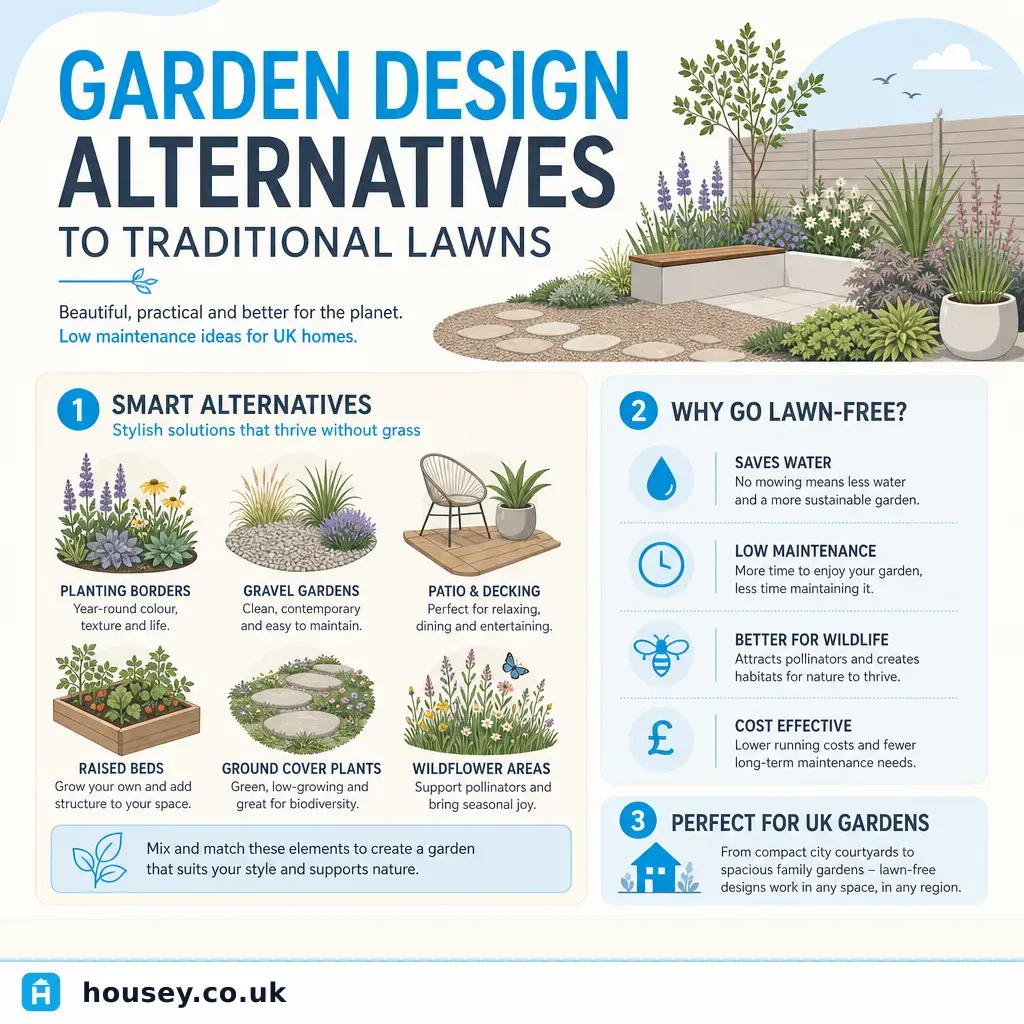
Garden Design Alternatives to Traditional Lawns
Popular alternatives to a traditional grass lawn in UK gardens include gravel, wildflower meadow planting, permeable paving, and ground-cover plants.
 Improvement & Build
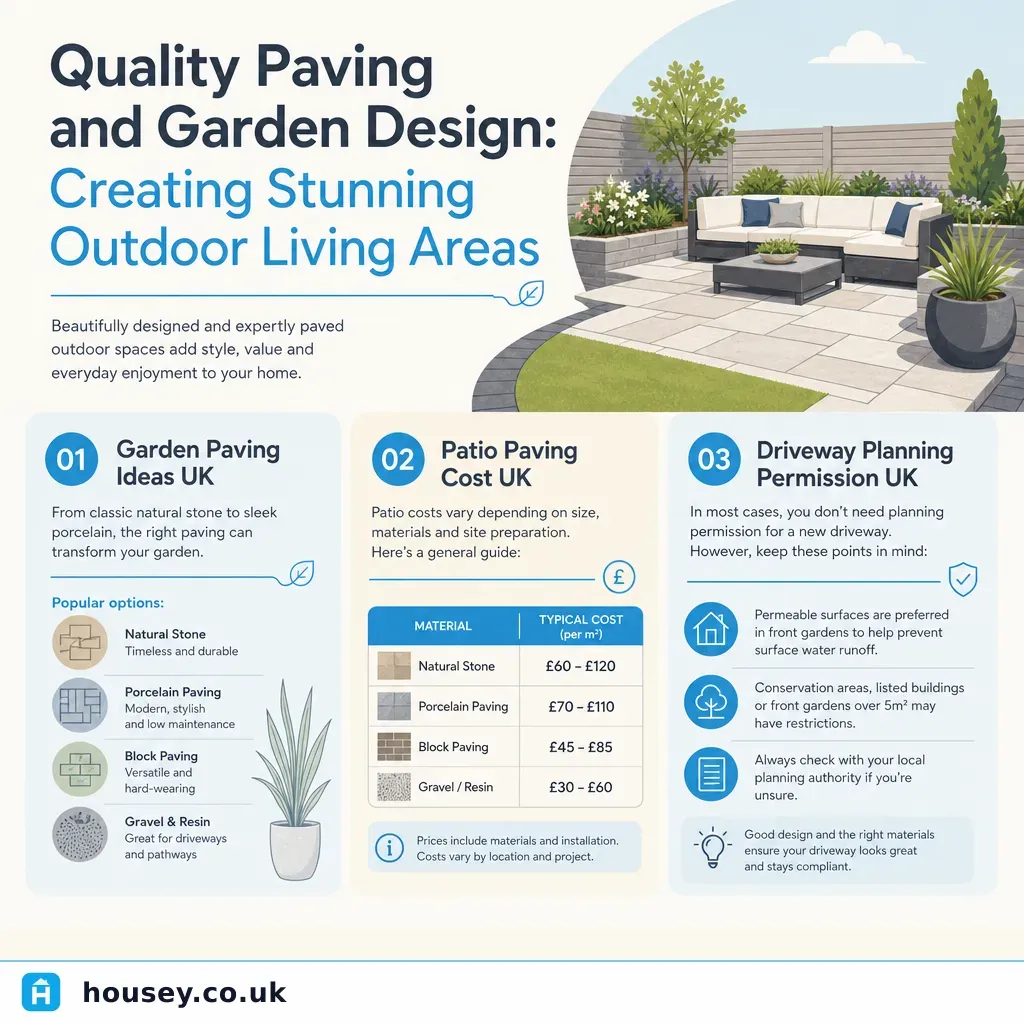
Quality Paving and Garden Design: Creating Stunning Outdoor Living Areas
Paving a front garden driveway over 5 square metres in England requires planning permission unless a permeable material is used and drainage is managed on site.