Pricing Guide for Constructing Raised Planting Beds
By Housey · Last reviewed 5th of May 2026
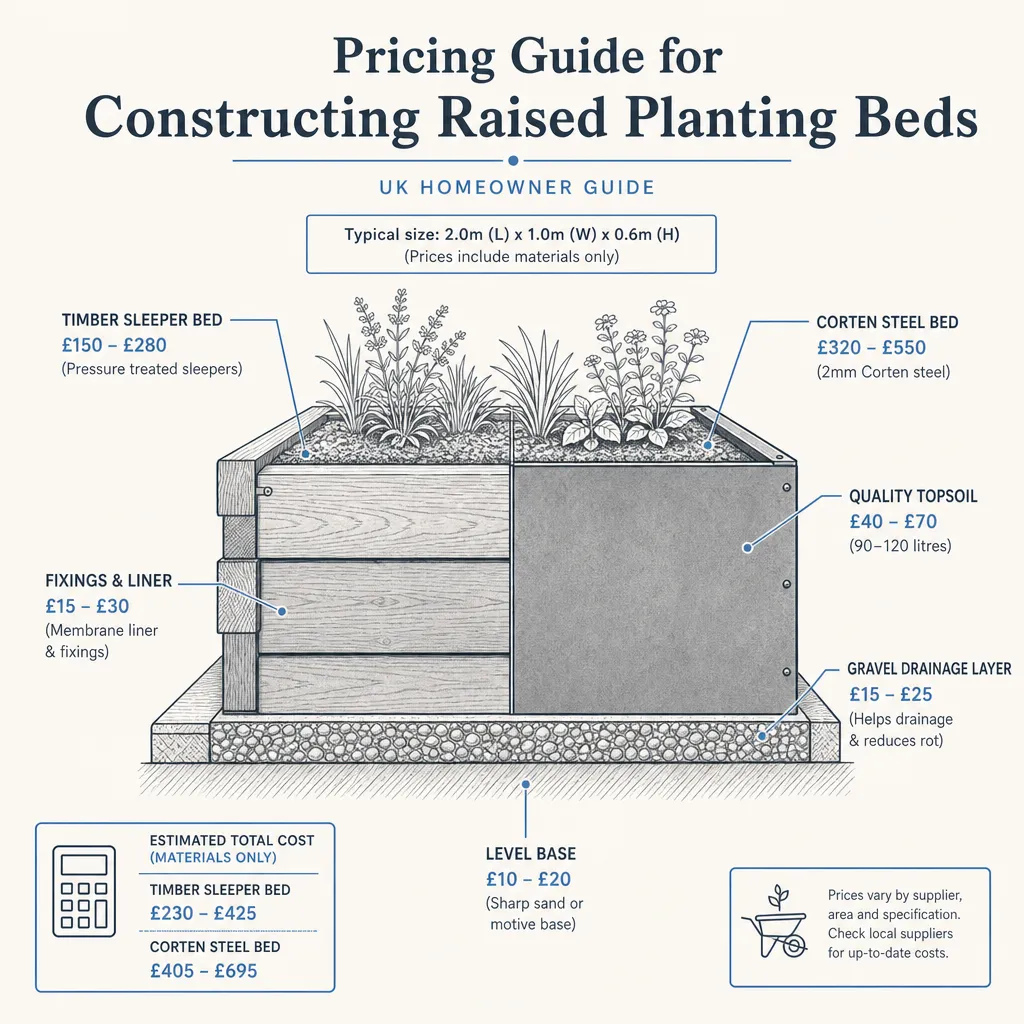
Pricing Guide for Constructing Raised Planting Beds
Raised planting beds have become one of the most popular garden improvements across UK homes, from compact terraced plots to larger rural gardens. Whether you are planning a productive kitchen garden, an accessible border for older gardeners, or a decorative feature in a contemporary outdoor space, understanding realistic cost ranges before you start helps you choose the right materials, decide whether to hire a contractor, and avoid budget surprises once work is underway.
Key points
- Treated softwood raised beds are the most affordable option; a basic 1.2m × 2.4m bed typically costs £40–£120 in materials, with contractor installation adding labour on top.
- Hardwood, oak railway sleepers, and Corten (weathering) steel cost significantly more upfront but last considerably longer — sleepers can exceed 20 years with minimal maintenance.
- Topsoil and compost to fill a standard raised bed adds a cost many homeowners underestimate; budget roughly £30–£80 per cubic metre for a blended growing medium ordered in bulk.
- Landscapers and garden contractors typically charge £150–£350 per day in most UK regions, with London and the South East at the higher end; a straightforward two-bed installation usually takes half to one full day.
- Permitted development rules do not normally apply to raised beds, but check with your local planning authority if you are in a listed building curtilage or conservation area before installing permanent brick or stone structures.
What affects the cost of raised planting beds?
The total price of a raised bed project is shaped by four main variables: material choice, bed size and height, the volume and quality of fill soil needed, and whether you build the beds yourself or hire a contractor. Getting clear on all four before requesting quotes helps ensure you receive comparable prices.
Material comparison
Material choice is the biggest single cost driver. The table below compares the most common options for UK gardens.
Material | Indicative material cost (1.2m × 2.4m bed) | Typical lifespan | Best for | Less ideal for |
|---|---|---|---|---|
Treated softwood (pressure-treated) | £40–£120 | 10–15 years | Budget projects, starter kitchen gardens | Long-term food growing where chemical treatment is a concern |
Hardwood (oak, sweet chestnut) | £100–£300 | 20–30 years | Permanent, attractive kitchen gardens | Tight budgets; sustainably sourced hardwood can have lead times |
New oak railway sleepers | £150–£400 (6–8 sleepers) | 20–25 years | Rustic or cottage-garden style, raised terracing | Very heavy — professional installation is often needed |
Corten (weathering) steel | £200–£600+ | 25+ years | Contemporary garden design, long-term value | Higher upfront cost; requires careful handling at corners and edges |
Recycled plastic lumber | £60–£180 | 25+ years | Low-maintenance, child-safe gardens | Less natural appearance; some products have limited load ratings |
Brick or natural stone | £200–£800+ (materials only) | 50+ years | Permanent landscaping, period properties | Requires foundations and skilled bricklaying; highest overall labour cost |
Indicative UK material costs, last reviewed 2026-05-05. Prices vary by region, supplier, and order volume. Always obtain at least two quotes before purchasing.
Bed size and height
A taller bed requires more material and more fill soil. Standard kitchen-garden beds are typically 200–300mm high. Accessible beds designed for wheelchair users or gardeners with limited mobility are often 600–900mm, which requires additional structural depth, corner bracing, and significantly more growing medium — all of which add to both materials and labour time.
Soil and compost fill
A bed measuring 1.2m × 2.4m × 0.3m deep holds roughly 0.86 cubic metres of growing medium. A blended topsoil and compost mix costs approximately £30–£80 per cubic metre delivered in bulk; bagged compost from a garden centre costs considerably more per volume for larger quantities. For a productive kitchen garden, aim for roughly 50% quality topsoil (BS 3882 compliant) and 50% well-rotted compost or multipurpose growing media.
Labour costs
Landscapers and garden contractors typically charge £150–£350 per day depending on location and project complexity. A simple two-bed installation — marking out, cutting, assembling, levelling, and filling — usually takes a professional half a day to a full day. Projects involving ground clearance, sloped sites, or integration with a wider landscaping scheme take longer.
DIY versus hiring a contractor
- Choose DIY if you are comfortable with basic woodworking, have access to tools (circular saw, drill, spirit level), and the beds are standard softwood or kit-form timber on a flat, prepared base.
- Choose a contractor if you are using heavy materials such as sleepers, brick, or stone, need multiple large beds, require precise levelling on a sloped site, or want the beds integrated into a wider landscaping project.
- Ask a garden designer if you want a full planting plan alongside the construction, need to coordinate beds with paths, irrigation, or seating, or are creating a productive kitchen garden layout from scratch.
- Request quotes from landscapers if you need groundwork alongside bed installation — clearing existing planting, bringing in bulk topsoil, or creating a level terrace to set the beds on.
Worked UK property scenario
A homeowner in Bristol wants four raised vegetable beds in a south-facing rear garden, each 1.2m × 2.4m × 0.3m high, built from new oak sleepers. Here is a realistic indicative cost breakdown:
Item | Indicative cost |
|---|---|
24 new oak sleepers (6 per bed) | £480–£720 |
Corner brackets and stainless fixings | £40–£80 |
Weed-suppressing membrane | £20–£40 |
3.5m³ blended topsoil and compost (bulk delivery) | £140–£280 |
Landscaper — one day (levelling, assembly, filling) | £200–£350 |
Estimated project total | £880–£1,470 |
Indicative UK costs, last reviewed 2026-05-05. Actual quotes may vary by supplier, region, and site conditions.
What to ask before accepting a quote
- What timber treatment has been applied, and is it certified food-safe for a vegetable growing bed?
- Are the fixings stainless steel or galvanised to prevent rust staining and premature failure?
- What grade and source of topsoil is being supplied — does it meet BS 3882?
- Will the contractor level the ground before installation, or is that excluded from scope?
- Is VAT included in the quoted price?
- What is specifically excluded — for instance, removing existing turf, disposing of old soil, or preparing site access?
- Is there a warranty on materials or workmanship, and for how long?
When to get professional help
Most raised bed projects are low-risk and well within reach of a confident DIYer or a general landscaper. Consider involving a professional when:
- Your garden slopes significantly and beds need to be set into a bank or terraced, which often involves groundwork beyond straightforward assembly.
- You want brick or stone raised beds, which require proper footings and skilled construction to avoid movement over time.
- You are integrating beds into a wider garden redesign involving drainage, hard landscaping, or structural planting schemes.
- You are working within a listed building curtilage or conservation area — check with your local planning authority before constructing any permanent garden feature.
How Housey can help
If you want professional help designing or building raised planting beds, Housey connects you with experienced landscapers and garden designers across the UK. You can request quotes from local professionals and compare them before committing to any work.
Frequently asked questions
How much does a basic raised bed cost in the UK?
A simple treated softwood raised bed measuring 1.2m × 2.4m typically costs £40–£120 in materials if built yourself, or £200–£450 including landscaper labour. Costs rise significantly with hardwood, sleepers, or Corten steel. Always budget separately for topsoil and compost fill, which can add £30–£100 depending on the volume and quality of growing medium used.
Do raised planting beds need planning permission?
Raised planting beds do not normally require planning permission, as they are considered temporary garden features rather than structures. However, if you live within a listed building's curtilage or a conservation area, check with your local planning authority before installing anything permanent or substantial — particularly brick or stone structures that require foundations.
How long do raised beds last?
Lifespan depends heavily on material. Treated softwood typically lasts 10–15 years. Hardwood and oak sleepers can reach 20–30 years or more. Recycled plastic lumber often exceeds 25 years with minimal maintenance. Brick and stone beds are effectively permanent. Food-safe liners can extend the life of timber beds and reduce any risk of chemical leaching into growing media.
Can I build raised beds on a sloped garden?
Yes, but a sloped site adds complexity. Beds may need to be stepped or terraced rather than placed level, requiring additional groundwork and structural thought. For a gentle slope, adjusting post heights and packing the base is often sufficient. For steeper sites, ask a landscaper to assess whether retaining structures are needed before construction begins.
What is the best material for raised beds in the UK climate?
Oak sleepers and hardwood timber offer a good balance of appearance, durability, and long-term value despite higher upfront costs. Treated softwood is the most affordable widely available option. Corten steel suits contemporary designs and is very durable. Avoid untreated or low-grade softwood, which tends to rot quickly in the UK's characteristically wet climate.
Sources and further reading
- Raised beds — Royal Horticultural Society
- Planning permission for householders — GOV.UK
- BS 3882: Specification for topsoil — BSI Group
Useful next reads
 Improvement & Build
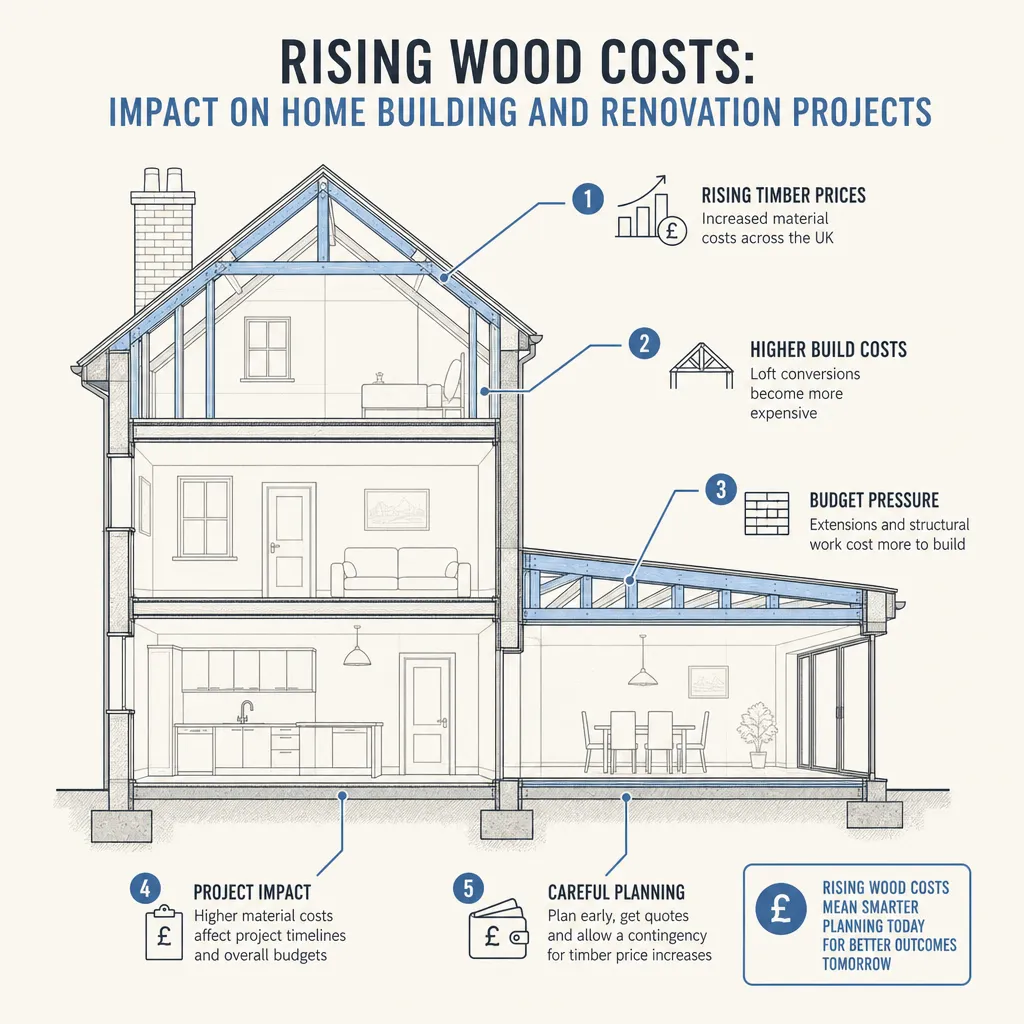
Rising Wood Costs: Impact on Home Building and Renovation Projects
Rising timber prices affect UK home renovation budgets most on timber-frame extensions, loft conversions, and self-builds, where structural wood can account for 15–25% of material costs.
 Improvement & Build
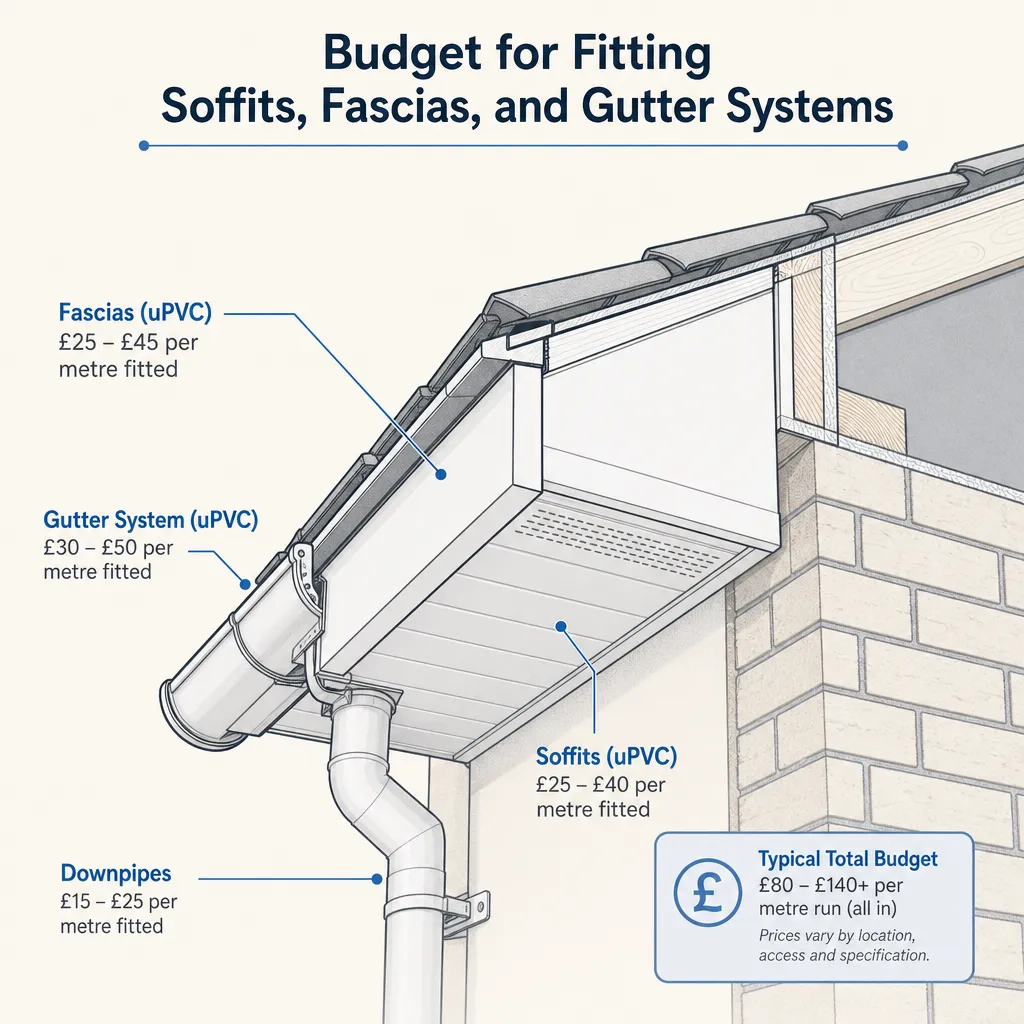
Budget for Fitting Soffits, Fascias, and Gutter Systems
Replacing soffits, fascias, and gutters on a typical UK semi-detached house costs roughly £1,500–£3,500 for uPVC, depending on property size, access, and material choice.
 Improvement & Build
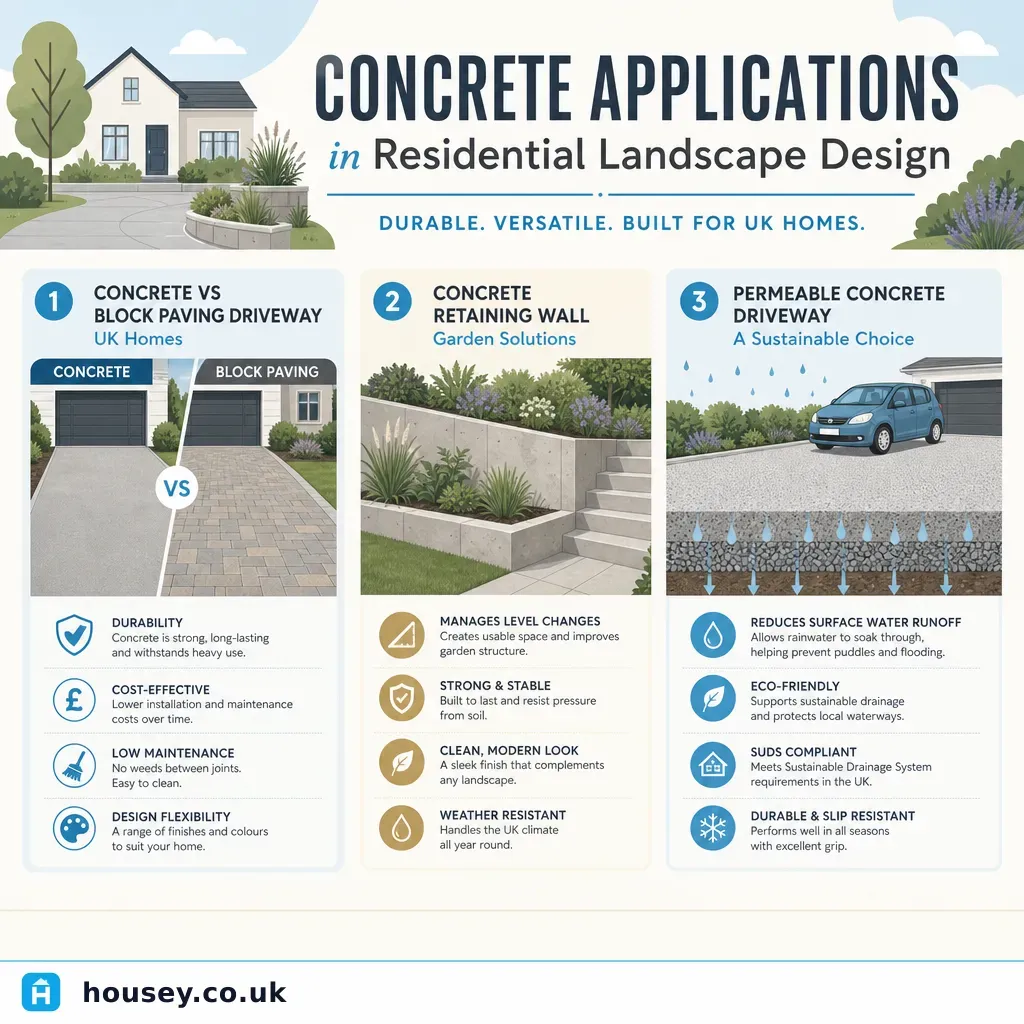
Concrete Applications in Residential Landscape Design
Concrete serves multiple roles in residential landscape design: as a surface material for driveways, patios, and paths; as a structural element in retaining walls and foundations; and as prefabricated components including slabs, edging, and copings.
 Improvement & Build
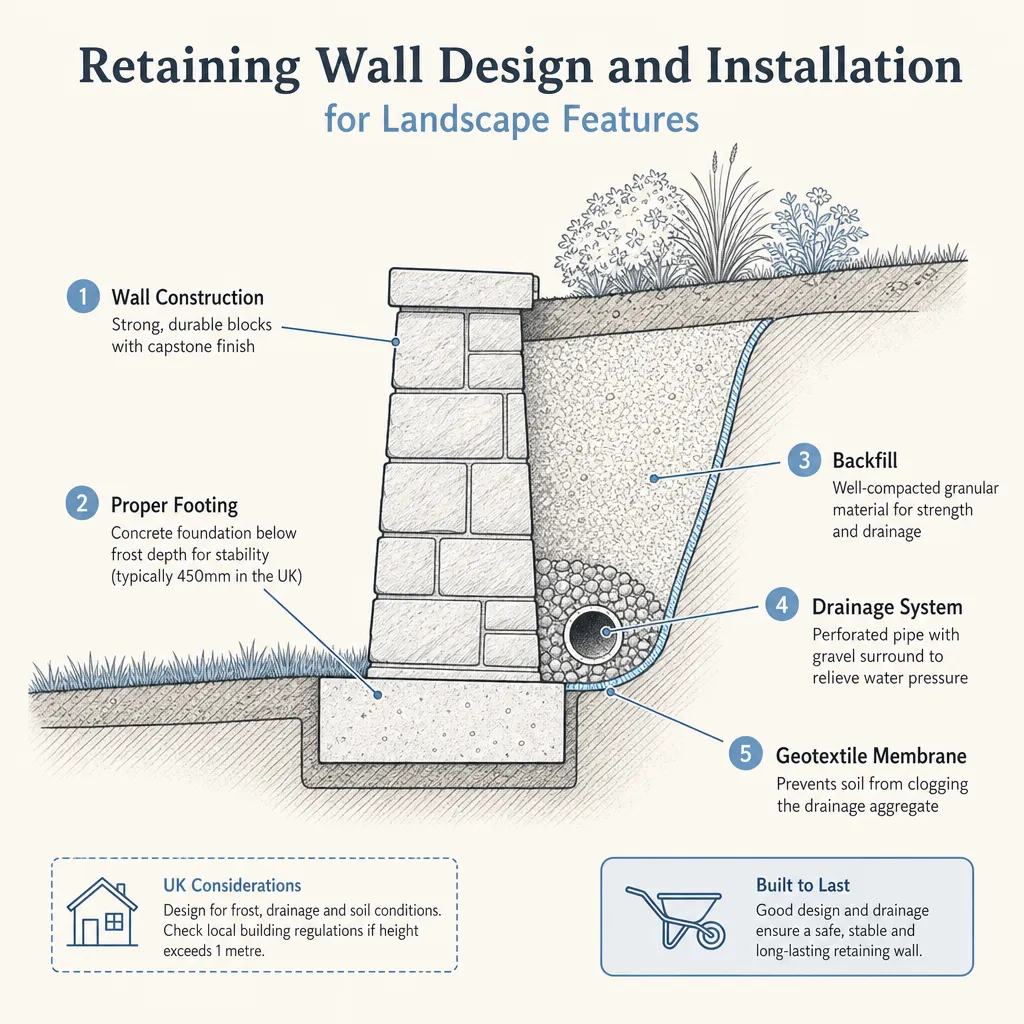
Retaining Wall Design and Installation for Landscape Features
A garden retaining wall holds back soil on a sloped plot using concrete blocks, stone, or timber.
 Improvement & Build
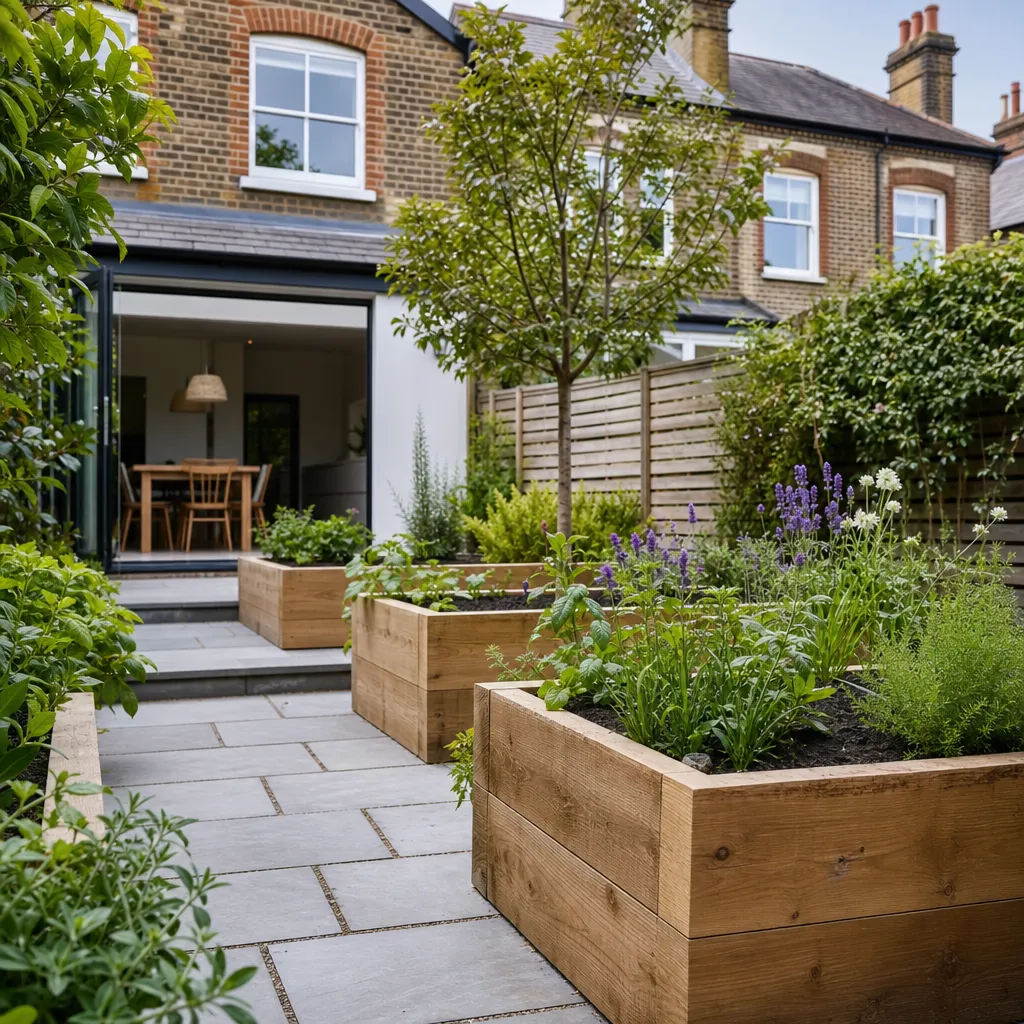
Raised Garden Beds: Design Benefits and Implementation
Raised garden beds suit most UK gardens, particularly those with heavy clay, poor drainage, or limited growing space.