Asphalt Driveway Installation: Cost and Durability
By Housey · Last reviewed 5th of May 2026
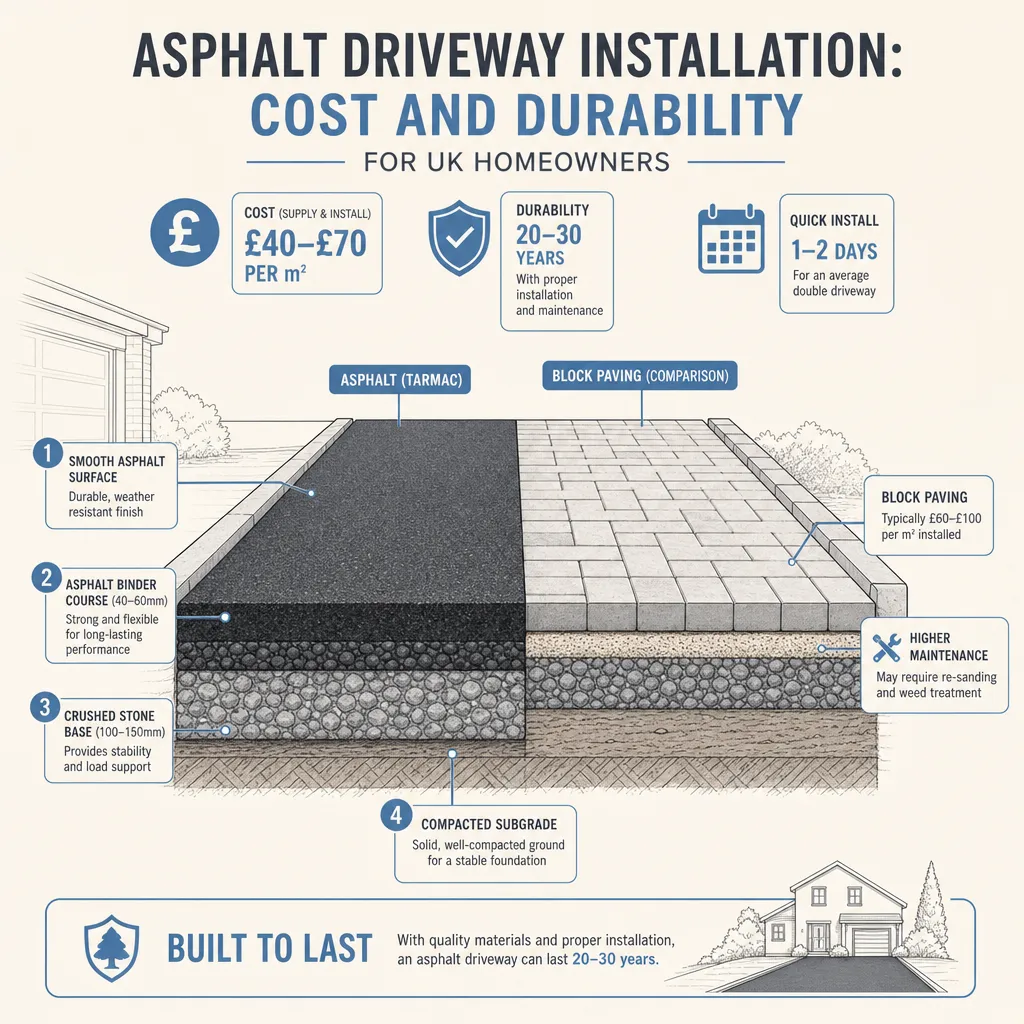
Asphalt Driveway Installation: Cost and Durability
Replacing or installing a driveway is one of the most visible improvements a UK homeowner can make to kerb appeal and day-to-day practicality, but it also involves surface water drainage rules, highway authority consents, and material trade-offs that are easy to underestimate at the planning stage. Asphalt — often called tarmac by contractors — is one of the most widely specified driveway surfaces in the UK, valued for its durability, relatively low cost per square metre, and speed of installation. Questions about asphalt typically arise when a gravel drive has become unmanageable, block paving has settled unevenly, or a new-build plot still has a temporary or unmade surface.
Key points
- Asphalt driveway installation typically costs £40–£80 per square metre in the UK, depending on sub-base depth, preparation required, and region (indicative UK costs, last reviewed 2026-05-05).
- In England, driveways over 5m² using an impermeable surface require planning permission under the Town and Country Planning (General Permitted Development) (England) Order 2015 if surface water drains to the highway, unless adequate drainage to a soakaway or border is provided.
- A dropped kerb consent from the local highway authority is required before creating or widening a driveway access onto a public road — this is a separate process from planning permission and is subject to its own fee.
- A correctly specified asphalt driveway — with a compacted Type 1 MOT sub-base, binder course, and surface course — typically lasts 15–25 years.
- Periodic resealing every five to seven years extends surface life and prevents water ingress that can accelerate deterioration of the binder course.
Asphalt versus other driveway surfaces
Choosing an asphalt driveway is usually a balance of upfront cost, durability, drainage compliance, and appearance. This table compares the most commonly installed residential driveway surfaces in the UK.
Surface | Typical installed cost per m² (indicative, 2026-05-05) | Typical lifespan | Inherently permeable | Maintenance level | Best suited to |
|---|---|---|---|---|---|
Asphalt / tarmac | £40–£80 | 15–25 years | No (standard dense) | Low | Value, durability, speed of installation |
Block paving | £60–£120 | 20–30 years | Yes (permeable block available) | Medium | Appearance, individual block replacement |
Resin-bound gravel | £60–£120 | 15–25 years | Yes | Low | Permeable compliance, aesthetics |
Concrete | £70–£110 | 25–40 years | No (standard) | Low | Maximum longevity, heavy vehicles |
Loose gravel | £15–£30 | Variable | Yes | High | Budget, natural drainage compliance |
Asphalt sits comfortably in the middle of the market — cheaper per square metre than block paving or resin-bound surfaces, faster to lay than concrete, and more stable than loose gravel. Its primary limitation for front gardens in England is that standard dense asphalt is non-permeable, which may engage the permitted development drainage rule described below.
What affects the cost of an asphalt driveway?
Sub-base preparation
The largest cost variable is the condition of the existing ground. A correctly prepared sub-base is the primary determinant of driveway longevity. For a residential driveway carrying light vehicles, contractors should excavate to at least 150mm, lay and compact a Type 1 MOT sub-base, and then apply a binder course and a finished surface course. If the ground is soft, contains tree roots, or has poor bearing capacity, excavation depth and material volumes increase, pushing costs upward.
Surface area and layout complexity
A simple rectangular driveway is quicker and cheaper to price than a curved, stepped, or irregular layout. Edge restraints, drainage channels, and gullies all add to the final bill. Typical UK residential driveways range from 30m² to 70m²; very small areas may not achieve the economies of scale that make asphalt competitive with other surfaces.
Drainage requirements
If your driveway is non-permeable and surface water drains toward the highway, a linear drain or trapped gully discharging to a soakaway or surface water sewer is required. Budget an additional £200–£600 for a drainage channel installation (indicative UK costs, last reviewed 2026-05-05). This addition may also resolve the planning permission requirement under permitted development rules.
Dropped kerb consent
If you do not already have a dropped kerb, or you are widening the access, you will need consent from your local highway authority before starting any work. This is usually managed through the council, sometimes via an approved contractor on its list. Costs typically range from £800 to £2,500 depending on the authority, the road type, and whether reinforcement of the footway is required (indicative UK costs, last reviewed 2026-05-05). Failure to obtain consent before construction can result in the council requiring you to reinstate the original kerb at your own expense.
Regional variation
Labour costs vary across the UK. The same specification driveway will generally cost more in London and the South East than in the Midlands, the North of England, Wales, or Scotland.
A worked UK property scenario
Property: 1970s semi-detached house in the East Midlands. Existing concrete drive, approximately 40m², cracked and uneven. The owner wants to replace it with asphalt and widen the access by roughly 12m² to accommodate a second vehicle.
Scope of work: Break out and dispose of the existing concrete surface, excavate the additional strip for widening, lay a compacted Type 1 MOT sub-base across the full 52m², install a binder course and 30mm surface course asphalt, fit new edge restraints and haunching, and install a linear channel drain discharging to an existing soakaway.
Indicative cost breakdown (2026-05-05; actual quotes will vary by contractor and site conditions):
Item | Indicative cost |
|---|---|
Break-out and disposal of existing concrete (40m²) | £600–£900 |
Excavation for widening (12m²) and spoil removal | £300–£500 |
Type 1 MOT sub-base material and compaction (52m²) | £700–£1,100 |
Binder course and surface course asphalt (52m²) | £1,500–£2,500 |
Edge restraints and haunching | £300–£600 |
Linear channel drain and soakaway connection | £300–£600 |
Total estimate | £3,700–£6,200 |
This does not include dropped kerb costs if the widening requires a new or extended access onto the public highway; that requires a separate application and fee to the local highway authority.
Planning permission and permitted development
For domestic properties in England, laying a driveway in the front garden is subject to permitted development rules introduced and subsequently amended under the Town and Country Planning (General Permitted Development) (England) Order 2015. The key points are:
- Permeable surface: A driveway using a permeable material — such as permeable block paving, resin-bound gravel, or porous asphalt — does not require planning permission regardless of area.
- Impermeable surface over 5m²: If the surface is impermeable and surface water will drain toward the highway rather than to a lawn, border, or soakaway, planning permission is required.
Standard dense asphalt is an impermeable surface. Installing a drainage channel directing surface water to a soakaway is a common and often cost-effective solution that can allow asphalt to be used without a planning application. Your installer should advise on this at the quoting stage.
Rules in Wales, Scotland, and Northern Ireland differ from those in England. If your property is in a conservation area, is a listed building, or is subject to an Article 4 Direction that removes certain permitted development rights, additional restrictions may apply. Check with your local planning authority before starting work.
What to ask before accepting a quote
Before instructing an asphalt driveway contractor, ask:
- What sub-base depth and material are you specifying, and is 150mm the minimum?
- How many asphalt layers will be laid, and what is the total finished depth?
- How will surface water drainage be managed — is a channel drain included in this price?
- Can you advise whether I need planning permission or a dropped kerb consent for my intended works?
- What edge restraint or kerbing is included, and how will it be finished?
- Does the quote include breaking out and disposing of the existing surface?
- What surface course thickness do you recommend given my expected vehicle use?
- Is VAT included in the quoted price?
- What level of public liability insurance do you carry?
- What warranty do you offer on the finished surface, and under what conditions does it apply?
How long does asphalt last, and how is it maintained?
A correctly specified and installed asphalt driveway should give 15–25 years of reliable service. The main factors affecting longevity are:
- Sub-base quality and depth: A poorly compacted or shallow sub-base is the most common cause of premature cracking and surface settlement.
- Edge restraints: Without solid edging, asphalt tends to spread laterally and fracture at the margins over time, particularly in areas of repeated vehicle loading.
- Surface sealing: Applying a bitumen-based sealer every five to seven years prevents water ingress, reduces oxidation of the binder, and noticeably extends surface life.
- Tree roots: Mature trees within two to three metres of the driveway can cause heave as roots extend beneath the surface layer.
- Vehicle loads: A standard residential specification is designed for private cars and light vans. Regular use by heavier commercial vehicles requires a thicker, reinforced specification; using a standard driveway for heavy loads will shorten its life.
Minor cracks and small potholes can be filled with cold-mix asphalt patching compound as a temporary repair, but widespread cracking, significant potholing, or surface depression typically requires professional resurfacing.
When to get professional help
Always use a professional contractor for asphalt driveway installation — hot-mix asphalt requires specialist plant and compaction equipment that is not available to homeowners. Seek professional advice specifically if:
- Ground investigation during excavation reveals soft spots, underground tanks, tree roots, or buried services.
- Your property is in a conservation area or is a listed building, where permitted development rights may not apply.
- The driveway will be used regularly by commercial vehicles, which may require a heavier specification.
- Surface water discharge will connect to a public sewer — this may require notification to your water authority or building control.
- You are uncertain whether planning permission or a dropped kerb consent applies to your situation.
How Housey can help
Housey can connect you with vetted driveway installers across the UK who can assess your site, advise on drainage and planning requirements, and provide itemised, comparable quotes for asphalt installation and related groundworks.
Frequently asked questions
Is asphalt the same as tarmac for driveways?
The terms are often used interchangeably by contractors, but there is a technical difference. Tarmac historically used coal-tar as a binder; modern driveways use asphalt, which uses bitumen derived from petroleum. Both produce a dark, smooth surface. When a UK contractor quotes for a tarmac driveway today, they almost certainly mean hot-rolled asphalt with a bitumen binder.
Do I need planning permission for an asphalt driveway in England?
In England, an asphalt driveway in the front garden over 5m² requires planning permission if it uses an impermeable surface and surface water drains to the highway, under the Town and Country Planning (General Permitted Development) (England) Order 2015. Installing a drainage channel discharging to a soakaway may resolve this without a planning application. Rules differ in Wales, Scotland, and Northern Ireland; check with your local planning authority.
How long does asphalt driveway installation take?
A standard residential asphalt driveway of 40–60 square metres typically takes one to two days to install, including sub-base preparation, laying, and compaction. The surface should not be driven on for at least 24–48 hours after installation. Full curing takes several weeks, during which heavy vehicle loads should be avoided to prevent rutting or indentation.
Can asphalt be laid in cold or wet weather?
Asphalt can be installed year-round in the UK, but temperatures below 0°C and wet conditions can affect adhesion and compaction quality. A reputable contractor will advise postponing installation if conditions are unsuitable. The substrate must be dry and frost-free before laying begins, and rain during laying can compromise the finished surface.
How do I compare quotes from asphalt driveway contractors?
Request a minimum of three written, itemised quotes. Ensure each specifies sub-base depth and material, the number of asphalt layers and their finished thickness, the drainage solution, edge restraints, and disposal of any existing surface. Price per square metre is a useful comparison point, but an unusually low figure may indicate a thinner specification. Ask for references and evidence of public liability insurance before instructing.
Sources and further reading
- Driveways: planning permission guidance — Planning Portal
- Town and Country Planning (General Permitted Development) (England) Order 2015 — legislation.gov.uk
- Highways Act 1980 — legislation.gov.uk
- Sustainable drainage systems: non-statutory technical standards — GOV.UK
Useful next reads
 Improvement & Build
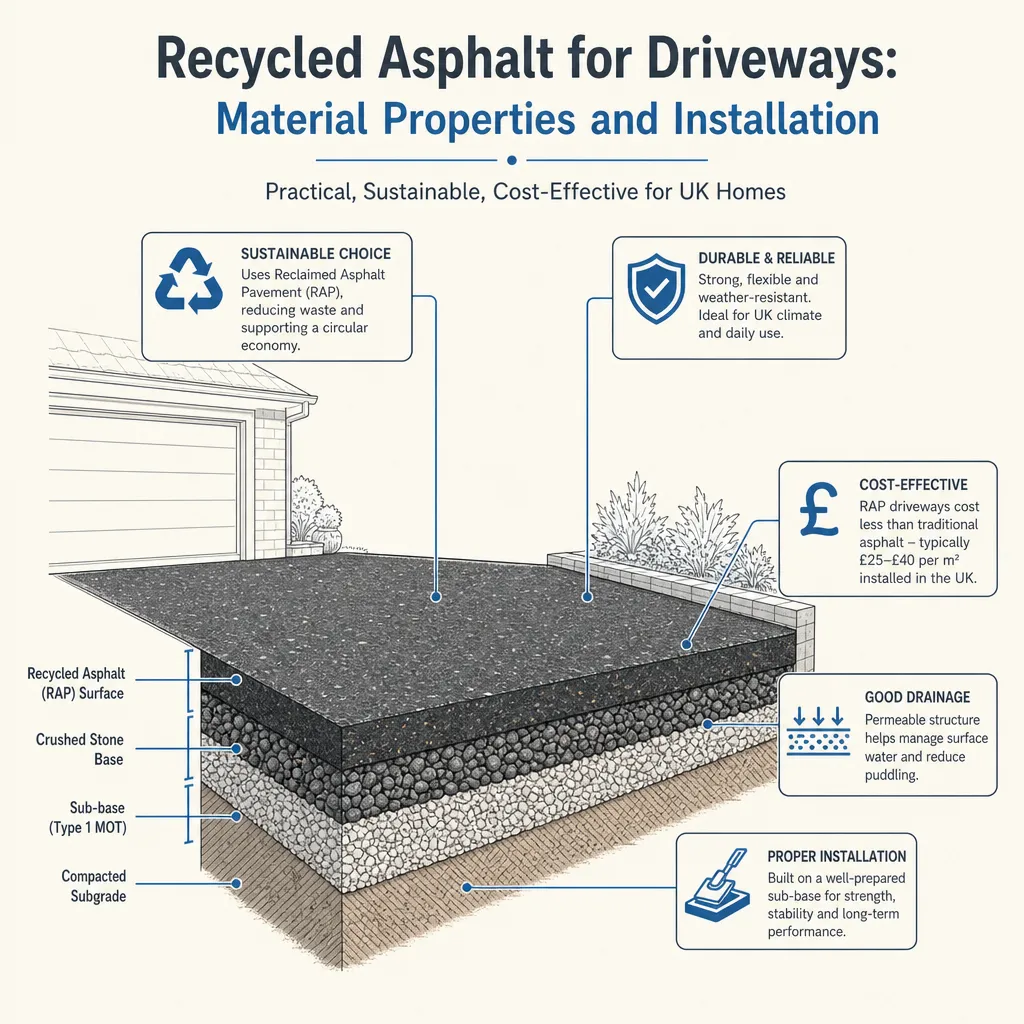
Recycled Asphalt for Driveways: Material Properties and Installation
Recycled asphalt (RAP) uses reclaimed road material and costs less than virgin asphalt, making it a budget-friendly option for UK driveways.
 Improvement & Build
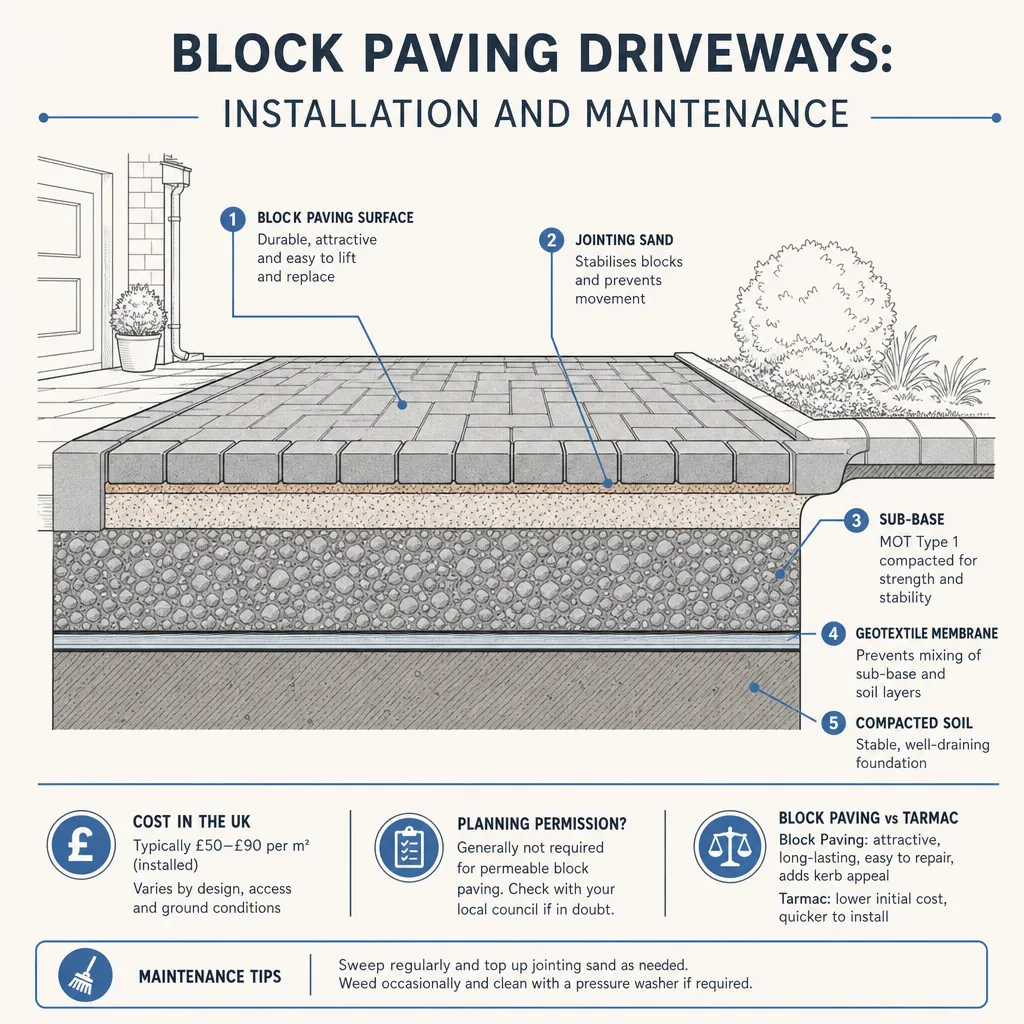
Block Paving Driveways: Installation and Maintenance
Block paving driveways typically cost £50–£120 per m² installed and last 20–30 years with good maintenance.
 Improvement & Build
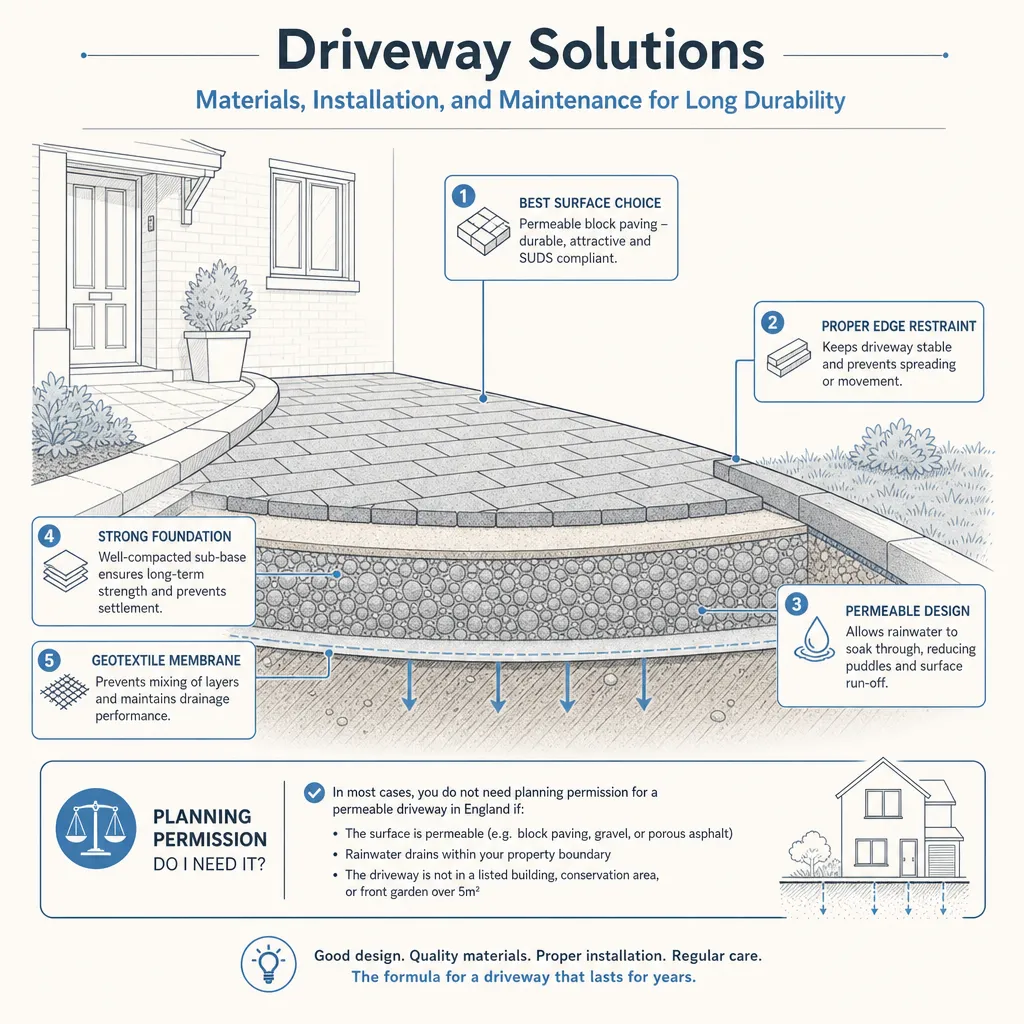
Driveway Solutions: Materials, Installation, and Maintenance for Long Durability
In England, driveways over 5 square metres need planning permission unless they use a permeable surface or drain to a lawn or border.
 Improvement & Build
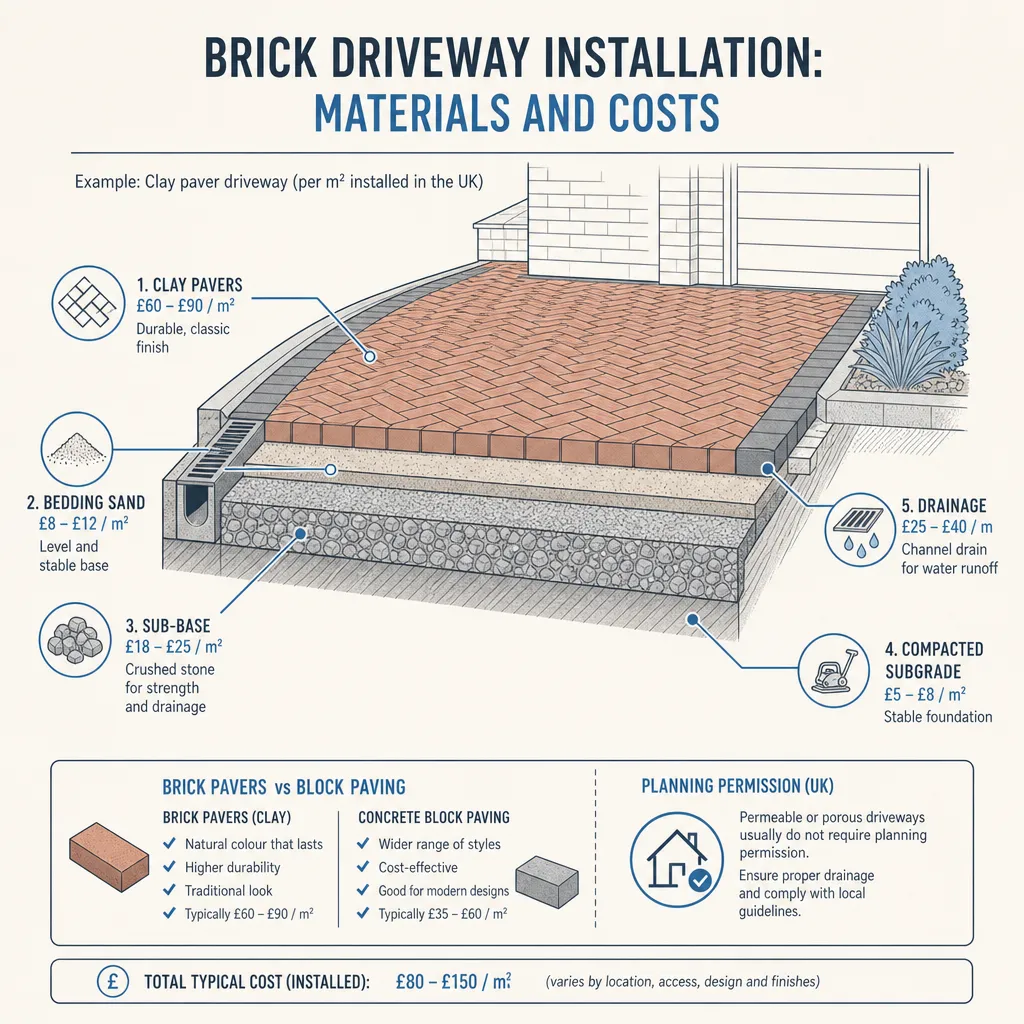
Brick Driveway Installation: Materials and Costs
A brick or clay paver driveway typically costs £90–£150 per square metre installed in the UK, depending on material grade, sub-base requirements, and regional labour rates.
 Improvement & Build
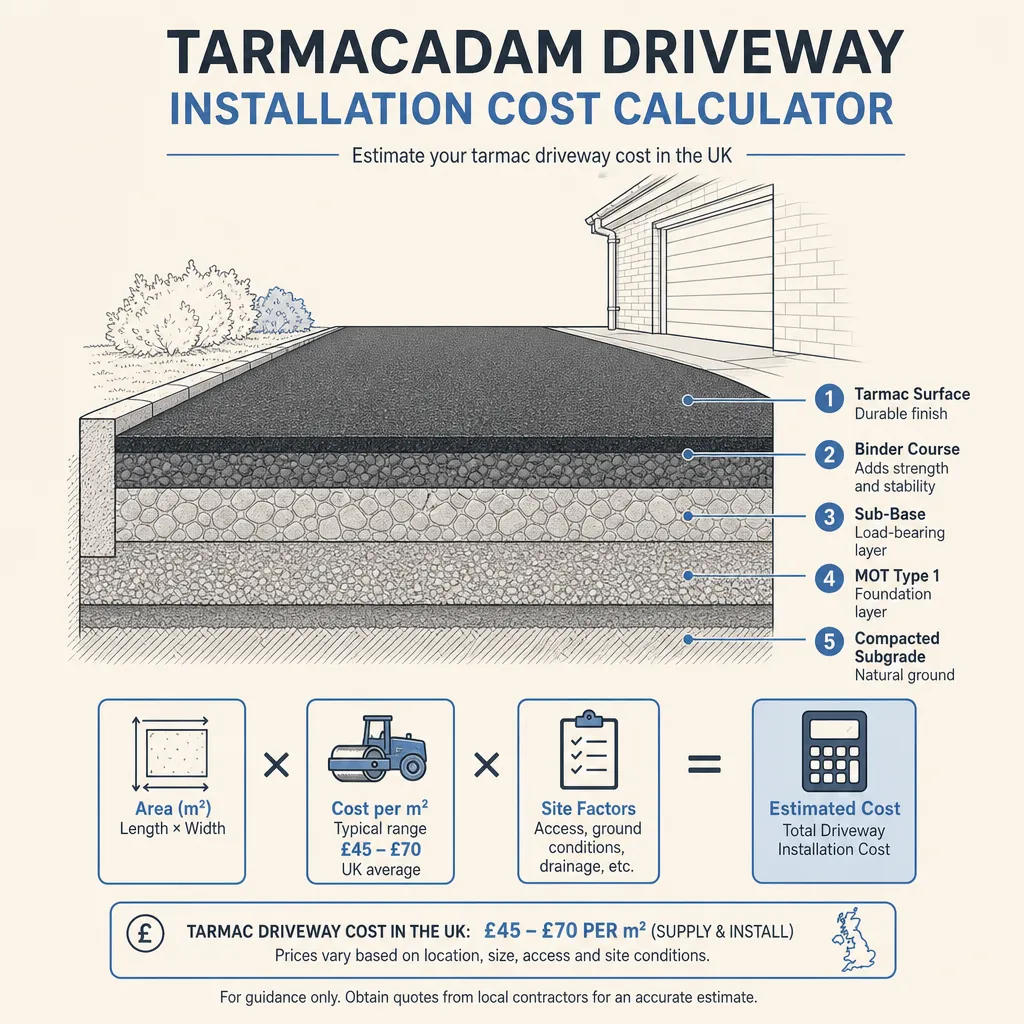
Tarmacadam Driveway Installation Cost Calculator
Tarmacadam driveway installation costs approximately £50–£100 per sq m in the UK for a full new installation, or £20–£50 per sq m for resurfacing over a sound existing base.