Driveway Solutions: Materials, Installation, and Maintenance for Long Durability
By Housey · Last reviewed 19th of May 2026
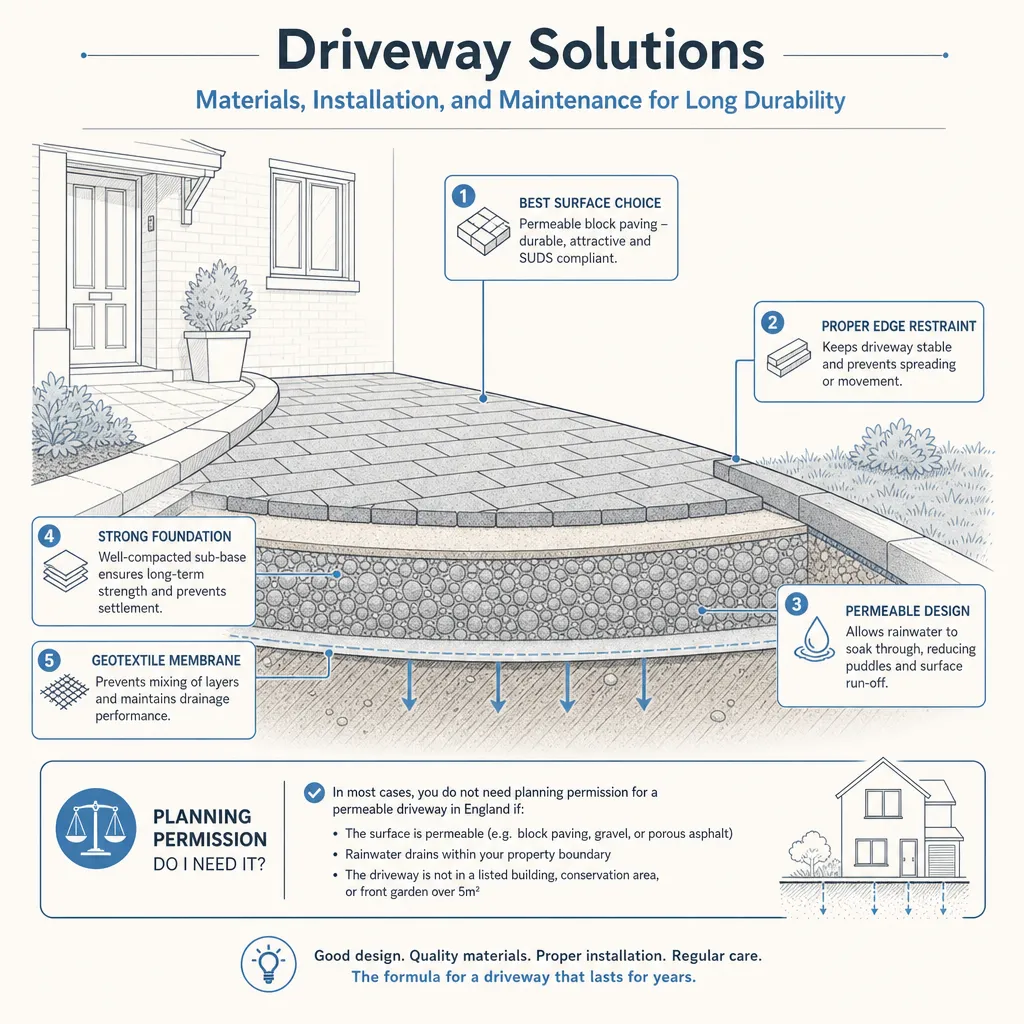
Driveway Solutions: Materials, Installation, and Maintenance for Long Durability
A new driveway is one of the more visible and permanent improvements you can make to a UK home, and the choice of material has implications beyond kerb appeal — planning rules, drainage law, and long-term maintenance all vary significantly depending on what you lay. Whether you're replacing a crumbling tarmac surface, converting a front garden for parking for the first time, or extending provision ahead of an electric vehicle charge point installation, choosing the right surface and a competent installer matters considerably.
Key points
- In England, a new or replacement driveway larger than 5 square metres requires planning permission unless it uses a permeable surface or drains water to a lawn or border, following the Town and Country Planning (General Permitted Development) (Amendment) (England) Order 2008.
- The Highways Act 1980 (Section 163) prohibits water from your property flowing onto the public highway; impermeable driveways must direct surface water away from the road.
- Block paving typically has a serviceable life of 20–30 years; resin-bound surfacing 15–25 years; standard tarmac 15–20 years — all depending on sub-base quality and traffic loading.
- Planning permission rules differ in Wales, Scotland, and Northern Ireland — always check with your local planning authority before finalising a design.
- Any work involving the creation or widening of a vehicle access across a public footway (a dropped kerb) requires a licence from your local highway authority before work begins.
Do you need planning permission for your driveway?
In England, rules introduced in 2008 mean that using an impermeable surface — standard tarmac, concrete, or clay block paving with tight mortar joints — over more than 5 square metres of front garden triggers a planning application. The change was introduced to address surface water runoff from paved front gardens overwhelming urban drainage networks.
You can avoid a planning application in England by:
- Using a permeable surface (permeable block paving, resin-bound aggregate, gravel, or a cellular paving system).
- Designing the driveway so that water drains to a lawn, flower border, or soakaway rather than to the road or a surface water drain.
These rules apply to the principal elevation of a dwelling house — generally the front. Rear and side driveways are usually unaffected. Properties in conservation areas and listed buildings face additional restrictions; consult your local planning authority early in the process.
Decision tree: do you need planning permission in England?
- Driveway is 5 sq m or smaller → No planning permission needed.
- Driveway is larger than 5 sq m AND uses a permeable surface → No planning permission needed.
- Driveway is larger than 5 sq m AND impermeable AND drains to a lawn or border → No planning permission needed.
- Driveway is larger than 5 sq m AND impermeable AND drains to road or sewer → Planning permission required.
- Property is listed or in a conservation area → Always check with your local planning authority regardless of size or material.
- You need a dropped kerb → Licence required from the local highway authority before work begins.
- Property is in Wales, Scotland, or Northern Ireland → Check with your local planning authority as rules differ.
Comparing driveway materials
Material | Typical lifespan | Permeable? | Relative installed cost | Best for | Watch out for |
|---|---|---|---|---|---|
Gravel | 10–20 yrs (top-ups needed) | Yes | Low | Period homes, rural settings | Migrates onto road and lawn; unsuitable on steep slopes |
Standard tarmac | 15–20 yrs | No | Low–medium | Simple replacements; large areas | May need planning permission; softens in prolonged heat |
Porous tarmac | 15–20 yrs | Yes | Medium | Planning-friendly tarmac alternative | Less widely available; needs periodic jet-washing |
Block paving | 20–30 yrs | Depends on jointing | Medium | Traditional aesthetics; colour variety | Weeds in joints; needs periodic re-sanding |
Permeable block paving | 20–30 yrs | Yes | Medium–high | Planning-friendly in urban settings | Costs more than standard block; needs open-graded bedding aggregate |
Resin-bound | 15–25 yrs | Yes | High | Contemporary finish; low maintenance | UV yellowing if poor-quality resin; requires stable, crack-free sub-base |
Concrete | 25–40 yrs | No (unless cellular) | Medium–high | Heavy traffic; long-stay vehicle parking | Prone to cracking; staining visible; planning permission likely |
Cellular grass paving | Variable | Yes | Medium | Occasional-use parking; green aesthetics | Not suited to daily main driveway use |
Indicative UK costs, last reviewed 2026-05-19. Prices vary significantly by region, access, groundwork depth, and disposal costs.
Sub-base: the foundation that determines durability
The most common reason driveways fail prematurely is an inadequate sub-base. Surface materials are only as durable as what lies beneath them.
For a domestic driveway, a typical construction build-up would be:
- 150mm compacted MOT Type 1 hardcore (crushed limestone or granite) as the base layer.
- 30–50mm bedding layer — sharp sand for block paving, or open-graded aggregate for permeable surfaces.
- Surface material at the manufacturer's recommended depth.
If the existing sub-base is in reasonable condition, some resurfacing can use it. On driveways with significant cracking, subsidence, or drainage failure, full excavation is usually the more economical long-term choice, even if it costs more upfront. Soft or filled ground, or areas close to tree root zones, may need deeper excavation or geotextile fabric to prevent sub-base movement.
What to ask before accepting a quote
Driveway work is an area where poor workmanship is common and difficult to spot until problems emerge months later. Ask the following before committing to any contractor:
- What depth of sub-base excavation is included, and what material will be used?
- Will spoil (excavated material) removal be included in the price?
- What is the depth and specification of the surface material?
- Is edge restraint (edging, haunching) included?
- Will existing drainage gullies be retained, raised, or replaced?
- What is the drainage arrangement for surface water — soakaway, lawn, or sewer connection?
- Does the price include any dropped kerb or highway authority liaison?
- What guarantee is offered, and is the installer registered with a recognised trade body?
- Is VAT included? (Driveway installation is generally standard-rated at 20%.)
Get at least three written quotes and be cautious of any quote significantly lower than the others without a clear explanation of what has been reduced.
Maintenance to extend driveway life
- Gravel: rake regularly to redistribute displaced material; top up approximately every 3–5 years; lay weed-suppressing fabric at installation to reduce ongoing maintenance.
- Block paving: re-sand joints every few years with kiln-dried sand; use targeted weedkiller rather than pressure washing alone; seal if you want to reduce staining and weed growth.
- Resin-bound: jet-wash annually; avoid point loads from stand-alone vehicle jacks, which can crack the surface.
- Tarmac: avoid repeated fuel spills, which degrade bitumen; seal-coat every 3–5 years in high-traffic areas; repair cracks early to prevent water ingress and freeze-thaw damage.
- Concrete: seal against staining; fill hairline cracks before they widen; pressure-wash regularly to remove moss growth.
When to get professional help
Consult a qualified driveway installer or a planning consultant if:
- Your property is listed or in a conservation area and you are unsure about restrictions.
- You need a dropped kerb — this requires a highway authority licence and must be installed by an approved contractor.
- There are signs of significant ground movement, soft spots, or drainage failure under the existing surface.
- You are close to tree root zones where root barriers and specialist advice may be needed.
- Your chosen contractor cannot provide a written quote specifying the sub-base depth and drainage arrangement.
How Housey can help
Housey connects you with vetted local driveway installers who can advise on material choice, planning requirements, and sub-base specification for your specific property and site conditions. Comparing at least three quotes is always advisable for driveway projects.
Frequently asked questions
Does a new driveway add value to my home?
A well-installed driveway in good condition is generally viewed positively by buyers, particularly where off-street parking is scarce. There is no universally reliable uplift figure — value depends on property type, local parking demand, and installation quality. A local estate agent can give a more informed view for your specific area and property type.
Can I lay a driveway myself?
Gravel and some forms of block paving are within the range of competent DIY, provided sub-base preparation is thorough. Resin-bound and tarmac surfaces require specialist equipment and are not practical DIY projects. If you need a dropped kerb, that work must be carried out by a contractor approved by the local highway authority, regardless of the surface material chosen.
How long does driveway installation take?
A standard domestic driveway typically takes 2–5 days for excavation, sub-base laying, surface installation, and edging — depending on area size, material chosen, and extent of groundwork required. Resin-bound surfaces need a curing period of at least 24 hours before vehicle use. Dropped kerb works are arranged separately and depend on the highway authority's schedule.
Is installing a driveway a permitted development right in England?
In England, you can install a driveway without planning permission as a permitted development right, subject to the size and permeability conditions described above. Permitted development rights do not apply to the construction or widening of a vehicle access across a public footway (dropped kerb) on a classified road, which requires a highway authority licence.
Sources and further reading
- Driveways and hardstandings: planning guidance — Planning Portal
- Town and Country Planning (GPDO) (Amendment) (England) Order 2008 — legislation.gov.uk
- Highways Act 1980 — legislation.gov.uk
- Sustainable drainage systems guidance — GOV.UK
Useful next reads
 Improvement & Build
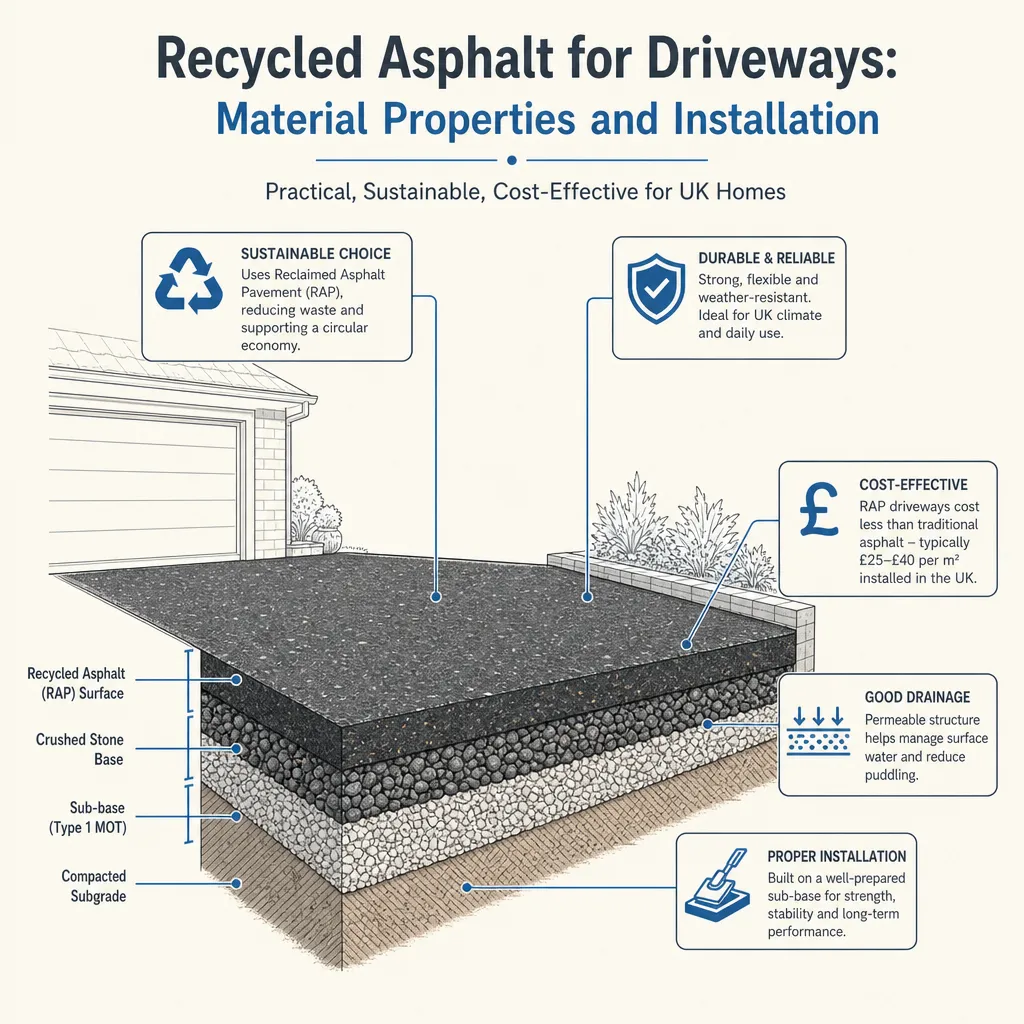
Recycled Asphalt for Driveways: Material Properties and Installation
Recycled asphalt (RAP) uses reclaimed road material and costs less than virgin asphalt, making it a budget-friendly option for UK driveways.
 Improvement & Build
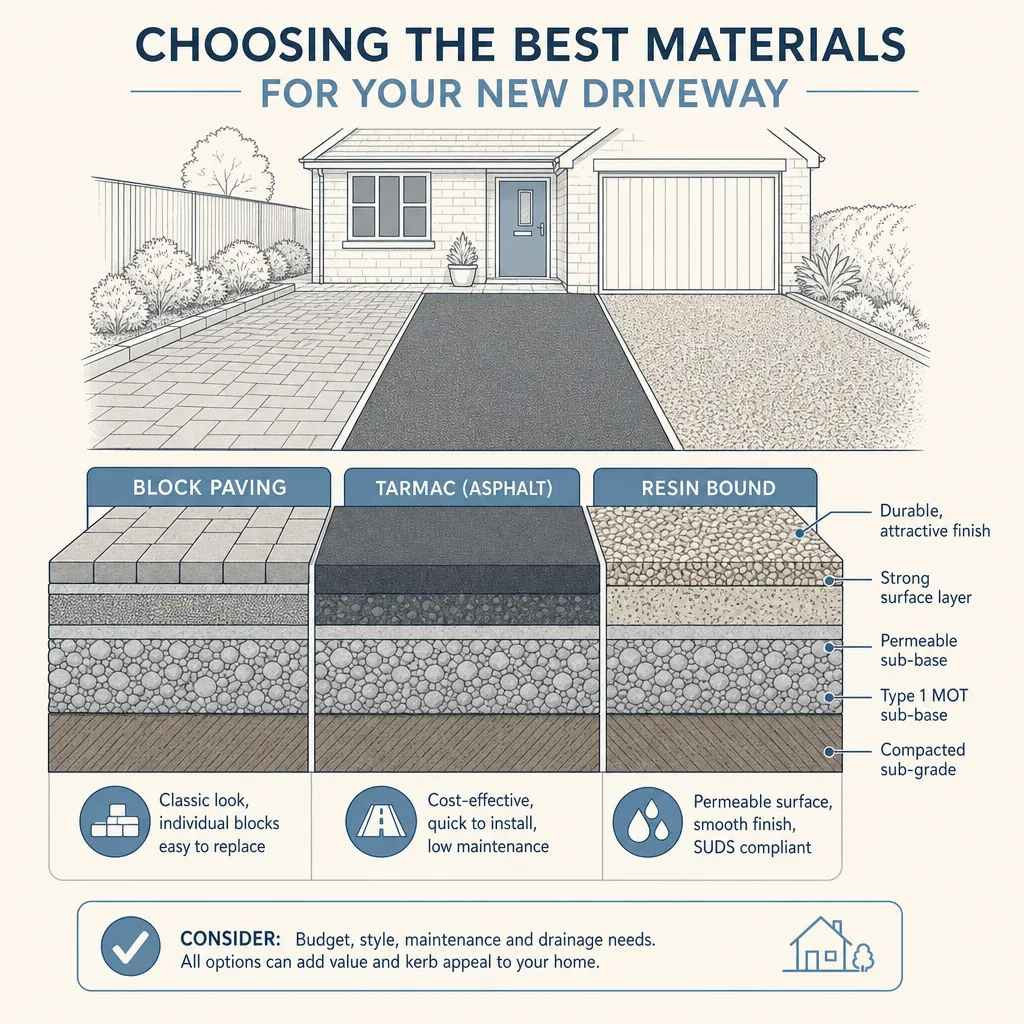
Choosing the best materials for your new driveway
The most common driveway materials in the UK are tarmac, block paving, resin-bound surfacing, concrete, and gravel.
 Improvement & Build
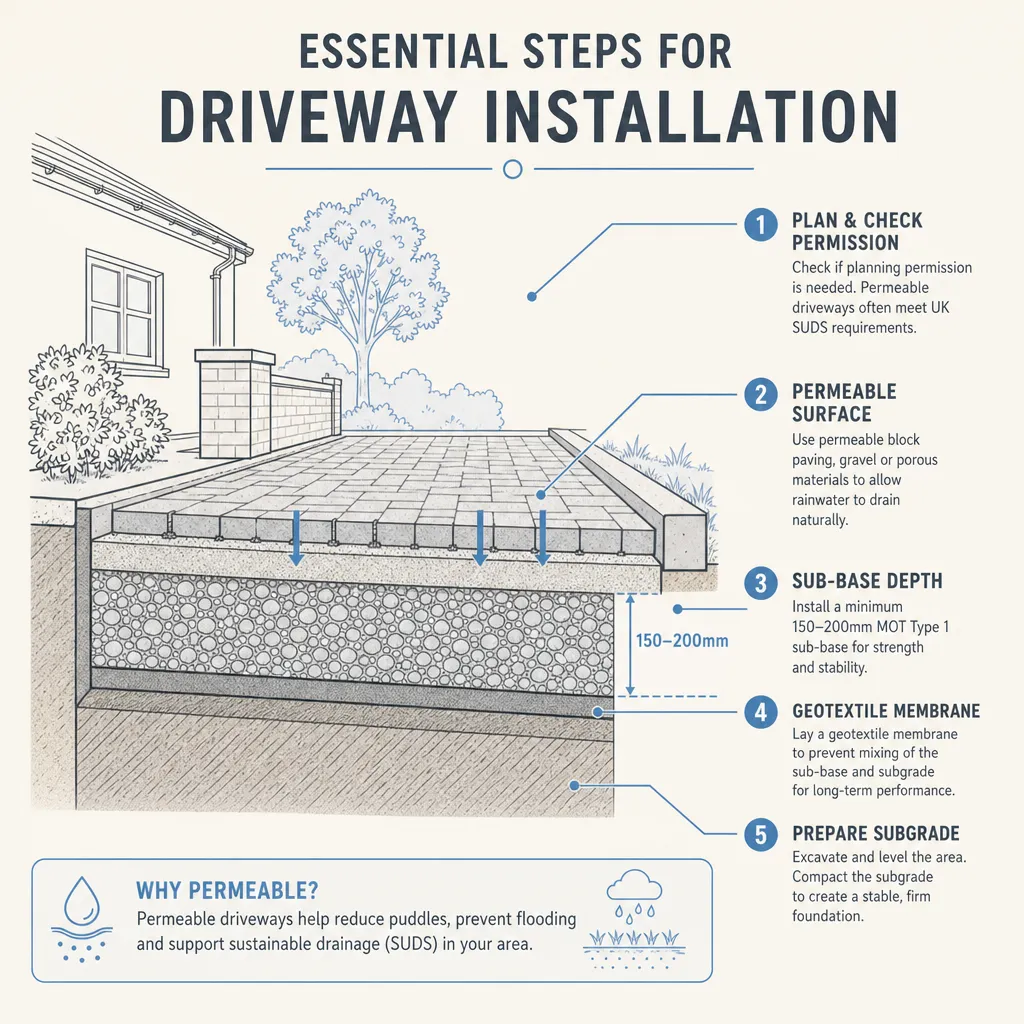
Essential Steps for Driveway Installation
Installing a driveway in England requires planning permission only when using an impermeable surface (standard tarmac, concrete, or block paving) on a front garden area over 5 m².
 Improvement & Build
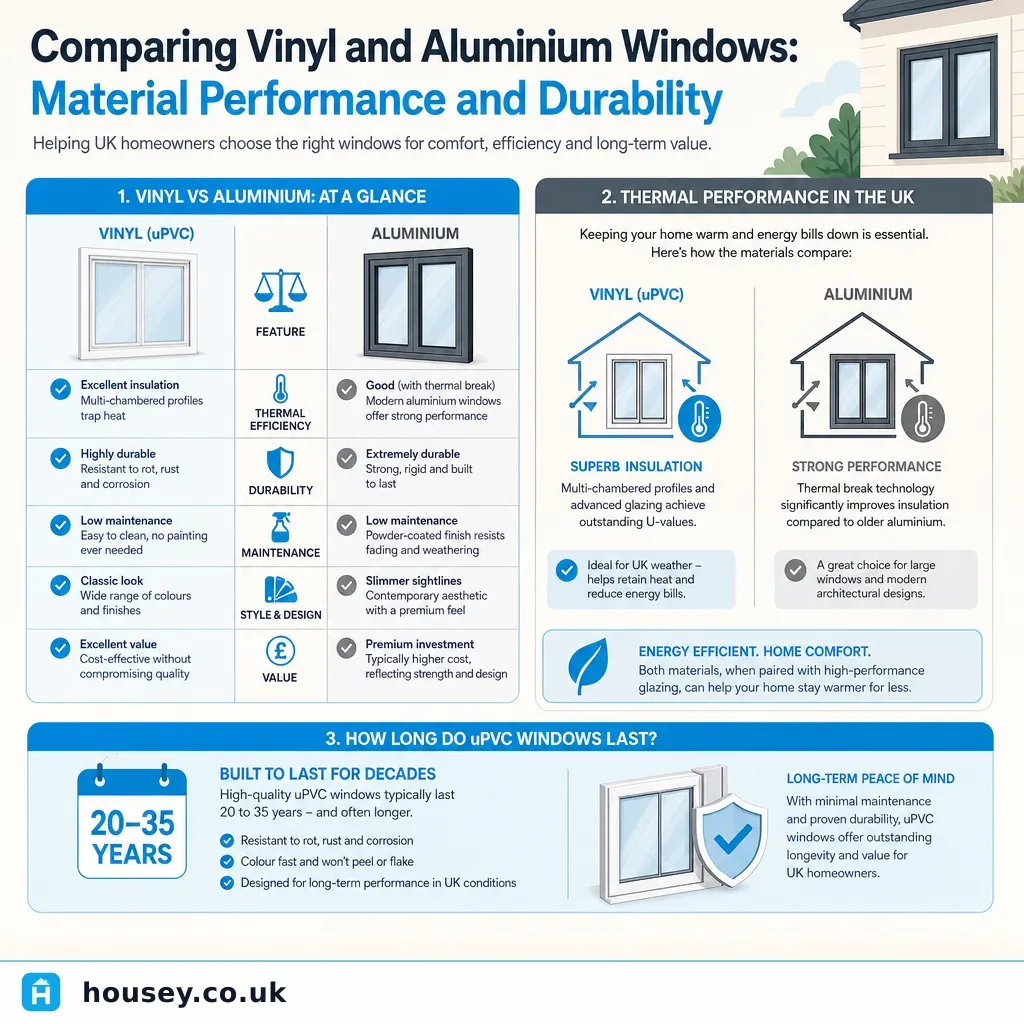
Comparing Vinyl and Aluminium Windows: Material Performance and Durability
uPVC (vinyl) and aluminium windows both meet UK Building Regulations Part L when properly specified.
 Improvement & Build
Professional Roofing Solutions: Expert Installation and Maintenance
A professional roofer should hold relevant trade qualifications such as NVQ Level 2 in Roofing Occupations, carry public liability insurance, and provide a written quotation.