Best Practices for Packing and Preparing Items for Relocation
By Housey · Last reviewed 30th of May 2026
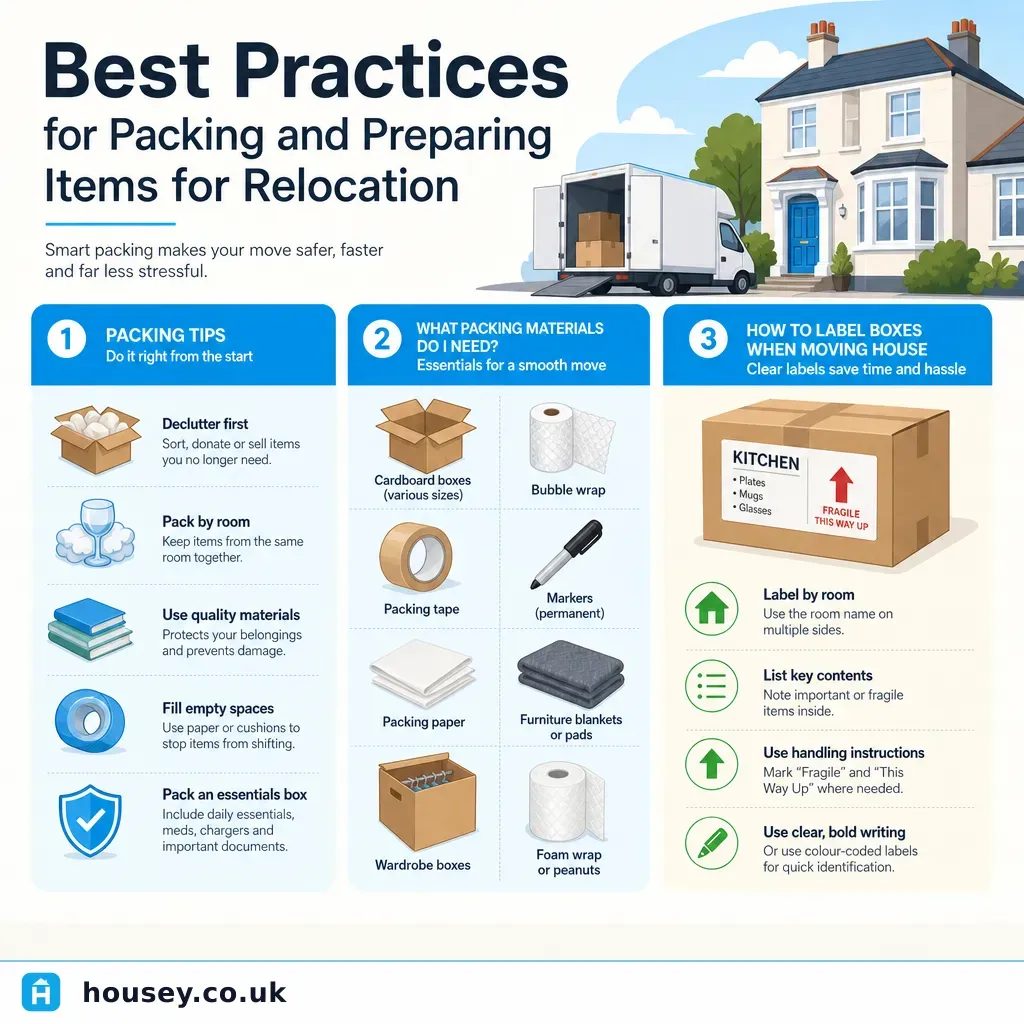
Best Practices for Packing and Preparing Items for Relocation
Moving house generates a surprising number of decisions before a single box is sealed. For most UK homeowners, the period between exchange and completion — typically four to eight weeks — is when packing needs to begin in earnest, yet it is easy to underestimate the time and materials involved. Poor packing is one of the most common causes of damage claims with removals companies, and disorganised boxes slow down the unload at the other end considerably.
Key points
- Use double-walled boxes for books, ceramics, and kitchen equipment; single-wall boxes are suitable for soft furnishings and lightweight items only.
- Removals companies in the UK typically offer transit insurance, but policies often cover negligence only rather than all risks — check the wording before your move.
- Defrost your fridge-freezer 24–48 hours before moving day to prevent water damage to boxes and soft furnishings.
- Label every box on the top and at least two sides with the destination room and handling notes such as Fragile — This Way Up.
- Under the Consumer Rights Act 2015, if a removals company damages your belongings through negligence you have statutory rights to seek redress, but written and photographic evidence of condition beforehand strengthens any claim.
What to pack yourself and what to leave to the removals company
Not every item belongs in a cardboard box you have packed yourself. This decision tree helps allocate the work before moving day.
- Pack yourself if items are low risk, low value, and you are confident wrapping them — clothes, books, non-fragile kitchenware, linen, pantry items.
- Ask the removals company to pack if items are fragile, bulky, or particularly valuable. Many companies offer a professional packing service that uses specialist materials and extends their liability for damage.
- Use a specialist service if moving fine art, antiques, pianos, or items exceeding standard transit insurance limits — typically £50,000 per item for most household policies.
- Check your home insurance to see whether your existing contents policy covers items in transit, which may reduce the need for duplicate removals insurance.
- Ask about packed-by-owner boxes — some companies reduce or remove their liability for damage to boxes they did not pack themselves.
Choosing the right packing materials
Using the wrong materials is a false economy. The table below summarises the most common options and their appropriate uses.
Material | Best for | Not suitable for | Notes |
|---|---|---|---|
Double-walled cardboard box | Books, crockery, electrical items, glassware | Items above 20 kg | Recyclable; available from removals suppliers |
Single-walled cardboard box | Clothes, soft furnishings, light kitchenware | Fragile or heavy items | Lower cost; collapses under pressure if stacked incorrectly |
Acid-free tissue paper | Silverware, artworks, delicate fabrics | General wrapping | Prevents tarnishing and chemical transfer |
Bubble wrap | Glassware, ceramics, mirrors | Large furniture surfaces | Buy at least 50 m roll for a typical three-bed house |
Foam packing sheets | Plates, picture frames | Heavy ceramics | Interleave between stacked plates to prevent chips |
Wardrobe boxes | Suits, dresses, coats | Heavy folded items | Prevents creasing; useful for the week of the move |
Indicative UK costs, last reviewed 2026-05-30: a packing materials kit for a three-bedroom house typically costs £80–£150 from a removals supplier, and more if purchased from general retailers.
The room-by-room packing order
Starting too late is the most common packing mistake. A structured sequence reduces last-minute stress.
Four to six weeks before moving day
- Loft, garage, and garden storage — seasonal items and rarely used boxes
- Spare bedrooms and guest rooms
- Books, DVDs, and non-essential shelving
Two to three weeks before
- Kitchen equipment used less than once a fortnight (baking tins, specialist appliances)
- Home office files, stationery, and non-essential electronics
- Decorative items and picture frames — remove hanging hardware and tape it to the back of each frame
One week before
- Most of the kitchen, leaving one set of everyday crockery and one pan
- Bedroom wardrobes using hanging wardrobe boxes
- Bathroom toiletries, leaving only daily essentials accessible
The night before
- Pack your essentials box: kettle, mugs, tea and coffee, phone charger, toilet roll, toolkit, change of clothes, essential medications
- Defrost fridge-freezer; consume or donate remaining frozen food
Moving day
- Dismantle remaining flat-pack furniture — photograph the assembled state first to aid reassembly
- Strip beds and pack bedding last
Packing fragile and breakable items safely
The most common causes of breakage during transit are inadequate cushioning, boxes too loosely packed so items shift, and boxes so heavy they collapse when stacked.
- Line the base of every box with at least 5 cm of crumpled paper or foam before placing any items.
- Wrap each piece individually, then add a second layer of wrapping.
- Pack plates on their edge — vertically, not flat — as they withstand compression better in this orientation.
- Fill all void space so nothing can move; a correctly packed box should not rattle when gently shaken.
- Do not exceed 15 kg per box for fragile categories — movers cannot safely carry heavier loads without risk.
Moving day homeowner checklist
24 hours before:
Moving day:
When to get professional help
Most household moves are straightforward, but some situations warrant extra expertise.
- If you are moving items worth more than the removals company's standard liability limit, engage a specialist art or antiques handler before booking a general company.
- If a large item — a grand piano, an American-style fridge-freezer, or an oversized sofa — cannot be removed through standard doorways, contact a furniture hoisting or disassembly specialist before moving day. Improvising on the day frequently causes damage to both item and property.
- If there is a gap between leaving your old property and gaining access to the new one, consider professional storage rather than leaving items in transit or an uninsured location.
How Housey can help
Housey connects you with vetted house removals companies across the UK who can advise on packing services, specialist handling, and transit insurance. If you need somewhere to keep furniture between completion dates, you can also compare storage providers through the platform.
Frequently asked questions
How far in advance should I start packing for a house move?
For a typical three-bedroom house, most people need three to four weeks if packing themselves, starting with the loft, garage, and rarely used rooms. Leaving it until the week before is a common source of stress and breakages — begin earlier than you think you need to.
Do removals companies provide packing materials?
Many do, either included in a full-pack service or sold separately. Boxes from a removals supplier are usually designed to stack correctly in a van and are often cheaper than purchasing from general retailers. Ask about this when requesting your quote.
What should I pack in my essentials box?
Include your kettle, tea and coffee, mugs, phone charger, toilet roll, a change of clothes, essential medications, a basic toolkit, and any documents you need on the day such as completion paperwork and utility account numbers.
Can I leave clothes in drawers during a removal?
Some removals companies allow lightweight drawers to be carried separately and replaced in the van. Always confirm with your company first, as heavier drawers can shift during transit and damage the furniture carcass. This arrangement is not accepted by all providers.
Sources and further reading
- Consumer Rights Act 2015 — legislation.gov.uk
- Moving home — GOV.UK
- British Association of Removers — BAR
- Problems with a service — Citizens Advice
Useful next reads
 Buying & Moving
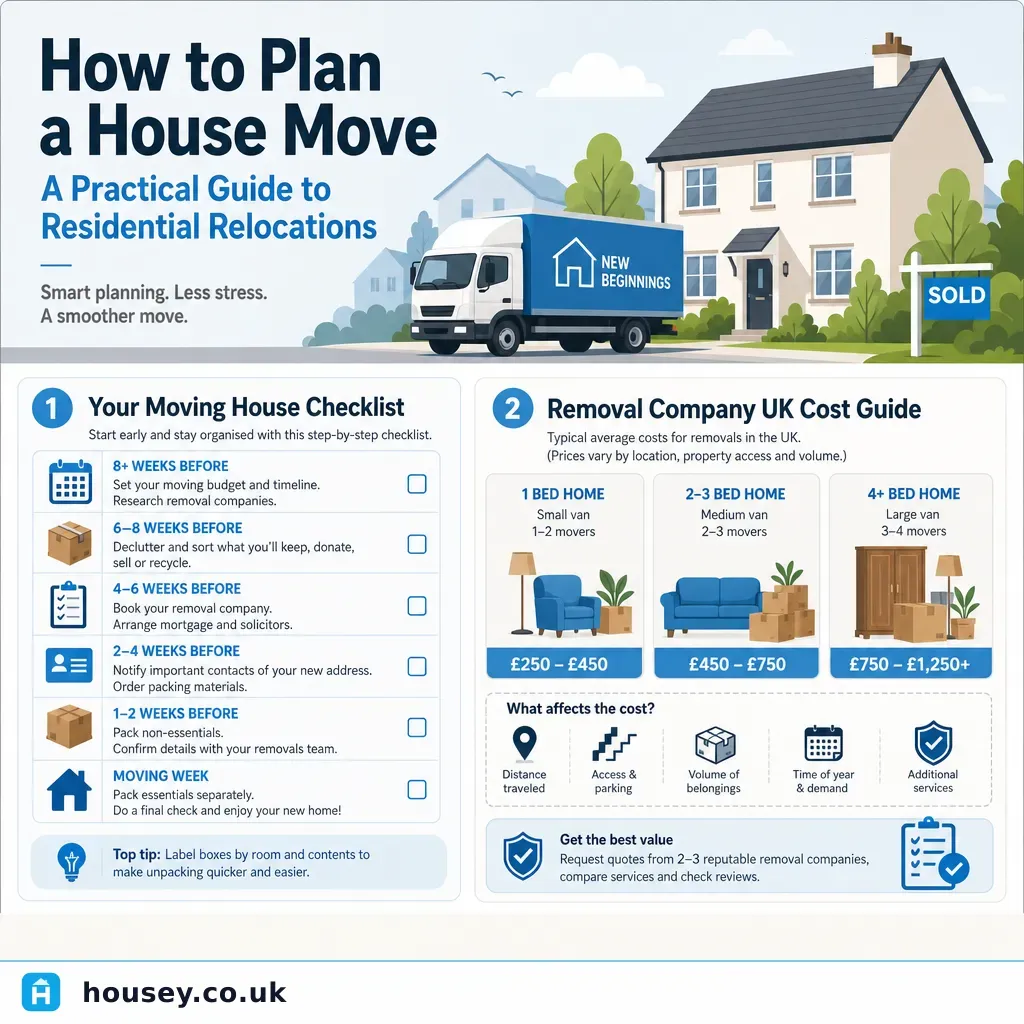
How to Plan a House Move: A Practical Guide to Residential Relocations
A UK house move goes more smoothly with planning that starts 6–8 weeks before moving day.
 Buying & Moving
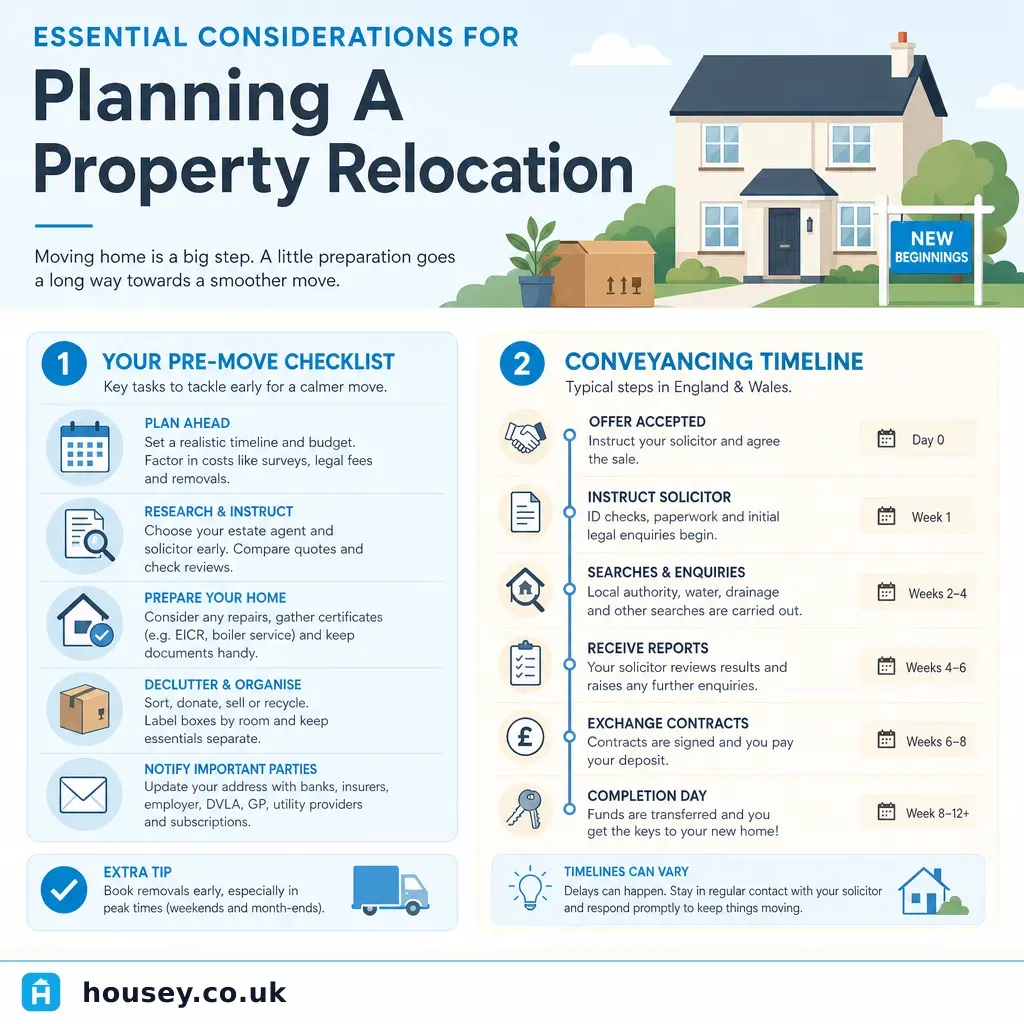
Essential Considerations For Planning A Property Relocation
Planning a UK property relocation means coordinating legal, financial, and practical steps across several months.
 Buying & Moving
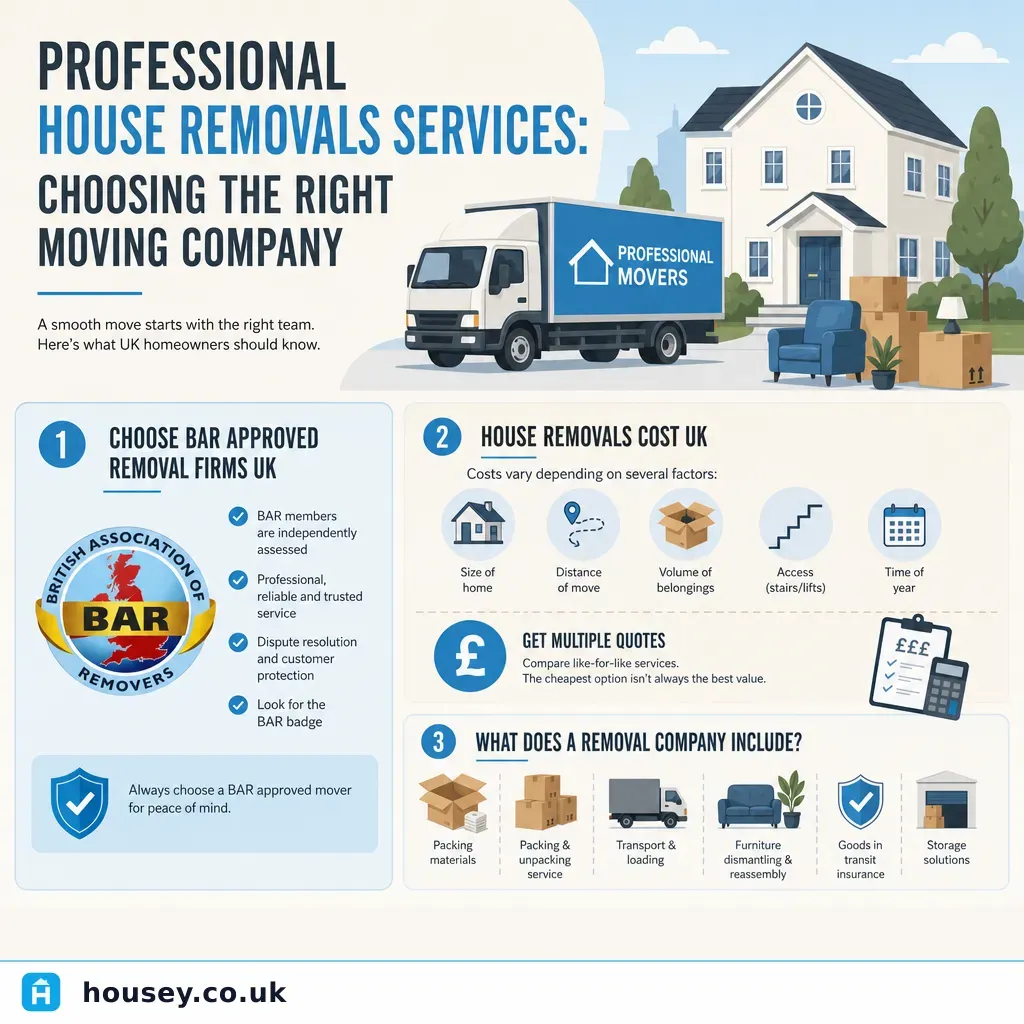
Professional House Removals Services: Choosing the Right Moving Company
A professional house removals company handles loading, transport, and unloading; full-service firms with BAR membership also offer deposit protection and independent dispute resolution.
 Buying & Moving
Managing Residential Moves During Major Urban Events
Moving house during a major urban event — a marathon, carnival, street festival, or large sporting occasion — requires advance planning around road closures, parking suspensions, and access restrictions.
 Buying & Moving
Moving Home During the Festive Season: Planning and Logistics Guide
Moving home during the festive season is achievable but requires extra planning.