Brick Repairs vs. Replacement: Decision Framework for Homeowners
By Housey · Last reviewed 18th of May 2026
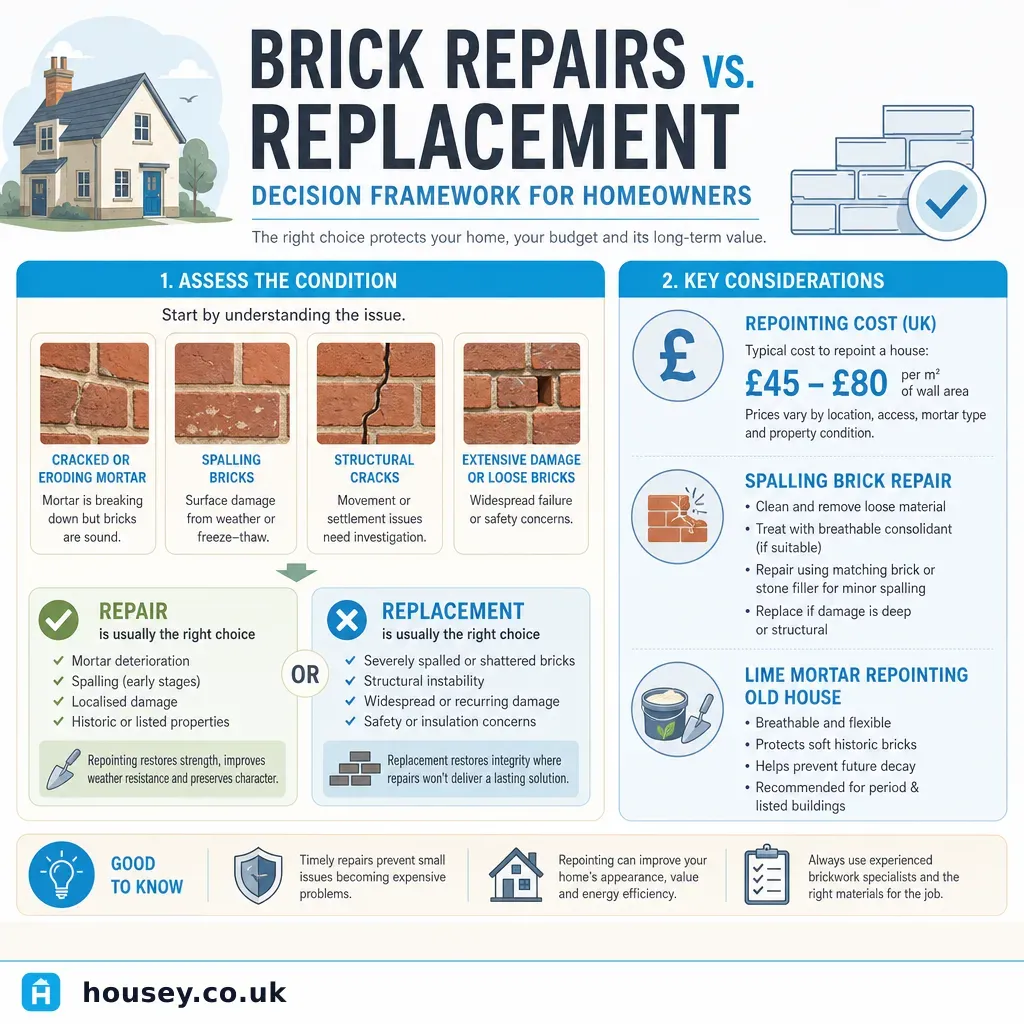
Brick Repairs vs. Replacement: Decision Framework for Homeowners
Cracks in mortar joints, crumbling brick faces, and damp patches on external walls are among the most common maintenance issues UK homeowners encounter — and choosing between repair and replacement can have significant financial and structural consequences. Whether you own a Victorian terrace, a 1930s semi, or a newer brick-built house, the right decision depends on the type and extent of deterioration, the age of the brickwork, and whether any underlying structural movement is involved.
Key points
- Spalling bricks — where the face has flaked away — cannot be restored by repointing alone; affected bricks must be individually cut out and replaced.
- Pre-1919 solid-wall properties should use lime-based mortar, not ordinary Portland cement (OPC), to allow moisture movement and prevent accelerated brick deterioration.
- Stepped diagonal or horizontal cracks wider than 0.2 mm that appear to be growing indicate structural movement and require a structural engineer's assessment before any repair work begins.
- Listed buildings and properties in conservation areas may need planning permission or listed building consent to replace brickwork — check with your local planning authority before ordering materials.
- Repointing a chimney stack typically costs £400–£1,500; full brick replacement is considerably more expensive depending on extent and matching requirements. Indicative UK costs, last reviewed 2026-05-18.
Understanding brick deterioration
Brickwork fails for several distinct reasons, and correctly identifying the cause is the first step in deciding whether to repair or replace.
Mortar deterioration is the most common issue in older properties. The mortar joints — the lime- or cement-based compound between bricks — erode over time, become porous, and allow water ingress. This typically presents as loose, crumbly, or recessed joints and is addressed by repointing: raking out the old mortar and applying new material to the correct specification.
Spalling occurs when moisture penetrates the brick itself, freezes, and forces the outer face to flake away. Spalled bricks look pitted, hollow, or layered on the surface. Once a brick has spalled significantly, repointing alone will not restore it — the brick must be cut out and replaced.
Efflorescence — white crystalline deposits on the surface — indicates soluble salts migrating from within the masonry. It is usually cosmetic, though persistent efflorescence can point to ongoing dampness that should be investigated rather than simply cleaned.
Staining and algae are surface issues often treatable with appropriate masonry cleaners, though the underlying moisture source should always be identified first.
Structural cracks are a separate and more serious category requiring professional assessment before any repair work begins. See the Red flags section below.
Repair or replace: which option is right?
The table below sets out the most common conditions and the appropriate response.
Condition | Recommended action | Typical professional |
|---|---|---|
Recessed, crumbling mortar joints; bricks intact | Repointing | Bricklayer or masonry contractor |
Spalled bricks (face flaking); mortar also deteriorated | Individual brick replacement + repointing | Bricklayer; reclamation brick may be needed |
Surface staining, algae, efflorescence | Masonry cleaning or biocide treatment | Specialist cleaning contractor |
Stepped diagonal cracks wider than 0.2 mm | Structural engineer assessment first; then repair as directed | Chartered structural engineer, then bricklayer |
Horizontal cracks or bulging brickwork | Urgent structural engineer assessment | Chartered structural engineer |
Large section of damaged or mismatched brickwork | Partial or full panel replacement | Bricklayer; seek planning advice if listed or conservation area |
Decision tree: repair or replace?
- Choose repointing if mortar joints are recessed, soft, or crumbling but the bricks themselves are intact with smooth, unflaked faces.
- Choose individual brick replacement if bricks show spalling, severe pitting, or fractures through the body of the brick rather than through the mortar joint.
- Combine both if mortar has failed and some bricks have also spalled — repointing alone will not address damaged bricks.
- Commission a structural engineer if any crack is stepping diagonally through mortar joints, running horizontally, visible internally as well as externally, or has appeared or grown recently.
- Check with your local planning authority before any replacement work if the property is listed or in a conservation area — replacement bricks may need to match the original in size, colour, texture, and firing.
- Take professional advice before rendering if the brickwork is extensively damaged and matching bricks are unavailable — rendering a solid-wall property can trap moisture if poorly specified.
Finding matching bricks
When replacing individual bricks, a close visual and physical match is important both aesthetically and functionally. A mismatch in porosity can accelerate deterioration at the repair zone by concentrating water movement.
Sources for matching bricks include:
- Reclamation yards — often the best source for pre-1950 brick types; search via the Salvo reclamation directory or local salvage dealers.
- Heritage ranges from brick manufacturers — many producers offer lines that closely match common Victorian and Edwardian profiles.
- Dismantled sections of the same building — for example, bricks removed from an internal wall that will be replastered.
Bring a sample brick or a high-resolution photograph when sourcing. Note dimensions (UK standard is approximately 215 × 102.5 × 65 mm, but older bricks vary considerably), colour, surface texture, and whether the brick is solid or perforated.
Mortar specification: why lime matters in older properties
In properties built before approximately 1919, the original mortar was almost always lime-based. Repointing these walls with modern OPC cement mortar produces a joint that is harder and less permeable than the bricks themselves. Moisture that would previously have escaped through the mortar is instead forced through the brickwork, accelerating spalling and potentially causing internal damp.
The correct specification for most solid-wall pre-1919 properties is a natural hydraulic lime (NHL) mortar, typically NHL 2 or NHL 3.5 depending on exposure level. A conservation-accredited contractor or a RICS chartered surveyor with building pathology experience can advise on the appropriate mix if you are uncertain.
For post-1945 cavity-wall properties, OPC-based mortars are generally appropriate, but the mortar strength should match the existing to avoid differential movement at the repair boundary.
Red flags: when to stop and seek expert advice
Stop work and consult a structural engineer or chartered surveyor if you notice any of the following:
- Cracks that were not present six months ago, or that appear to be widening. A straightforward method: fix a small plaster or paper tell-tale across the crack and check it over several weeks.
- Cracks that run continuously through bricks rather than following mortar joints.
- Bulging or bowing of a wall face.
- Doors or windows that have become difficult to open or close at the same time cracking appeared.
- Evidence of past underpinning, structural repairs, or significant ground works nearby.
- Any crack accompanied by water penetrating the internal wall surface.
These signs suggest the damage may be structural rather than superficial, and that repointing or brick replacement could mask a more serious underlying problem.
When to get professional help
Repointing and straightforward brick replacement are well-defined trades, but a professional assessment is warranted for older, listed, or structurally suspect properties. A RICS Level 3 Building Survey will identify masonry defects and their likely cause. Commission a chartered structural engineer if movement is suspected.
Get professional advice before starting any work if:
- Any crack is wider than 0.2 mm and appears to be growing.
- Horizontal cracking is present in external walls (may indicate lintel failure or wall tie failure in cavity walls).
- Visible deformation or bulging is present in any wall face.
- The property is listed or in a conservation area.
- You cannot identify a matching brick source for a substantial replacement area.
How Housey can help
Housey connects homeowners with vetted masonry contractors, building surveyors, and structural engineers across the UK. Describe your brickwork issue to receive comparable quotes from qualified local professionals — no obligation to proceed.
Frequently asked questions
Can I repoint brickwork myself?
Repointing is manageable for a competent DIYer on accessible sections such as garden walls or low-level joints, but external wall repointing at height requires safe working platforms and the correct mortar specification. For pre-1919 properties requiring lime mortar, using the wrong mix will cause further brick damage. Commission a professional if you are unsure of the correct specification or cannot work safely at height.
How long does repointing last?
Good-quality repointing with a correctly specified mortar typically lasts 20–30 years in a sheltered location. Exposed positions — chimney stacks, gable ends, and north-facing walls — may need attention after 15–20 years. The quality of the mortar mix and the standard of application both significantly affect longevity.
Do I need building regulations approval for brick repairs?
Routine repointing and individual brick replacement do not usually require building regulations approval. If work involves structural elements or the property is listed, you may need listed building consent or building control sign-off. Check with your local authority building control department if you are unsure whether the scope of work triggers a notification requirement.
How much does it cost to replace bricks on an external wall?
Costs vary widely based on extent of damage, accessibility, and the cost of sourcing matching bricks. Indicative UK costs, last reviewed 2026-05-18: individual brick replacement typically ranges from £15–£35 per brick including labour; repointing a chimney stack £400–£1,500; repointing an entire house elevation £1,500–£5,000 or more. Always obtain at least three written quotes.
Sources and further reading
- Repointing Brick and Stone Masonry — Historic England
- RICS Home Survey Standard — RICS
- Planning permission — listed buildings and conservation areas — GOV.UK
Useful next reads
 Improvement & Build
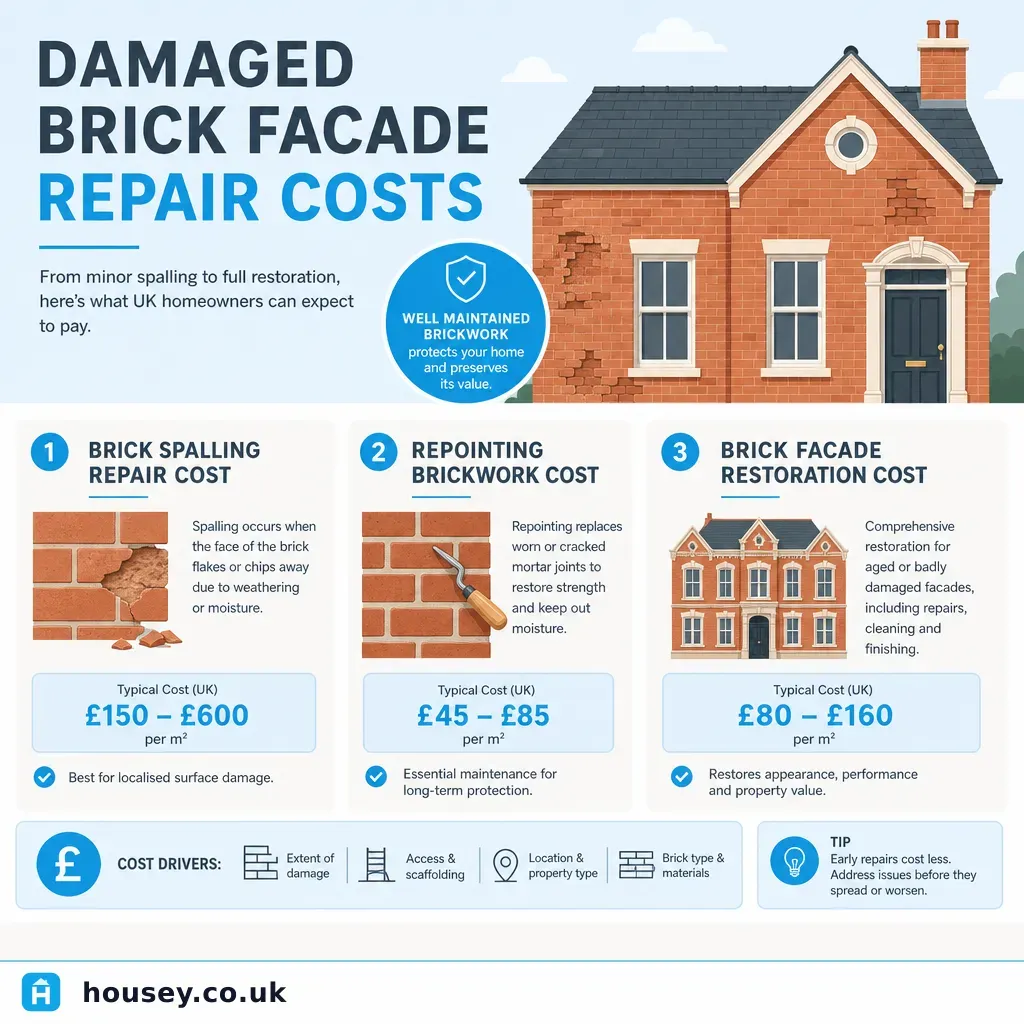
Damaged Brick Facade Repair Costs
Repairing a damaged brick facade in the UK typically involves repointing mortar joints, replacing spalled bricks, or full masonry restoration.
 Improvement & Build
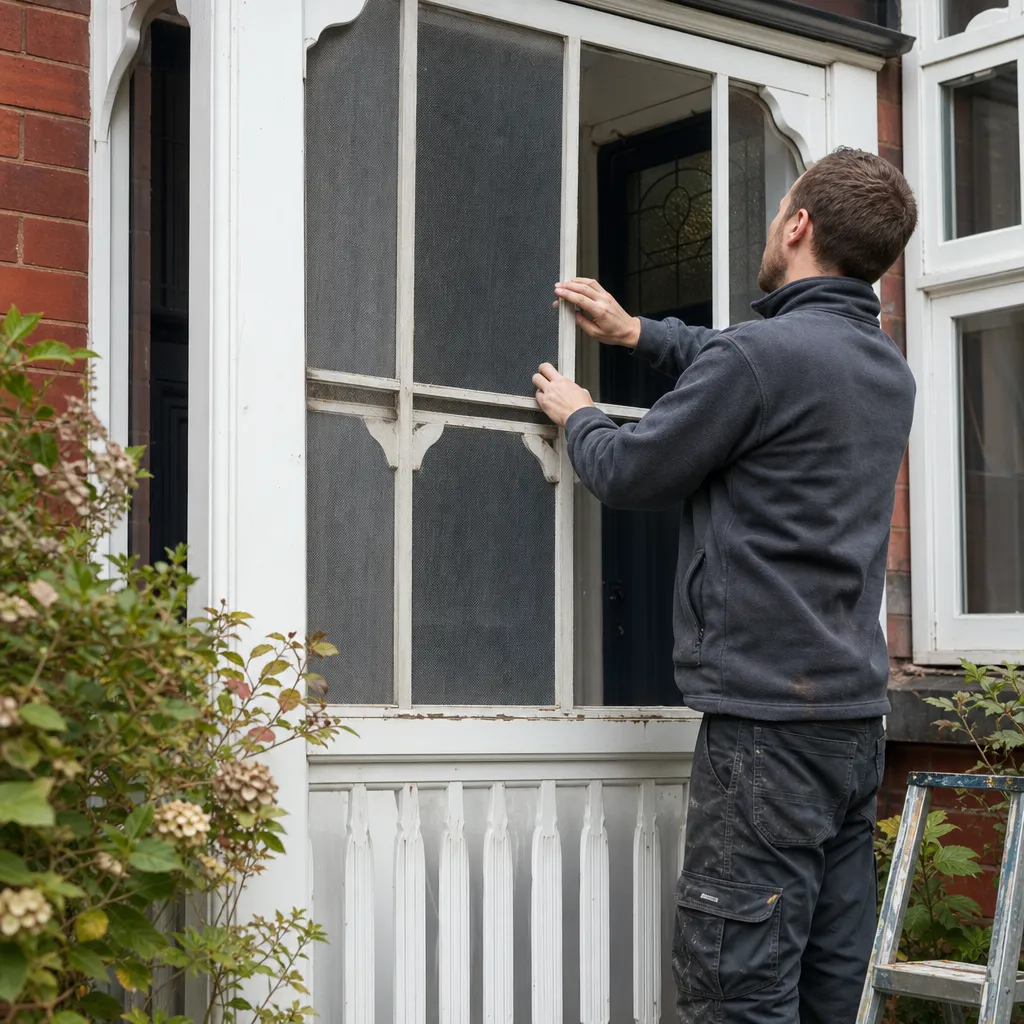
Repairing Damaged Porch Screens: When to Call a Specialist
Most porch screen repairs fall into two categories: surface work — cracked paint, minor mesh tears, loose beading — that a confident homeowner can handle, and structural or glass replacements that require a specialist.
 Improvement & Build
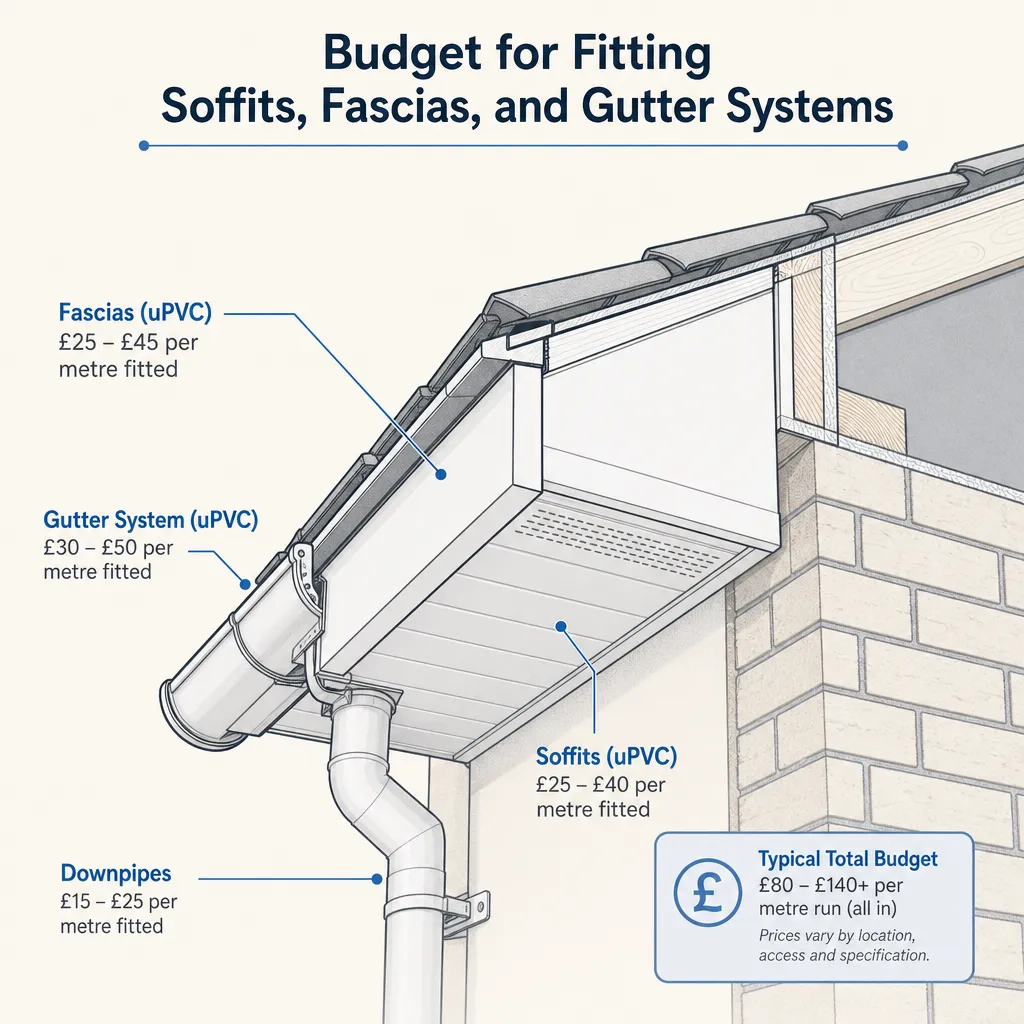
Budget for Fitting Soffits, Fascias, and Gutter Systems
Replacing soffits, fascias, and gutters on a typical UK semi-detached house costs roughly £1,500–£3,500 for uPVC, depending on property size, access, and material choice.
 Improvement & Build
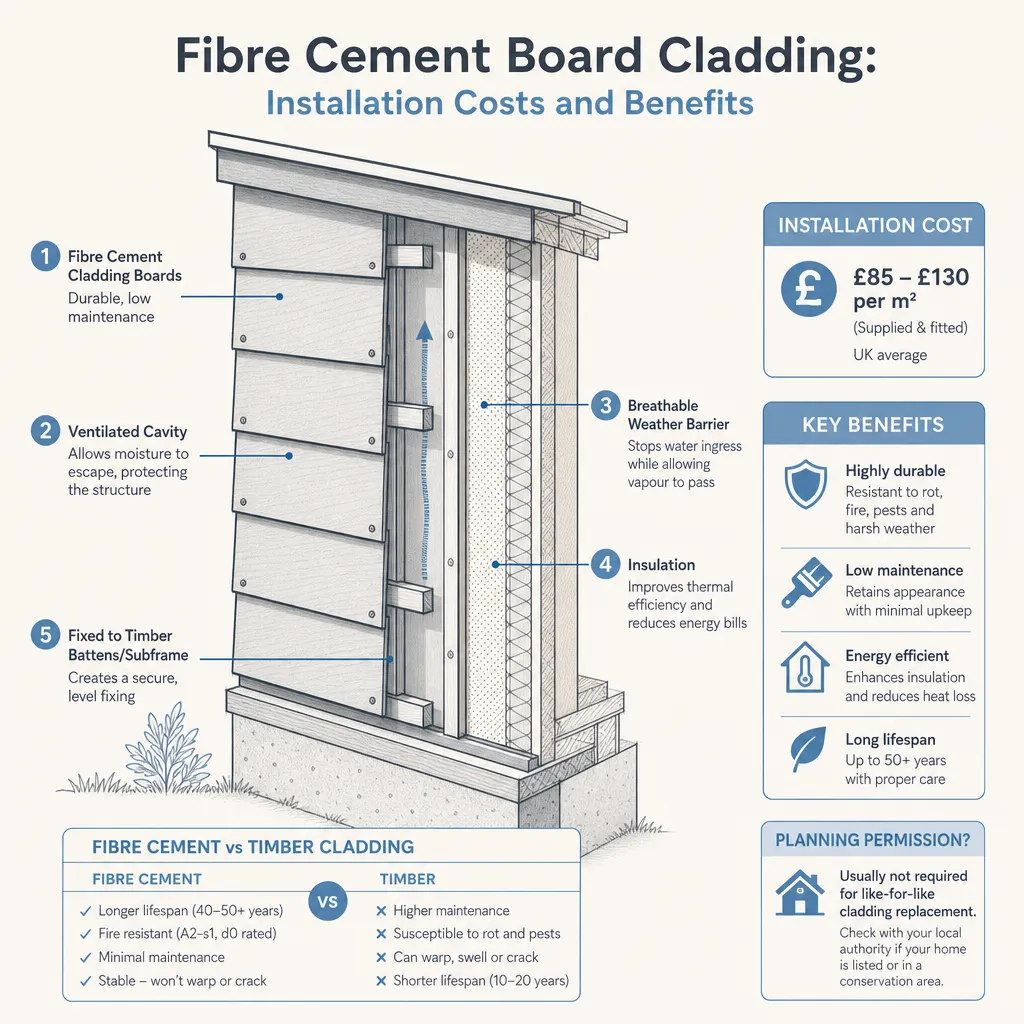
Fibre Cement Board Cladding: Installation Costs and Benefits
Fibre cement board cladding typically costs £80–£180 per m² installed in the UK, including boards, battens, breather membrane, and labour.
 Improvement & Build
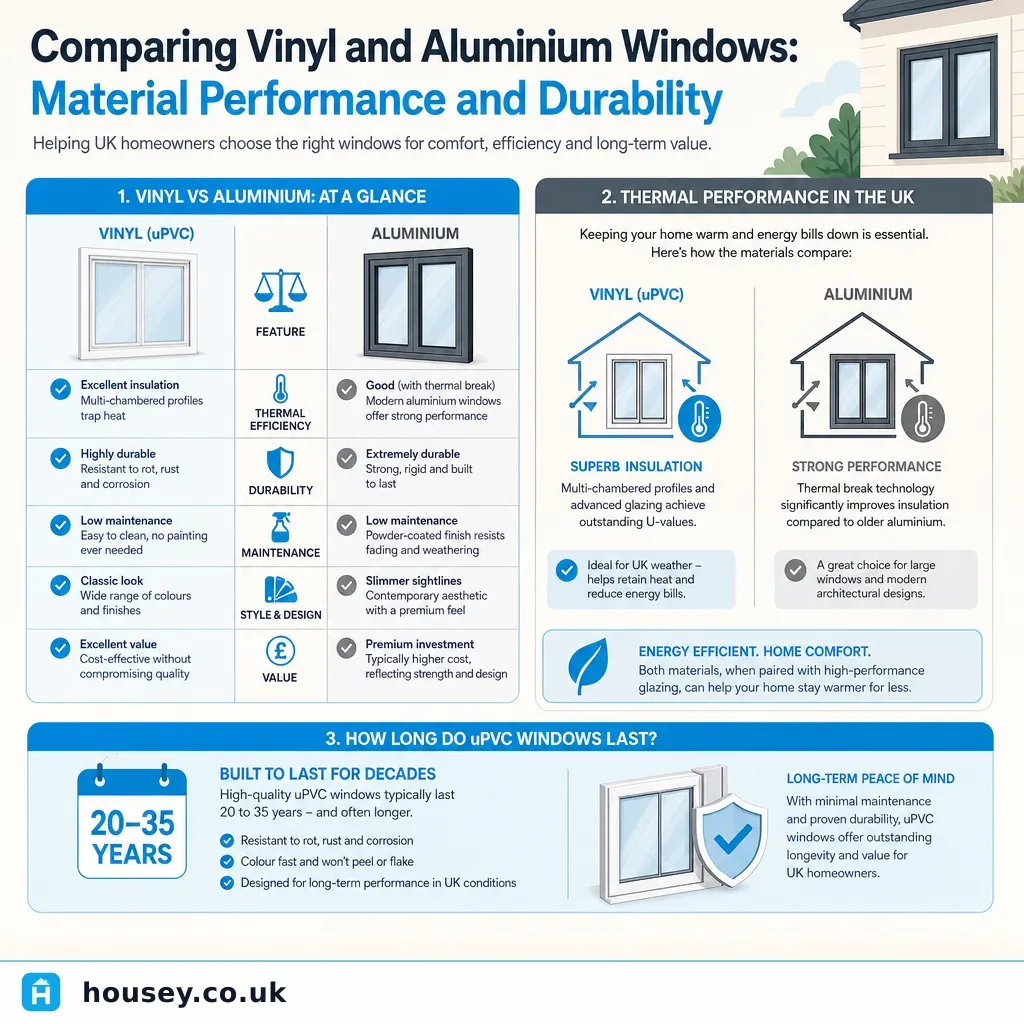
Comparing Vinyl and Aluminium Windows: Material Performance and Durability
uPVC (vinyl) and aluminium windows both meet UK Building Regulations Part L when properly specified.