Damaged Brick Facade Repair Costs
By Housey · Last reviewed 10th of May 2026
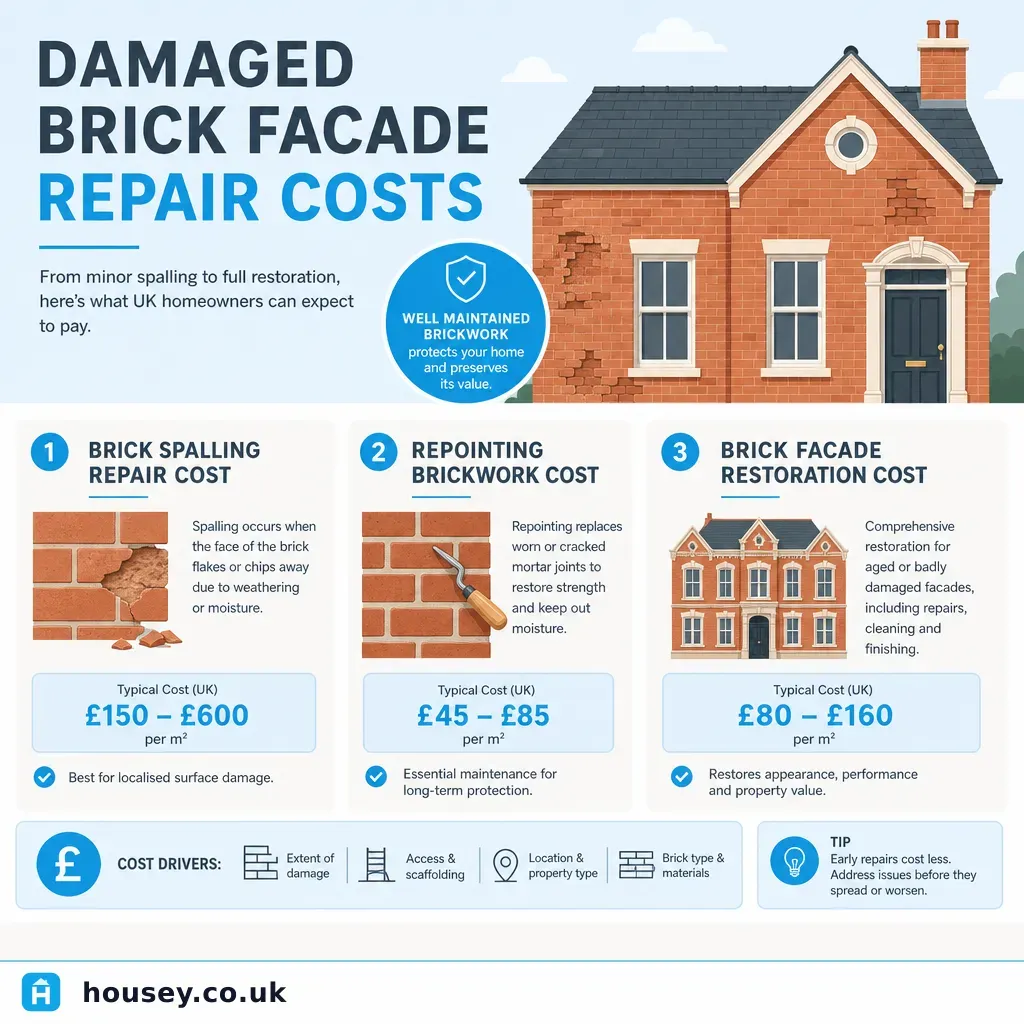
Damaged Brick Facade Repair Costs
Brick facades on UK homes take a constant battering from driving rain, frost, and temperature swings — and the damage often goes unnoticed until it is significant enough to threaten the fabric of the wall. Whether you have spotted spalling bricks, crumbling mortar joints, or stubborn staining across an elevation, understanding what repair work involves and what it costs helps you act before a cosmetic issue becomes a structural one.
Key points
- Repointing deteriorated mortar joints is one of the most common and cost-effective facade repairs; leaving open joints allows water penetration that accelerates structural decay.
- Spalling bricks — where the face breaks away — are caused by frost action, moisture trapped behind an impermeable render or coating, or incorrect mortar selection; identifying the root cause matters before repairs begin.
- Access is a major cost driver: scaffolding for a full two-storey elevation can add £1,000–£3,000 or more to any job, with some contractors offering cherry-picker (MEWP) hire as a lower-cost alternative for restricted access.
- Using the wrong mortar on pre-1919 brickwork can accelerate damage; soft hydraulic lime mortars should be used on Victorian and Edwardian buildings, not modern Ordinary Portland Cement (OPC) mixes.
- Listed buildings and properties in conservation areas may require consent before facade repairs — check with your local planning authority before any like-for-like replacement work.
What causes brick facade damage?
Brick facade damage in UK properties usually falls into one of four categories.
Spalling occurs when surface layers of the brick break away, typically after water enters the brick and freezes. Frost action exerts pressure that fractures the face. Spalling is particularly common on Victorian terraces and solid-wall homes. It can also be caused by a breathable wall being coated with an impermeable render or masonry paint, which traps moisture within the brick.
Mortar deterioration is normal over decades but accelerates in exposed or north-facing walls. Hard cement mortar applied to lime-built walls is a common cause of accelerated brick decay — the rigid mortar cannot accommodate movement, so stress concentrates in the bricks rather than the joint.
Efflorescence and staining (white salt deposits on the face) often indicates moisture movement through the wall. It is rarely harmful in itself, but it signals underlying water ingress that needs addressing.
Structural cracking — diagonal, stepped, or vertical — can indicate differential settlement, lintel failure, or subsidence. These situations require assessment by a chartered surveyor or structural engineer before any cosmetic repairs begin.
Types of repair and indicative costs
The table below sets out common facade repair types and broad indicative cost ranges for UK properties.
Indicative UK costs, last reviewed 2026-05-10. Prices vary significantly by region, access requirements, wall size, brick type, and contractor. Always obtain at least three itemised quotes.
Repair type | Typical scope | Indicative cost range | Notes |
|---|---|---|---|
Localised repointing | Up to 5 m² of joints raked and repointed | £250–£600 | Access included if ground-level |
Full elevation repointing | One or two-storey front elevation | £1,500–£5,000+ | Scaffold often required |
Spalled brick replacement | Replacement of individual damaged bricks | £100–£400 per brick | Matching brick sourcing adds cost |
Brick slip or decorative tile repair | Re-adhering loose slips or facade tiles | £300–£900 per m² | Specialist skill required |
Render removal and breathable re-coat | Stripping impermeable render, applying lime or breathable alternative | £3,000–£10,000+ | Major work; affects wall breathability |
Crack repair and toothing-in | Stitching, crack injection, or toothing in new bricks | £500–£3,000+ | Structural cause must be resolved first |
What drives the cost?
Access and height. Ground-floor work may need only hop-up steps, while upper floors require scaffold, a MEWP (cherry-picker), or rope-access techniques. Scaffold erection for a full house typically costs £1,500–£4,000 depending on size and duration.
Brick matching. Replacing bricks requires a close visual match — size, colour, texture, and hardness. Salvage yards are a common source. Unusual brick sizes (especially pre-metric imperial formats) can be difficult to source and increase lead time.
Extent of damage. A few spalled bricks on a small area is a straightforward repair. Widespread spalling across an entire elevation is a substantially different project.
Mortar specification. Using the correct mortar (particularly hydraulic lime for older properties) takes skill and materials that cost more than standard cement mixes. Getting this wrong can cause the repair to fail within a few years.
Location. London and the South East typically carry labour premiums of 20–40% above regional averages.
Which repair do you need? A decision guide
- Choose localised repointing if mortar joints are recessed, crumbling, or absent in a defined area and the brickwork is otherwise sound.
- Choose full elevation repointing if joints are deteriorated across a full wall face or water penetration is occurring over a large area.
- Choose brick replacement if individual bricks show spalling, cracking through the face, or deep frost damage.
- Choose render removal and re-coat if an impermeable render or masonry paint is trapping moisture and causing spalling or damp ingress.
- Ask a chartered surveyor or structural engineer if you see diagonal or stepped cracking, bulging or bowing walls, or cracks that are widening — do not proceed with cosmetic repairs until the cause is understood.
- Check with your local planning authority if the property is listed or in a conservation area before starting any facade work.
Homeowner checklist before getting quotes
Red flags to watch for
- Cracks running diagonally from window or door corners, or stepped along mortar joints over more than 1 m.
- A section of wall that bulges or leans outward when viewed from a low angle.
- Brickwork that sounds hollow when tapped firmly.
- Any contractor proposing ordinary Portland cement mortar on a pre-1919 wall without explaining why it is appropriate.
- A quote that does not specify scaffold provision, mortar type, or brick sourcing.
When to get professional help
Most brick facade repairs are carried out by experienced masonry contractors. However, some situations require a professional assessment before any work begins:
- Diagonal or stepped cracking, or cracks wider than approximately 5 mm, should be assessed by a RICS-accredited chartered surveyor or structural engineer before repair.
- Suspected subsidence — particularly after a dry summer or following nearby excavation — requires specialist investigation.
- Listed buildings require a heritage-aware contractor and may need listed building consent; consult Historic England's guidance on traditional masonry repair and speak to your local authority.
- If failed roof drainage is directing water onto the facade, the roof issue should be addressed first — otherwise facade repairs will fail prematurely. A roofer should assess guttering, downpipes, and flashings before masonry work begins.
Housey can connect you with trusted local roofers if roof drainage issues are contributing to facade damage — fixing the source of water ingress is the right first step before masonry repair.
How Housey can help
If your brick facade work needs to be coordinated with other external maintenance — particularly where failing guttering or roof details are allowing water to reach the brickwork — Housey's trusted local roofers can assess and quote for drainage and roofline repairs as part of the same project. Combining both scopes under a single access window (scaffold or MEWP) can reduce overall cost.
Frequently asked questions
How do I know if my repointing mortar is wrong?
Look at the colour and hardness. Modern grey cement mortar is hard and impermeable. Correct lime mortar for older buildings is softer, slightly crumbly at the edges when dry, and usually cream or pale tan. If cement has been used on a Victorian or Edwardian wall, it may be harder than the bricks themselves and could be causing accelerated damage. A masonry specialist can assess and advise.
Does brick facade repair need planning permission?
Most like-for-like repairs do not require planning permission. However, if your property is listed or in a conservation area, you may need listed building consent or conservation area consent before altering the facade. Check with your local planning authority before starting. GOV.UK's planning portal can help identify whether your property has any planning constraints.
Can I repair spalled bricks myself?
Minor brick replacement at ground level is possible for a confident DIYer with masonry experience. However, matching bricks, selecting the correct mortar, and cutting out damaged bricks without harming surrounding masonry all require skill. Never attempt repairs from a ladder above 2 m. For anything beyond a single brick, or for work at height, a qualified masonry contractor is strongly advisable.
How long does repointing last?
Quality repointing using the correct mortar specification typically lasts 30–50 years. Cement mortar applied incorrectly to older lime-built walls may fail within 5–15 years and can cause accelerated brick damage in the process. Specifying the right mortar at the outset is far more cost-effective than repairing damage caused by an unsuitable mix.
Sources and further reading
- Repairing Historic Brickwork — Historic England
- Advice on Repointing and Mortars — Society for the Protection of Ancient Buildings
- Listed Buildings and Conservation Areas — Planning Portal
Useful next reads
 Improvement & Build
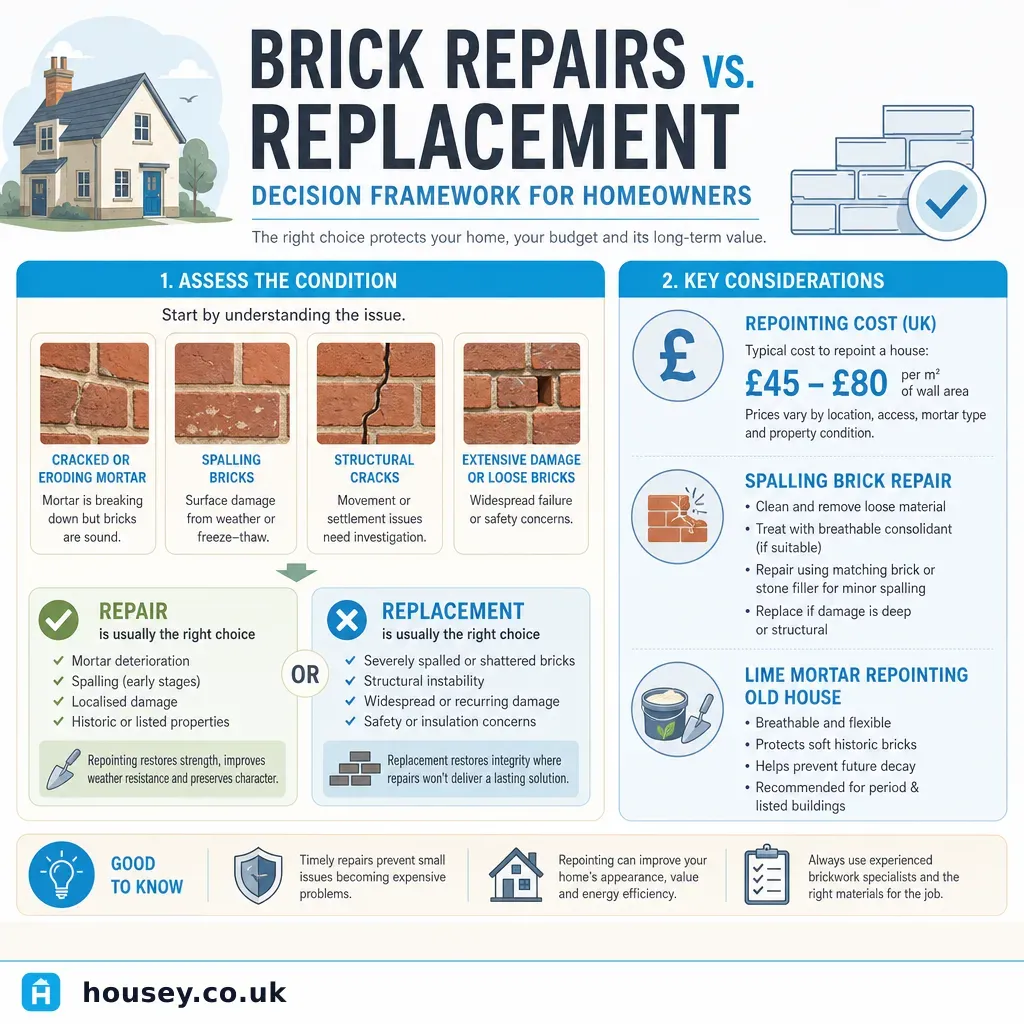
Brick Repairs vs. Replacement: Decision Framework for Homeowners
Whether to repair or replace brickwork depends on the type and extent of damage.
 Improvement & Build
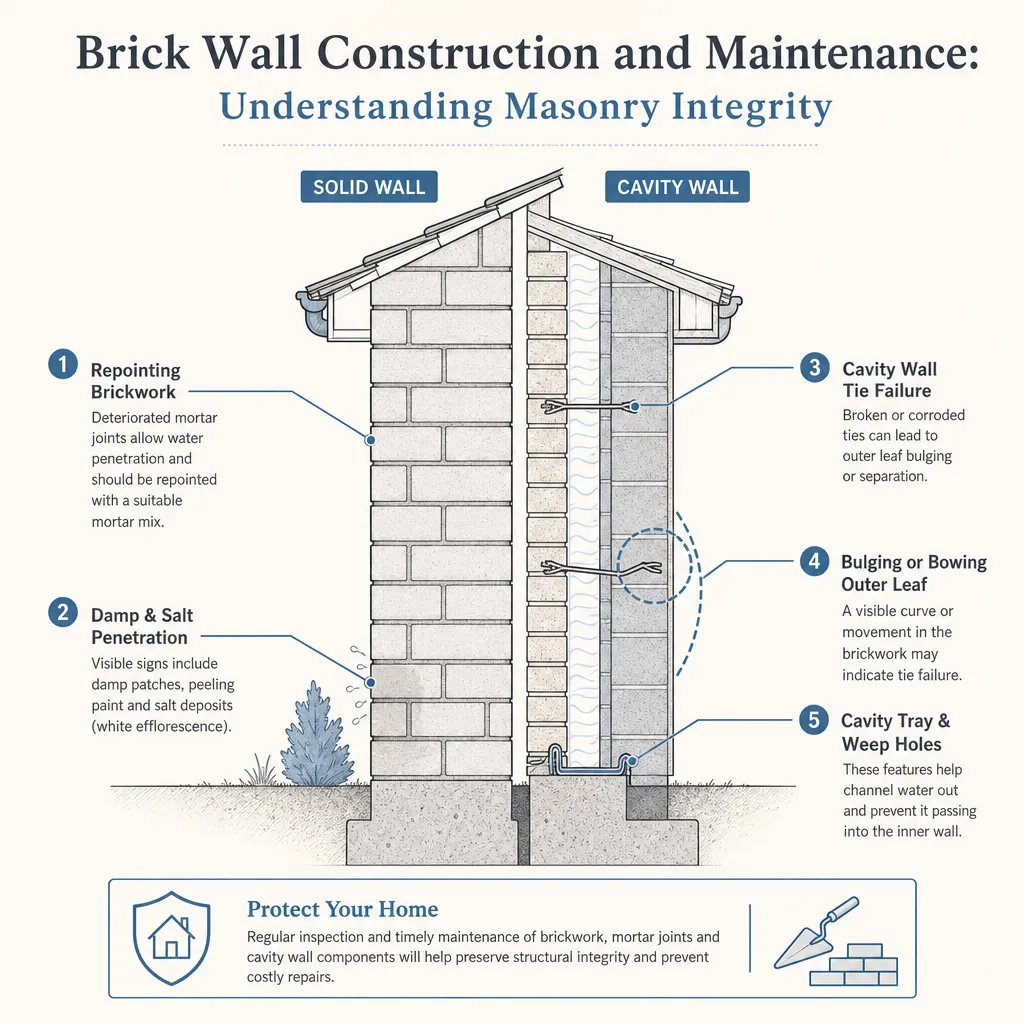
Brick Wall Construction and Maintenance: Understanding Masonry Integrity
Brick walls in UK homes use either solid masonry construction (pre-1920) or cavity construction (post-1920s), with two leaves of brickwork separated by a gap or insulation.
 Improvement & Build
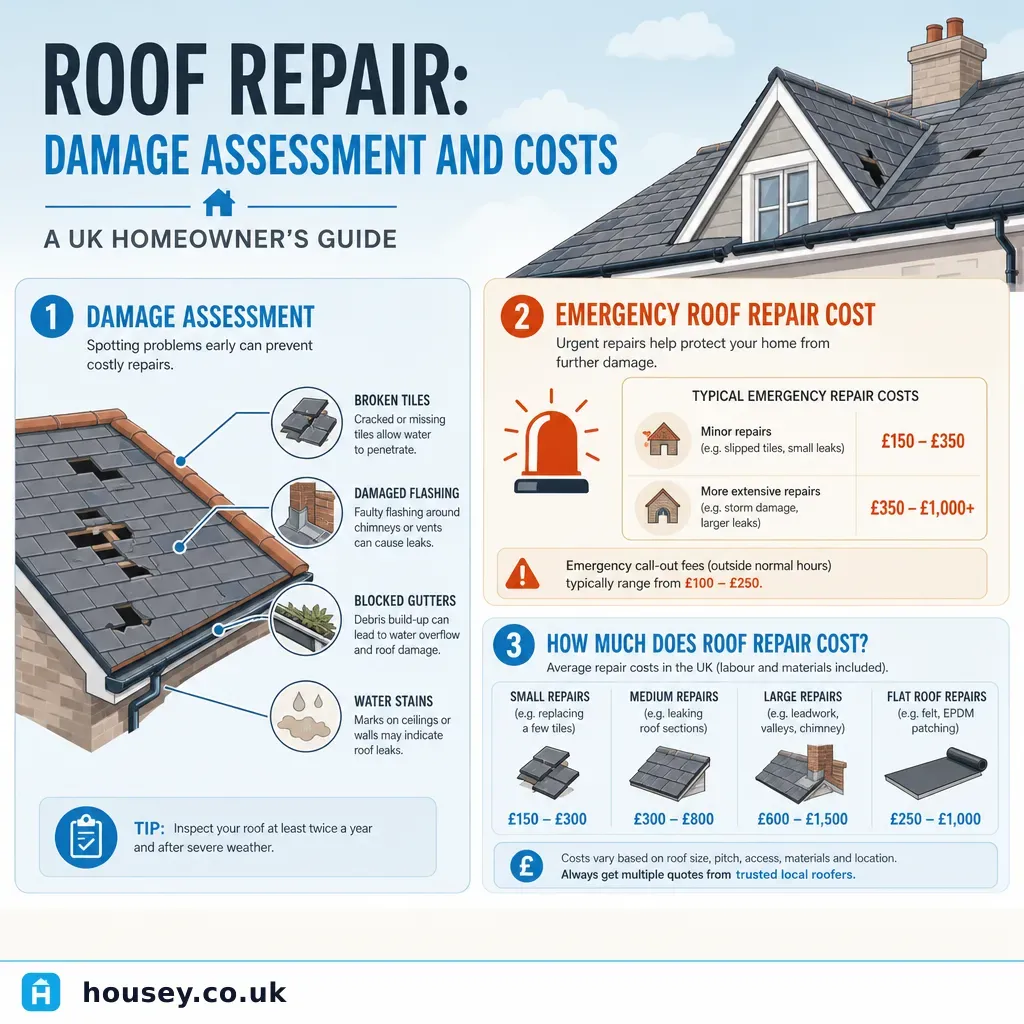
Roof Repair: Damage Assessment and Costs
Most roof repairs — replacing slipped tiles, re-bedding ridge tiles, or patching flashing — are straightforward maintenance jobs that do not require planning permission.
 Improvement & Build
Masonry Repointing Costs and Best Practices
Masonry repointing in the UK typically costs £20–£60 per m² for labour and materials, with scaffold adding £600–£1,500 or more depending on height and access.
 Improvement & Build
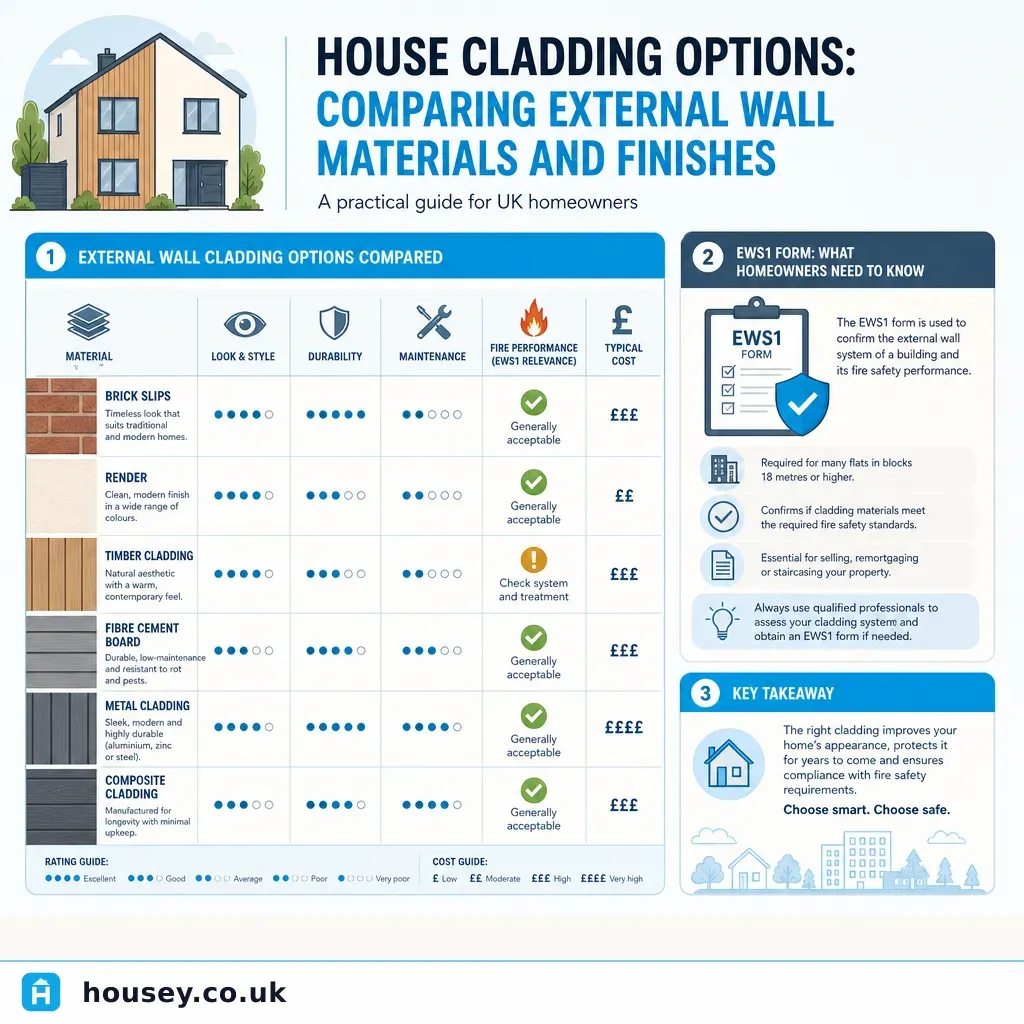
House Cladding Options: Comparing External Wall Materials and Finishes
External cladding materials for UK homes include render over insulation, brick slips, timber boards, metal panels, and fibre cement.