Repairing Damaged Porch Screens: When to Call a Specialist
By Housey · Last reviewed 26th of May 2026
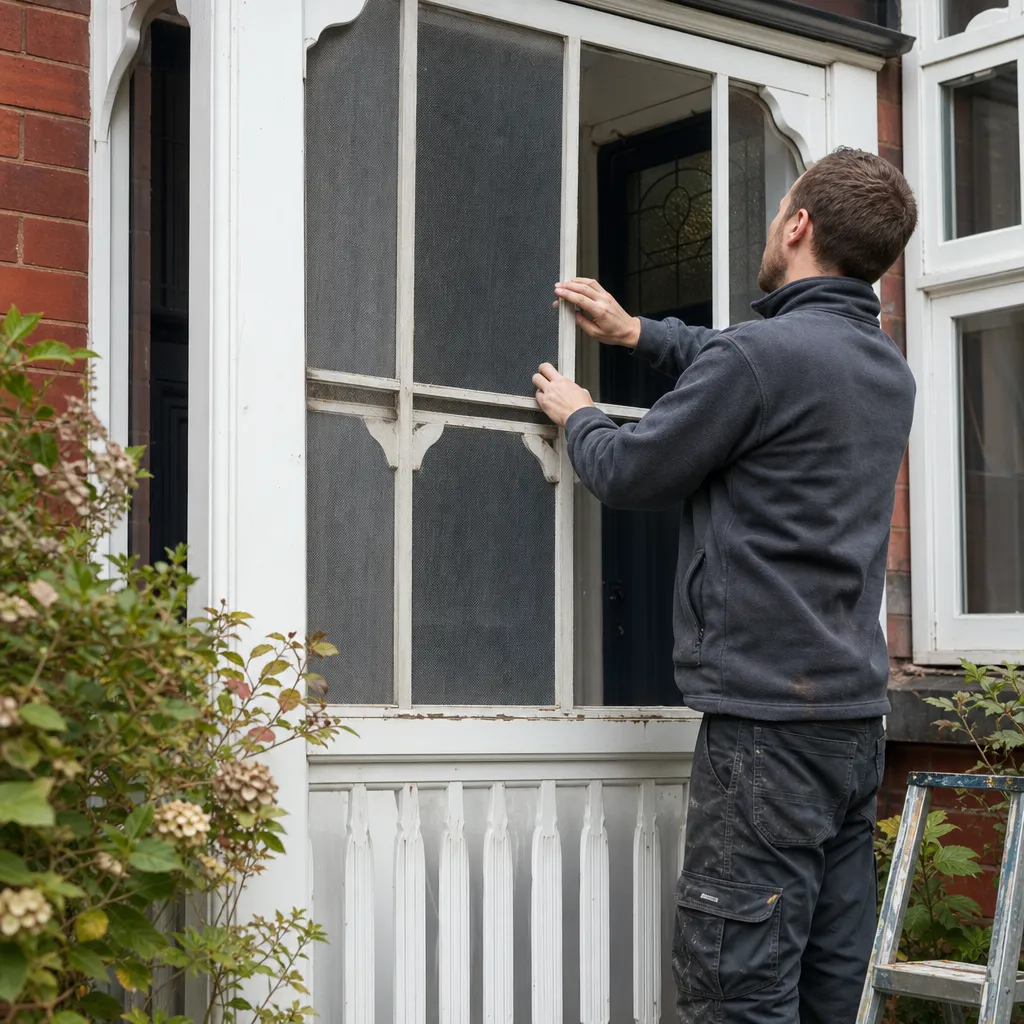
Repairing Damaged Porch Screens: When to Call a Specialist
A damaged porch screen — whether a cracked glazed panel, a rotten timber lattice, or a failing uPVC frame — can leave an entrance looking neglected and expose the structure to further deterioration through water ingress. The question of repair versus replacement, and whether it is a job for a confident homeowner or a specialist, depends on the screen type, the extent of the damage, and the materials involved. UK homeowners most commonly face this decision after storm damage, condensation failure in double-glazed units, or gradual timber decay.
Key points
- Replacement glass in porch screens must meet the safety glazing requirements of Building Regulations Approved Document N: toughened or laminated safety glass is required in critical locations below 1,500mm from the floor or within 300mm of a door edge.
- Replacing a glass unit within an existing external frame is notifiable work under FENSA (or equivalent schemes CERTASS or BSI); an unregistered installer must obtain a building control completion certificate instead.
- Timber porch screens showing surface crazing or peeling paint can often be repaired with sanding, primer, and exterior-grade paint; timber that compresses easily under firm thumb pressure indicates rot requiring structural repair or replacement.
- uPVC frame sections that are warped, cracked, or have failed seal channels can rarely be repaired cost-effectively; frame replacement is usually more economic than localised patching.
- Insect mesh panels use aluminium or fibreglass mesh; small tears under 100mm can be repaired with patch kits available from builders' merchants, but mesh perforated over a third of the frame should be replaced entirely.
Types of porch screen found in UK homes
In UK properties, the term 'porch screen' covers several quite different products:
Glazed porch panels — uPVC or aluminium-framed glass panels that enclose an open porch or form a glazed inner lobby. These are the most common type, particularly on 1980s–2000s houses with lean-to or pitched porches.
Timber privacy and decorative screens — lattice panels, slatted screens, or bespoke joinery used to create a sheltered, semi-open entrance. Common on more traditional, rural, or period properties.
Composite and aluminium privacy screens — lower-maintenance alternatives to timber, increasingly popular since around 2015.
Insect mesh screens — aluminium or fibreglass mesh fitted to an opening or fixed frame. Less common in the UK than in warmer climates, but used in areas with significant flying insects or where ventilation without draughts is desired.
Each type fails differently and calls for a different repair approach.
DIY or specialist: a decision guide
Before calling anyone, run through this assessment:
- Choose DIY if the damage is surface-level: cracked paint, a minor mesh tear under 100mm, a stiff or loose door latch on a timber screen frame, or loose glazing bead where the glass itself is intact.
- Call a specialist glazier or porch company if glass is cracked or broken, a double-glazed unit has misted, or the uPVC or aluminium frame is warped, cracked, or has failed weatherseal channels.
- Check with your local planning authority if the porch is on a listed building or in a conservation area, as like-for-like material changes may require listed building consent or planning permission.
- Seek a structural assessment if the porch posts, lintel, or roof show signs of movement — a door or panel that was not previously stiff and is now sticking can indicate settlement.
Repair difficulty by screen type
Screen type | Common fault | DIY appropriate? | When to call a specialist |
|---|---|---|---|
uPVC glazed panel | Misted double-glazed unit | No | Always — glass replacement requires FENSA certification |
uPVC glazed panel | Loose glazing bead, worn draft strip | Yes — parts widely available | If the frame itself is warped or cracked |
Aluminium glazed panel | Cracked or broken pane | No | Glazier or specialist porch installer |
Timber privacy screen | Surface rot, flaking paint | Yes — sand, treat, prime, repaint | If rot depth exceeds 15–20mm or affects structural joints |
Timber privacy screen | Structural decay, failed joints | No | Joiner or carpenter |
Composite screen | Surface scratches, minor chips | Yes — manufacturer touch-up kits | If structural profile is cracked through |
Insect mesh panel | Small tear under 100mm | Yes — patch kits from builders' merchants | If mesh is perforated over a large area |
Repairing glazed porch panels: what the work involves
Misting or fogging between the panes of a double-glazed unit means the hermetic seal has failed and moisture-laden air has entered the cavity. This cannot be fixed by cleaning — the unit must be replaced.
Key steps for glazed porch panel repairs:
- Measure the unit precisely — double-glazed units are made to measure. Record width, height, and spacer bar depth (typically 16mm or 20mm for modern units) before ordering.
- Check the critical location rules — Approved Document N defines where safety glazing (toughened or laminated to BS EN 12600 Class 1C or 2C) is mandatory. Confirm whether your porch glazing falls in a critical location before ordering replacement glass.
- Use a FENSA-registered installer — this ensures the replacement is self-certified without a separate building control application. Ask for your FENSA certificate on completion.
- Inspect frame seals while the unit is out — packer blocks and perimeter gaskets should be checked and replaced at the same time to prevent repeat water ingress.
Timber and composite screens: repair or replace?
Timber porch screens can last decades with regular maintenance. The key diagnostic is whether decay is surface-level or has reached the structural core.
Probe any soft or discoloured area with a flat-head screwdriver or bradawl. If the tool sinks into the wood with light pressure, surface filler or paint will not hold and structural repair or replacement is the right course. If resistance is firm, the decay is surface-level and the repair is straightforward.
Surface repairs follow a simple sequence: remove loose material; apply a two-part wood filler or flexible exterior filler to any voids; sand flush when cured; apply a flexible primer coat; finish with two coats of exterior-grade paint or stain. Pay particular attention to end grain and joints, which are the primary entry points for moisture.
Composite (WPC — wood-plastic composite) and aluminium screens rarely suffer structural decay. UV exposure can cause colour fading and surface chalking over time. Most composite manufacturers offer touch-up kits and 10–25 year warranties; check whether the damage falls within warranty terms before commissioning paid repair work.
When to get professional help
Involve a specialist when any of the following apply:
- Glass is cracked, broken, or misted — glazing replacement must meet Approved Document N safety requirements and FENSA certification rules.
- Structural timber in the screen frame or supporting posts is soft, spongy, or visibly decayed at depth.
- The porch frame is out of square, a door or panel is sticking without an obvious cause, or fixings are pulling away from the wall.
- The repair affects a structure shared with a neighbouring property — check Party Wall etc. Act 1996 obligations if relevant.
- The porch is on a listed building or in a conservation area — repairs that alter appearance or materials may require consent.
- Roof glazing or overhead glass panels are involved — working at height above 2m and safety glazing requirements make this specialist work.
How Housey can help
Housey can connect you with local joiners, specialist glaziers, and porch and conservatory installers who can assess damage and provide quotes for repair or replacement. Getting two or three quotes for any significant porch screen repair helps you understand the scope and whether a targeted repair or full replacement offers better long-term value.
Frequently asked questions
Does replacing porch screen glass need building regulations approval?
Yes. Replacing glass units in an external frame is notifiable work. A FENSA-registered (or CERTASS- or BSI-registered) installer can self-certify the work. If you use an unregistered glazier, you or they must notify local authority building control, who will inspect and issue a completion certificate.
Can I repair a misted double-glazed porch panel myself?
No. Once a double-glazed unit has failed and fogged between the panes, the unit must be replaced. There is no DIY fix that restores the hermetic seal. Replacement units should be ordered to measure and installed with the correct safety glazing specification if the location is classified as critical under Approved Document N.
How long do uPVC porch frames typically last?
Most uPVC frames have a manufacturer lifespan of 20–35 years. The glass units within them may fail earlier — typically after 15–25 years depending on the original gas fill and seal quality. Frames that are out of square, have failed multi-point locks, or show cracking in the profiles are approaching end of life, and repair is rarely cost-effective.
Do I need planning permission to change the material of a porch screen?
Replacing like-for-like materials is usually permitted development for a non-listed property outside a conservation area. However, changing the material significantly — for example, from timber to uPVC on a period property in a conservation area — may require planning consent. Check with your local planning authority before proceeding.
Sources and further reading
- Building Regulations Approved Document N: Glazing — GOV.UK
- FENSA: registered glazing installer scheme — FENSA
- Planning Portal: listed buildings and conservation areas — Planning Portal
- Glass and Glazing Federation: homeowner guidance — Glass and Glazing Federation
Useful next reads
 Improvement & Build
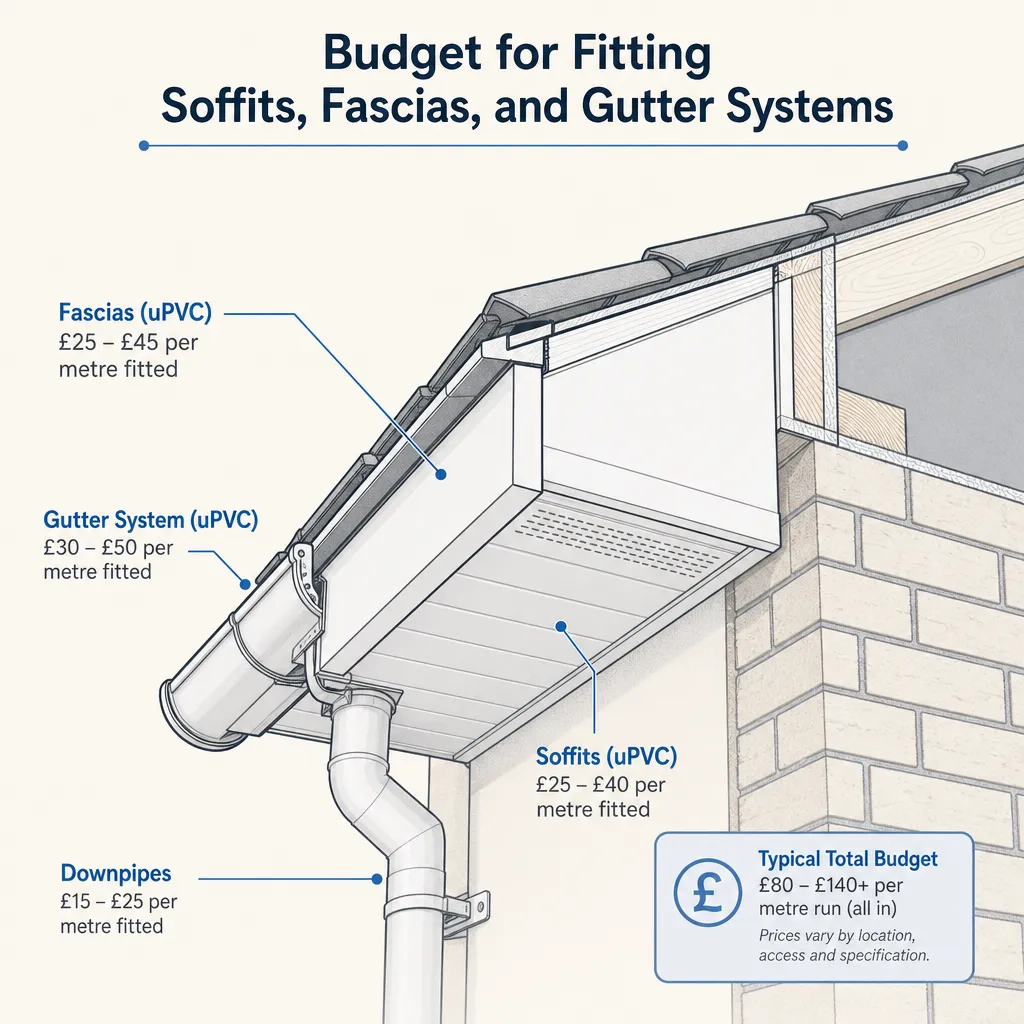
Budget for Fitting Soffits, Fascias, and Gutter Systems
Replacing soffits, fascias, and gutters on a typical UK semi-detached house costs roughly £1,500–£3,500 for uPVC, depending on property size, access, and material choice.
 Improvement & Build
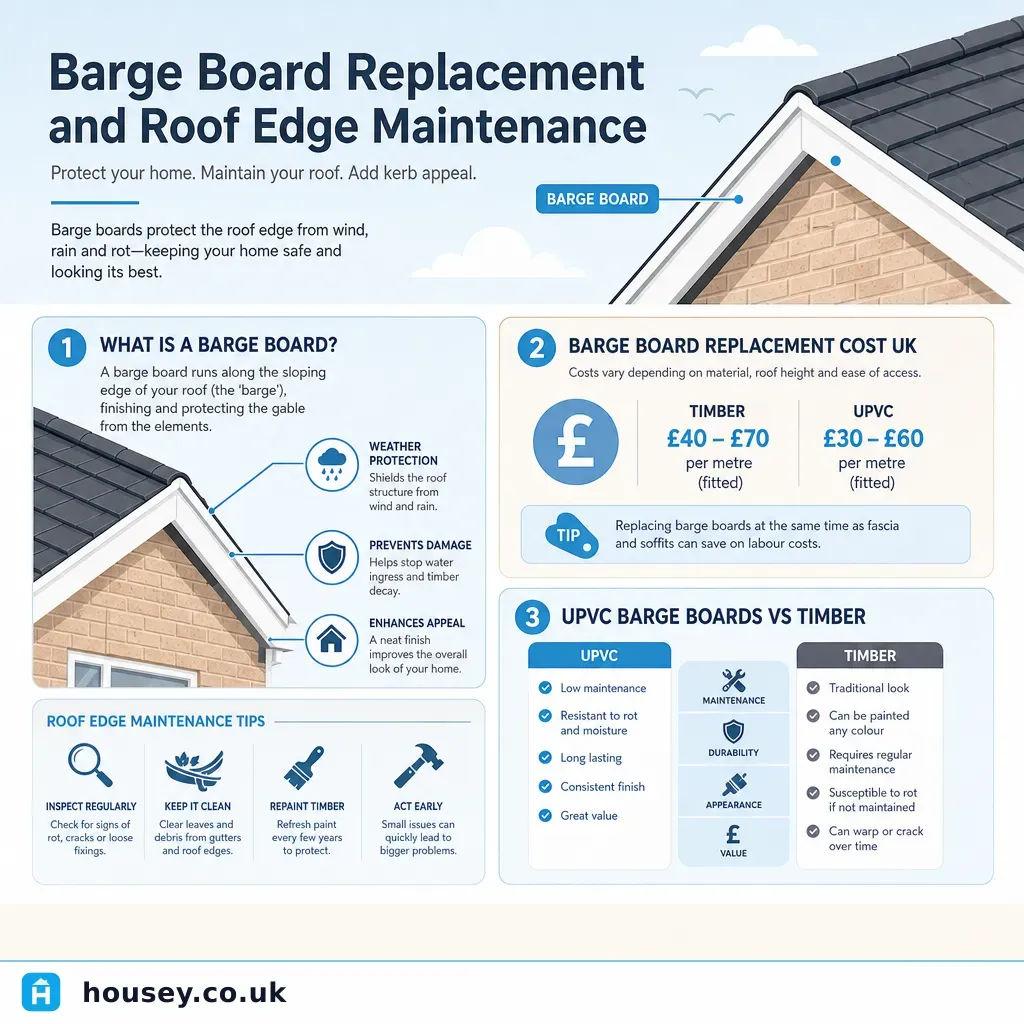
Barge Board Replacement and Roof Edge Maintenance
Barge boards sit at the gable end of a pitched roof and protect the verge from wind-driven rain.
 Improvement & Build
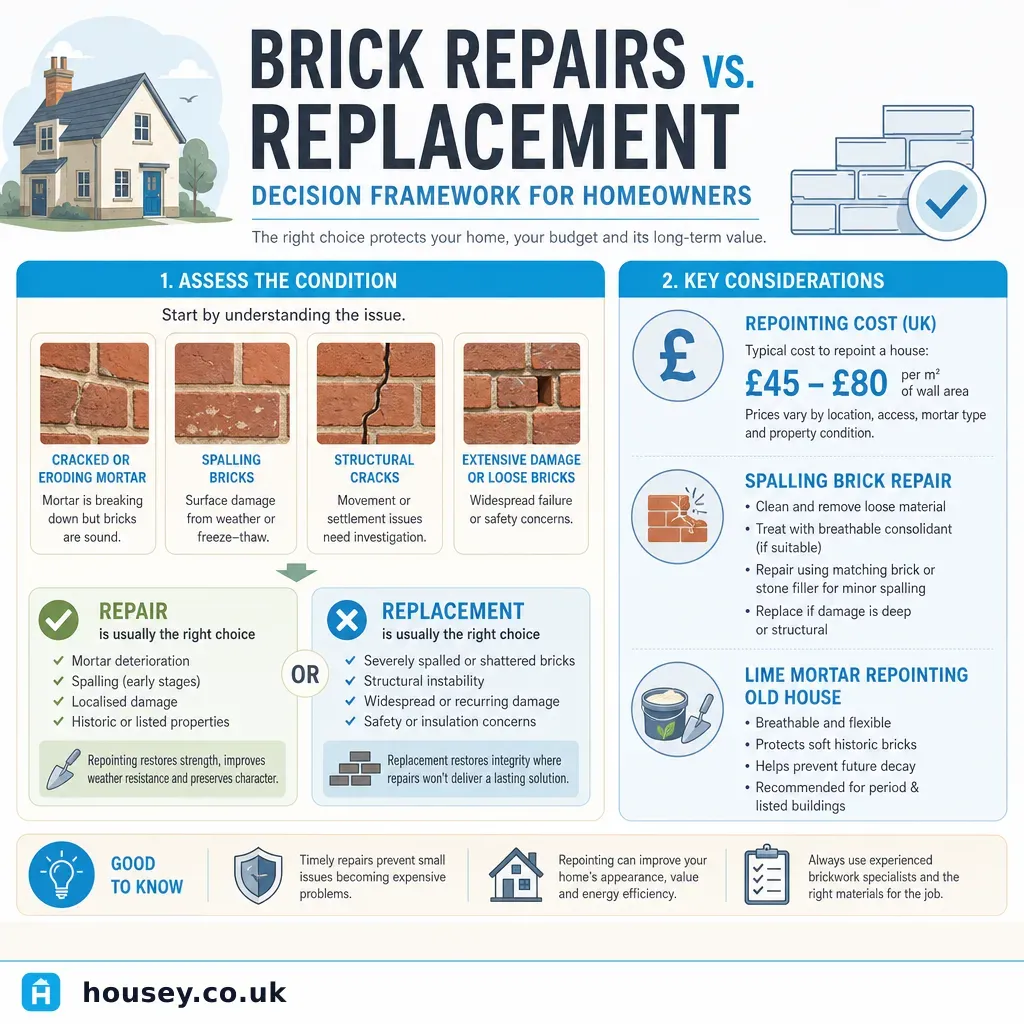
Brick Repairs vs. Replacement: Decision Framework for Homeowners
Whether to repair or replace brickwork depends on the type and extent of damage.
 Improvement & Build
Cleaning Hard Water Deposits From Exterior Windows
Hard water affects around 60% of UK homes, leaving calcium carbonate deposits on exterior windows that standard cleaners cannot dissolve.
 Improvement & Build
Removing Oil and Residue Stains from Driveway Surfaces
Oil and grease stains penetrate porous driveway surfaces within minutes, making prompt action important.