Building an Outdoor Shower: Design and Installation Guide
By Housey · Last reviewed 30th of May 2026
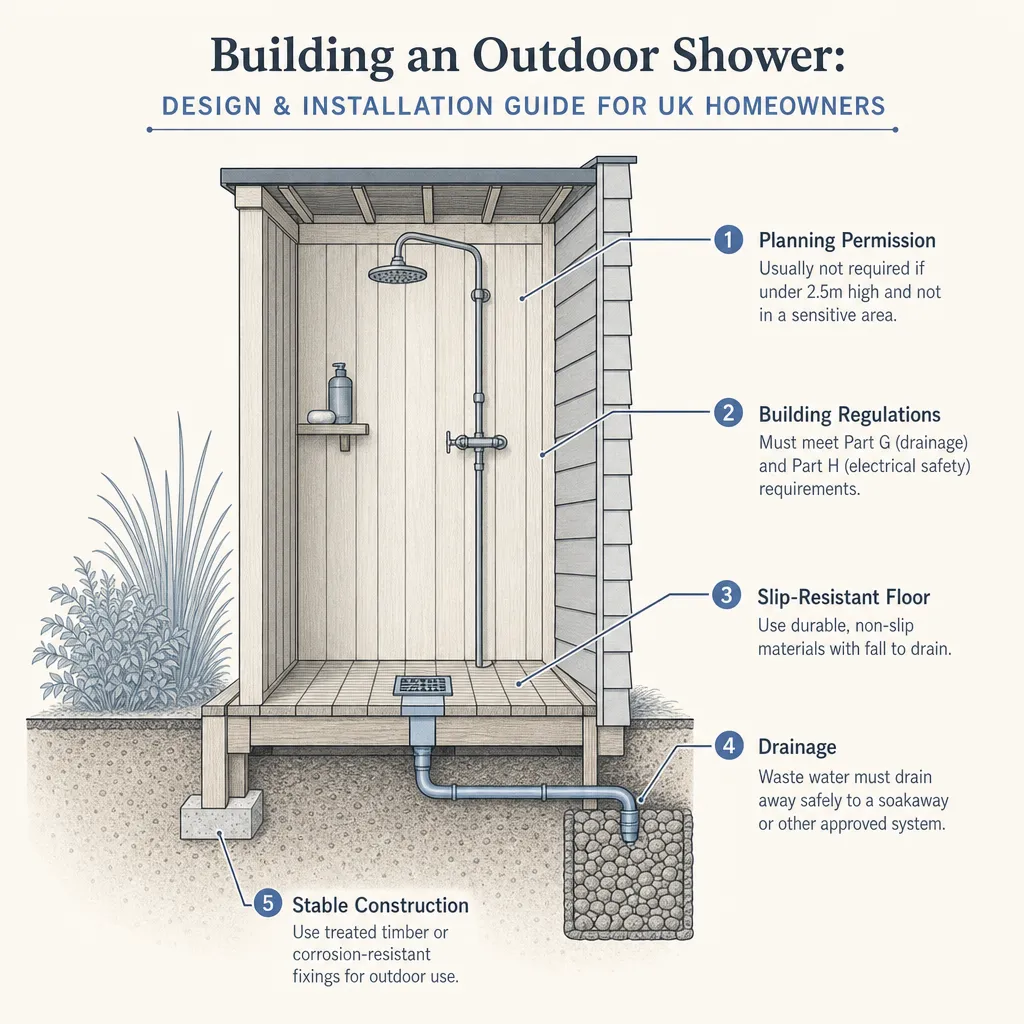
Building an Outdoor Shower: Design and Installation Guide
An outdoor shower is an increasingly popular addition to UK gardens — practical after beach trips, before entering a hot tub, or for rinsing muddy boots and dogs without trailing water through the house. Before any ground is broken, it is important to understand the regulatory picture: permanent structures may fall under Permitted Development limits, any new drainage connection is governed by Building Regulations, and electrical or gas elements require registered professionals. Getting these details right at the design stage avoids costly alterations and potential enforcement action later.
Key points
- Under Class E Permitted Development, a permanent outdoor shower structure must not exceed 2.5m in eave height, must not bring the cumulative outbuilding footprint above 50% of the garden area, and must not be positioned forward of the principal elevation of the house.
- Any new connection to the public sewer or private drainage system must comply with Building Regulations Part H (Drainage and Waste Disposal), self-certified by a registered drainage competent person or approved via a local authority building control application.
- Electrical supplies to an outdoor shower require installation by a Part P-registered electrician or competent person registered with NICEIC or NAPIT; outdoor installations typically require IP65-rated fittings as a minimum.
- In a conservation area, Article 4 Direction area, or on the grounds of a listed building, Permitted Development rights for outbuildings may be restricted or removed entirely — always check with your local planning authority before starting work.
- A cold-water-only outdoor shower fed from an existing outdoor tap avoids electrical, gas, and most Building Regulations requirements, making it the simplest starting point for most UK gardens.
Does an outdoor shower need planning permission?
Planning permission requirements depend on the structure's size, your property type, and your location.
Under Class E of Schedule 2, Part 1 of the Town and Country Planning (General Permitted Development) (England) Order 2015, an outbuilding — which includes a permanent outdoor shower structure — can be erected without planning permission if it meets all of the following conditions:
- It is not positioned forward of the principal elevation of the house.
- It is single-storey with a maximum eave height of 2.5m (or a maximum ridge height of 4m for a dual-pitched roof set within 2m of a boundary).
- The total footprint of all outbuildings combined does not exceed 50% of the garden area.
- The property is not in a conservation area, National Scenic Area, AONB, or the curtilage of a listed building.
- The dwelling is a house, not a flat.
Rules differ in Scotland and Wales. In Scotland, consult the Householder Permitted Development guidance from the Scottish Government. In Wales, refer to the Town and Country Planning (General Permitted Development) Order 1995 as amended by Welsh Government regulations.
If your garden already contains a substantial shed, summerhouse, or garden room, the cumulative footprint may already be close to the 50% threshold. Calculate the total before commencing any new structure.
Drainage: connecting to existing systems
Drainage is often the most regulated element of an outdoor shower installation, and the choice of drainage route has both regulatory and environmental implications.
Drainage option | What it involves | Regulated? | Notes |
|---|---|---|---|
Connection to foul sewer | Shower water enters household drainage | Yes — Building Regulations Part H | Requires competent person self-certification or building control approval |
Grey water soakaway | Dispersal into ground via soakaway pit | Partly | Percolation test usually required; must be sited away from boundaries and watercourses |
Connection to surface water drain | Water diverted to surface drainage system | Check locally | Some local authorities prohibit grey water discharge to surface water drains |
Closed collection tank | Water collected for manual disposal | Generally not regulated | Practical for occasional use; requires regular emptying |
Connecting to the foul sewer is the most common approach for a permanent installation. Never connect an outdoor shower to a surface water drain that discharges directly to a watercourse without first consulting the Environment Agency or your Lead Local Flood Authority.
Water supply: cold-only vs. hot water
Cold-water-only showers draw from a standard outdoor tap (bib tap) connected to the mains cold supply. This is the simplest installation, avoids Part P electrical requirements, and can generally be completed by a competent plumber. Supply pipes must be protected against frost, with isolating valves allowing the system to be drained down before winter.
Hot water supply adds regulatory requirements:
- An electric shower unit outdoors requires a dedicated circuit with RCD protection and installation by a Part P-registered electrician. The unit must carry a minimum IP65 rating (or IP44 for products designed specifically for outdoor zone 2 locations).
- A gas-heated supply requires a Gas Safe registered engineer.
- A thermostatic mixing valve is recommended to prevent scalding risk, particularly where children will use the shower.
Design options and materials
Outdoor shower structures in the UK must withstand frost, sustained rainfall, UV exposure, and significant temperature cycling between seasons. Material choice affects longevity and maintenance requirements.
Material | Durability in UK climate | Maintenance required | Indicative cost range | Best suited for |
|---|---|---|---|---|
Hardwood (teak, oak, iroko) | High | Annual oiling | £800–£2,500+ | Coastal and premium gardens |
Powder-coated steel | High | Low | £400–£1,500 | Modern and minimal designs |
Stainless steel | Very high | Very low | £1,000–£3,000+ | Marine and coastal environments |
Composite or HDPE board | Medium-high | Very low | £300–£1,000 | Budget-conscious projects |
Pressure-treated softwood | Medium | Annual treatment | £200–£800 | DIY builds; shorter overall lifespan |
Indicative UK costs, last reviewed 2026-05-30. Prices vary by supplier, location, and specification. Obtain at least three quotes before committing.
Frost protection is essential across most of the UK. Always include isolating valves to allow the supply to be drained down between October and March. In milder coastal locations this window may be shorter, but a drain-down capability should be designed in regardless.
Important limitations
This guide provides general information about outdoor shower installation in the UK. Planning, drainage, electrical, and gas rules vary by property type, local authority policy, and site-specific conditions. Nothing in this article constitutes planning advice, legal advice, or building control advice.
Always verify planning requirements with your local planning authority before commencing any work. Always instruct registered professionals for drainage connections, electrical installations, and gas supply works. Planning enforcement notices can require the removal of non-compliant structures entirely at the owner's cost.
What to ask a qualified professional
Before instructing anyone to design or install an outdoor shower, ask:
- Are you registered under the relevant competent person scheme for this type of work — for example, Gas Safe, NICEIC, NAPIT, or an approved drainage competent person scheme?
- Will you self-certify this work under a competent person scheme, or does it require a formal local authority building control application?
- What are the planning implications for my specific property, and have you confirmed that all Permitted Development conditions are satisfied?
- What drainage route are you proposing, and how does it comply with Building Regulations Part H?
- What frost protection measures are included in the design specification?
- What IP rating will the electrical fittings carry, and is that appropriate for the zone classification of an outdoor shower installation?
- Will you provide a completion certificate or building control sign-off document on completion of the works?
When to get professional help
An outdoor shower is not a fully DIY project if it involves any of the following:
- A new connection to mains drainage or the foul sewer — this requires a registered competent person or formal building control approval under Building Regulations Part H.
- Any new electrical supply — Part P requires a registered electrician or competent person self-certification, and outdoor installations carry additional IP rating requirements.
- Any gas supply — this legally requires a Gas Safe registered engineer.
- Construction near a boundary, on a significant slope, or in a conservation area — planning and potentially structural implications need professional assessment.
- Any uncertainty about whether the cumulative outbuilding footprint on your property already exceeds Permitted Development limits.
If you are uncertain about planning, contact your local planning authority before starting any work. Enforcement action can result in a formal notice requiring complete removal of a non-compliant structure.
How Housey can help
For help designing an outdoor shower that suits your garden's layout, drainage routes, and aesthetic, garden designers on Housey can advise on structure positioning, material selection, and integration with existing garden features. For the regulated drainage groundworks, drainage contractors on Housey can handle compliant sewer connections and self-certify the work under the appropriate competent person scheme.
Frequently asked questions
Do I need building regulations approval for an outdoor shower?
Possibly. If the shower connects to the foul drainage system, Building Regulations Part H applies and requires either a registered competent person (who can self-certify) or a formal local authority building control application. Any new electrical supply triggers Part P. A cold-water-only shower draining to a correctly sized soakaway may not need building control sign-off, but confirm this with your local authority before proceeding.
Can an outdoor shower be used year-round in the UK?
In most of the UK, outdoor showers are seasonal. Supply pipes are vulnerable to freezing and should be drained down between October and March in most parts of the country. Frost-tolerant designs use self-draining valves and insulated pipework to extend the usable season, but an isolating valve and drain point should always be designed in regardless of location.
Does an outdoor shower add value to a property?
An outdoor shower is a lifestyle feature rather than a primary value driver. It may appeal to buyers with pools, hot tubs, or active outdoor lifestyles, but its value contribution is generally modest. Non-compliant installation — particularly drainage lacking building control sign-off — could complicate a future sale if the issue is raised by a buyer's surveyor or solicitor.
What is the minimum soakaway size for an outdoor shower?
Soakaway sizing depends on ground permeability (assessed by a percolation test per Building Regulations Approved Document H), anticipated water volume, and required separation from boundaries and watercourses. A registered drainage contractor can carry out the percolation test and specify the correct soakaway dimensions for your specific site conditions and ground type.
Sources and further reading
- Permitted Development rights for householders: technical guidance — GOV.UK
- Approved Document H: Drainage and Waste Disposal — GOV.UK / MHCLG
- Approved Document P: Electrical safety in dwellings — GOV.UK / MHCLG
- Gas Safe Register: find a registered engineer — Gas Safe Register
- NICEIC: find a registered electrician — NICEIC
Useful next reads
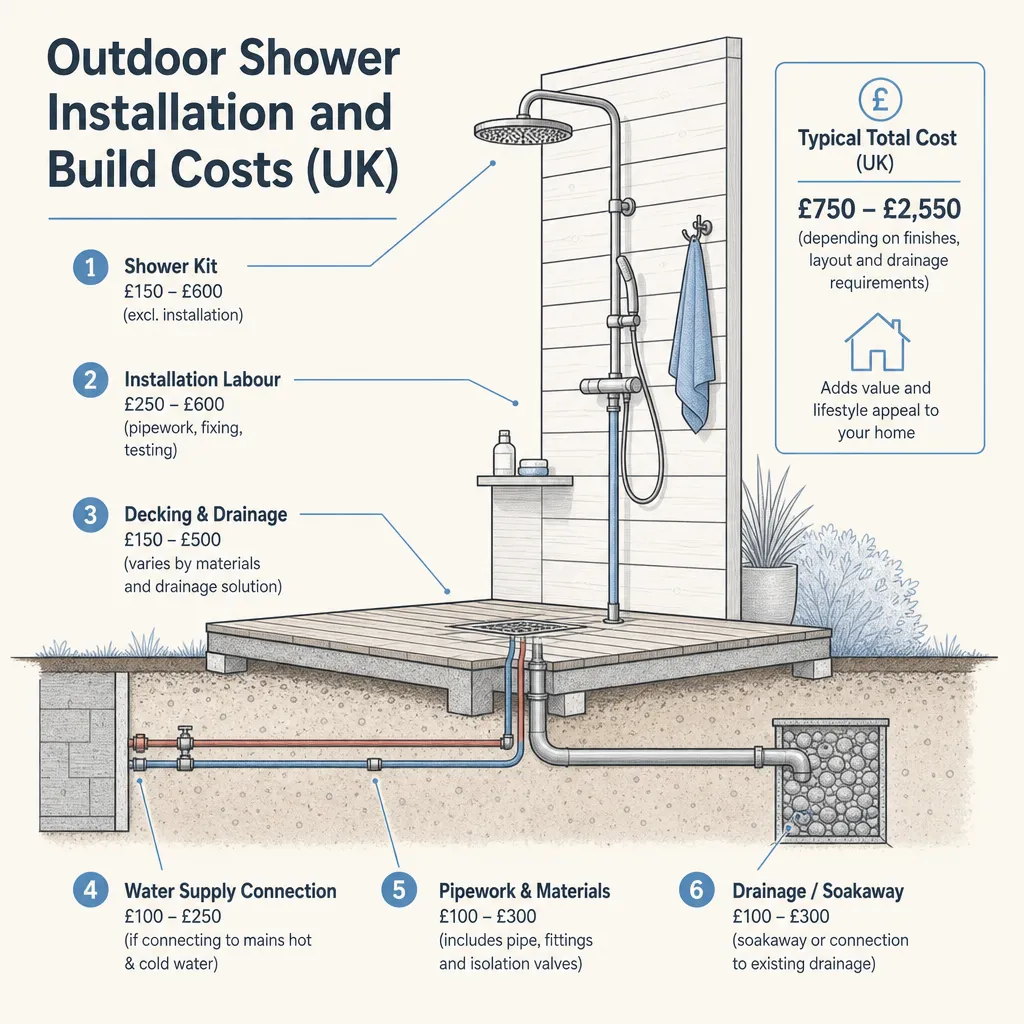 Improvement & Build
Outdoor Shower Installation and Build Costs
An outdoor shower in the UK costs from around £600 for a simple cold-water tap-fed kit to £15,000+ for a bespoke plumbed enclosure.
 Improvement & Build
Installing a Fire Pit: Garden Features and Outdoor Space Design
Installing a garden fire pit in the UK is generally permitted, but Smoke Control Area rules prohibit open wood-burning in most towns and cities.
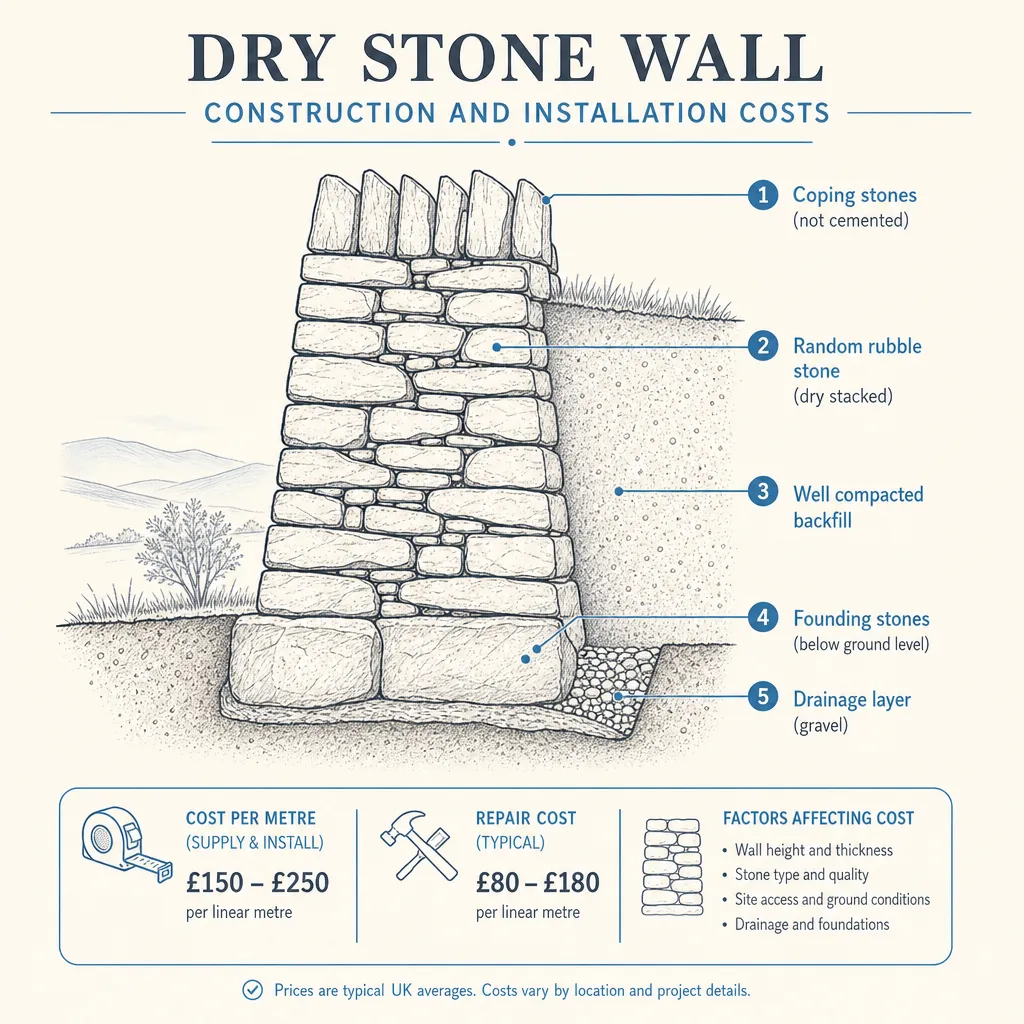 Improvement & Build
Dry Stone Wall Construction and Installation Costs
Dry stone wall construction in the UK typically costs £150–£350 or more per linear metre for new build, with repairs usually less expensive.
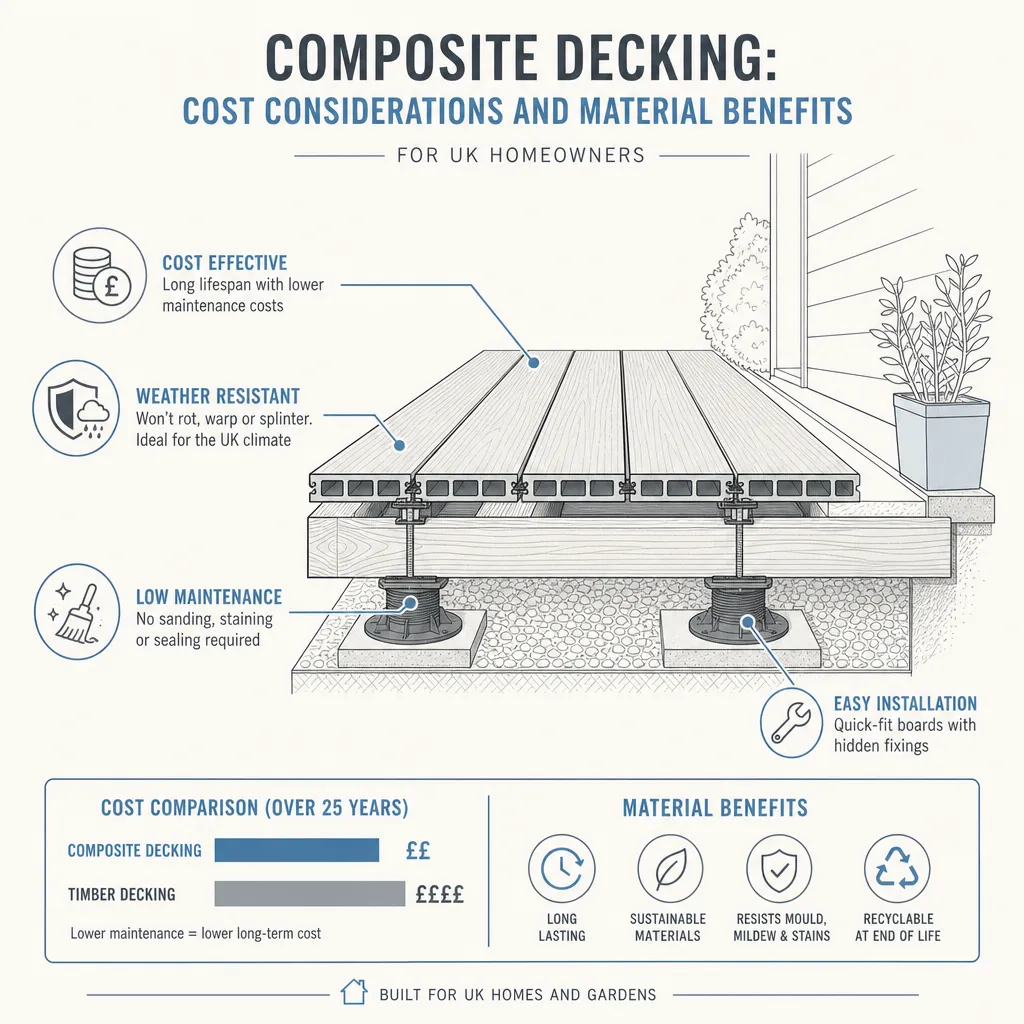 Improvement & Build
Composite Decking: Cost Considerations and Material Benefits
Composite decking typically costs £80–£150 per square metre for materials in the UK, with installation adding £30–£60 per square metre.
 Improvement & Build
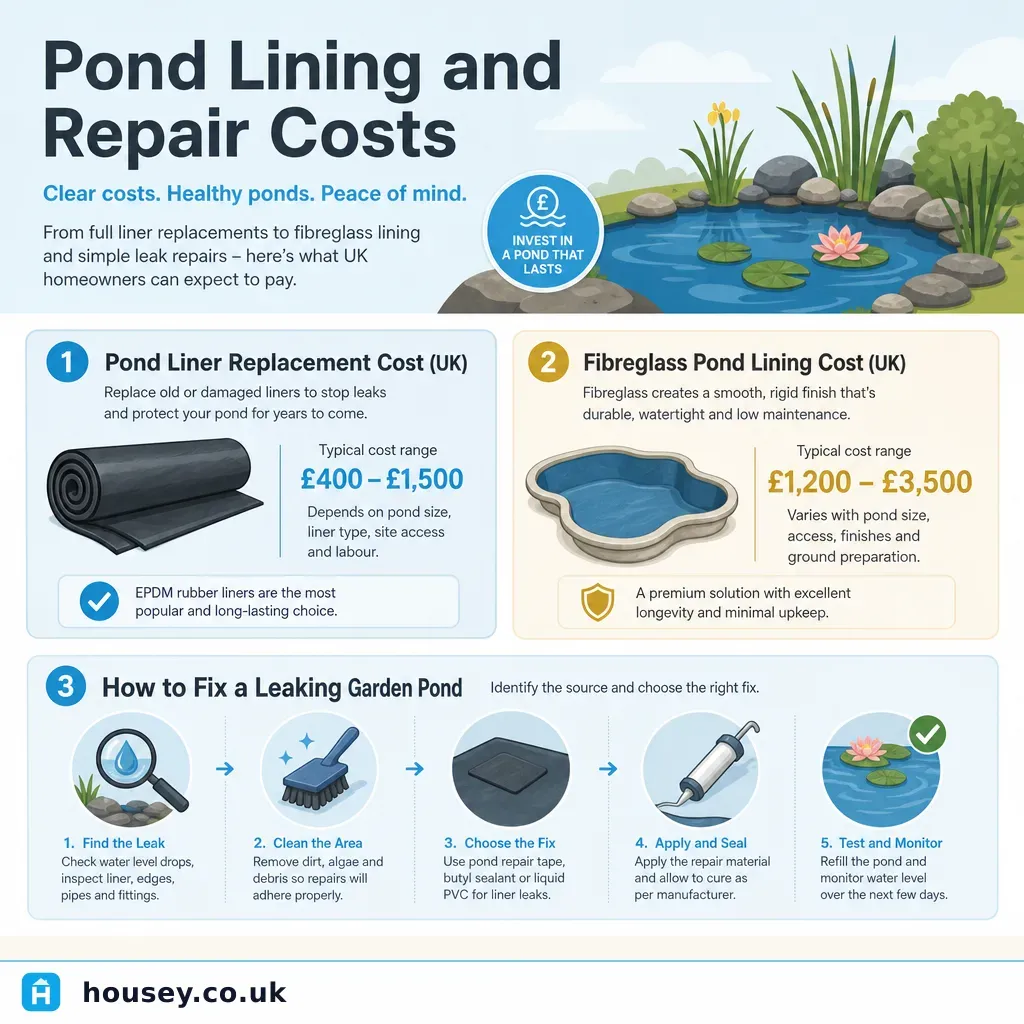
Pond Lining and Repair Costs
Pond lining costs in the UK depend on pond size, liner material, and the condition of the existing shell.