Composite Decking: Cost Considerations and Material Benefits
By Housey · Last reviewed 11th of May 2026
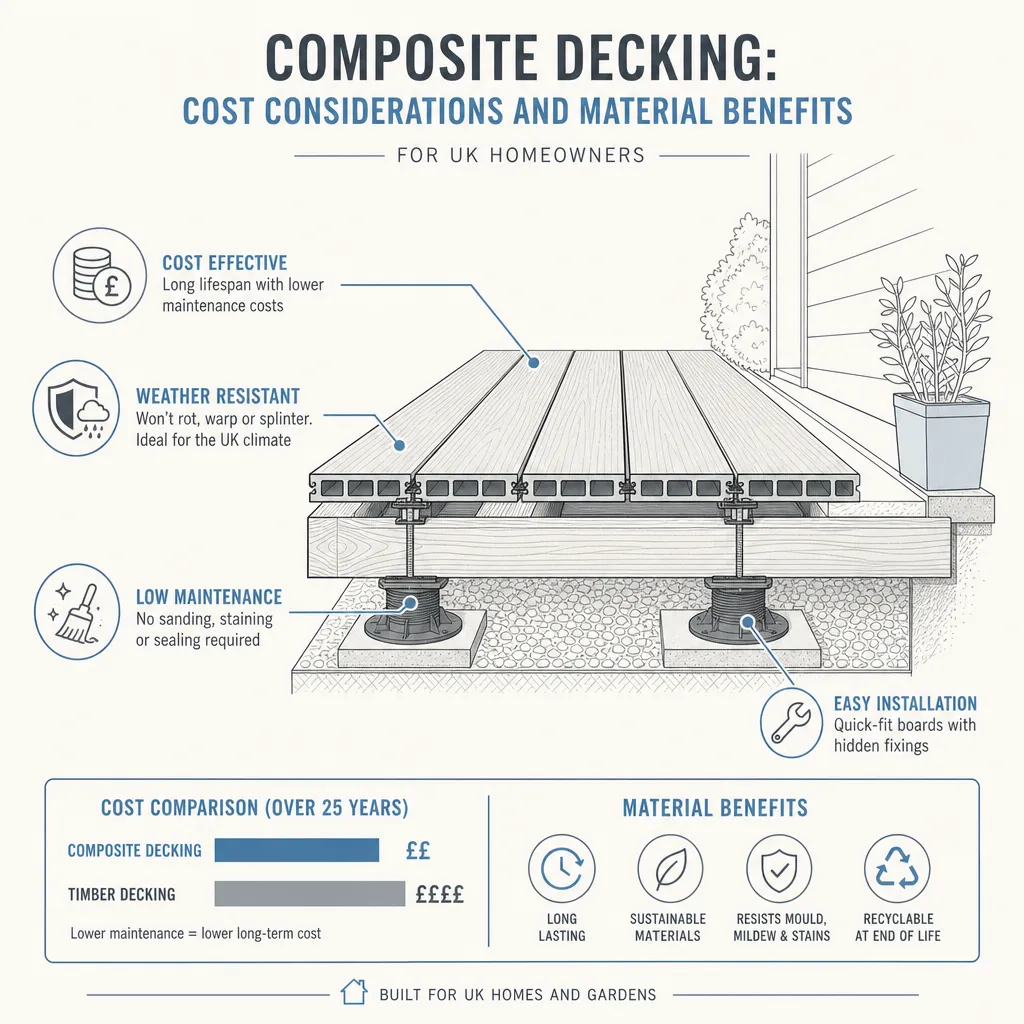
Composite Decking: Cost Considerations and Material Benefits
Composite decking has become one of the more popular garden improvement choices for UK homeowners over the past decade. The decision to install it typically arises when existing timber decking needs replacing, when a garden redesign is under way, or when a homeowner is weighing long-term maintenance costs against a higher upfront outlay. The choice of material affects not just appearance but performance, durability, and — in some circumstances — planning compliance.
Key points
- Composite decking typically costs £80–£150 per m² for materials in the UK; professional installation adds £30–£60 per m² (indicative costs, last reviewed 2026-05-11).
- Most composite boards combine wood fibre (or rice husks) with recycled thermoplastic polymer; reputable products carry manufacturer warranties of 10–25 years.
- Under Class E of the Town and Country Planning (General Permitted Development) (England) Order 2015, domestic decking is generally permitted development provided it does not exceed 30 cm above original ground level.
- Composite decking is not maintenance-free: algae growth requires periodic cleaning, especially in shaded or north-facing positions.
- An aluminium subframe costs more than pressure-treated timber but improves longevity and reduces board movement.
What is composite decking?
Composite decking is a manufactured board product made from a mixture of wood fibres (or agricultural fibres such as rice husks) and thermoplastic polymer — typically polyethylene or polypropylene. Most boards are hollow-core or solid-core and produced in a range of colours, textures, and profiles that can replicate the look of natural timber without the same maintenance demands.
There are two main types:
- Wood-polymer composite (WPC): the most common type; combines wood fibre and plastic, usually in a 50:50 or 60:40 ratio. Susceptible to some moisture absorption at exposed cut ends if not properly capped.
- PVC composite (full plastic): boards with no wood content, sometimes referred to as cellular PVC decking. Higher moisture resistance but a different feel underfoot and less naturally timber-like in appearance.
Both types are typically installed over pressure-treated timber joists or aluminium subframes, using hidden fixing clips for a clean board-line finish.
Composite vs timber decking: a comparison
Feature | Composite (capped WPC) | Pressure-treated softwood | Hardwood (e.g. Ipe, Garapa) |
|---|---|---|---|
Typical material cost per m² | £80–£150 | £25–£50 | £60–£120 |
Typical total installed cost per m² | £120–£220 | £60–£100 | £100–£200 |
Maintenance required | Annual clean; occasional algae treatment | Annual stain or oil; regular rot checks | Periodic oiling every 1–2 years |
Typical lifespan | 20–30 years with care | 10–20 years with care | 25+ years with care |
Splinter risk | None (capped boards) | Moderate over time | Low |
Environmental credentials | Varies by recycled content and certification | FSC certification available | FSC/PEFC certification available |
Planning implications | Same as any decking material | Same | Same |
Indicative UK costs, last reviewed 2026-05-11. Costs vary significantly by product specification, garden size, access, ground conditions, and regional labour rates.
Planning permission and composite decking
Composite decking is treated identically to any other decking material for planning purposes. Under Class E of the Town and Country Planning (General Permitted Development) (England) Order 2015, domestic decking is generally permitted development — no planning permission required — provided:
- The decking is no more than 30 cm above the original ground level at its highest point.
- The decking, together with any outbuildings, does not cover more than 50% of the curtilage of the dwelling.
- The property is not listed and is not in a protected area where permitted development rights are restricted.
Conservation areas, Areas of Outstanding Natural Beauty, and National Parks: permitted development rights for decking may be further restricted. Check with your local planning authority before starting work if your property falls within any of these designations.
Listed buildings: any external alteration requires Listed Building Consent, regardless of the material used.
Cost drivers: why composite decking quotes vary
Composite decking quotes can vary considerably between suppliers and installers. Understanding what drives costs helps you compare quotes meaningfully:
- Board specification: hollow-core entry-level boards cost significantly less than capped solid-core premium boards but offer less longevity and scratch resistance.
- Subframe material: a pressure-treated timber subframe is standard; an aluminium subframe adds cost but improves longevity and reduces movement.
- Ground conditions: levelling a sloped garden, removing existing decking, treating soil, or laying weed membrane all add to preparation costs.
- Size and shape: a simple rectangular deck has lower waste and labour costs than a deck with curves, insets, or multiple levels.
- Fascia and edge trim: capped perimeter boards and matching fascia add cost but significantly improve the finished appearance and prevent moisture ingress at cut board ends.
- Lighting and accessories: integrated LED deck lighting, post caps, and balustrade systems can add substantially to the overall project cost.
Homeowner checklist: planning a composite decking project
What to ask before accepting a quote
- What is the board manufacturer, product name, and warranty period?
- Is the board hollow-core or solid-core, and is it capped on all faces?
- What subframe material and specification is included in the quote?
- What ground preparation is included, and what conditions could change the price?
- Is VAT included?
- Who will carry out the work, and do they have previous composite decking installations I can view or contact references for?
- What fixing system will be used — surface screw or hidden clip?
- Are fascia boards and edge trim included, and how will cut board ends be sealed?
- What is the lead time for materials and the estimated installation duration?
When to get professional help
A composite decking installation on level ground is a standard landscaping project manageable by most experienced installers. However, professional input is particularly advisable when:
- The site involves a significant slope requiring structural groundwork or elevated joists.
- The deck will be above 30 cm from ground level — planning compliance and structural stability both require careful assessment.
- The property is listed or in a conservation area.
- Drainage, underground utilities, or tree roots affect the proposed installation area.
- The deck will be cantilevered or structurally attached to the house — a structural calculation may be needed.
How Housey can help
Housey makes it straightforward to compare quotes from verified local professionals for your composite decking project. Connect with experienced landscapers who handle composite deck installation and groundwork, or work with a garden designer to integrate decking into a broader outdoor redesign before instructing an installer.
Frequently asked questions
Does composite decking need planning permission?
Usually not, provided the deck is no more than 30 cm above original ground level and does not cover more than 50% of the garden. However, in conservation areas, National Parks, and AONBs, permitted development rights for decking may be restricted. Always check with your local planning authority before starting work in a designated area. Listed buildings require Listed Building Consent for any external alteration.
How long does composite decking last?
Quality capped composite boards typically carry manufacturer warranties of 10–25 years. In practice, well-maintained composite decking on a properly specified subframe can last 20–30 years. Lifespan depends on board quality (hollow versus solid core, capped versus uncapped), subframe material, installation quality, and how regularly the deck is cleaned. Uncapped boards left without maintenance will deteriorate significantly faster.
Is composite decking slippery when wet?
Lower-quality composite boards can become slippery when wet, particularly in shaded gardens where algae accumulates. Reputable products carry embossed grain textures and anti-slip ratings tested to recognised standards. Look for products specifying low Pendulum Test Value differentials between dry and wet conditions. Regular cleaning, especially in damp or north-facing positions, is the most effective way to maintain slip resistance over time.
Is composite decking worth the extra cost compared to timber?
The answer depends on how you weigh upfront cost against ongoing maintenance. Composite costs more to install than pressure-treated softwood but eliminates the need for annual staining or oiling. Over a 20-year period, total cost of ownership for composite can be lower than for softwood once maintenance labour and materials are factored in. For busy households where maintenance time is limited, the higher initial cost is often justified.
Sources and further reading
Useful next reads
 Improvement & Build
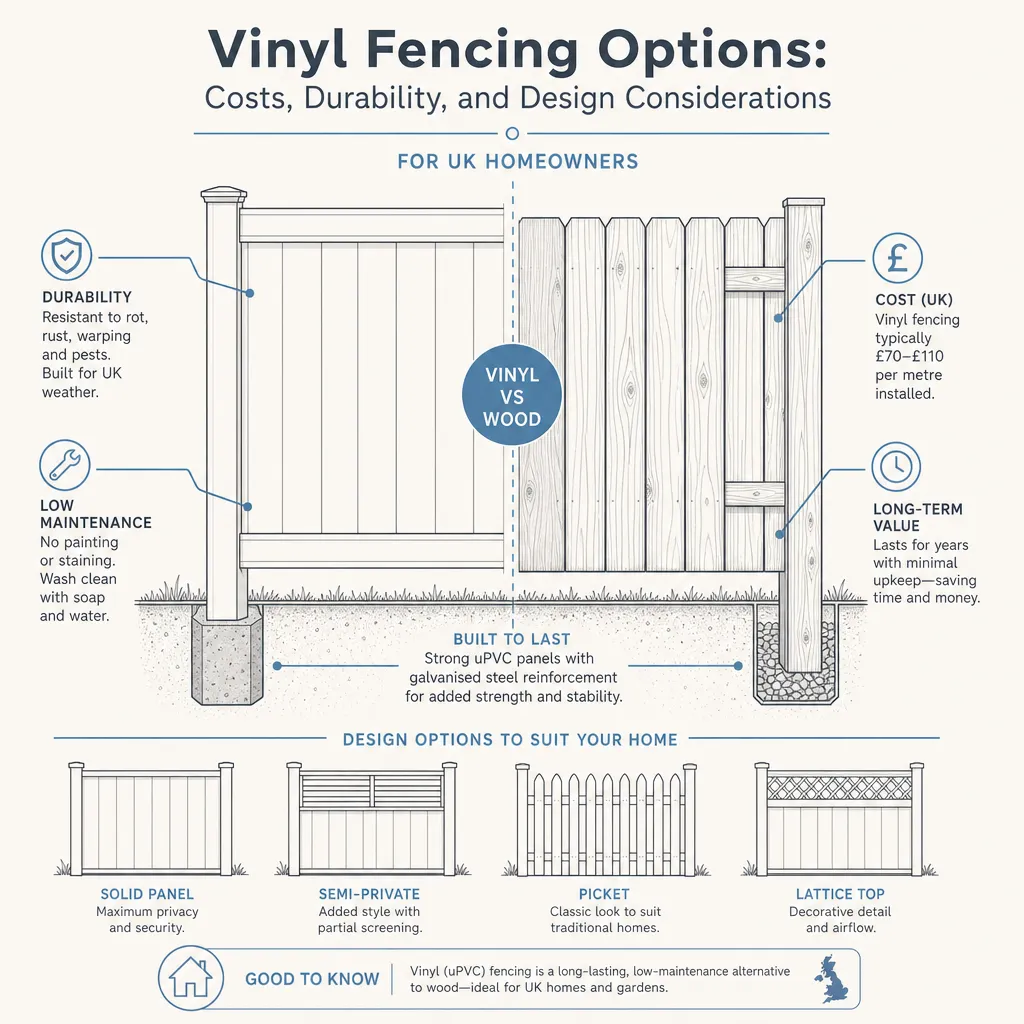
Vinyl Fencing Options: Costs, Durability, and Design Considerations
PVC (vinyl) fencing in the UK typically costs £100–£300 per linear metre installed and lasts 20–30 years with minimal maintenance.
 Improvement & Build
Installing a Fire Pit: Garden Features and Outdoor Space Design
Installing a garden fire pit in the UK is generally permitted, but Smoke Control Area rules prohibit open wood-burning in most towns and cities.
 Improvement & Build
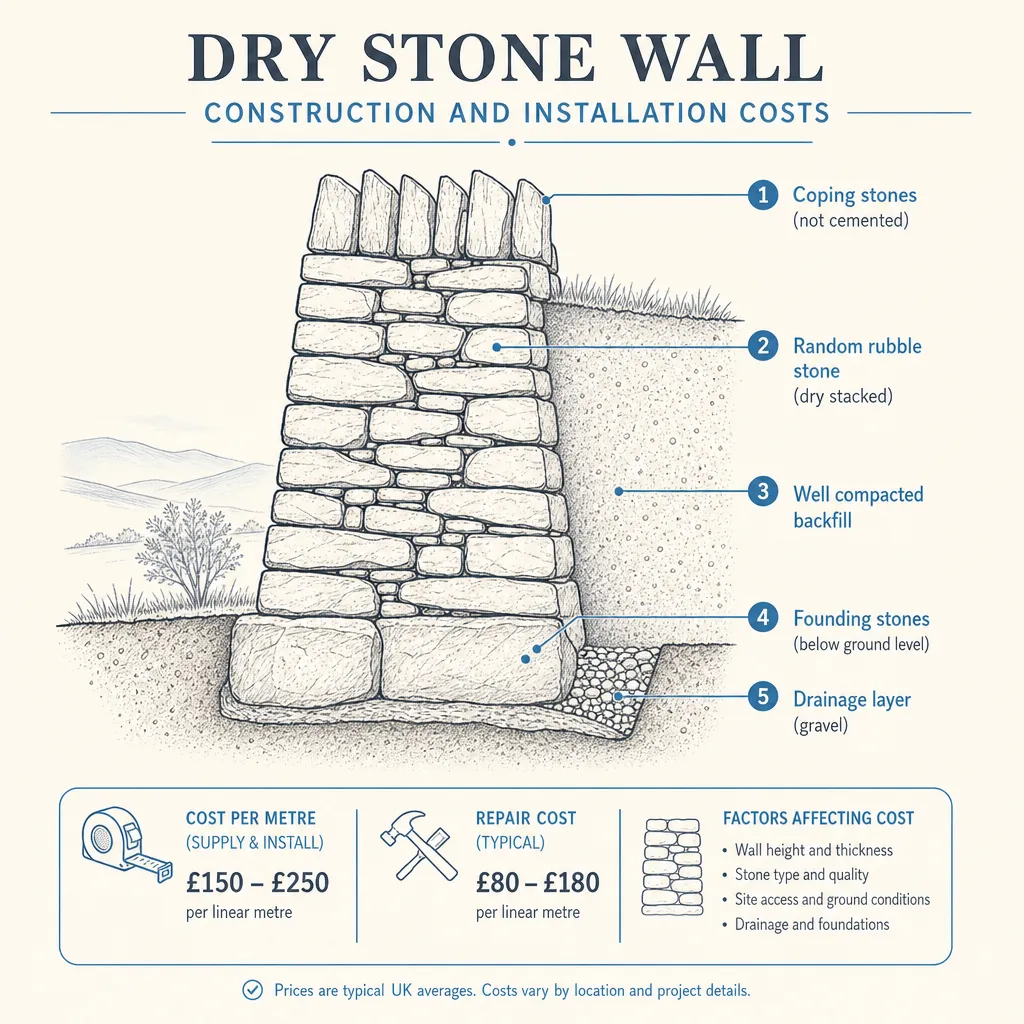
Dry Stone Wall Construction and Installation Costs
Dry stone wall construction in the UK typically costs £150–£350 or more per linear metre for new build, with repairs usually less expensive.
 Improvement & Build
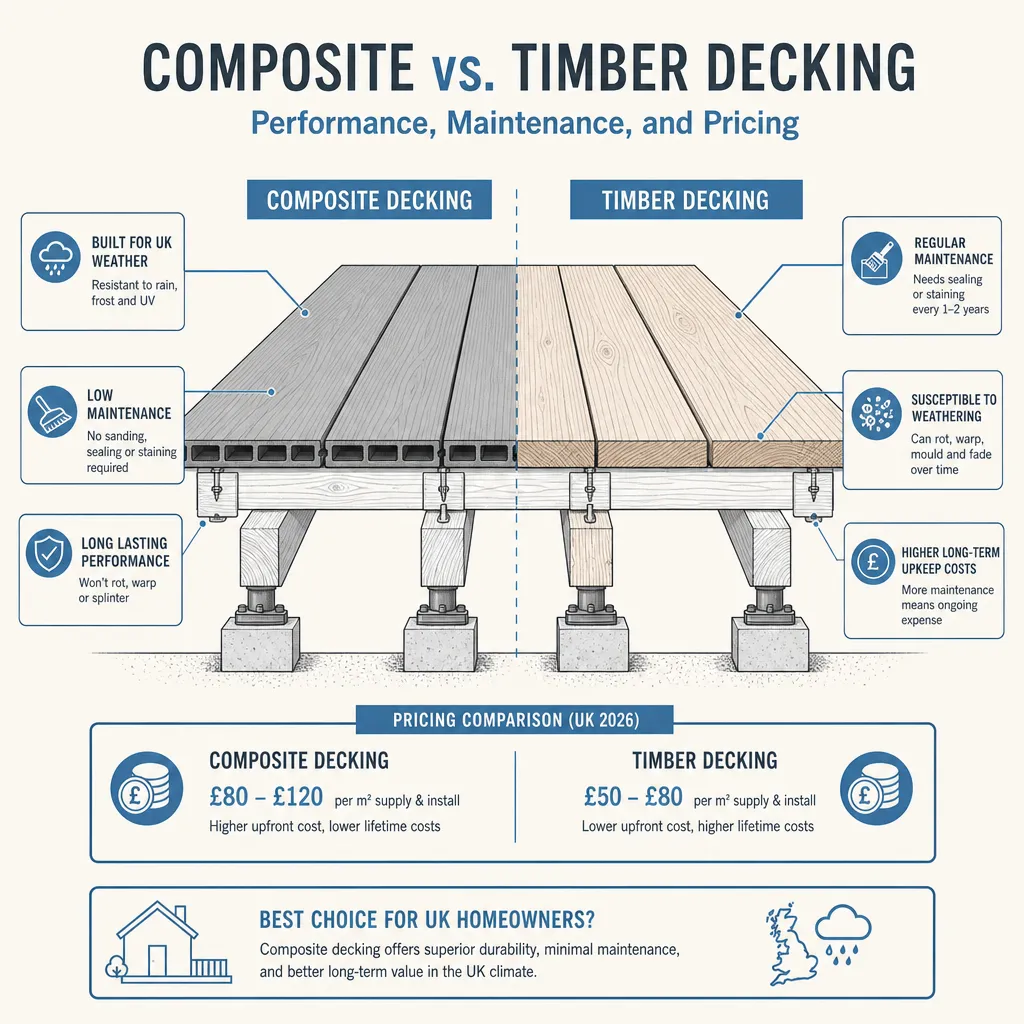
Composite vs. Timber Decking: Performance, Maintenance, and Pricing
Composite decking costs more upfront — typically £120–£220 per m² installed versus £80–£150 for treated softwood — but requires far less maintenance and carries a 25-year warranty.
 Improvement & Build
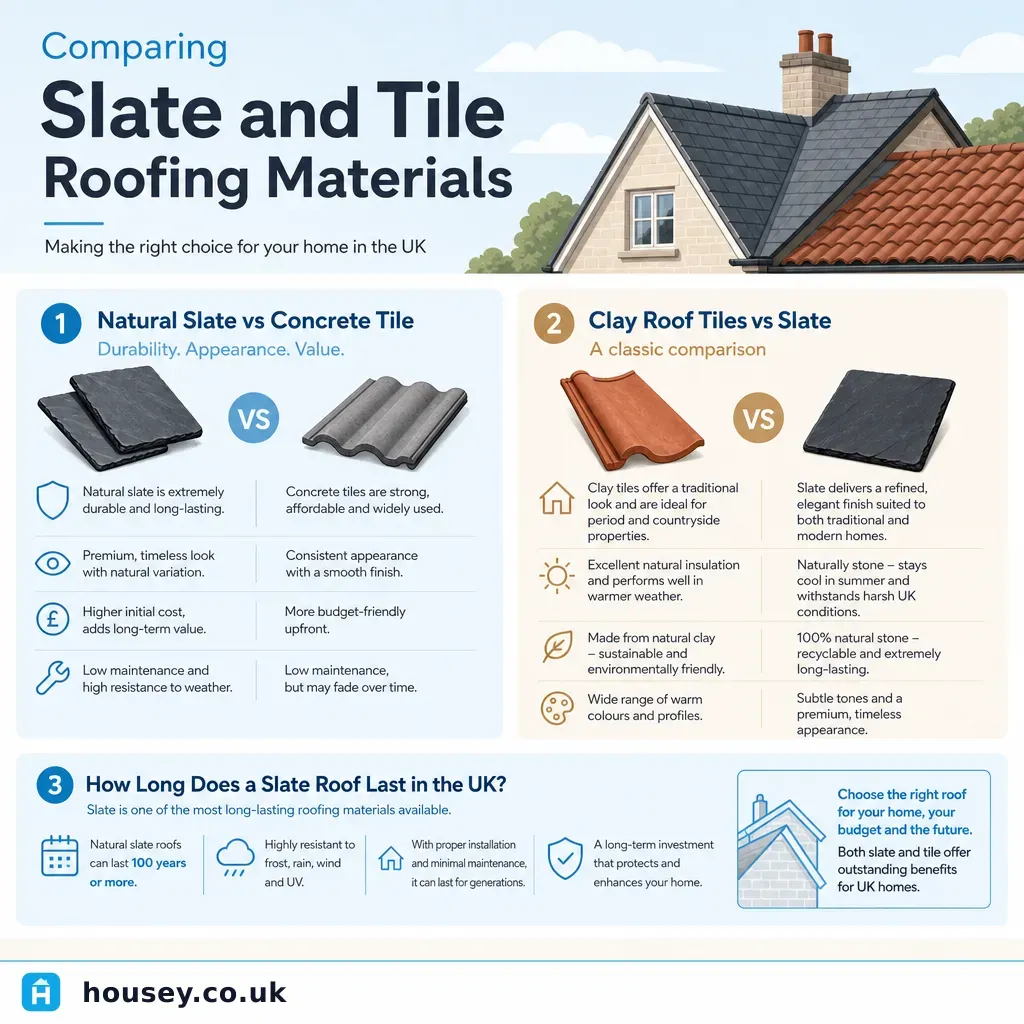
Comparing Slate and Tile Roofing Materials
Natural slate typically lasts 80–150 years and suits period and listed UK properties, while clay tiles offer 60–100 years and remain historically appropriate for Victorian and Edwardian stock.