Pond Lining and Repair Costs
By Housey · Last reviewed 8th of May 2026
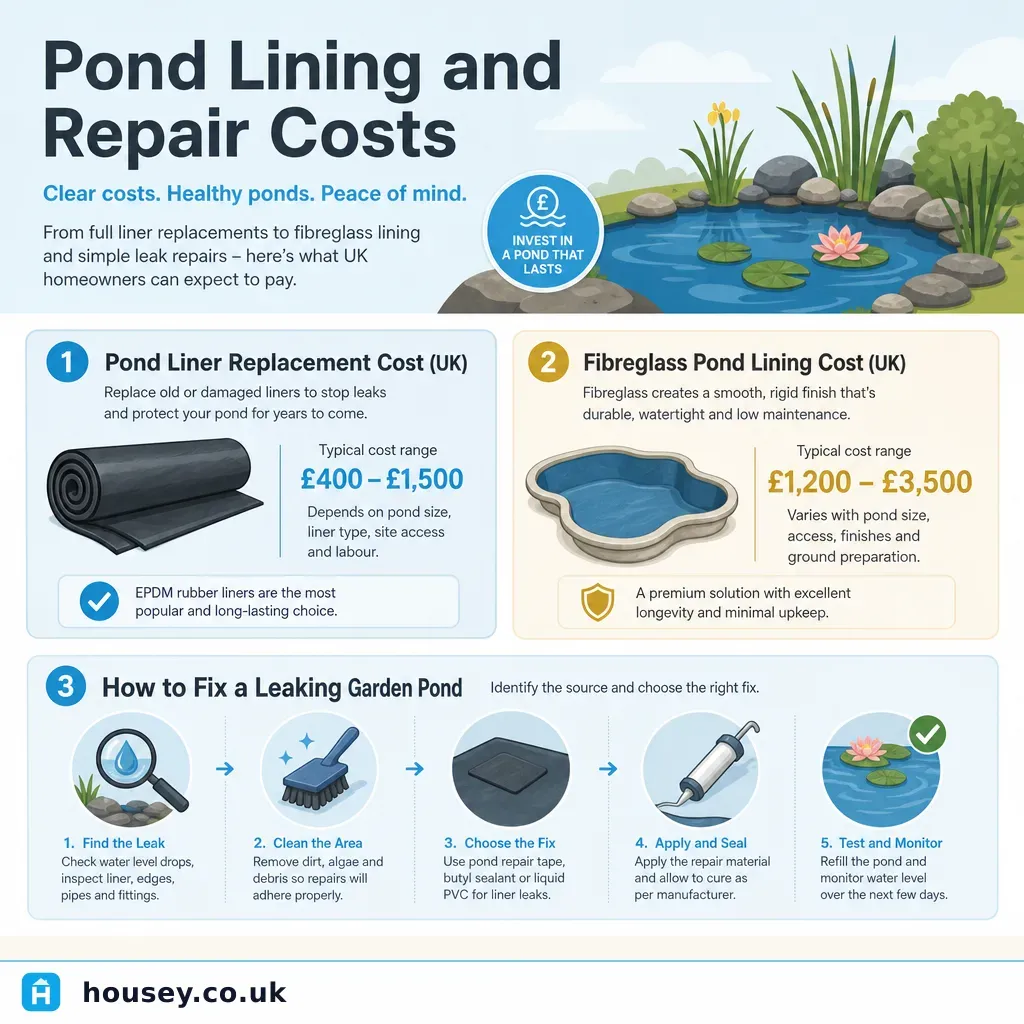
Pond Lining and Repair Costs
A leaking or deteriorating garden pond is one of those problems that tends to get worse quickly — what starts as a gradual water loss can become a failing structure that damages surrounding planting, paving, or nearby walls. The cost question typically arises when a pond first shows signs of leakage, when a homeowner takes on a property with an existing water feature in poor condition, or when a garden is being redesigned and a pond needs refurbishing or relocating.
Key points
- EPDM rubber is the most widely used liner material for garden pond replacement; professional supply and fitting for a medium pond (approximately 6 m² surface area) typically costs £300–£800 (Indicative UK costs, last reviewed 2026-05-08).
- Fibreglass (GRP) relining is better suited to ponds with complex shapes or concrete shells; professionally installed GRP relining of a medium pond costs £500–£2,000+ and offers a design life of 30–50+ years.
- Before committing to relining, the source of water loss must be diagnosed — edge settlement, pipe penetration failures, and normal evaporation are common culprits that a new liner alone will not always fix.
- Works near an ordinary watercourse, ditch, or culvert may require consent from the Environment Agency or the lead local flood authority under the Land Drainage Act 1991.
- Fish, aquatic plants, and pond invertebrates should be moved to a properly oxygenated holding tank during any major lining or repair work; handling larger koi collections adds meaningful time and cost.
What causes ponds to leak?
Understanding the source of water loss is more important than moving straight to relining. Common causes include:
Liner punctures or perishing: EPDM and butyl rubber liners can develop small tears from sharp stones, root penetration, or UV degradation at the waterline over time.
Concrete cracking: Older concrete ponds develop hairline cracks from ground movement, freeze-thaw cycles, or carbonation of the cement mix. Not all cracks cause leaks, but widening or stepped cracks usually do.
Pipe and fitting failures: Pump returns, filter inlets, and overflow pipes all pass through the liner or pond shell. These penetration points are among the most common leak sites and are often overlooked.
Edge settlement: If coping stones or edging have settled below the water surface, the pond will drain to that level regardless of liner condition. Relining will not solve this without also reinstating the edging.
Normal evaporation: A bucket test is the simplest way to distinguish a genuine leak from evaporation. Fill a bucket with pond water, place it on a shelf at the waterline, mark both the pond level and the bucket level, and compare after 24–48 hours. If the pond drops more than the bucket, there is a leak.
Pond liner types: a comparison
Liner type | Typical lifespan | Best for | Not ideal for | Indicative fitted cost (medium pond ~6 m²) |
|---|---|---|---|---|
EPDM rubber (0.75 mm) | 20–30 years | Most garden ponds, flexible organic shapes | Very large or formal ponds needing a rigid finish | £300–£800 |
Butyl rubber | 20–30 years | Higher puncture resistance, irregular shapes | More costly than EPDM; availability can vary | £400–£1,000 |
PVC (polythene) | 10–15 years | Budget replacements, temporary features | Less durable; not suitable for fish long-term | £150–£400 |
Fibreglass (GRP) | 30–50+ years | Formal ponds, concrete shells, complex shapes | Organic irregular shapes; higher initial cost | £500–£2,000+ |
Concrete resealing | Variable | Minor cracks in otherwise sound concrete | Structurally compromised or actively cracking shells | £100–£500 |
Indicative UK costs, last reviewed 2026-05-08. Costs vary by region, pond size, access, and whether fish and plant handling is included.
What affects the cost?
Pond size and depth: Cost scales broadly with surface area and volume. A small wildlife pond of 2 × 1 m is very different from a formal koi pond of 6 × 4 m with a deep zone and a recirculation system.
Access: Ponds surrounded by established planting, decking, or paved terracing require careful dismantling and reinstatement, which adds labour time and cost.
Existing construction: A sound concrete shell can often be glassed over directly after preparation; a severely cracked or crumbling shell may need structural repair or partial demolition before any liner can be applied.
Fish and plant handling: Koi collections require careful transfer, oxygenation, and water quality monitoring during works. This is often charged separately or treated as a specialist task.
Pump, filter, and pipework: If the circulation or filtration system is being replaced at the same time, add £150–£1,500+ depending on pond size and system specification.
Shape and complexity: Formal rectangular ponds are straightforward to line; irregular wildlife ponds with shelves, marginal planting ledges, and varied depths require more careful material calculation and fitting.
Red flags: when to get a professional involved
Stop and seek professional input if you notice any of the following:
- Water loss of more than 2–3 cm per day after ruling out evaporation with a bucket test.
- Visible cracks in a concrete shell, particularly stepped, widening, or running through the full thickness of the wall.
- Ground that is soft, waterlogged, or subsiding around the pond perimeter.
- Any sign of water ingress near house foundations, a boundary wall, or a retaining structure — water tracking from a pond can cause structural problems in adjacent masonry.
- The pond is within 8 metres of a watercourse, ditch, or culvert — works here may require formal consent.
- Fish showing unexplained health problems, which can indicate poor water chemistry linked to liner degradation or contamination from failed sealants.
DIY vs professional: which should you choose?
- Choose DIY if: the pond is small (under 4 m²), contains no fish, uses flexible liner only, and the existing ground or shell is in clearly sound condition.
- Choose a professional if: the pond holds fish or valuable aquatic plants, the existing construction is concrete or GRP, the shape is complex, or site access is difficult.
- Ask a landscaper if: you are also redesigning surrounding areas, adding edging, or integrating the pond into a wider garden project where multiple trades need coordinating.
- Check with your local planning authority if: the pond is in a conservation area, within a listed building curtilage, or near a watercourse — works in these locations may require prior consent.
When to get professional help
Professional help is worthwhile whenever the cost of failure outweighs the cost of instruction. A poorly fitted EPDM liner that fails within two years — or a GRP lining applied over structurally unsound concrete — will cost more to remedy than the professional installation would have cost in the first place. For ponds with valuable fish collections or ponds close to structures, the stakes are higher still.
How Housey can help
For pond lining and repair as part of a broader garden project, a landscaper with water feature experience can assess the existing pond construction, specify the right lining solution, and manage fish and plant handling through the works. If the pond forms part of a wider garden redesign, a garden designer can integrate it into the new layout and coordinate the relevant contractors. Housey can help you request quotes from relevant local providers.
Frequently asked questions
How do I know if my pond is actually leaking?
Use a bucket test: fill a bucket with pond water, place it on a shelf or ledge at the waterline, mark both the pond level and the bucket level, and compare after 24–48 hours. If the pond drops more than the bucket, there is a genuine leak rather than normal evaporation. Evaporation typically accounts for 1–3 cm per week in warm, windy conditions.
Can I line over an existing cracked concrete pond?
In many cases yes — GRP fibreglass can be applied over a structurally sound concrete shell after surface preparation and minor crack repair. If the concrete is actively cracking, crumbling, or showing signs of ground movement, the shell needs structural attention first. Applying a new liner over ongoing structural damage will shorten its lifespan significantly and is unlikely to stop the leak.
How long does pond lining last?
EPDM and butyl rubber liners typically last 20–30 years with proper installation. GRP fibreglass linings can last 30–50 years or more when correctly applied. PVC liners are cheaper but often need replacing within 10–15 years. Lifespan depends on installation quality, UV exposure at the waterline, root intrusion, and how well pipe penetrations and edges are sealed.
Do I need planning permission to repair a pond?
Repairing or relining an existing garden pond does not usually require planning permission. Significantly enlarging a pond or creating a new one may use permitted development allowances. Works near an ordinary watercourse may require consent under the Land Drainage Act 1991. In conservation areas or listed building curtilages, check with your local planning authority before starting any works.
Sources and further reading
- Ponds — planting and maintaining — Royal Horticultural Society
- Ordinary watercourse consent — GOV.UK
- Permitted development rights for householders: technical guidance — GOV.UK
- Planning permission: when you need it — GOV.UK
Useful next reads
 Improvement & Build
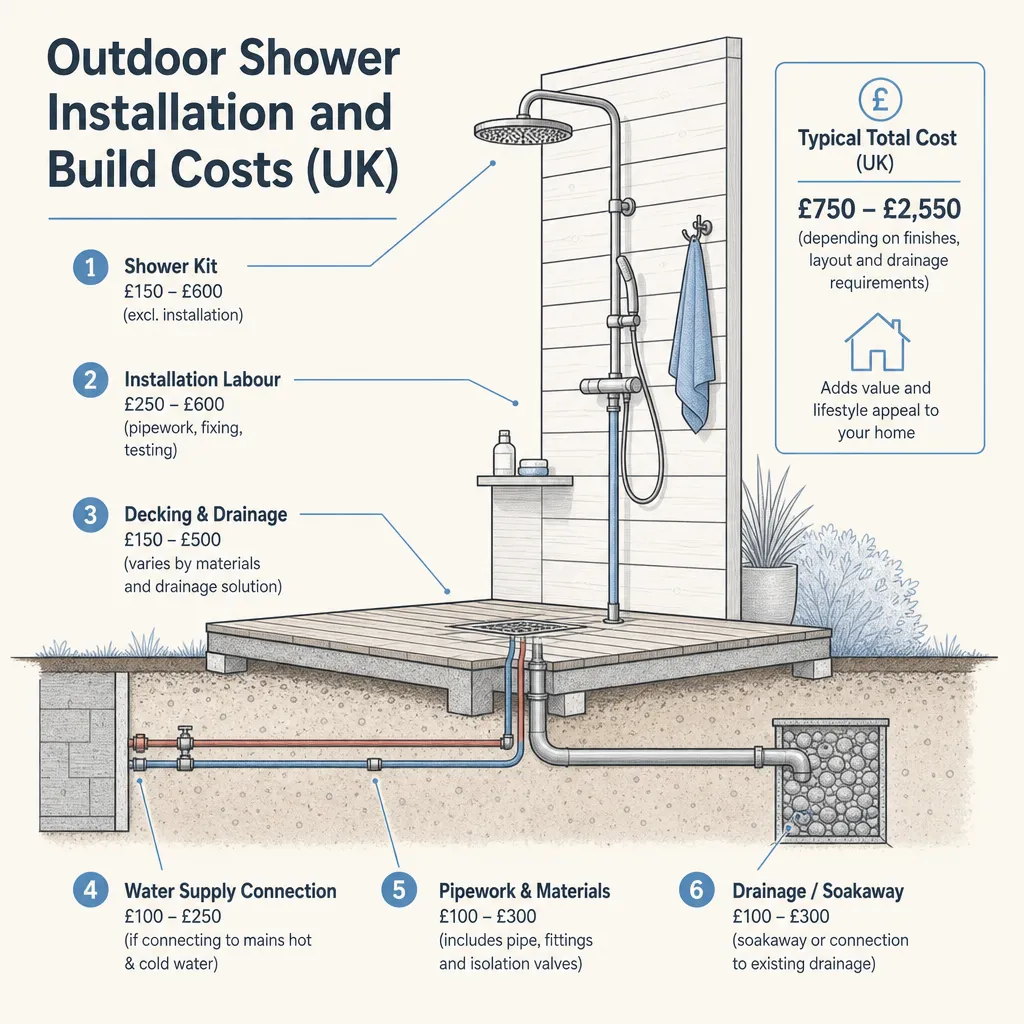
Outdoor Shower Installation and Build Costs
An outdoor shower in the UK costs from around £600 for a simple cold-water tap-fed kit to £15,000+ for a bespoke plumbed enclosure.
 Improvement & Build
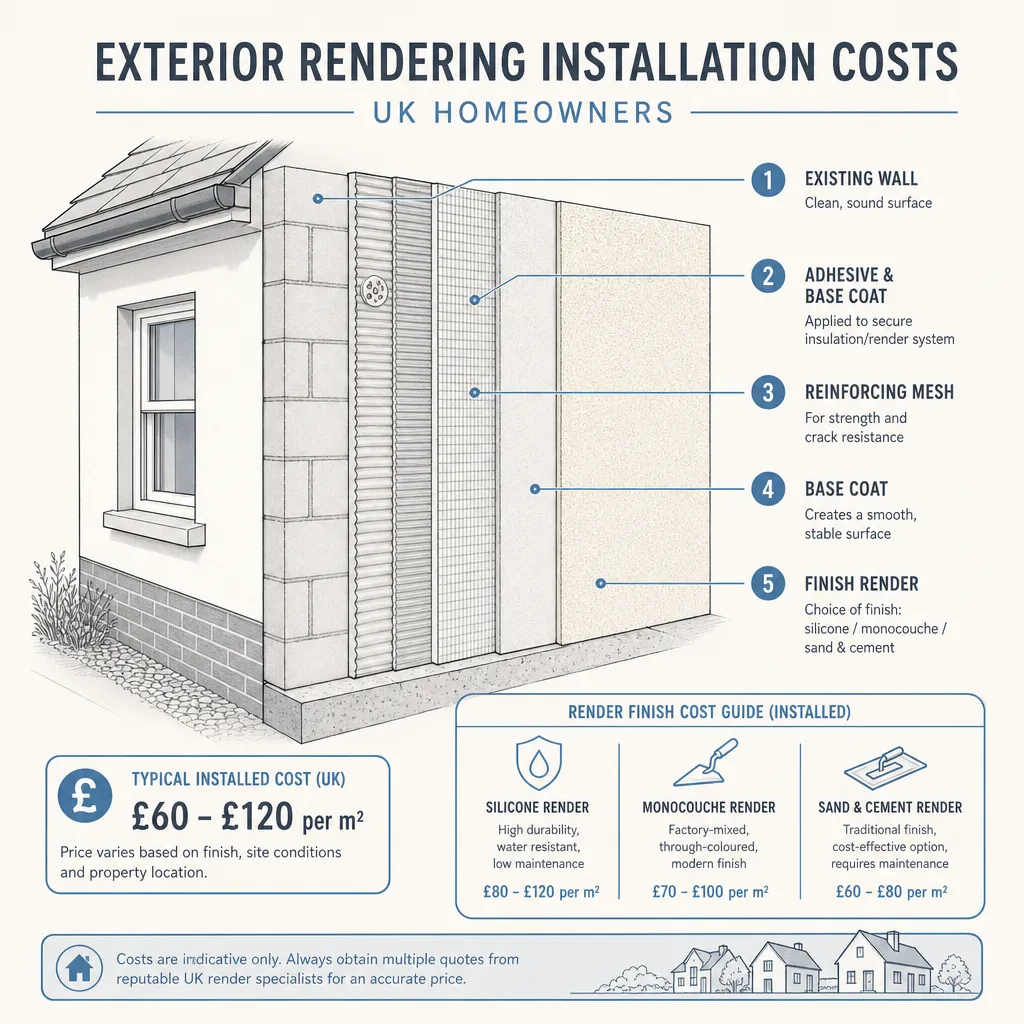
Exterior Rendering Installation Costs
Exterior rendering in the UK typically costs £20–£60 per square metre for standard render systems, or £80–£150 per square metre for External Wall Insulation with a render finish.
 Improvement & Build
Installing a Fire Pit: Garden Features and Outdoor Space Design
Installing a garden fire pit in the UK is generally permitted, but Smoke Control Area rules prohibit open wood-burning in most towns and cities.
 Improvement & Build
Designing an outdoor kitchen for entertaining and garden living
An outdoor kitchen in a UK garden needs a stable, level base — typically a concrete slab or quality paving — with weather-rated materials such as stainless steel grade 316 or frost-rated porcelain.
 Improvement & Build
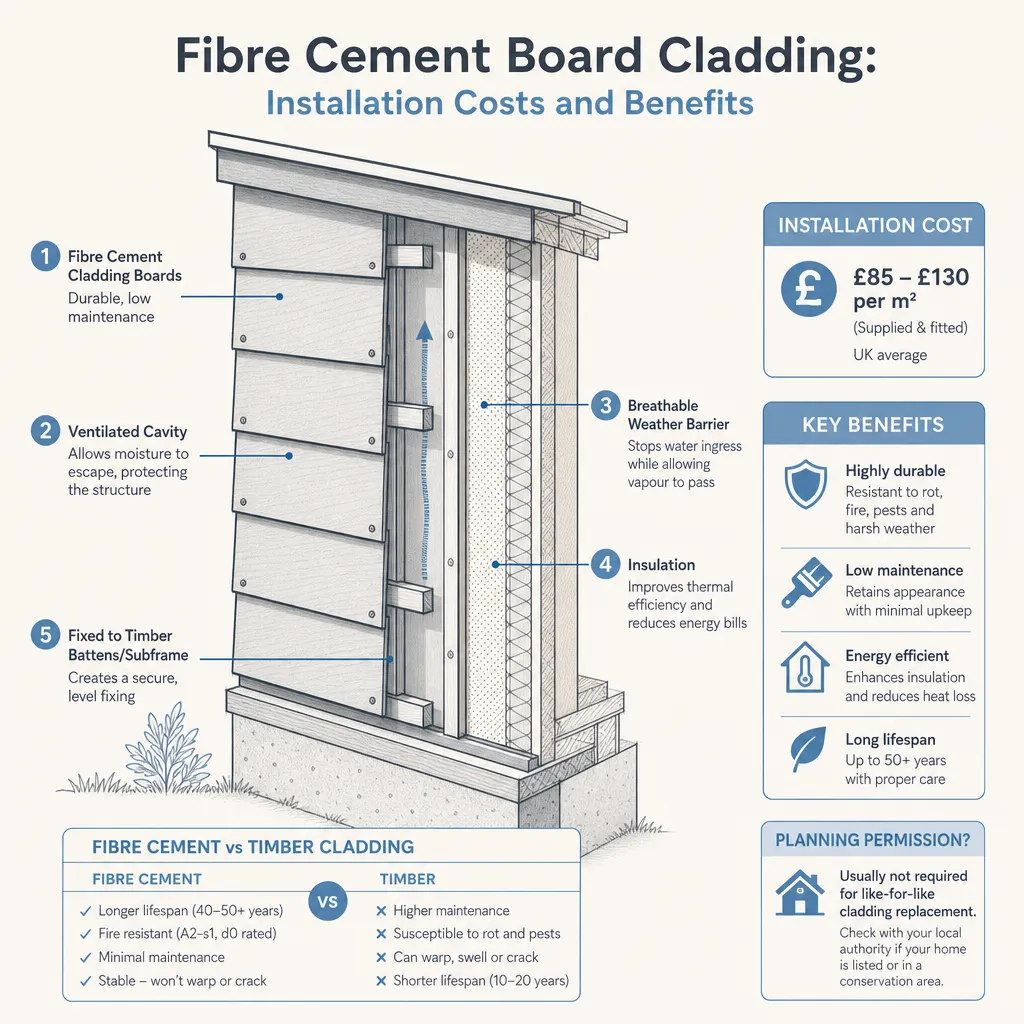
Fibre Cement Board Cladding: Installation Costs and Benefits
Fibre cement board cladding typically costs £80–£180 per m² installed in the UK, including boards, battens, breather membrane, and labour.