Building Cladding Installation Costs and Materials
By Housey · Last reviewed 7th of May 2026
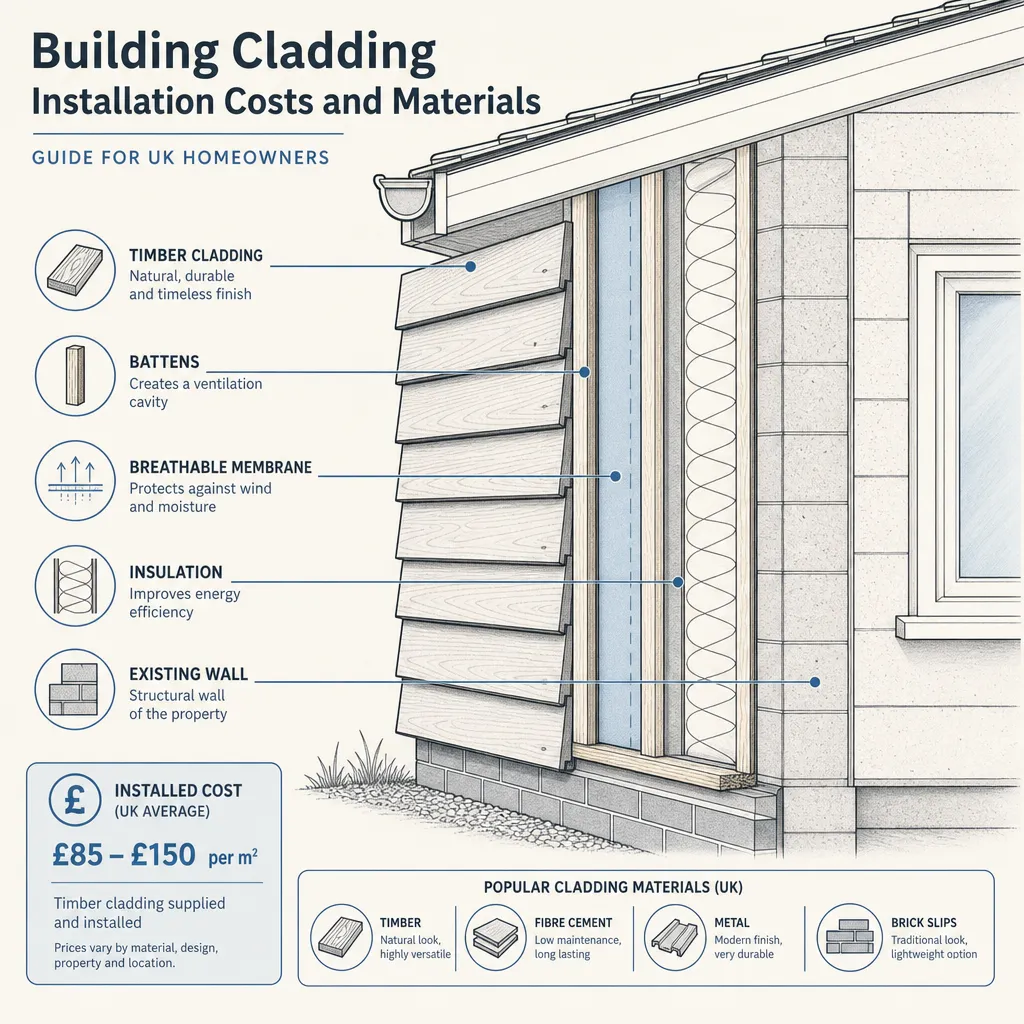
Building Cladding Installation Costs and Materials
External cladding is one of the more consequential decisions in a home improvement or extension project — it determines how the building looks, how well it resists the UK's wet climate, and in some cases whether planning permission is needed. UK homeowners typically consider it when extending, refurbishing a tired exterior, replacing failed render, or retrofitting external wall insulation. The range of materials, specifications, and costs is wide, and the wrong choice for your property type or location can be expensive to rectify.
Key points
- External cladding installation in the UK typically costs £40–£200 per m², depending on material, fixing system, and wall preparation required (Indicative UK costs, last reviewed 2026-05-07).
- Most residential cladding installations are subject to Building Regulations, particularly Approved Document B (fire safety) and Approved Document L (energy efficiency).
- Properties in conservation areas, listed buildings, or those subject to Article 4 Directions may require planning permission for external cladding — check with your local planning authority before ordering materials.
- Under the Building Safety Act 2022 and amended Building Regulations, combustible cladding materials are prohibited on the external walls of residential buildings over 11 metres in height.
- A ventilated cavity of 25–50 mm behind cladding boards is recommended in most UK installations to control moisture and prevent interstitial condensation.
Cladding materials: costs and comparison
The material you choose affects upfront cost, maintenance commitment, thermal performance, and planning acceptability. The table below covers the most common options for UK residential buildings.
Material | Installed cost per m² | Lifespan | Maintenance | Best for | Not ideal for |
|---|---|---|---|---|---|
Timber — softwood (treated) | £40–£90 | 20–30 years | Re-staining every 3–5 years | Rural or traditional properties, extensions | Shaded north-facing walls with poor ventilation |
Timber — hardwood (e.g. Siberian larch) | £80–£150 | 30–50 years | Minimal if allowed to silver | Contemporary and rural homes | Budget-sensitive projects |
Composite / WPC | £60–£130 | 25–40 years | Low | Modern homes, low-maintenance priority | Conservation areas, listed settings |
uPVC | £30–£70 | 20–30 years | Very low | Buy-to-let, render replacement, budget-led | Planning-sensitive or design-conscious projects |
Fibre cement (e.g. Hardie Plank) | £50–£110 | 30–50 years | Low | Fire-resistance requirements, coastal areas | Areas requiring traditional materials |
Brick slips | £100–£200 | 50+ years | Very low | Matching existing brickwork, conservation areas | Complex geometry, cost-sensitive projects |
Metal (aluminium, zinc, or steel) | £90–£200+ | 40–60 years | Very low | Contemporary architecture | Traditional streets, planning-sensitive areas |
Monocouche or silicone render | £30–£70 | 15–25 years | Low to moderate | Solid-wall homes, uniform whole-house finish | Timber-framed structures without appropriate substrate |
Indicative UK costs per m², installed, last reviewed 2026-05-07. Prices vary by region, scaffold requirements, and wall preparation needed.
What drives the cost of cladding installation?
Wall area and storey height are the most direct cost drivers. Ground-floor-only cladding is relatively straightforward; above single-storey height, scaffold is required, typically adding £800–£2,500 or more depending on the extent of the elevation. Ask for scaffold costs as a separate line item so you can compare contractors fairly.
Wall preparation is rarely avoidable. Removing old render, repairing masonry, or treating existing damp must be done before installing any cladding system. A poorly prepared substrate is the most common cause of premature cladding failure.
Insulation integration adds to the budget but improves performance significantly. Installing a continuous insulation board — expanded polystyrene (EPS), mineral wool, or PIR — as part of an External Wall Insulation (EWI) system can add £30–£80 per m². EWI may qualify for grant funding through ECO4 or the Great British Insulation Scheme; check current eligibility on GOV.UK.
Detailing around openings — windows, doors, eaves, and sills — is skilled work and a frequent cause of moisture ingress when done poorly. It must be explicitly included in any quote.
Regional variation: labour rates in London and the South East are typically 15–30% higher than in the Midlands or North of England.
Planning permission and building regulations
Most external cladding on a house in England falls under permitted development and does not require a planning application — provided the materials are of a similar appearance to the existing exterior. However, this exemption does not apply if:
- The property is a listed building (any grade)
- The property is in a conservation area or subject to an Article 4 Direction
- The work removes features considered integral to the building's character
Even where planning is not required, Building Regulations notification is typically needed when the work significantly changes the thermal envelope — for instance, when adding external wall insulation under Approved Document L. Your contractor should advise on which notifications apply.
For buildings over 11 metres in height, the Building Safety Act 2022 prohibits combustible cladding materials on external walls. This applies mainly to purpose-built flats and taller residential buildings, but seek specific advice for any multi-storey property.
Which cladding material is right for your property?
Use this decision framework before requesting quotes.
- Choose treated softwood timber if you want a natural appearance, are in a rural or semi-rural setting, and can commit to periodic re-staining.
- Choose hardwood timber (larch or oak) if you want the look of timber with significantly less maintenance; larch can be left to silver naturally.
- Choose composite or WPC if you want a timber-like appearance with minimal upkeep and the property is modern or contemporary.
- Choose fibre cement if fire resistance is a requirement, you are near the coast, or you want a durable low-maintenance system with a long manufacturer's warranty.
- Choose brick slips if you need to closely match existing brickwork or are in a conservation area where traditional materials are preferred by the planning authority.
- Choose uPVC if budget is the primary constraint and planning considerations do not apply — but note the shorter lifespan and lower resale appeal compared with timber or fibre cement.
- Choose metal cladding (aluminium or zinc) if the project is architecturally contemporary and long-term durability matters more than initial cost.
- Ask a planning consultant before committing to any material if the property is listed, in a conservation area, or subject to any local planning condition.
What to ask before accepting a quote
- Is scaffolding included, or quoted separately?
- What wall preparation is included — will existing render be stripped?
- Is insulation included, and if so, what type and thickness?
- Does the installation include a ventilated cavity?
- Which Building Regulations notifications will you submit on my behalf?
- What are the manufacturer's warranty terms for the cladding system?
- Is VAT included in the quoted price?
- Who supplies the materials, and will I receive a full specification sheet?
- What are the payment stages?
When to get professional help
Cladding installation is a skilled trade requiring careful preparation, accurate detailing, and correct fixing. Get professional installation for anything above single-storey height or involving fire-rated systems.
Seek specialist advice if:
- The property is listed or in a conservation area — a planning consultant or conservation officer should advise on material acceptability before any purchases are made.
- The work includes an EWI system as part of a whole-house energy retrofit — a PAS 2035-qualified Retrofit Coordinator should oversee the design and assess moisture risk.
- You are uncertain whether Building Regulations approval is needed — contact your local building control body before work starts.
- The building is over 11 metres in height — fire safety advice under the Building Safety Act 2022 is mandatory.
How Housey can help
For cladding on extensions and new builds, extension builders on Housey often have direct experience specifying and installing external cladding systems. If your project involves replacing windows at the same time as re-cladding, window and door installers can coordinate the critical detailing around openings. For projects where the roof and upper walls are being tackled together, roofers sometimes carry cladding experience, particularly with fibre cement and metal systems.
Frequently asked questions
Does external cladding add value to a house?
Cladding that improves thermal performance, weatherproofing, and kerb appeal typically adds value, but the amount depends on material quality, installation standard, and local market expectations. Poorly specified or non-compliant cladding can raise concerns during a buyer's survey and may affect mortgage lending if building regulations were not followed.
Do I need planning permission for timber cladding on my house?
In most cases in England, no — timber cladding falls under permitted development, provided the material is of a similar appearance to the existing exterior. This exemption does not apply to listed buildings or properties in conservation areas. Always check with your local planning authority first.
What is the cheapest external cladding option in the UK?
uPVC cladding is typically the lowest-cost option at roughly £30–£70 per m² installed. Silicone render is comparable. Both require less maintenance than timber but are not suitable for planning-sensitive locations such as conservation areas, where material choice may be restricted.
How long does external cladding installation take?
A single front elevation on a semi-detached house typically takes 3–5 days. A full whole-house re-clad including scaffold erection and removal may take 2–4 weeks, depending on the size of the property and the complexity of detailing around openings.
Can I clad over existing render?
In some cases, yes — provided the existing render is sound, level, and properly keyed. Many contractors recommend removing unstable or damp render before installing new cladding, particularly when external wall insulation is being added. A survey of the existing substrate is advisable before committing to either approach.
Sources and further reading
- Approved Document B: Fire Safety, Volume 1 (Dwellinghouses) — GOV.UK — MHCLG
- Approved Document C: Resistance to contaminants and moisture — GOV.UK — MHCLG
- Approved Document L: Conservation of fuel and power — GOV.UK — MHCLG
- Permitted development rights for householders: technical guidance — GOV.UK — MHCLG
- Building Safety Act 2022 — legislation.gov.uk — legislation.gov.uk
- ECO4 scheme: guidance — GOV.UK — DESNZ / GOV.UK
Useful next reads
 Improvement & Build
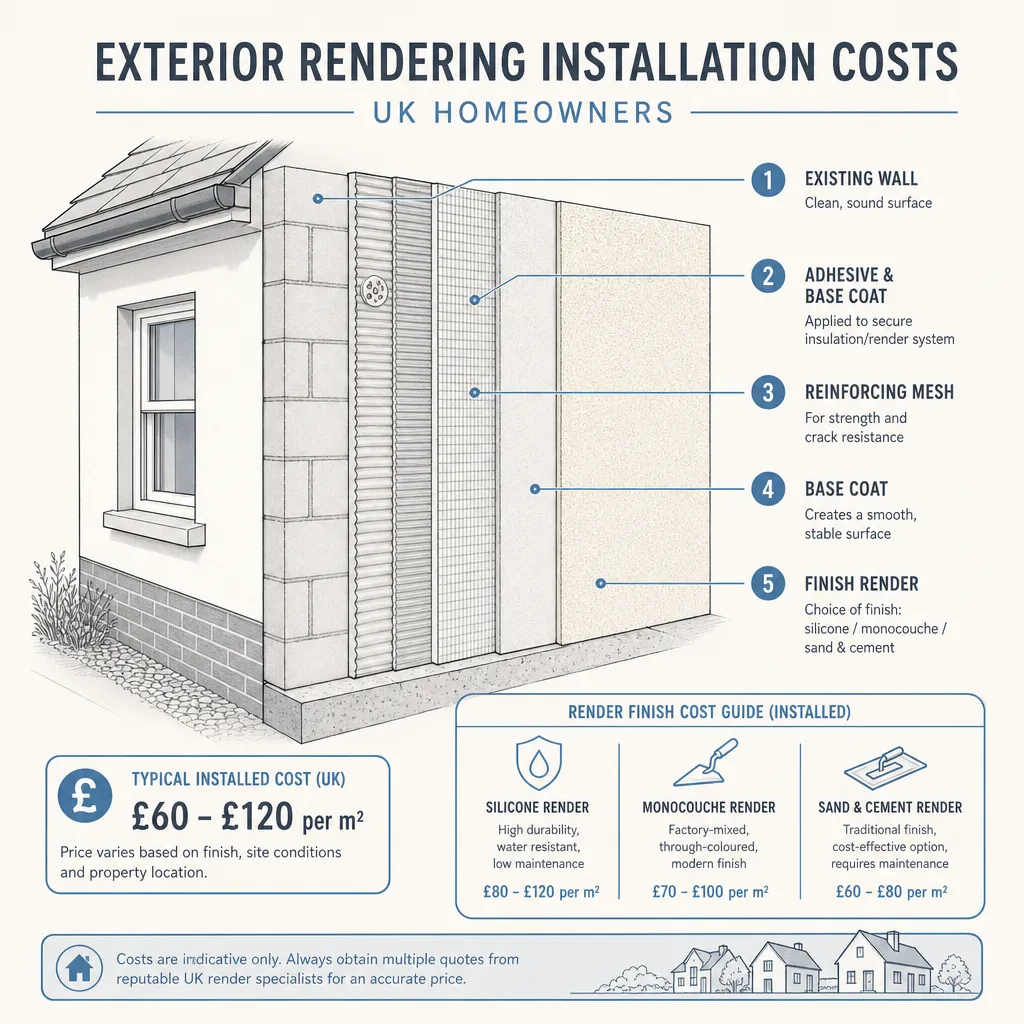
Exterior Rendering Installation Costs
Exterior rendering in the UK typically costs £20–£60 per square metre for standard render systems, or £80–£150 per square metre for External Wall Insulation with a render finish.
 Improvement & Build
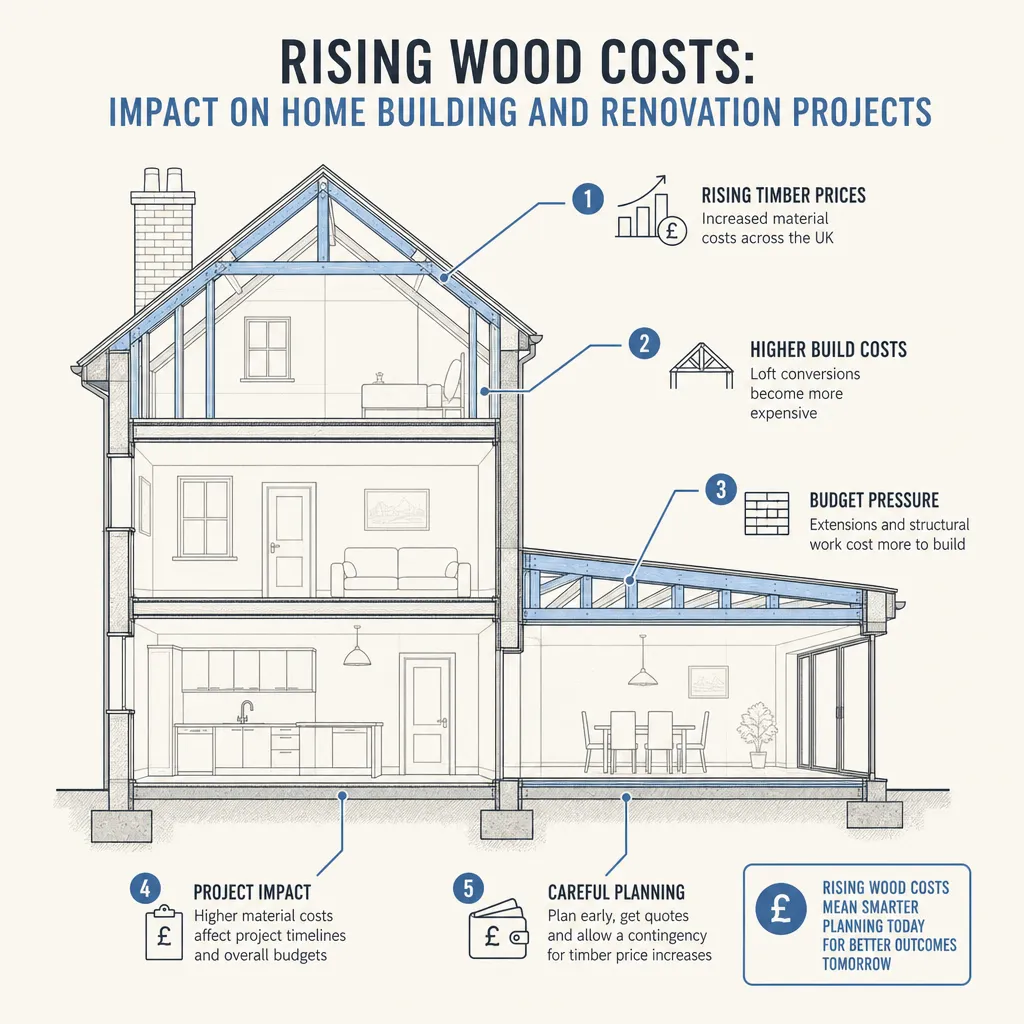
Rising Wood Costs: Impact on Home Building and Renovation Projects
Rising timber prices affect UK home renovation budgets most on timber-frame extensions, loft conversions, and self-builds, where structural wood can account for 15–25% of material costs.
 Improvement & Build
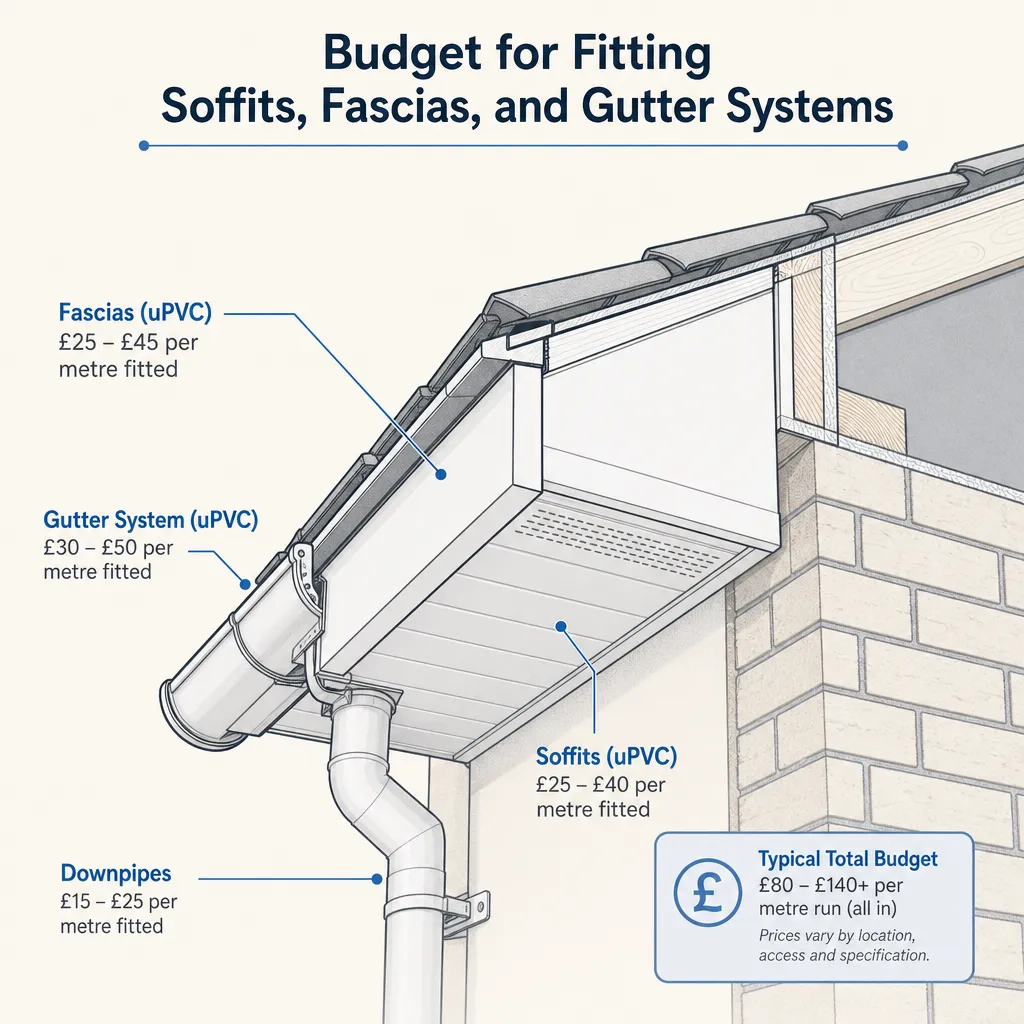
Budget for Fitting Soffits, Fascias, and Gutter Systems
Replacing soffits, fascias, and gutters on a typical UK semi-detached house costs roughly £1,500–£3,500 for uPVC, depending on property size, access, and material choice.
 Improvement & Build
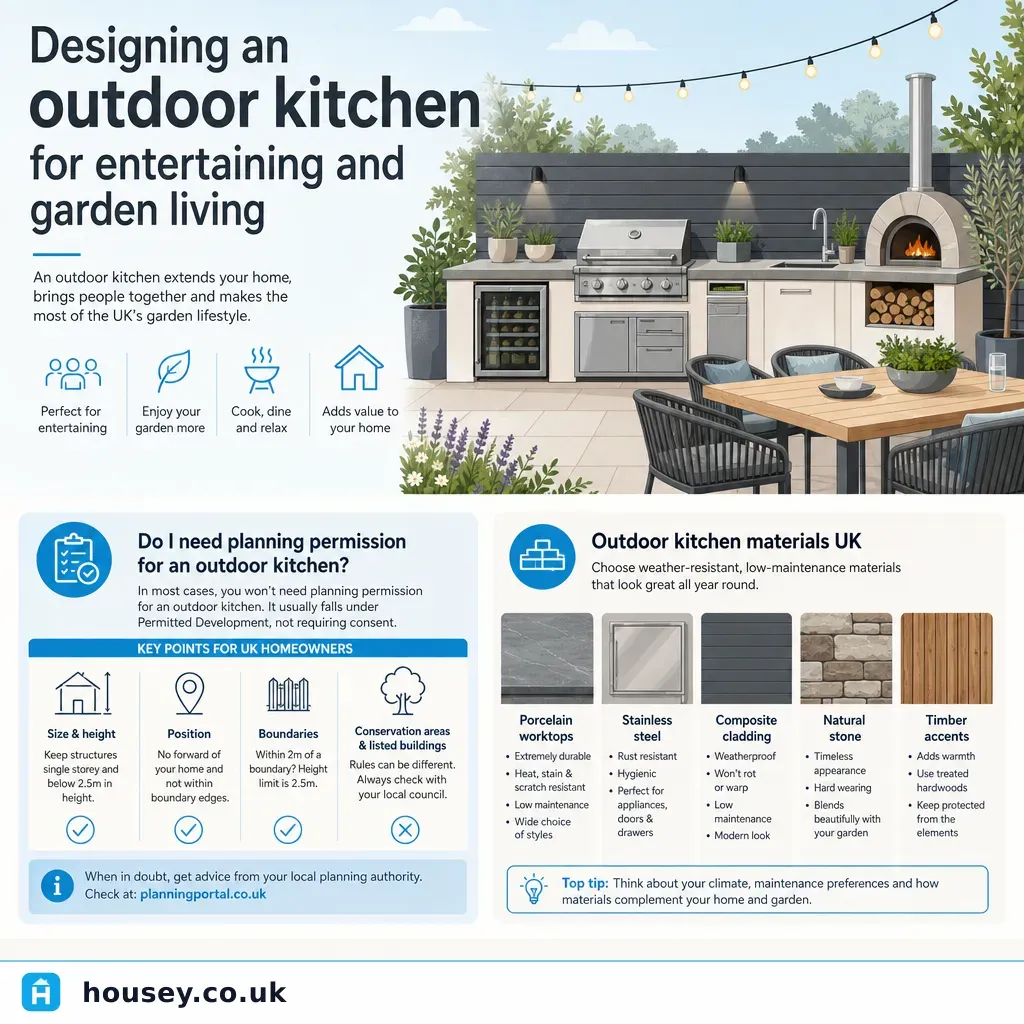
Designing an outdoor kitchen for entertaining and garden living
An outdoor kitchen in a UK garden needs a stable, level base — typically a concrete slab or quality paving — with weather-rated materials such as stainless steel grade 316 or frost-rated porcelain.
 Improvement & Build
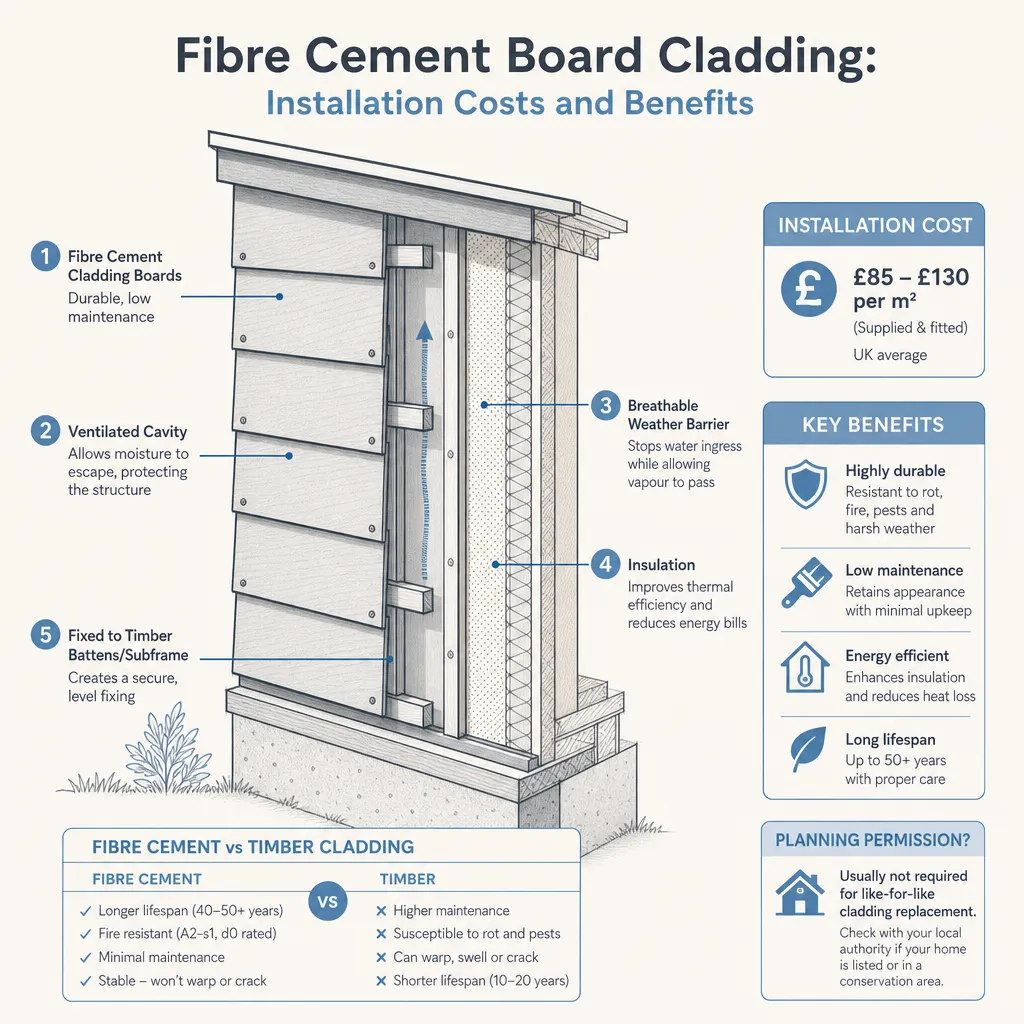
Fibre Cement Board Cladding: Installation Costs and Benefits
Fibre cement board cladding typically costs £80–£180 per m² installed in the UK, including boards, battens, breather membrane, and labour.