Designing an outdoor kitchen for entertaining and garden living
By Housey · Last reviewed 31st of May 2026
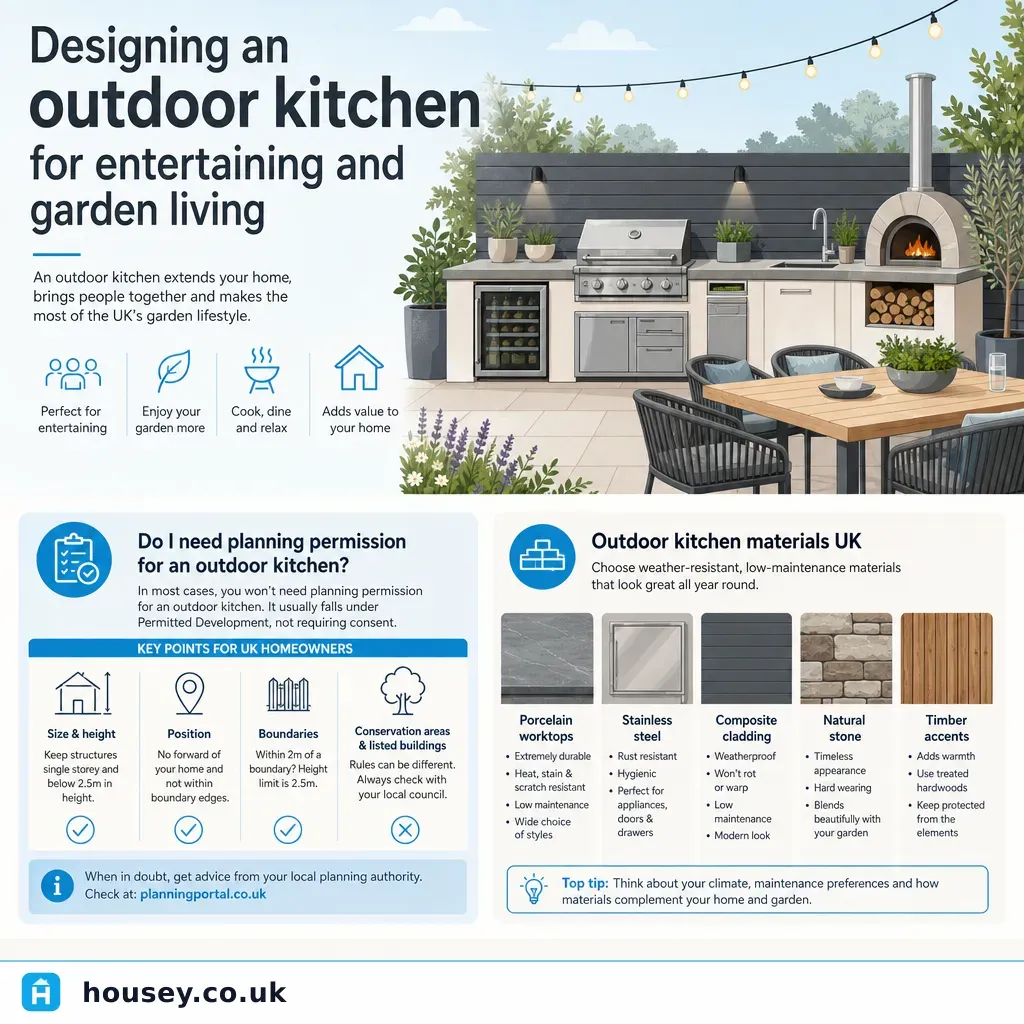
Designing an outdoor kitchen for entertaining and garden living
For many UK homeowners, the outdoor kitchen has become the centrepiece of a genuinely usable garden — a permanent cooking and dining space rather than a seasonal afterthought. The question of when to invest, and how to design it well, typically arises during a garden redesign or extension project, when the budget and opportunity exist to build something lasting rather than portable. Done thoughtfully, an outdoor kitchen can extend the usable season of your garden and add real value to the property; done hastily, it creates expensive remedial work around gas connections, drainage, and weatherproofing.
Key points
- Gas connections to an outdoor kitchen must be installed by a Gas Safe registered engineer under the Gas Safety (Installation and Use) Regulations 1998 — no exceptions.
- A permanent roofed structure attached to the house may need planning permission if it exceeds permitted development limits — verify with your local planning authority before building.
- Stainless steel grade 316, marine-grade aluminium, and frost-rated porcelain are the most appropriate materials for permanent UK outdoor kitchen installations.
- Outdoor electrical installations must comply with BS 7671 (IET Wiring Regulations, 18th Edition) and may require a Part P Building Regulations notification for any new circuit.
- VAT at the standard 20% rate applies to most outdoor kitchen installations; there is no reduced rate for residential garden structures.
Choosing location and orientation
The most-used outdoor kitchens are positioned with practical intent rather than purely aesthetic effect. Aim for:
- Proximity to the house — ideally within 3–5 metres to avoid long gas pipe runs and to make carrying food and crockery practical.
- South or south-west facing — maximises afternoon sun in the UK, which matters in a climate where evenings cool quickly.
- Natural shelter — an existing wall, fence, or boundary planting on the northern or eastern side reduces wind chill considerably.
- Level base with drainage fall — a minimum 1:80 gradient away from the cooking area prevents standing water collecting under appliances and worktops.
If your garden slopes, a landscaper or garden designer will typically assess whether cutting a level terrace is achievable without significant additional groundwork costs.
Base, structure, and shelter
The base is the most critical structural decision you will make for an outdoor kitchen. Options include:
- Concrete slab — typically 100–150mm thick on a compacted hardcore base; the most stable and durable option for heavy built-in kitchens.
- Porcelain or natural stone paving — appropriate for modular or lighter installations; ensure the sub-base is correctly prepared to avoid movement and water retention between slabs.
- Existing patio — check it is level and structurally adequate before placing heavy masonry units or appliances on top.
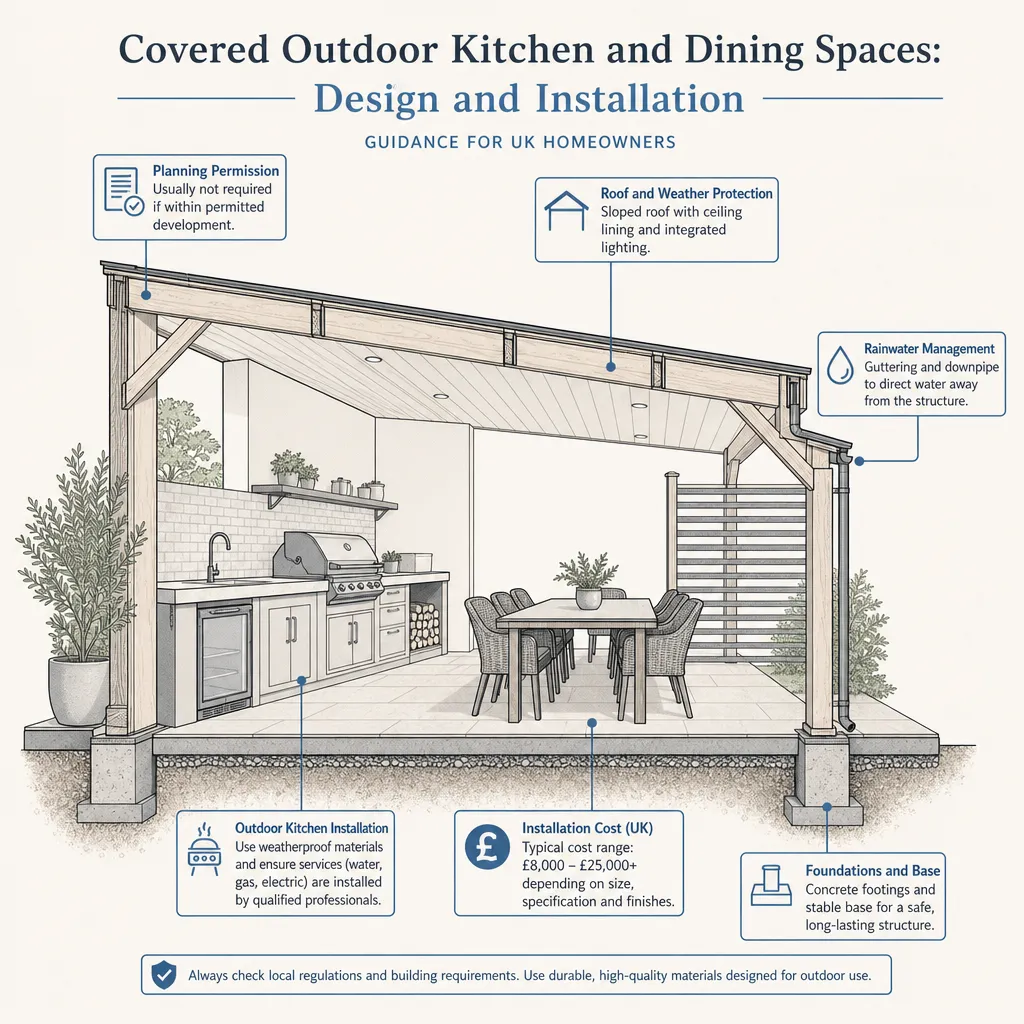
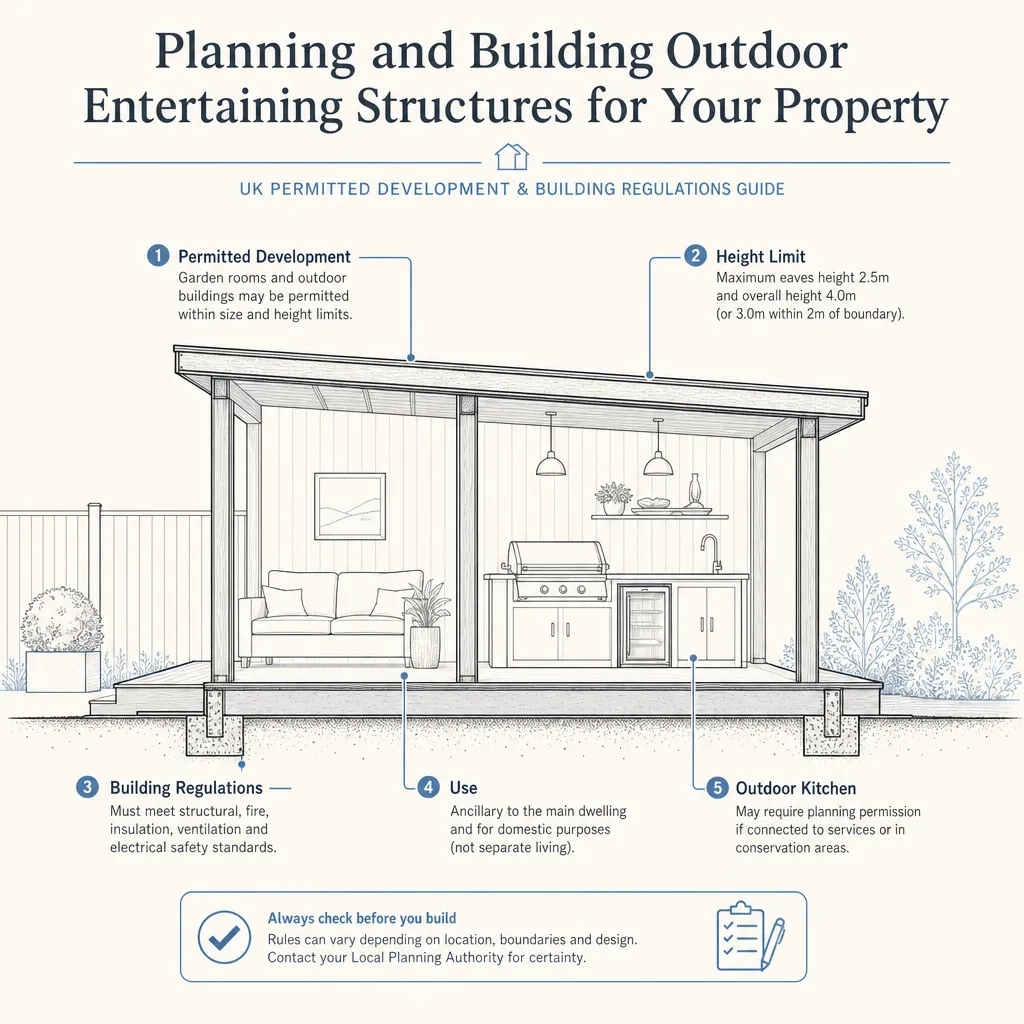
For shelter, a pergola or lean-to structure significantly extends use into the cooler months. A lean-to pergola attached to the house wall is usually permitted development under the Town and Country Planning (General Permitted Development) (England) Order 2015, provided it does not exceed 4m in height or cover more than 50% of the garden area. In Wales, Scotland, and Northern Ireland, permitted development rules differ — always verify with your local planning authority.
Materials compared: worktops, cabinets, and surfaces
UK outdoor conditions — freeze-thaw cycles, persistent moisture, and UV exposure — mean material choice matters considerably more than in a sheltered indoor setting.
Material | Durability in UK weather | Maintenance | Best for |
|---|---|---|---|
Stainless steel 316 | Excellent | Wipe clean, occasional polish | Appliance surrounds, sinks |
Marine-grade aluminium | Excellent | Minimal | Cabinet frames and doors |
Frost-rated porcelain (20mm+) | Very good | Optional annual seal | Worktops, splashbacks |
Natural granite (sealed) | Good | Annual seal outdoors | Premium worktops |
Render or brick (capped) | Good | Periodic repointing | Base structure cladding |
Hardwood timber | Moderate | Annual oiling | Accents and open shelving |
Avoid standard kitchen cabinet carcasses, MDF, and indoor-rated worktop materials — even with sealant, they typically fail within two to three seasons in UK outdoor conditions.
Services: gas, electricity, water, and drainage
Gas: If you plan a built-in gas barbecue, hob, or pizza oven with a permanent gas supply, the connection must be made by a Gas Safe registered engineer. A temporary LPG cylinder is a practical alternative that avoids fixed pipework and is suitable for modular or lower-specification setups.
Electricity: Outdoor sockets and appliance connections require RCD protection and must comply with BS 7671. Any new dedicated circuit from the consumer unit needs a Part P notification in England and Wales. Use IP65-rated or higher sockets and fittings for all outdoor positions.
Water and drainage: A cold water supply to a sink is valuable for food hygiene and practical use. Drain runs must comply with Building Regulations Part H and typically connect to the existing surface water drainage system. Running grey water to the foul drain requires specific design and may need separate Building Regulations approval.
Planning the layout for cooking and entertaining
A well-designed outdoor kitchen applies commercial kitchen logic: a work triangle between the cooking zone, prep zone, and wash zone. For typical UK entertaining groups of 6–12 people, a minimum linear run of 2.4 metres provides sufficient worktop and appliance space without requiring a U-shaped layout.
Consider:
- Cooking zone — grill, plancha, or pizza oven; allow 600mm clearance above open-flame appliances if any overhead cover exists.
- Prep zone — adjacent to the cooking zone; 600–900mm of uninterrupted worktop.
- Refrigeration — an under-counter outdoor-rated fridge, specified for ambient temperatures down to 10°C or lower for reliable UK performance.
- Wash zone — ideally at one end to keep water and food preparation separate from cooking heat.
Which setup should you choose?
- Choose a freestanding modular unit if your budget is under £5,000, you are renting, or you want flexibility to reconfigure or relocate the kitchen later.
- Choose a built-in permanent kitchen if you want a bespoke specification, integrated appliances, and a lasting addition to the property.
- Choose a covered pergola or lean-to if you use the garden year-round or live in a wetter region — the investment in cover pays back quickly in extended usable days.
- Consider induction rather than gas if your garden already has electricity and you want to avoid Gas Safe engineer fees, long pipe runs, or LPG cylinder storage.
- Consult a garden designer if your garden has level changes, multiple use zones, or you want the kitchen integrated with planting, paving, and lighting design.
- Check with your local planning authority before building any permanent roofed structure attached to the house, particularly in conservation areas or on listed property.
What to ask before accepting a quote
- Who is responsible for base preparation — is it included in the quote or priced separately?
- Will gas and electrical connections be made by certified contractors (Gas Safe and NICEIC-registered respectively), and will installation certificates be issued?
- Which appliances are specified, and what are their weather-resistance ratings for outdoor use?
- Is VAT included in the quoted price?
- What is the expected build timeline, and how is inclement weather managed during construction?
- What warranties apply to the structure and to individual appliances stated separately?
- What maintenance is required in the first year to protect the investment?
When to get professional help
An outdoor kitchen involves several trades working in sequence: groundworkers and landscapers for the base and structure, a Gas Safe engineer for any gas connection, an electrician for outdoor circuits, and potentially a planning consultant for complex covered structures. Even for a confident self-managed project, the following should always involve qualified professionals:
- Any gas supply connection or appliance commissioning
- New electrical circuits from the consumer unit
- Drainage connections to the surface water or foul system
- Any building work in a conservation area or on a listed building
How Housey can help
Whether you need a complete design-and-build service or just groundwork and a hard-standing base, Housey connects you with experienced local professionals. Browse garden designers for layout and planting integration, find landscapers for base preparation and hard landscaping, or get quotes from extension builders for substantial covered structures.
Frequently asked questions
Does an outdoor kitchen need planning permission in the UK?
A freestanding outdoor kitchen usually does not need planning permission in England, provided it sits within permitted development limits and is not fully enclosed. A permanent roofed structure attached to the house may need permission if it exceeds the limits in the Town and Country Planning (General Permitted Development) (England) Order 2015. Always check with your local planning authority, particularly in conservation areas.
What is the best base for an outdoor kitchen in the UK?
A concrete slab — typically 100–150mm thick on a compacted sub-base — is the most stable option for a built-in outdoor kitchen. For modular or lighter installations, well-laid porcelain or natural stone paving on a properly prepared sub-base is usually sufficient. Avoid placing heavy masonry units on an existing patio without first checking sub-base condition and load capacity.
Can I connect gas to an outdoor kitchen myself?
No. Any connection to the mains gas supply or installation of fixed gas pipework must be carried out by a Gas Safe registered engineer under the Gas Safety (Installation and Use) Regulations 1998. Using an LPG cylinder with a regulator and flexible hose to a portable appliance is a lawful alternative, but permanent gas pipework to any outdoor structure always requires a Gas Safe professional.
How much does an outdoor kitchen cost in the UK?
Indicative UK costs, last reviewed 2026-05-31: a basic built-in outdoor kitchen with a gas grill and modest worktop typically costs £5,000–£12,000 installed, including base preparation. A fully specified kitchen with a covered pergola, integrated appliances, sink, and outdoor fridge typically costs £15,000–£35,000 or more. Costs vary significantly by region, materials, and complexity — obtain at least three quotes.
Sources and further reading
- Permitted development rights for householders: technical guidance — GOV.UK
- Gas Safety (Installation and Use) Regulations 1998 — legislation.gov.uk
- Gas Safe Register — Gas Safe Register
- IET Wiring Regulations (BS 7671) — Institution of Engineering and Technology
- Outbuildings: planning permission guidance — Planning Portal
Useful next reads
 Improvement & Build
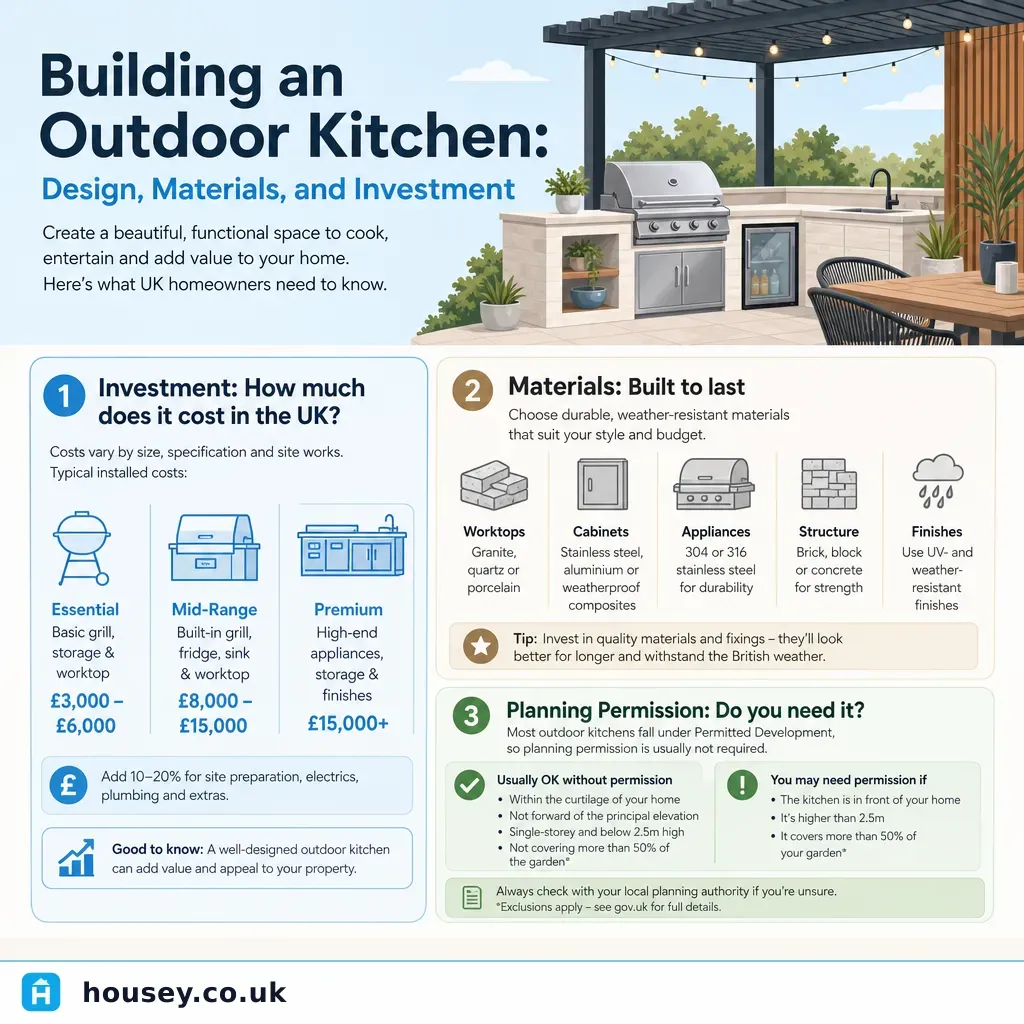
Building an Outdoor Kitchen: Design, Materials, and Investment
Building an outdoor kitchen in the UK costs roughly £3,000–£25,000 depending on size and materials.
 Improvement & Build
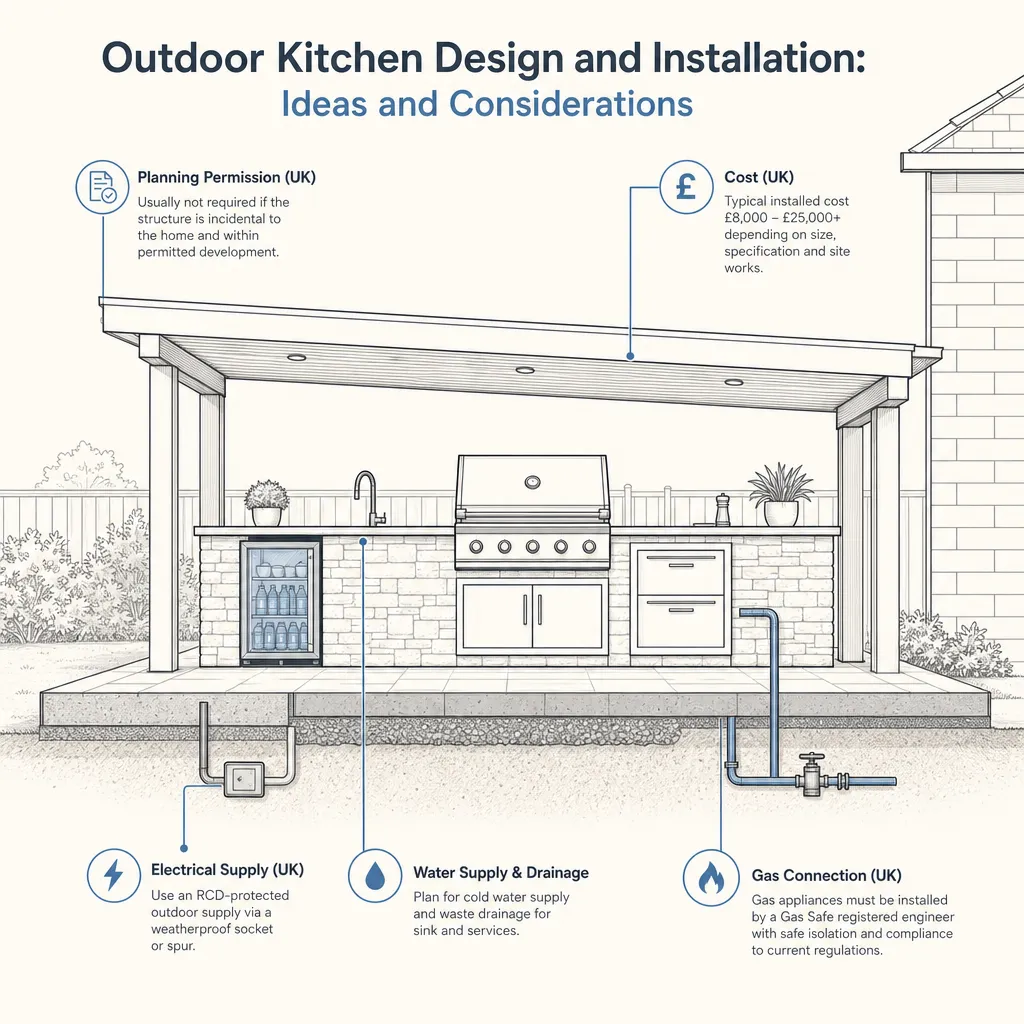
Outdoor Kitchen Design and Installation: Ideas and Considerations
An outdoor kitchen in the UK typically costs £3,000–50,000 depending on size and specification.
 Improvement & Build
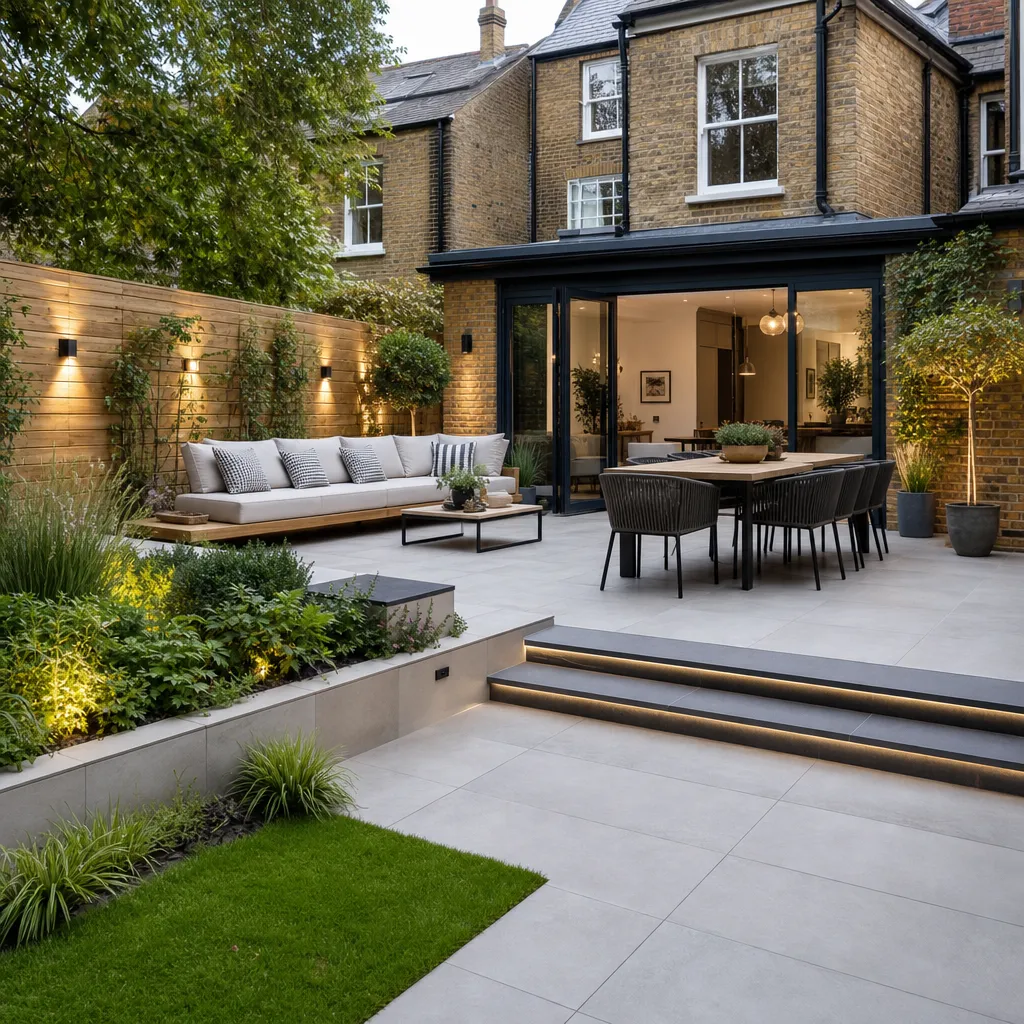
Creating Functional and Attractive Outdoor Entertainment Areas
A well-planned outdoor entertainment area combines a level surface — patio, decking, or gravel — shelter or shade, appropriate lighting, and power access if needed.
 Improvement & Build
Covered Outdoor Kitchen and Dining Spaces: Design and Installation
A covered outdoor kitchen in a UK rear garden is usually permitted development under the GPDO 2015, provided the structure stays within height and footprint limits.
 Improvement & Build
Planning and Building Outdoor Entertaining Structures for Your Property
Most garden rooms, sheds and outdoor entertaining structures fall under permitted development rights in England and need no planning permission, provided they stay within size and height limits, cover under 50% of the garden, and sit behind the main elevation.