Rising Wood Costs: Impact on Home Building and Renovation Projects
By Housey · Last reviewed 24th of May 2026
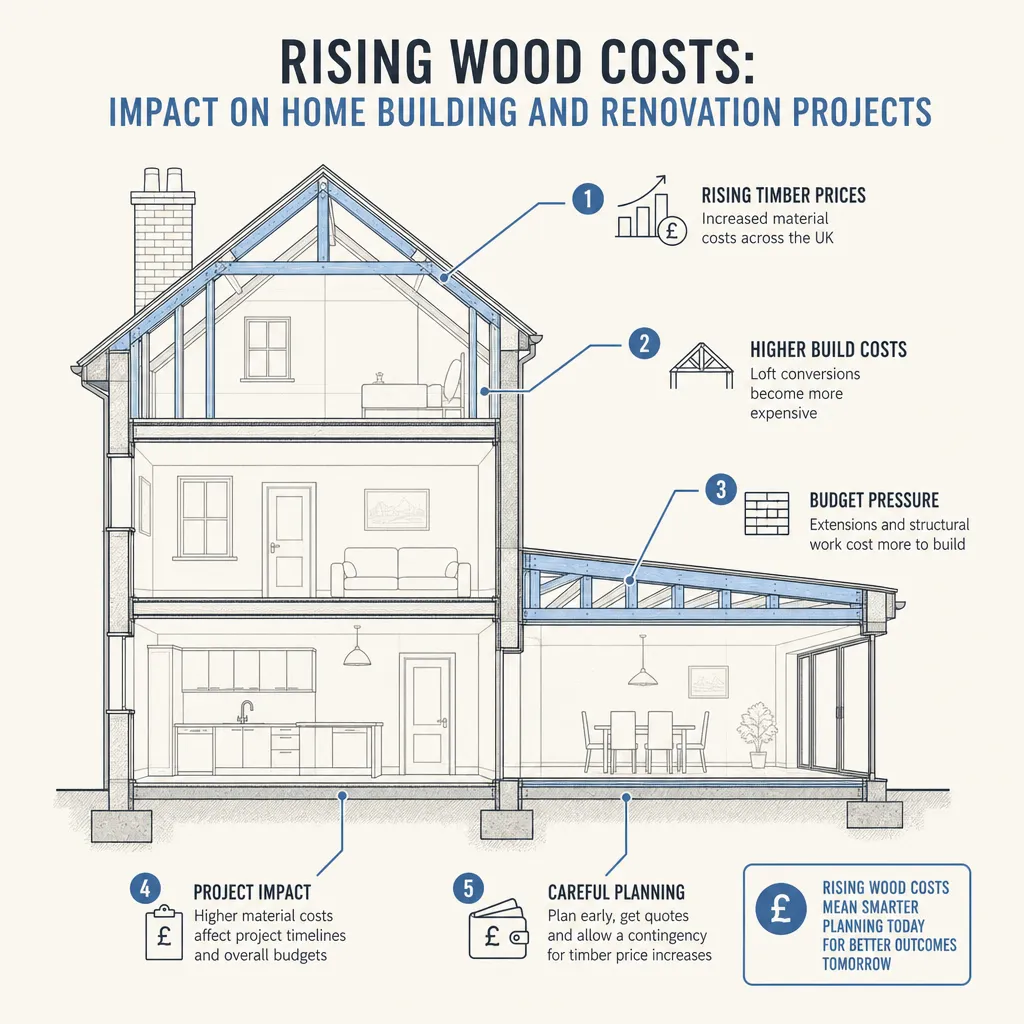
Rising Wood Costs: Impact on Home Building and Renovation Projects
Homeowners planning an extension, loft conversion, or structural renovation often start with budget estimates researched online — then receive contractor quotes that look quite different. Structural timber and engineered wood products are among the most price-volatile materials in UK residential construction, with movements driven by global supply chains that are difficult to predict from the homeowner's perspective. Understanding which projects carry the most timber exposure, how material price changes feed through into contractor quotes, and how to protect your budget before signing a contract is increasingly important groundwork before committing to any timber-heavy build.
Key points
- Structural timber typically accounts for 15–25% of material costs in a timber-frame extension or loft conversion, making it one of the largest single material exposures in residential renovation budgets.
- The ONS Construction Materials Price Index tracks price changes across timber, board, and joinery product categories; the index reached historic highs in 2021–2022 following post-pandemic supply disruptions and has remained elevated relative to pre-2020 baselines.
- RICS recommends a minimum 10% project contingency for residential renovations; in periods of material price volatility, or where a project spans more than one procurement cycle, 15–20% is more appropriate.
- Timber price changes cascade through interconnected products: roof joists, structural floor decking, stud partitions, first-fix joinery, door sets, OSB, plywood, and MDF are all affected when raw softwood prices move.
- Fixed-price contracts protect homeowners from material price rises after signing — but contractors typically include a risk premium to cover this exposure; understanding your contract type before signing determines who bears price risk.
What drives wood and timber prices in the UK
UK construction depends heavily on imported softwood — primarily spruce, pine, and fir from Scandinavia, Central Europe, and North America. Price movements are therefore influenced by several interconnected factors:
Global demand cycles: Post-pandemic construction booms in North America and Europe drove simultaneous demand spikes that depleted European sawmill stockpiles. When multiple major markets compete for the same raw material supply at once, prices rise sharply and take time to normalise.
Shipping and logistics costs: Container freight costs rose dramatically in 2021–2022 and, although they have partially recovered, remain above pre-pandemic baselines, affecting the landed cost of all imported materials including timber.
Currency movements: Sterling weakness against the euro and US dollar makes imported softwood more expensive in nominal terms for UK buyers, even when underlying commodity prices are flat.
Domestic production capacity: The UK produces a proportion of its structural softwood domestically, but not at sufficient volume to buffer global price shocks or substitute for imports at short notice.
Forest disease and climate events: Bark beetle infestations across Central European forests have created periodic windfall supply from salvage logging while simultaneously constraining future availability through long replanting timescales.
Timber markets move frequently and point-in-time price data can become outdated within months. For current material cost guidance relevant to your specific project, consult a quantity surveyor or ask your contractor for an up-to-date material schedule at quote stage.
How timber price changes affect different project types
Project type | Timber exposure | Key materials affected | Sensitivity to price changes |
|---|---|---|---|
Timber-frame rear extension | High | Structural frame, floor joists, roof rafters, sheathing board | High |
Loft conversion | Medium–high | New floor structure, roof modification timbers, stud walls, staircase | Medium–high |
Masonry extension | Medium | Floor joists, roof structure, first-fix joinery, internal stud walls | Medium |
Roof replacement or repair | Medium | Roofing timbers, battens, fascias, soffits | Medium |
Kitchen or bathroom fit-out | Low–medium | Carcass materials, MDF, floor decking | Low–medium |
Timber-frame self-build | Very high | Entire structural package | Very high |
Relative cost data varies by project specification, region, and contractor. Obtain current quotes before finalising any budget.
A worked UK renovation scenario
Scenario: A homeowner in Leeds plans a single-storey rear extension to a 1970s semi-detached house — approximately 20 m² in floor area, timber-frame construction with a flat roof.
Their architect's initial cost estimate from late 2021 included a structural timber and boarding allowance of approximately £3,800. By the time the project was ready to tender in mid-2022, the same specification came in at £5,400–£6,000 across three contractor quotes — a rise of around 40–58% driven largely by timber and OSB costs. A masonry-build alternative was costed at a similar total due to higher block-and-mortar and groundworks costs, so the homeowner proceeded with the original timber-frame design but revised the total budget upward with an 18% contingency.
The practical lesson: if your initial budget research or architect's estimate is more than three to four months old, ask your contractor for a current material schedule before signing anything. The time gap between estimate and build start is one of the most consistent drivers of budget overrun on residential projects.
Figures are illustrative, based on reported industry ranges during that period. Indicative UK costs — verify current pricing with your contractor. Last reviewed 2026-05-24.
Budget protection strategies
1. Ask for itemised material schedules
A quote that bundles 'timber and materials — £X,000' is difficult to interrogate or compare meaningfully between contractors. Ask for a schedule that lists structural timber by volume or species, engineered wood products, boarding, first-fix joinery, and other major line items separately. This makes it easier to compare quotes, understand cost drivers, and assess any mid-project variation requests.
2. Understand your contract type
- Fixed-price contracts protect you from material cost rises after signing — but contractors typically include a risk premium to cover potential rises during the build period, which means you may pay above actual cost if prices fall.
- Cost-plus or open-book contracts pass actual material cost movements directly to you; you benefit if prices fall but carry full exposure to rises. More appropriate when a contractor cannot procure materials in advance, or for longer projects.
- Hybrid contracts — fixed labour rate with an agreed material price-review mechanism — are increasingly common on projects lasting more than three to four months.
Ask your contractor directly: if timber prices rise between contract signing and material procurement, who bears that additional cost?
3. Build in appropriate contingency from the outset
RICS recommends a minimum 10% contingency for residential renovation projects. In periods of supply-chain volatility, or when a project spans more than one procurement cycle (typically 8–12 weeks for timber-frame components), 15–20% is more appropriate. Treat contingency as a core part of your budget from day one, not a reserve you hope not to touch.
4. Discuss procurement timing with your contractor
For timber-frame extensions and loft conversions, the structural frame is often procured as a package 8–12 weeks before installation. Confirming this procurement window and locking in pricing at the point of material order — rather than at the quote stage months earlier — can meaningfully reduce exposure to interim price movements.
5. Consider design flexibility before planning permission is granted
On projects where both timber-frame and masonry construction are technically feasible, raise the material cost differential with your designer at briefing stage, before planning permission is locked in. Neither approach is consistently cheaper across all regions and time periods — labour costs, regional availability, and current material pricing all vary — but understanding the trade-off before design is finalised avoids costly specification changes later.
Document and quote preparation checklist
Before finalising any contract for a timber-heavy project, confirm the following:
When to get professional help
A RICS-accredited quantity surveyor or independent project manager adds most value on projects where material costs represent a significant budget risk:
- Timber-frame or self-build projects where the structural timber package is a major proportion of the overall budget.
- Projects spanning more than one construction season, where supply windows and pricing cycles create genuine procurement risk.
- Where you have received quotes with a wide spread and need independent guidance on what a reasonable material cost looks like for your specification.
- Any project where a fixed-price contract is not available and you need to understand your full exposure to cost movements before committing.
RICS-accredited quantity surveyors are listed by location and specialism at rics.org.
How Housey can help
Getting competing, itemised quotes is the most direct way to understand current market pricing for your project. Housey connects homeowners with vetted extension builders, loft conversion companies, roofers, and design-and-build firms who provide detailed quotes so you can compare material and labour costs clearly before committing to any contract.
Frequently asked questions
Why are timber prices in the UK so volatile?
UK construction relies heavily on imported softwood, making it sensitive to global demand cycles, currency movements, shipping costs, and supply events such as forest disease or severe weather in producing countries. Unlike manufactured materials, timber supply cannot be ramped up quickly — new plantings take decades to mature, meaning supply constraints can persist for years after an initial demand spike.
Should I delay my renovation project waiting for lower timber prices?
Timing the material market is rarely practical. Timber prices fluctuate, but other costs — labour, groundworks, and other materials — move independently and may rise while timber falls. Most renovation professionals advise planning thoroughly, budgeting with appropriate contingency, and proceeding when the project is properly scoped rather than waiting indefinitely for a market moment that may not arrive.
Does VAT apply to timber used in my home renovation?
For most renovation and improvement work on an existing home, VAT is charged at the standard rate of 20% on materials. New-build construction may qualify for zero-rated VAT on qualifying materials and services under certain conditions. HMRC VAT Notice 708 covers construction services and building materials in detail; your contractor should be able to clarify the VAT position for your specific project.
How do I know if a contractor's timber cost is reasonable?
Ask for a material schedule with quantities and species specified — C16 or C24 structural softwood is standard for most residential work. Timber Trade Federation data and published merchant prices provide a reference point. For larger projects, a RICS-accredited quantity surveyor can review the material cost element and flag significant deviations from current market rates. Getting three quotes remains the most practical baseline.
Sources and further reading
- ONS Construction Materials Price Indices — Office for National Statistics
- RICS: find a surveyor — RICS
- GOV.UK: VAT on construction services — Notice 708 — HMRC
- BCIS: Building Cost Information Service — RICS / BCIS
- Timber Trade Federation: UK timber market information — Timber Trade Federation
Useful next reads
 Improvement & Build
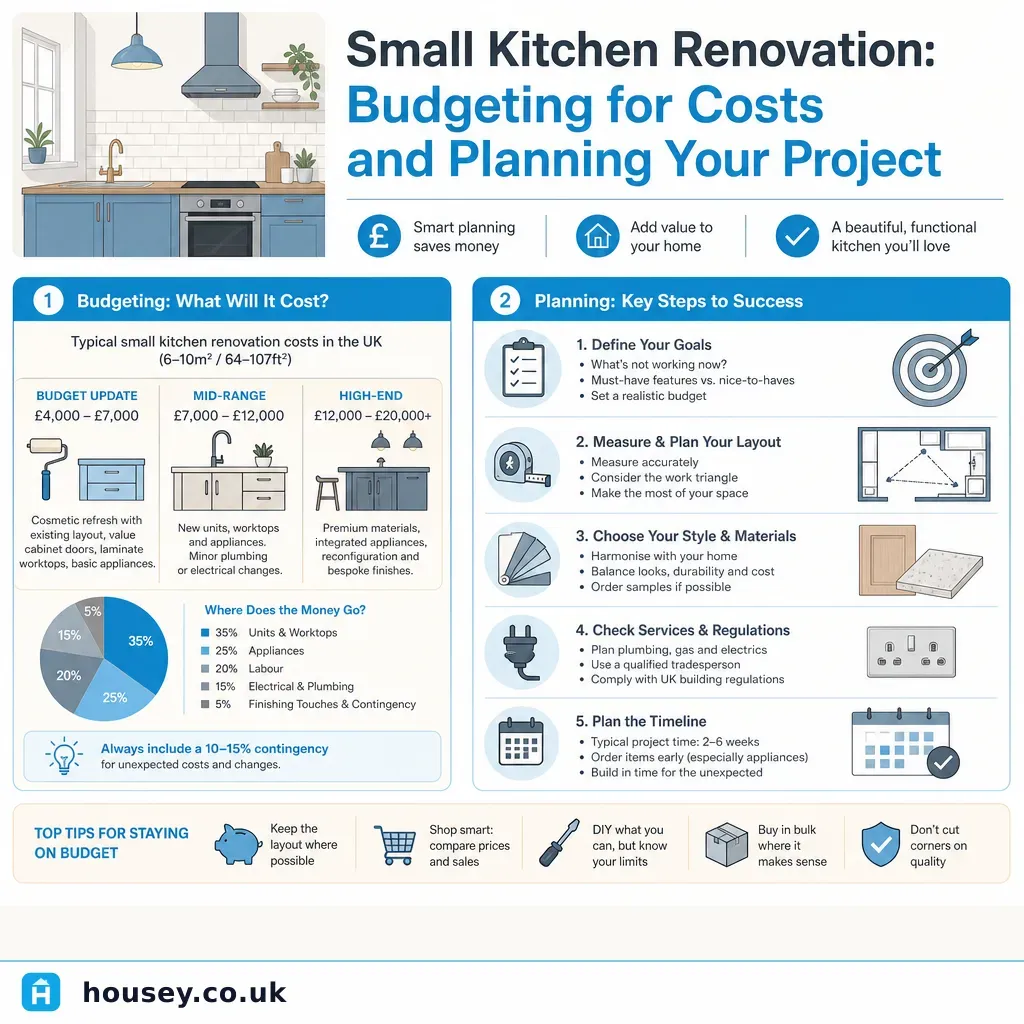
Small kitchen renovation: budgeting for costs and planning your project
A small kitchen renovation in the UK typically costs £5,000–£15,000 for a full refresh including new units, worktops, tiling, and appliances, though costs vary widely by specification, region, and whether structural changes or rewiring are involved.
 Improvement & Build
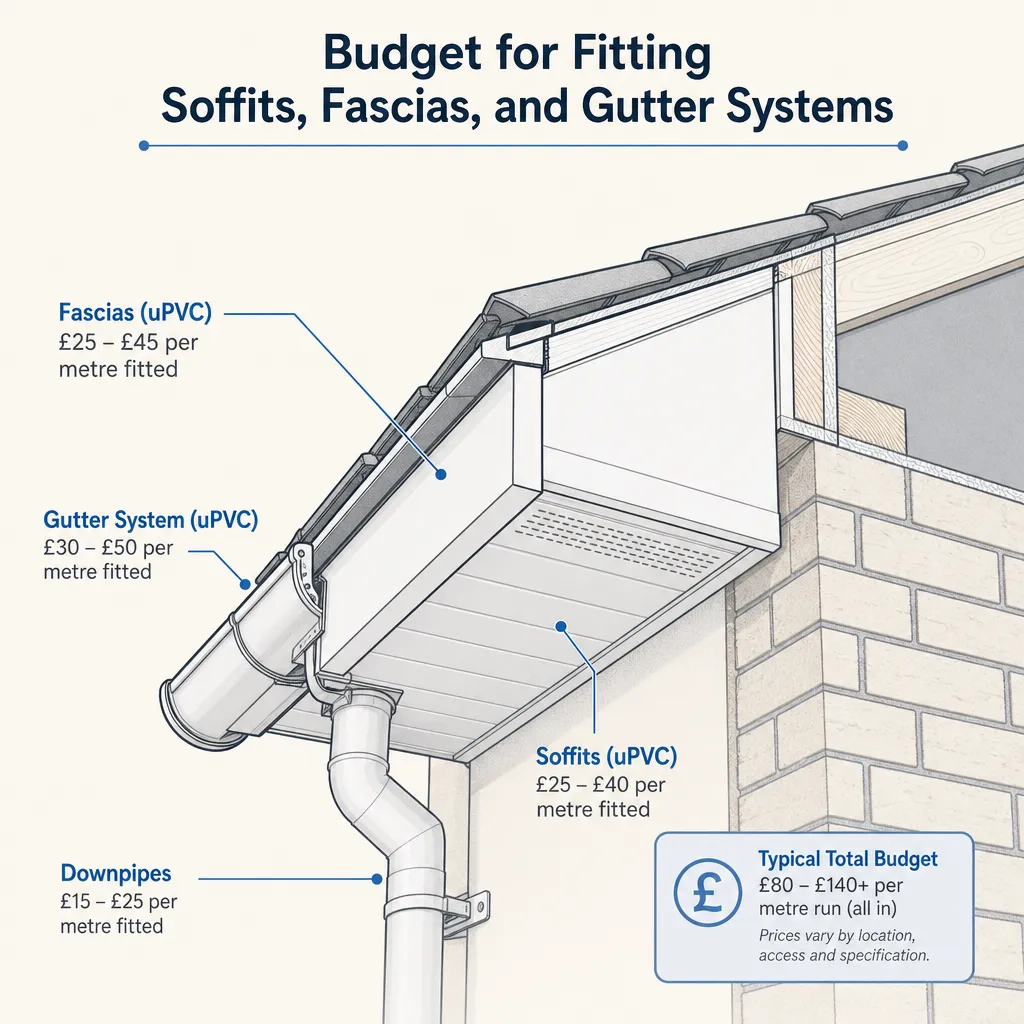
Budget for Fitting Soffits, Fascias, and Gutter Systems
Replacing soffits, fascias, and gutters on a typical UK semi-detached house costs roughly £1,500–£3,500 for uPVC, depending on property size, access, and material choice.
 Improvement & Build
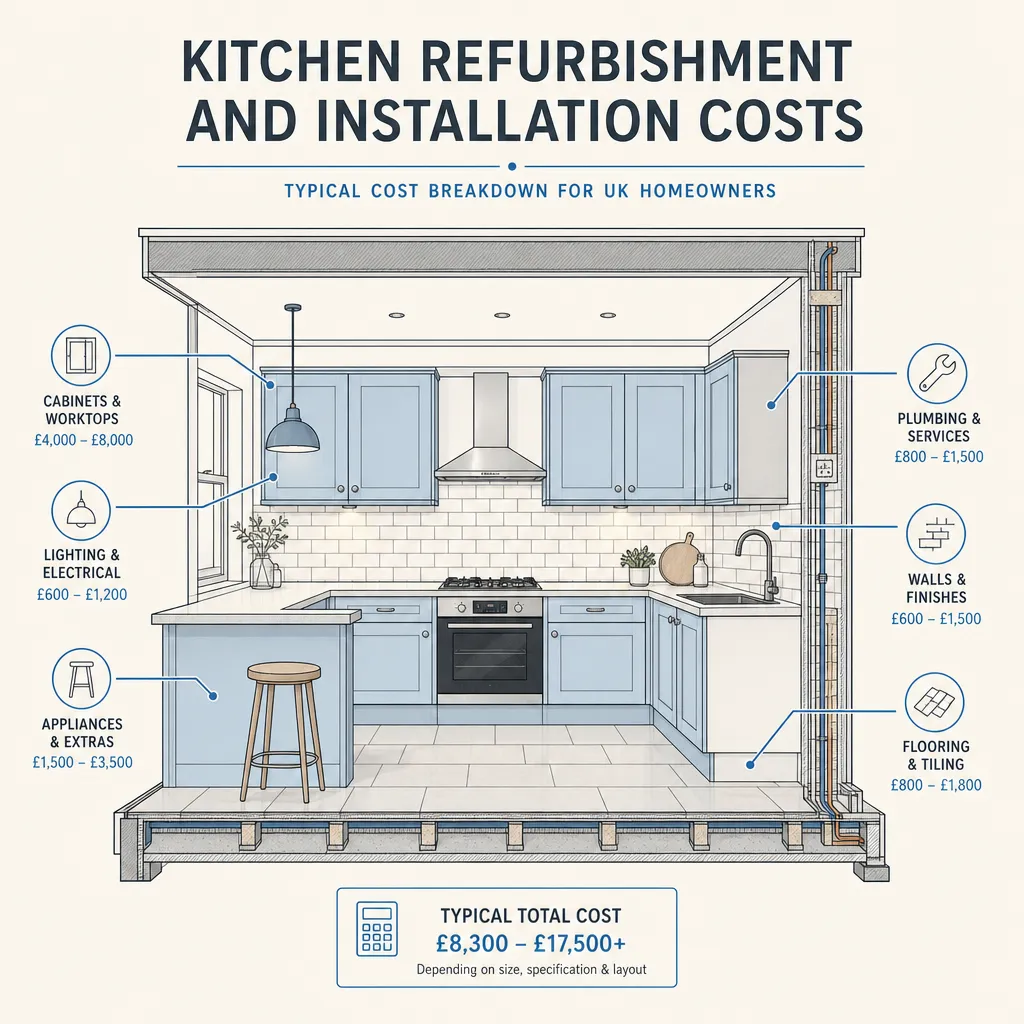
Kitchen Refurbishment and Installation Costs
A kitchen refurbishment in the UK typically costs between £3,000 and £40,000 or more, depending on whether you are replacing units only or carrying out a full design-and-build project.
 Improvement & Build
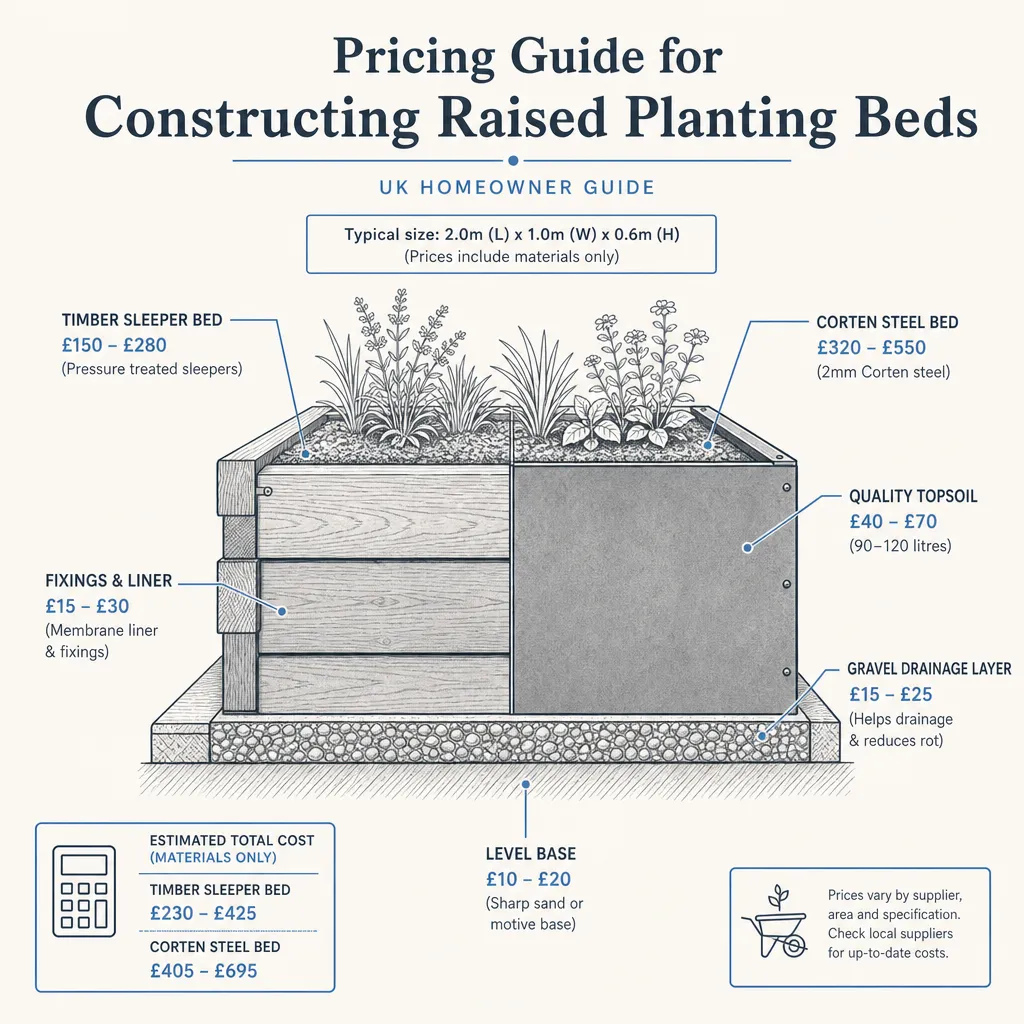
Pricing Guide for Constructing Raised Planting Beds
Raised planting beds cost from around £40 in DIY timber materials for a standard size, rising to £200–£1,500 or more for professionally installed sleeper or Corten steel beds.
 Improvement & Build
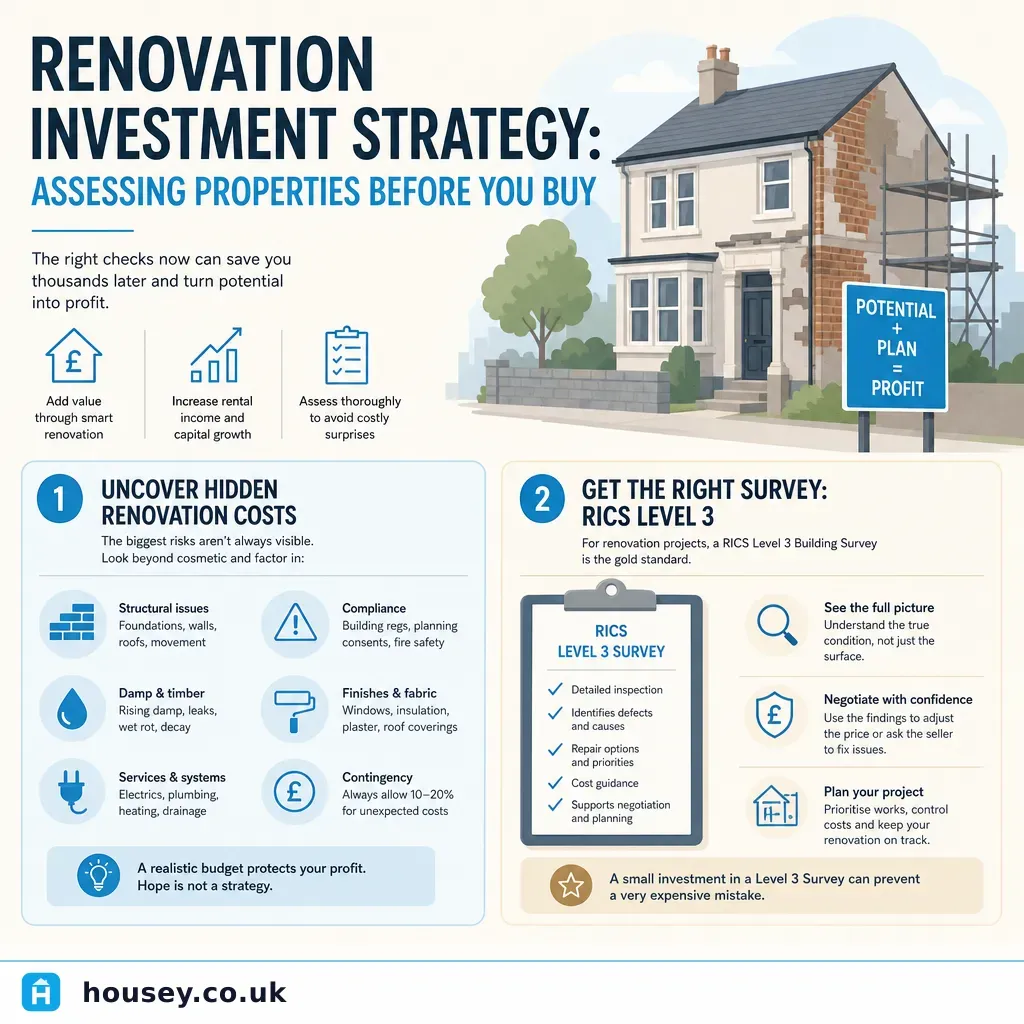
Renovation Investment Strategy: Assessing Properties Before You Buy
Renovation investment properties require more due diligence than a standard home purchase.