Buying and Selling via Online Property Auctions: Process and Considerations
By Housey · Last reviewed 30th of May 2026

Buying and Selling via Online Property Auctions: Process and Considerations
Online property auctions have grown rapidly in the UK as an alternative to estate agency sales, particularly for properties that are tenanted, in need of renovation, or otherwise harder to shift through conventional marketing. For buyers and sellers new to the format, the rules and timescales differ significantly from a standard open-market transaction — and the consequences of misunderstanding them can be financially serious. Understanding which type of auction you are dealing with, and what due diligence is needed before you commit, is the essential starting point.
Key points
- UK online property auctions use two main formats: traditional (unconditional) auction and the Modern Method of Auction (MMoA), each with different legal obligations at the point of exchange.
- In a traditional auction, exchange of contracts is legally binding at the moment the winning online bid is accepted — a buyer who withdraws loses their deposit, typically 10% of the purchase price.
- The Modern Method of Auction gives buyers and sellers more time: usually 28 days to exchange contracts and a further 28 days to complete, but a non-refundable reservation fee (often 3–5% plus VAT) is charged upfront by the buyer.
- Buyers must arrange a survey and review the legal pack before bidding — costs incurred pre-exchange are not recoverable if the deal does not proceed.
- Sellers should confirm with their auctioneer which format applies, as this determines when the price is legally locked in and what additional fees the buyer will pay.
Traditional auction vs Modern Method of Auction
Feature | Traditional (unconditional) auction | Modern Method of Auction (MMoA) |
|---|---|---|
When exchange happens | At fall of the virtual hammer or acceptance of winning bid | Up to 28 days after the auction closes |
Buyer's upfront payment | 10% deposit, paid immediately on winning | Reservation fee — typically 3–5% plus VAT, non-refundable |
Completion timescale | Typically 28 days after exchange | Typically 28 days after exchange (56 days total from auction close) |
Finance | Cash or pre-arranged bridging loan most practical | Mortgage possible if arranged promptly; bridging also used |
Legal pack | Must be reviewed before bidding | Must be reviewed before bidding |
Best for sellers | Maximum certainty and speed; no fall-throughs post-exchange | Broader buyer pool including mortgage purchasers |
Risk for buyers | Withdrawal after bid loses full deposit; potential legal action | Reservation fee is lost if exchange does not complete |
The critical point for buyers is that in a traditional auction, you have effectively exchanged contracts the moment your bid is accepted. You cannot withdraw without losing your deposit and potentially facing further legal action. In the Modern Method of Auction there is more time, but the reservation fee is non-refundable in most cases — and failure to exchange by the deadline still leaves you out of pocket.
The online auction process for buyers
Before bidding
- Register on the auction platform. Most require identity verification and evidence of funds or a mortgage in principle before you can place a bid.
- Download and review the legal pack. The pack is prepared by the seller's solicitor and typically includes the title register, special conditions of sale, searches (if provided by the seller), and any tenancy agreements or planning history. Instruct a conveyancing solicitor to review it before you bid — do not treat this as optional.
- Arrange a survey. For most properties, and especially older or renovated ones, instruct a surveyor to inspect before the auction. Costs are not recoverable if you are outbid or choose not to bid.
- Arrange finance. Confirm whether your intended funding method — cash, bridging loan, or mortgage — is compatible with the auction's timescale. Most traditional auctions require completion within 28 days.
- Set a maximum bid and hold to it. Competitive bidding can create pressure; know your absolute ceiling before the auction opens.
During bidding
Online auctions typically run for a fixed period, often with an anti-sniping extension that adds a few minutes to the clock if a bid lands close to the deadline. Confirm the platform's specific rules before the auction starts.
After a winning bid
- Traditional auction: your conveyancing solicitor should be briefed and ready to act immediately. You will be required to pay the deposit and sign the memorandum of sale promptly.
- Modern Method of Auction: the 28-day exchange clock begins from acceptance. Instruct your solicitor and notify your lender or broker without delay.
The online auction process for sellers
Sellers should prepare well before the auction date:
- Instruct a solicitor early to prepare the legal pack. A comprehensive pack — including title documents, planning history, and searches — typically improves buyer confidence and final prices.
- Agree the reserve price with your auctioneer. This is the minimum you will accept and is kept confidential. If bidding does not reach the reserve, the property does not sell.
- Understand the fee structure. Some auctioneers charge sellers a listing fee and/or a percentage of the sale price. In MMoA, the buyer pays the reservation fee — sellers should understand how this affects net proceeds.
- Set the guide price carefully. A guide price significantly above the reserve can deter bidders; one well below it may attract interest but creates expectations that are hard to manage.
Homeowner checklist for auction buyers
Red flags to watch for
- No legal pack available before the auction. A legitimate UK property auction should always provide a legal pack for pre-auction review. Bidding without one is a significant risk.
- Access for inspection refused. If the seller or auctioneer prevents a pre-auction survey, that is a warning sign worth taking seriously.
- Unusual or onerous special conditions. Your solicitor should flag any clauses in the legal pack that transfer additional costs or risks to the buyer beyond the standard terms.
- Guide price far below comparable properties without explanation. Properties with structural problems, title defects, short leases, or sitting tenants can appear at auction for this reason.
- Pressure to bid without legal review. No reputable auctioneer will advise buyers to proceed without reading the legal pack — anyone who does should be treated with caution.
When to get professional help
Always instruct a solicitor before bidding at any UK property auction. The legal consequences of exchange are faster and more severe than in a standard open-market purchase. Seek additional professional guidance if:
- The legal pack contains anything you do not fully understand, including easements, restrictions, covenants, or unusual conditions of sale.
- The property is tenanted, listed, in a conservation area, or has alterations without clear evidence of planning permission or building regulations approval.
- You are buying with a mortgage and are uncertain whether your lender will proceed within the required auction timescale.
- A valuation survey or inspection reveals defects that change your assessment of the property's value.
- The guide price or reserve seems inconsistent with comparable properties and no explanation is provided in the legal pack.
How Housey can help
Whether you are buying or selling at online auction, having the right professionals in place before the auction date is essential. Housey can connect you with a conveyancing solicitor who understands auction timescales and can review a legal pack promptly, and with a qualified surveyor for a valuation survey to help you bid with confidence. Compare quotes from local professionals well before your auction date — not after you have won a bid.
Frequently asked questions
Can I get a mortgage to buy a property at online auction?
Mortgages can be used, but timescales are tight. Traditional auction typically requires completion within 28 days of exchange — too fast for most mortgage applications. Many buyers use bridging finance to complete on time, then remortgage. The Modern Method of Auction's 56-day total timeline is more accommodating for mortgage buyers, but you should confirm your lender's position before placing any bid.
What happens if I win an auction bid but cannot complete?
In a traditional auction, failure to complete means you lose your 10% deposit and may face further legal action from the seller for losses incurred. In the Modern Method of Auction, failing to exchange within the reservation period means forfeiting the reservation fee. In both cases the financial consequences are significant — only bid when your finance and legal position are fully confirmed.
Do I pay Stamp Duty Land Tax on an auction purchase?
Yes. Stamp Duty Land Tax applies to auction purchases in England in exactly the same way as any other property transaction. Your solicitor must file the SDLT return and pay any tax due within 14 days of completion. Factor this into your total budget before bidding — your solicitor can provide a calculation based on the purchase price.
Is online auction a good way to sell a standard residential property?
It can be, particularly if you want a faster or more certain sale, or if the property is difficult to mortgage in its current condition. However, the pool of active auction bidders may be smaller than a full open-market campaign, and properties in strong demand may achieve higher prices through traditional estate agency. Discuss both options with a valuer before deciding which route suits your circumstances.
Sources and further reading
- Buying or selling your home — GOV.UK
- Buying at auction — Propertymark
- Buying a home — Citizens Advice — Citizens Advice
- National Association of Property Buyers — NAPB
Useful next reads
 Buying & Moving
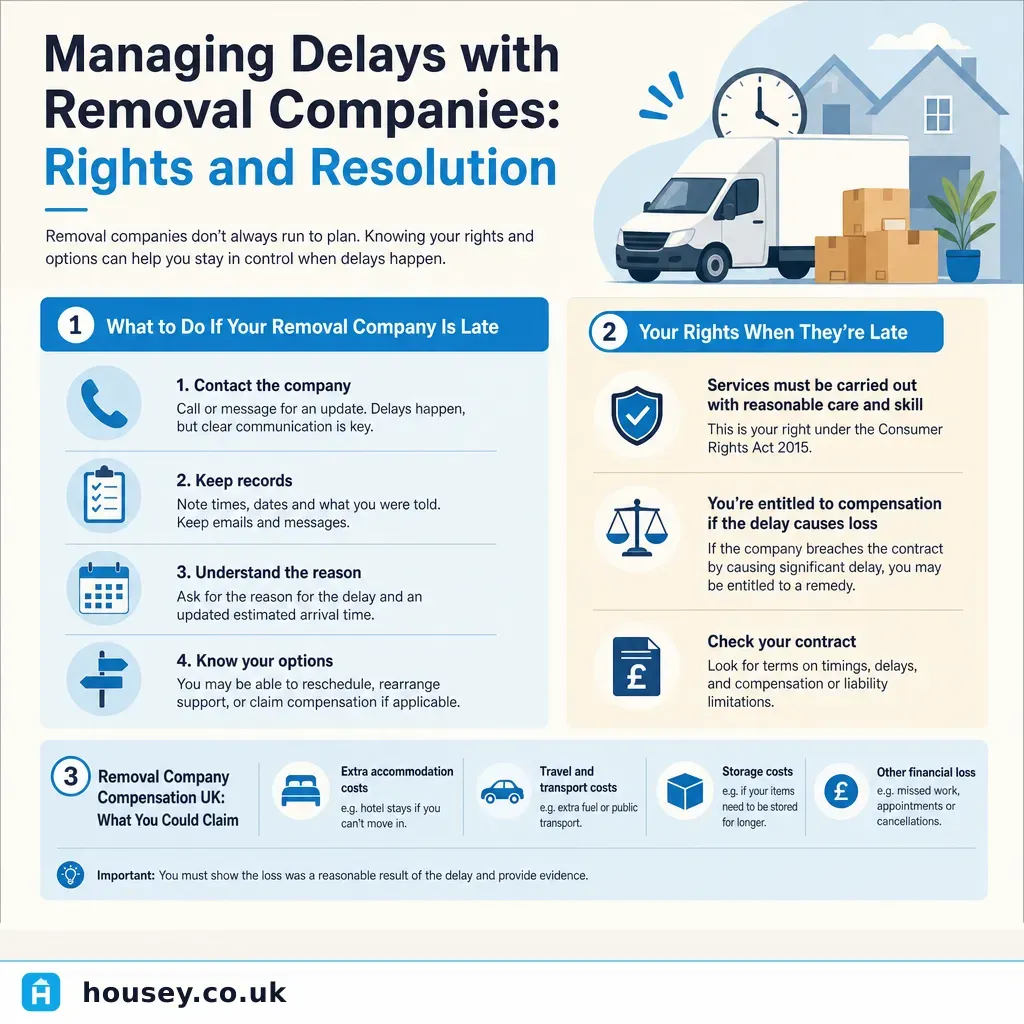
Managing Delays with Removal Companies: Rights and Resolution
If a removal company is late, your rights depend on your contract and whether the company is BAR-registered.
 Buying & Moving
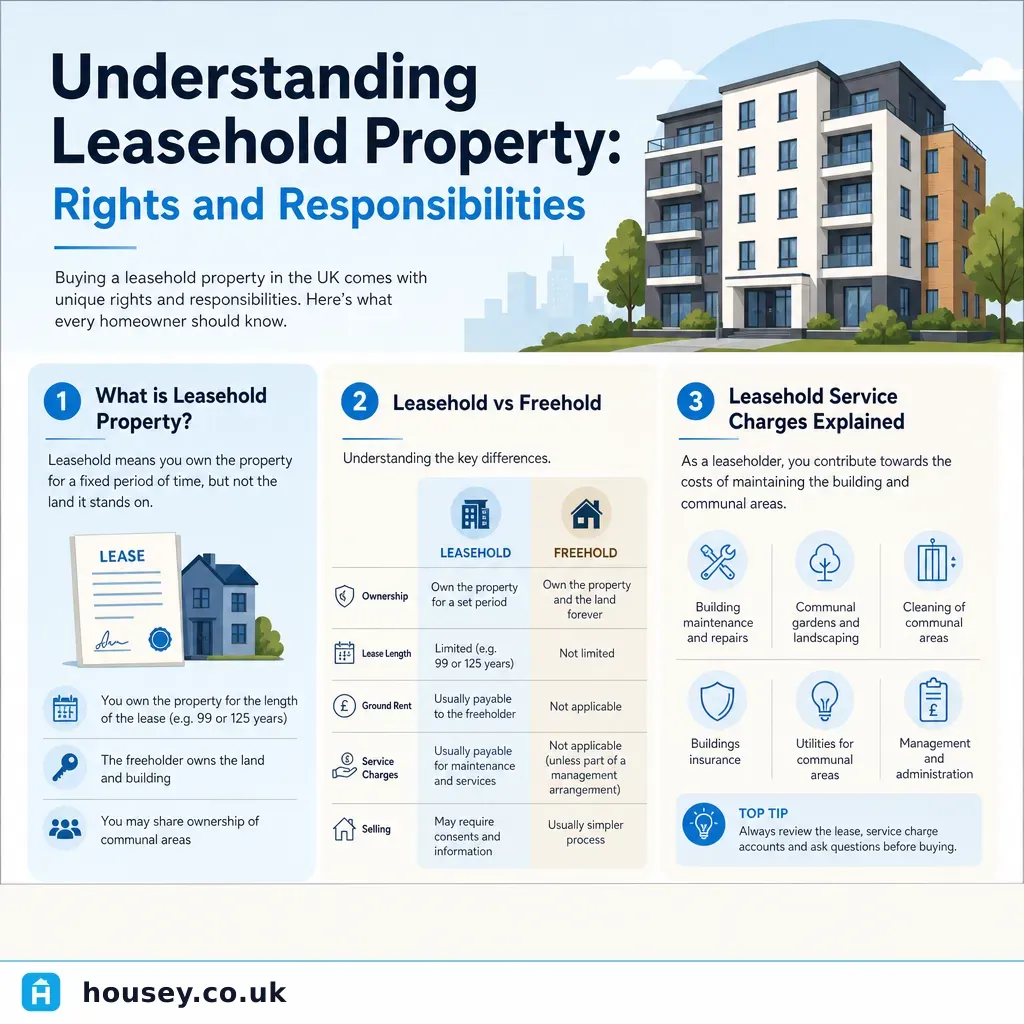
Understanding Leasehold Property: Rights and Responsibilities
Leasehold means you own a time-limited interest in a property while the freeholder owns the land and building.
 Buying & Moving
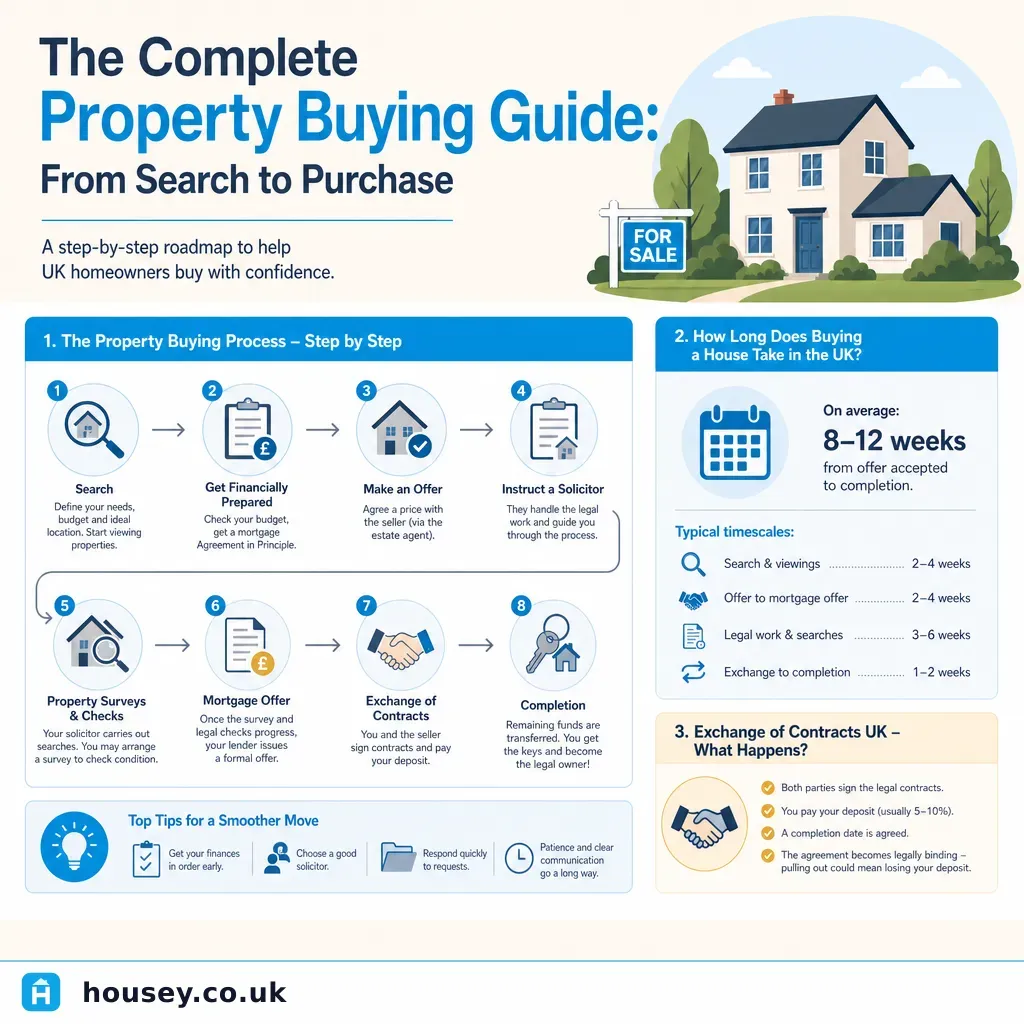
The Complete Property Buying Guide: From Search to Purchase
Buying a property in England and Wales typically takes 3–6 months from accepted offer to completion.
 Buying & Moving
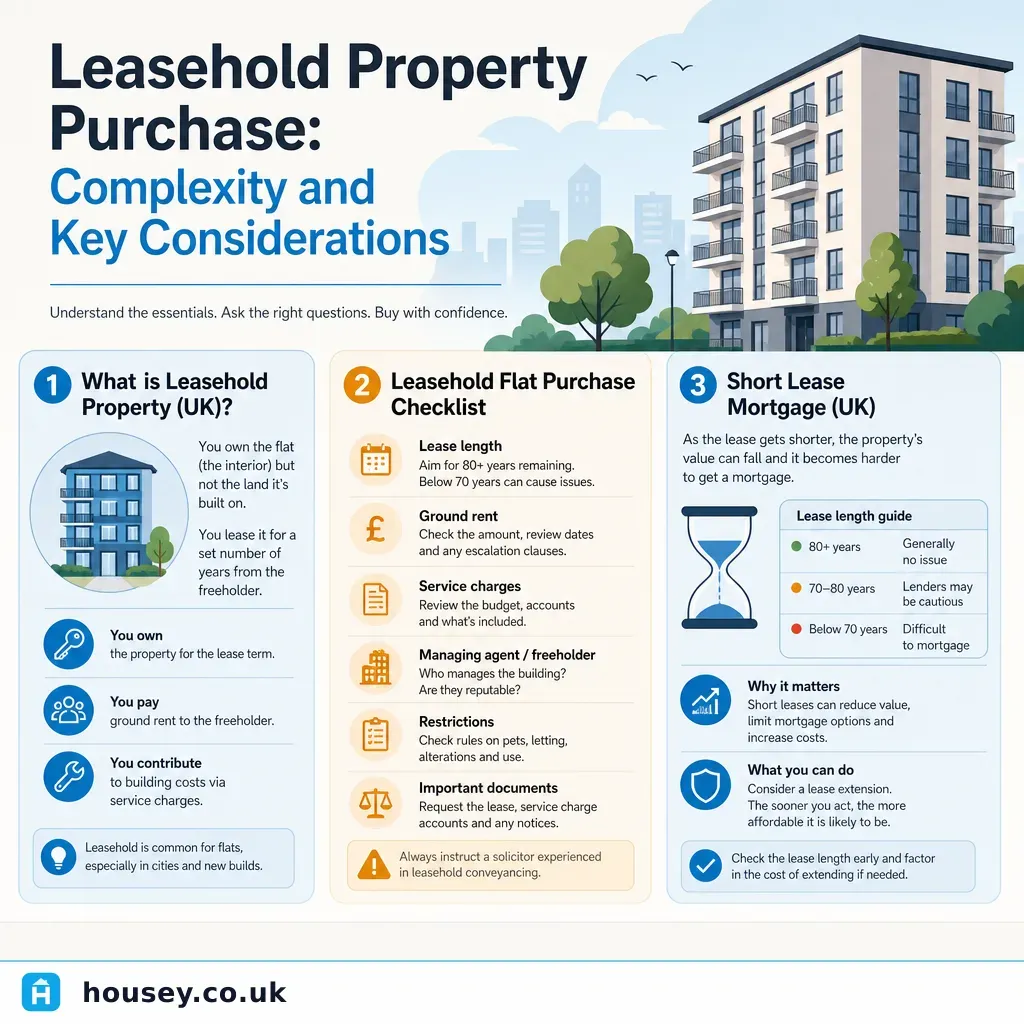
Leasehold Property Purchase: Complexity and Key Considerations
Buying a leasehold property means purchasing the right to occupy for a fixed term rather than owning the land outright.
 Buying & Moving
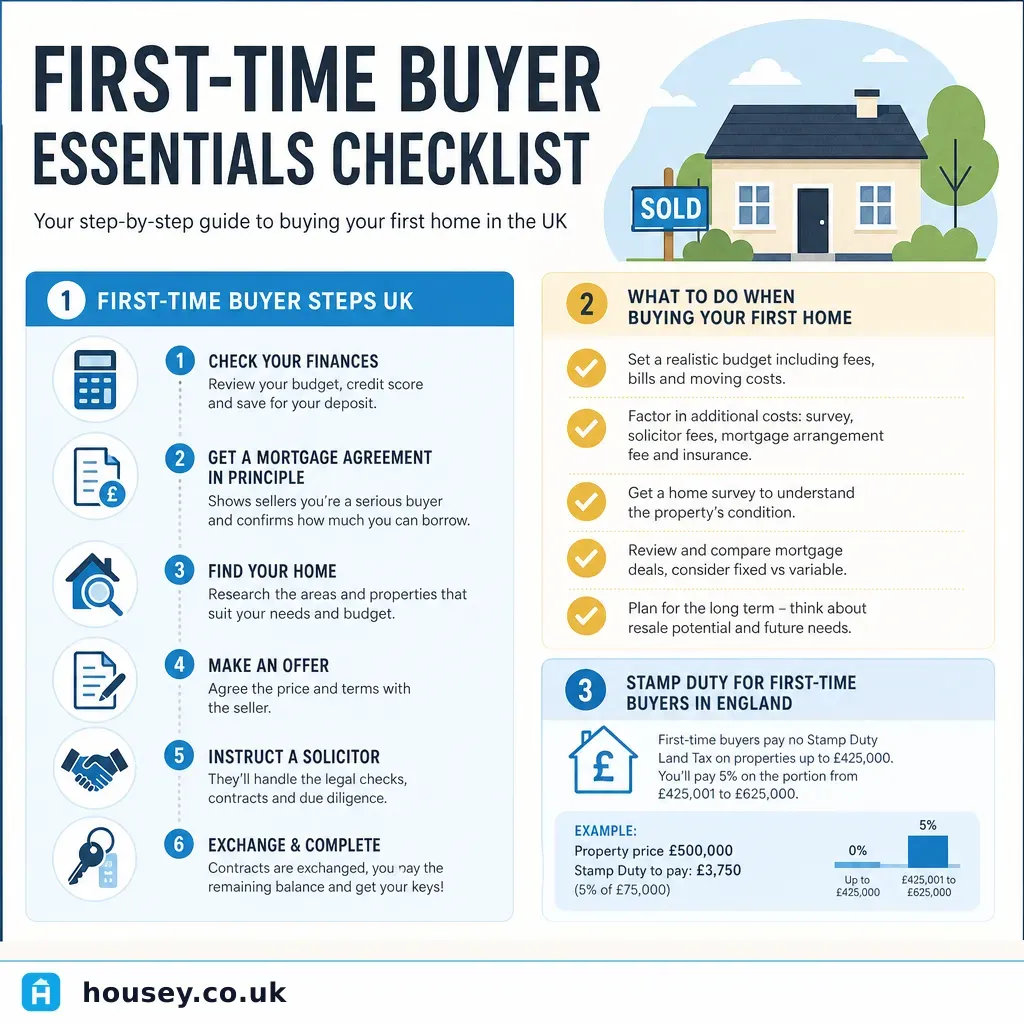
First-Time Buyer Essentials Checklist
Buying your first home involves obtaining a mortgage in principle, making an offer, instructing a solicitor, arranging a survey, and exchanging contracts before completion.