Cleaning Hard Water Deposits From Exterior Windows
By Housey · Last reviewed 18th of May 2026
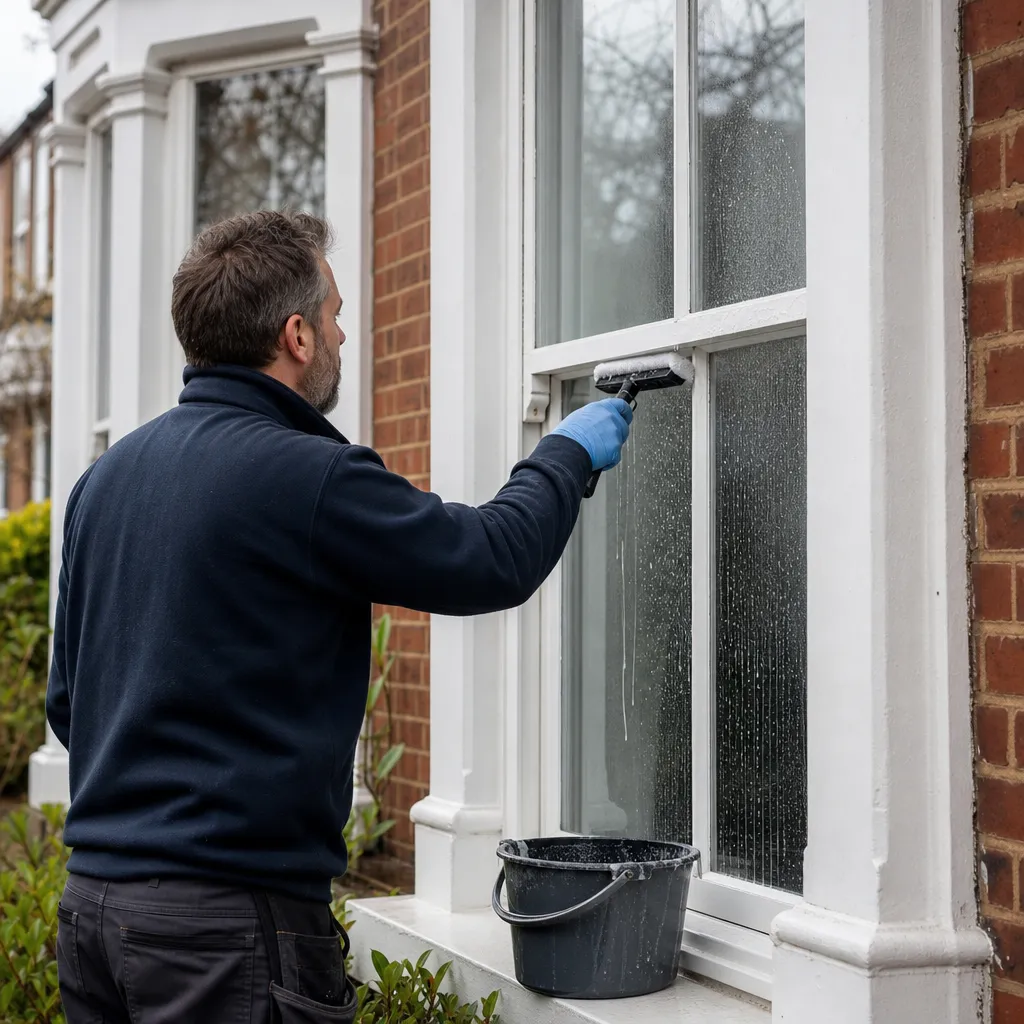
Cleaning Hard Water Deposits From Exterior Windows
Hard water affects around 60% of UK homes — particularly those in South East England, East Anglia, the Midlands, and parts of Yorkshire — leaving mineral deposits on exterior glazing that no amount of ordinary washing will shift. The deposits typically appear after rain evaporates or garden sprinklers hit glass, leaving a chalky white or faintly iridescent film of calcium and magnesium carbonate. Left untreated, mineral scale becomes progressively harder to remove and, in severe cases, can begin to etch into the glass surface itself.
Key points
- UK water hardness is measured in milligrams per litre (mg/l) of calcium carbonate; water above 200 mg/l is classed as hard and above 300 mg/l as very hard by the Drinking Water Inspectorate.
- Acid-based cleaners — white vinegar, citric acid solutions, or proprietary limescale removers — dissolve calcium carbonate deposits; plain washing-up liquid does not.
- Abrasive cleaning tools (steel wool, scouring pads, dry scraping) cause micro-scratches on glass that make it more susceptible to future staining and are difficult to reverse.
- UPVC frames and rubber seals should be rinsed thoroughly after any acidic cleaner is applied; prolonged acid contact degrades seals over time.
- Severely etched glass — where mineral deposits have chemically bonded to the silica in the pane — may require professional polishing or pane replacement rather than cleaning alone.
Why ordinary window cleaning does not remove hard water stains
Standard glass cleaners and washing-up liquid are pH-neutral or mildly alkaline. Calcium carbonate — the main component of limescale — is an alkaline mineral salt. Neutral cleaners dissolve organic dirt (dust, pollution, bird droppings) effectively, but they have little chemical action on alkaline mineral deposits. This is why windows can look streaky even after a thorough clean: the limescale remains once the surface grime is removed.
Effective removal requires either a mild acid (to dissolve the carbonate) or a purpose-made chelating agent that binds to calcium ions and lifts them from the glass. The key is applying the right chemistry without damaging the glass or the surrounding materials.
Comparison of cleaning methods
Method | Best for | Not ideal for | Key risk |
|---|---|---|---|
White vinegar (1:1 with water) | Light to moderate deposits; readily available | Heavy or long-standing scale | Prolonged contact with rubber seals or UPVC |
Citric acid solution (1 tsp per 500 ml water) | Moderate deposits; mild and biodegradable | Very heavy build-up | Residue if not rinsed thoroughly |
Proprietary limescale remover | Stubborn or heavy scale | Tinted or coated glazing | Damage to UPVC frames if overused |
Specialist glass polishing paste | Mild etching and micro-scratches | Deep structural etching | Requires careful buffing technique |
Professional glass restoration service | Deeply etched or damaged panes | Minor stains (cost not justified) | None if correctly specified |
Step-by-step exterior window cleaning checklist
Use this sequence for a safe, methodical approach to removing hard water deposits.
What not to assume about hard water window stains
Not all white marks on glass are limescale. Efflorescence — salt leaching from mortar or render above the window — produces visually similar white streaks but has a different chemical composition and must be addressed at source (typically a moisture ingress problem in the masonry above). Paint overspray and silicone sealant residue can also mimic limescale in appearance.
Heavy deposits do not necessarily mean permanent damage. Most external hard water build-up, even after several years, responds to an appropriate acid-based cleaner with sufficient dwell time. Do not assume replacement is inevitable before attempting targeted cleaning.
Not all cleaners are safe on all glass types. Self-cleaning glass — such as Pilkington Activ — has a photocatalytic titanium dioxide coating that certain proprietary cleaners can degrade. Check the manufacturer's guidance before applying anything other than plain water to self-cleaning or coated glazing.
Preventing hard water build-up
Prevention requires considerably less effort than cure. Practical measures include:
- Apply a hydrophobic glass sealant (silica-based rain repellent treatments) to exterior glazing once or twice a year. These cause water to bead and run off rather than evaporate and leave mineral residue.
- Redirect garden sprinklers away from window glass — irrigation water is often the primary source of repeated deposits on ground-floor windows.
- Increase cleaning frequency in hard water areas — monthly is more appropriate than quarterly where hardness exceeds 200 mg/l.
- Consider a whole-house water softener for the mains supply, which progressively reduces mineral deposits across all external surfaces. Check with your water company regarding compatibility with your supply arrangement.
When to get professional help
Most hard water deposits can be managed without professional help. Consider a specialist window cleaner or glass restoration service when:
- Cleaning has been attempted multiple times without success.
- The glass shows a permanent haze or rough texture after thorough cleaning.
- The deposits appear to be between the panes of a double-glazed unit — sealed units must be replaced, not cleaned externally.
- Windows are above ground-floor level where working safely requires appropriate equipment and training.
- You are uncertain whether the glazing has a specialist coating that cleaning products could damage.
How Housey can help
If hard water damage has progressed beyond what cleaning can restore, or if your windows are due for replacement, Housey can connect you with vetted window and door installers who can assess glazing condition and provide quotes for repair or replacement.
Frequently asked questions
How do I know if my area has hard water?
The Drinking Water Inspectorate publishes water hardness data by supply zone, and most UK water companies provide a postcode-based lookup on their websites. South East England, East Anglia, the East Midlands, and parts of Yorkshire tend to have the hardest supplies, typically above 200 mg/l of calcium carbonate. Your water company's website is usually the quickest starting point.
Will a water softener prevent hard water deposits on exterior windows?
A whole-house water softener treats mains water inside the property, so it softens water used for hosing down windows. It will not affect rainwater or an unsoftened outdoor tap supply. For the best exterior results, combine a softener with a water-fed pole system that filters water to near-zero total dissolved solids before application, leaving virtually no mineral residue after drying.
Can lemon juice or cola be used to remove limescale from glass?
Citric acid in lemon juice is mildly effective and less pungent than vinegar. Carbonated soft drinks contain phosphoric acid but also sugar and additives that leave residue on glass and should be avoided. For reliable results, use a dedicated citric acid cleaning solution or diluted white vinegar rather than improvised household products.
When should windows be replaced rather than cleaned?
Replacement is usually necessary when mineral etching has penetrated the glass surface beyond what polishing can recover; when the sealed double-glazed unit has failed (condensation between the panes); when frames have warped, rotted, or lost thermal performance; or when glazing no longer meets current security or energy-efficiency expectations.
Sources and further reading
- Water hardness data by supply zone — Drinking Water Inspectorate
- Water supply hardness by area — Water UK
- Pilkington Activ self-cleaning glass care guidance — Pilkington
- Water-saving advice and water softeners — Energy Saving Trust
Useful next reads
 Improvement & Build
Repairing Damaged Porch Screens: When to Call a Specialist
Most porch screen repairs fall into two categories: surface work — cracked paint, minor mesh tears, loose beading — that a confident homeowner can handle, and structural or glass replacements that require a specialist.
 Improvement & Build
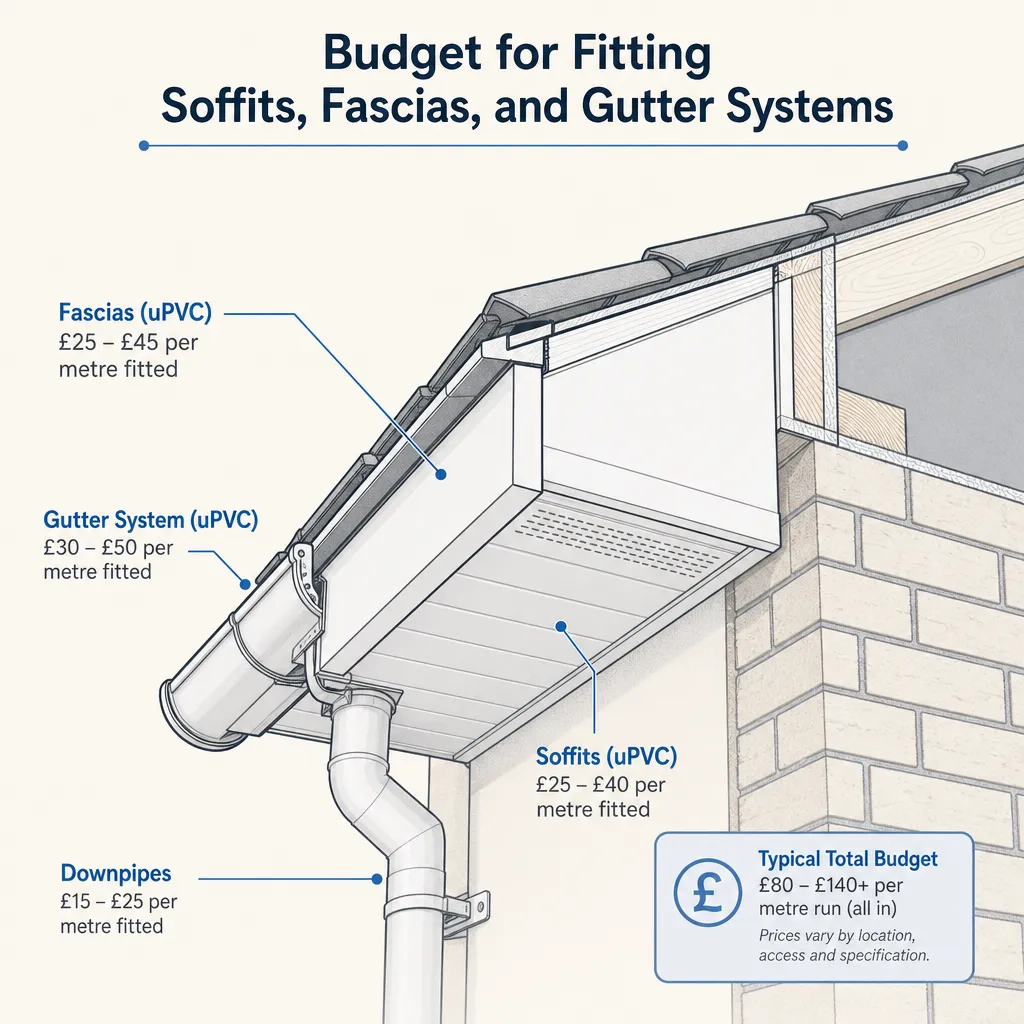
Budget for Fitting Soffits, Fascias, and Gutter Systems
Replacing soffits, fascias, and gutters on a typical UK semi-detached house costs roughly £1,500–£3,500 for uPVC, depending on property size, access, and material choice.
 Improvement & Build
Window cleaning costs: what to budget
Window cleaning in the UK typically costs £5–£15 per visit for a small terraced house and £15–£40 or more for a larger detached property, depending on the number of windows, access difficulty, and frequency.
 Improvement & Build
Barge Board Replacement and Roof Edge Maintenance
Barge boards sit at the gable end of a pitched roof and protect the verge from wind-driven rain.
 Improvement & Build
Brick Repairs vs. Replacement: Decision Framework for Homeowners
Whether to repair or replace brickwork depends on the type and extent of damage.