Window cleaning costs: what to budget
By Housey · Last reviewed 11th of May 2026

Window cleaning costs: what to budget
Regular window cleaning is one of the most overlooked aspects of home maintenance — easy to defer until glass becomes noticeably grimy, but simple to organise once a reliable local cleaner has been found. For many homeowners the question of cost comes up when moving to a new property, when establishing a cleaning routine for the first time, or when windows have been neglected long enough that a one-off clean is needed before starting a regular round. Access difficulty, property size, and whether inside cleaning is required all affect what you should expect to pay.
Key points
- Typical UK window cleaning costs range from £5–£15 per visit for a small terraced house to £15–£40+ for a larger detached property (indicative UK costs, last reviewed 2026-05-11).
- Most window cleaners charge a higher rate for a first clean — often 1.5× to 2× the regular price — because heavily soiled glass and frames take significantly longer to clean.
- Water-fed pole (WFP) systems using purified water are now the dominant method in the UK domestic market and are suitable for most properties up to four storeys without requiring a ladder.
- Conservatory roof cleaning is almost always a separate service, typically costing an additional £40–£100 depending on size and access method.
- Window cleaners operating as sole traders below the VAT registration threshold do not charge VAT; check before hiring if you need a VAT receipt for rental or tax purposes.
What affects window cleaning costs?
Number and size of windows The most direct cost driver. A two-bedroom terraced house typically has 8–12 windows; a four-bedroom detached home may have 20–30 or more. Large bay windows, bifold doors, and floor-to-ceiling glazing take longer to clean and often attract a higher price.
Property height and access Ground and first-floor windows are easily reached by a water-fed pole. Windows at second storey and above require an extending pole or specialist access equipment. Some cleaners will not take on work above a certain height and may decline the job or price it significantly higher.
First-clean premium Windows that have not been cleaned for several months — or years — often carry mineral deposits, hard water staining, or bird lime that requires additional time and sometimes specialist products to shift. Most cleaners charge 1.5× to 2× their regular round rate for a first clean.
Frequency A regular four-weekly or six-weekly round costs less per visit than one-off or occasional cleans. The more consistently windows are maintained, the less work each visit involves and the more efficiently the cleaner can plan their round.
Location Prices are higher in London, the South East, and major cities. Rural areas can also see higher prices where fewer cleaners serve a larger geographic area.
Additional services Frame and sill wiping is sometimes included and sometimes charged extra. Gutters, fascias, soffits, and conservatory roofs are almost always separate services priced on top of the standard window clean.
Window cleaning prices by property type
Property type | Typical window count | Typical cost per visit | Notes |
|---|---|---|---|
1–2 bed terraced house | 8–12 | £5–£12 | Ground and first floor; straightforward access |
2–3 bed semi-detached | 12–18 | £10–£18 | First-floor bay windows may add to cost |
3–4 bed detached | 18–25 | £18–£30 | Higher if second storey or large glazing areas |
Large 4–5 bed detached | 25–35+ | £30–£50+ | May need extending pole; staged visits possible |
Ground-floor flat | 4–8 | £5–£10 | Often done as part of a block arrangement |
Indicative UK costs, last reviewed 2026-05-11. Prices vary by region and contractor.
Traditional cleaning vs water-fed pole: what is the difference?
Method | How it works | Advantages | Limitations |
|---|---|---|---|
Traditional (squeegee and cloth) | Soapy water applied by hand; squeegee and cloth finish from a ladder or standing position | Effective on ground floor; familiar finish | Requires ladder for upper floors; can leave slight residue on frames |
Water-fed pole (WFP) | Purified water pumped through a brush on an extendable pole; no soap used | Safer — minimal or no ladder use; reaches 3–4 storeys; purified water leaves no mineral deposits | Glass may appear slightly streaky on the first clean until old deposits are removed |
Most professional domestic window cleaners in the UK now use WFP as their primary method. A reputable cleaner will advise which approach they use and explain the finish to expect.
What to ask before hiring a window cleaner
- What is the cleaning frequency — every 4, 6, or 8 weeks?
- Is there a higher first-clean charge, and how much is it?
- What is included — glass only, or frames, sills, and doors too?
- Do you hold public liability insurance, and for what level? (£2 million is standard for domestic work)
- How do you notify me before arriving — text message, an app, or no advance notice?
- How do you prefer payment — bank transfer, direct debit app, or cash?
- Do you clean in wet weather? (WFP cleaners often do; traditional cleaners usually do not)
- What is your policy if I need to postpone a visit?
- Are you a sole trader or limited company, and are you VAT-registered?
Window cleaning homeowner checklist
Before and on the day of a clean:
When to get professional help
Most window cleaning is a routine domestic service. However, always use a professional rather than attempting the work yourself when:
- Windows are above the first floor and cannot be safely reached from the ground
- Glass has significant mineral deposits, cement splatter, or paint contamination requiring specialist restoration cleaning
- A leasehold flat or shared building requires a contractor with appropriate insurance and a block cleaning arrangement
Never attempt to clean windows above ground floor from a domestic ladder without correct training and equipment. The Work at Height Regulations 2005 set out the legal requirements for contractors working at height; the same physical risks apply to homeowners.
How Housey can help
Housey helps homeowners find vetted local service professionals across the UK. Submit a window cleaning request to compare quotes from local providers in your area.
Frequently asked questions
How often should windows be professionally cleaned?
Most residential window cleaners recommend a four-weekly or six-weekly cycle. Four weeks tends to keep windows consistently clear; six weeks is often sufficient in lower-pollution or rural areas. Annual or twice-yearly cleans are better than nothing, but windows remain dirty for long periods in between and a first-clean premium will usually apply each time a cleaner returns after a gap.
What is the difference between traditional and water-fed pole window cleaning?
Traditional cleaning uses a squeegee and cloth, often from a ladder. Water-fed pole (WFP) cleaning pumps purified water through a brush on an extendable pole, rinsing the glass without soap. WFP is now the dominant domestic method in the UK because it reduces the need for ladders and allows safe access to upper storeys without specialist equipment.
Do window cleaners clean the inside of windows?
Most domestic round cleaners clean the outside only as their regular service. Internal cleaning is usually offered as a one-off or add-on service at a higher price, as it requires access to every room and takes significantly longer. Confirm whether inside cleaning is included when requesting a quote if you want both surfaces cleaned.
Do I need to be home when the window cleaner visits?
For exterior-only cleaning, you do not usually need to be present. Most cleaners work around the outside of the property independently. If the cleaner needs access to the rear garden through a locked gate, make sure arrangements are agreed in advance. Inside cleaning will require someone to be home throughout the visit.
How do I find a reliable local window cleaner?
Word of mouth from neighbours is often the most reliable starting point, particularly if a cleaner already serves your street. Local community groups and noticeboards are also useful. Always ask for proof of public liability insurance before agreeing to a regular round, and check whether the cleaner already operates in your area — round efficiency often results in better pricing for nearby homes.
Sources and further reading
- Work at Height Regulations 2005 — legislation.gov.uk
- Working at height: a brief guide — Health and Safety Executive
- How to find a good trader — Which?
Useful next reads
 Improvement & Build
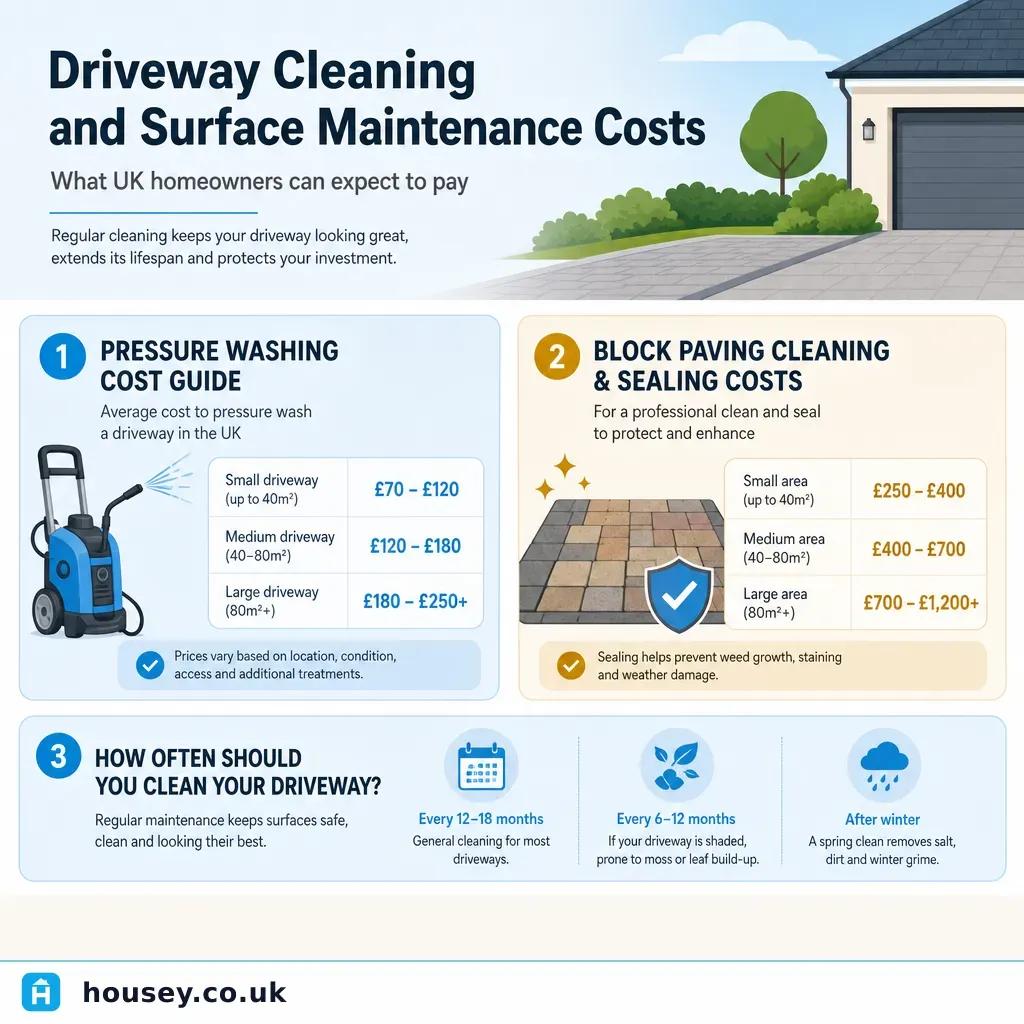
Driveway Cleaning and Surface Maintenance Costs
Professional driveway cleaning in the UK typically costs £100–£300 for pressure washing an average single driveway, rising to £300–£600 if block paving sealing and re-jointing are included.
 Improvement & Build
Property Maintenance Cost Expectations and Planning
UK homeowners typically budget between 1% and 3% of their property's value annually for maintenance and repairs.
 Improvement & Build
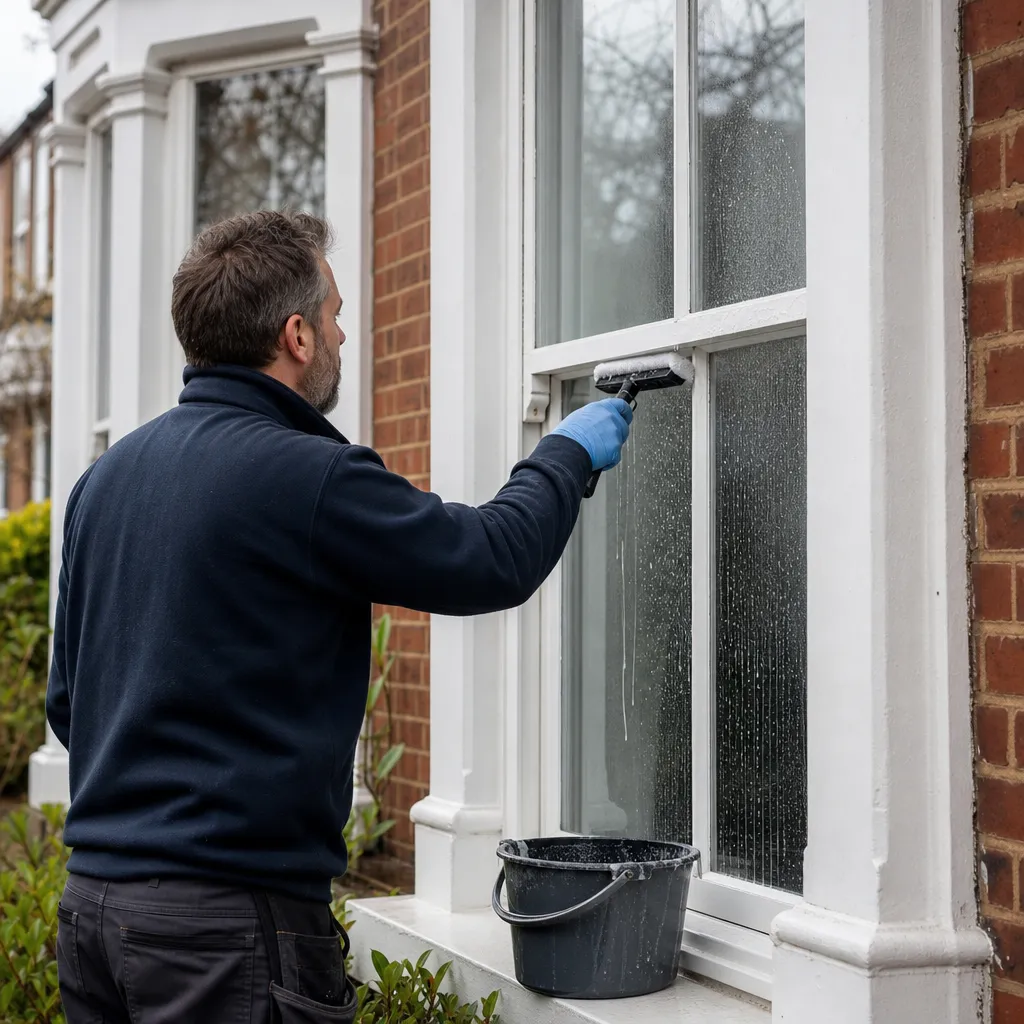
Cleaning Hard Water Deposits From Exterior Windows
Hard water affects around 60% of UK homes, leaving calcium carbonate deposits on exterior windows that standard cleaners cannot dissolve.
 Improvement & Build
Climbing Plant and Ivy Removal Services
Professional ivy and climbing plant removal typically costs £150–£700 for a standard UK semi-detached, depending on coverage, plant type, and access requirements.
 Improvement & Build
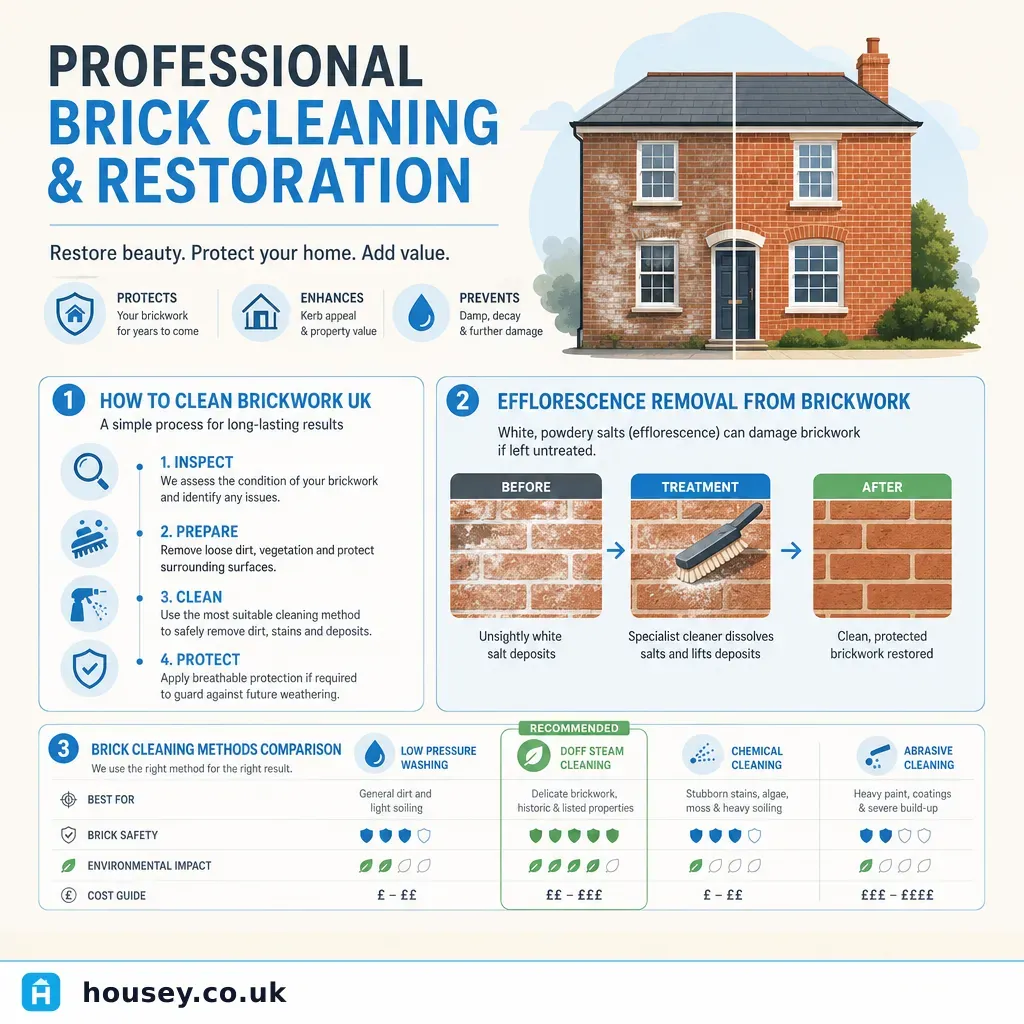
Professional Brick Cleaning and Restoration
Professional brick cleaning removes staining, efflorescence, pollution deposits, and biological growth from masonry without damaging mortar joints or the brick face.