Common Roofing Scams: How to Protect Yourself and Your Property
By Housey · Last reviewed 11th of May 2026
Common Roofing Scams: How to Protect Yourself and Your Property
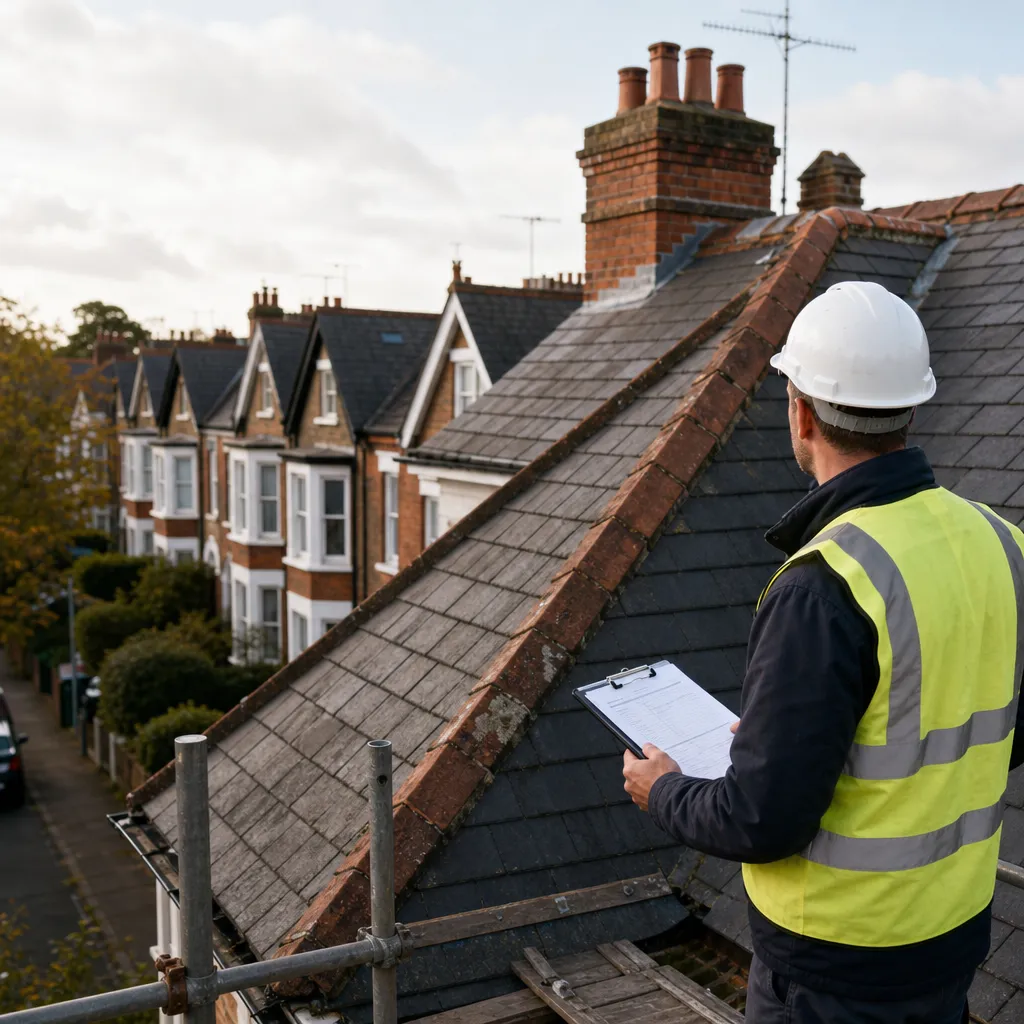
Roofing scams are among the most frequently reported home improvement frauds in the UK, with Trading Standards teams across England, Wales, and Scotland fielding thousands of complaints each year. They typically arise after periods of bad weather — when storm damage is visible and homeowners feel pressure to act quickly — or when an uninvited contractor turns up at the door offering what sounds like a routine inspection. For UK homeowners, the risk is heightened by the difficulty of assessing roof condition from ground level, leaving many reliant on the word of whoever has climbed the ladder first.
Key points
- The National Federation of Roofing Contractors (NFRC) advises that deposits should not normally exceed 25–30% of the total job cost, and should always be backed by a written contract.
- Trading Standards teams across the UK can be contacted via the Citizens Advice consumer helpline (0808 223 1133) if you have been approached by or paid a rogue trader.
- Unsolicited doorstep approaches are a common trigger for roofing fraud; legitimate contractors rarely cold-call residential properties without a prior appointment.
- Coaching a homeowner to make a false insurance claim is an offence under the Fraud Act 2006 — if a roofer suggests doing this, report it to Action Fraud.
- Credit card payments over £100 attract Section 75 protection under the Consumer Credit Act 1974, giving you rights against the card issuer if the contractor fails to deliver.
How roofing scams typically work
Roofing scams tend to follow one of a small number of recognisable patterns.
The doorstep approach after bad weather. A van pulls up outside your home shortly after high winds or heavy rain. The caller claims they were working on a neighbour's roof and noticed slipped tiles or damaged flashing on yours. They offer a free inspection — and the inspection almost always reveals urgent, expensive problems requiring immediate action.
The upfront payment trap. The contractor requests a large cash deposit — often 50–70% of the quoted total — before starting work. In many cases, minimal work is done before the contractor becomes uncontactable. Cash payments are particularly difficult to recover because they leave no digital trace.
The inflated storm-damage claim. The roofer photographs minor wear or pre-existing damage and presents it as severe recent storm damage, sometimes suggesting you can 'claim it back on your home insurance'. In some cases they coach homeowners to make fraudulent insurance claims — an offence under the Fraud Act 2006.
The substandard materials substitution. A plausible quote is agreed, but on completion the materials installed are inferior to those specified — low-grade felt, non-certified tiles, or wrong-specification lead flashing. Identifying this typically requires an independent post-completion inspection.
Red flags to watch for
The following warning signs should cause you to pause before agreeing to any work or handing over money.
- The contractor arrived uninvited and without a prior appointment.
- They claim to have 'just spotted' damage while working nearby.
- They request cash payment only — particularly a large amount upfront.
- No written quote, no company address, and no VAT number are provided.
- High-pressure language such as 'If you don't fix this today, your ceiling could collapse.'
- They can start immediately and finish the same day, regardless of scope.
- The quote is dramatically lower or higher than other estimates you have obtained.
- They are unable to name their public liability insurer or show a certificate.
- They discourage you from seeking a second opinion.
- No paperwork is offered — no contract, no warranty, no receipt.
What to ask before hiring a roofer
A legitimate contractor will answer these questions willingly and in writing.
- Are you a member of the National Federation of Roofing Contractors (NFRC) or a recognised approved installer scheme?
- Can you provide your company registration number and a fixed business address?
- What public liability insurance do you carry, and can I see the certificate?
- Will you provide a written, itemised quote showing materials, labour, and VAT separately?
- What is the deposit structure, and what payment milestones are tied to which stages?
- Who will carry out the work — employed staff or subcontractors?
- What warranty applies to the completed work and to the materials used?
- Can you provide references from similar jobs completed in the last 12 months?
How to verify a roofer before committing
Check membership bodies. The NFRC operates a contractor-search tool at nfrc.co.uk. Trading Standards' Buy with Confidence scheme also lists approved traders vetted by local authority Trading Standards officers.
Request written evidence. Ask for a formal written quote on company-headed paper, a copy of their public liability certificate, and a signed contract before paying anything.
Get multiple quotes. Aim for at least three written, itemised quotes. A price dramatically lower than the others — or dramatically higher — warrants questions about what is or is not included.
Don't let urgency override judgement. If a roofer insists the work is critical and must be done today, consider the claim carefully. Genuinely dangerous structures — an unstable chimney stack, for example — should be assessed by an independent RICS-registered building surveyor, not only by the contractor seeking the paid work.
Pay by card where possible. Credit card payments over £100 attract Section 75 protection under the Consumer Credit Act 1974. Debit card payments may also be recoverable via the Chargeback scheme — contact your bank promptly.
A homeowner checklist before signing anything
Work through this checklist before agreeing to any roofing work.
What to do if you have been targeted
If you have paid a roofer who has not completed the work, or if you suspect fraud:
- Contact your bank or card provider immediately if you paid by card — request a chargeback or Section 75 claim.
- Report to the Citizens Advice consumer helpline (0808 223 1133), which passes serious cases to Trading Standards.
- Report to Action Fraud (actionfraud.police.uk or 0300 123 2040) if a criminal fraud has been committed.
- Keep all records — text messages, emails, photos, bank receipts, and any written documents.
- If the contractor may still be active locally, notify your local council's Trading Standards team.
When to get professional help
Contact an independent, qualified professional — not the contractor who approached you — if:
- You suspect completed work does not match what was agreed or specified in the quote.
- A roofer has identified structural or dangerous damage and you want an independent view before authorising expensive work.
- You have suffered financial loss and need to document defects for a legal claim or insurance dispute.
A RICS-registered building surveyor can assess roof condition independently. A solicitor can advise on contract disputes and options for financial recovery.
How Housey can help
Housey connects homeowners with vetted, reviewed local roofers across the UK. Every provider on the platform is checked for relevant insurance and registration, so you can request quotes from multiple contractors and compare them in one place — without the risk of an unsolicited doorstep approach.
Frequently asked questions
What should I do if a roofer has already taken my deposit and disappeared?
Contact your bank or credit card provider immediately to request a chargeback or Section 75 claim if you paid by card. Report the incident to the Citizens Advice consumer helpline (0808 223 1133), which refers serious cases to Trading Standards. Also report to Action Fraud at actionfraud.police.uk. Keep all records — messages, receipts, and photos — as these support any complaint or recovery claim.
Are all doorstep roofers fraudulent?
No. Some legitimate contractors do canvass areas where they are already working. However, any unsolicited approach should trigger careful checks: verify NFRC membership, request a written quote, and never make payment before checks are complete. High-pressure urgency from the contractor alone is never a sufficient reason to bypass due diligence.
How much deposit is reasonable for roofing work?
As a general guide, a deposit should not normally exceed 25–30% of the total agreed cost. For small jobs, no deposit may be appropriate. Larger deposits are sometimes requested for specialist materials ordered in advance — these should always be tied to a written contract and a specific delivery milestone, not paid without documentation.
What qualifications should a reputable roofer hold?
Membership of the National Federation of Roofing Contractors (NFRC) or the Competent Roofer scheme is a strong indicator. NFRC members operate under a code of conduct and must carry appropriate public liability insurance — minimum £2 million cover is standard. For heritage or listed-building roofing, look for contractors familiar with Historic England guidance and traditional materials.
Sources and further reading
- Citizens Advice: Rogue traders and doorstep selling — Citizens Advice
- National Federation of Roofing Contractors: Find a contractor — NFRC
- Action Fraud: Report a fraud — Action Fraud (City of London Police)
- Trading Standards: Buy with Confidence scheme — Chartered Trading Standards Institute
- Consumer Credit Act 1974: Section 75 — legislation.gov.uk
Useful next reads
 Improvement & Build
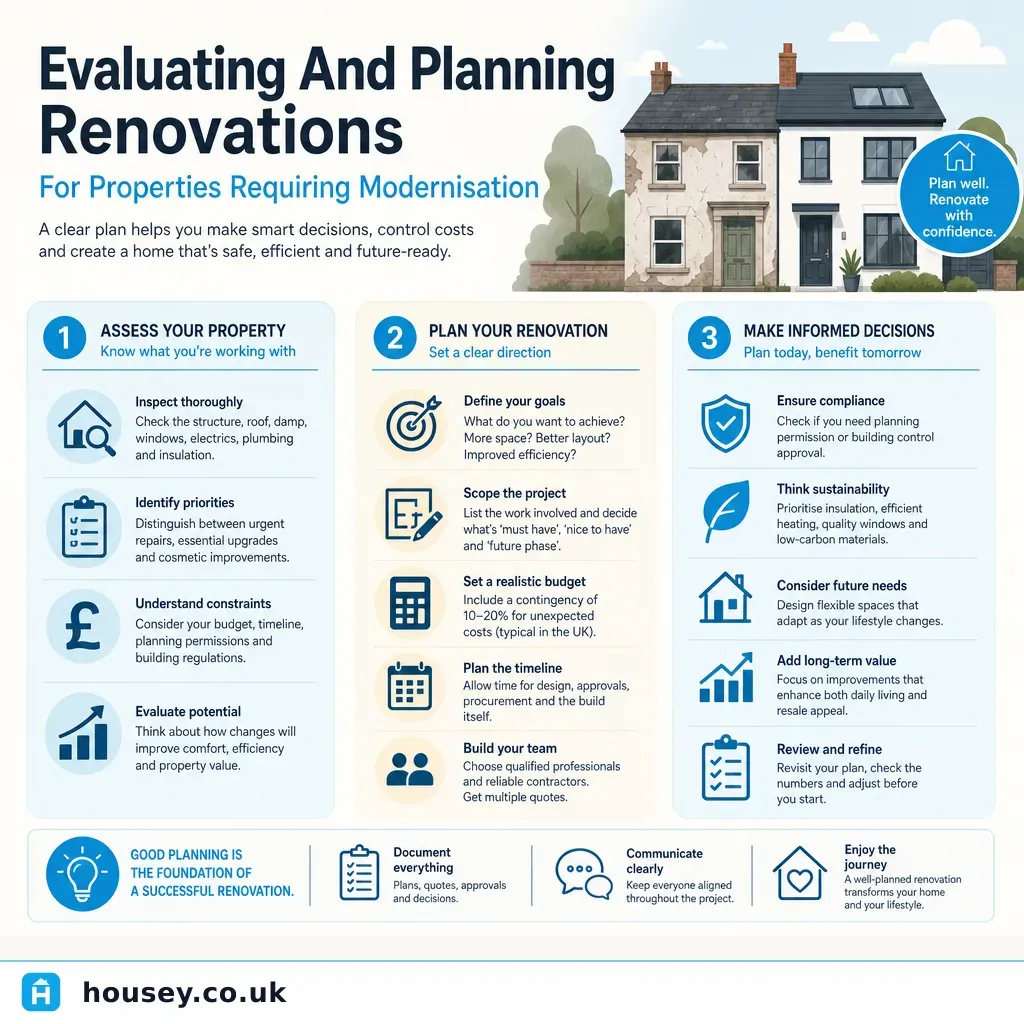
Evaluating And Planning Renovations For Properties Requiring Modernisation
Start by commissioning a condition survey — RICS Level 3 for pre-1919 properties — to identify structural defects, damp, and services issues before finalising a budget.
 Improvement & Build
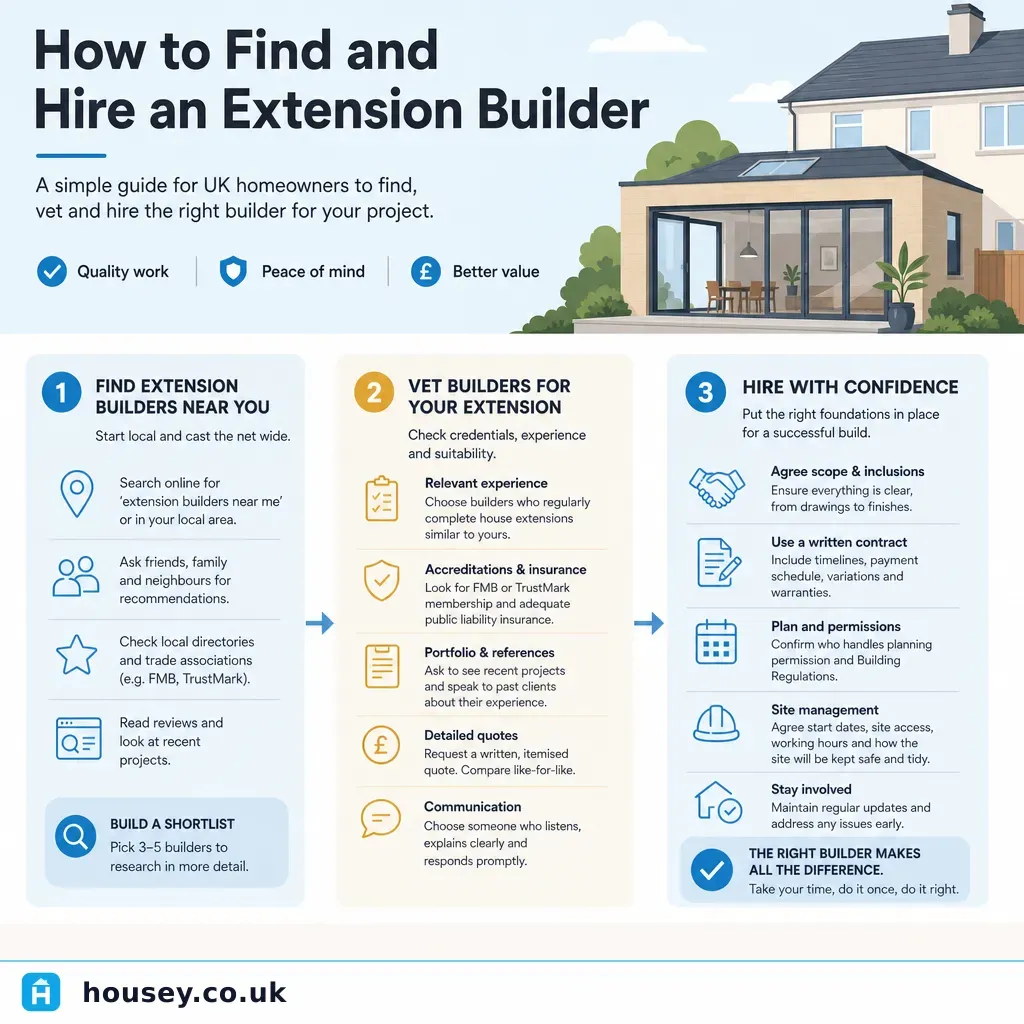
How to Find and Hire an Extension Builder
To hire a reliable extension builder, get at least three detailed written quotes from contractors with documented experience of similar projects.
 Improvement & Build
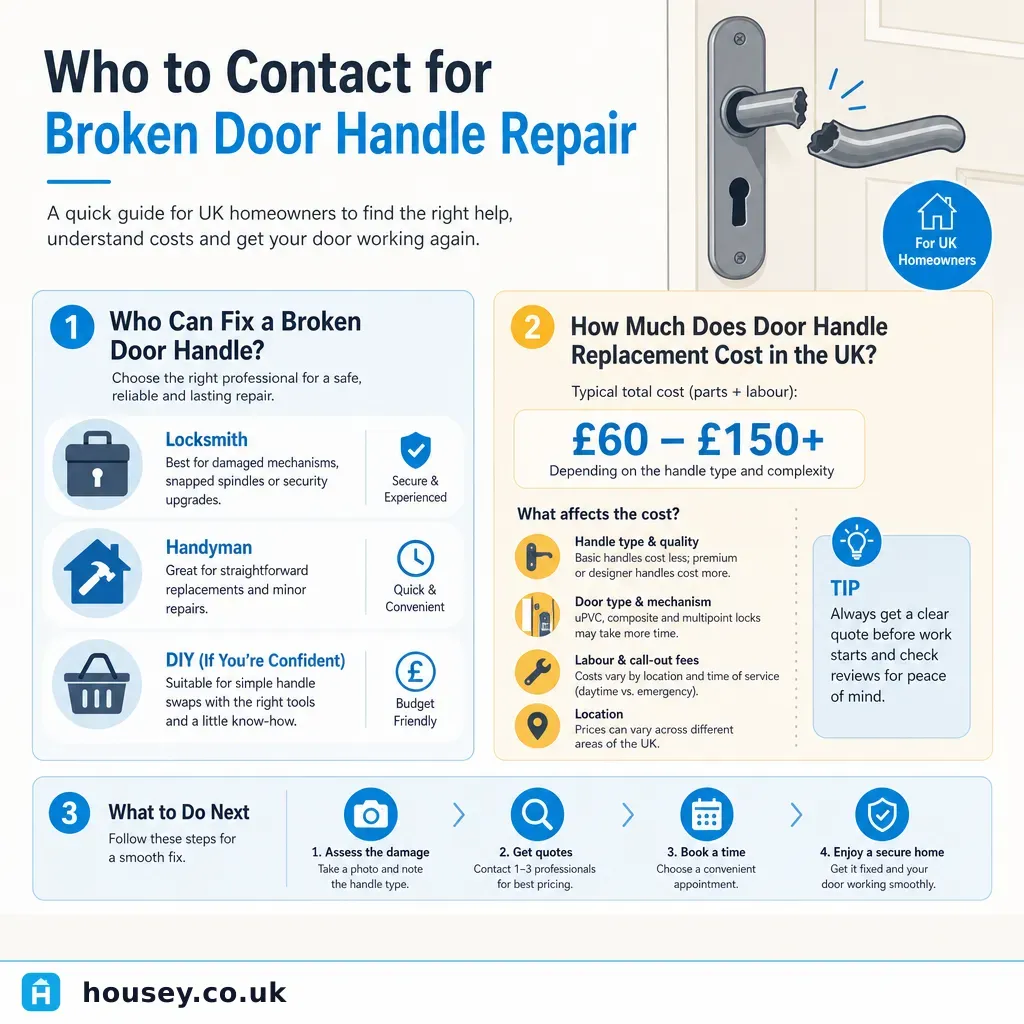
Who to Contact for Broken Door Handle Repair
For a broken door handle, a general handyperson can handle most internal timber door repairs, while a joiner or locksmith is better suited to external doors, particularly if the lock mechanism is affected.
 Improvement & Build
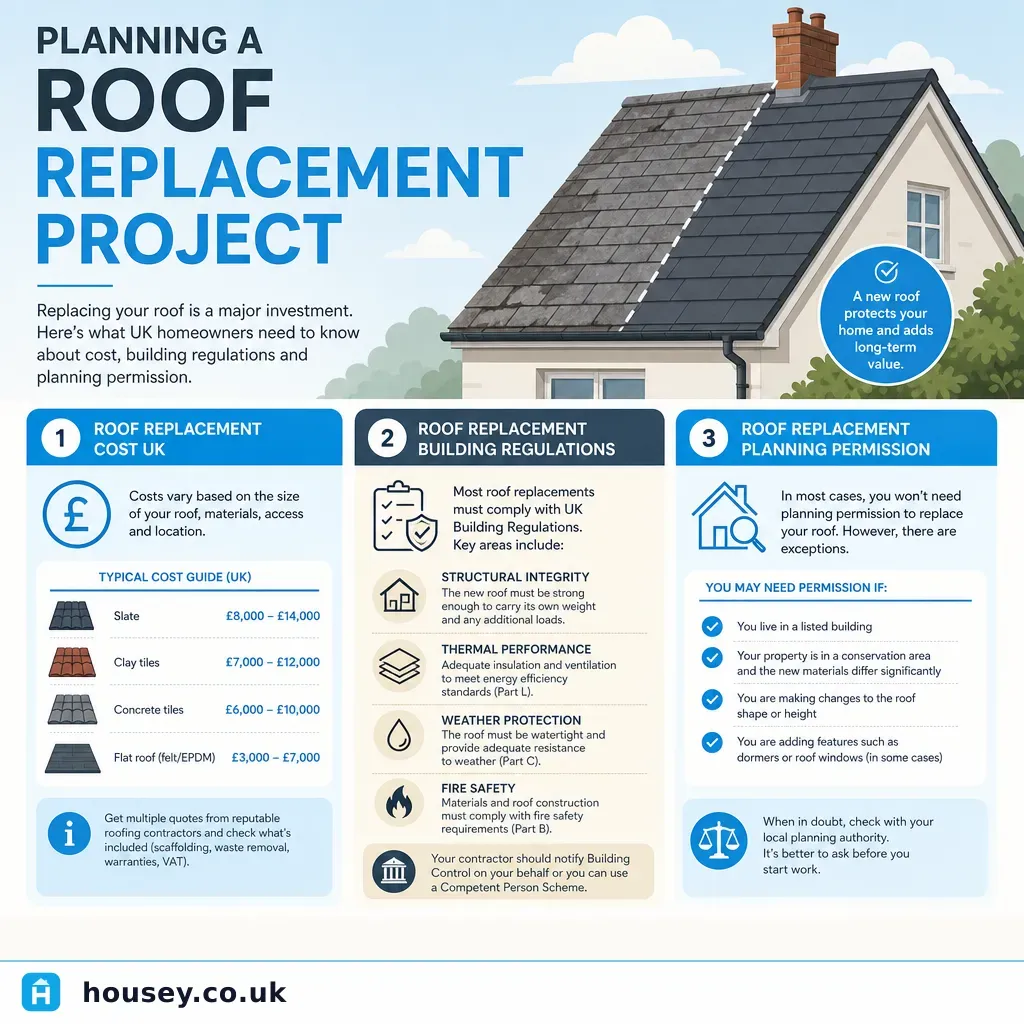
Planning a Roof Replacement Project
A roof replacement project involves stripping the existing covering, renewing the sarking felt and battens, and laying new tiles, slates, or a flat-roof membrane.
 Improvement & Build
Benefits of Hiring Established Landscaping Services in Coastal Areas
Established landscaping contractors in coastal areas understand salt spray exposure, prevailing wind patterns, and local planning restrictions that inland firms often overlook.