Complete Breakdown of Selling Costs and Expenses
By Housey · Last reviewed 24th of May 2026
Complete Breakdown of Selling Costs and Expenses
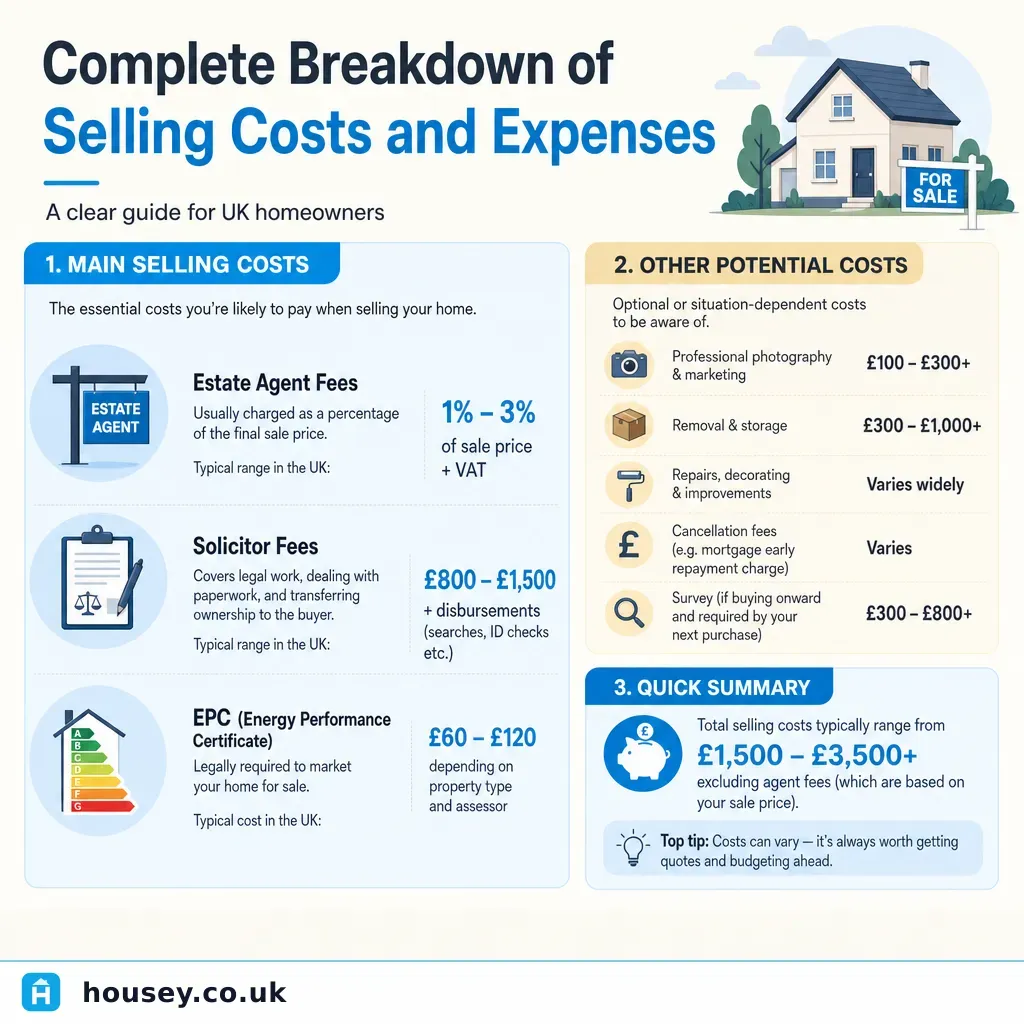
Selling a property in England or Wales typically costs more than many homeowners expect. Beyond the estate agent's commission, there are solicitor charges, mandatory certificates, removal expenses, and potentially tax liabilities — all deducted before the net proceeds reach your account. Understanding each cost category early helps you set a realistic asking price and avoid an unwelcome shortfall at completion.
Key points
- Estate agency fees in the UK usually range from 1% to 3% of the agreed sale price plus VAT (20%), though online and hybrid agents often charge fixed fees of £500–£1,500 regardless of sale price.
- A solicitor or licensed conveyancer's legal fees for a straightforward sale are typically £800–£1,800 plus disbursements such as Land Registry office copies (£3–£6 per title) and telegraphic transfer fees (£20–£45).
- An Energy Performance Certificate (EPC) is a legal requirement before marketing; if no valid certificate exists, one costs approximately £60–£120 from an accredited domestic energy assessor.
- Capital Gains Tax (CGT) applies if you are selling a property that is not your main home — the gain is taxed at 18% (basic-rate taxpayer) or 24% (higher-rate) on residential property as of the 2025/26 tax year.
- Mortgage early repayment charges (ERCs) can reach 1–5% of the outstanding loan balance if you exit a fixed-rate deal before the tie-in period ends.
What selling a house actually costs: the full picture
The total cost of selling depends on your property's value, your tenure (freehold or leasehold), and how you sell. The table below provides indicative UK cost ranges last reviewed 2026-05-24 — treat these as reference ranges rather than fixed prices, as quotes vary significantly by location, firm, and property complexity.
Cost category | Typical range | Notes |
|---|---|---|
Estate agency fee (traditional high-street) | 1%–3% + VAT | Negotiable; confirm whether the fee applies even if you withdraw |
Estate agency fee (online or hybrid agent) | £500–£1,500 fixed | Often paid upfront; not always refundable if sale fails |
Solicitor or conveyancer legal fees | £800–£1,800 + VAT | Varies by firm and property complexity |
Disbursements (Land Registry, TT fee, ID checks) | £50–£300 | Estimated; can be higher on leasehold properties |
Energy Performance Certificate (if not valid) | £60–£120 | Required before listing; certificates valid for 10 years |
Removal costs | £300–£2,500+ | Depends on volume, distance, and whether packing is included |
Mortgage early repayment charge | 1%–5% of outstanding balance | Check your mortgage offer or call your lender |
Capital Gains Tax | 18% or 24% of taxable gain | Only applies to non-primary-residence properties |
Home Report (Scotland only) | £500–£900 | Mandatory before marketing; covers single survey, EPC, and questionnaire |
Indicative UK costs, last reviewed 2026-05-24. Always obtain multiple quotes.
Estate agency fees in detail
Traditional high-street agents charge a percentage of the final sale price. A 1.5% fee on a £350,000 property equals £5,250, plus £1,050 VAT — a total of £6,300. Online agents charge a flat fee but typically require payment upfront, whether or not the property sells. Multi-agency arrangements (where two or more agents are instructed simultaneously) usually attract a higher percentage of 2–3.5%.
Before signing any agency contract, confirm:
- Whether the fee applies under sole agency or multi-agency terms.
- Whether the contract is no-sale, no-fee or requires upfront payment.
- The notice period required to exit the contract.
- Whether the agent charges separately for accompanied viewings or floor plans.
Conveyancing and legal costs
Your solicitor or licensed conveyancer handles the legal transfer of ownership. Their invoice usually separates their professional fee from third-party disbursements. Common disbursements on a sale include:
- Land Registry official copies (to confirm title): approximately £3–£6 per title register.
- Telegraphic transfer (TT) fee: charged to move your sale proceeds to you — typically £20–£45.
- Leasehold management pack (if selling a leasehold flat): £200–£500, paid to the freeholder or managing agent. This is often the most variable disbursement on a leasehold sale and can take several weeks to obtain — request it as early as possible.
If you are simultaneously purchasing a property, your conveyancer may handle both transactions and offer a combined fee. Housey's conveyancing service can help you find a qualified solicitor or licensed conveyancer for your sale.
Mandatory certificates and reports
An EPC must be commissioned before you can legally market the property. Your estate agent can often arrange one through an accredited assessor. In Scotland, a Home Report — covering a single survey, an EPC, and a property questionnaire — is mandatory before marketing and is commissioned and paid for by the seller.
For leasehold properties, the buyer's solicitor will request a leasehold management pack from your freeholder or managing agent. You pay for this pack, and it cannot always be obtained quickly — budget at least two to four weeks and factor the cost into your pre-sale planning.
Tax considerations when selling
If the property is your only or main home and has always been your private residence, Private Residence Relief (PRR) usually exempts any gain from CGT entirely. Relief may be reduced if:
- Part of the property has been let to tenants.
- Part has been used exclusively for business purposes.
- The garden or grounds exceed 0.5 hectares.
If CGT applies, you must report and pay it within 60 days of completion using HMRC's Real Time Capital Gains Tax service. Consult a tax adviser or accountant to assess your liability before committing to a sale price; see GOV.UK guidance on CGT on residential property.
Worked example: selling a £300,000 leasehold flat in Manchester
The following breakdown illustrates realistic total costs for a mid-range leasehold sale. All figures are indicative and based on typical UK market ranges, last reviewed 2026-05-24.
Item | Cost (incl. VAT where applicable) |
|---|---|
Estate agency fee (1.5% + VAT) | £5,400 |
Solicitor legal fee (mid-range firm) | £1,200 |
Disbursements | £180 |
Leasehold management pack | £350 |
EPC (existing certificate expired) | £90 |
Removal costs (local move) | £600 |
Estimated total selling costs | £7,820 |
This gives a net receipt of approximately £292,180 before any outstanding mortgage is repaid or CGT is calculated — illustrating why many sellers are surprised by the gap between the agreed price and actual proceeds.
Costs that can catch you out
- Mortgage early repayment charge: exiting a fixed-rate deal early can cost thousands. Check your annual mortgage statement or call your lender before committing to a completion date.
- Negative equity: if your outstanding mortgage exceeds the sale price, your lender must agree to any shortfall arrangement before completion can proceed.
- Indemnity insurance: occasionally required to resolve title defects or missing planning documentation before exchange; typically £50–£300 but can be higher for complex cases.
- Bridging finance: if you need to complete a purchase before sale proceeds land, bridging loans carry significant ongoing costs — typically 0.5–1.5% interest per month plus arrangement fees of 1–2%.
Seller's cost checklist
Work through the following before accepting an offer:
Important limitations
This article provides general cost guidance for selling residential property in England and Wales. Scotland and Northern Ireland operate under different legal processes, mandatory requirements, and tax frameworks. Cost figures are indicative and will vary by property, location, tenure, and individual professional. This is not legal, tax, or financial advice. Consult a qualified solicitor, a regulated tax adviser, or an independent financial adviser before making decisions based on cost estimates.
What to ask a qualified professional
Before instructing a solicitor or estate agent, ask:
- What is your total fee, and what is included versus charged separately as a disbursement?
- Are disbursements capped or estimated — and what could trigger additional charges?
- What is the typical timeframe from instruction to completion for a property like mine?
- If the sale falls through, what fees would be payable to you at that point?
- For leasehold: how long does the management pack typically take to obtain, and what does it cost?
- If CGT may apply to this sale, can you refer me to a tax adviser?
When to get professional help
Seek professional advice promptly if:
- You are unsure whether CGT applies — the 60-day HMRC reporting deadline runs from the date of completion, not from the decision to sell.
- Your property has a defective title, missing planning documents, or a legal restriction registered against it.
- You believe your property may be in negative equity.
- You are selling a leasehold property with fewer than 80 years remaining on the lease.
- Your mortgage has unusual portability or early redemption clauses you do not fully understand.
How Housey can help
Housey connects you with qualified professionals at every stage of a property sale. Our conveyancing service matches you with experienced solicitors and licensed conveyancers for the legal side of your sale. If you want an independent professional assessment of your property's market value before setting an asking price, our valuation surveys service can help you find a RICS-registered valuer.
Frequently asked questions
Do I need to pay all selling costs upfront?
Most selling costs are deducted from your proceeds at completion — including the estate agency fee and solicitor's bill. The EPC is usually paid upfront. Online estate agents typically require their flat fee before marketing begins. Your solicitor may ask for a small disbursement deposit on instruction, usually £100–£300.
Can I negotiate estate agency fees?
Yes. Most traditional high-street agents will negotiate, particularly if the property is competitively priced or you are also buying through the same agent. The growth of online agents has made fee negotiation more common across the board. Always confirm the agreed fee in writing before signing the agency contract.
How long does conveyancing take when selling?
A straightforward freehold sale with no complications typically takes 8–12 weeks from instruction to completion. Leasehold sales, long chains, or title complications can extend this to 16 weeks or more. Your conveyancer will give an indicative timeline once they have reviewed the title documents and any outstanding enquiries.
Is stamp duty a cost for the seller?
No. Stamp Duty Land Tax (SDLT) is payable by the buyer in England and Northern Ireland. In Scotland the equivalent is Land and Buildings Transaction Tax (LBTT), and in Wales it is Land Transaction Tax (LTT) — both are the buyer's responsibility. The seller has no SDLT liability on a standard sale.
What happens to my selling costs if the sale falls through?
Under a no-sale, no-fee estate agency agreement you owe nothing if the sale falls through before exchange. Flat fees paid to online agents are typically non-refundable. Your solicitor will usually charge for work already completed — the amount depends on how far the transaction had progressed before the sale fell through.
Sources and further reading
- Capital Gains Tax on UK property — HMRC / GOV.UK
- Energy Performance Certificates — GOV.UK
- Stamp Duty Land Tax — HMRC / GOV.UK
- Costs of moving home — Citizens Advice
- RICS standards and guidance — Royal Institution of Chartered Surveyors
Useful next reads
 Buying & Moving
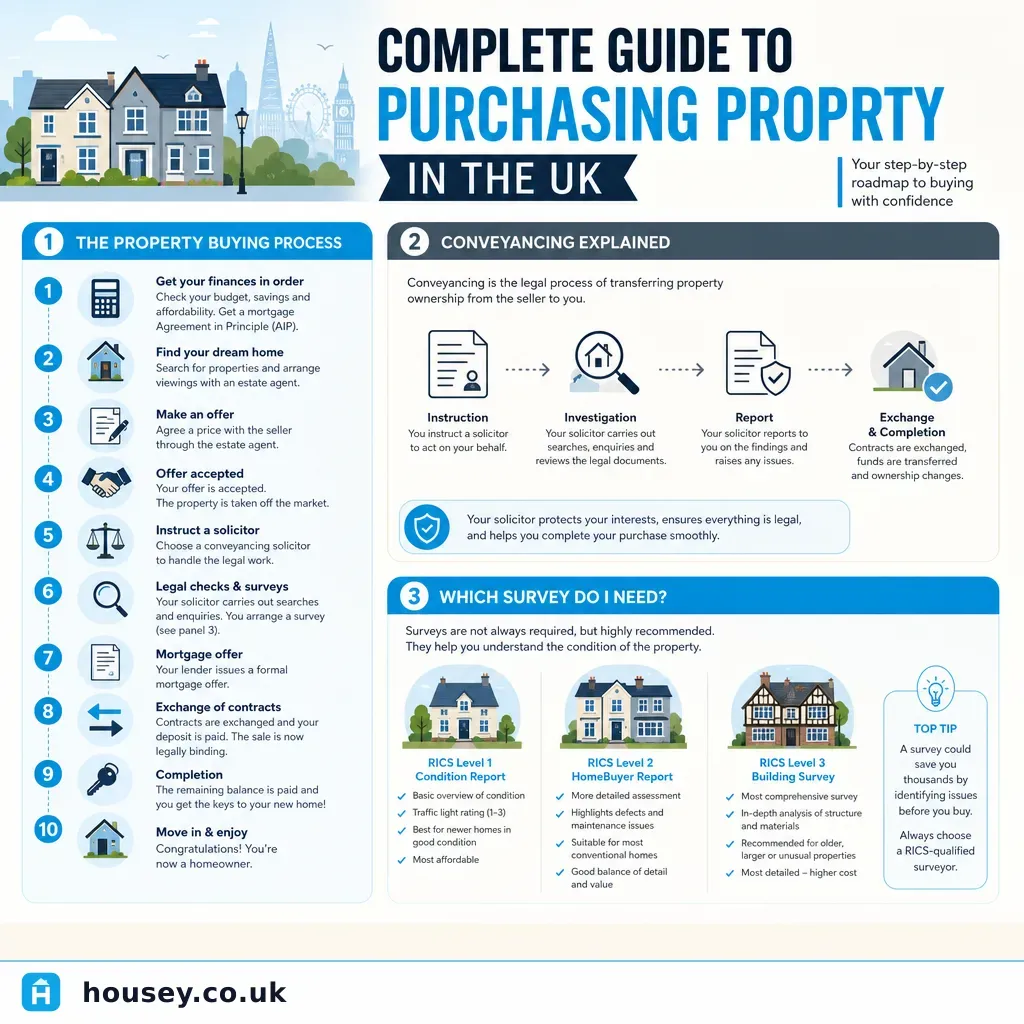
Complete Guide to Purchasing Property in the UK
Buying property in England and Wales typically takes 12 to 16 weeks from offer acceptance to completion.
 Buying & Moving
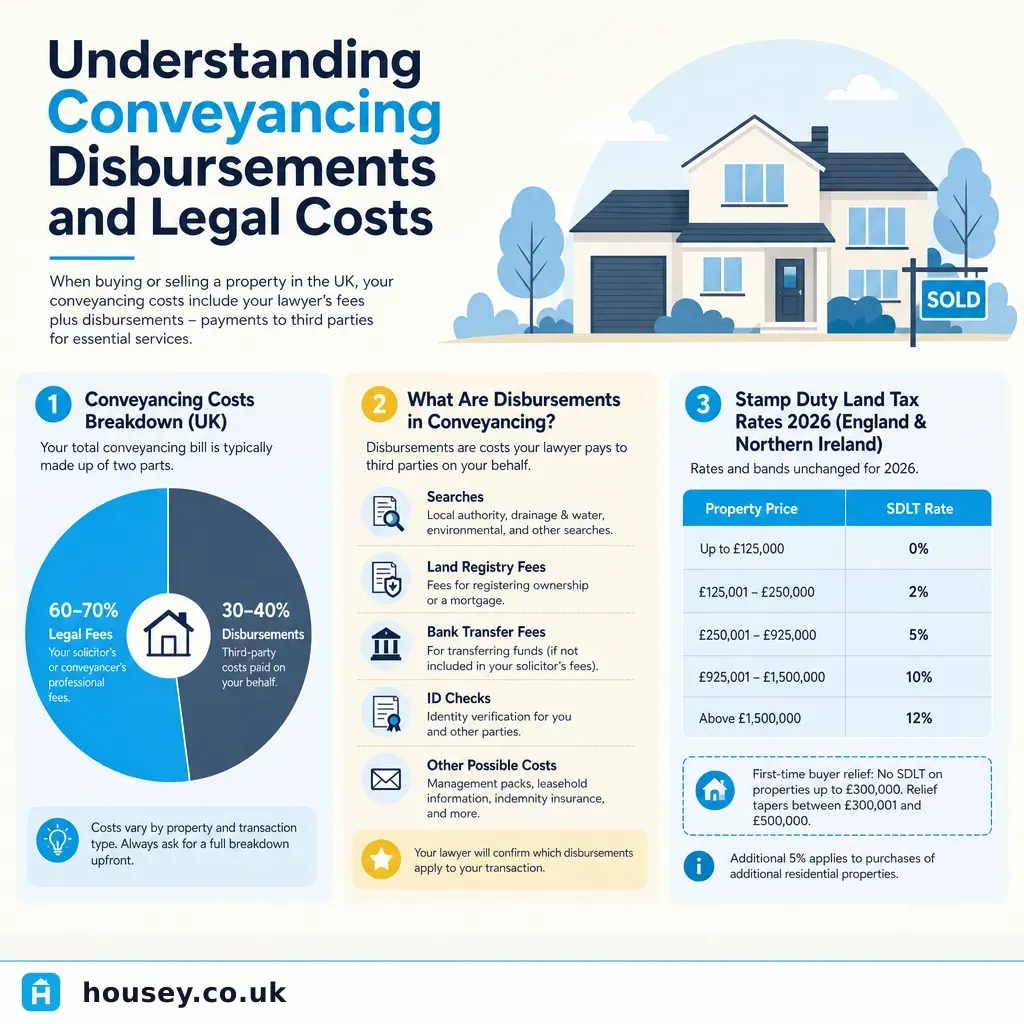
Understanding Conveyancing Disbursements and Legal Costs
Conveyancing disbursements are payments your solicitor makes on your behalf to third parties — HMRC for Stamp Duty Land Tax, HM Land Registry for registration, local councils for searches, and water companies for drainage checks.
 Buying & Moving
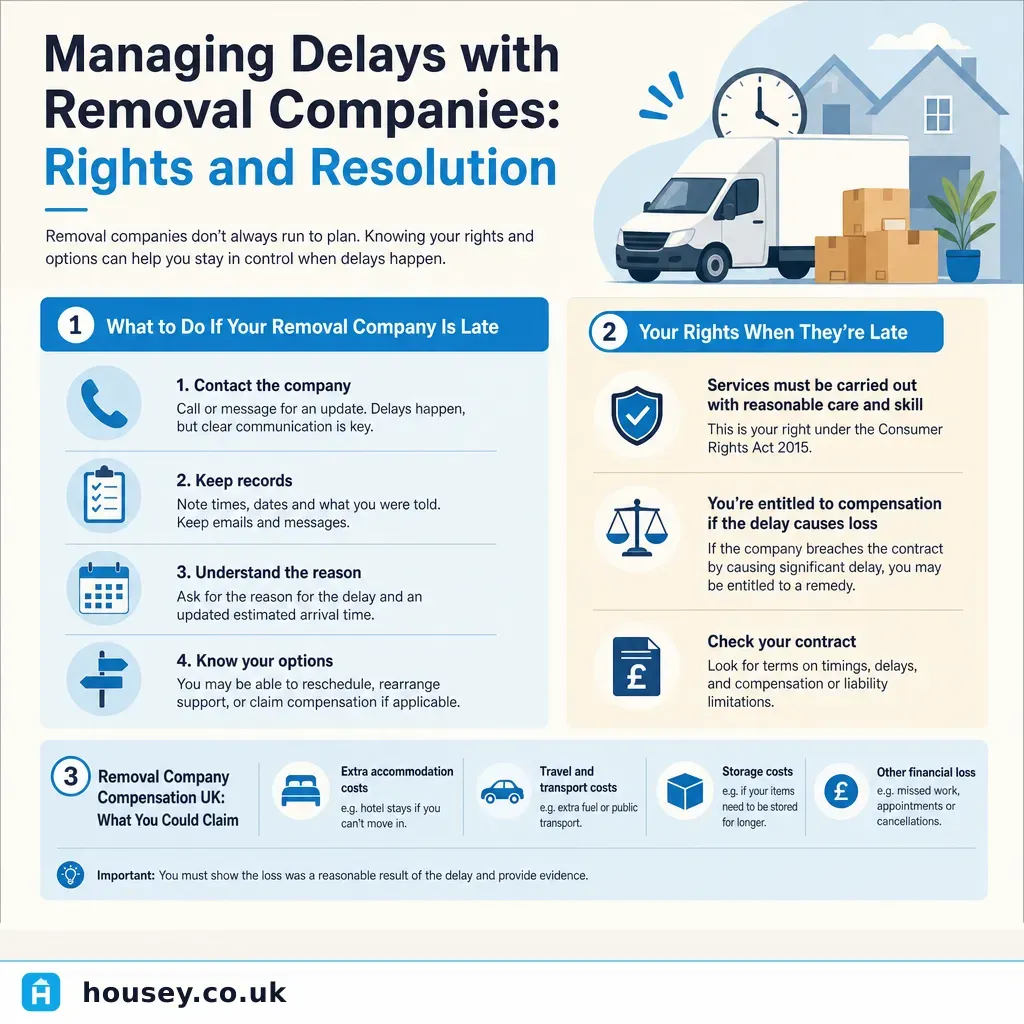
Managing Delays with Removal Companies: Rights and Resolution
If a removal company is late, your rights depend on your contract and whether the company is BAR-registered.
 Buying & Moving
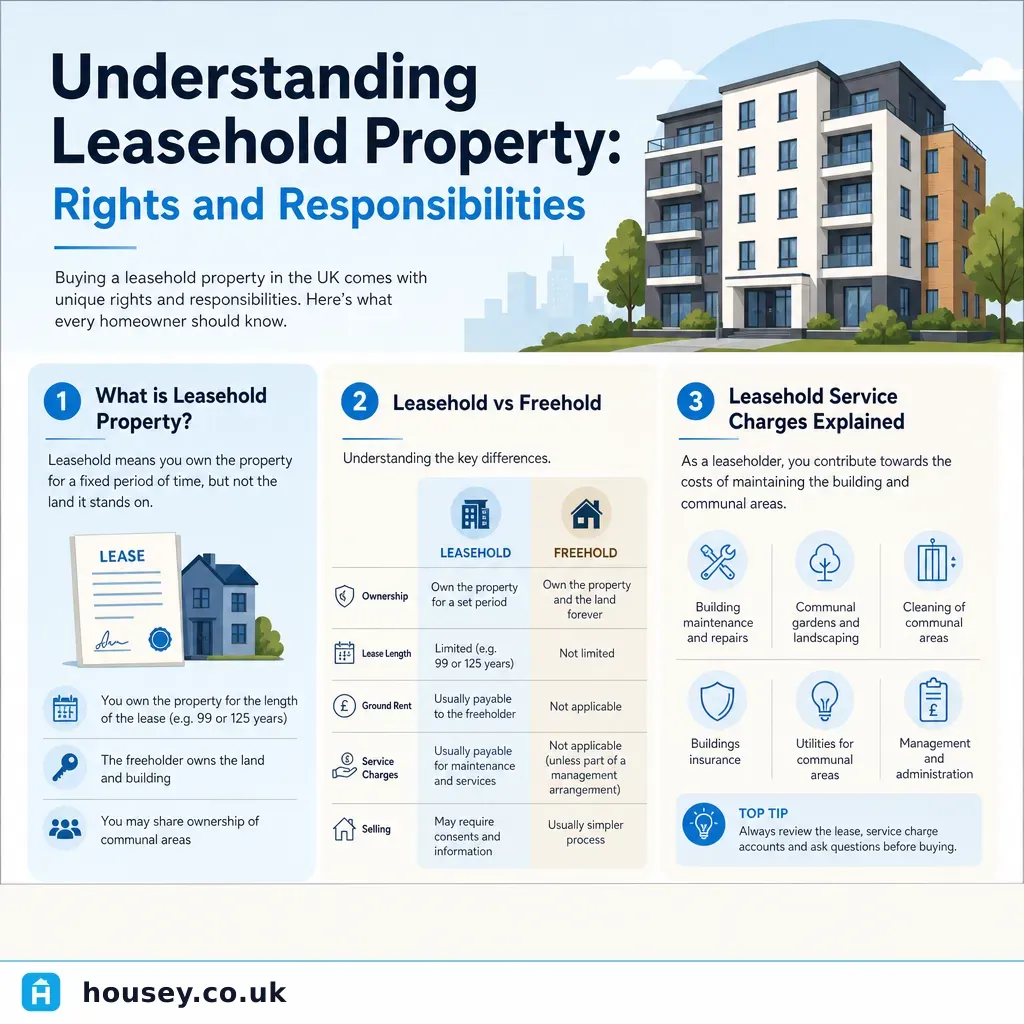
Understanding Leasehold Property: Rights and Responsibilities
Leasehold means you own a time-limited interest in a property while the freeholder owns the land and building.
 Buying & Moving
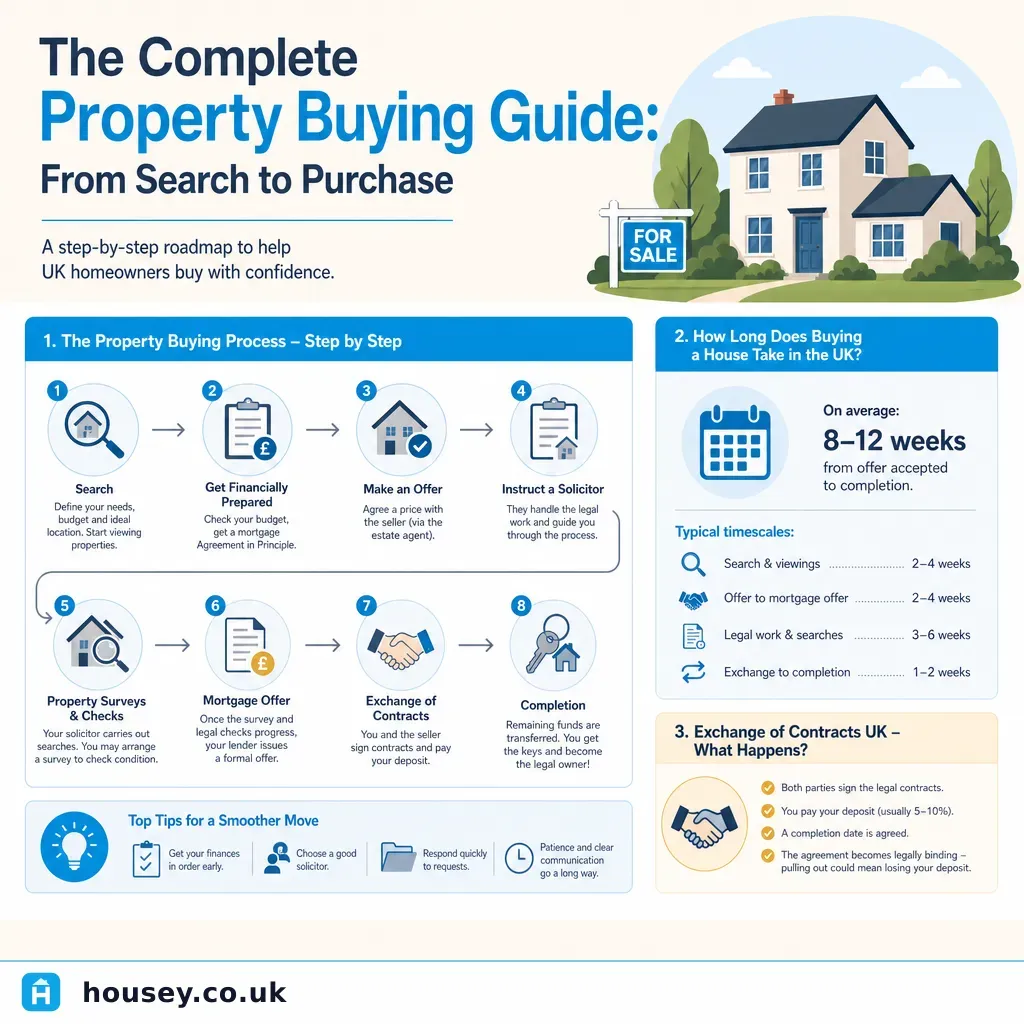
The Complete Property Buying Guide: From Search to Purchase
Buying a property in England and Wales typically takes 3–6 months from accepted offer to completion.