Conveyancing Quality Scheme: Understanding Professional Standards and Consumer Protection
By Housey · Last reviewed 25th of May 2026

Conveyancing Quality Scheme: Understanding Professional Standards and Consumer Protection
Homebuyers and sellers in England and Wales frequently encounter the Conveyancing Quality Scheme (CQS) when selecting a solicitor. With hundreds of thousands of residential transactions completing each year, the scheme exists to set a baseline standard for how conveyancing firms operate — but its scope, what it actually requires of firms, and when it matters for buyers are all widely misunderstood. Knowing the difference between CQS accreditation and general SRA regulation helps you make a more informed choice when instructing a legal representative for one of the most significant financial transactions of your life.
Key points
- The Conveyancing Quality Scheme (CQS) was launched by the Law Society of England and Wales in 2011 as a recognised quality mark for residential conveyancing practices.
- CQS-accredited firms must comply with the Law Society's Conveyancing Protocol — a standardised set of procedures covering client care, searches, title investigation, exchange, and completion.
- Some mortgage lenders, including several major high street banks, maintain approved panels that require CQS membership as a condition of inclusion, meaning non-CQS firms cannot act for that lender.
- CQS firms undergo annual audit and must maintain appropriate professional indemnity insurance, demonstrate staff competency, and pass anti-money laundering compliance checks.
- CQS is separate from — and additional to — regulation by the Solicitors Regulation Authority (SRA), which is mandatory for all solicitors' firms; CQS is voluntary.
What the Conveyancing Quality Scheme involves
CQS was developed partly in response to concerns from lenders about inconsistent conveyancing standards and the risk of mortgage fraud. Accreditation involves:
- Application and initial assessment — firms provide information about their conveyancing caseload, staffing, systems, and compliance policies.
- Compliance with the Conveyancing Protocol — the Law Society's standardised workflow covering every stage of a transaction from instruction to completion.
- Anti-money laundering (AML) compliance — firms must have documented AML policies and verify client identity in accordance with the Money Laundering, Terrorist Financing and Transfer of Funds (Information on the Payer) Regulations 2017.
- Annual renewal — accreditation must be renewed each year; firms that fall below the required standard can have accreditation withdrawn.
- Staff training requirements — conveyancing supervisors and fee earners must meet continuing professional development requirements relevant to residential conveyancing.
Comparison: CQS-accredited solicitor vs non-CQS solicitor vs licensed conveyancer
Factor | CQS-accredited solicitor | Non-CQS solicitor | Licensed conveyancer (CLC regulated) |
|---|---|---|---|
Regulated by | SRA and Law Society CQS | SRA | Council for Licensed Conveyancers (CLC) |
Mortgage lender panel | Required by most major lenders | May be excluded from some lender panels | Generally accepted; confirm with your specific lender |
Standard procedures | Must follow Conveyancing Protocol | No mandatory standardised workflow | CLC has its own separate regulatory framework |
Annual audit | Yes — CQS-specific | No (SRA spot-checks apply) | CLC monitoring applies |
Complaints body | Legal Ombudsman | Legal Ombudsman | Legal Ombudsman |
Scope | Residential conveyancing only | Any legal work the firm is authorised for | Residential conveyancing only |
Who needs a CQS-accredited conveyancer?
A CQS-accredited firm is likely required if:
- Your mortgage lender's approved panel specifies CQS membership (check with your lender or broker before instructing)
- You are purchasing with a Help to Buy equity loan or other government-backed mortgage scheme
- Your lender uses a shared legal representation model — one solicitor acting for both borrower and lender — most lenders require CQS membership in this arrangement
CQS membership is less critical if:
- You are a cash buyer with no mortgage lender requirements
- Your lender's panel does not specify CQS membership
- You are using a licensed conveyancer regulated by the Council for Licensed Conveyancers (CLC), who cannot hold CQS — a Law Society scheme for solicitors — but is subject to separate CLC regulation
Homeowner checklist: choosing a conveyancer
What CQS does not guarantee
CQS accreditation confirms that a firm has systems and policies meeting the Law Society's standard at the point of audit — it does not guarantee a fast or trouble-free transaction. Property transactions involve many variables outside any solicitor's control: seller chains, mortgage offer delays, local authority search turnaround times, and title complications can all extend timelines regardless of the firm's accreditation status. A CQS firm with experienced, communicative fee earners will generally serve you better than accreditation alone can predict.
Important limitations
This article describes the CQS scheme as it operates in England and Wales. Scotland and Northern Ireland have separate legal systems with different conveyancing procedures and professional bodies. In Scotland, the Law Society of Scotland operates independently; in Northern Ireland, solicitors are regulated by the Law Society of Northern Ireland. The CQS is a Law Society of England and Wales scheme and does not apply in either jurisdiction.
This article provides general information only. You should seek advice from a qualified solicitor or licensed conveyancer before committing to a property transaction.
When to get professional help
You should instruct a conveyancer at the point your offer on a property is accepted — or as early as possible if you are selling. Raise a complaint or seek independent advice if:
- Your solicitor is uncontactable for extended periods without explanation
- Exchange deadlines pass without clear communication about the cause of the delay
- You receive a completion statement that includes charges not itemised in the original quote
- A concern arises about the property's title, planning history, or legal status that the solicitor does not adequately explain
- You are pressured to exchange before you have received or understood the results of all searches
What to ask a qualified professional
Before instructing a conveyancer:
- Are you CQS-accredited and on my mortgage lender's approved panel?
- Who will be handling my transaction day to day, and what are their qualifications?
- What are your current search turnaround times, and which search providers do you use?
- What is your communication policy — will I receive proactive updates or only responses to my enquiries?
- What is included in your quoted fee and which disbursements are estimated?
- How do you handle title issues or planning concerns that emerge after searches are received?
- What is the firm's target timeline from instruction to exchange in the current market?
How Housey can help
Housey connects homebuyers and sellers with conveyancing solicitors who are CQS-accredited and experienced in residential property transactions across England and Wales. Getting quotes through Housey means you can compare fees, accreditations, and estimated timelines in one place, rather than contacting multiple firms individually.
Frequently asked questions
Do I need a CQS-accredited solicitor to buy a home?
Not always — but you may need one. Many mortgage lenders require their approved solicitors to hold CQS accreditation as a condition of acting for both borrower and lender. If you have a mortgage, check your lender's requirements before instructing a solicitor. Cash buyers are not subject to this restriction and can instruct any SRA-regulated solicitor or CLC-regulated conveyancer.
Is CQS the same as being regulated by the SRA?
No. SRA regulation is mandatory for all solicitors' firms in England and Wales; CQS is a voluntary quality mark issued by the Law Society. A firm regulated by the SRA has met the minimum standards required to practise law. CQS indicates the firm has additionally committed to the Law Society's Conveyancing Protocol and passed an annual audit of its conveyancing-specific systems.
How do I check if a conveyancer is CQS-accredited?
Use the Law Society's Find a Solicitor directory, which allows you to filter by CQS accreditation status. Alternatively, ask the firm directly and request their CQS accreditation reference number for independent verification. It is worth confirming accreditation before instructing, as accreditation can lapse at annual renewal.
What happens if I have a complaint about a CQS-accredited conveyancer?
First raise it with the firm's internal complaints process. If the matter is unresolved, you can refer it to the Legal Ombudsman, which handles complaints about solicitors in England and Wales. If the solicitor's conduct is at issue, you can also report it to the SRA. CQS accreditation does not create an additional complaints channel.
Sources and further reading
- Conveyancing Quality Scheme — Law Society of England and Wales
- Find a Solicitor (with CQS filter) — Law Society of England and Wales
- Check a solicitor's record — Solicitors Regulation Authority
- Council for Licensed Conveyancers — Council for Licensed Conveyancers
- Legal Ombudsman — Legal Ombudsman
Useful next reads
 Buying & Moving
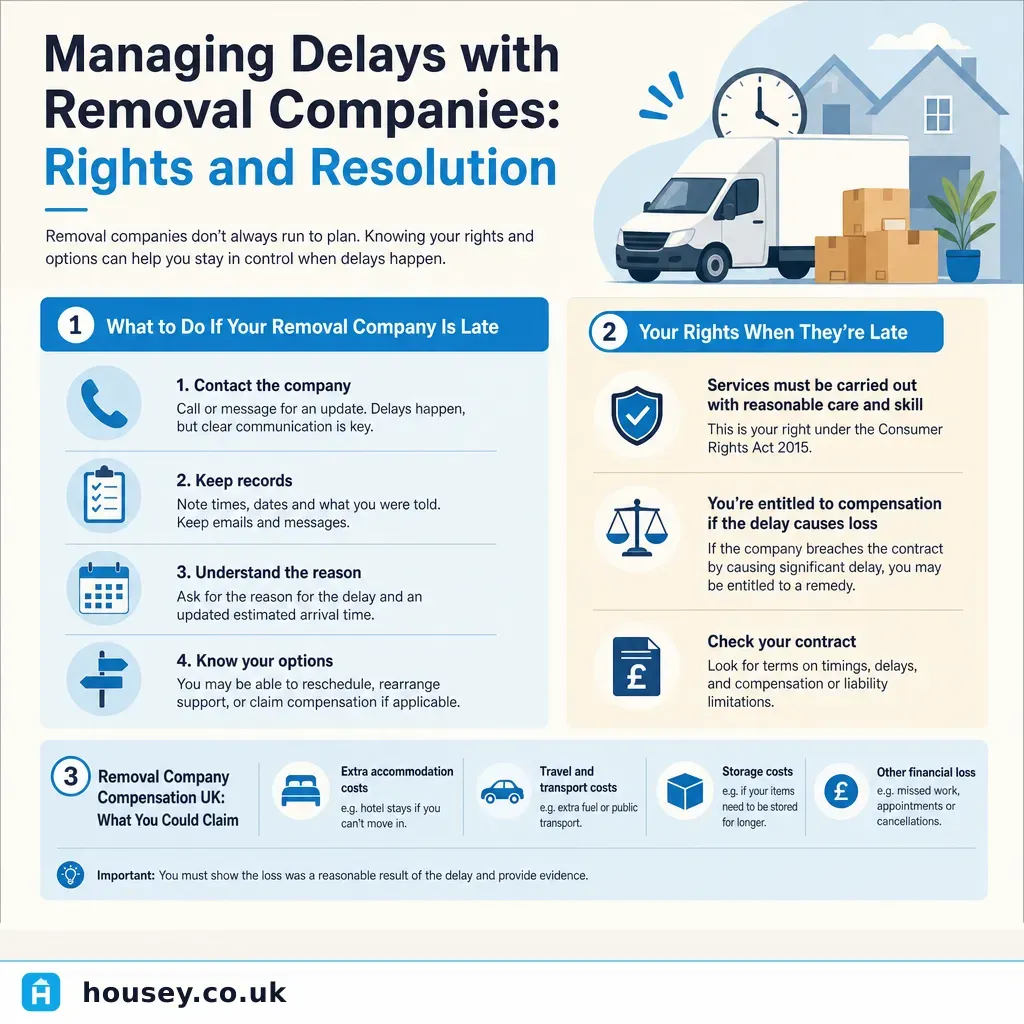
Managing Delays with Removal Companies: Rights and Resolution
If a removal company is late, your rights depend on your contract and whether the company is BAR-registered.
 Buying & Moving
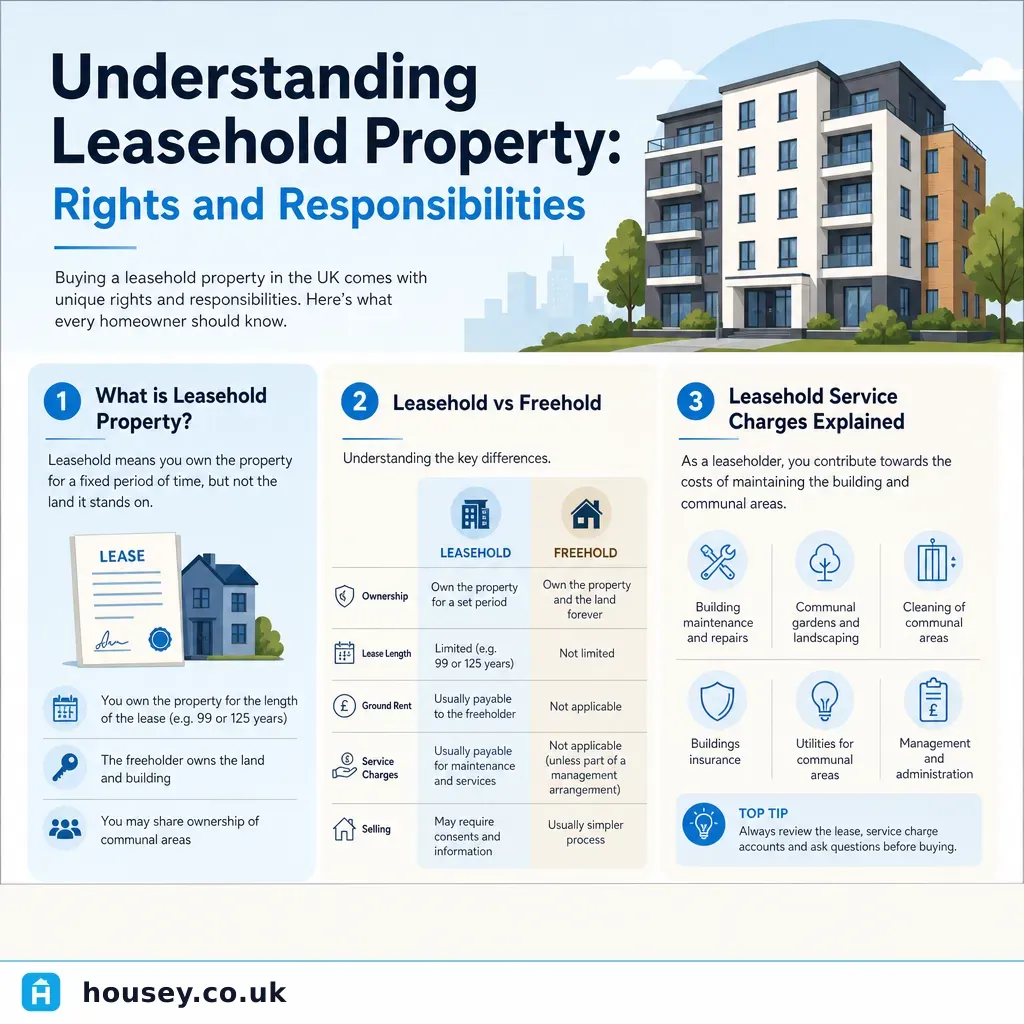
Understanding Leasehold Property: Rights and Responsibilities
Leasehold means you own a time-limited interest in a property while the freeholder owns the land and building.
 Buying & Moving
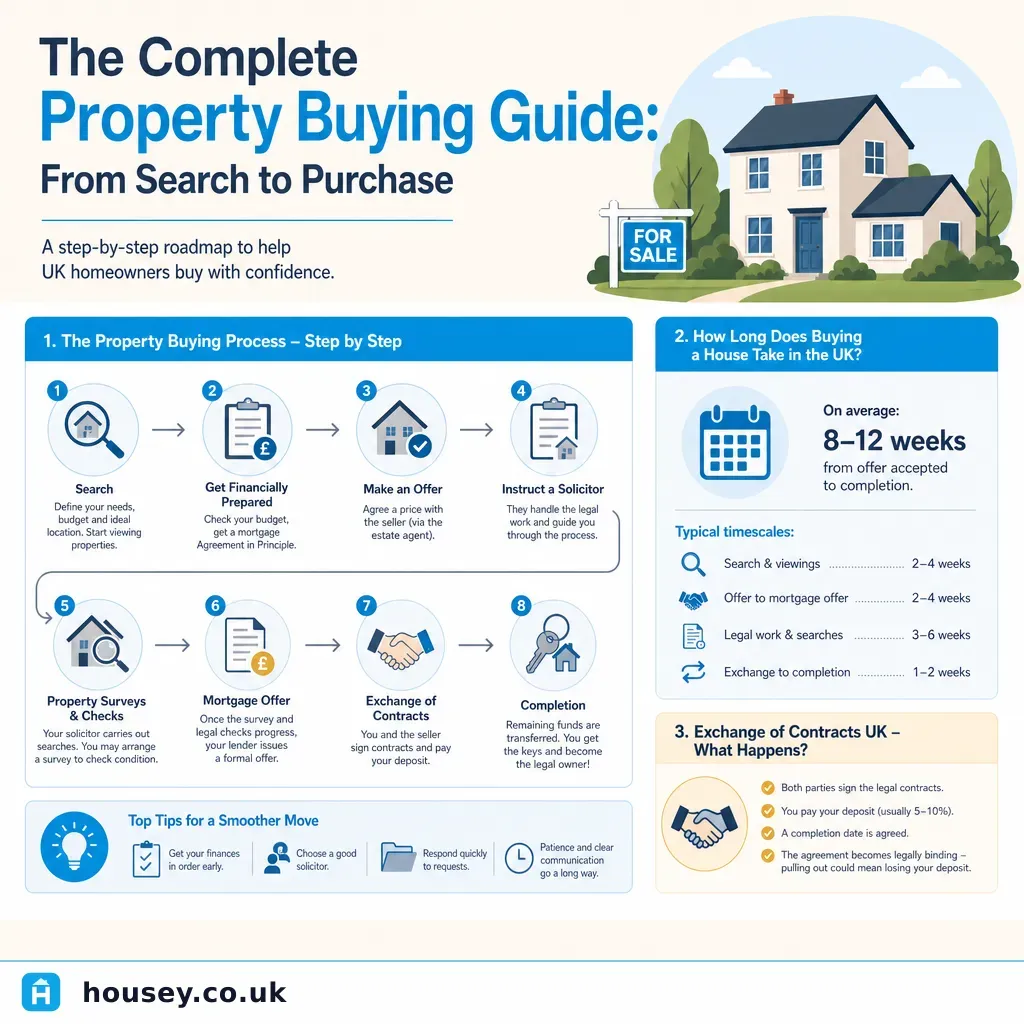
The Complete Property Buying Guide: From Search to Purchase
Buying a property in England and Wales typically takes 3–6 months from accepted offer to completion.
 Buying & Moving
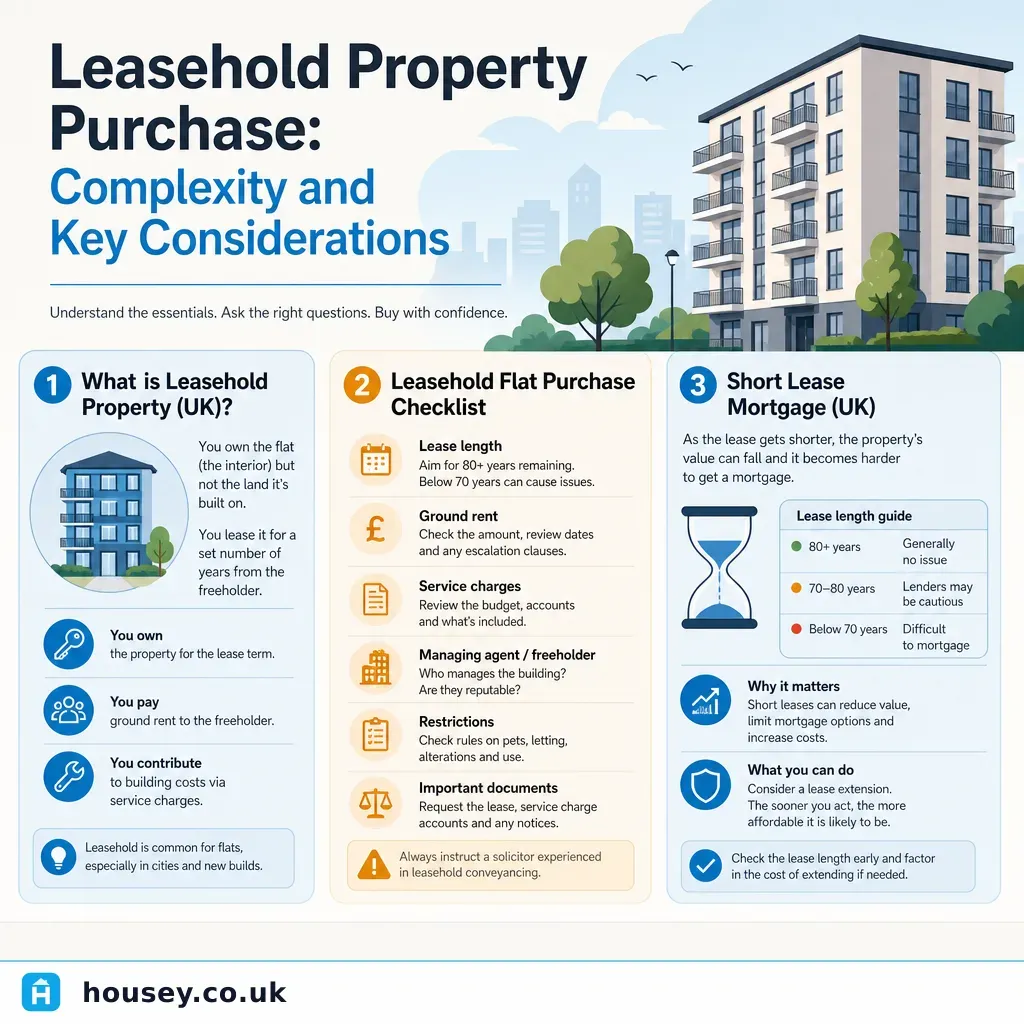
Leasehold Property Purchase: Complexity and Key Considerations
Buying a leasehold property means purchasing the right to occupy for a fixed term rather than owning the land outright.
 Buying & Moving
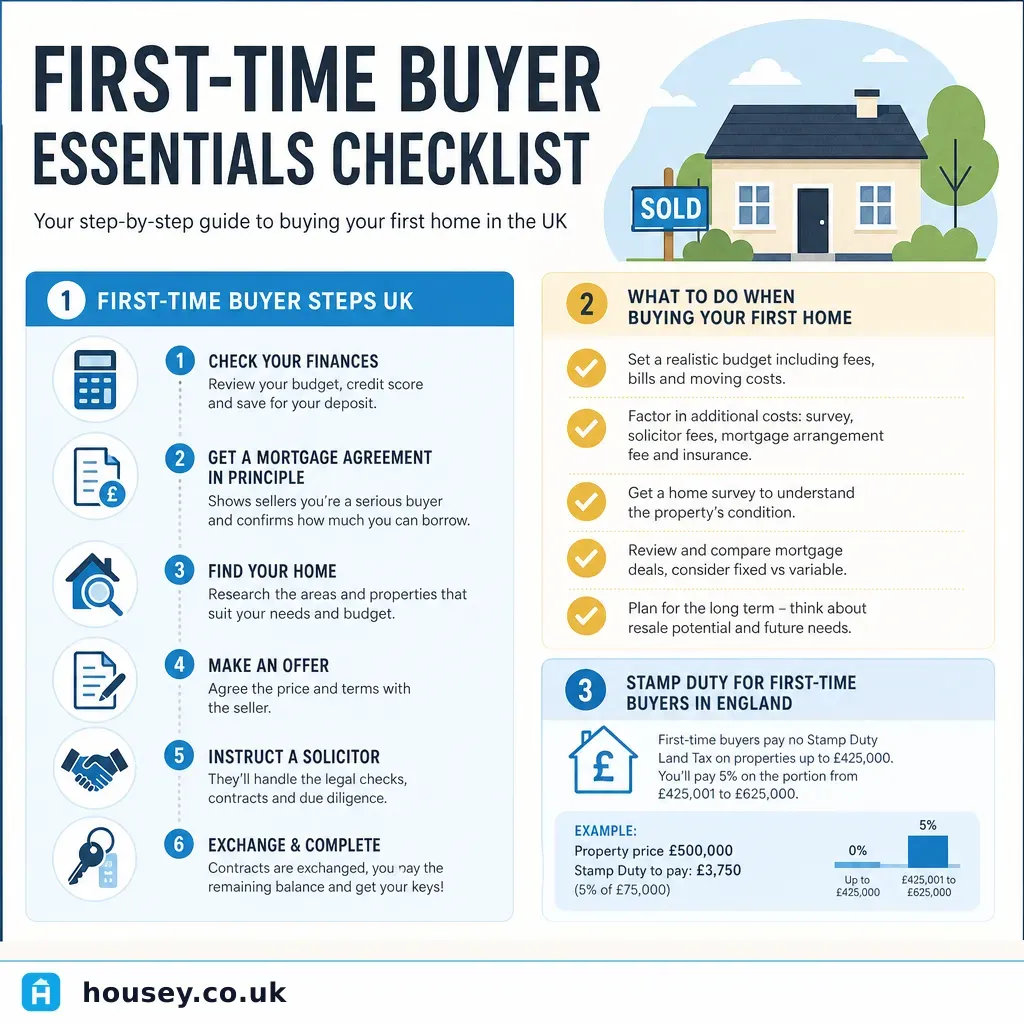
First-Time Buyer Essentials Checklist
Buying your first home involves obtaining a mortgage in principle, making an offer, instructing a solicitor, arranging a survey, and exchanging contracts before completion.