Conveyancing Services in London: Regional Considerations and Costs
By Housey · Last reviewed 25th of May 2026
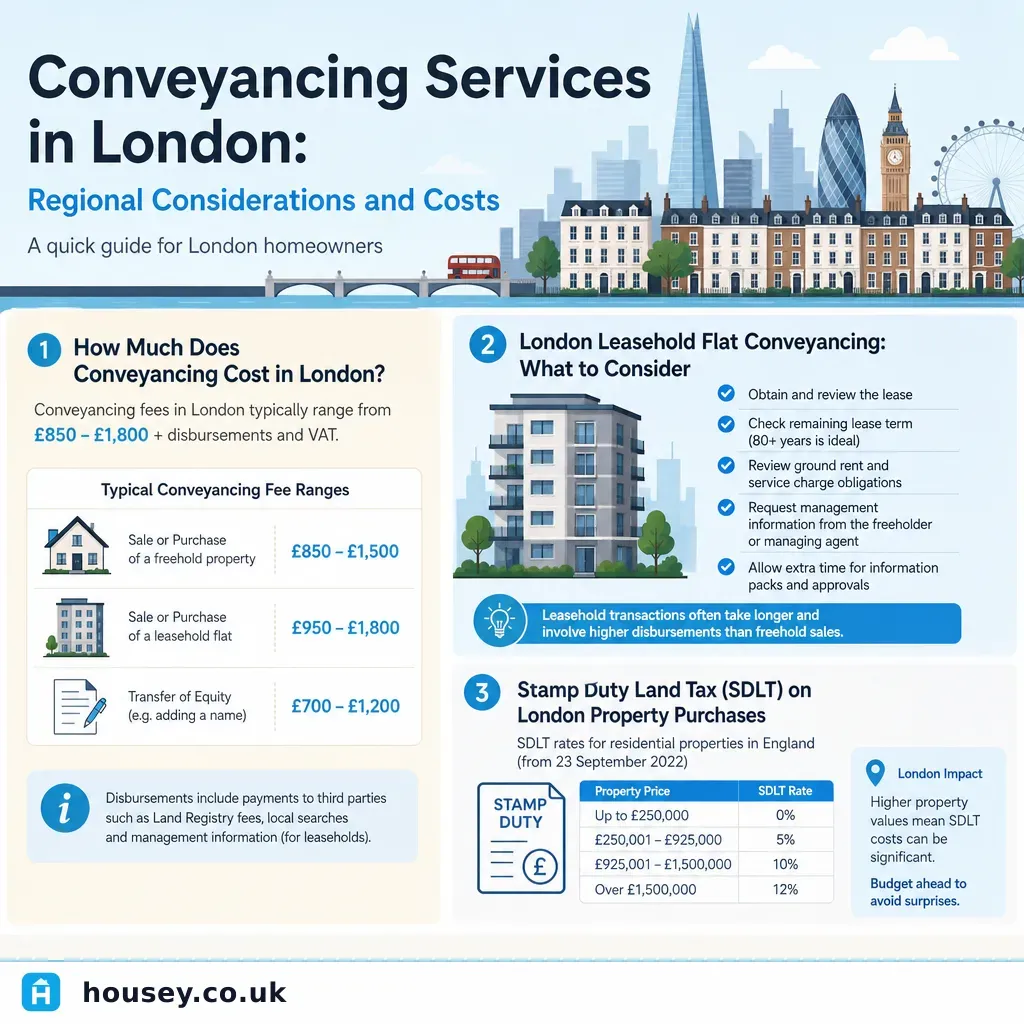
Conveyancing Services in London: Regional Considerations and Costs
London property transactions carry a distinct set of legal complexities that differ meaningfully from the national picture. High purchase prices, an unusually high proportion of leasehold flats, the involvement of large corporate managing agents, and — since the Building Safety Act 2022 — new due diligence requirements for taller residential buildings all affect how long conveyancing takes, what it costs, and what specialist knowledge your legal team needs.
Key points
- Approximately 67% of properties in London are leasehold, compared with around 20% nationally (English Housing Survey, DLUHC 2022–23), making lease review a standard requirement in most London transactions.
- The Building Safety Act 2022 introduced new protections and duties for leasehold flats in buildings over 11 metres; buyers of such properties require additional due diligence on cladding assessments, EWS1 forms, and any building safety fund applications.
- Stamp Duty Land Tax (SDLT) is higher in London due to property values; a standard residential purchase at £600,000 attracts £20,000 in SDLT — always use the GOV.UK SDLT calculator for the current rates.
- Local authority search timescales vary significantly across London boroughs — some return results in under two weeks, others take six to eight weeks — directly affecting overall transaction timescales.
- HM Land Registry registration fees for properties above £1 million sit at the top of the scale fee schedule (£1,105 as at 2026), affecting a significant proportion of central London purchases.
Why London conveyancing is different
The leasehold reality
The majority of London property purchases — particularly flats — involve leasehold rather than freehold title. Leasehold conveyancing requires your solicitor to review:
- The lease itself: term length, ground rent provisions, alienation clauses (permission to sublet or assign), and repair obligations
- Service charge accounts for at least three years
- Buildings insurance arranged by the freeholder or managing agent
- Section 20 notices: formal consultation notices where the landlord proposes major works above a cost threshold
- A management pack from the freeholder or managing agent, provided at the seller's cost and often taking several weeks to obtain
Leases with fewer than 80 years remaining are a significant issue in London: many older mansion blocks and post-war estates have leases that were not extended at earlier points of sale. A lease below 80 years substantially limits mortgage options and increases the complexity and cost of any future lease extension under the Leasehold Reform, Housing and Urban Development Act 1993.
Building safety requirements
The Building Safety Act 2022 changed the legal landscape for leasehold flats in higher-risk buildings — broadly, those above 11 metres or five storeys. Additional due diligence now includes:
- Whether the building has been assessed under the government's building safety programme
- Whether an EWS1 (External Wall System) fire safety assessment is available, and its outcome
- Leaseholder protections limiting how much qualifying remediation costs can be passed on
- Whether any Building Safety Fund application has been made or completed
This area of law continues to develop. Buyers of flats in relevant buildings should instruct a solicitor with specific experience of building safety due diligence.
Corporate managing agents and response times
Many London leasehold blocks are managed by large corporate managing agents. Obtaining management packs and responses to solicitors' enquiries from these organisations commonly takes four to eight weeks, regardless of how promptly the buyer's solicitor chases. This is one of the primary reasons London conveyancing exceeds the national average timescale. Some solicitors have established working relationships with major managing agents; it is reasonable to ask your conveyancer about this.
London conveyancing costs
Indicative UK costs, last reviewed 2026-05-25. London costs are typically higher than national averages due to property values, leasehold complexity, and additional due diligence requirements.
Cost item | Indicative London range |
|---|---|
Solicitor legal fees (buyer) | £1,200–£3,500 + VAT |
Solicitor legal fees (seller) | £900–£2,000 + VAT |
Local authority search | £120–£300 (varies by borough) |
Water and drainage search | £35–£65 |
Environmental search | £40–£90 |
Management pack (leasehold) | £250–£600 |
HM Land Registry fee (£500,000 purchase) | £270 |
HM Land Registry fee (above £1 million) | £1,105 |
SDLT at £600,000 (standard residential) | £20,000 — verify using GOV.UK SDLT calculator |
SDLT additional property surcharge | Extra 3% of full purchase price |
Request a fully itemised quote before instructing. Ensure disbursements are listed separately from professional fees, and confirm whether VAT is included in the headline figure.
Stamp Duty Land Tax in London
Since London property values sit above the national average, SDLT forms a larger share of purchase costs for most buyers. Current residential SDLT rates for England (check GOV.UK for any updates, as thresholds change):
- Up to £250,000: 0%
- £250,001 to £925,000: 5%
- £925,001 to £1.5 million: 10%
- Above £1.5 million: 12%
First-time buyer relief applies a 0% rate on the first £300,000 and 5% on the next £200,000 (up to £500,000 total purchase price). Above £500,000, standard rates apply regardless of first-time buyer status — excluding most central London purchases from the relief. An additional 3% surcharge applies to purchases of additional residential properties.
Local authority search timescales by London borough
Search timescales in London vary considerably and affect overall transaction length. The tiers below are indicative and subject to change; your solicitor should check current turnaround times for the specific borough before advising on expected timescales.
Borough tier | Typical search turnaround |
|---|---|
Faster boroughs (e.g. City of London, Wandsworth) | 5–10 working days |
Mid-range boroughs (e.g. Lambeth, Hammersmith and Fulham) | 2–4 weeks |
Slower boroughs | 4–8 weeks |
For transactions where speed is essential, some conveyancers use regulated personal search companies, which can return results faster but produce a different type of report. Some lenders restrict their use; check with your mortgage lender before proceeding.
Worked example: buying a leasehold flat in Zone 2
Scenario: a first-time buyer purchases a two-bedroom leasehold flat in Hackney for £520,000 with a mortgage.
Lease check: The flat has 87 years remaining — above 80 years and mortgage-eligible, but the buyer's solicitor notes that extension becomes considerably more expensive once the lease drops below that threshold. The solicitor recommends budgeting for a lease extension within five to seven years.
Searches: Hackney local authority search currently takes approximately three to four weeks. An environmental search flags medium flood risk; the solicitor advises obtaining flood insurance quotes before exchange.
Management pack: The managing agent takes five weeks to provide the pack. It reveals a Section 20 notice for planned lift replacement at an estimated cost of £4,500 per flat. The buyer's solicitor negotiates a financial retention from the seller to cover this liability.
Building safety: The building is six storeys — above the 11-metre threshold. The seller provides an EWS1 form with an A2 outcome (minor remediation already completed). The buyer's lender accepts this.
SDLT: First-time buyer relief applies. SDLT is 0% on the first £300,000, then 5% on the remaining £220,000 — total £11,000.
Land Registry fee: £270 for a £520,000 purchase.
Total timescale: 17 weeks from offer to completion, primarily driven by the management pack delay and mortgage valuation conditions.
Important limitations
This article provides general information about conveyancing in London. It is not legal advice. SDLT rates, the Building Safety Act regime, local authority search timescales, and Land Registry fees change regularly. Your specific transaction — including lease terms, building safety status, lender requirements, and title history — requires professional legal assessment. Always rely on the advice of your instructed solicitor.
When to get professional help
Instruct a solicitor immediately on offer acceptance. Seek specialist legal advice if:
- The lease has fewer than 80 years remaining
- The property is a flat in a building above 11 metres and the building safety status is unclear or unresolved
- An EWS1 form is unavailable or shows an elevated-risk outcome
- The management pack reveals significant service charge arrears or major planned works without a cost estimate
- The title reveals historic disputes, absence of planning consent for works, or unclear boundary positions
What to ask a qualified professional
Before instructing a London conveyancer, ask:
- Do you have experience with London leasehold transactions and building safety due diligence under the Building Safety Act 2022?
- What are the current local authority search timescales for this borough?
- How do you handle management pack delays — do you proactively chase managing agents?
- What is your full quote, including all disbursements and VAT?
- Do you have established working relationships with any of the major London managing agents?
- If the lease needs extending, can you advise on that process or refer me to a specialist?
- Are you on my mortgage lender's approved conveyancer panel?
How Housey can help
Housey can connect you with conveyancing solicitors experienced in London property transactions, including leasehold due diligence and building safety checks. Find and compare regulated professionals through our conveyancing service to match your transaction type and borough.
Frequently asked questions
Is conveyancing more expensive in London?
Yes, typically. Legal fees are higher because London transactions are more complex — leasehold prevalence, building safety due diligence, management pack requirements, and higher property values all add time and work. Indicative buyer legal fees run from £1,200 to £3,500 + VAT in London, compared with £800 to £2,000 nationally. SDLT is also significantly higher given average London property prices.
Why does London conveyancing take longer than the national average?
The main causes are management pack delays from large corporate managing agents (commonly four to eight weeks), variable local authority search timescales by borough, building safety due diligence on taller blocks, and the prevalence of leasehold conveyancing which requires additional enquiries. Chains involving multiple London properties can extend timescales further.
Do I need a London-based solicitor to buy a London property?
No — any regulated solicitor or licensed conveyancer in England and Wales can act on your transaction. However, a solicitor with a London leasehold practice brings familiarity with major managing agents, building safety due diligence, and borough-specific search timescales, which can reduce delays and improve the resolution of complex enquiries.
What is the Stamp Duty Land Tax on a London flat at £450,000?
For a standard residential purchase at £450,000 (not a first-time buyer, not an additional property), SDLT is 0% on the first £250,000 (£0), plus 5% on £200,000 (£10,000) — total £10,000. First-time buyer relief reduces this if eligible. Use the GOV.UK SDLT calculator for an accurate current figure, as thresholds change.
What is an EWS1 form and do I need one for a London flat?
An EWS1 (External Wall System) form is a fire safety assessment for the external walls of a residential building, completed by a qualified professional. Some mortgage lenders require it for leasehold flats in buildings above 11 metres. If the result indicates elevated fire risk, mortgage lending may be restricted until remediation is complete. Your solicitor and lender will advise whether one is required for your specific property.
Sources and further reading
- Stamp Duty Land Tax rates and calculator — HMRC / GOV.UK
- Building Safety Act 2022 — legislation.gov.uk
- HM Land Registry registration fees — HM Land Registry
- Leasehold reform: your rights — GOV.UK
- English Housing Survey 2022 to 2023 headline report — DLUHC
- Buying leasehold property — Law Society
Useful next reads
 Buying & Moving
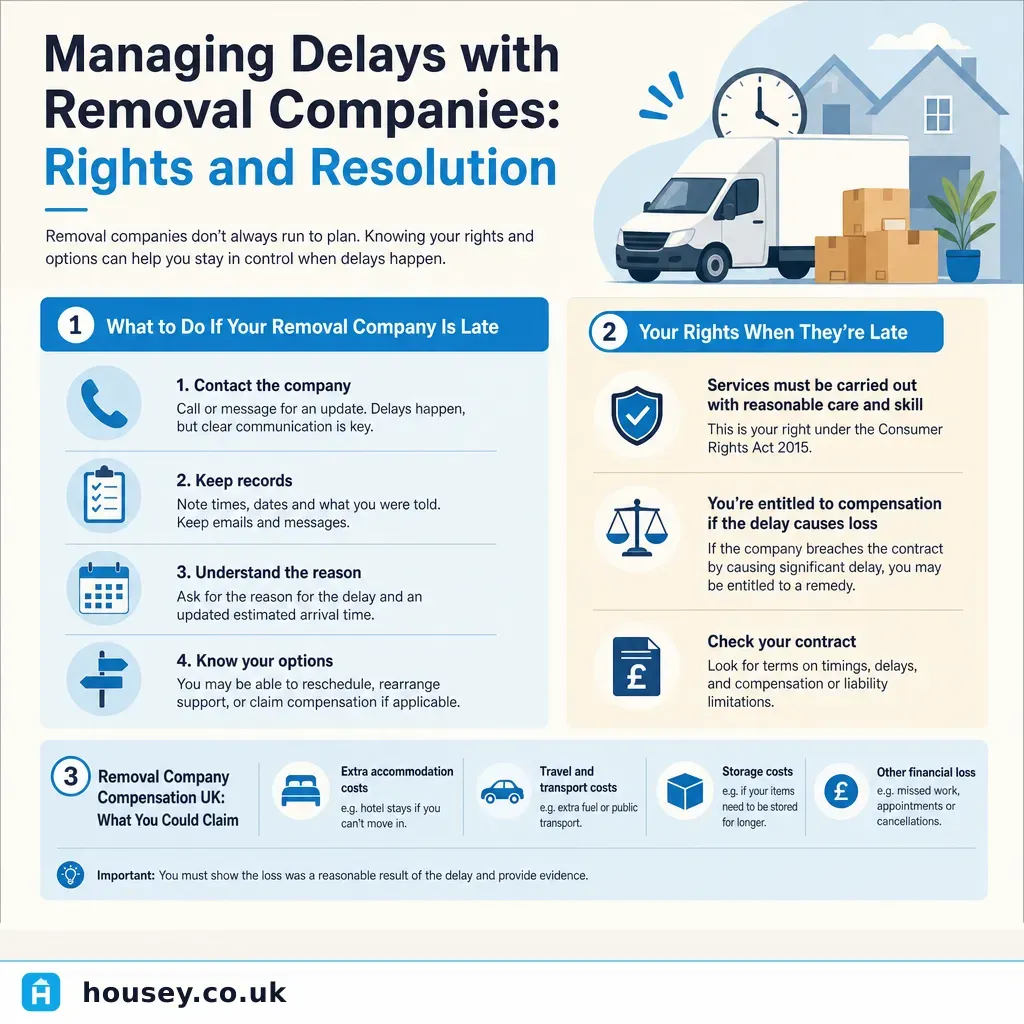
Managing Delays with Removal Companies: Rights and Resolution
If a removal company is late, your rights depend on your contract and whether the company is BAR-registered.
 Buying & Moving
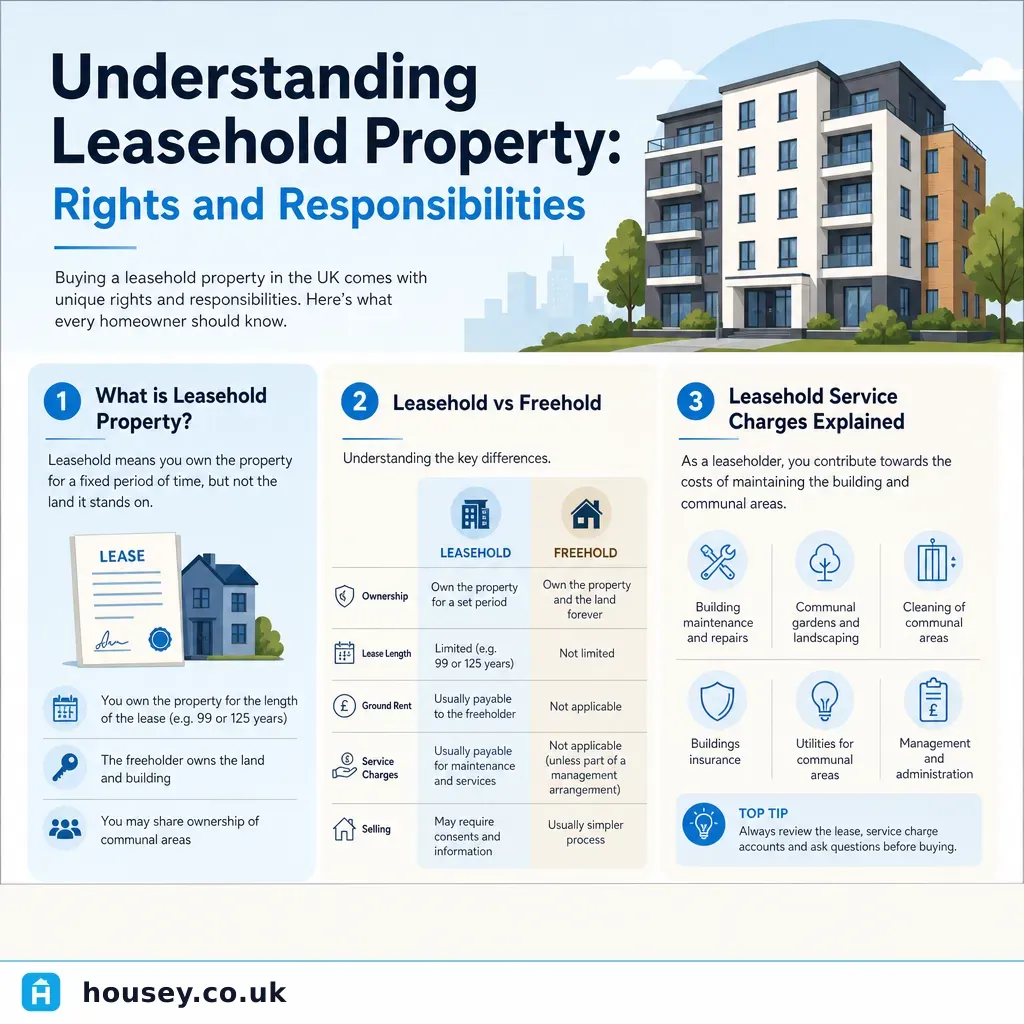
Understanding Leasehold Property: Rights and Responsibilities
Leasehold means you own a time-limited interest in a property while the freeholder owns the land and building.
 Buying & Moving
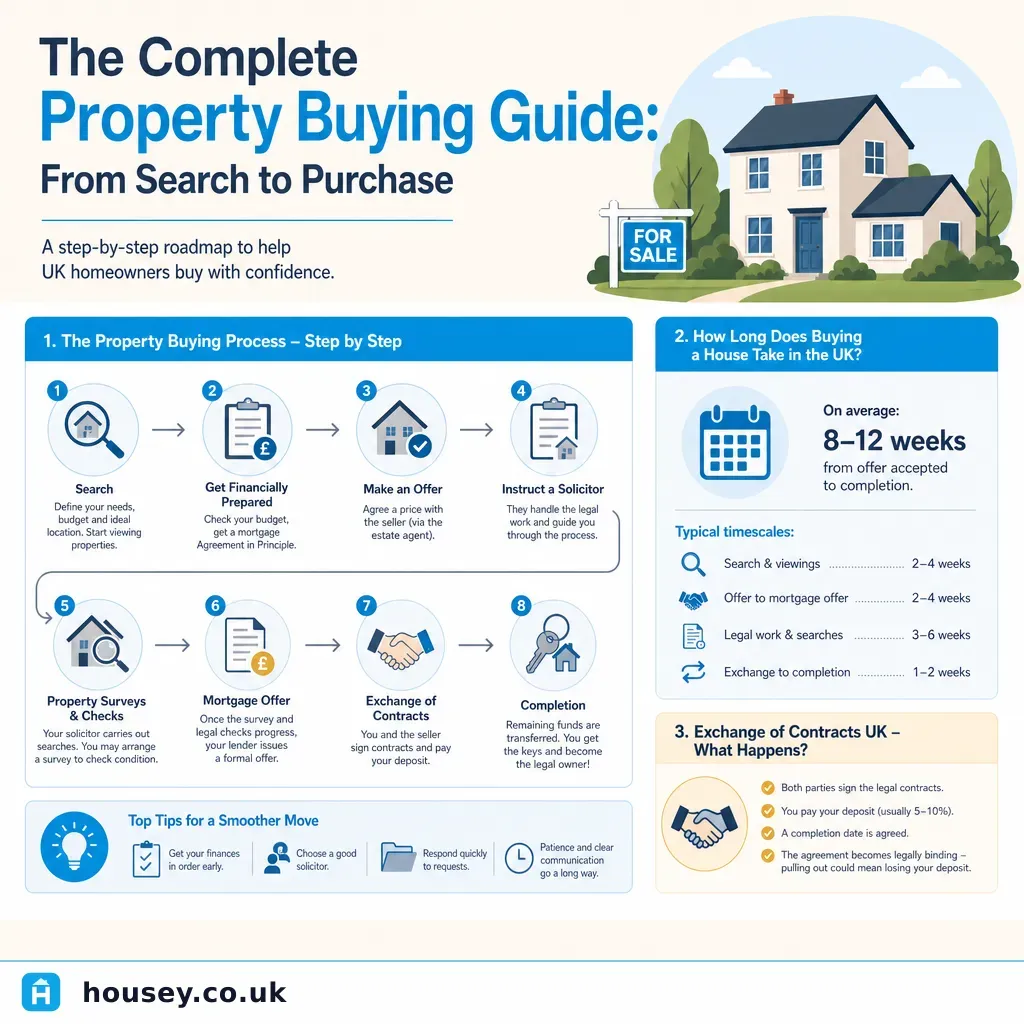
The Complete Property Buying Guide: From Search to Purchase
Buying a property in England and Wales typically takes 3–6 months from accepted offer to completion.
 Buying & Moving
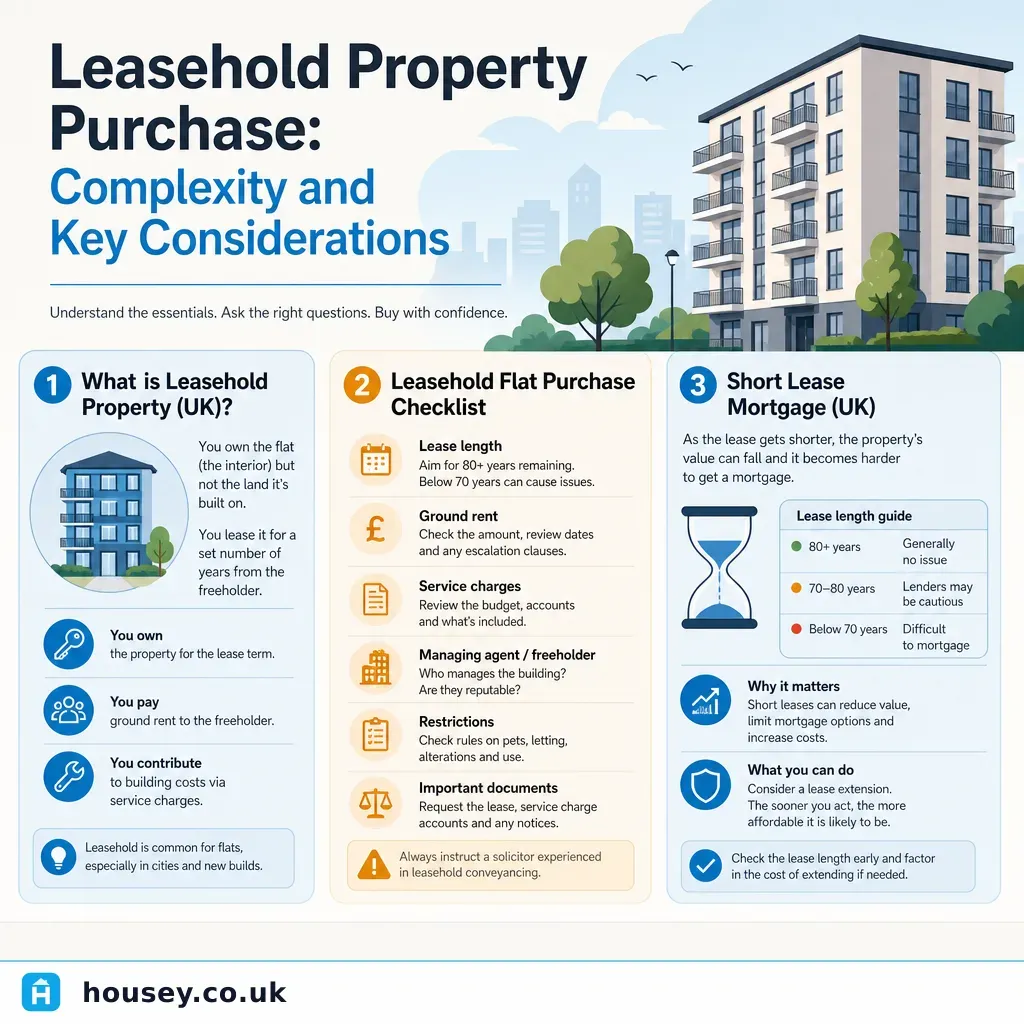
Leasehold Property Purchase: Complexity and Key Considerations
Buying a leasehold property means purchasing the right to occupy for a fixed term rather than owning the land outright.
 Buying & Moving
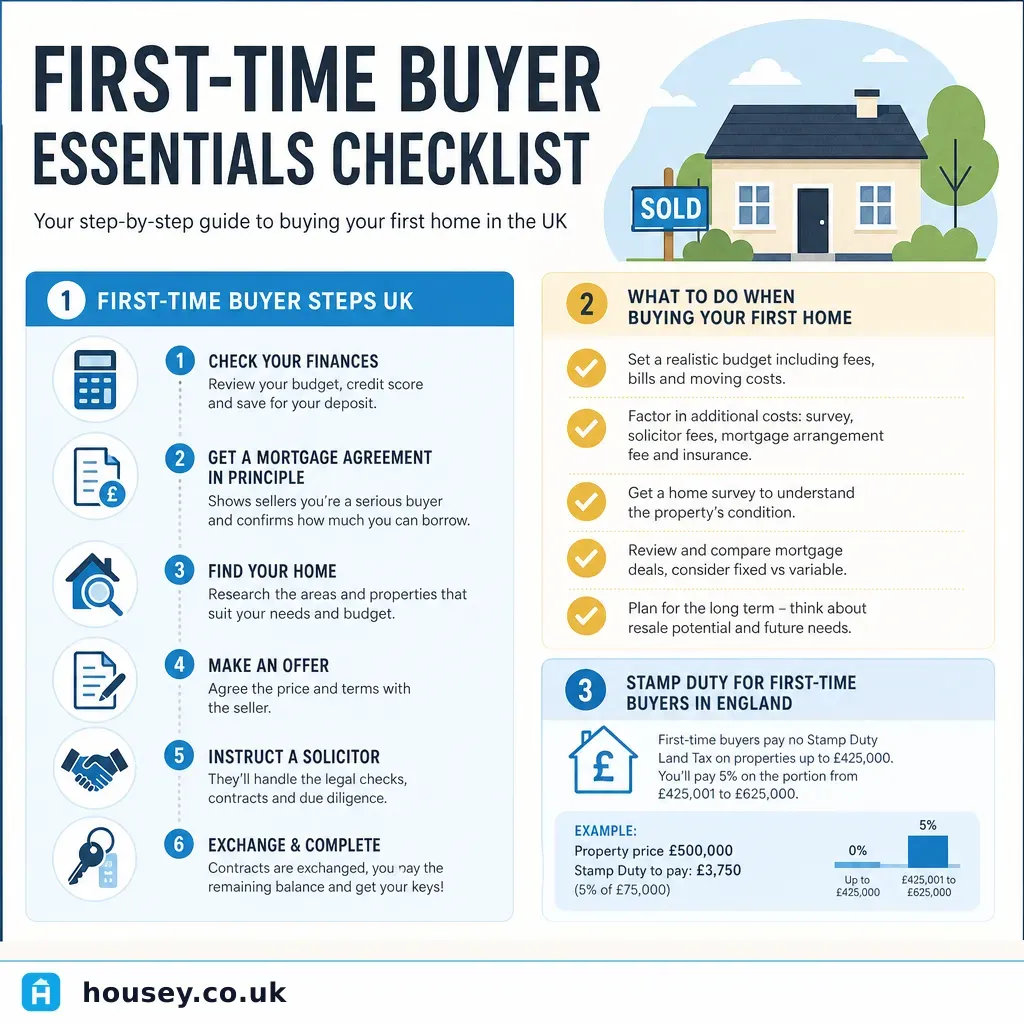
First-Time Buyer Essentials Checklist
Buying your first home involves obtaining a mortgage in principle, making an offer, instructing a solicitor, arranging a survey, and exchanging contracts before completion.