Conveyancing Timeline: How Long Does the Property Purchase Process Take?
By Housey · Last reviewed 30th of May 2026
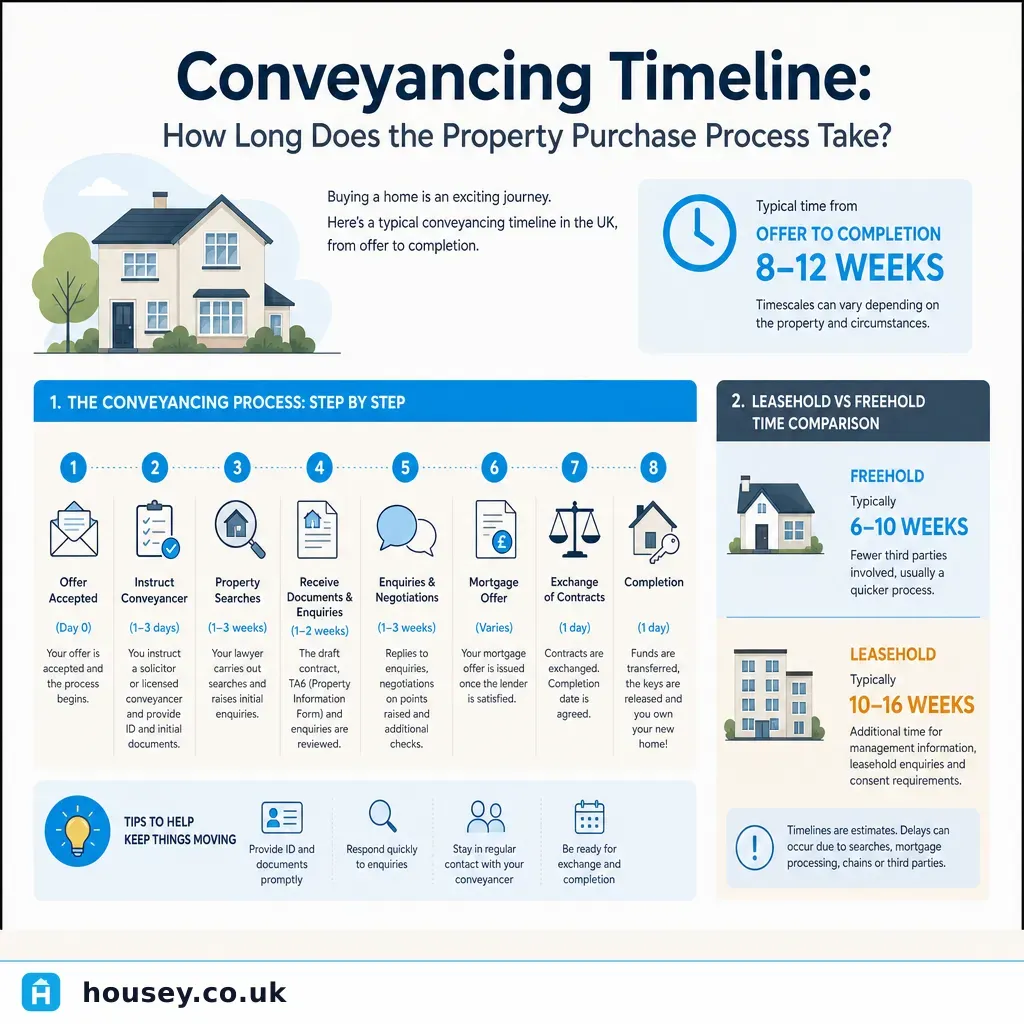
Conveyancing Timeline: How Long Does the Property Purchase Process Take?
Conveyancing — the legal transfer of property ownership — rarely follows a predictable timetable, and this uncertainty catches many buyers and sellers off guard. Whether you are purchasing a leasehold flat in a new development or a Victorian terrace as part of a lengthy chain, the timeline depends on a web of third parties: mortgage lenders, local authorities processing searches, management companies, solicitors on both sides, and any connected transactions above or below you. Understanding the main stages and the factors that slow them down helps set realistic expectations and supports better planning.
Key points
- The average UK residential conveyancing transaction takes between 10 and 16 weeks from offer acceptance to completion; chain-free cash purchases can sometimes complete in four to six weeks.
- Four key milestones mark every purchase: instruction of solicitors → exchange of contracts → completion → registration at HM Land Registry.
- Local authority searches — one of the most time-consuming elements — take two to eight weeks depending on the processing council; some solicitors use personal search agents to reduce this delay.
- Exchange of contracts is the legally binding commitment point; once exchanged, both buyer and seller are committed and a completion date is fixed — pulling out after exchange carries significant financial consequences.
- Leasehold purchases typically take four to six weeks longer than equivalent freehold transactions due to management company enquiries, service charge account review, and examination of the lease terms.
The main stages of the conveyancing process
Stage 1: Instruction (Weeks 1–2)
Once your offer is accepted, you instruct a conveyancing solicitor or licensed conveyancer. Your solicitor will:
- Request official copies of the title from HM Land Registry and initial documents from the seller's solicitor
- Apply for local authority, water, drainage, and environmental searches
- Raise preliminary enquiries on the property
- Verify your identity and source of funds (required under anti-money laundering regulations)
If you have a mortgage, the lender will also instruct a solicitor to act on their behalf — often the same firm acting for you, though this is not always the case.
Stage 2: Searches and enquiries (Weeks 2–8)
This is typically the longest and least predictable stage.
- Local authority search: reveals the property's planning history, outstanding enforcement notices, road adoption status, and nearby proposed developments. Turnaround varies considerably — some councils take two weeks, others eight or more.
- Environmental search: checks for flood risk, ground contamination, landfill proximity, and radon levels.
- Water and drainage search: confirms connection to mains water and whether public sewers cross the land.
- Solicitor's enquiries: your solicitor raises questions with the seller's solicitor about boundaries, disputes, services, planning permissions, building regulations certificates, FENSA certificates for replacement windows, warranties, guarantees, and any occupiers.
Stage 3: Mortgage offer (if applicable)
Your lender carries out a valuation and, once satisfied, issues a formal mortgage offer. This typically takes two to four weeks from full mortgage application, though lender workloads and underwriting complexity can extend this. Your solicitor reviews the offer conditions and reports to you before proceeding to exchange.
Stage 4: Pre-exchange (Weeks 6–12)
Once searches have returned, enquiries are satisfactorily answered, and the mortgage offer is in hand, your solicitor will:
- Report to you in writing on the title, search results, and all enquiry responses
- Confirm the final purchase price and provide a completion statement detailing all funds required
- Request your deposit in readiness for exchange
You then sign the contract. The solicitors on both sides agree a completion date before formally exchanging.
Stage 5: Exchange of contracts
Exchange is the legally binding point. Once contracts are exchanged:
- You cannot withdraw without forfeiting your deposit (typically 10% of the purchase price)
- The seller cannot pull out without significant financial liability
- A completion date is fixed — typically one to four weeks after exchange
For freehold purchases, buildings insurance should be arranged and in force from exchange.
Stage 6: Completion and post-completion
On completion day, your solicitor transfers the purchase funds to the seller's solicitors. Once receipt is confirmed, keys are released. Your solicitor will then:
- Pay any Stamp Duty Land Tax due on your behalf within 14 days of completion
- Submit an application to register your ownership at HM Land Registry
- Send you the title documents once registration is complete
Land Registry registration currently takes several weeks to several months depending on the complexity of the title and current registration workload. You are the legal owner from completion, but the register update occurs after.
Freehold vs leasehold: how the timelines compare
| Freehold | Leasehold |
|---|---|---|
Typical timeline | 10–14 weeks | 14–20 weeks |
Key extra steps | None | Management pack, service charge accounts, ground rent history, deed of covenant |
Common causes of delay | Missing building regs certificates, boundary queries | Slow management company responses, short lease, defective lease terms |
Additional parties involved | Buyer, seller, solicitors, mortgage lender | All of the above plus freeholder or management company |
Lender lease length requirement | Not applicable | Typically 70–85 years minimum remaining after mortgage term |
Indicative UK timelines, last reviewed 2026-05-30. Actual timescales depend on chain length, lender processing times, and local authority search turnaround.
What typically causes delays?
- Chain complications: any party withdrawing, renegotiating, or having their own transaction delayed can set the whole chain back by weeks.
- Slow local authority searches: some councils process searches manually, with turnaround extending well beyond the national average.
- Mortgage complications: a change in your financial circumstances, a valuation below the agreed purchase price, or underwriting queries can add weeks to the mortgage offer stage.
- Leasehold management packs: management companies are often slow to respond despite having a formal obligation to do so; regular chasing by your solicitor is essential.
- Defective title or missing documents: absent building regulations completion certificates, planning permissions, FENSA certificates, or drainage agreements all take time to resolve — typically through an indemnity insurance policy.
- Survey findings: a significant defect found in a survey may lead to price renegotiation, a specialist structural engineer's report, or a delayed exchange whilst the parties agree how to proceed.
- Slow responses from any party: conveyancing requires prompt responses from buyers, sellers, and solicitors alike; delays in answering enquiries or returning signed documents slow the entire chain.
Document preparation checklist for buyers
Having these ready promptly after instructing your solicitor can avoid early delays:
Important limitations
This article describes the typical conveyancing process for residential property purchases in England and Wales. Timelines and processes vary significantly depending on the specific property, lender, local authority, chain length, and the professionals instructed. Conveyancing involves legal and financial decisions that affect your ownership rights and financial position. You should always instruct a qualified solicitor or licensed conveyancer regulated by the Solicitors Regulation Authority or the Council for Licensed Conveyancers, and follow their specific advice. Nothing in this article constitutes legal advice.
When this becomes urgent
Seek qualified legal advice immediately if:
- You receive a completion notice from the seller's solicitor and are not in a position to complete on the stated date
- Exchange is imminent but you have not received and carefully read your solicitor's full written report on title
- You discover after exchange that there is a material defect with the title or property condition that was not disclosed
- Your mortgage offer is approaching its expiry date and the transaction has not yet completed
- A search result or enquiry response has flagged a significant unresolved issue — such as an enforcement notice, title dispute, or missing certificate — without a clear explanation from your solicitor
What to ask a qualified conveyancing solicitor
- What is your estimated timeline for this transaction given the chain length, property type, and lender involved?
- What searches are included in your fixed fee, and are personal search agents an option to reduce local authority search times?
- What are the most likely causes of delay in this specific transaction, and how will you manage them?
- How will you communicate progress updates — by email, phone, or online portal — and how frequently can I expect to hear from you?
- Are you acting for both me and my mortgage lender, and what happens if their interests diverge from mine?
- What are your fees if the transaction falls through before exchange of contracts?
- What support do you provide if the other side's solicitors are slow or unresponsive?
When to get professional help
A qualified conveyancing solicitor or licensed conveyancer is required for all mortgage-backed purchases — lenders will not release funds without one. For cash purchases, instructing a qualified professional is strongly recommended to carry out proper title investigation, searches, and enquiries, and to protect your legal position.
Red flags to address immediately:
- Your solicitor has stopped responding and exchange is approaching
- You are being pressured to exchange before all enquiries have been answered to your solicitor's satisfaction
- The seller is insisting on an unusually short period between exchange and completion that your finances cannot support
- A search or enquiry result has flagged a problem — such as an enforcement notice, disputed boundary, or unapproved alteration — that has not been resolved or fully explained
How Housey can help
Our conveyancing service connects you with regulated solicitors and licensed conveyancers experienced in residential transactions of all types — freehold purchases, leasehold flats, chain transactions, Right to Buy, and Shared Ownership conveyancing.
Frequently asked questions
How long does conveyancing take for a cash purchase?
Cash purchases remove the mortgage stage entirely and can sometimes complete in four to six weeks if there are no chain complications, the title is clean, and searches return promptly. However, local authority search turnaround still applies, and leasehold properties add their own complexity — management packs and lease enquiries — regardless of whether a mortgage is involved.
Can I speed up the conveyancing process?
You can reduce avoidable delays by instructing a solicitor immediately after offer acceptance, providing identity and source-of-funds documents promptly, responding to all requests without delay, and choosing a solicitor who offers regular progress updates. Some solicitors use personal search agents for local authority searches, which can be faster than official searches in slow-processing councils.
What is the difference between exchange and completion?
Exchange of contracts is the legally binding commitment — both buyer and seller are committed to proceed on the agreed terms. Completion is when ownership formally transfers, funds move, and keys are handed over. They typically occur on different days with one to four weeks between them. Simultaneous exchange and completion is possible but usually only for straightforward chain-free transactions.
What happens if the seller pulls out after exchange?
If the seller withdraws after exchange, they are in breach of contract and you may be entitled to claim damages, including recovery of professional costs incurred. Your solicitor will advise on the specific remedies available in your circumstances. Before exchange, either party can withdraw without legal penalty to the other, though professional fees already paid are not recoverable.
Sources and further reading
- Buying or selling a home — GOV.UK
- HM Land Registry — HM Land Registry
- Stamp Duty Land Tax — GOV.UK
- Conveyancing guidance for home buyers — The Law Society
- Buying a home — Citizens Advice
Useful next reads
 Buying & Moving
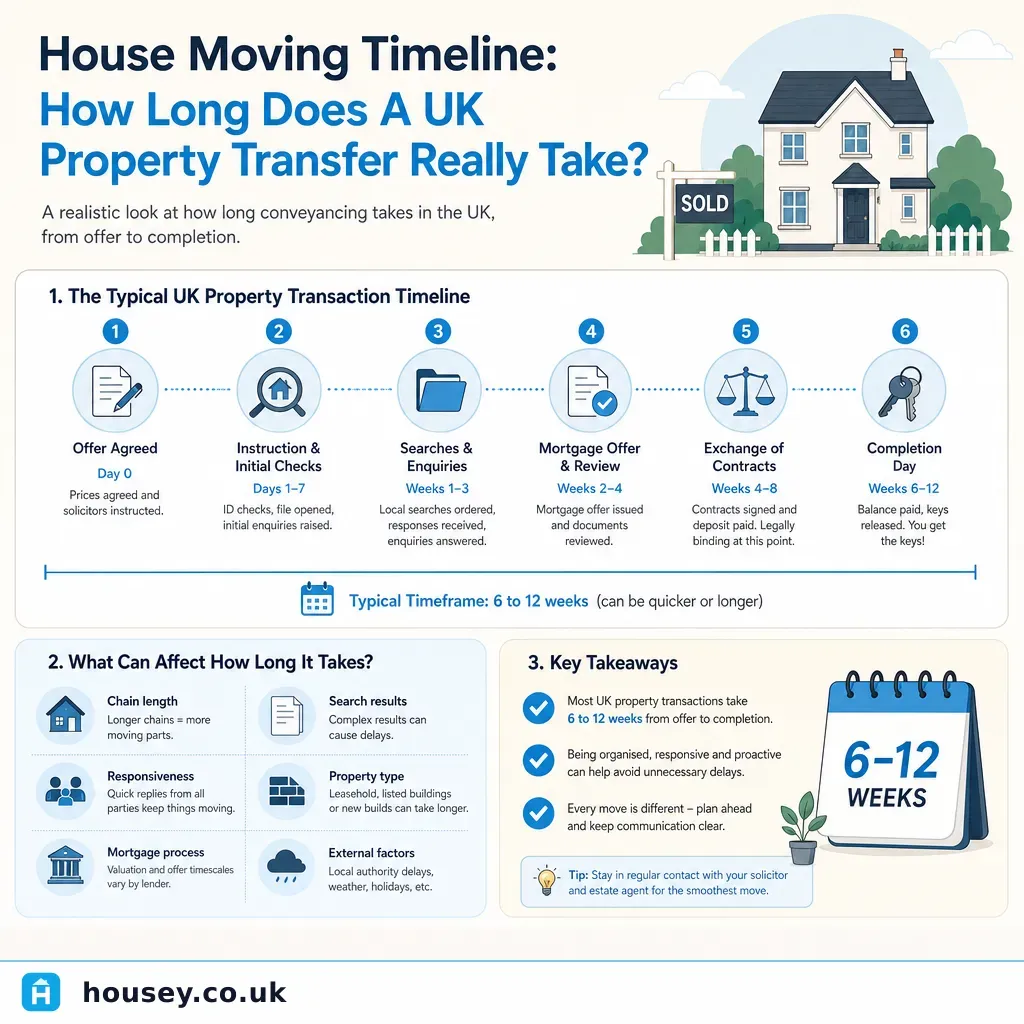
House Moving Timeline: How Long Does A UK Property Transfer Really Take?
A UK property transfer typically takes 12–16 weeks from offer acceptance to completion, though chains, mortgage requirements, and survey findings can extend this considerably.
 Buying & Moving
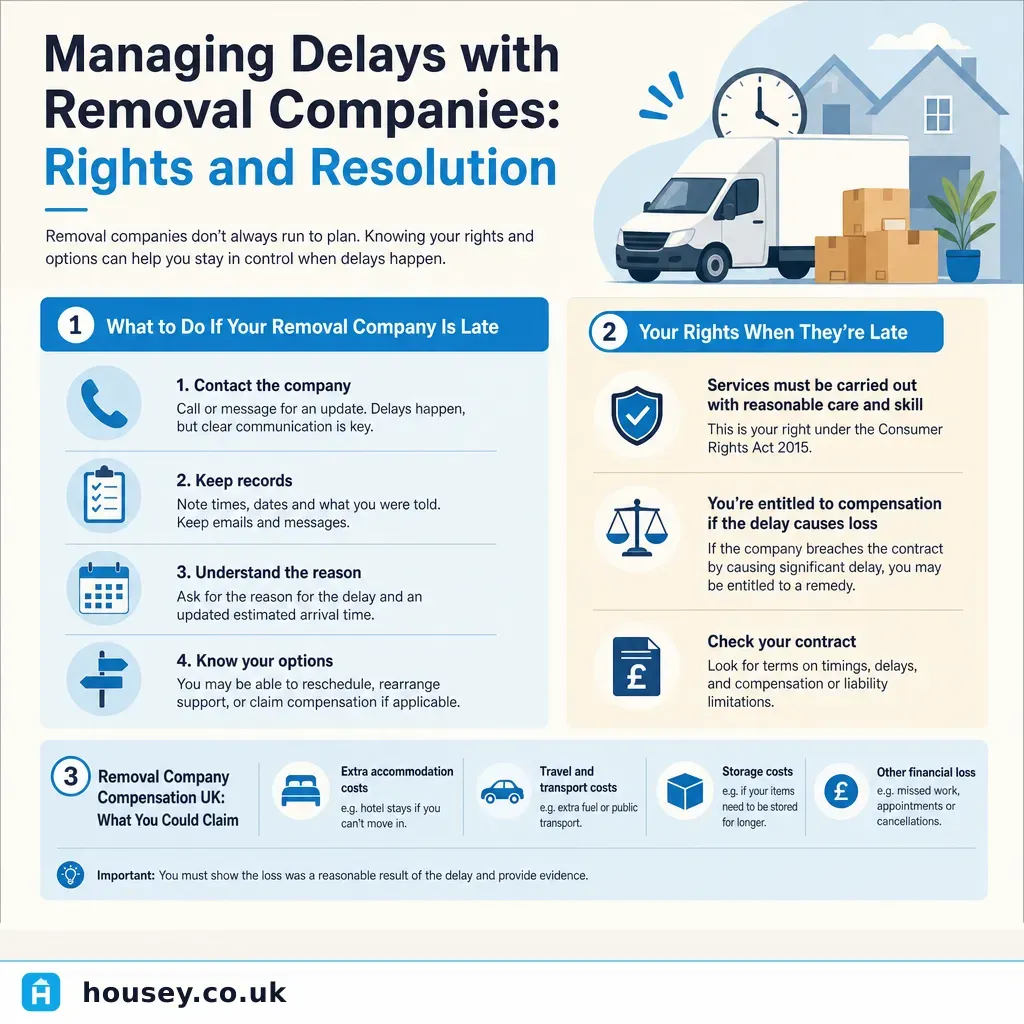
Managing Delays with Removal Companies: Rights and Resolution
If a removal company is late, your rights depend on your contract and whether the company is BAR-registered.
 Buying & Moving
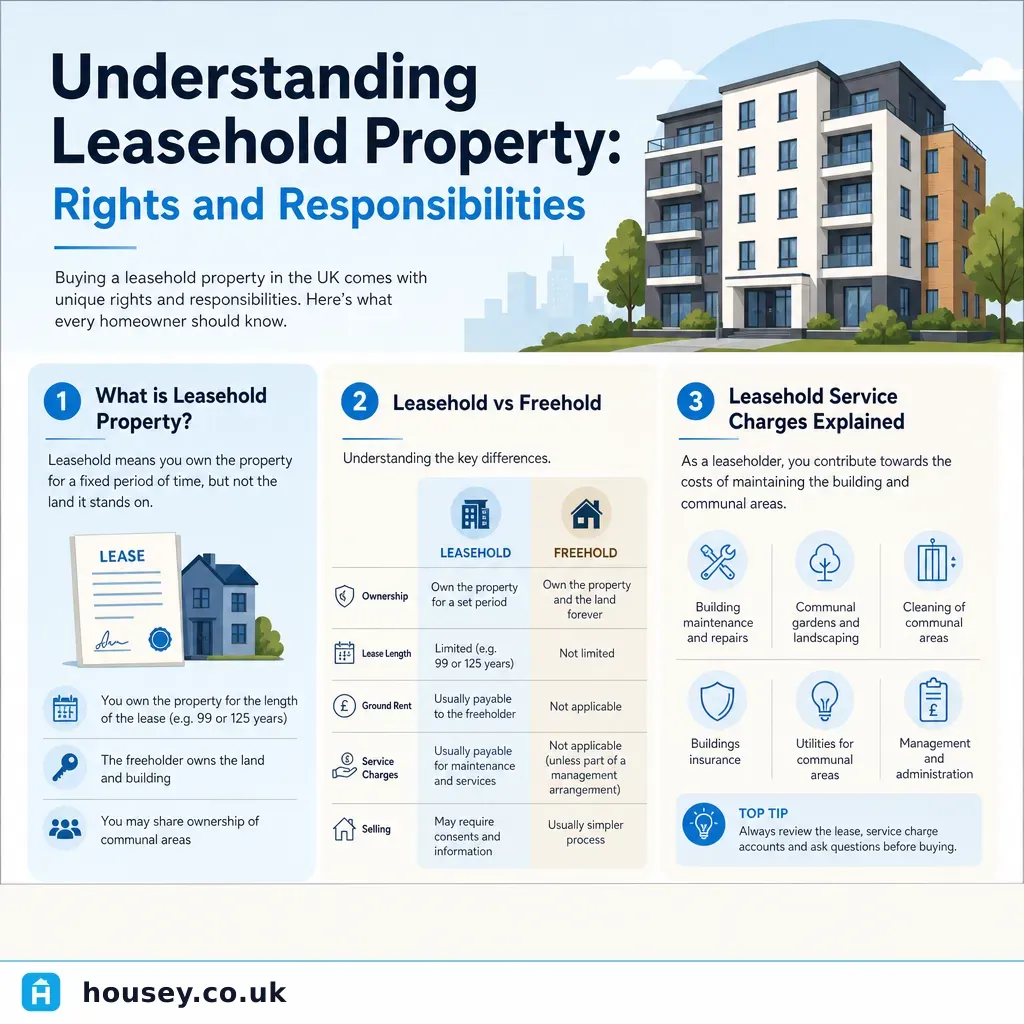
Understanding Leasehold Property: Rights and Responsibilities
Leasehold means you own a time-limited interest in a property while the freeholder owns the land and building.
 Buying & Moving
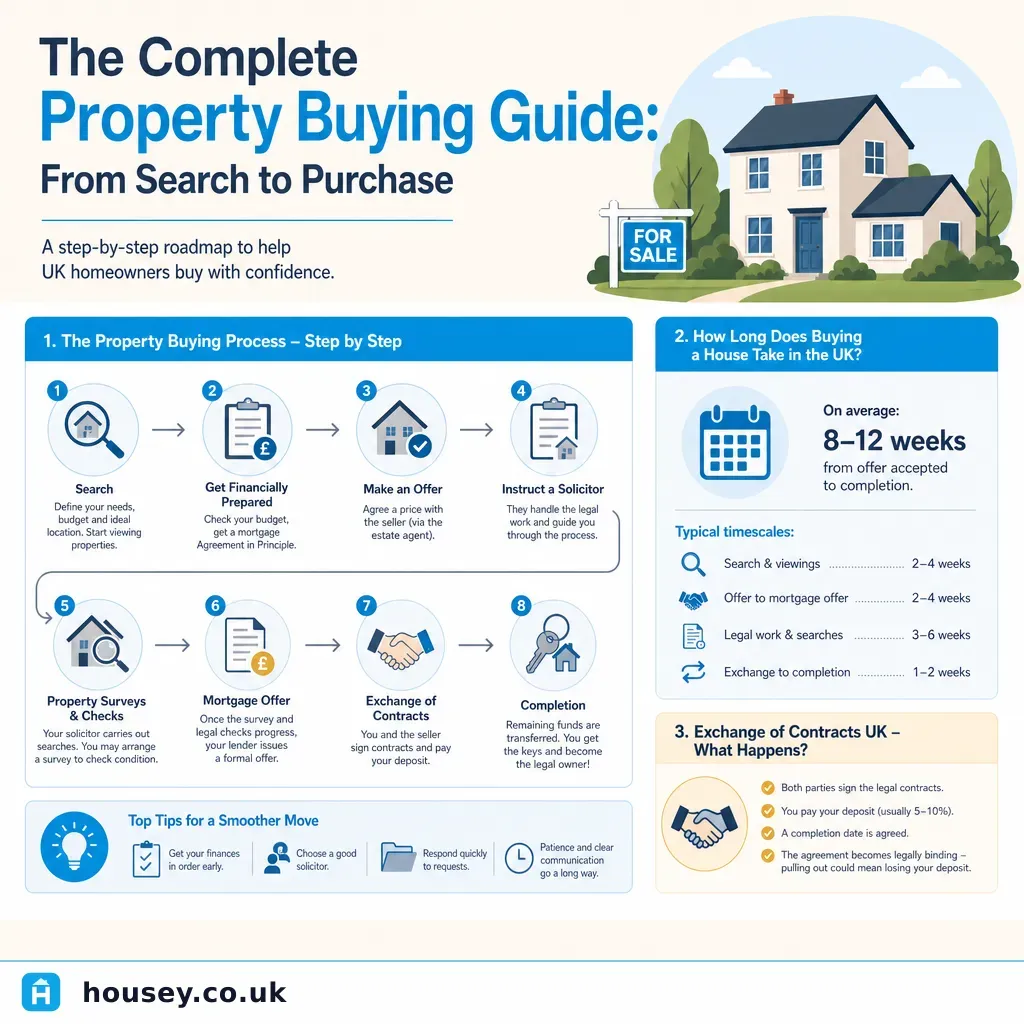
The Complete Property Buying Guide: From Search to Purchase
Buying a property in England and Wales typically takes 3–6 months from accepted offer to completion.
 Buying & Moving
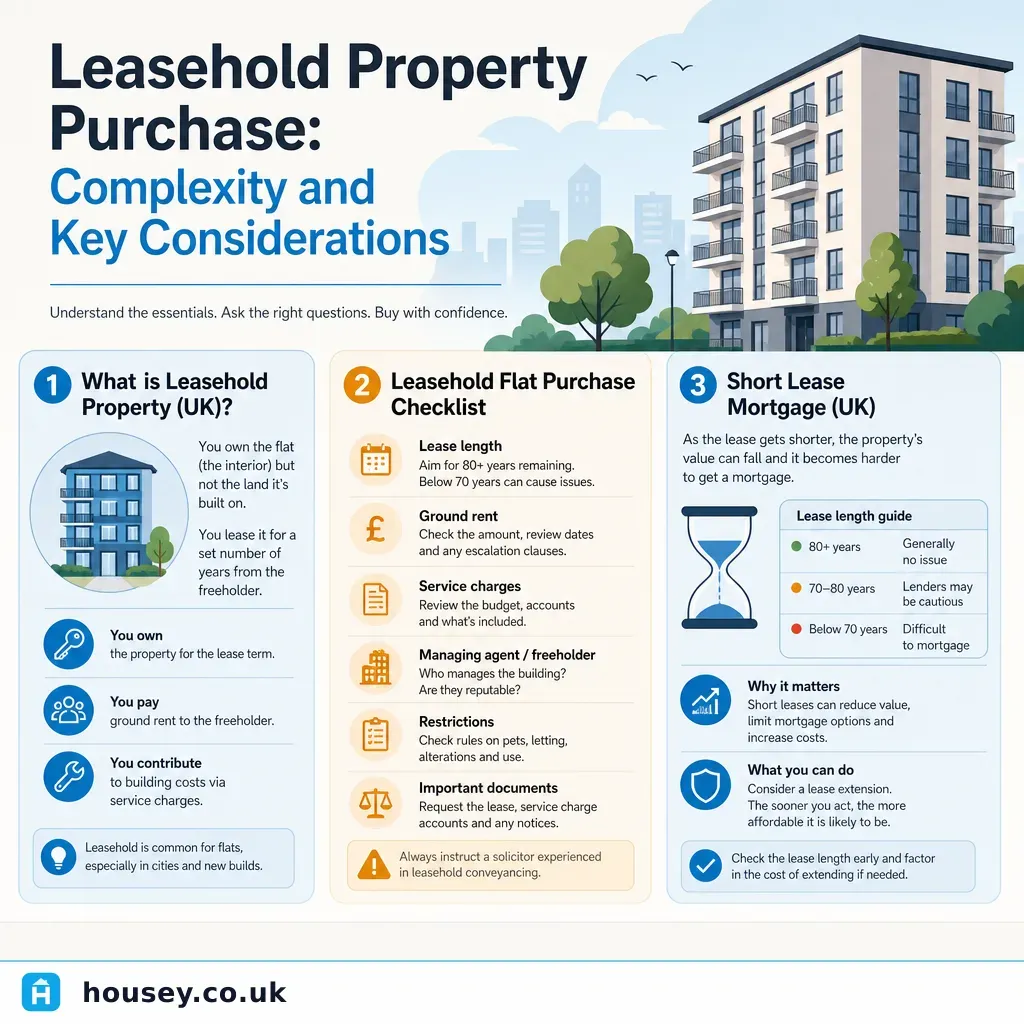
Leasehold Property Purchase: Complexity and Key Considerations
Buying a leasehold property means purchasing the right to occupy for a fixed term rather than owning the land outright.