Concrete Applications in Residential Landscape Design
By Housey · Last reviewed 25th of May 2026
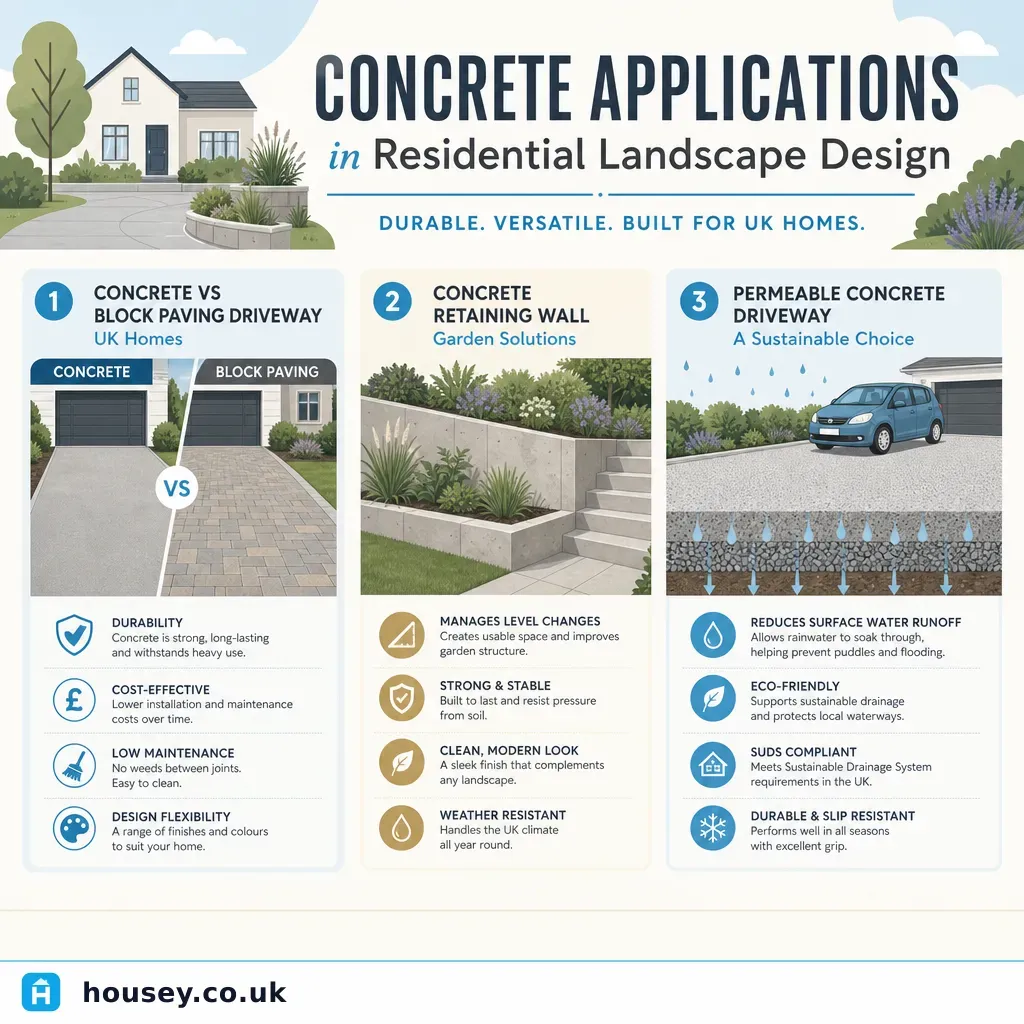
Concrete Applications in Residential Landscape Design
When planning a garden overhaul or driveway replacement, UK homeowners face a wide spectrum of hard landscape material choices. Concrete underpins this decision in more ways than one — not only as a surface material in its own right but as the structural sub-system beneath most other hard landscape surfaces. Understanding where concrete excels, where alternatives perform better, and what regulatory requirements govern its use helps you brief a landscaper with precision and avoid costly rework once construction begins.
Key points
- Impermeable hard standing — including standard concrete — covering more than 5m² at the front of a house in England requires planning permission unless drainage routes to a permeable area such as a lawn; permeable concrete or block paving avoids this requirement under permitted development.
- Concrete strength class is specified to match the intended loading: C20/25 is typical for domestic pedestrian paths and patios; C25/30 is recommended for driveways subject to regular vehicle loading.
- Reinforced concrete (using A142 or A193 steel mesh) is standard for domestic driveways and for any retaining wall over 600mm; above 1m retaining height, structural design input is strongly advisable.
- Concrete sub-bases — typically 100–150mm of compacted MOT Type 1 hardcore — are required beneath most paving, block work, and slab surfaces even where the surface itself is natural stone or porcelain.
- Sustainable Urban Drainage Systems (SuDS) guidance under the Flood and Water Management Act 2010 means most local authorities in England now expect permeable or semi-permeable solutions for new residential driveways.
Where concrete is used in residential landscapes
Concrete appears at multiple levels in any landscape project — as a structural sub-system, as the primary surface, and as manufactured components.
Driveways
Concrete driveways are durable, long-lived, and increasingly popular as a contemporary alternative to block paving or tarmac. Key specification decisions:
- Permeable versus impermeable: Permeable concrete using a gap-graded mix, or block paving on a permeable sub-base, satisfies the 5m² planning requirement. Plain impermeable concrete for front driveways over 5m² requires a planning application unless drainage routes to a planted area.
- Reinforcement: A142 mesh (7mm bars at 200mm centres) is typical for light car use; A193 mesh suits heavier vehicles or frequent traffic.
- Thickness: 100–150mm for private cars; 150–200mm for vans or light commercial vehicles.
- Highway crossover: If kerb or footway alteration is needed to access the driveway, a separate application to the local highway authority is required — this is independent of any planning permission.
Patios and terraces
For patios, concrete competes directly with natural stone, porcelain, and clay pavers. The choice often comes down to budget, aesthetic preference, and whether a bespoke shape or finish is required. In-situ concrete allows seamless large-format pours and a variety of decorative finishes; pre-cut natural stone or porcelain offers premium aesthetics on a concrete or mortar bed sub-base.
Retaining walls
Reinforced concrete is the structural standard for garden retaining walls. Alternatives include:
- Timber sleepers — suited to walls up to 600mm in well-drained conditions; limited lifespan.
- Brick or blockwork — aesthetically flexible; requires engineering input for walls over 1m.
- Gabion baskets — permeable and informal in character; suited to naturalistic landscapes.
- Reinforced in-situ concrete — strongest option; best for walls over 1m or where ground loading is uncertain.
Sub-bases and foundations
Concrete sub-bases and concrete blinding layers are used beneath paths, patios, retaining wall footings, and structural foundations even when the surface material is natural stone, porcelain, or timber decking. A 50mm lean-mix concrete (C10) blinding layer is standard beneath reinforced concrete strip foundations. For natural stone or large-format porcelain on a domestic patio, a 100mm concrete sub-base on compacted hardcore provides a rigid, stable platform.
Steps and edging
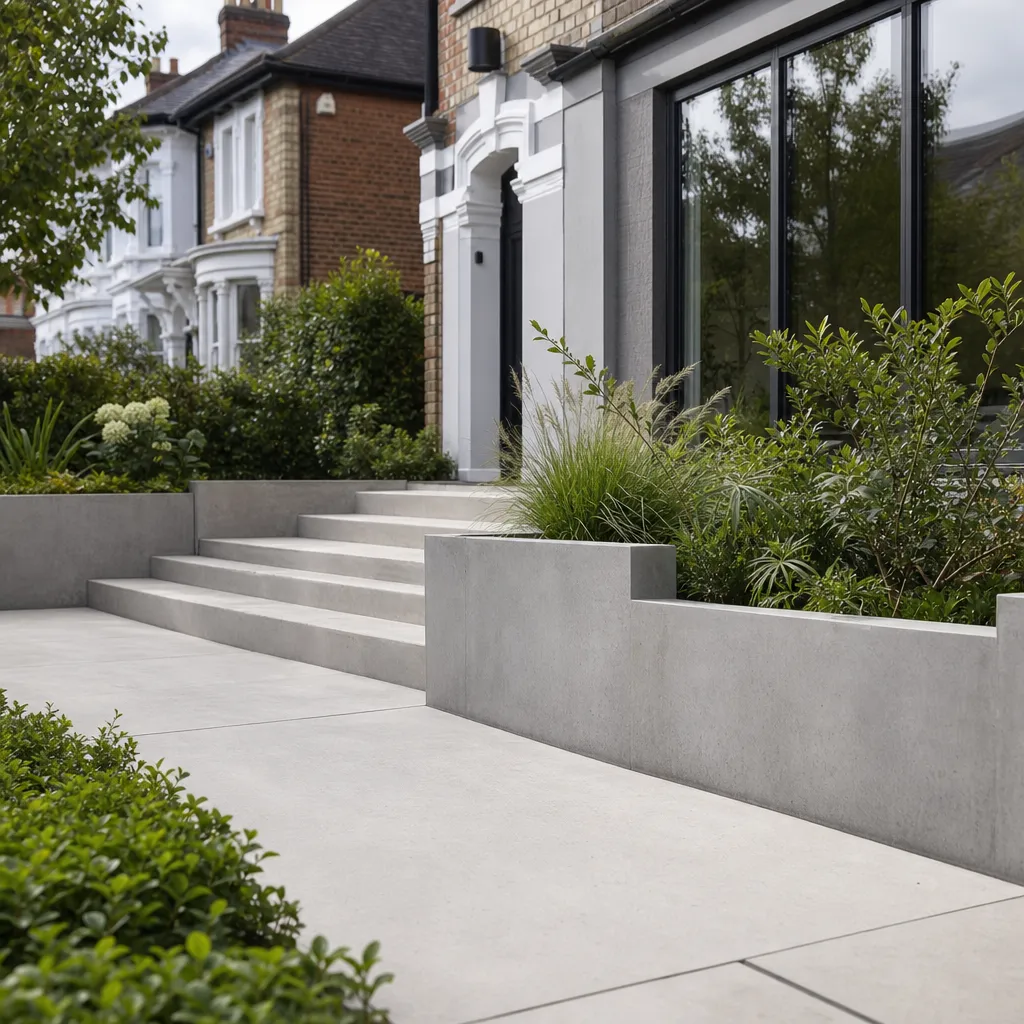
In-situ or precast concrete steps integrate cleanly with contemporary garden schemes and can be cast to exact site dimensions. Precast concrete edging (mowing strips, path borders, channel edging) is practical, cost-effective, and widely available. Concrete copings on garden walls shed rainwater away from the wall face, reducing frost damage and efflorescence over time.
Concrete versus alternative landscape materials
Application | Concrete | Natural stone | Porcelain paving | Block paving | Gravel / resin bound |
|---|---|---|---|---|---|
Front driveway | Durable and low-maintenance; impermeable standard concrete requires planning over 5m² | Premium aesthetic; permeable if laid on gravel sub-base | High-end; check load rating for vehicles | Permeable if correctly laid; flexible and repairable | Permeable; lower cost; less durable under heavy use |
Rear patio / terrace | Cost-effective; wide finish choice; expansion joints needed | Premium look; varies by stone type and origin | Contemporary; very low maintenance; UV stable | Traditional; flexible base; tolerates ground movement | Informal character; weed management required |
Garden path | Easy to form curves; seamless finish; crack risk without joints | Expensive at scale; can be slippery if mossy | Practical and clean; high-end cost | Traditional brick paths; flexible | Easy to lay; less formal; weed growth risk |
Retaining wall | Strongest structural option; good for heights over 600mm | Dry-stone walls for informal use; skilled labour needed | Not appropriate | Not appropriate | Not appropriate |
Steps | Durable; cast to any dimension; low maintenance | Premium appearance; requires skilled cutting | Suitable if 20mm+ thickness | Not typical for steps | Not appropriate |
Decision guide: when to choose concrete
- Choose in-situ concrete if you need bespoke dimensions, a seamless large-format surface, or maximum structural strength for a retaining wall or heavily loaded driveway.
- Choose permeable concrete or permeable block paving if your front garden hard standing exceeds 5m² and you want to avoid a planning application.
- Choose precast concrete products — slabs, edging, copings — if speed of installation and consistent dimensions matter more than fully bespoke design.
- Choose a different surface on a concrete sub-base if you prefer the aesthetic of natural stone, porcelain, or clay but need the rigidity and load distribution of a solid base.
- Ask a structural engineer before specifying a retaining wall over 1m, particularly if there is a building or highway at the top of the retained slope.
- Check with your lead local flood authority before replacing an existing driveway over 5m² with an impermeable surface — many authorities in England now require a drainage assessment or a move to a permeable solution.
Drainage and SuDS requirements
Since the Flood and Water Management Act 2010 and subsequent planning policy guidance, Sustainable Urban Drainage Systems (SuDS) are the expected approach for new hard standing in residential settings across most of England.
In practice, for most domestic projects this means:
- Front driveways over 5m²: permeable surfacing, or surface water directed to a lawn, planted border, or properly sized soakaway. Standard impermeable concrete triggers a planning application.
- Rear garden patios and paths: no planning requirement arises, but good drainage practice — falls of at least 1:60 away from the house, channel drains where needed, soakaways or connection to a soakaway drain — reduces flood risk and is expected by most local authorities.
- Wales: SuDS approval by the SuDS Approving Body (SAB) is required for most new drainage under the Schedule 3 of the Flood and Water Management Act, in force since January 2019.
- Scotland and Northern Ireland: separate regulations apply; always check with your local authority before specifying an impermeable surface.
For the majority of domestic rear garden projects in England, a surface drainage fall toward a planted border or a channel drain into a soakaway satisfies requirements without any planning application.
Homeowner checklist for concrete landscape applications
Before instructing a landscaper:
When to get professional help
For most residential concrete landscape projects, a competent landscaper can deliver the work to a good standard. Engage additional professional input — a structural engineer, garden designer, or building control professional — if:
- The project includes a retaining wall over 1m retaining earth.
- You are replacing a front driveway over 5m² and considering an impermeable surface — consult your local planning authority and lead local flood authority first.
- The garden is subject to a flood risk area designation or is known to have a high water table.
- The property is listed or in a Conservation Area, where external hard landscaping may require listed building consent or planning permission.
- You are uncertain about underground services — commission a utility survey before any significant excavation.
How Housey can help
Housey connects you with experienced landscapers who understand the full range of concrete applications in UK residential gardens — from driveway specifications to retaining wall construction — and with garden designers who can produce a coordinated scheme with material specifications, drainage plans, and build-ready drawings.
Frequently asked questions
Is a concrete driveway better than block paving in the UK?
Both are widely used and durable choices. Concrete driveways need less ongoing maintenance as there are no individual units to re-level or re-sand, but surface cracks are harder to repair cleanly than block paving, which can be lifted and relaid locally. Block paving on a permeable sub-base is typically easier to make compliant with the 5m² planning rule for front drives. The right choice depends on aesthetics, budget, and maintenance preferences.
How much does a concrete driveway cost in the UK?
A standard brushed or broom-finished concrete driveway typically costs £50–£100 per m² installed, depending on thickness, reinforcement specification, removal of existing surfaces, and regional labour rates. Decorative finishes such as exposed aggregate or stamped concrete add to this. Indicative UK costs, last reviewed 2026-05-25 — always obtain at least three itemised quotes before instructing.
Does a concrete patio affect my home insurance?
Hard landscaping generally does not directly affect home building insurance. However, significant changes to drainage — particularly where impermeable surfacing increases surface water runoff toward the house or neighbouring properties — could create liability exposure. Confirm your drainage plan satisfies your local authority's expectations and consider informing your insurer of major external works as a precaution.
Do I need building regulations for a concrete retaining wall in my garden?
Building Regulations may apply where a retaining wall could affect the structural stability of an adjacent building or public infrastructure. For walls over 1m retaining earth near a building or highway, check with your local authority's building control team before construction. Freestanding garden walls up to 2m generally do not require building regulations approval, but structural assessment is advisable above 1m.
Sources and further reading
- When is permission required? — Planning Practice Guidance — GOV.UK
- Sustainable drainage systems guidance — GOV.UK
- Flood and Water Management Act 2010 — legislation.gov.uk
- Building Regulations Approved Document A — Structure — GOV.UK
- Concrete in landscape design — technical guidance — The Concrete Centre (MPA)
Useful next reads
 Improvement & Build
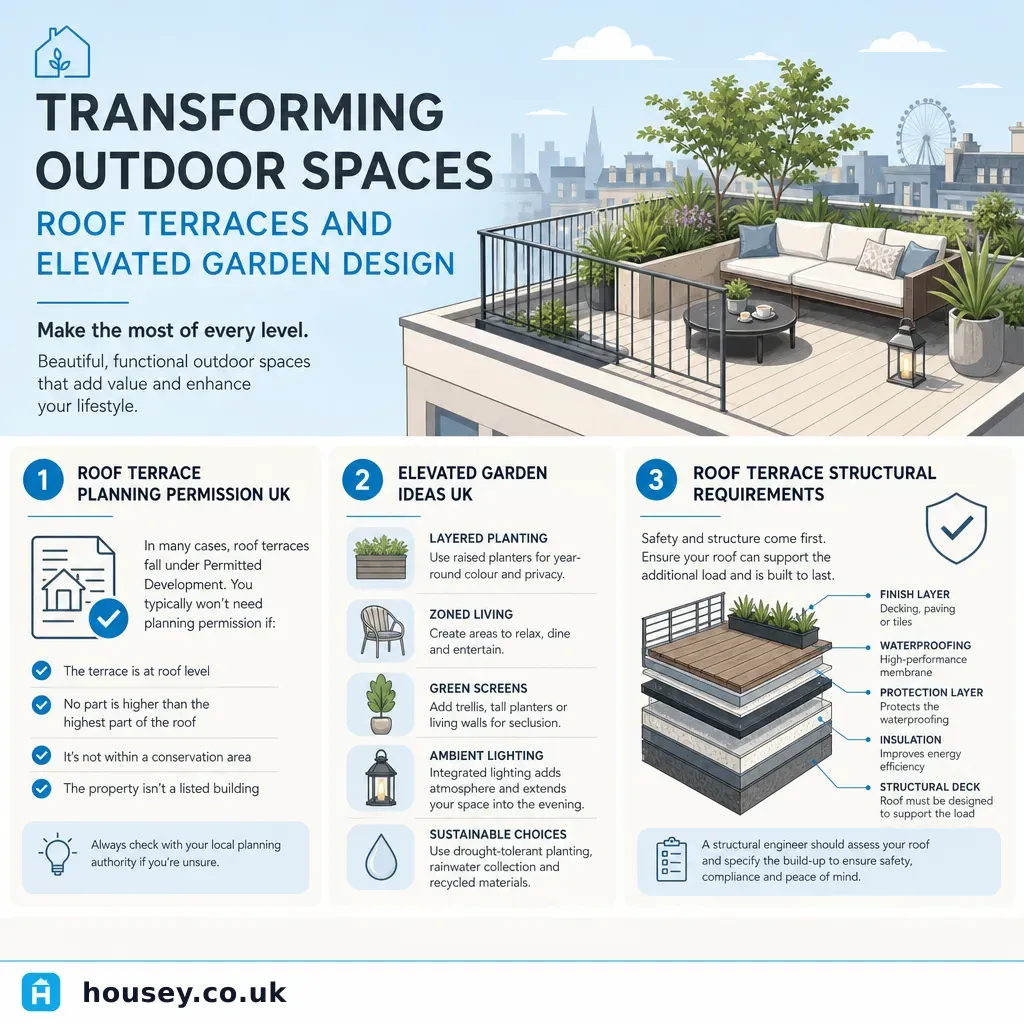
Transforming Outdoor Spaces: Roof Terraces and Elevated Garden Design
Roof terraces in the UK almost always need planning permission and a structural engineer's load capacity assessment before design work begins.
 Improvement & Build
Buying guide: composite doors for homeowners
A composite door is a multi-layer product with a glass reinforced plastic outer skin, solid foam core, and multipoint locking as standard.
 Improvement & Build
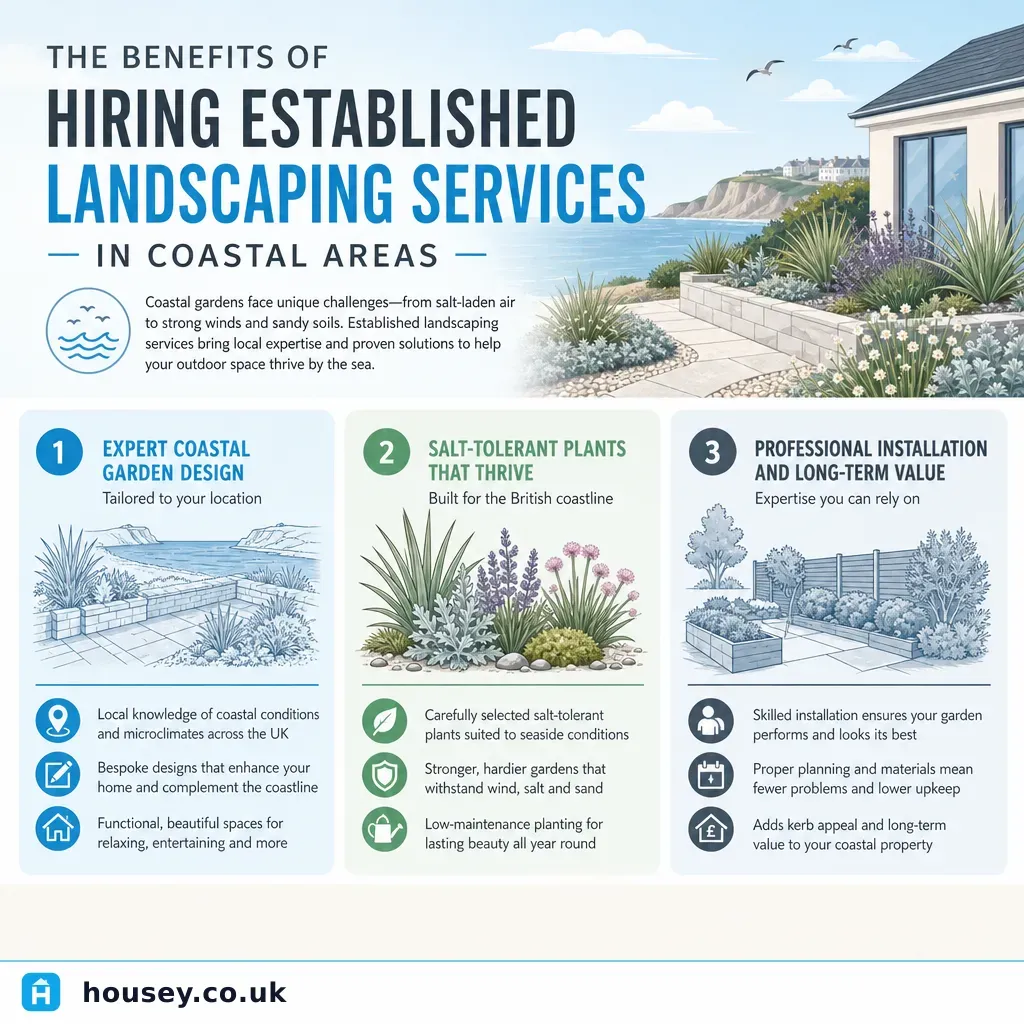
Benefits of Hiring Established Landscaping Services in Coastal Areas
Established landscaping contractors in coastal areas understand salt spray exposure, prevailing wind patterns, and local planning restrictions that inland firms often overlook.
 Improvement & Build
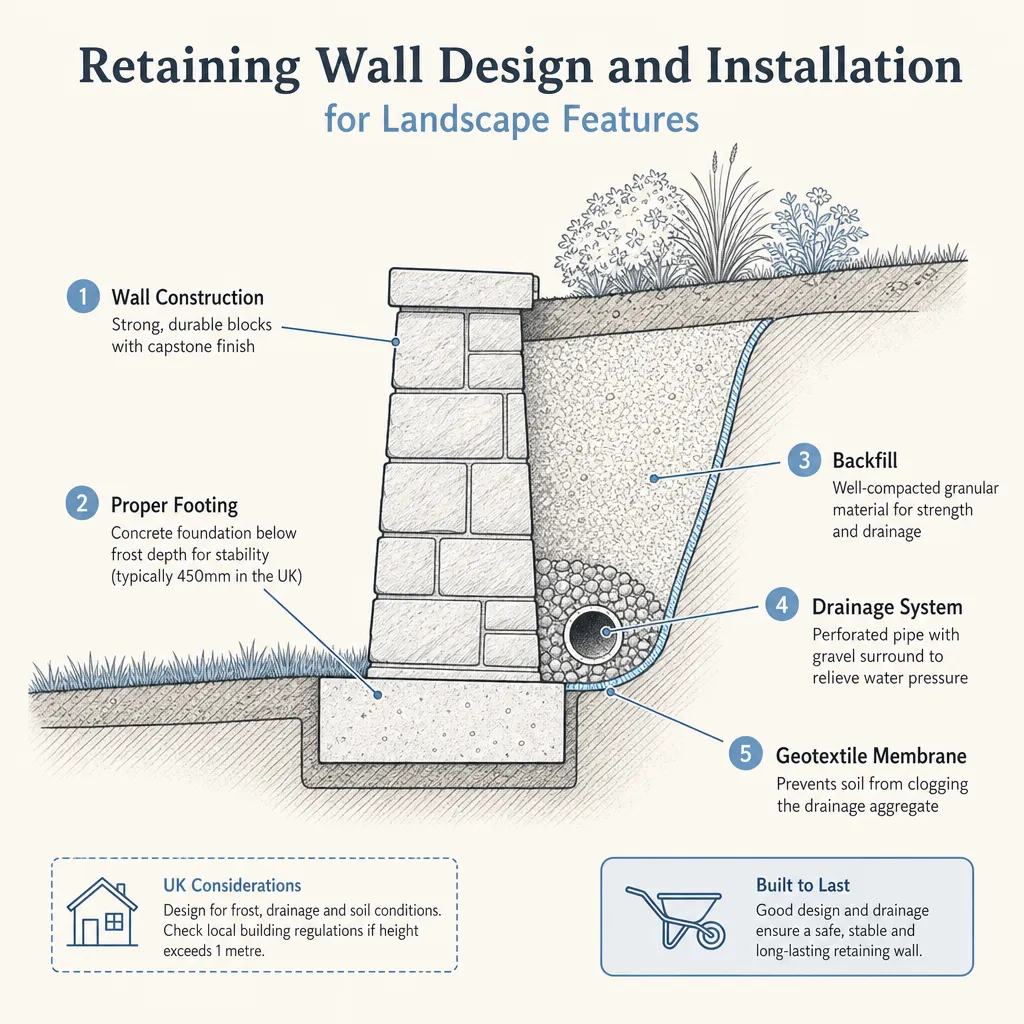
Retaining Wall Design and Installation for Landscape Features
A garden retaining wall holds back soil on a sloped plot using concrete blocks, stone, or timber.
 Improvement & Build
Concrete Landscaping for Homeowners: Durability and Design Benefits
Concrete is one of the most durable hard landscaping materials available to UK homeowners, with a typical design life of 25–40 years and low ongoing maintenance.