Cost of Installing Fitted Bedroom Furniture
By Housey · Last reviewed 5th of May 2026
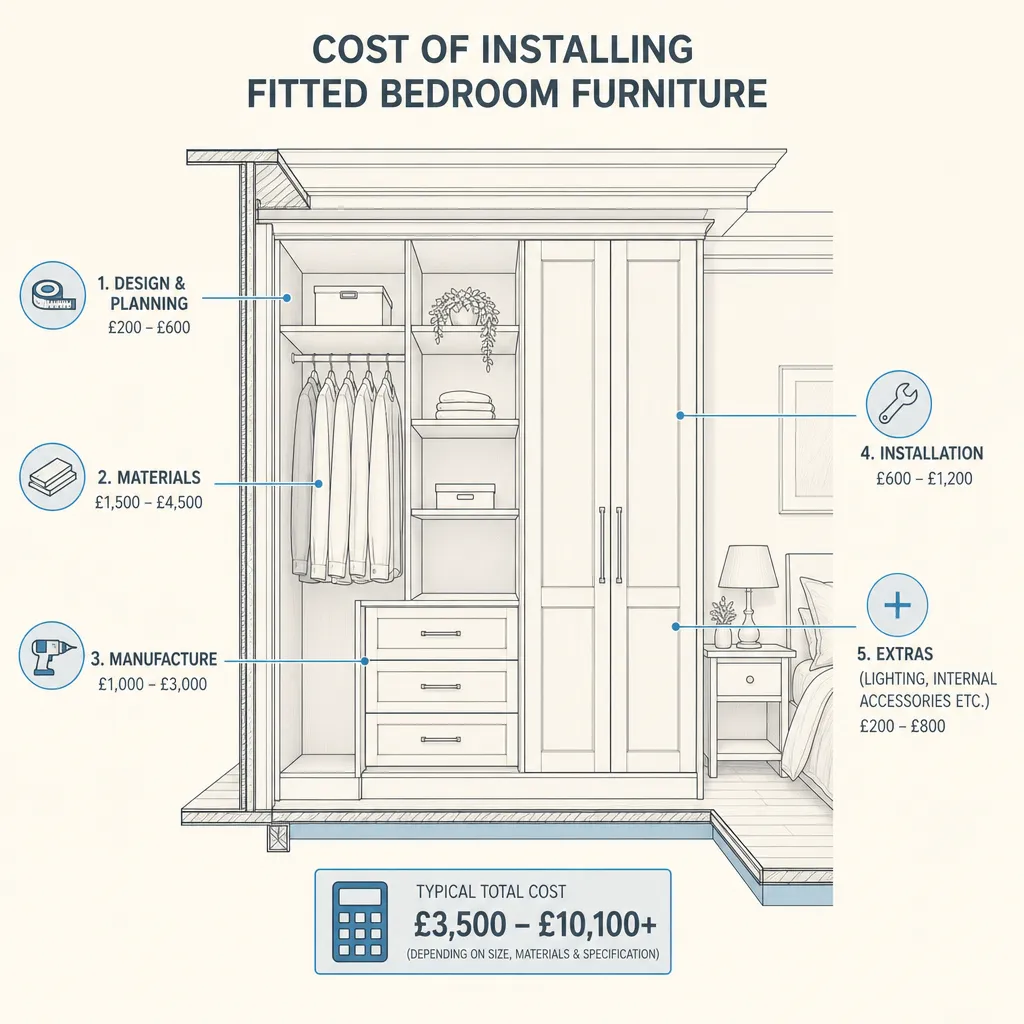
Cost of Installing Fitted Bedroom Furniture
Fitted bedroom furniture is one of the most popular home improvement projects in the UK, offering a practical solution for awkward alcoves, low eaves, and underused wall space that freestanding wardrobes cannot address. The question of cost usually arises once homeowners have decided fitted storage is the right option and need a realistic budget before approaching suppliers. Prices vary considerably depending on the scale of the project, the materials chosen, and whether you go to a national fitted furniture company, a local joiner, or a modular system — so understanding what drives the difference is essential before requesting quotes.
Key points
- Fitted bedroom furniture in the UK costs roughly £1,000–£2,500 for basic modular installations, £2,500–£7,000 for semi-bespoke, and £7,000–£20,000+ for fully bespoke joinery (indicative UK costs, last reviewed 2026-05-05).
- VAT at 20% applies to most fitted furniture installations — always confirm whether quotes are VAT-inclusive or exclusive before comparing them.
- The main cost drivers are room size, door style (hinged vs sliding, mirrored vs painted), interior fittings (drawers, shelves, rails), and material finish.
- MDF is the standard carcass material; premium options such as lacquered paint, solid timber, or soft-close mechanisms add noticeably to the total cost.
- Lead times range from one to three weeks for modular flat-pack to eight to sixteen weeks for bespoke cabinet-making.
What types of fitted bedroom furniture are there?
Three broad tiers cover most of the UK market, each with a different cost structure and level of customisation.
Modular (flat-pack assembled and fitted)
Retailers offer modular systems where pre-made units are combined and fitted to your room by a carpenter or the retailer's own fitter, with workarounds for sloped ceilings or awkward walls. This is the most affordable option but the least tailored — gaps at ceiling height and corners are more common, and very irregular rooms may be difficult to accommodate well.
Semi-bespoke (made-to-measure by a specialist supplier)
Specialist companies design, manufacture, and install units to your specific room dimensions. Carcasses are typically MDF or melamine-faced board in standard depths, but door sizes, finishes, handles, and interior configurations are chosen by the homeowner. This is the most common choice for UK bedrooms, balancing cost and customisation.
Fully bespoke joinery
A local joiner or cabinetmaker builds everything from scratch to your exact specification. This is the highest-cost option but offers the most flexibility for unusual room shapes, heritage properties, specific timber species, or complex interior layouts including integrated dressing areas.
How much does fitted bedroom furniture cost in the UK?
The table below gives indicative installed costs for a single-wall wardrobe run (approximately three metres wide) in a standard UK bedroom. Larger rooms, walk-in configurations, and more complex interiors will cost proportionally more.
Type | Indicative cost (fitted, VAT inclusive) | Best for |
|---|---|---|
Modular / flat-pack | £1,000–£2,500 | Straightforward rooms, tighter budgets |
Semi-bespoke specialist | £2,500–£7,000 | Most UK bedrooms; good balance of quality and cost |
Fully bespoke joinery | £7,000–£20,000+ | Unusual room shapes, period properties, high-spec finishes |
Indicative UK costs, last reviewed 2026-05-05. Quotes vary significantly by region, room size, and specification. Always request itemised quotes from at least three suppliers.
What are the main cost drivers?
Understanding what affects price helps you make informed decisions before requesting quotes.
Room size and layout — A full room with floor-to-ceiling wardrobes on multiple walls costs significantly more than a single-wall run. Walk-in wardrobes and dressing rooms are at the higher end of the market.
Door style — Sliding doors are typically more expensive than hinged doors due to the tracking mechanism. Mirrored doors, painted lacquer finishes, and glass panels all add to the total.
Interior fittings — A basic interior with a hanging rail and fixed shelves costs less than a fitted interior with pull-out drawers, shoe racks, tie rails, trouser hangers, and integrated LED lighting.
Materials and finish — Painted MDF and foil-wrapped finishes are standard mid-range options. Solid timber, lacquered paint, and premium soft-close hardware increase price noticeably.
Access and room condition — Coving, skirting boards, and uneven ceilings can complicate installation. Filling and decorating around new units is sometimes charged separately — confirm this upfront.
Company type — National fitted furniture companies carry design, survey, and installation overhead. Local joiners may offer competitive pricing for equivalent quality. It is worth getting quotes from both types before deciding.
Fitted versus freestanding: a quick comparison
Factor | Fitted | Freestanding |
|---|---|---|
Upfront cost | Higher | Lower |
Customisation | High — made to your room dimensions | Limited to standard sizes |
Use of awkward space | Excellent — alcoves, sloped ceilings | Poor; gaps at ceiling and walls |
Flexibility | Fixed; difficult to move or take with you | Can be moved to your next property |
Resale appeal | Often viewed positively by buyers | Neutral — buyers bring their own |
Lead time | Weeks to months depending on type | Immediate if in stock |
What to check before accepting a quote
Use this checklist when comparing quotes from fitted bedroom furniture suppliers:
- Is VAT included in the quoted price?
- Does the price cover design, manufacture, delivery, and installation, or are any of these charged separately?
- Who surveys the room — the company directly, or a subcontractor?
- What happens if measurements are found to be incorrect on the day of installation?
- What is the guarantee on the furniture and the installation workmanship, and how long does it last?
- Which finish options, door styles, and interior configurations are included in the base price, and what costs extra?
- How are changes to skirting boards, coving, or ceiling heights handled, and is there an additional charge?
- What is the lead time from deposit payment to installation date?
- Is a deposit required, and what are the cancellation or cooling-off terms?
What to ask before hiring a separate fitter
If you are supplying your own flat-pack units and hiring a carpenter to assemble and install them independently:
- How many installations of this type and scale have you completed?
- Can you provide photos of similar projects and references from recent customers?
- How do you handle rooms with sloped ceilings, alcoves, or uneven floors?
- Is all snagging and finishing work included in your quote, or charged on top?
- What is your fixed price or day rate for this project, and what factors could change it?
When to get professional help
Most fitted bedroom furniture projects are low-risk, but consider getting specialist advice if:
- Your room has a chimney breast, protruding RSJ, or load-bearing wall feature that may affect where units can be fixed — a structural engineer or experienced joiner should assess this before work begins.
- You want integrated lighting that requires new electrical wiring — this must be carried out by a qualified electrician in compliance with Part P of the Building Regulations.
- Your property is listed or sits within a conservation area and you are considering structural changes to walls or openings to accommodate the furniture.
- You have damp or moisture issues in the bedroom — investigate and resolve these before installation, as trapping moisture behind fitted units accelerates mould growth and can damage both the furniture and the wall behind.
How Housey can help
Housey helps UK homeowners compare quotes from local tradespeople across a wide range of home improvement projects. If your bedroom plans also involve electrical work for integrated lighting, damp investigation, or structural alterations to walls, use Housey to find and compare the right specialists for those elements of the project before proceeding with the fitted furniture installation itself.
Frequently asked questions
Does fitted bedroom furniture add value to a house?
Well-designed, quality fitted bedroom furniture generally has a positive effect on buyer perception and can support your asking price, particularly in the master bedroom. However, value added depends on quality, condition, and whether the style suits the property. Poorly fitted or dated units can have the opposite effect. There is no universally accepted percentage uplift figure.
Do I need planning permission for fitted bedroom furniture?
In almost all cases, no. Installing fitted furniture inside an existing room is not building or development work requiring planning permission. Exceptions may apply if you are creating a new room by partitioning a space, which may engage Building Regulations, or if structural changes to walls are involved. Check with your local planning authority if uncertain.
How long does fitted bedroom furniture installation take?
A typical bedroom wardrobe installation by a specialist supplier takes one to two days. Larger or more complex projects — walk-in wardrobes or full-room installations — may take three to five days. Fully bespoke joinery projects can take longer, particularly if multiple rooms are involved or access is restricted.
Can I get fitted bedroom furniture on finance?
Many national fitted furniture companies offer finance options, typically 0% interest over a promotional period or longer-term plans at a fixed rate. Read the terms carefully, confirm who the finance provider is, and check the total cost of credit before agreeing to any arrangement.
What is the best material for fitted wardrobes?
MDF is the most common carcass material due to its stability and ease of machining. It accepts paint well and resists warping better than solid timber in variable humidity. Solid timber costs more but suits high-end or period interiors. The door finish — foil wrap, spray paint, or solid timber — has the biggest impact on both appearance and overall price.
Sources and further reading
- Fitted wardrobes guide — Which?
- Fitted wardrobe cost guide — Checkatrade
- VAT on construction and building services — GOV.UK
Useful next reads
 Improvement & Build
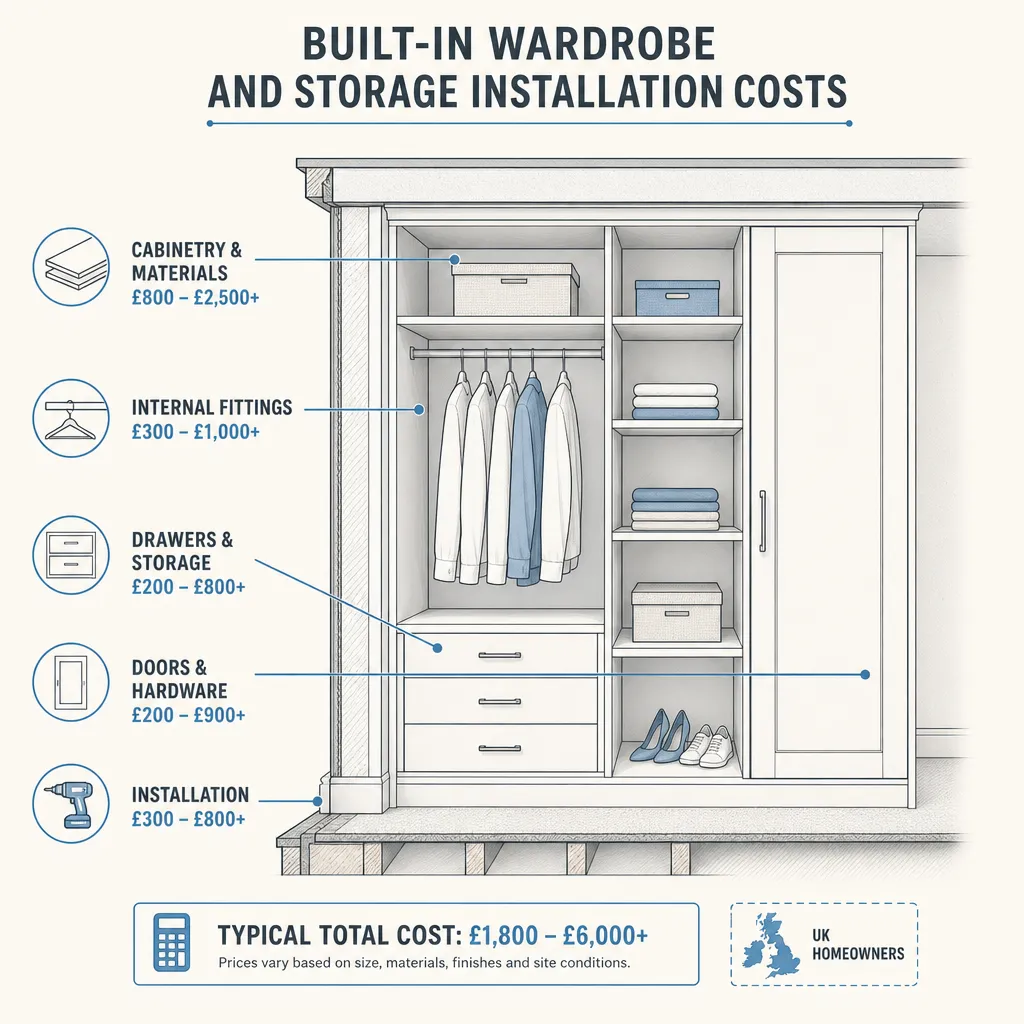
Built-In Wardrobe and Storage Installation Costs
Built-in wardrobe installation in the UK typically costs £800–£3,000 for a standard bedroom using fitted flatpack or semi-bespoke systems, and £2,500–£8,000 or more for fully bespoke carpentry.
 Improvement & Build
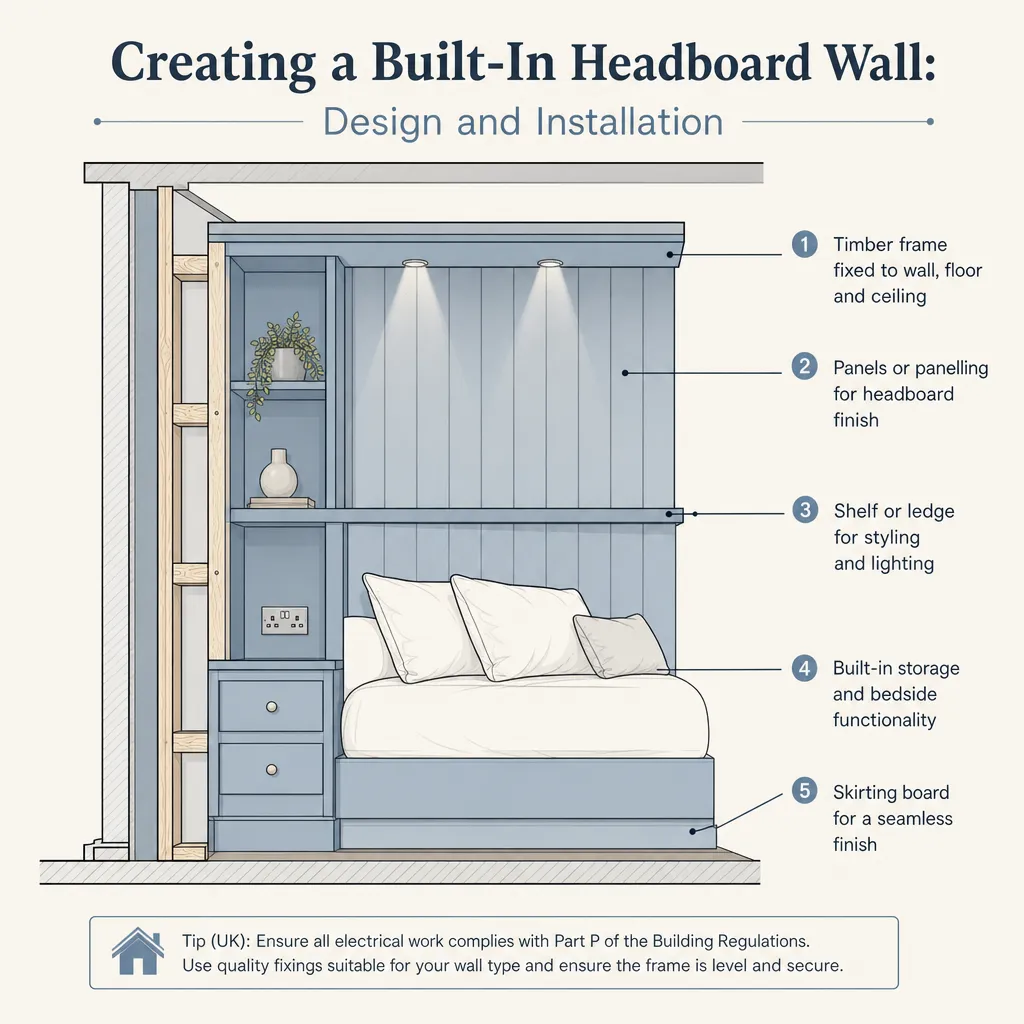
Creating a Built-In Headboard Wall: Design and Installation
A built-in headboard wall involves fixing a panelled or framed structure to the bedroom wall, typically from floor to dado height or full ceiling.
 Improvement & Build
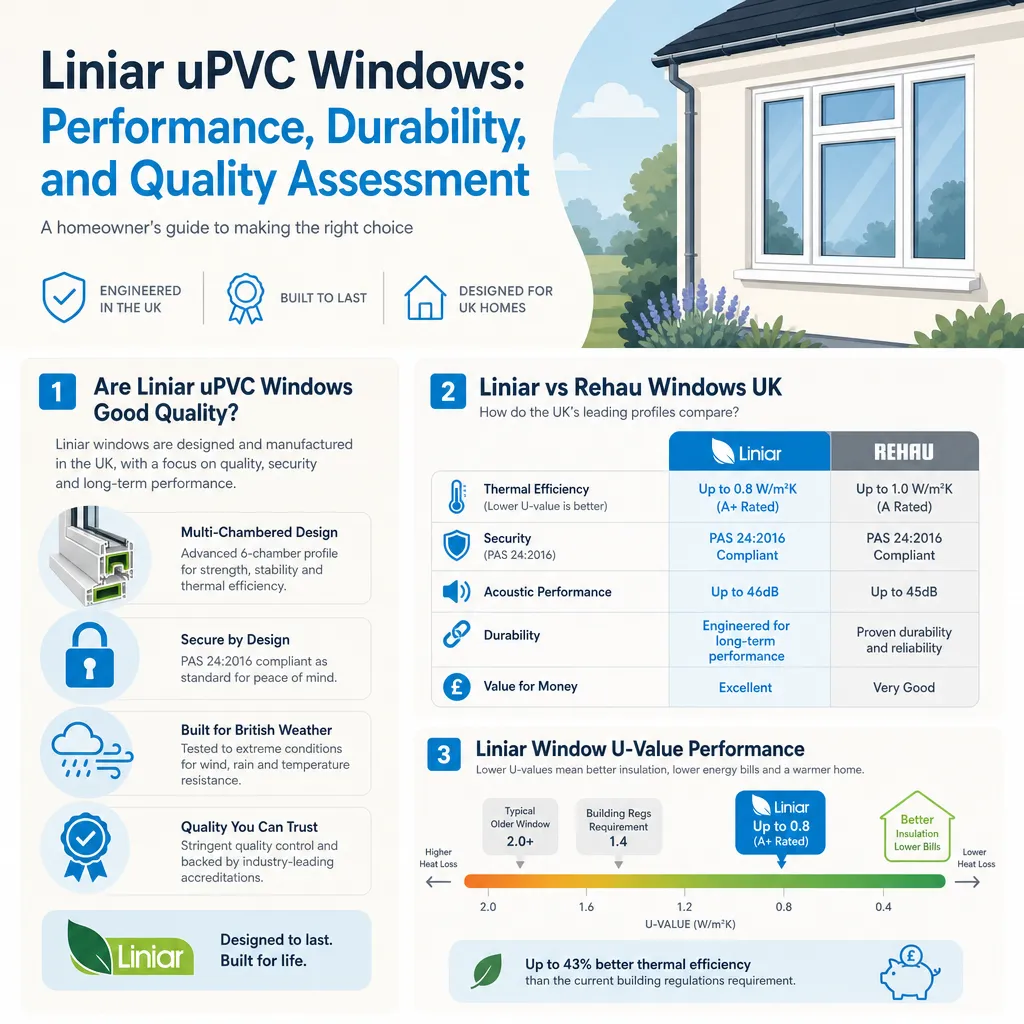
Liniar uPVC Windows: Performance, Durability, and Quality Assessment
Liniar uPVC window profiles are manufactured in the UK using multi-chambered, foamed frames.
 Improvement & Build
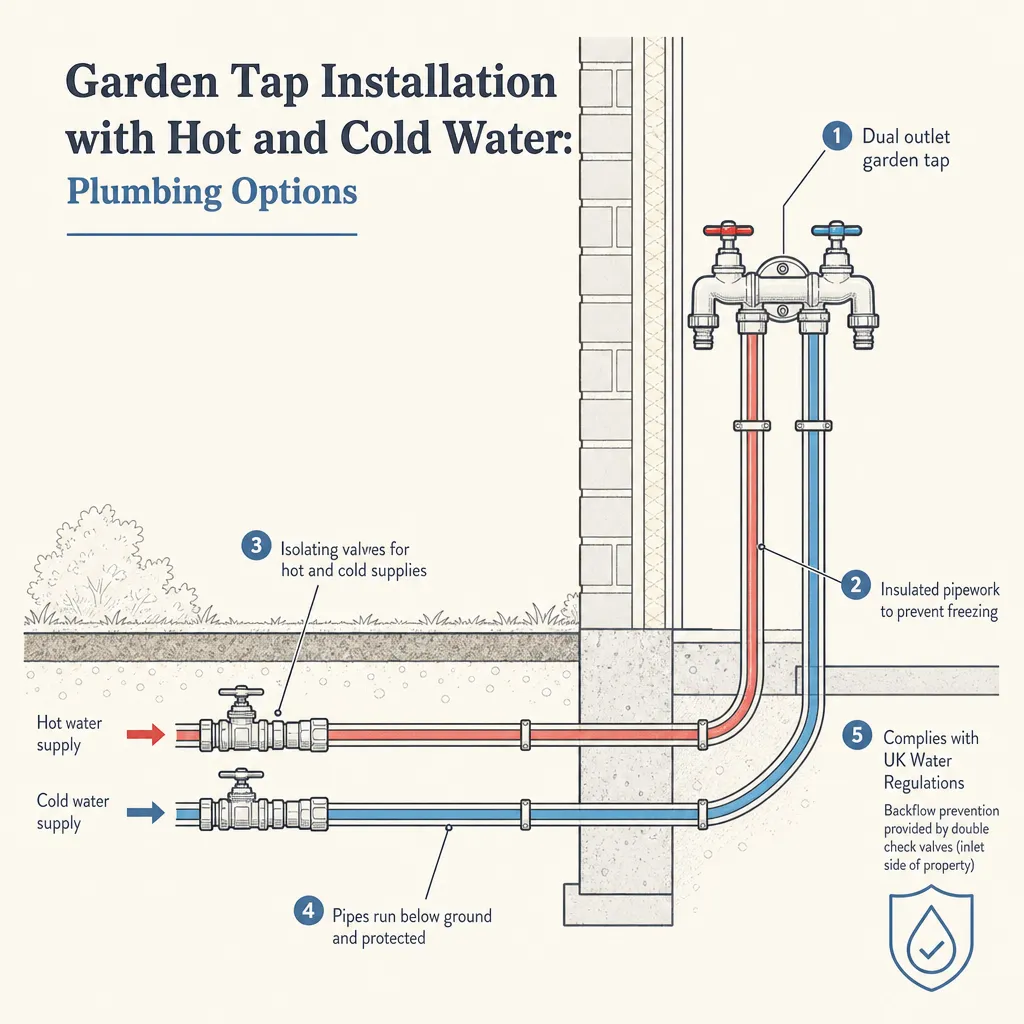
Garden Tap Installation with Hot and Cold Water: Plumbing Options
Adding a cold garden tap is a common DIY project, but routing hot water outdoors requires a plumber to connect to your domestic hot water system and comply with the Water Supply (Water Fittings) Regulations 1999.
 Improvement & Build
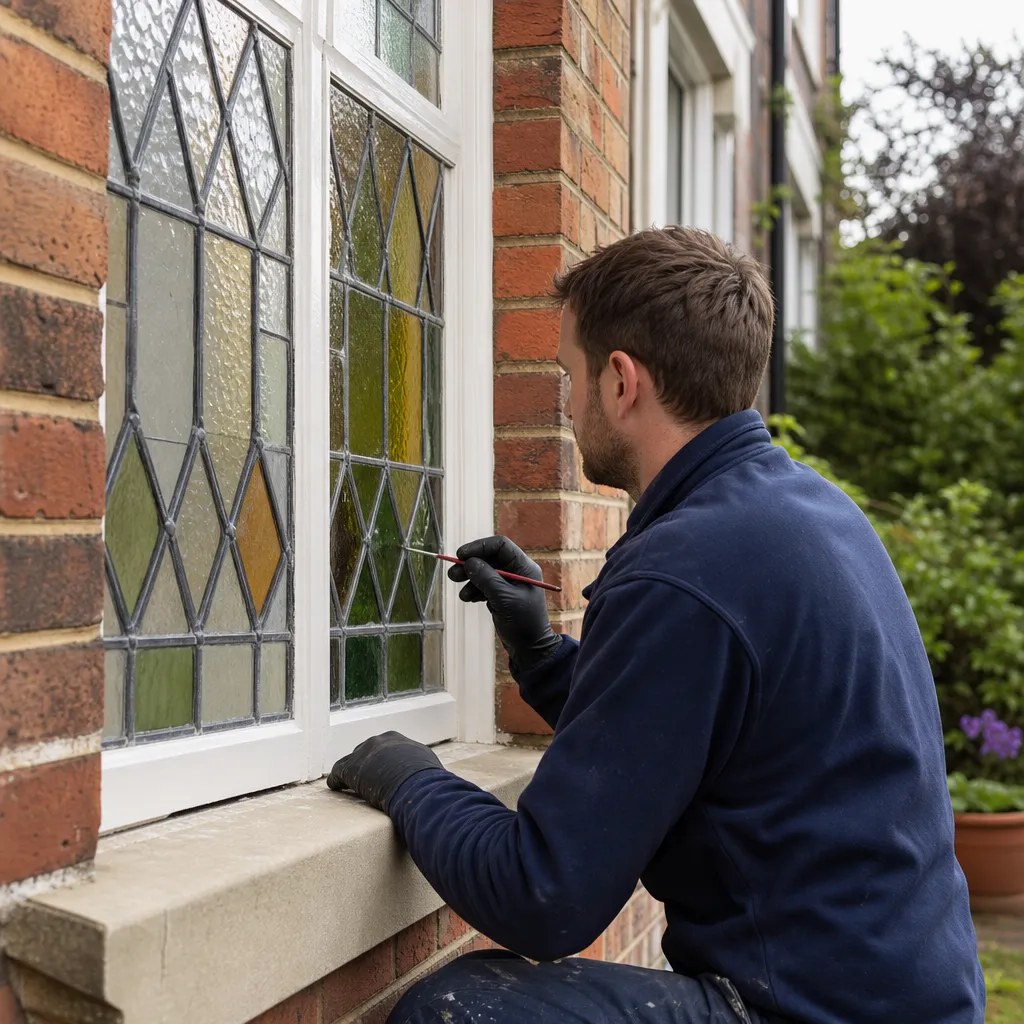
Sealing and Maintaining Historic Leaded Glass Windows: Preservation and Performance
Leaded glass windows are maintained using traditional linseed oil cement — not silicone or modern sealants, which prevent natural movement in the lead came.