Creating a Built-In Headboard Wall: Design and Installation
By Housey · Last reviewed 11th of May 2026
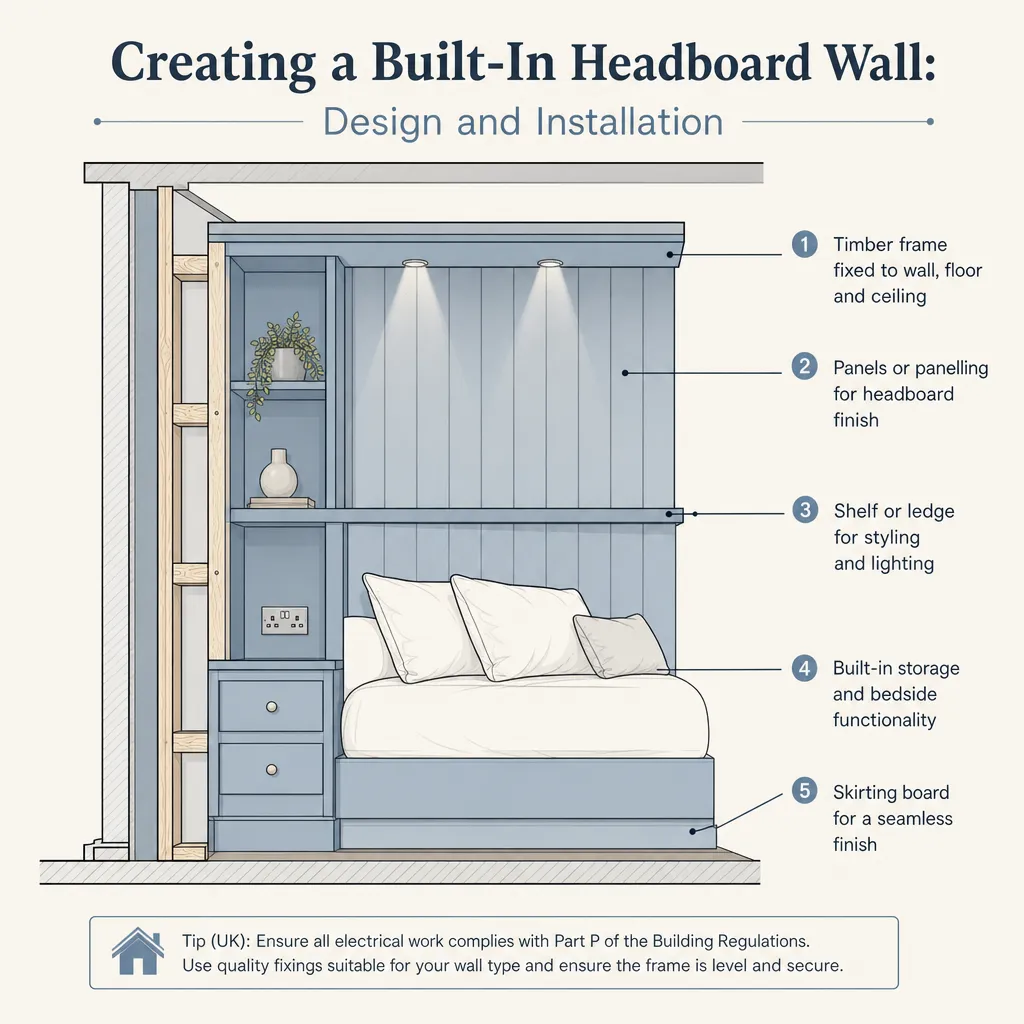
Creating a Built-In Headboard Wall: Design and Installation
A built-in headboard wall transforms a plain bedroom into something that feels considered and complete—a feature that adds visual weight and purpose while often incorporating integrated lighting or storage. The idea tends to surface during a bedroom redesign, a house move where the new room feels bare, or when off-the-shelf furniture simply is not working. In UK homes ranging from Victorian terraces to new-build flats, a wall-fixed or floor-to-ceiling panelled headboard is increasingly popular because it reads as architectural rather than merely decorative—and, unlike a freestanding piece, it will not shift or creak during the night.
Key points
- A built-in headboard wall requires fixing a framework or panelling to the wall; always confirm the wall type (solid masonry, timber stud, or metal stud) before drilling, as the correct fixings differ significantly between types.
- Integrated reading lights or USB outlets within a headboard panel require a Part P-registered electrician if new sockets, wiring, or a fused spur are involved—plug-in LED strip lighting does not.
- Standard UK king-size beds are 150 cm wide; double beds are 135 cm wide—design the panel 15–30 cm wider on each side of the mattress for proper visual balance against the wall.
- MDF (medium-density fibreboard) is the most widely used material for shaped and painted headboard panels in UK interiors; hardwood or hardwood-veneered MDF is preferred when a natural or stained finish is intended.
- For upholstered headboard panels, specify high-resilience foam of at least 30 kg/m³ density; lighter foams compress and lose their shape within a few years in regular bedroom use.
Material and style options
The core decision is whether the headboard wall will be a flat panelled surface, a three-dimensional Shaker-style grid, or a fully framed upholstered structure. Each suits different aesthetics and skill levels.
Approach | Best for | Material | Finish options | Indicative fitted cost (UK) |
|---|---|---|---|---|
Flat MDF panel with mouldings | Contemporary or period painted bedrooms | MDF, timber mouldings | Eggshell or satinwood paint | £400–£900 |
Shaker or grid panelling | Classic, Scandi, or transitional style | MDF or plywood | Paint, satinwood | £500–£1,200 |
Upholstered panel | Boutique hotel aesthetic | Timber frame + foam + fabric | Any upholstery fabric | £600–£1,500 |
Floor-to-ceiling joinery with shelving | Fully built-in look with storage | MDF, plywood, solid timber | Paint, lacquer, veneer | £1,200–£3,500+ |
Batten frame with wallpaper panel | Budget-friendly feature wall | Battens + decorative wallpaper | Patterned or textured wallpaper | £100–£400 |
Indicative UK costs (fitted), last reviewed 2026-05-11. Prices vary by region, specification, and installer. Obtain at least two quotes.
Checking your wall type before you start
The approach to fixing changes depending on what lies behind the plaster or plasterboard:
- Solid masonry (Victorian or Edwardian brick, 1930s cavity wall): use masonry fixings—wall plugs and screws for battens, chemical anchors for heavy frames. Fixing is generally robust but requires a hammer drill.
- Timber stud partition: locate studs using an electronic stud finder and fix the headboard framework directly into studs. Avoid hollow-wall fixings for anything heavy.
- Metal stud partition (common in flats and post-1990 new builds): use self-drilling metal screws into the studs. Avoid over-tightening, which can distort the stud and weaken the fixing.
If in doubt about the wall construction, a local carpenter or builder can identify the type before works begin.
Designing for proportion: the 15–30 cm rule
A common mistake is making the headboard panel exactly the width of the mattress. In practice, a panel flush with the bed edges reads as disproportionately narrow against the wall. A simple rule: allow 15–30 cm beyond the mattress on each side. For a standard 150 cm king-size, this means a panel roughly 180–210 cm wide. For a floor-to-ceiling feature, running the panel the full wall width—typically 280–360 cm in a UK bedroom—often looks more intentional than a narrower centred panel.
Height matters equally. A standard headboard sits 90–120 cm from the floor. A panelled wall extending to ceiling height reads as genuinely architectural and can make a room feel taller, which is particularly effective in a 1930s semi-detached with generous ceiling heights of 2.4 m or above.
Worked scenario: Shaker-panel headboard in a 1930s semi
A couple in a 1930s semi-detached house in the East Midlands wants to replace a freestanding upholstered headboard with a built-in panelled wall behind their king-size bed. The bedroom is 3.2 m wide with a 2.4 m ceiling.
They choose MDF Shaker panels to complement the period detailing elsewhere in the house. A carpenter fixes horizontal and vertical MDF battens to the solid brick wall using masonry fixings, creating a grid that runs the full 3.2 m width to the ceiling. Existing plug-in wall lights are replaced with hardwired fittings and a wall switch, installed by a NICEIC-registered electrician who adds a fused spur and issues a Minor Works Certificate.
Total installed cost: approximately £1,800–£2,400 including the electrician, materials, and carpentry—excluding decoration, which the couple carry out themselves. The wall became the primary feature of the room without any structural work, building regulations notification, or planning involvement.
Homeowner checklist: before you start
When to get professional help
A basic panelled headboard wall is within reach of a competent DIYer. Consider instructing a carpenter or joiner if:
- The design involves complex mitred joints, curved panels, or integrated cabinetry with drawers or shelving.
- The wall is significantly out of plumb or uneven—common in older UK homes—which requires skilled scribing to achieve a neat fit.
- You want integrated hardwired lighting, recessed reading lights, or new electrical outlets (these require a Part P-registered electrician regardless of who builds the frame).
- You are in a rented property and the landlord's consent is needed before making structural fixings.
- The room is in a listed building where alterations to the fabric—including wall fixings—may require listed building consent.
How Housey can help
Housey can connect you with experienced local carpenters, joiners, and Part P-registered electricians if you would prefer professional installation of your built-in headboard wall. Visit the Housey services section to request and compare quotes from vetted tradespeople in your area.
Frequently asked questions
Do I need building regulations approval for a built-in headboard wall?
No—a non-structural panelled or upholstered headboard feature does not require building regulations approval. However, if the project involves new electrical wiring, sockets, or a fused spur rather than plug-in fittings, the electrical work must comply with Part P of the Building Regulations. In England and Wales this means the work must be carried out by a registered competent person who self-certifies, or be notified to local authority building control for inspection.
What materials work best for a built-in headboard wall?
MDF is the most practical choice for a painted finish: it is stable, takes paint well, and accepts mouldings easily. For a natural or stained finish, use hardwood timber or hardwood-veneered MDF. Plywood is a stronger middle option with a more attractive edge. For upholstered panels, a timber frame with high-density foam is standard. Avoid chipboard for visible surfaces as it does not take paint or fabric as cleanly.
Can I add lighting to a built-in headboard wall?
Yes. Plug-in LED strip lighting or clip-on reading lights can be used without any electrical qualification. If you want hardwired recessed downlights, integrated USB outlets, or a wall switch controlling the headboard lighting, this work must be carried out by a Part P-registered electrician. Always request a Minor Works Certificate on completion as evidence of compliance with Building Regulations.
Sources and further reading
- Approved Document P: electrical safety in dwellings — GOV.UK
- Find a NICEIC registered contractor — NICEIC
- Find a NAPIT registered member — NAPIT
- Listed buildings: planning guidance — GOV.UK / Historic England
Useful next reads
 Improvement & Build
Installing Peel-And-Stick Wallpaper: Application Techniques
Peel-and-stick wallpaper works best on smooth, emulsion-painted walls cured for at least 30 days, in rooms between 13°C and 30°C.
 Improvement & Build
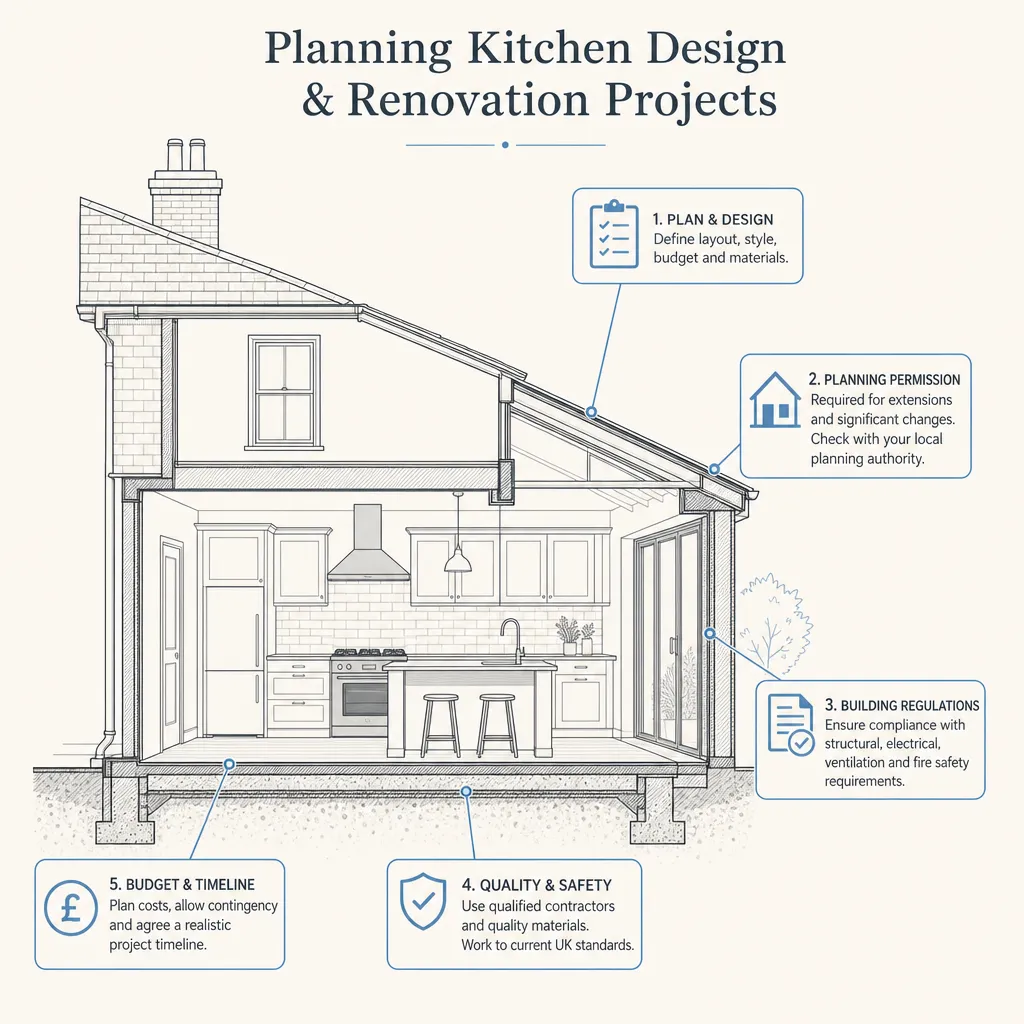
Planning kitchen design and renovation projects
Planning a kitchen renovation in the UK typically involves choosing a layout, setting a budget, deciding which contractors you need, and understanding which regulations apply.
 Improvement & Build
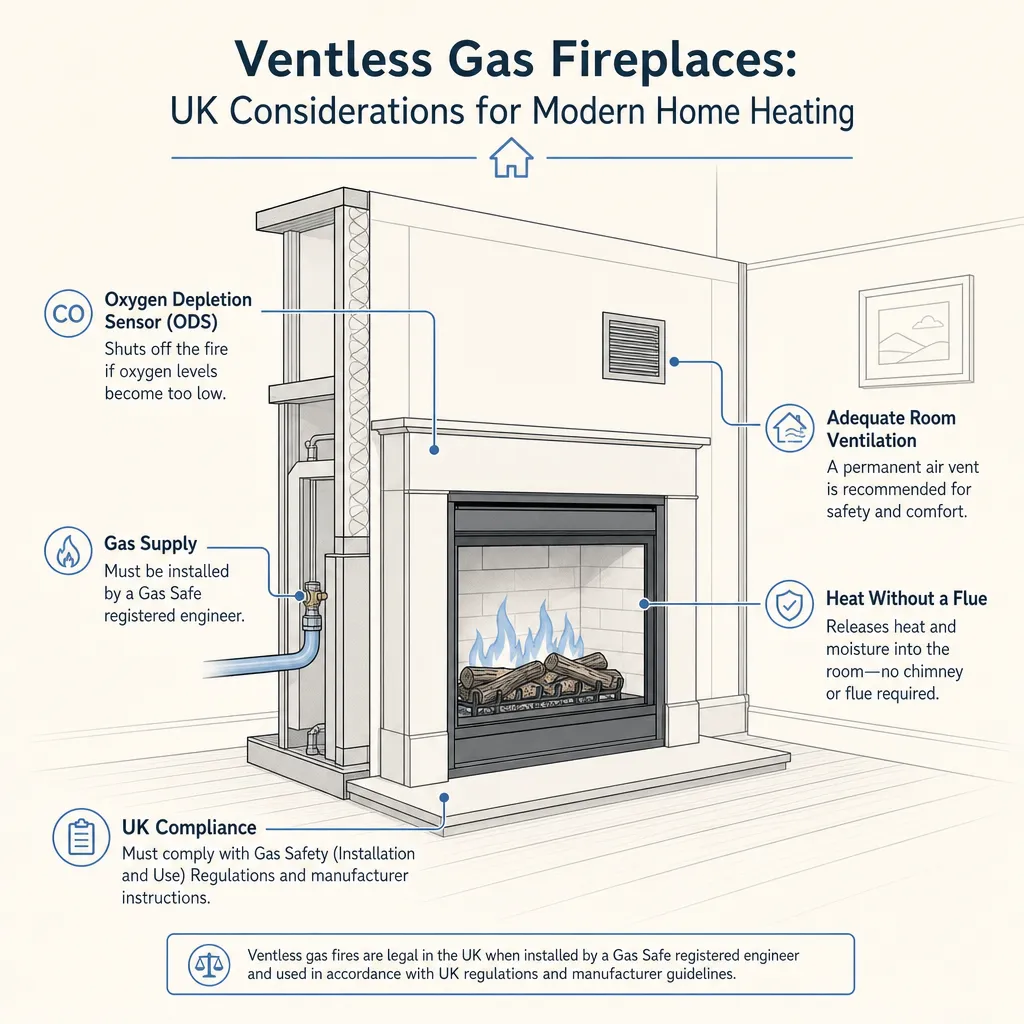
Ventless Gas Fireplaces: UK Considerations for Modern Home Heating
In the UK, ventless gas fires are known as flueless gas fires and are permitted only in specific circumstances under Building Regulations Approved Document J and the Gas Safety Regulations 1998.
 Improvement & Build
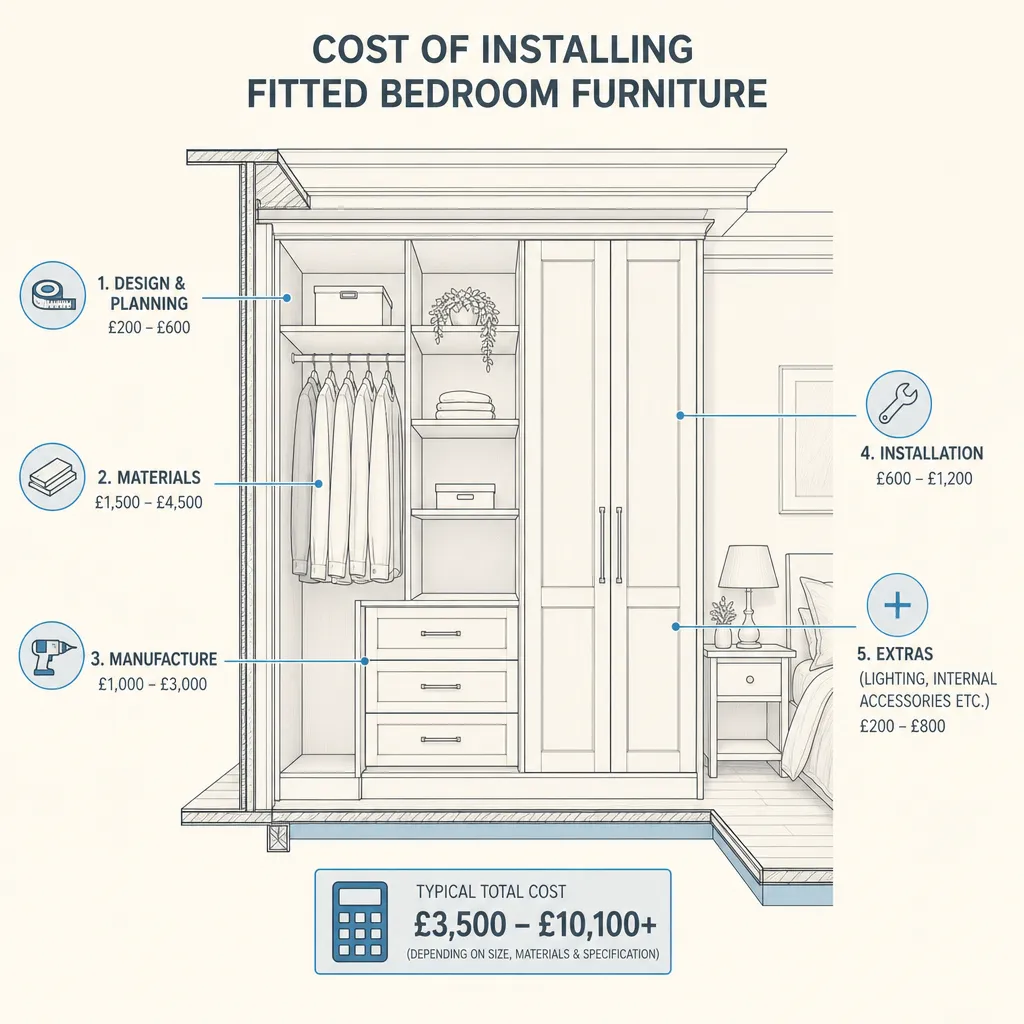
Cost of Installing Fitted Bedroom Furniture
Fitted bedroom furniture in the UK typically costs between £1,000 and £2,500 for modular installations, £2,500–£7,000 for semi-bespoke options, and £7,000–£20,000 or more for fully bespoke joinery.
 Improvement & Build
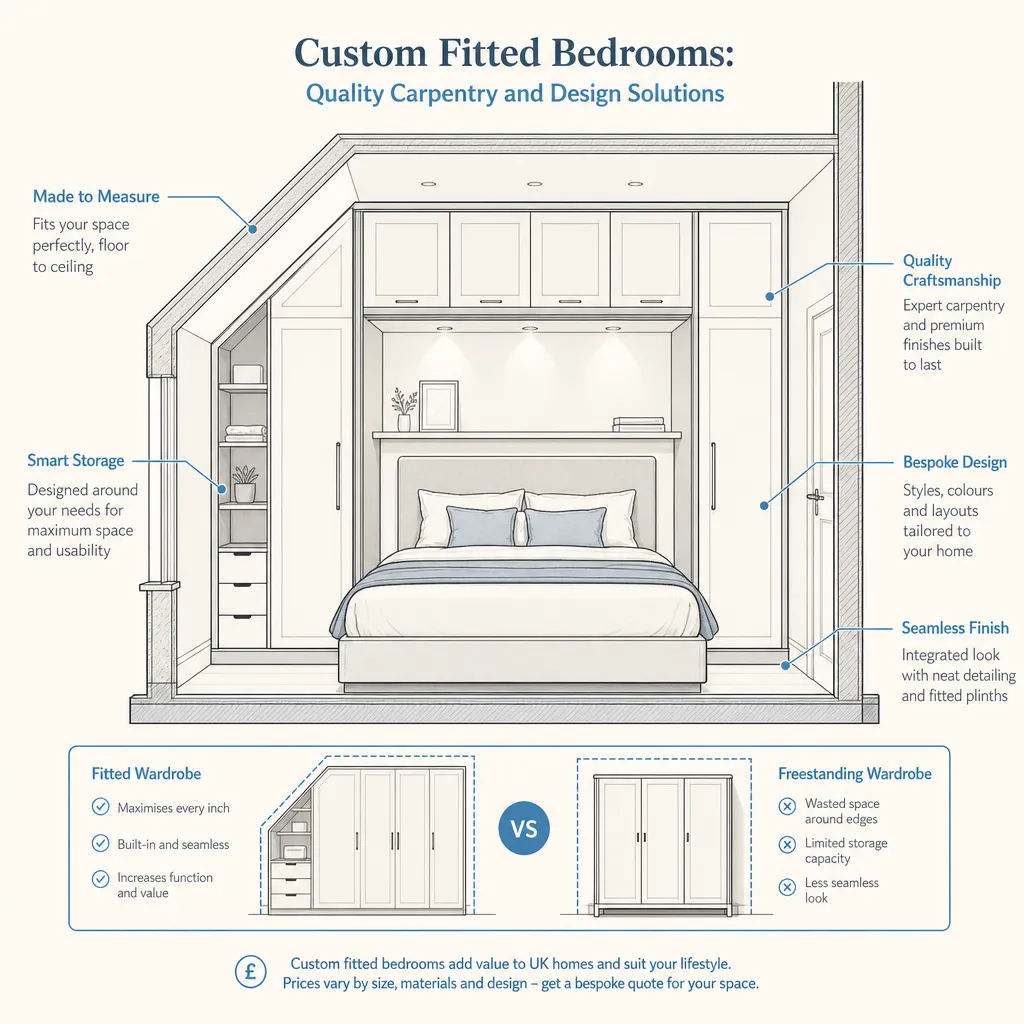
Custom Fitted Bedrooms: Quality Carpentry and Design Solutions
Custom fitted bedrooms are built to your exact room dimensions — by a specialist fitted-furniture company or an independent carpenter — to maximise storage in awkward spaces.