Complete Breakdown of Property Sale Costs and Expenses
By Housey · Last reviewed 6th of May 2026
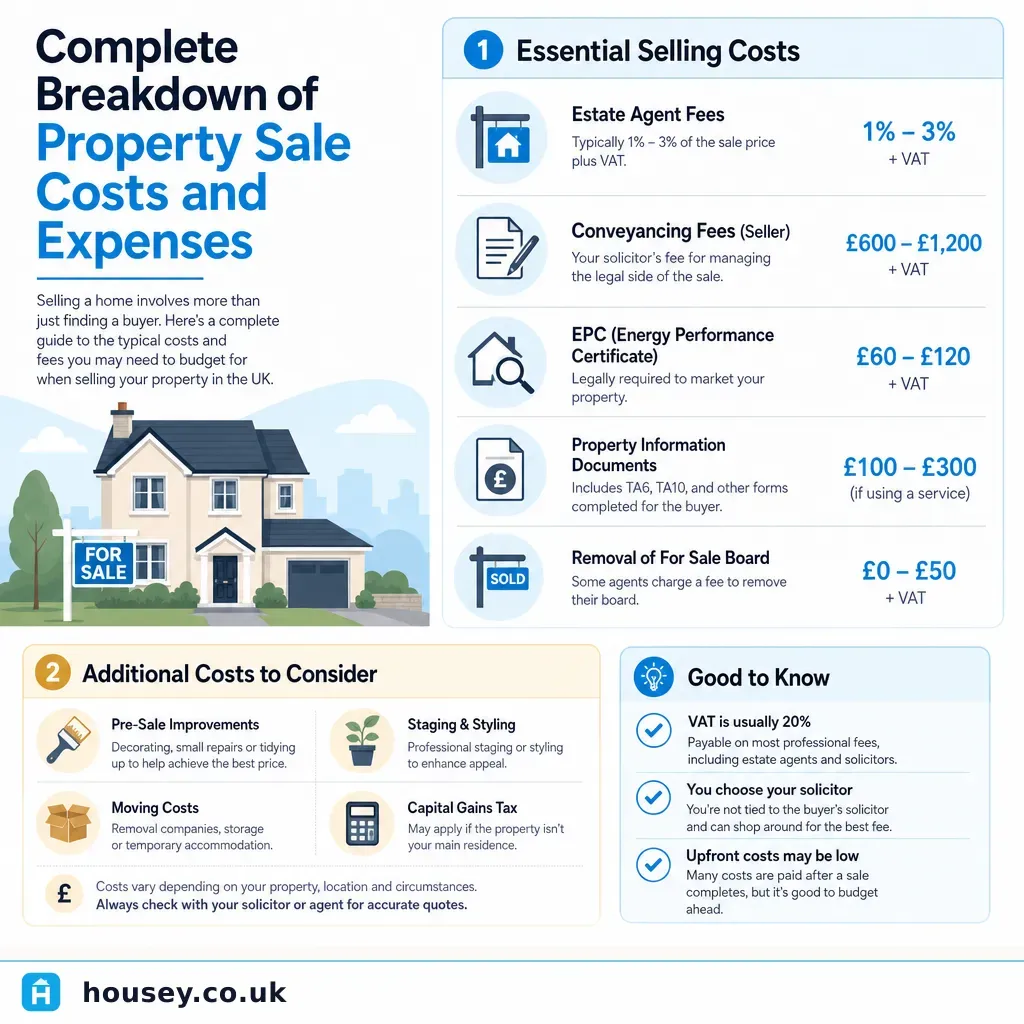
Complete Breakdown of Property Sale Costs and Expenses
Most vendors focus on the agreed sale price, but the amount that actually arrives in your bank account at completion can be considerably less. Selling costs in England and Wales typically absorb 3–6% of the sale price, and several further charges — mortgage redemption penalties, leasehold pack fees, void period costs — are easy to overlook until the completion statement arrives. Understanding each cost in advance lets you set a realistic net figure and plan your next move with confidence.
Key points
- Estate agent fees are the largest single selling cost for most vendors, typically 1–3% of the final sale price plus VAT at 20%.
- Sellers in England, Wales, and Northern Ireland must provide a valid Energy Performance Certificate (EPC) before marketing; assessments cost £60–£150 and are valid for 10 years.
- Conveyancing fees for sellers usually run from £800 to £1,600 in legal fees, plus disbursements such as Land Registry official copies (typically £6–£15 per document).
- Capital Gains Tax (CGT) may apply if the property is not your only or main residence; the annual CGT exempt amount is currently £3,000 for individuals (2026/27 tax year) — always confirm with HMRC or a qualified tax adviser.
- Fixed-rate mortgage early repayment charges (ERCs) can reach 1–5% of the outstanding balance if you redeem during a tie-in period.
Estate agent fees: what to expect
Estate agent fees are almost always quoted as a percentage of the final sale price plus VAT, though online and hybrid agents often charge a fixed fee regardless of outcome.
Agent type | Typical fee structure | Best for | Watch out for |
|---|---|---|---|
High street, sole agency | 1–2% + VAT | Full-service support, local expertise | Minimum fee clauses; tie-in periods of 8–16 weeks |
High street, multi-agency | 2–3.5% + VAT | Competitive or slow local markets | Higher cost; multiple boards can unsettle some buyers |
Online/hybrid, upfront fixed | £500–£1,500 payable upfront | Confident vendors in buoyant markets | Fee due even if the property does not sell |
Online/hybrid, no sale no fee | £1,000–£2,000 on completion | Those wanting some cost certainty | Fewer local market insights; variable viewings support |
Indicative UK costs, last reviewed 2026-05-06. Fees vary by agent and region.
High street agents in England and Wales are required by law to belong to a government-approved redress scheme — either The Property Ombudsman or the Property Redress Scheme. Before signing, check the contract for the tie-in period, the notice period required to terminate, and the definition of a qualifying introduction.
Conveyancing and legal fees for sellers
A solicitor or licensed conveyancer manages the legal transfer of ownership: investigating your title, responding to the buyer's solicitor's enquiries, handling the mortgage redemption, and transferring the net proceeds to you at completion.
Typical seller conveyancing costs:
- Solicitor's legal fee: £800–£1,600 (leasehold transactions often add £200–£400)
- Land Registry official copies: £6–£15 per title document (usually 2–4 required)
- Bank transfer (CHAPS) fee: £20–£45
- Electronic ID verification: £10–£25 per person
- Leasehold management pack: £100–£400, payable to the freeholder or managing agent
Total seller conveyancing costs for a freehold property typically run to £1,000–£2,000 including disbursements. Always request a full quote that itemises disbursements separately — the headline legal fee rarely tells the whole story. You can compare conveyancers for your sale through Housey.
Mandatory and optional pre-sale costs
Energy Performance Certificate (EPC)
Sellers in England, Wales, and Northern Ireland are legally required to have a valid EPC commissioned before the property is marketed. Check whether your existing certificate is still within its 10-year validity before spending money on a new one. New assessments cost £60–£150 depending on property size. You can arrange an Energy Performance Certificate through Housey.
Pre-sale valuation
Your estate agent will provide a market appraisal free of charge, but a formal RICS Red Book valuation (£150–£500) may be required for probate, shared ownership exit, Help to Buy redemption, or matrimonial proceedings. RICS-registered valuers for a formal valuation are available through Housey where needed.
Property photography and floorplans
Professional photography is often included in estate agent fees — check your agreement. Where it is not, standalone photography typically costs £100–£300 and floorplans add £50–£150. Research consistently shows professionally presented listings generate more viewings and can support a faster sale. Housey can help you find a professional property photographer if your agent's service is limited.
Tax implications when selling
Stamp Duty Land Tax: Sellers do not pay SDLT — it is the buyer's liability.
Capital Gains Tax: If you are selling your only or main home and it has been your principal private residence throughout your ownership, Private Residence Relief (PRR) usually eliminates any CGT liability entirely. However, if the property is a buy-to-let, a second home, or has been let for part of the ownership period, a CGT calculation is required. Gains above the annual exempt amount (currently £3,000 for individuals in 2026/27) are taxed at 18% (basic-rate taxpayers) or 24% (higher-rate) for residential property. Tax rules can change and individual circumstances vary — always seek advice from a qualified accountant or tax adviser before completing the sale.
Landlords selling a rental property: Ensure all rental income has been declared and any Self Assessment obligations are up to date. The sale itself is a CGT event, not an Income Tax event, but HMRC may scrutinise the return in the context of prior rental income reporting.
Hidden and easily overlooked selling costs
- Mortgage early repayment charge: Check your mortgage offer document for any ERC tie-in. On a £200,000 balance, a 2% ERC = £4,000.
- Outstanding service charges and ground rent: Leasehold sellers must settle any arrears before completion; the management pack reveals the current position.
- Void period costs: If you vacate before completion you may continue paying mortgage interest, council tax, buildings insurance, and utilities on an empty property.
- Removals: Depending on volume, distance, and service level, professional removals typically cost £400–£2,500 for a standard household. Indicative UK costs, last reviewed 2026-05-06.
- Bridging finance: If you purchase before completing your sale, bridging loan rates are typically 0.5–1.5% per month — a significant additional cost in a slow chain.
Worked example: selling a £320,000 semi-detached in England
This is an illustrative scenario only, not a guarantee of actual costs. Mortgage redemption, ERCs, and CGT are excluded as they vary significantly by individual.
Cost item | Estimate |
|---|---|
Estate agent fee (1.5% + VAT) | £5,760 |
Solicitor/conveyancer (freehold) | £1,200 |
EPC (new certificate required) | £90 |
Land Registry copies + CHAPS transfer | £80 |
Professional photography and floorplan | £220 |
Removals (local 3-bed household) | £1,100 |
Total estimated selling costs | £8,450 |
Net of selling costs (before mortgage redemption) | £311,550 |
Indicative UK costs, last reviewed 2026-05-06.
When to get professional help
Selling a property involves legal, financial, and regulatory obligations that qualified professionals should manage. Seek independent advice if:
- You believe Capital Gains Tax may apply — instruct a qualified accountant or tax adviser before completing.
- You are selling a leasehold property with complex service charge history, pending major works, or a short lease — a solicitor experienced in leasehold conveyancing is essential.
- Your mortgage has an ERC that you cannot calculate from the documentation — ask your lender directly for a mortgage redemption figure.
- You have received contradictory valuations and are uncertain whether to accept an offer — a formal RICS Red Book valuation may assist.
- A chain break means you need bridging finance — speak to an independent mortgage broker before arranging any loan.
How Housey can help
Housey helps you find and compare qualified professionals at every stage of your sale. Whether you need to arrange an Energy Performance Certificate, find a professional property photographer, or compare conveyancers for your sale, you can request quotes from vetted UK providers in one place.
Frequently asked questions
Do sellers pay Stamp Duty Land Tax?
No. Stamp Duty Land Tax is the buyer's liability in England and Northern Ireland. Land Transaction Tax applies in Wales and Land and Buildings Transaction Tax in Scotland. Sellers are not liable for any of these property transaction taxes, regardless of the sale price or their own ownership history.
Can I deduct selling costs from Capital Gains Tax?
HMRC allows certain costs to be deducted when calculating your chargeable gain, including estate agent fees, solicitor fees, and qualifying improvement expenditure that added value to the property. Routine maintenance and repair costs are not deductible. A qualified accountant or tax adviser should confirm what applies in your specific situation before you file.
Do I need to commission a survey as the seller?
Sellers in England and Wales are not required to arrange a survey. In Scotland, a Home Report — comprising a Single Survey, Energy Report, and Property Questionnaire — is a legal requirement before marketing most residential properties. Sellers in England and Wales may optionally commission a pre-sale condition report to reduce buyer uncertainty and reduce the risk of renegotiation after a buyer's survey.
What is included in a leasehold management pack?
A leasehold management pack (often called an LPE1) is provided by the freeholder or managing agent and typically covers: service charge accounts, building insurance details, ground rent schedule, details of planned major works, and confirmation of any arrears. It is required for most leasehold sales and usually costs £100–£400, payable by the seller.
How long does seller conveyancing typically take?
Seller conveyancing usually takes 8–16 weeks from instruction to completion, depending on chain length, mortgage lender timescales, and enquiry response times. Leasehold transactions often take longer because the management pack must be obtained from the freeholder or managing agent before the buyer's solicitor can resolve enquiries.
Sources and further reading
- Energy Performance Certificates for properties you sell — GOV.UK
- Capital Gains Tax: what you pay it on — HMRC / GOV.UK
- Get information about property and land — HM Land Registry
- Code of Practice for Residential Estate Agents — The Property Ombudsman
- Selling a leasehold property — Leasehold Advisory Service (LEASE)
Useful next reads
 Buying & Moving
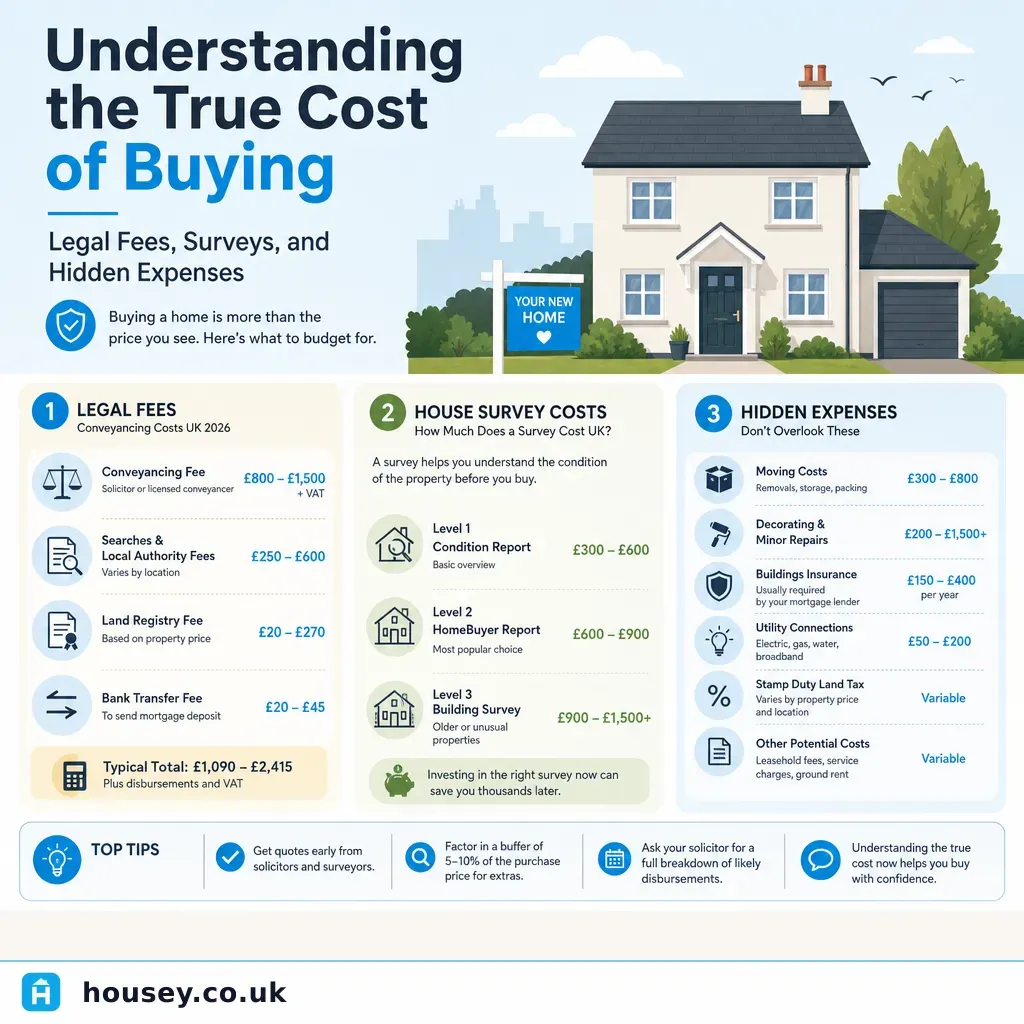
Understanding the True Cost of Buying: Legal Fees, Surveys, and Hidden Expenses
The true cost of buying a UK home typically adds 3–5% on top of the purchase price.
 Buying & Moving
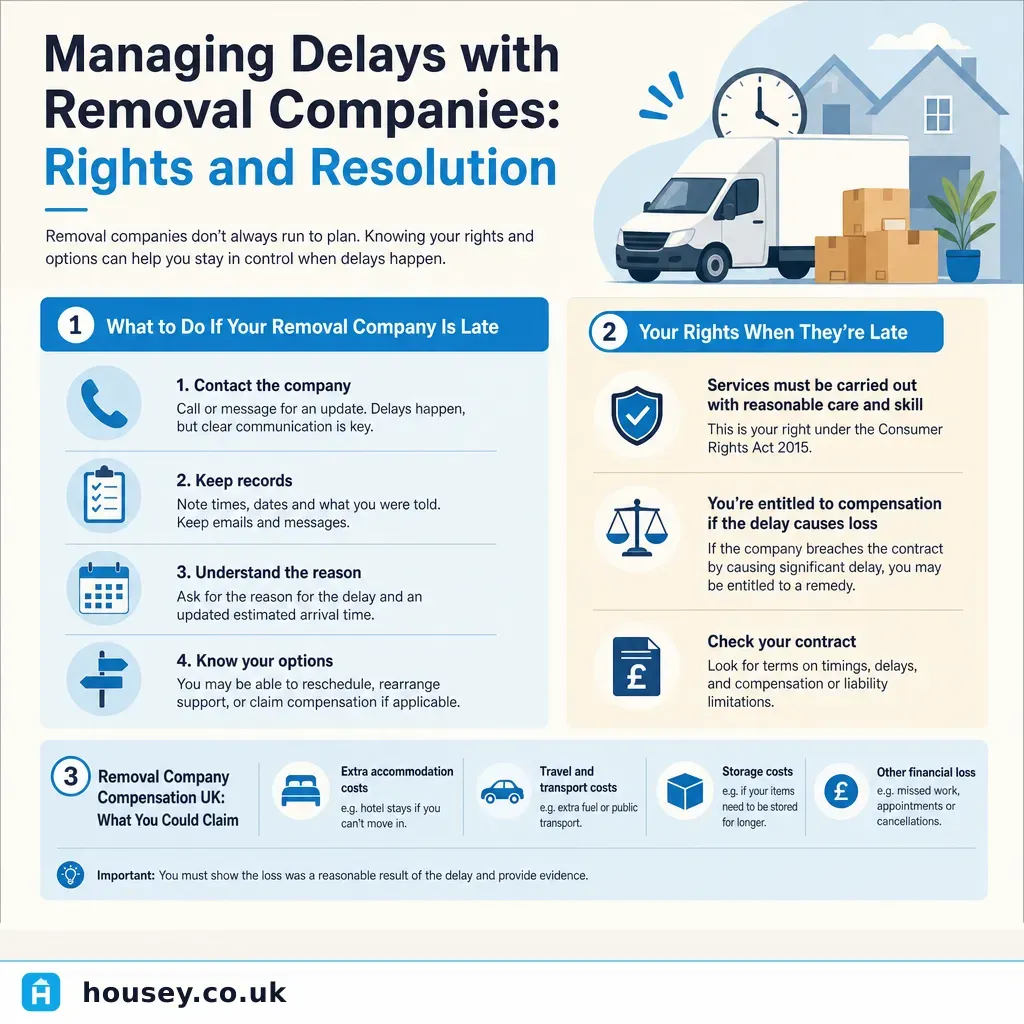
Managing Delays with Removal Companies: Rights and Resolution
If a removal company is late, your rights depend on your contract and whether the company is BAR-registered.
 Buying & Moving
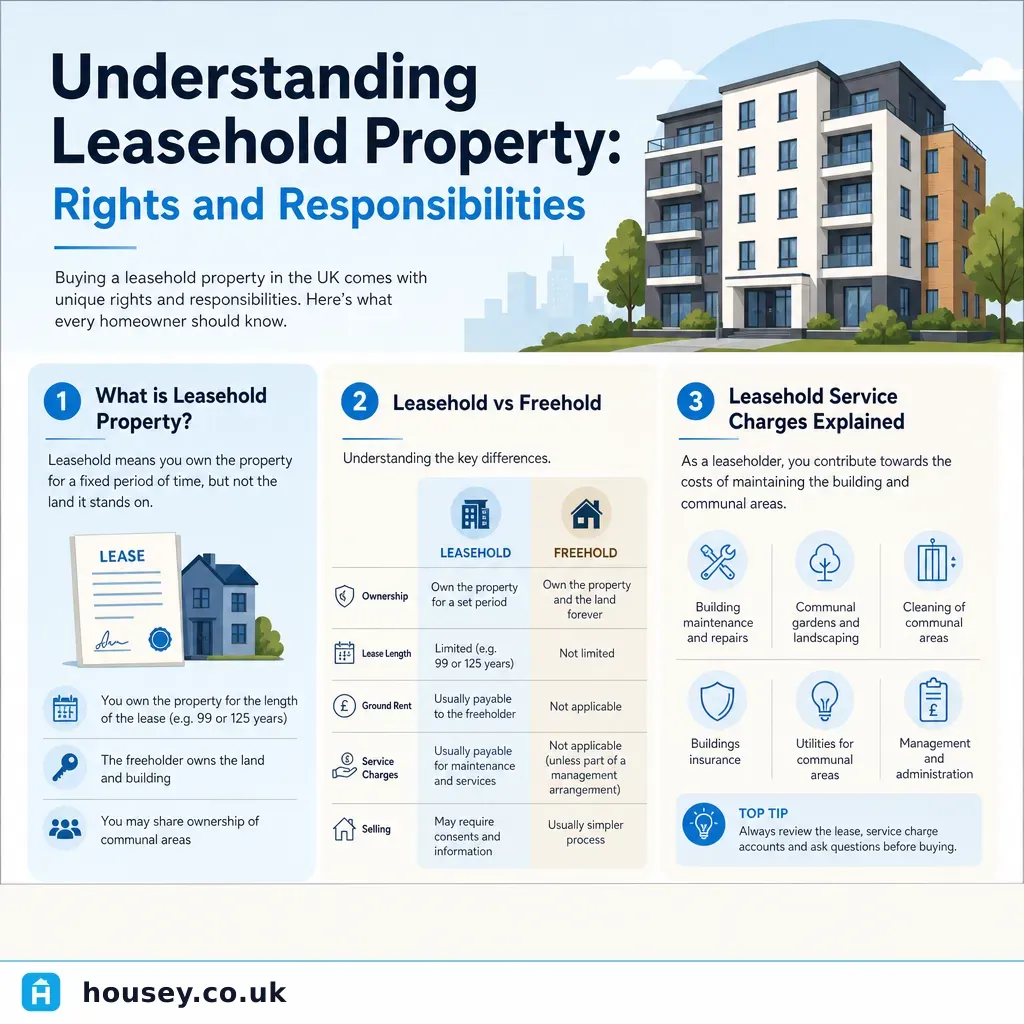
Understanding Leasehold Property: Rights and Responsibilities
Leasehold means you own a time-limited interest in a property while the freeholder owns the land and building.
 Buying & Moving
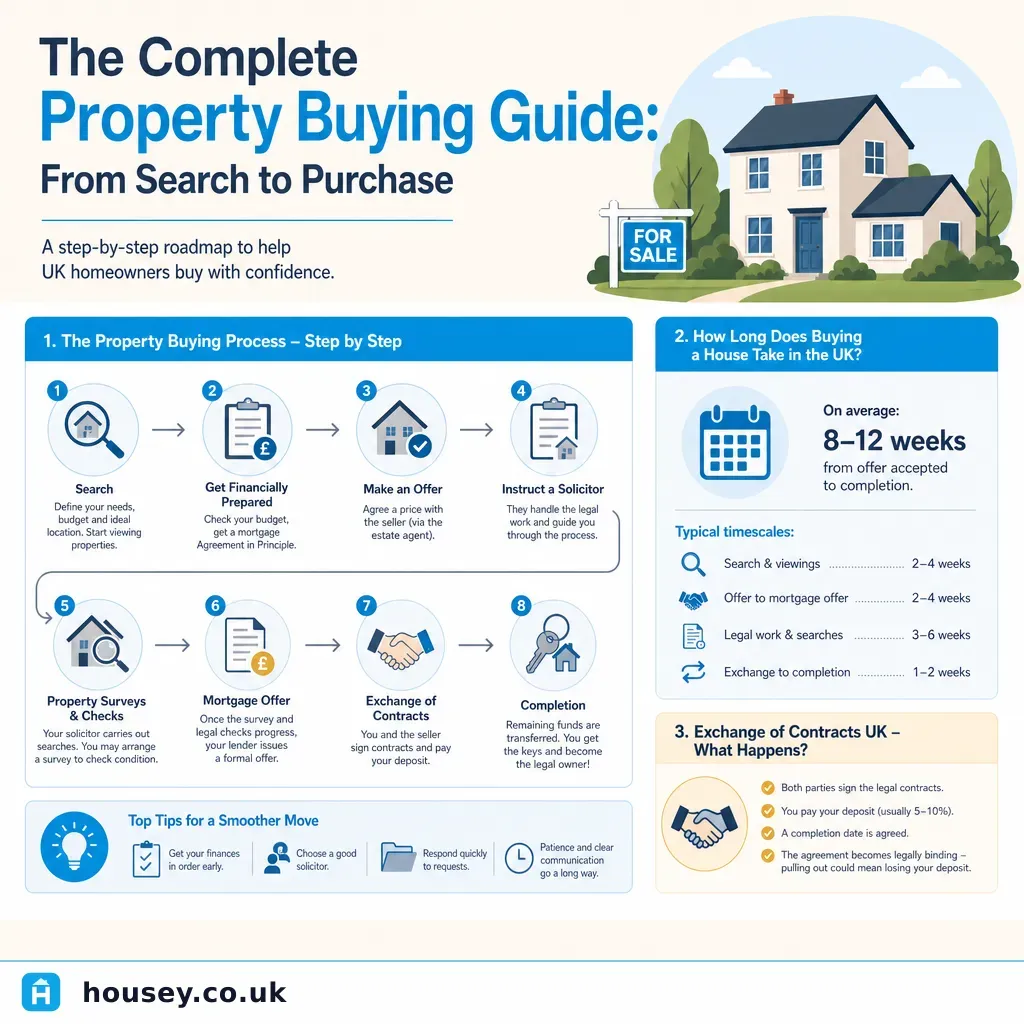
The Complete Property Buying Guide: From Search to Purchase
Buying a property in England and Wales typically takes 3–6 months from accepted offer to completion.
 Buying & Moving
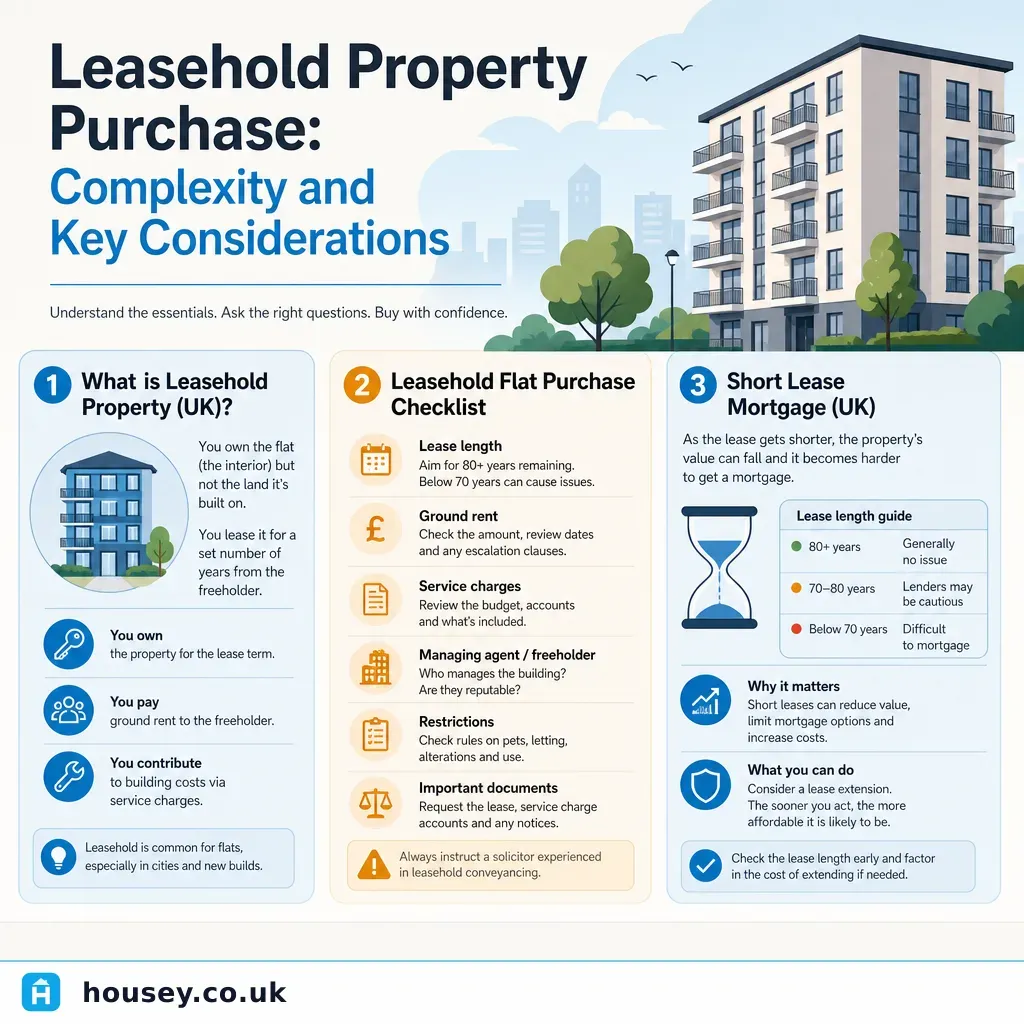
Leasehold Property Purchase: Complexity and Key Considerations
Buying a leasehold property means purchasing the right to occupy for a fixed term rather than owning the land outright.