Understanding the True Cost of Buying: Legal Fees, Surveys, and Hidden Expenses
By Housey · Last reviewed 18th of May 2026
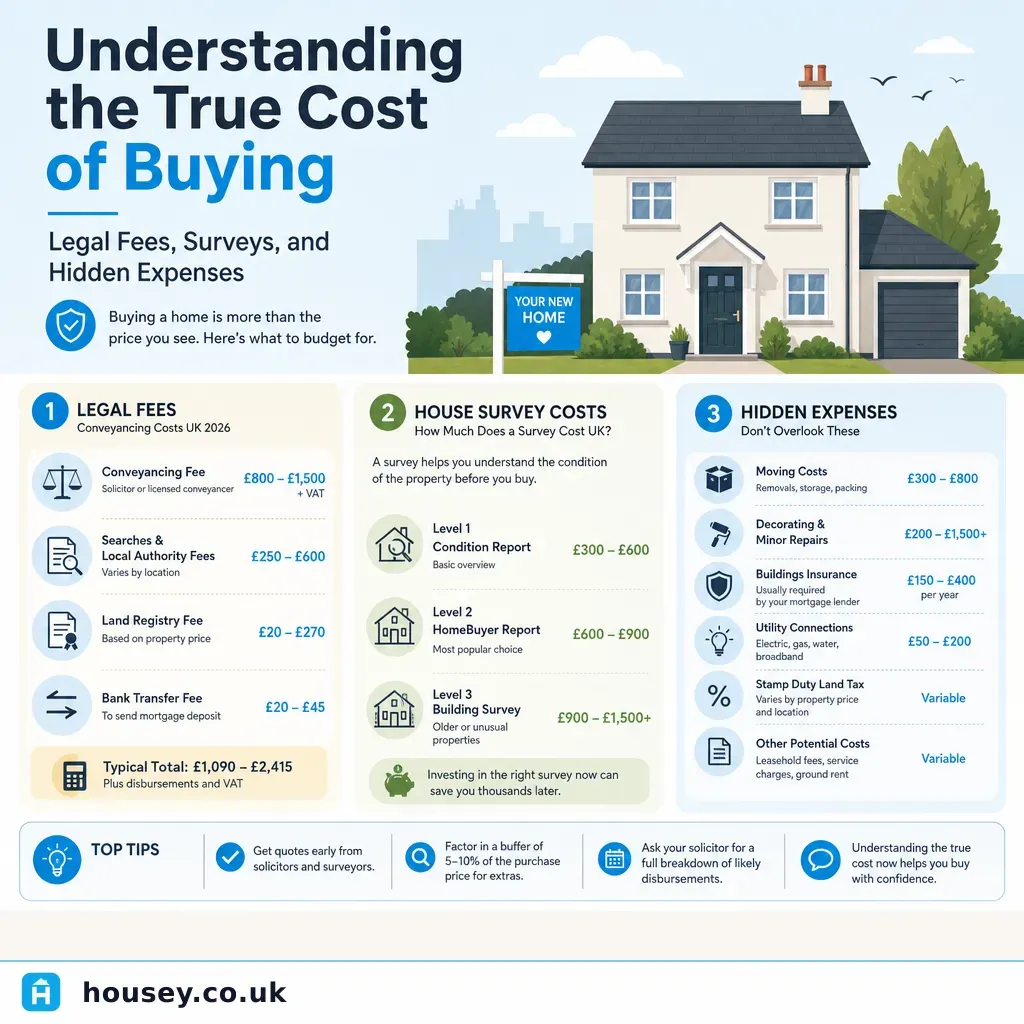
Understanding the True Cost of Buying: Legal Fees, Surveys, and Hidden Expenses
The purchase price agreed with a vendor is only part of what completing a UK property transaction will cost. For first-time buyers in particular, the gap between the agreed price and the total funds required at completion often comes as a surprise — and some of it is not negotiable. Stamp Duty Land Tax in England, Land and Buildings Transaction Tax in Scotland, and Land Transaction Tax in Wales are statutory obligations. Legal fees, search costs, Land Registry charges, and survey fees are unavoidable if you want proper protection. Understanding the full picture before making an offer means fewer shocks and a more reliable budget from start to completion.
Key points
- Stamp Duty Land Tax (SDLT) in England applies at 2% on the portion of the purchase price between £125,001 and £250,000, and 5% on the portion between £250,001 and £925,000 for standard residential purchases — use the GOV.UK SDLT calculator for your specific situation
- First-time buyer SDLT relief in England applies a 0% rate on the first £300,000 of a property priced up to £500,000 (as at 2026); properties above £500,000 do not qualify for relief and standard rates apply in full
- Licensed conveyancers or solicitors are legally required to handle the transfer of property in England and Wales — this cannot be completed without a qualified professional
- The Land Registry charges a scale fee for registering the transfer of title, currently ranging from £20 to £910 depending on the purchase price
- A RICS Level 2 Home Survey typically costs £400–£700 and a RICS Level 3 Building Survey £600–£1,500 on a standard property — both are separate from and additional to any mortgage valuation fee — Indicative UK costs, last reviewed 2026-05-18
What every buyer needs to budget for
Stamp Duty Land Tax (England)
SDLT is paid by the buyer and due within 14 days of completion. Your solicitor typically submits the SDLT return on your behalf as part of the conveyancing process.
Purchase price band | Standard rate (England, 2026) | First-time buyer rate |
|---|---|---|
Up to £125,000 | 0% | 0% |
£125,001–£250,000 | 2% | 0% |
£250,001–£300,000 | 5% | 0% |
£300,001–£500,000 | 5% | 5% |
£500,001–£925,000 | 5% | Standard rate applies (no relief) |
£925,001–£1.5m | 10% | Standard rate applies (no relief) |
Above £1.5m | 12% | Standard rate applies (no relief) |
Scotland uses Land and Buildings Transaction Tax (LBTT) and Wales uses Land Transaction Tax (LTT) — both with different bands and rates. Check the Revenue Scotland or Welsh Revenue Authority calculators for the current position. An additional 3% surcharge applies in England on second homes and buy-to-let purchases.
Conveyancing fees
Solicitor or licensed conveyancer fees cover the legal work of transferring ownership. These typically comprise:
- Legal fee (the professional's own charge): £800–£2,000, depending on complexity and firm
- Search fees: £200–£500 for local authority, drainage and water, environmental, and chancel repair searches (varies by council)
- Land Registry fee: £20–£910 (scale fee based on purchase price)
- Electronic transfer fee (CHAPS/TT): £20–£50
- ID and anti-money-laundering checks: £20–£60
Leasehold purchases typically cost £200–£500 more to convey than freehold, due to additional work reviewing the lease, service charge accounts, and management company correspondence. Indicative UK costs, last reviewed 2026-05-18.
Survey costs
A mortgage valuation is not a survey. It is carried out for the lender's benefit to confirm the property is adequate security for the loan — it does not assess condition in detail and carries no liability to the buyer.
Survey type | Best for | Typical cost (England, 2026) |
|---|---|---|
RICS Level 2 Home Survey | Conventional post-1945 homes in reasonable condition | £400–£700 |
RICS Level 3 Building Survey | Older, extended, altered, or visibly defective properties | £600–£1,500 |
Specialist structural, damp, or drainage survey | Properties with identified or suspected specific defects | £200–£600 per specialist |
Indicative UK costs, last reviewed 2026-05-18. Costs vary by property size, location, and surveyor.
Mortgage costs
- Arrangement or product fee: £0–£2,000 (varies significantly by lender and mortgage product)
- Mortgage valuation fee: £0–£500 (some lenders waive this; others charge on a scale)
- Broker fee: £0–£500+ (many brokers are paid by lender commission and charge nothing to the buyer; some charge for complex cases)
- Buildings insurance: required from exchange of contracts; typically £150–£400 per year for a standard home — Indicative UK costs, last reviewed 2026-05-18
Moving costs
- Removal firm: £500–£3,000 depending on volume, distance, and whether packing is included — Indicative UK costs, last reviewed 2026-05-18
- Storage: if completion dates for an onward move do not align, short-term storage adds to the overall figure
Worked UK scenario: total buying costs on a £325,000 freehold in England
Buyer profile: non-first-time buyer, standard mortgage, RICS Level 2 survey
Cost item | Amount |
|---|---|
SDLT (0% on £125k + 2% on £125k + 5% on £75k) | £6,250 |
Solicitor legal fee | £1,200 |
Search fees | £350 |
Land Registry fee | £270 |
Electronic transfer fee | £40 |
ID and AML checks | £30 |
Mortgage arrangement fee | £999 |
Mortgage valuation (lender) | £300 |
RICS Level 2 survey | £550 |
Removal firm | £1,000 |
Total additional costs | ~£10,989 |
This represents approximately 3.4% on top of the purchase price. For a first-time buyer on the same property, SDLT would be £1,250 (5% on £25,000 above the £300,000 nil-rate threshold), reducing total costs to around £5,989 — approximately 1.8% above the purchase price.
What to ask before accepting a conveyancing quote
When comparing quotes from solicitors or licensed conveyancers:
- Is the legal fee fixed, or can it increase if complications arise?
- Are search fees included in the quote, or billed separately as disbursements?
- What is your typical turnaround time for raising and resolving enquiries?
- Do you charge extra for leasehold, new-build, shared ownership, or Help to Buy transactions?
- Is VAT included in all figures shown?
- What happens to your fee if the purchase falls through before exchange?
- Will a qualified solicitor or conveyancer handle my file directly?
Important limitations
This article provides general guidance on typical UK buying costs as at 2026-05-18. Tax rates, SDLT thresholds, Land Registry fees, and lender charges can change following Budget announcements or regulatory updates — always verify current figures via official government sources before budgeting. Conveyancing fees vary significantly between firms, property types, and regions. This guide does not constitute legal, financial, or tax advice. You should instruct a qualified solicitor or licensed conveyancer for your specific transaction and take independent financial advice on mortgage products.
What to ask a qualified professional
Solicitor or licensed conveyancer:
- Are there any restrictions on the title that could affect my use or future sale of the property?
- Is the lease (if leasehold) in good standing, and what are the current ground rent and service charge arrangements?
- Have you identified any overriding interests, charges, or unusual entries on the title register?
- Are there any planning or building regulations compliance issues I should be aware of before exchange?
Mortgage broker:
- What is the total cost of comparison (APRC) for each product, accounting for the arrangement fee?
- Is it cheaper to add the arrangement fee to the loan or pay it upfront, given my planned mortgage term?
- Are there early repayment charges that would affect my plans to remortgage or move within the next few years?
RICS surveyor:
- What level of survey do you recommend for this specific property, and why?
- Are there any concerns you have identified that should be investigated by a specialist before I exchange?
When to get professional help
Instruct a qualified solicitor or licensed conveyancer as soon as your offer is accepted — not after. For leasehold purchases with a short lease (below 80 years), new-build properties, shared ownership, probate sales, or any property with a complex planning or title history, choose a specialist with relevant experience rather than the cheapest available option.
If the SDLT position is unclear — for example, if you own property abroad, have gifted equity involved, or are purchasing through a company structure — take formal tax advice from a qualified tax professional before exchange.
How Housey can help
Housey makes it straightforward to find qualified professionals at the right stage of your purchase. Compare conveyancing services from regulated firms, commission an independent valuation survey, or book a RICS Home Survey to understand exactly what you are buying before you commit at exchange.
Frequently asked questions
Do first-time buyers pay Stamp Duty in England?
First-time buyers in England pay no SDLT on the first £300,000 of a property priced up to £500,000 (as at 2026 — thresholds can change following Budget announcements). On the portion between £300,001 and £500,000, the rate is 5%. Properties above £500,000 do not qualify for first-time buyer relief, and standard rates apply in full from the first pound. Scotland and Wales have their own relief schemes with different thresholds.
Can I add conveyancing fees to my mortgage?
Conveyancing fees are generally paid from your own funds at completion, not added to the mortgage. Some mortgage arrangement fees can be added to the loan, but this means paying interest on them for the full mortgage term — which typically costs more overall than paying upfront. Ask your broker to calculate the total cost of both options before deciding, taking your planned mortgage term into account.
What are disbursements in a conveyancing quote?
Disbursements are third-party costs your solicitor pays on your behalf — including search fees, the Land Registry registration fee, and bank transfer charges. They are separate from the solicitor's own legal fee and should be itemised in any quote you receive. Always check whether a quoted total is inclusive or exclusive of disbursements and VAT before comparing different firms.
What if my purchase falls through after I've paid for surveys and searches?
If a purchase falls through before exchange of contracts, you will typically lose the cost of any surveys, searches, and legal work already carried out. Most survey providers do not offer refunds. Some solicitors offer a no-completion, no-fee arrangement on their own legal fee — check this when instructing. Home buyer protection insurance can cover some of these costs on higher-value or complex purchases.
Sources and further reading
- Stamp Duty Land Tax — GOV.UK
- HM Land Registry fee scale — HM Land Registry
- RICS Home Survey Standard — RICS
- Buying a home: conveyancing — GOV.UK
- Land and Buildings Transaction Tax — Revenue Scotland
- Land Transaction Tax guide — Welsh Revenue Authority
Useful next reads
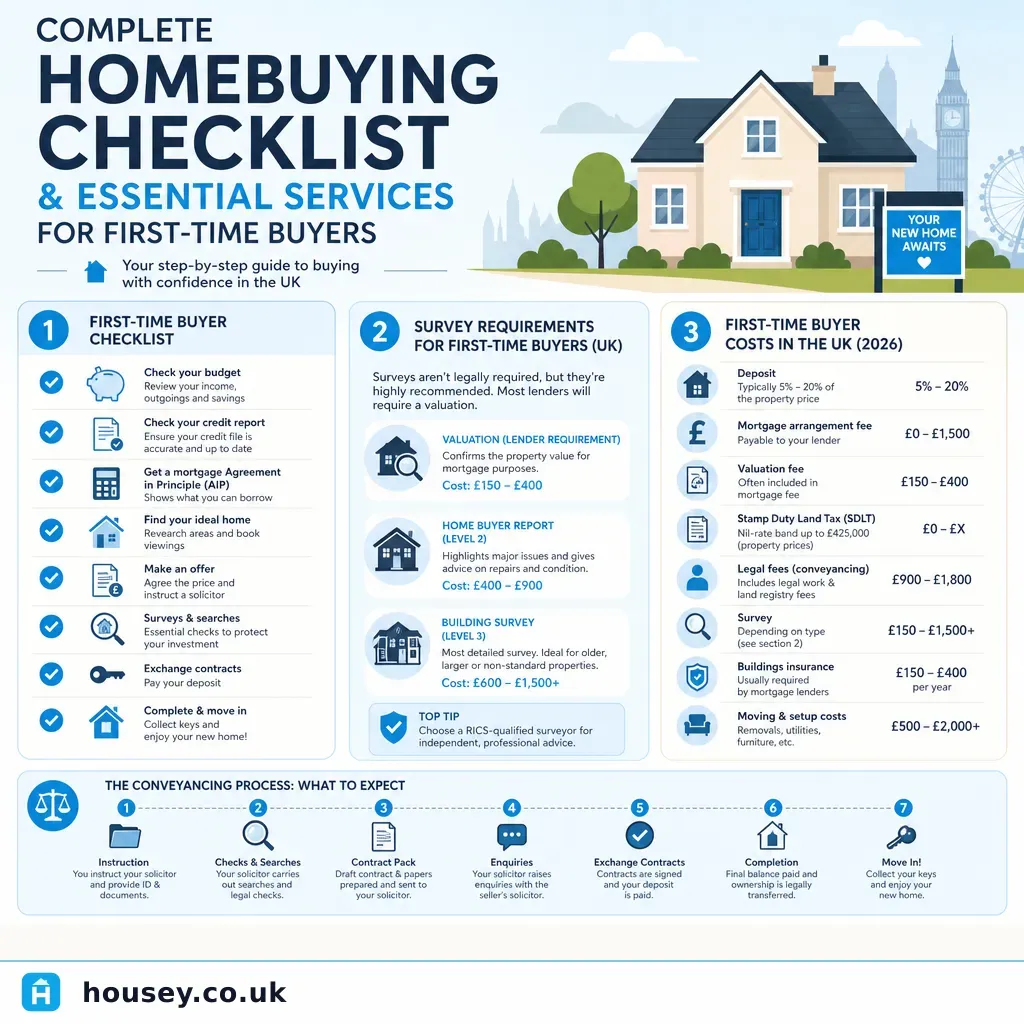 Buying & Moving
Complete Homebuying Checklist and Essential Services for First-Time Buyers
First-time buyers in the UK should commission an independent RICS Home Survey before exchange — a mortgage lender's valuation does not protect you.
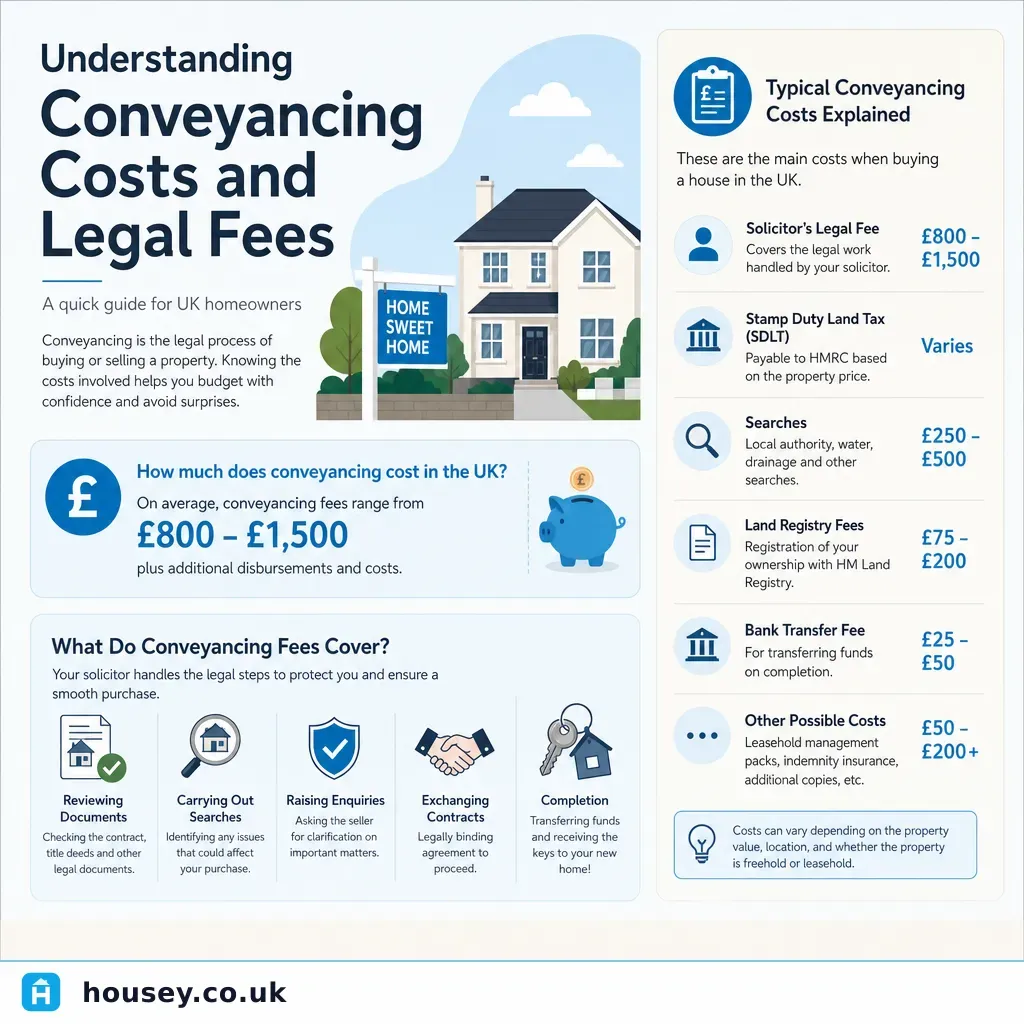 Buying & Moving
Understanding Conveyancing Costs and Legal Fees
Conveyancing costs in England and Wales include a solicitor's or licensed conveyancer's professional fee plus disbursements such as searches, Land Registry registration, and bank transfer charges.
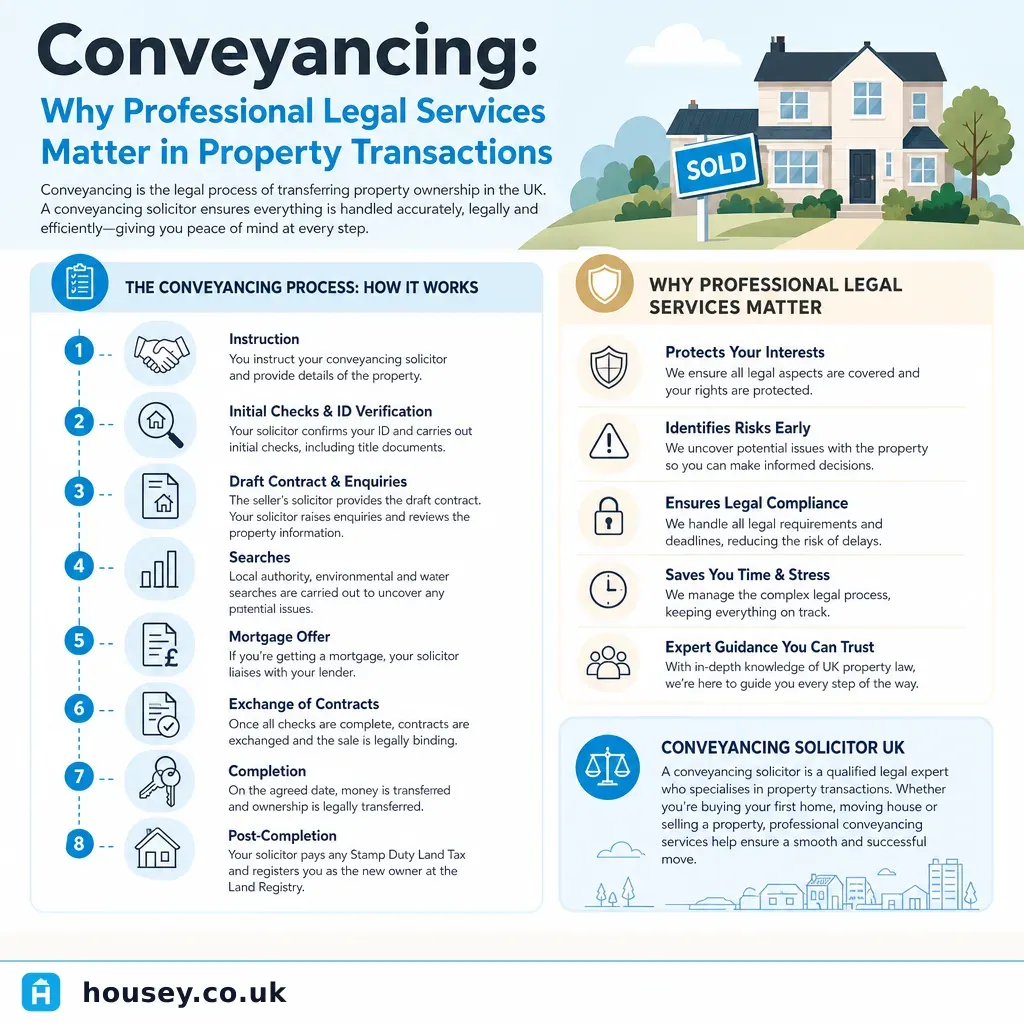 Buying & Moving
Conveyancing: Why Professional Legal Services Matter in Property Transactions
Conveyancing is the legal process of transferring property ownership in England and Wales, carried out by an SRA-regulated solicitor or CLC-regulated licensed conveyancer.
 Buying & Moving
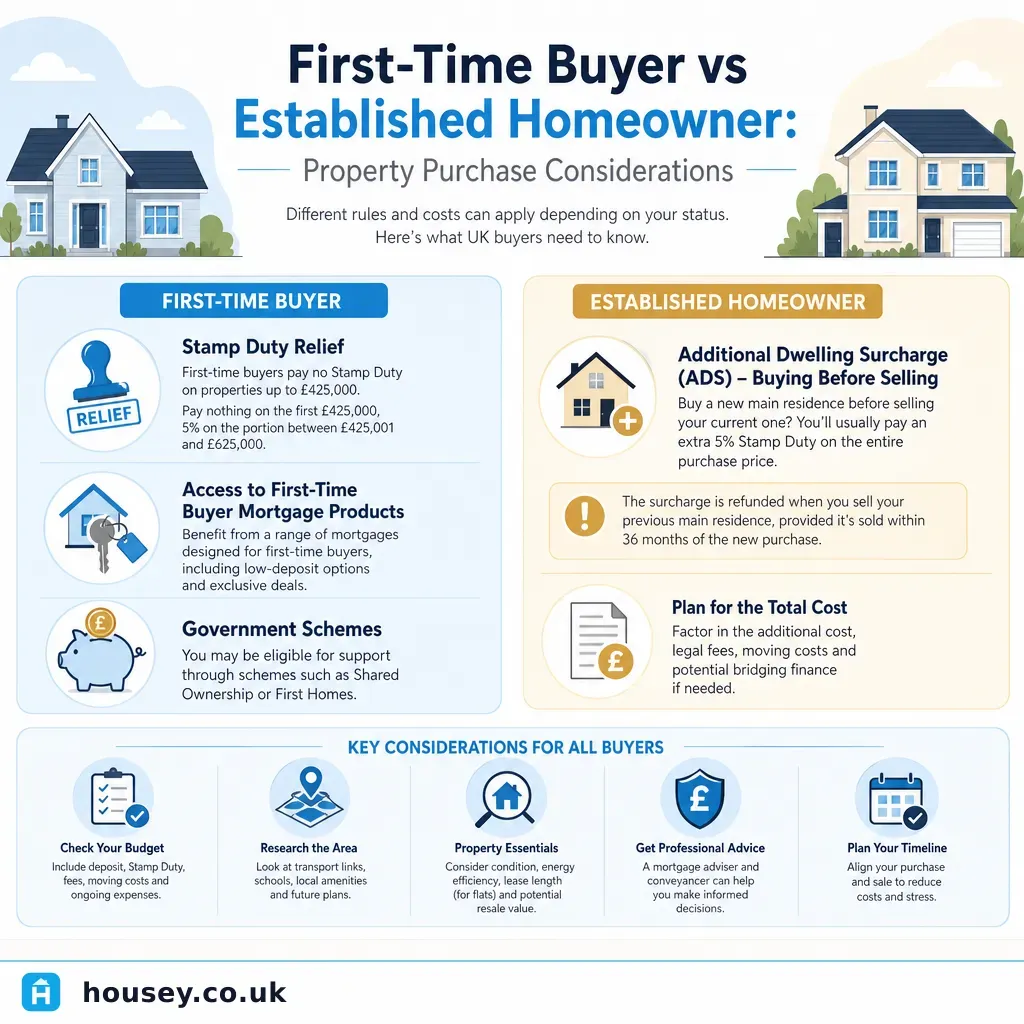
First-Time Buyer vs Established Homeowner: Property Purchase Considerations
First-time buyers in England pay no stamp duty on the first £300,000 of a property worth up to £500,000 and may access specific mortgage products.
 Buying & Moving
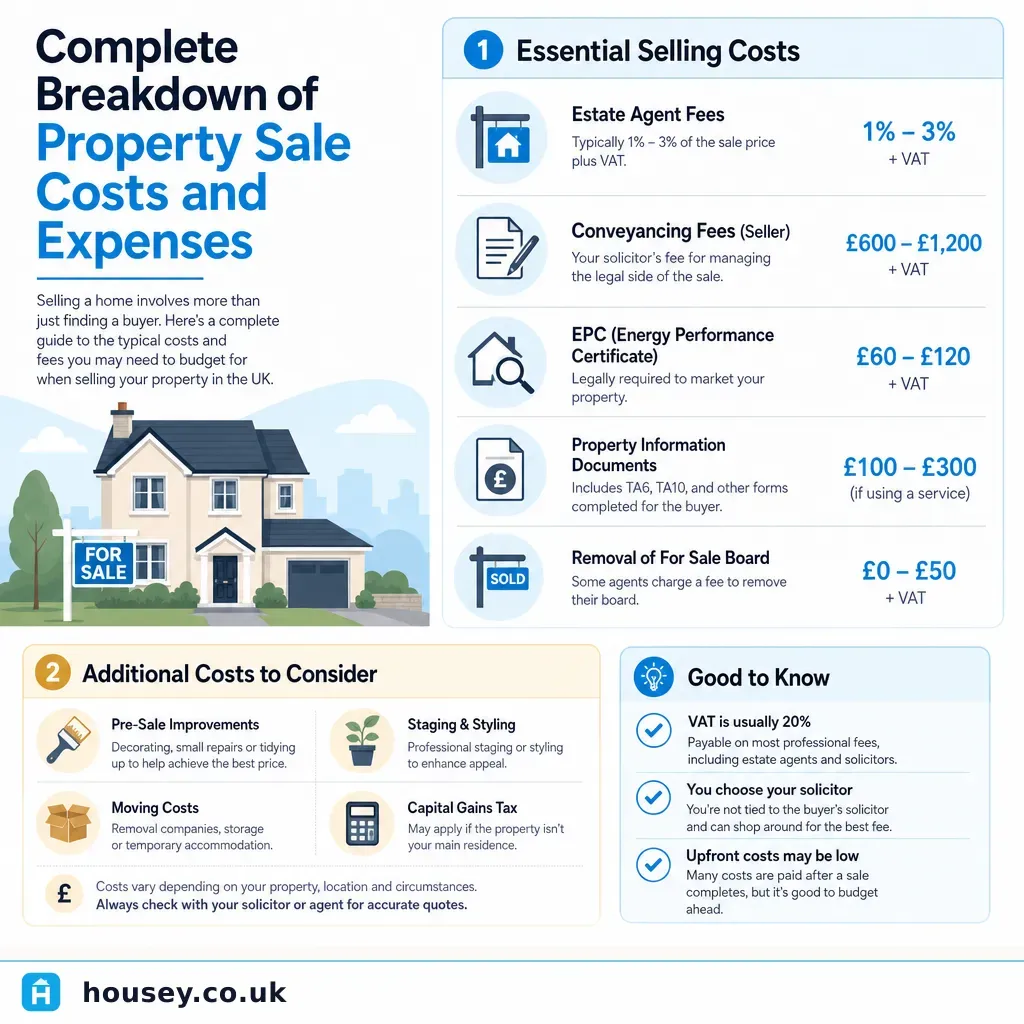
Complete Breakdown of Property Sale Costs and Expenses
Selling a house in England and Wales typically absorbs 3–6% of the sale price.