Cost of Window Frame Capping and Repair
By Housey · Last reviewed 19th of May 2026
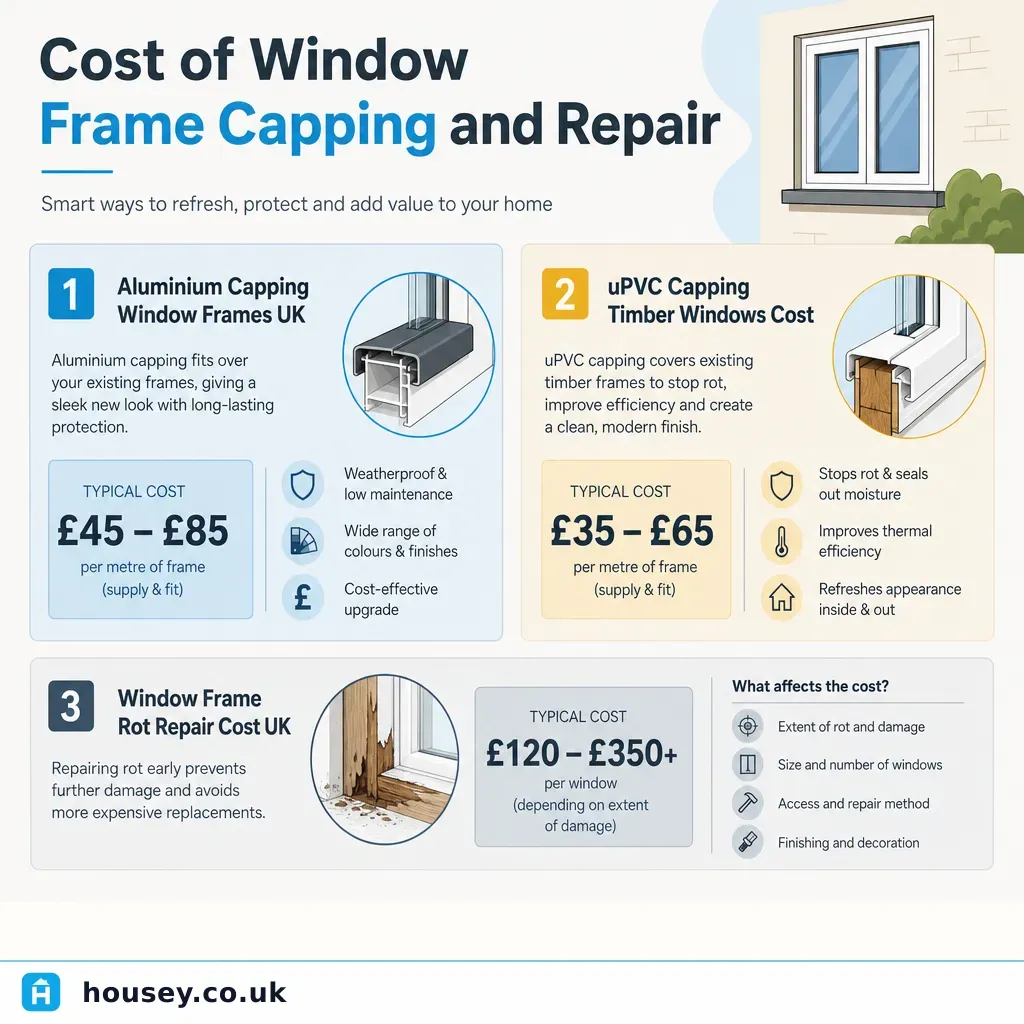
Cost of Window Frame Capping and Repair
Window frame capping tends to come onto the radar when exterior paint is failing, draughts are worsening, and the cost of full window replacement feels disproportionate to the underlying problem. It is a maintenance solution most commonly applied to 1950s–1980s properties with softwood casement or sash windows that remain structurally sound but are weathered on the surface. Understanding what capping actually involves — and whether it is the right solution for your windows — will help you compare quotes accurately and avoid paying for the wrong approach.
Key points
- Window frame capping — fitting aluminium or uPVC profiles over existing timber frames — typically costs £100–£350 per window for materials and labour. Indicative UK costs, last reviewed 2026-05-19.
- Capping is only appropriate where the underlying timber frame is structurally sound and free of active rot in load-bearing sections; encapsulating decayed timber accelerates hidden deterioration rather than resolving it.
- Window installers carrying out work that breaks the weatherproof seal of the building should be FENSA or CERTASS registered to self-certify compliance with Building Regulations Part L (Conservation of Fuel and Power).
- Listed buildings and properties in conservation areas may require listed building consent or prior planning approval before capping is applied, particularly where uPVC or aluminium replaces traditional detailing on street-facing elevations.
- Minor isolated rot repairs using epoxy consolidant and filler systems typically cost £60–£200 per window and can extend frame life by 10–20 years. Indicative UK costs, last reviewed 2026-05-19.
What is window frame capping?
Window frame capping — also called aluminium capping, frame over-cladding, or uPVC cladding — involves fitting pre-formed aluminium or uPVC profiles directly over the external face of existing timber window frames. The technique does not replace the glass unit, the hardware, or the frame structure: it encloses the external timber surfaces in a weather-resistant skin that requires no ongoing painting.
Capping is most commonly applied to:
- Post-war softwood casement and sash windows (roughly 1945–1985) showing surface paint failure or minor checking.
- Hardwood frames that are structurally sound but have experienced paint system breakdown.
- Properties where full window replacement would be expensive, architecturally disruptive, or subject to planning constraints.
Capping does not resolve underlying rot. If active decay is present in load-bearing sections of the frame — the sill, jambs, or head — encapsulating it prevents drying and accelerates hidden deterioration. A reputable contractor will probe the frame before capping and advise on any necessary rot repair first.
Indicative costs for window frame capping and repair in the UK
Indicative UK costs, last reviewed 2026-05-19. Costs vary by region, window size, material specification, and contractor. Always obtain at least three like-for-like written quotes.
Work type | Indicative cost per window | Notes |
|---|---|---|
Aluminium capping (labour + materials) | £150–£350 | Most durable; powder-coated finishes available |
uPVC capping (standard profile) | £100–£250 | Lower upfront cost; less repairable if damaged |
Minor rot repair (epoxy consolidant + filler) | £60–£150 | Suitable for isolated, shallow rot only |
Timber splice repair (moderate rot) | £200–£500+ | Structural sections replaced in-situ by joiner |
Like-for-like slim-profile timber replacement | £500–£1,500+ | Conservation-grade frames for listed buildings |
Standard uPVC full replacement (casement) | £400–£900 | FENSA or CERTASS registration required |
Aluminium full replacement | £600–£1,200+ | Slimmer sightlines; powder-coated to specification |
Capping, repair, or full replacement: which is right for your windows?
Option | Best for | Not suitable for | Typical lifespan after work | Main risk if wrong choice |
|---|---|---|---|---|
Capping | Sound frames with surface weathering; low-maintenance priority | Active rot; failed glazing seals; energy upgrade needed | 20–30 yrs aluminium; 15–20 yrs uPVC | Sealing in moisture accelerates rot |
Epoxy repair | Isolated rot in sound frame; conservation settings | Extensive decay; failed joints | 10–20 years if maintained | May not address full extent of decay |
Timber splice | Moderate rot in specific sections; listed buildings | Large-scale structural decay | 20–40 years | Higher cost; requires skilled joiner |
Full replacement | Failed glazing; extensive decay; energy upgrade | Conservation areas — check consent; tight budget | 20–40+ years (quality frames) | Over-specified for structurally sound frames |
Worked example: 1960s semi-detached, 10 casement windows
A homeowner on a 1960s Midlands estate has ten softwood casement windows with peeling paint and draughts around two frames. A carpenter probes the timber and finds one sill with shallow isolated rot across roughly 20% of its length; all other frames are sound.
Recommended approach: Epoxy repair the affected sill (estimated £120–£150), then aluminium capping across all ten windows (estimated £1,500–£3,000). Total estimated outlay: approximately £1,600–£3,200, compared with £4,500–£9,000 for full uPVC replacement. Indicative UK costs, last reviewed 2026-05-19. Capping that does not replace the frame or break the weatherproof seal does not usually require FENSA registration, though the installer should confirm this in writing.
Cost drivers: why quotes vary
- Window size and profile complexity — bay windows, arched heads, and non-standard sections require bespoke profiling at higher cost.
- Scaffold or access equipment — first-floor and above windows add scaffolding or MEWP hire costs, typically £400–£1,200 for a full-house scaffolding period.
- Material specification — powder-coated aluminium is more durable than standard uPVC but costs more per metre of profile.
- Extent of rot repair before capping — contractors who do not probe frames before quoting may revise their price on discovery of decay.
- Regional labour rates — London and South East rates typically run 20–35% above the national average for comparable window work.
- Number of windows — most contractors price per window with a day-rate minimum; larger jobs attract a lower per-unit cost.
What to ask before accepting a quote
- Will you probe the frames for active rot before capping, and what happens to the price if rot is found?
- Is the quote for aluminium or uPVC profiles, and can I see a sample of the finish?
- Are you FENSA or CERTASS registered? If not, do you consider building regulations notification necessary for this scope of work?
- Does the quote cover all surfaces — sills, heads, jambs, and reveals — or only the face of the frame?
- Is scaffolding included in the price, or costed separately?
- Does the quote include VAT?
- What guarantee do you offer on materials and workmanship, and is it backed by an insurance-backed warranty?
- What assumptions is the quote based on, and what could cause the price to change?
Planning and regulatory considerations
For most standard residential properties, capping existing window frames does not require planning permission because the frame and glass unit are not replaced. However:
- Listed buildings — works altering the character of a listed building, including capping with non-traditional materials, may require listed building consent. Check with your local planning authority before proceeding.
- Conservation areas — local authority policies vary; some councils require prior approval before uPVC or aluminium capping is applied to street-facing traditional elevations.
- Full frame replacement — if work extends to replacing the frame or glass unit, FENSA or CERTASS registration (or a separate building regulations application) is required under Part L.
When to get professional help
Obtain a written assessment from a qualified joiner, carpenter, or window specialist before committing to capping if:
- Any section of the frame sill or lower rail feels soft when pressed — this indicates active rot.
- Paint is failing in a pattern suggesting trapped moisture rather than simple UV breakdown.
- A window is sticking, dropping, or showing distortion at corner joints — this may indicate structural movement in the lintel or reveal rather than surface weathering.
- The property is listed or in a conservation area.
- You are preparing to sell and want to know whether investment in capping or repair will be reflected in the valuation.
How Housey can help
Housey connects homeowners with vetted local window and door installers who can assess your frames, recommend the most appropriate solution — capping, repair, or full replacement — and provide itemised written quotes. Use Housey to compare quotes from multiple contractors before committing to any work.
Frequently asked questions
Does window frame capping require planning permission?
In most cases, no. Capping existing timber frames does not usually require planning permission for standard residential properties. However, listed buildings and conservation area properties are subject to stricter controls — local planning authorities may require listed building consent or prior approval before non-traditional materials are applied to street-facing elevations. Always confirm with your local planning authority before proceeding.
Will capping my window frames improve energy efficiency?
Capping reduces draughts by sealing gaps around the frame, which can improve comfort and limit heat loss at the junction. However, the primary factor in window thermal performance is the glazing unit, not the frame profile. Single-glazed windows with new capping will not achieve a meaningful improvement in thermal performance; replacing the glazed unit or the full window would be more effective for energy efficiency.
How long does window frame capping last?
Aluminium powder-coated capping typically lasts 20–30 years or more without significant maintenance. Standard uPVC profiles tend to discolour and may become brittle after 15–25 years, particularly on south-facing aspects with high UV exposure. Both options considerably outlast a conventional paint-and-maintain cycle on timber, making capping cost-effective for structurally sound frames.
Can I cap uPVC window frames instead of replacing them?
Capping is primarily designed for timber frames. Failing uPVC frames are generally better replaced, as uPVC does not respond well to over-cladding and direct replacement units are usually cost-competitive. If the uPVC frame itself is sound but the sealed glazing unit has fogged, replacing the glazed unit alone — rather than the whole frame — is usually the most economical repair.
Sources and further reading
- Approved Document L — Conservation of Fuel and Power — GOV.UK
- FENSA Homeowner Guidance — FENSA
- Windows in Traditional Buildings — Historic England
- CERTASS Trade Association — CERTASS
Useful next reads
 Improvement & Build
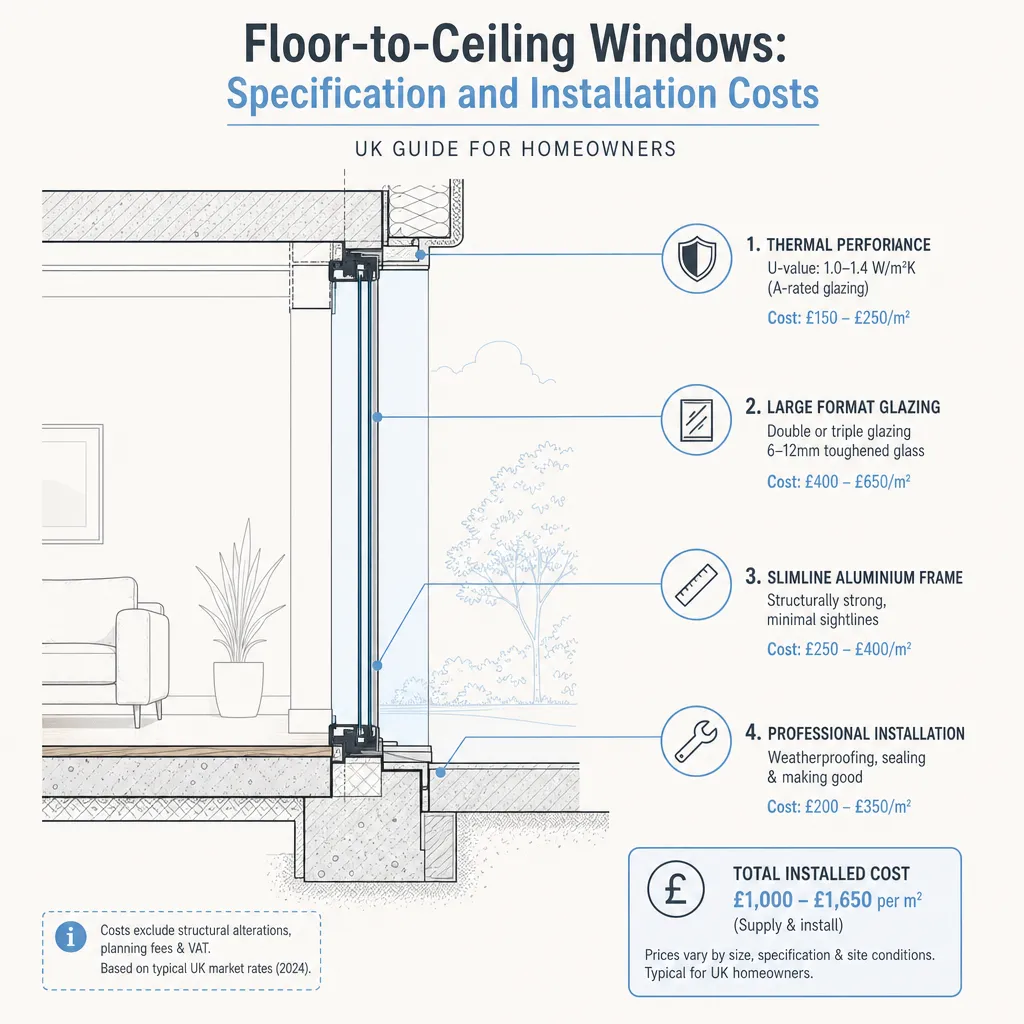
Floor-to-Ceiling Windows: Specification and Installation Costs
Floor-to-ceiling windows in the UK typically cost £1,800–£6,500 per unit installed, depending on glazing type, frame material, and whether structural alterations are needed.
 Improvement & Build
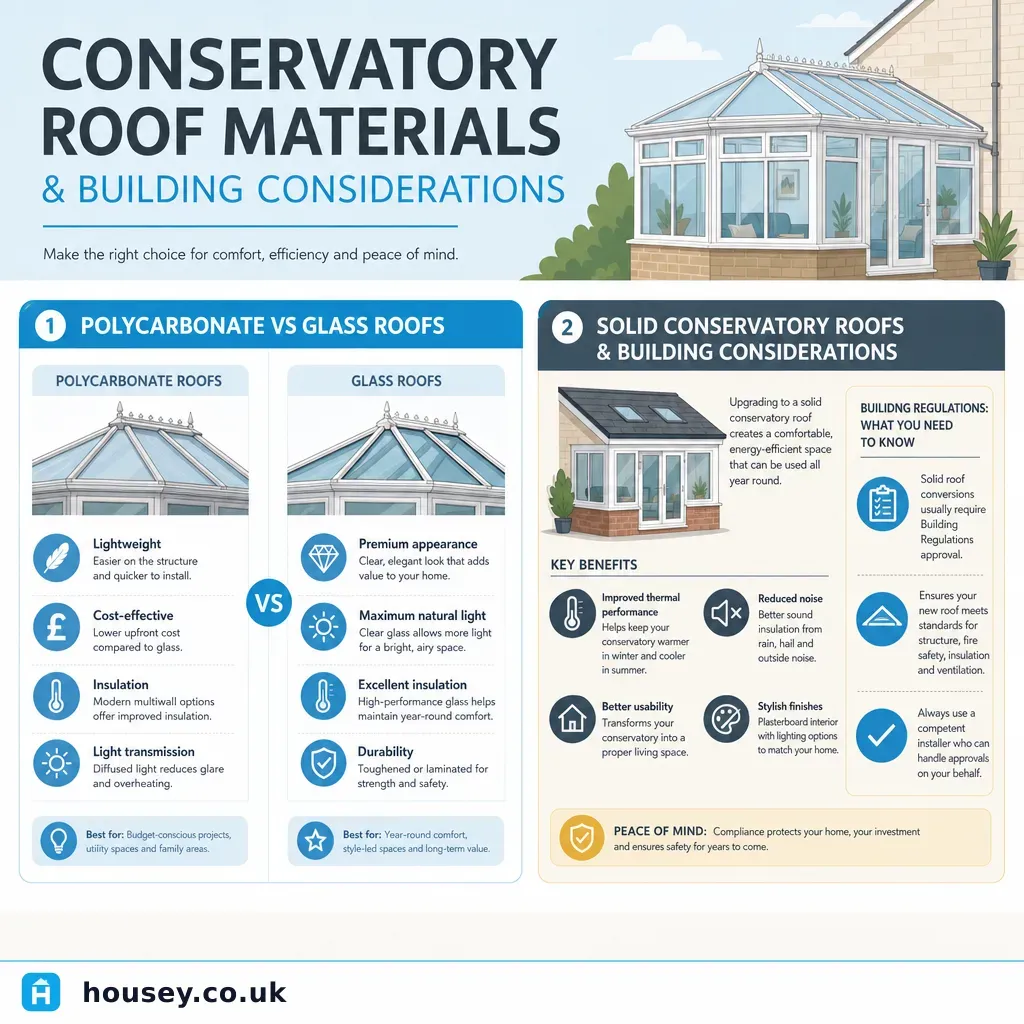
Conservatory Roof Materials and Building Considerations
The main conservatory roof materials are polycarbonate, glass, and solid insulated panels.
 Improvement & Build
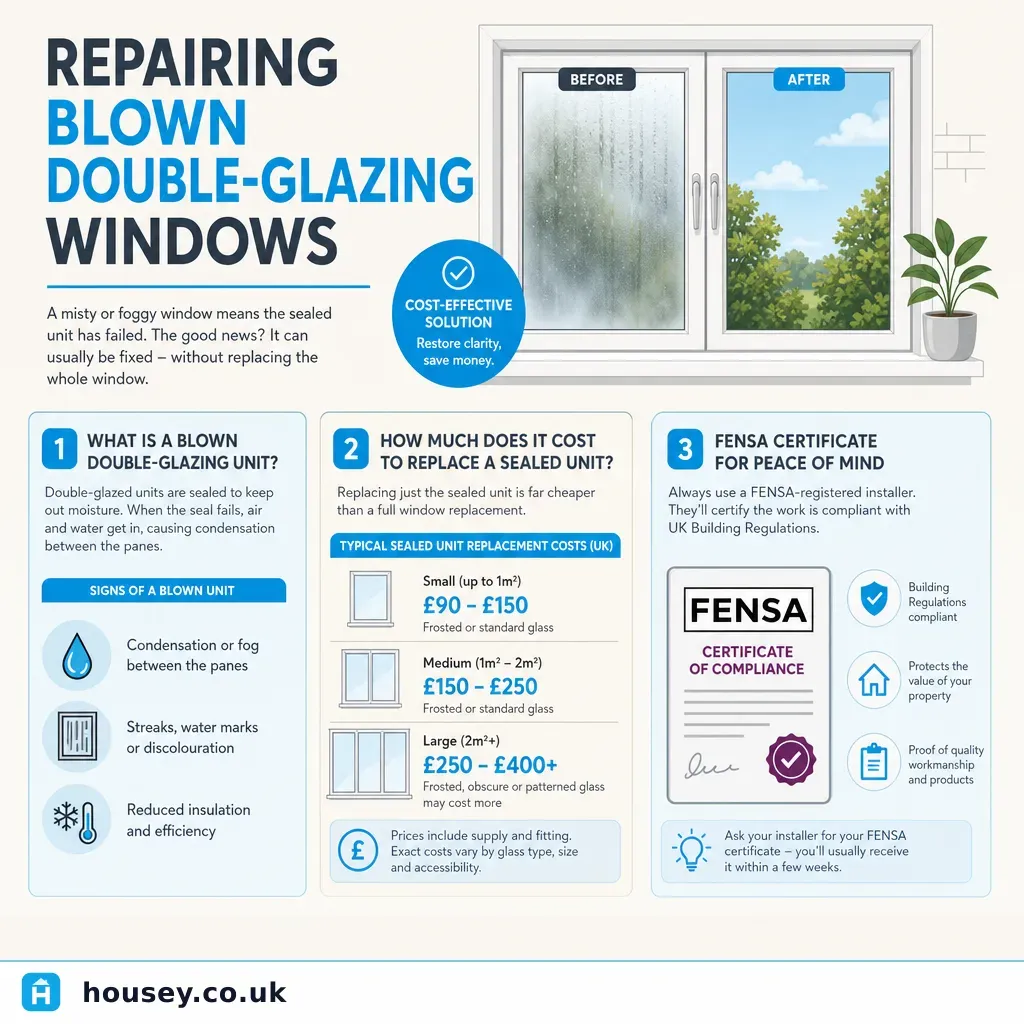
Repairing Blown Double-Glazing Windows
A blown double-glazed window occurs when the hermetic seal between the panes fails, allowing moisture to enter the cavity.
 Improvement & Build
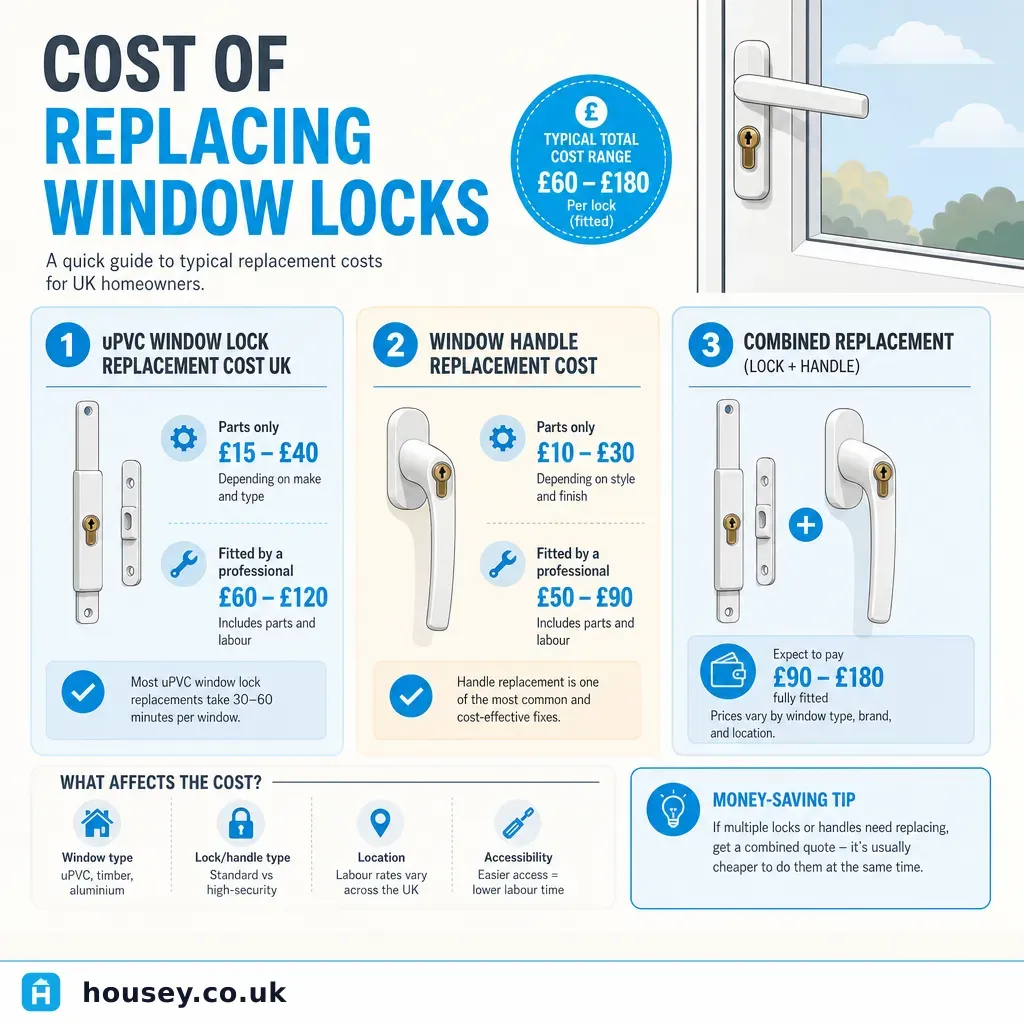
Cost of replacing window locks
Window lock replacement costs depend on the lock type.
 Improvement & Build
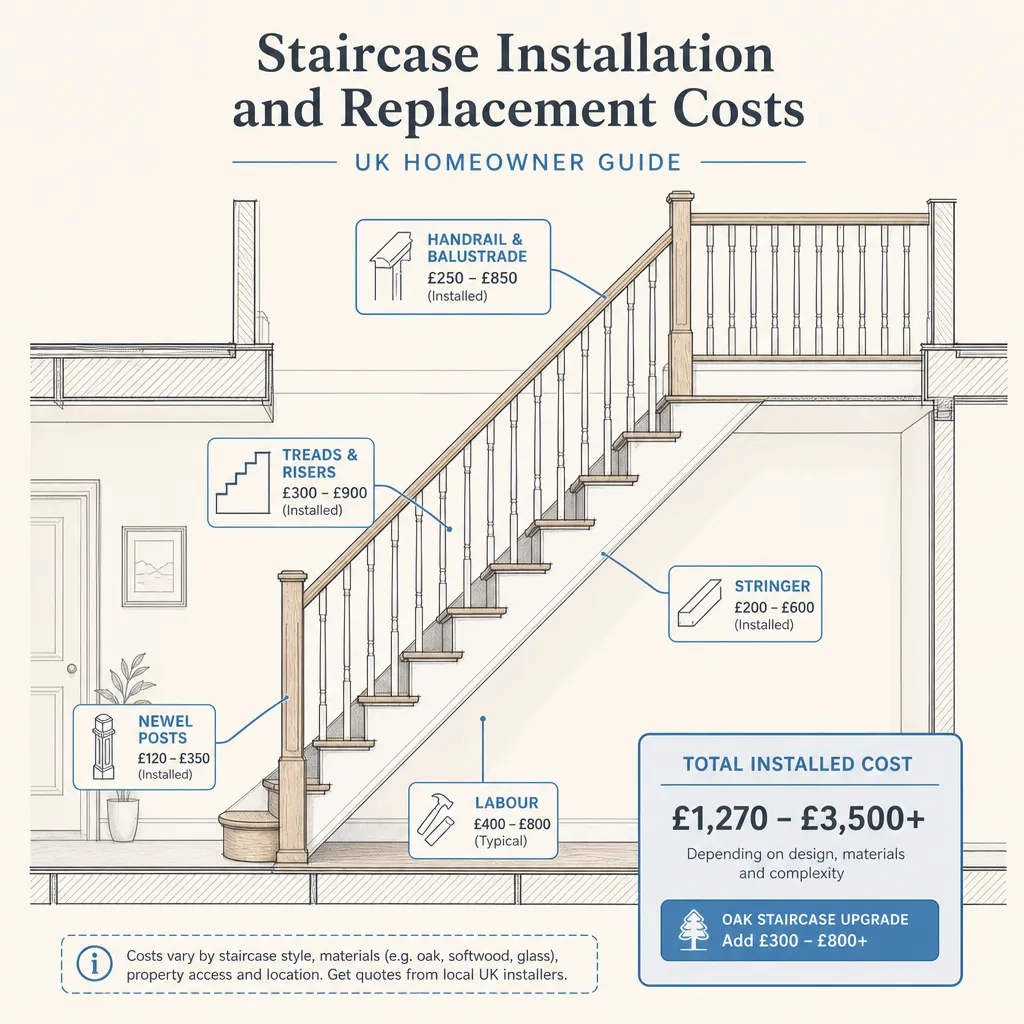
Staircase Installation and Replacement Costs
A straight-flight staircase replacement in the UK typically costs £1,500–£4,500 supply and fit.