Conservatory Roof Materials and Building Considerations
By Housey · Last reviewed 11th of May 2026
Conservatory Roof Materials and Building Considerations
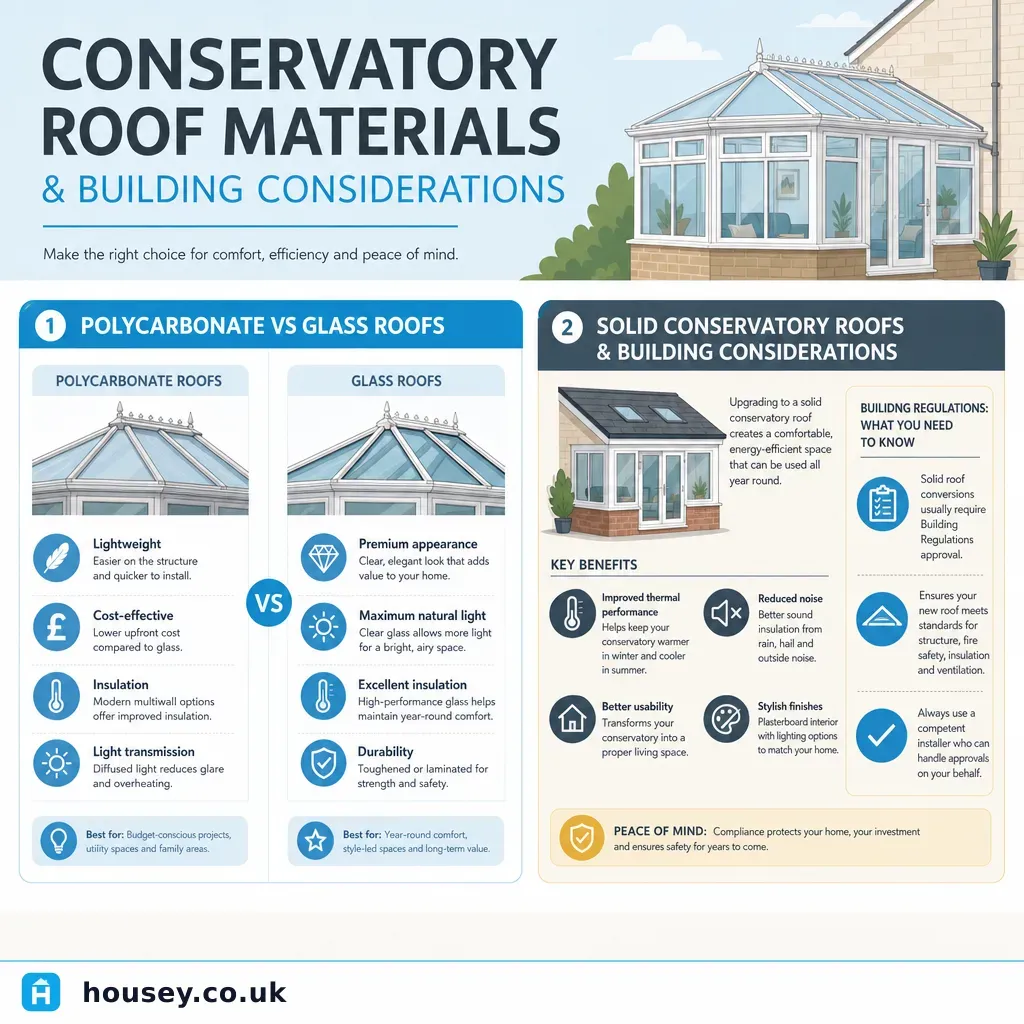
Conservatory roofs are among the most common home improvement decisions in the UK, with millions of properties still carrying glazing installed during the 1980s and 1990s building boom. Whether an ageing polycarbonate roof is leaking, yellowing with UV damage, or simply making the space unusable in summer heat, the choice of replacement material has direct consequences for thermal comfort, Building Regulations compliance, and what you can realistically do with the room year-round. The decision becomes considerably more complex when a homeowner wants to move from a translucent glazed roof to a solid insulated construction.
Key points
- Polycarbonate conservatory roofs typically achieve U-values of 1.8–2.0 W/m²K; for context, Building Regulations require replacement windows in existing English homes to achieve no worse than 1.4 W/m²K under Approved Document L (2021 edition).
- Replacing a translucent conservatory roof with a solid insulated construction almost always removes the property's entitlement to the conservatory exemption under Schedule 2 of the Building Regulations 2010, triggering a full Building Control application.
- Like-for-like roof material swaps — polycarbonate to polycarbonate, or polycarbonate to glass at the same profile and height — generally fall within permitted development and do not require planning permission for standard residential properties in England.
- Listed buildings require Listed Building Consent for any external alteration, including conservatory roof replacement, regardless of material type or colour.
- Solar-control glass coatings can significantly reduce summer overheating in glass-roofed conservatories without sacrificing natural light — a useful middle ground before committing to a solid roof.
Comparing conservatory roof materials
The three mainstream options serve different use cases, budgets, and regulatory situations.
Roof type | Approximate U-value | Best for | Not ideal for | Building Regulations usually needed? |
|---|---|---|---|---|
Twin-wall polycarbonate | 1.8–2.0 W/m²K | Low-cost like-for-like swap | Year-round comfort, noise, aesthetics | No (like-for-like) |
Double-glazed glass | 1.0–1.2 W/m²K | Light, improved insulation, appearance | South-facing rooms prone to solar gain | No (like-for-like) |
Triple-glazed glass | 0.6–0.8 W/m²K | Maximum glazed thermal performance | Weight loading on older frames, cost | Sometimes — check with local authority |
Solid insulated panel | 0.18–0.28 W/m²K | Habitable year-round room | Natural light, glazed appearance | Almost always yes |
Indicative U-values, last reviewed 2026-05-11. Product performance varies — check manufacturer specifications and confirm requirements with Building Control before work starts.
Polycarbonate: cheap but limited
Multi-wall polycarbonate remains the most affordable option and can be replaced on a like-for-like basis without triggering Building Regulations in most cases. However, UV degradation causes yellowing and panel cracking over time — most panels have a practical lifespan of 10–20 years. Noise during heavy rain is a persistent complaint, and winter heat loss through the roof is significant. If budget is the primary constraint and the conservatory is used only seasonally, like-for-like polycarbonate replacement is a reasonable short-term fix.
Glass: the most popular upgrade
Double-glazed glass panels offer substantially better thermal performance than polycarbonate and are the most popular upgrade for homeowners who want to preserve a light, airy appearance. Solar-control coatings, which reduce infrared transmission, can address summer overheating. Triple-glazed units perform better still but are heavier — a structural assessment of the conservatory frame is advisable before specifying them, as older aluminium or UPVC frames may not carry the additional load safely.
Solid insulated roofs: best performance, greatest regulatory complexity
Solid "warm roof" constructions — typically an insulated structural panel or a traditionally raftered build with a tiled or slated finish and internal plasterboard — provide the best thermal performance by a significant margin. They allow the space to be connected to the central heating system and used comfortably year-round.
The regulatory consequence is significant. The conservatory exemption under Building Regulations 2010 requires the roof to be at least 75% translucent material. Once a solid roof is installed, that condition fails, and the structure is treated as a new-build habitable room extension. A full Building Regulations application is then required, covering thermal performance (Approved Document L), structure (Approved Document A), ventilation (Approved Document F), and electrical work where new circuits are added (Approved Document P).
Building Regulations: the conservatory exemption explained
The conservatory exemption in Schedule 2 of the Building Regulations 2010 allows conservatories to be added to a dwelling without a full Building Control application, provided:
- The floor area does not exceed 30 m².
- The roof is at least 75% translucent material.
- The external walls are at least 50% glazed.
- The conservatory is thermally separated from the main house by an external-quality door.
- Safety glazing requirements are met throughout.
Converting a translucent roof to a solid construction immediately fails the 75% translucent roof condition. The structure is no longer a conservatory in regulatory terms — it is a new-build habitable room extension and must comply with current Building Regulations in full. Proceeding without Building Control approval can lead to enforcement action and will create difficulties when the property is sold: solicitors typically request a Completion Certificate, and its absence is flagged in standard conveyancing searches.
Planning permission: what the rules say
For most residential properties in England:
- Like-for-like replacement (same profile, same height) is permitted development — no planning permission is required.
- Changing the roof profile, height, or footprint may exceed permitted development limits and require a householder planning application.
- Listed buildings require Listed Building Consent for any alteration affecting the external appearance or character of the building.
- Conservation areas may have Article 4 Directions restricting permitted development rights — always check with your local planning authority before starting.
Planning rules differ in Scotland, Wales, and Northern Ireland — check the relevant national guidance if your property is outside England.
Decision tree: which conservatory roof should you choose?
- Choose polycarbonate if budget is the main constraint and the conservatory is used seasonally as an unheated sunroom.
- Choose double-glazed glass if you want better thermal performance and natural light without triggering a Building Regulations application.
- Choose triple-glazed glass if maximum glazed thermal performance is the priority — but have the existing frame structurally assessed first.
- Choose a solid insulated roof if you want the space to function as a habitable room year-round — and apply to Building Control before any work starts.
- Consult a structural engineer if the conservatory frame shows deflection, corrosion, or signs of movement, or if you are specifying heavy triple-glazed units.
- Contact your local planning authority before starting if the property is listed, in a conservation area, or if the replacement changes the conservatory's external appearance materially.
Leaking conservatory roofs: repair or replace?
Leaks typically originate at one of the following points:
- Ridge bar or eaves bar sealant failure.
- Cracked or UV-degraded polycarbonate panels.
- Flashing failure at the junction with the main house wall.
- Blocked or overflowing guttering causing backflow under the roof edge.
Single-panel polycarbonate replacement and sealant repairs are generally straightforward maintenance tasks. If the roof is over 15 years old, multiple panels are cracking, or leaks recur after repair, full replacement is usually more cost-effective over a 5–10 year horizon. Always check whether a leak at the wall junction indicates a flashing problem or a lintel issue within the main house wall — the latter is a separate and potentially more significant defect that a roofer alone may not be able to diagnose.
When to get professional help
Call a qualified roofer, conservatory specialist, or structural engineer when:
- You are converting a glazed roof to any solid construction.
- The conservatory frame shows deflection, corrosion, or any signs of movement.
- Leaks are appearing at the junction with the main house wall.
- The conservatory is over 20 years old and you are planning significant investment in the space.
- The property is listed or sits in a conservation area.
- You are unsure whether your planned change requires a Building Regulations application.
How Housey can help
Housey connects homeowners with experienced roofers experienced in conservatory work and extension builders for roof replacement and solid-roof conversion projects across the UK. If your project requires a formal Building Regulations application or structural drawings, our building regulations drawings service can match you with the right professional.
Frequently asked questions
Do I need planning permission to replace a conservatory roof?
For standard residential properties in England, like-for-like conservatory roof replacement is generally permitted development — no planning permission is required. Exceptions apply to listed buildings, where Listed Building Consent is needed, and properties in conservation areas, where permitted development rights may be restricted. Check with your local planning authority if your property falls into either category.
Does fitting a solid conservatory roof require Building Regulations approval?
In almost all cases, yes. Converting a translucent conservatory roof to a solid insulated construction removes the property's entitlement to the conservatory exemption under Schedule 2 of the Building Regulations 2010. The space is treated as a habitable room extension and must comply with Approved Documents L, A, F, and potentially P. A Completion Certificate will be needed for future property sales.
How long does a polycarbonate conservatory roof last?
Most twin-wall polycarbonate roofs last 10–20 years before UV degradation causes yellowing, brittleness, or significant light-transmission loss. Higher-specification UV-coated products may last longer. If your roof is over 15 years old and leaking repeatedly or showing visible cracking, full replacement is usually more cost-effective than ongoing repairs.
Sources and further reading
- Building Regulations 2010, Schedule 2 — legislation.gov.uk
- Planning Portal: Conservatories — Planning Portal
- Approved Document L: Conservation of fuel and power — GOV.UK
- Working at height: A brief guide — Health and Safety Executive
Useful next reads
 Improvement & Build
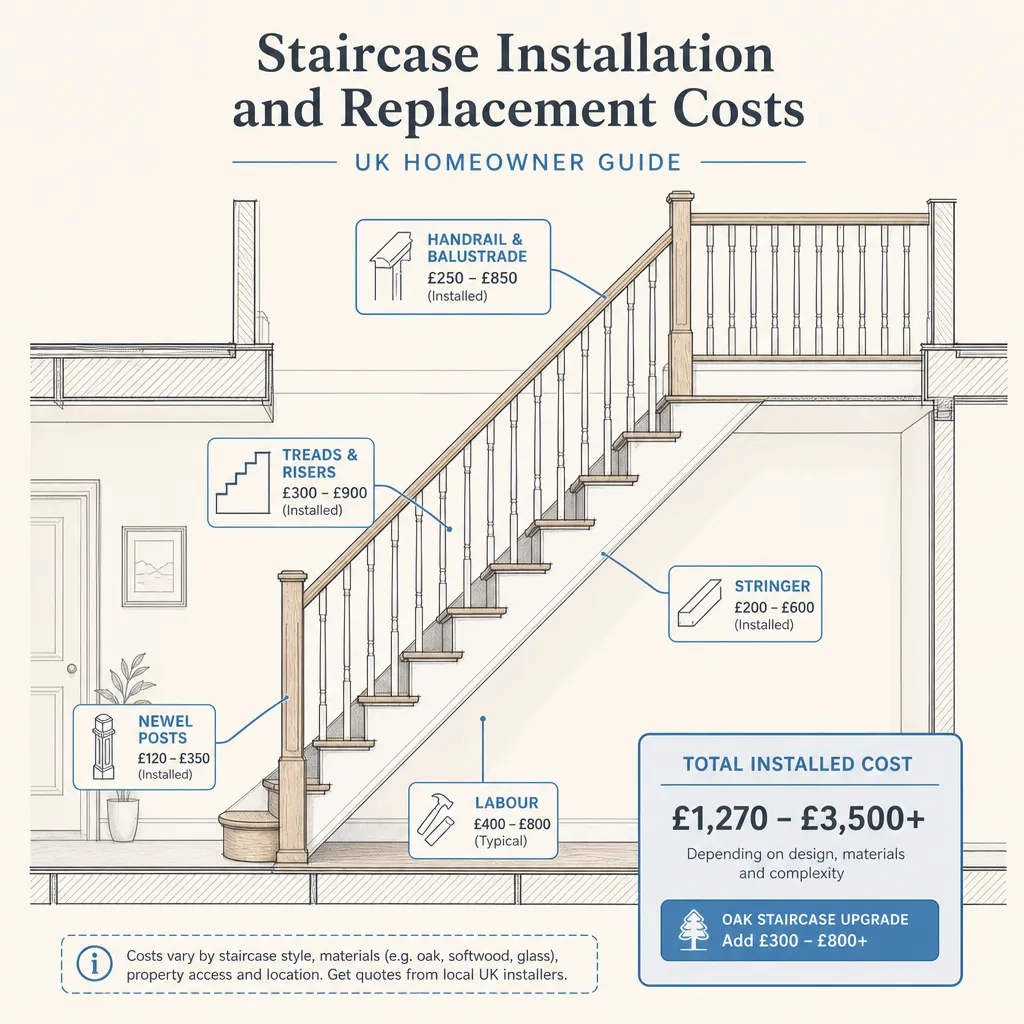
Staircase Installation and Replacement Costs
A straight-flight staircase replacement in the UK typically costs £1,500–£4,500 supply and fit.
 Improvement & Build
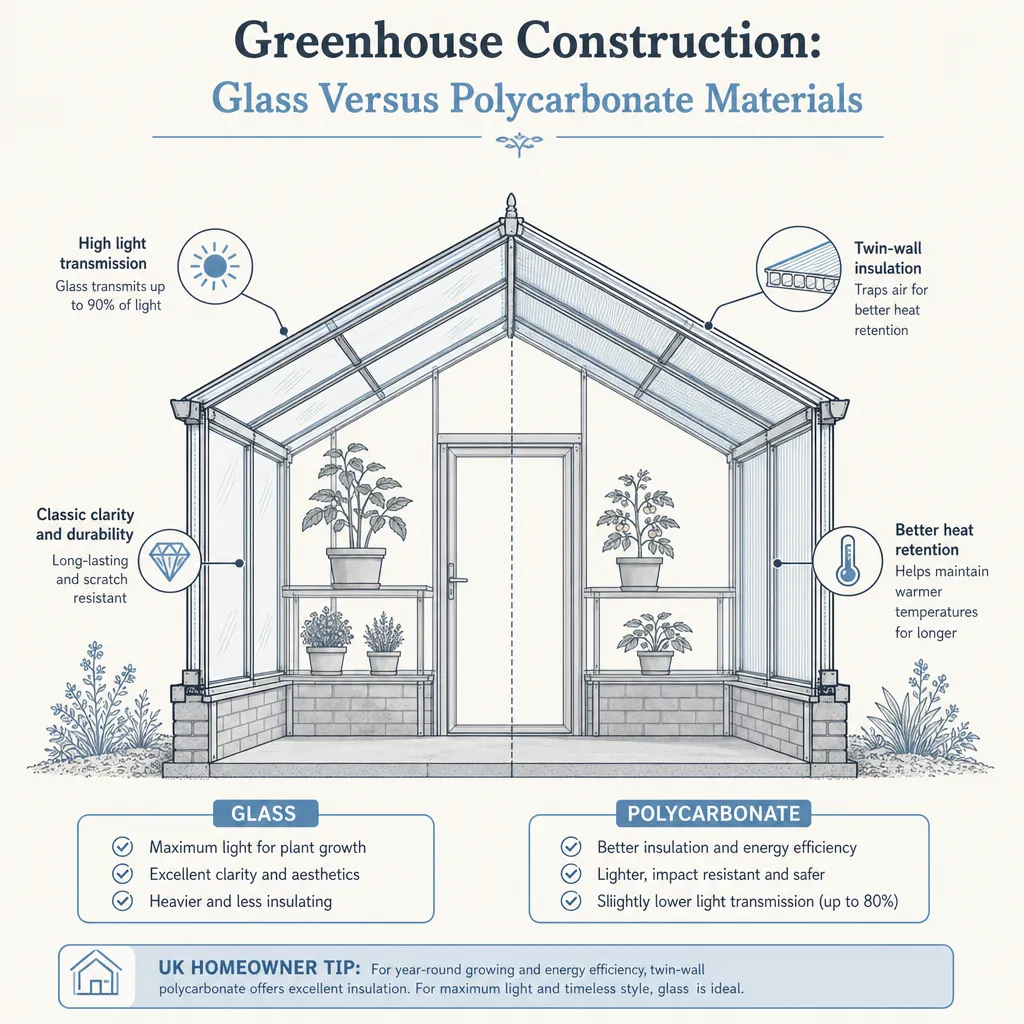
Greenhouse Construction: Glass Versus Polycarbonate Materials
Glass transmits around 90% of available light and lasts indefinitely if unbroken, but insulates poorly and shatters into sharp fragments.
 Improvement & Build
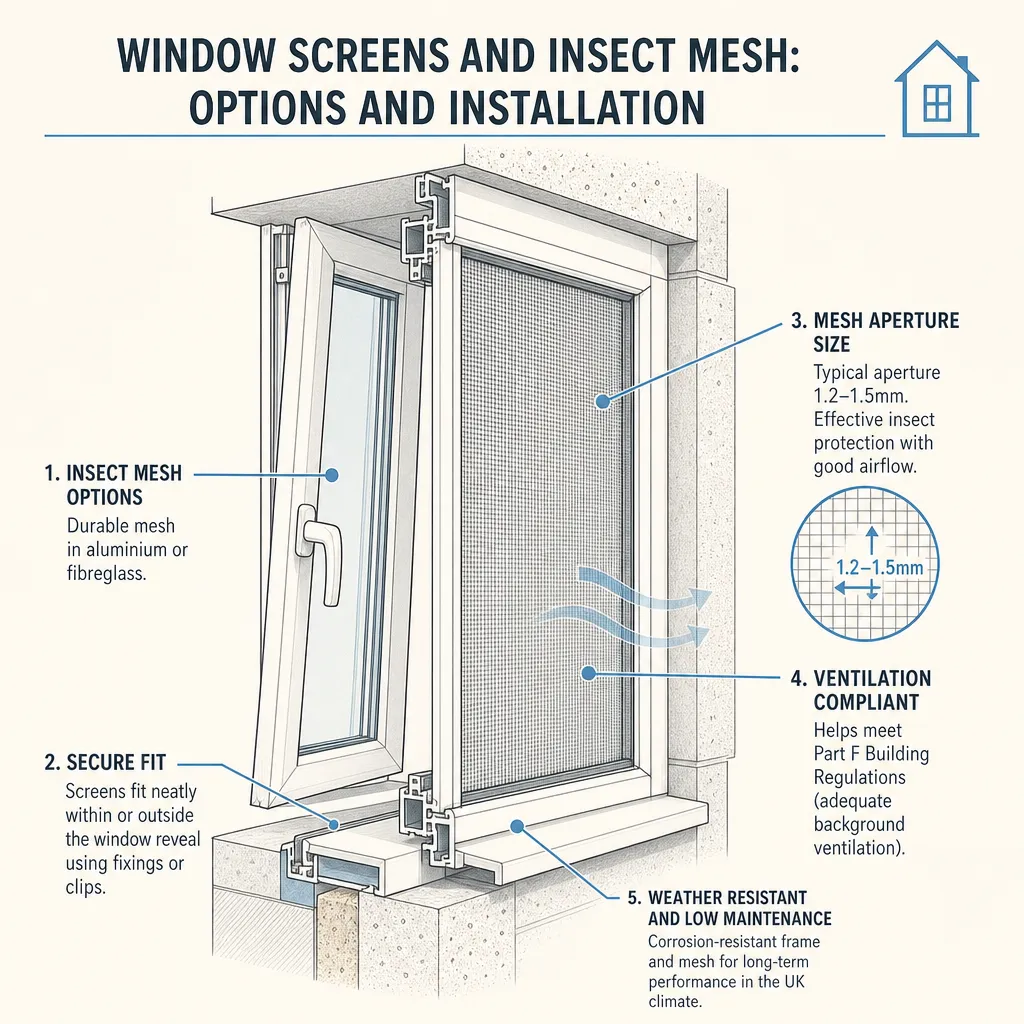
Window Screens and Insect Mesh: Options and Installation
UK window screens fall into four main types: fixed frame, roller retractable, pleated folding, and magnetic snap-fit.
 Improvement & Build
Window Installation Costs: uPVC Options and Project Planning
Replacing uPVC (vinyl) windows in the UK typically costs £400–£900 per casement window installed.
 Improvement & Build
Sustainable Roofing Solutions and Green Roof Systems
Sustainable roofing in the UK covers several options: sedum or living roofs, recycled-content tiles, reclaimed slate, and solar-integrated roofing.