Floor-to-Ceiling Windows: Specification and Installation Costs
By Housey · Last reviewed 7th of May 2026
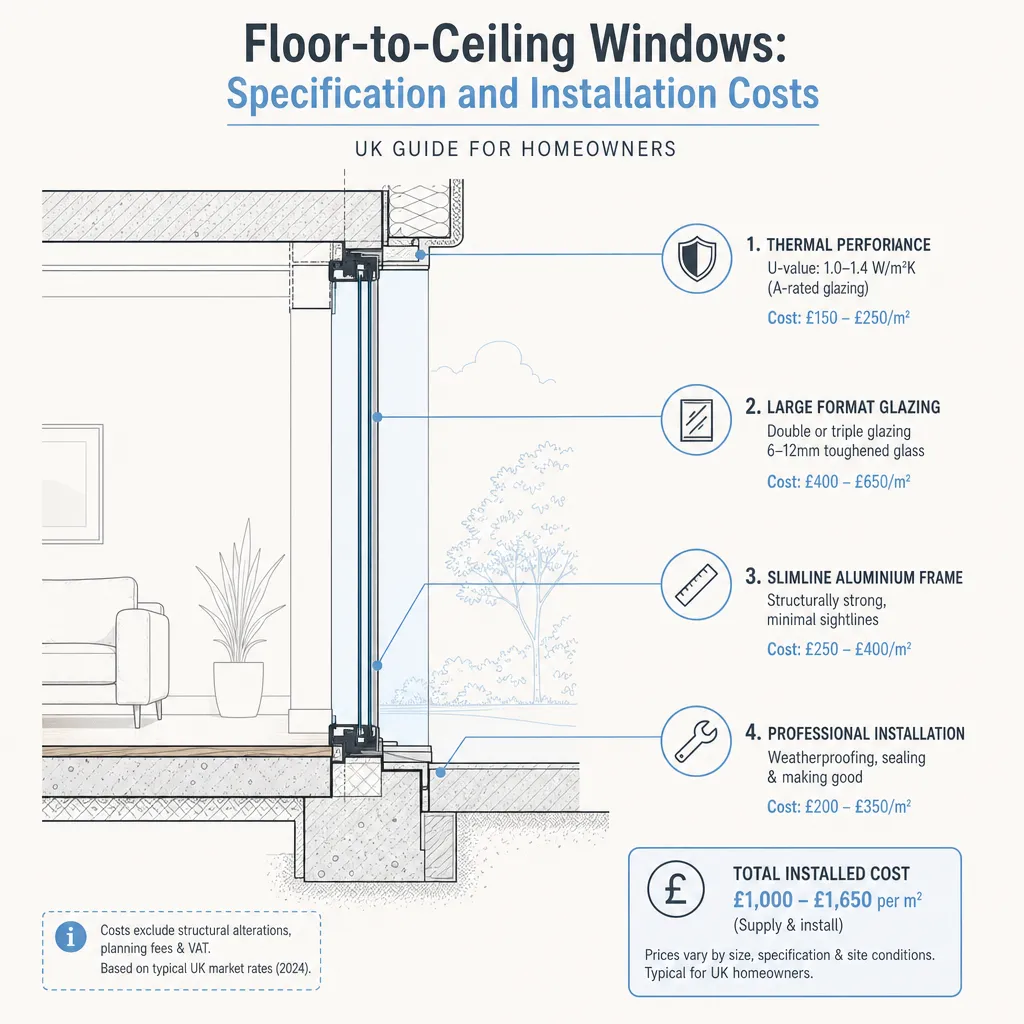
Floor-to-Ceiling Windows: Specification and Installation Costs
Floor-to-ceiling windows are increasingly popular in UK extensions, loft conversions, and rear renovation projects, where homeowners want to maximise light and frame views of the garden or landscape. Whether you are opening up the rear wall of a 1930s semi or specifying glazing for a new-build extension, the decisions made at the outset — glazing type, frame material, structural support, and thermal performance — have a significant bearing on budget, building regulations compliance, and long-term energy performance.
Key points
- All replacement windows in England must meet Building Regulations Part L, with a whole-window U-value no greater than 1.6 W/m²K under Approved Document L1B.
- A structural engineer is usually required to design the lintel or beam for any floor-to-ceiling glazing installed in a load-bearing wall.
- FENSA-registered installers can self-certify replacement window work under the Competent Person Scheme, removing the need for a separate building control application.
- Aluminium frames are the most common choice for large-format glazing in the UK, offering slim sightlines, structural rigidity, and low maintenance.
- Planning permission is not usually required for like-for-like replacements, but conservation area consent or listed building consent may apply.
What are floor-to-ceiling windows?
Floor-to-ceiling windows — sometimes called full-height windows or structural glazing — run from floor level to ceiling height, typically 2.1 m–3.0 m in modern UK homes. They may be fixed panes, openable casements, sliding or folding systems, or combined with door sets such as aluminium bifolds. In UK construction, they appear most often in single-storey rear extensions, open-plan kitchen-diner renovations, loft conversions with Juliet balconies, and contemporary self-build projects.
Glazing systems compared
Choosing the right system affects cost, thermal performance, maintenance, and aesthetics.
System | Best for | Not ideal for | Typical frame | Main consideration |
|---|---|---|---|---|
Fixed full-height pane | Maximum light, minimalist look | Ventilation without a separate opener | Aluminium or timber | Cleaning access; condensation risk |
Casement or tilt-and-turn | Ventilation plus large format | Very wide single panes | Aluminium, uPVC, timber | Weight per opener |
Aluminium bifold | Wide rear extension openings | Acoustic or security priority sites | Aluminium | Level threshold required; structural lintel |
Aluminium sliding door | Wide apertures, space saving | Traditional property aesthetics | Aluminium | Threshold drainage; structural opening |
Crittal-style steel | Heritage or industrial aesthetic | Budget-sensitive projects | Steel | Higher cost; thermal bridging risk |
Structural requirements
Any floor-to-ceiling window in a load-bearing external wall requires a structural element above it — usually a steel RSJ beam or concrete lintel — to carry the load of the wall, floor, or roof above the opening. A structural engineer must calculate the specification, including size, grade, and bearing lengths, before the opening is formed.
Do you need a structural engineer?
- Get a structural engineer's input if you are forming a new or enlarged opening in any external wall.
- Check with a structural engineer if you are unsure whether your wall is load-bearing — most external walls in UK homes are.
- A structural engineer is not usually required if you are replacing a window in an existing opening of identical dimensions.
- Always check if the wall construction is non-standard (timber frame, structural insulated panels, thin-joint blockwork), as the approach will differ.
Building regulations and planning permission
Building Regulations apply to virtually all window installation and replacement work in England and Wales. Approved Document L1B sets a maximum whole-window U-value of 1.6 W/m²K for replacement windows in existing dwellings. Forming a new opening also triggers Approved Document A (structural safety). FENSA-registered installers self-certify their work and issue a FENSA certificate satisfying building control — keep this certificate, as it is required on resale.
Planning permission is not normally required for replacing existing windows. You may need to apply if the property is listed (listed building consent required), in a conservation area where the front elevation is affected, a flat with restricted permitted development rights, or subject to an Article 4 Direction. Check with your local planning authority before starting work if any of these conditions might apply.
Indicative costs
Indicative UK costs, last reviewed 2026-05-07. Quotes vary significantly by region, specification, and site conditions.
Item | Typical installed cost |
|---|---|
Double-glazed aluminium floor-to-ceiling window (up to 2 m wide) | £1,800–£4,500 |
Triple-glazed aluminium floor-to-ceiling window | £2,500–£6,500 |
Aluminium bifold doors with floor-to-ceiling glazing (3 panel) | £3,500–£8,000 |
Crittal-style steel full-height window | £2,000–£7,000+ per unit |
Structural lintel (standard span, supply and fit) | £400–£1,500 |
Steel RSJ beam (larger opening) | £800–£3,500+ |
Structural engineer design fee | £500–£1,500 |
FENSA or building control certification (where separate) | £100–£300 |
Cost drivers include glazed area size, number of panels, triple versus double glazing, acoustic or solar-control coatings, frame finish, access constraints, and whether structural alterations are required. Obtain at least three itemised quotes.
Thermal performance and glass specification
Large glazed areas increase heat loss and overheating risk if not specified carefully:
- U-value: target ≤1.2 W/m²K whole-window for best practice in existing dwellings.
- g-value (solar heat gain coefficient): south-facing glazing should use 0.3–0.5 to limit summer overheating.
- Low-E coating: standard on all new glazing; reduces radiated heat loss.
- Argon or krypton fill: improves double or triple unit performance.
Confirm the specification meets Part L and ask for the U-value on the FENSA certificate.
Pre-installation checklist
Before instructing an installer:
When to get professional help
A FENSA-registered installer can manage straightforward like-for-like replacements. Seek additional professional input when:
- You are forming a new or enlarged opening in any external wall — always commission a structural engineer first.
- The opening spans more than approximately 2 metres or carries significant loads above.
- The property is listed or in a conservation area.
- Existing signs of structural movement are present (cracks, settled lintels, sticking doors) — obtain a structural survey before any glazing work.
- South-facing large glazing is planned in a well-insulated home — consider a building physics review for overheating risk.
How Housey can help
Housey connects UK homeowners with qualified window and door installers who can specify, supply, and fit floor-to-ceiling glazing to Building Regulations standards. Request quotes from vetted installers in your area and compare prices, credentials, and inclusions side by side.
Frequently asked questions
Do I need planning permission for floor-to-ceiling windows?
Not usually. Replacing existing windows — including enlarging glazed areas within an existing opening — is typically permitted development in England. Listed buildings require listed building consent, and conservation area restrictions may apply to front elevations. Always check with your local planning authority if in doubt, particularly for flats where permitted development rights are more limited.
What frame material should I choose for large windows?
Aluminium is the most common choice for large-format glazing in the UK, offering slim sightlines, high structural rigidity, low maintenance, and a wide range of powder-coat colours. Timber offers a traditional aesthetic but requires more maintenance and is less common for very large spans. Crittal-style steel suits heritage and industrial aesthetics but costs more and can present thermal bridging challenges.
How long does floor-to-ceiling window installation take?
Most installations take one to two days on site once glazing units arrive. Structural alterations — forming a new opening and installing a lintel — typically add one to two days. Bespoke large-format glazing units are manufactured to order and usually take 6–12 weeks from order to delivery, so factor this into your programme.
Will floor-to-ceiling windows make my home harder to heat?
Not necessarily, provided the glazing is correctly specified. Modern double-glazed units with low-E coatings and argon fill can meet Part L requirements. Triple glazing offers better insulation at higher cost. South-facing glazing should use a moderate g-value (0.3–0.5) to limit solar gain and reduce summer overheating risk.
Sources and further reading
- Approved Document L1B: Conservation of Fuel and Power in Existing Dwellings — HM Government
- FENSA: Competent Person Scheme for windows and doors — FENSA
- Planning Portal: Windows guidance — Planning Portal
- Energy Saving Trust: Windows and glazing — Energy Saving Trust
Useful next reads
 Improvement & Build
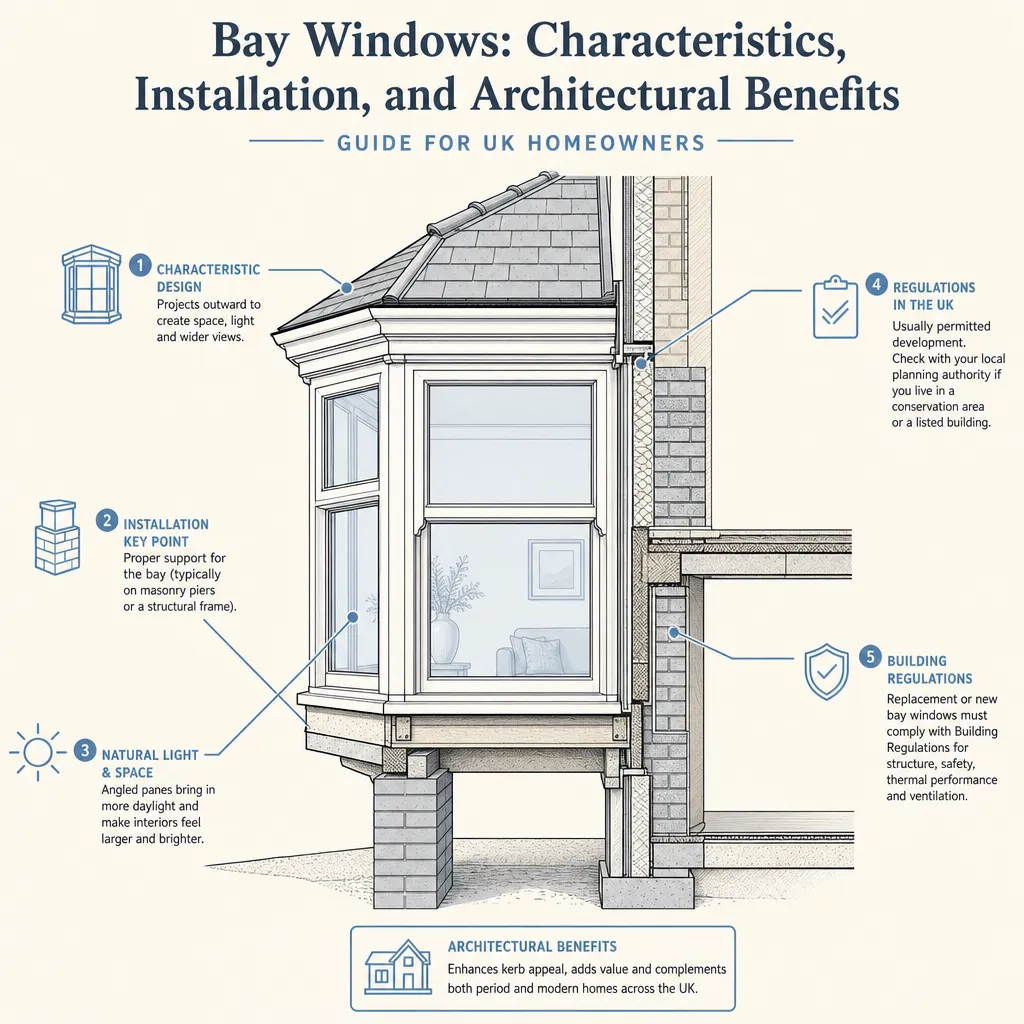
Bay Windows: Characteristics, Installation, and Architectural Benefits
Bay windows project outward from the main wall, adding floor space, natural light, and architectural character.
 Improvement & Build
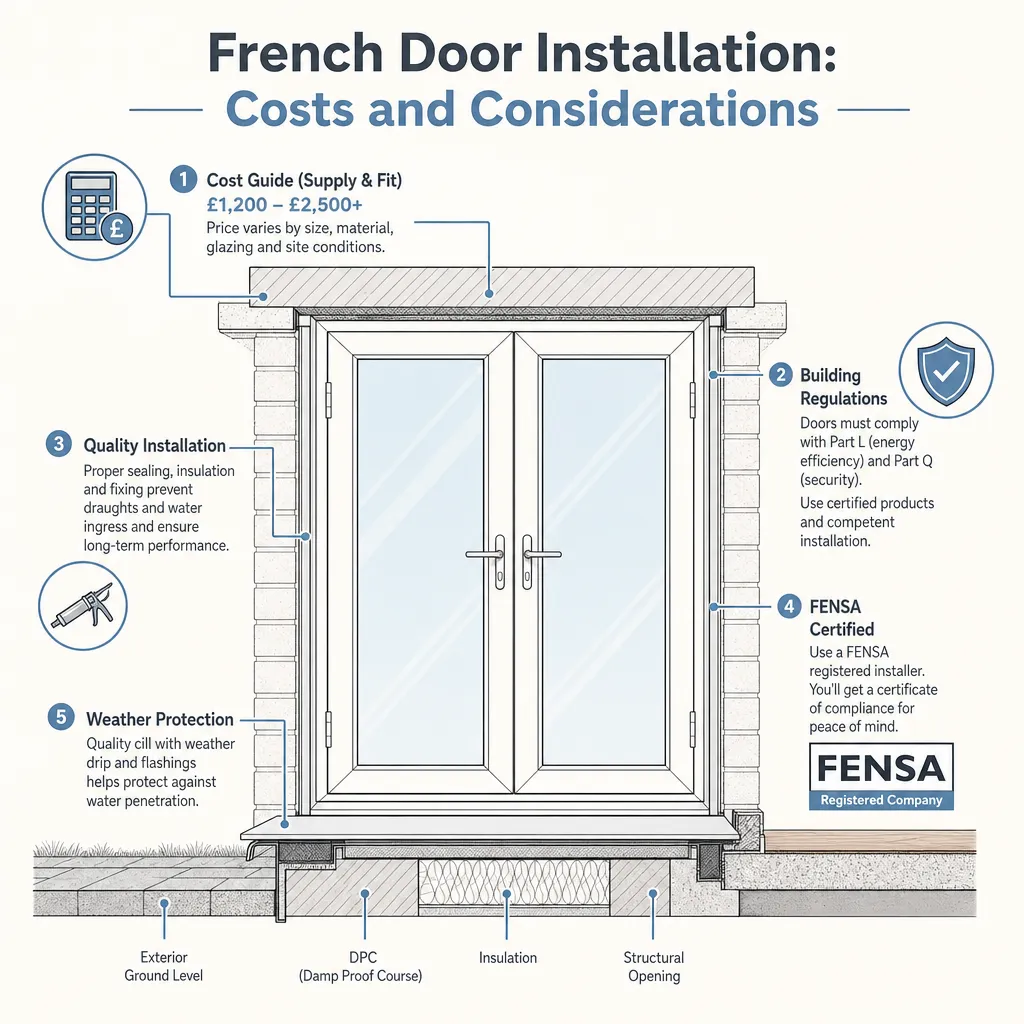
French Door Installation: Costs and Considerations
External French door installation typically costs £1,500–£4,000 in the UK, including supply and fitting, depending on material, glazing specification, and whether structural alterations are needed.
 Improvement & Build
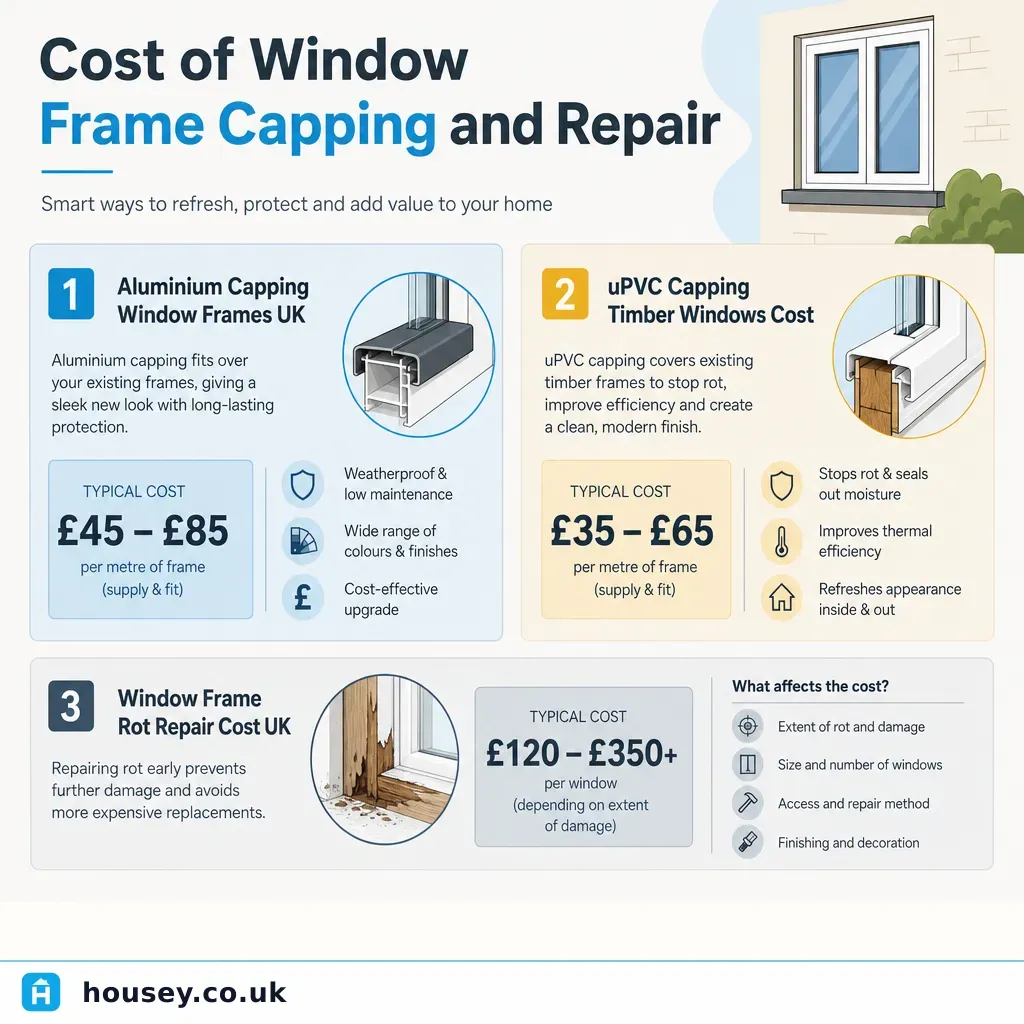
Cost of Window Frame Capping and Repair
Window frame capping uses aluminium or uPVC profiles fitted over existing timber frames to create a low-maintenance, weather-resistant finish without full replacement.
 Improvement & Build
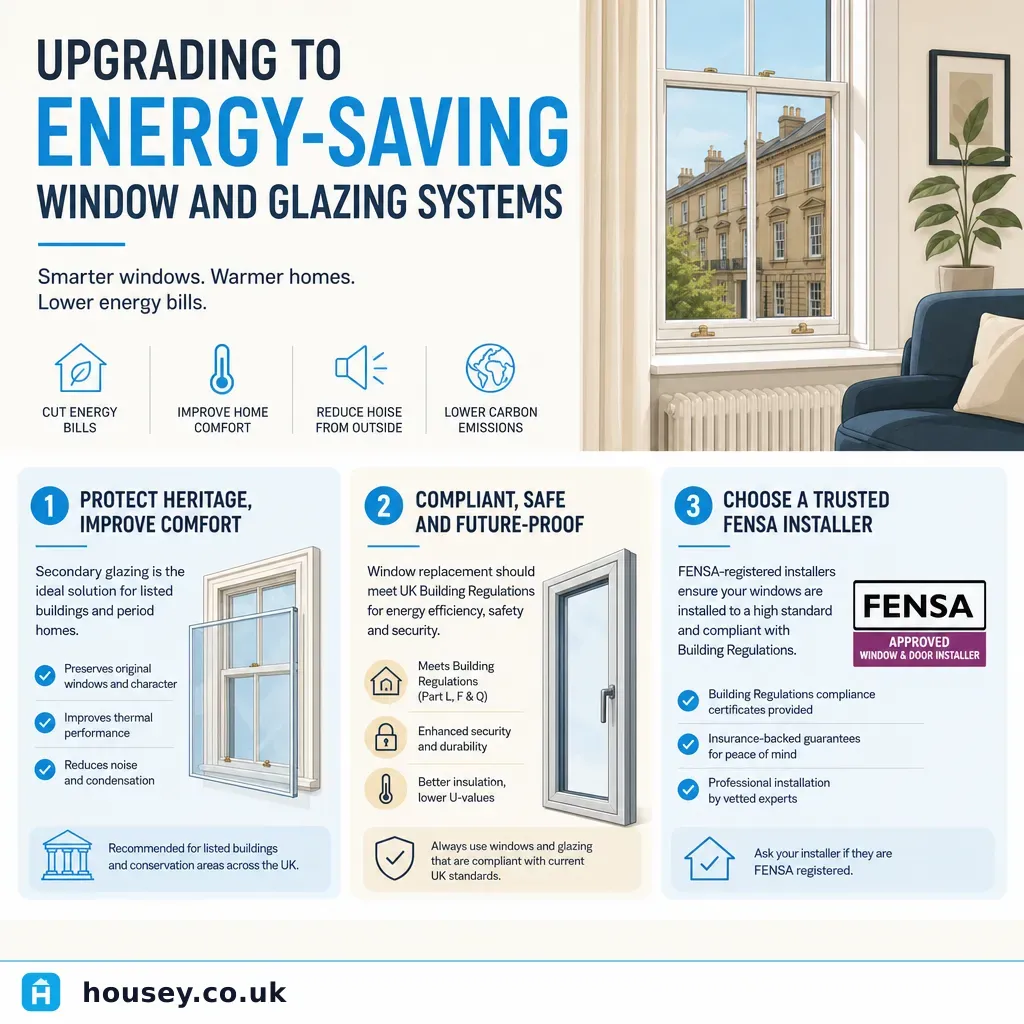
Upgrading to Energy-Saving Window and Glazing Systems
Upgrading to energy-saving glazing reduces heat loss, cuts heating bills, and can improve your EPC rating.
 Improvement & Build
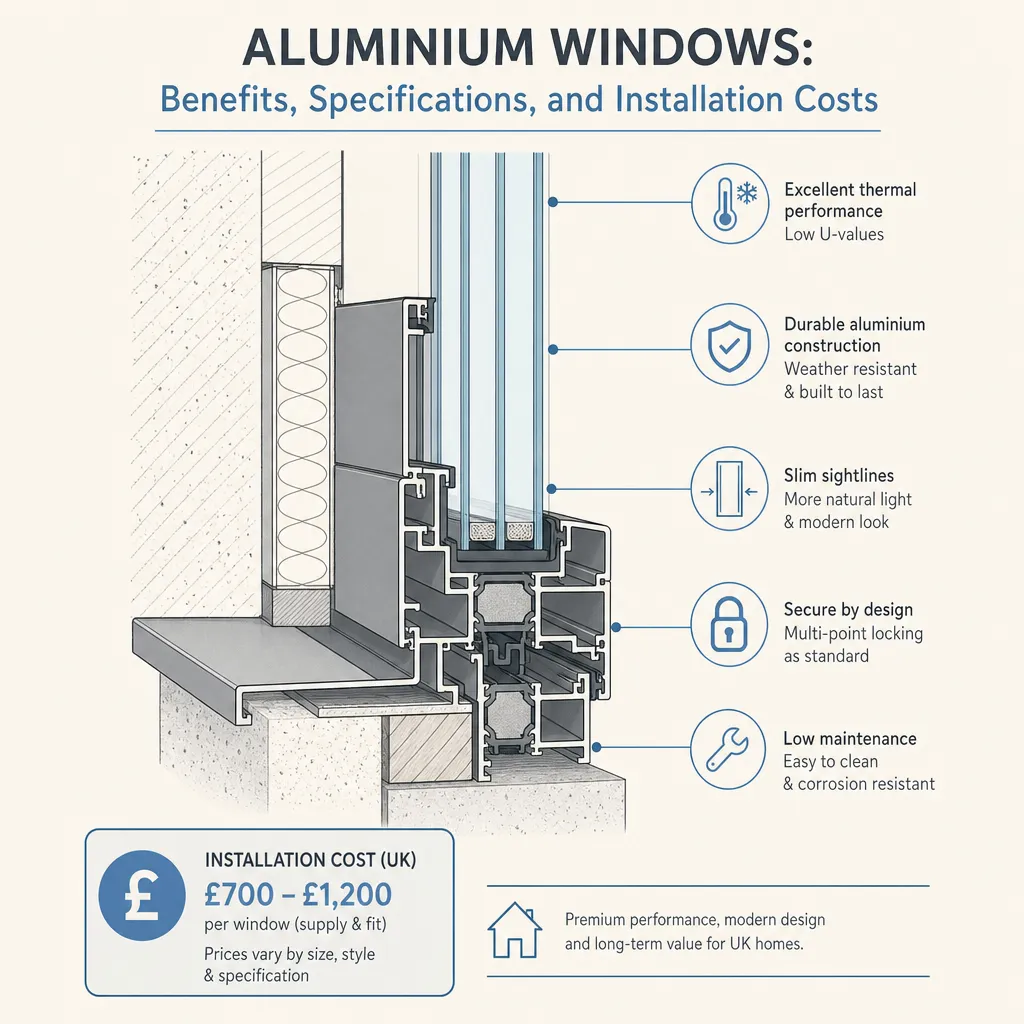
Aluminium Windows: Benefits, Specifications, and Installation Costs
Aluminium windows typically cost £600–£1,800 per window installed in the UK, depending on size and specification.