Staircase Installation and Replacement Costs
By Housey · Last reviewed 7th of May 2026
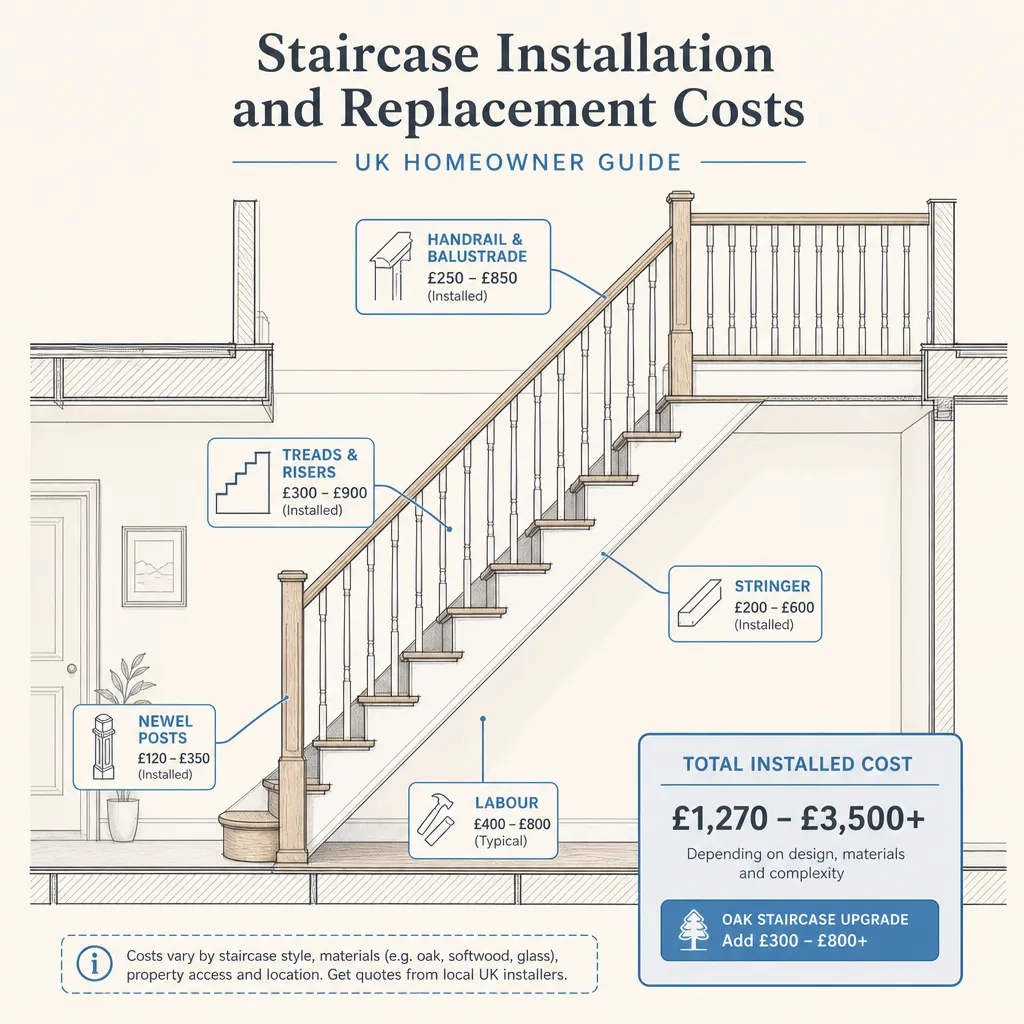
Staircase Installation and Replacement Costs
Whether you are renovating a Victorian terrace, completing a loft conversion, or replacing a tired staircase that no longer suits your home, understanding what the project will cost — and why prices vary so much — helps you plan realistically and compare quotes with confidence. Staircase work sits at the intersection of structural carpentry, interior design, and Building Regulations compliance, making it one of the more complex home improvement jobs to price without first seeing the property.
Key points
- Building Regulations Approved Document K sets the maximum pitch for private stairs at 42°, maximum rise at 220 mm, minimum going at 220 mm, and handrail height between 900 mm and 1,000 mm in England and Wales.
- A straight-flight staircase replacement typically costs £1,500–£4,500 supply and fit; bespoke glass or floating designs start at £8,000 and can exceed £20,000.
- Removing an existing staircase adds £200–£600 to the overall cost and may expose structural elements requiring additional remedial work.
- A like-for-like replacement in the same position does not usually require Building Regulations approval, but altering structural trimmer joists or floor beams does.
- Loft conversion staircases must comply with Part K and are often priced separately from the main conversion contract: typically £1,200–£3,000 for a standard straight or space-saver design.
What drives staircase costs?
The largest cost variables are design complexity, materials, and whether structural or remedial work is needed once the old staircase is removed. Labour for a standard straight-flight replacement typically runs to 2–4 days for a specialist joiner, at £200–£400 per day depending on region. London and the south-east tend to run higher.
Design type | Typical supply-and-fit range | Best for | Notes |
|---|---|---|---|
Straight flight, softwood | £1,500–£3,000 | Budget replacements, loft stairs | Paintable; lower visual impact |
Straight flight, oak or hardwood | £2,500–£5,000 | Main staircases, period homes | Stainable or oiled finish |
Quarter-turn (L-shaped) | £3,000–£7,000 | Hallways with a corner | More complex framing required |
Half-landing (U-shaped) | £4,500–£9,000 | Larger homes, Victorian layouts | Significant structural carpentry |
Space-saver / alternating tread | £1,200–£2,500 | Loft conversions, tight spaces | Restricted use; Part K limits apply |
Floating / open-tread | £5,000–£15,000 | Contemporary interiors | Steel spine or stringers usually needed |
Glass balustrade upgrade | £2,000–£6,000 (add-on) | Modern aesthetic | Requires toughened safety glass |
Indicative UK costs, last reviewed 2026-05-07. Prices vary by region, specification, and supplier. Always obtain at least three quotes.
Material choice affects both cost and longevity:
- Softwood (pine/spruce): Cheapest option; typically £80–£150 per tread and riser supplied. Takes paint or stain well.
- Oak: Most popular choice for visible staircases; solid oak treads £50–£150 each supplied; engineered oak is slightly less.
- Hardwood alternatives (ash, walnut, beech): Similar range to oak; walnut carries a significant premium.
- Steel and glass: Structural steel spine or balustrade systems require fabrication; costs are highly site-specific and should always be quoted on a site-visit basis.
Does staircase replacement need Building Regulations approval?
A like-for-like replacement in the same position does not usually require Building Regulations approval in England and Wales, provided the new staircase meets Approved Document K and no structural elements are altered. Approval is required if:
- You are moving the staircase to a new position within the property.
- The work involves altering structural trimmer joists, floor beams, or load-bearing walls.
- The project forms part of a loft conversion, which always requires Building Regulations approval.
- The property is a House in Multiple Occupation (HMO).
If in doubt, contact your local authority building control (LABC) before starting work. Approved Document K is available free on GOV.UK. For listed buildings and conservation area properties, changes to a principal staircase may also require listed building consent or design approval from your local planning authority.
What does staircase removal cost?
Stripping out an existing staircase typically adds £200–£600 to the project, depending on whether it is a straight flight or a quarter-turn design. Removal costs increase if:
- The existing staircase is bonded with adhesive as well as nails or screws.
- Carpet, tiles, or grippers need removing first.
- Investigation reveals rot, insect damage, or inadequate trimmer joists once the old structure comes out.
Allow a contingency of 10–15% of the overall quoted price for remedial structural carpentry that only becomes apparent after removal.
Which staircase type is right for you?
Use this decision guide before approaching contractors:
- Choose a straight-flight softwood staircase if budget is the priority and the space is a loft conversion or a secondary staircase.
- Choose an oak or hardwood straight flight if the staircase is a key feature of the hallway and you want a traditional or period-appropriate finish.
- Choose a quarter-turn or half-landing design if the existing layout already uses a landing configuration — changing to a straight flight may not be spatially or structurally feasible.
- Choose a floating or glass design if the budget allows and the interior style is contemporary; ask a structural engineer to confirm that floor and wall fixing points can carry the loads before ordering.
- Choose a space-saver staircase only for loft access where the standard going cannot be achieved; Approved Document K restricts alternating-tread stairs to serving a single room.
- Consult a building contractor or structural engineer first if the existing staircase sits within or adjacent to a load-bearing wall, or if the floor void condition is unknown.
What to ask before accepting a quote
A well-scoped staircase quote should answer all of the following:
- What is included — supply of all materials, fixings, removal of the old staircase, making good to walls and floors, and finishing (sanding, oiling, or painting)?
- Who will carry out the work, and what joinery or carpentry qualifications or trade body memberships do they hold?
- Is the quote based on a site visit, or on dimensions alone?
- Does the price include investigation and remedial work if structural issues are found after the old staircase is removed, or is that charged additionally?
- What happens if rot, inadequate joists, or other defects are uncovered?
- Is Building Regulations compliance (where required) the contractor's responsibility, and is any fee included?
- Is VAT included in the quoted price?
- What is the payment schedule, and is a deposit required upfront?
When to get professional help
Most staircase installations are carried out by specialist joiners or experienced building contractors. Consider escalating to additional professional input when:
- The project is part of a loft conversion — Building Regulations approval is mandatory and the designer must demonstrate Part K compliance.
- There is evidence of structural movement near the staircase, such as cracking walls, sloping floors, or sticking doors and windows.
- The property is listed or in a conservation area.
- You want a bespoke steel, glass, or floating design — these require structural calculations and specialist fabrication.
- The existing staircase shows signs of significant rot, insect infestation, or damp in the strings or trimmer joists.
A structural engineer should be consulted if the floor structure supporting or adjacent to the staircase needs assessment or redesign.
How Housey can help
If your staircase project is part of a larger renovation — a loft conversion, extension, or full refurbishment — Housey can connect you with vetted extension builders and design-and-build firms who can manage the staircase alongside the wider works. Request multiple quotes through Housey and compare them side by side.
Frequently asked questions
Do I need planning permission to replace a staircase?
Planning permission is not normally required to replace an internal staircase within an existing dwelling. However, if the property is listed, you may need listed building consent for changes to a principal or historic staircase. Always check with your local planning authority if you are unsure about your specific situation.
How long does staircase installation take?
A straight-flight replacement typically takes 2–4 days, assuming no structural remedial work is needed. More complex designs — quarter-turns, half-landings, or bespoke floating staircases — usually take 1–2 weeks. Bespoke fabricated metalwork or glass balustrade components may require several additional weeks of lead time before installation begins.
Can I replace just the treads and spindles rather than the whole staircase?
Yes. If the structural carriage — the string and trimmer framing — is sound, a joiner can replace just the treads, risers, balusters, and handrail at significantly lower cost than a full replacement. A specialist joiner should assess the existing structure before partial replacement is agreed to confirm it is adequate.
What is the minimum staircase width under Building Regulations?
Approved Document K does not specify a minimum stair width for private stairs within a single dwelling, though a clear width of 600 mm is widely used as a practical minimum. Stairs in common areas of HMOs or blocks of flats have stricter requirements under Part K and fire safety regulations.
Does a new staircase add value to a property?
A well-designed staircase in good condition contributes to first impressions, particularly in hallways buyers see immediately on entry. Replacement is generally justified by condition or design reasons rather than as a standalone resale investment, though a bespoke design can enhance the presentation of a premium property.
Sources and further reading
Useful next reads
 Improvement & Build
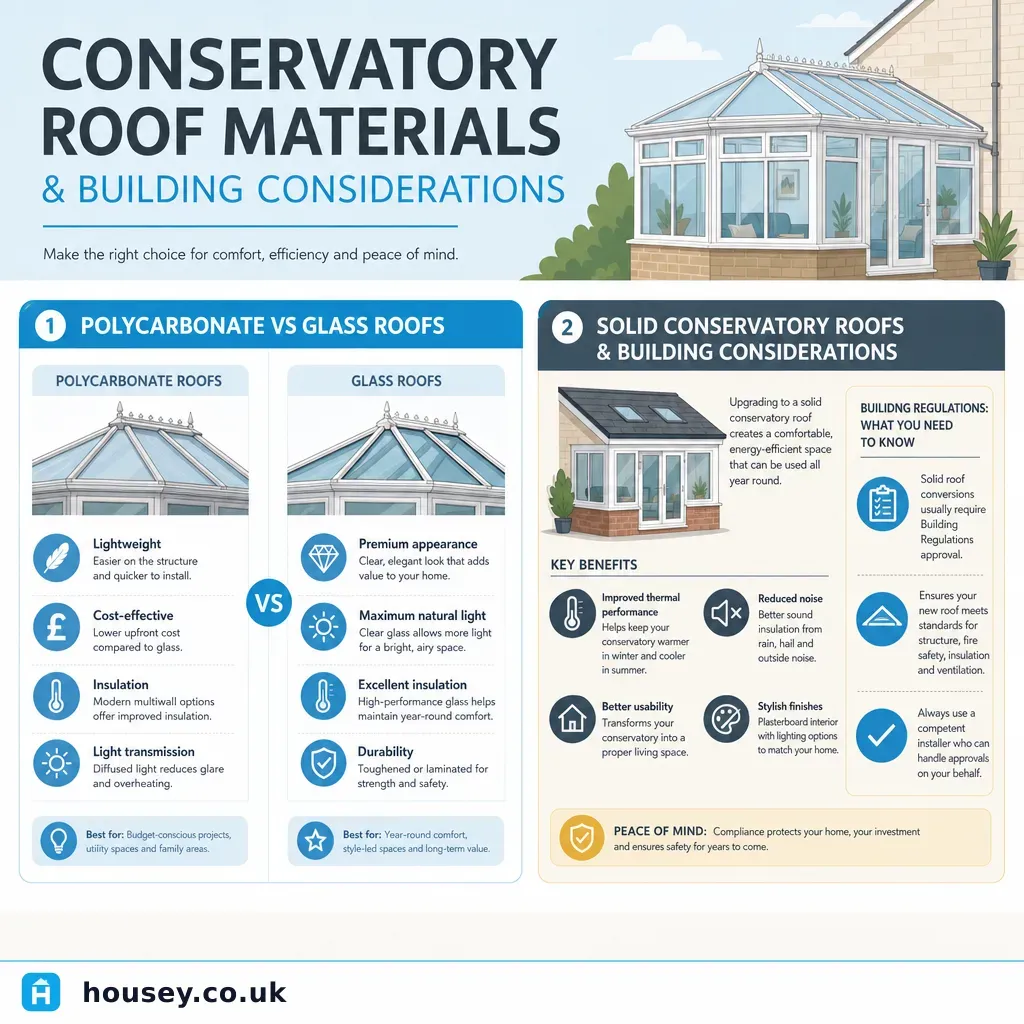
Conservatory Roof Materials and Building Considerations
The main conservatory roof materials are polycarbonate, glass, and solid insulated panels.
 Improvement & Build
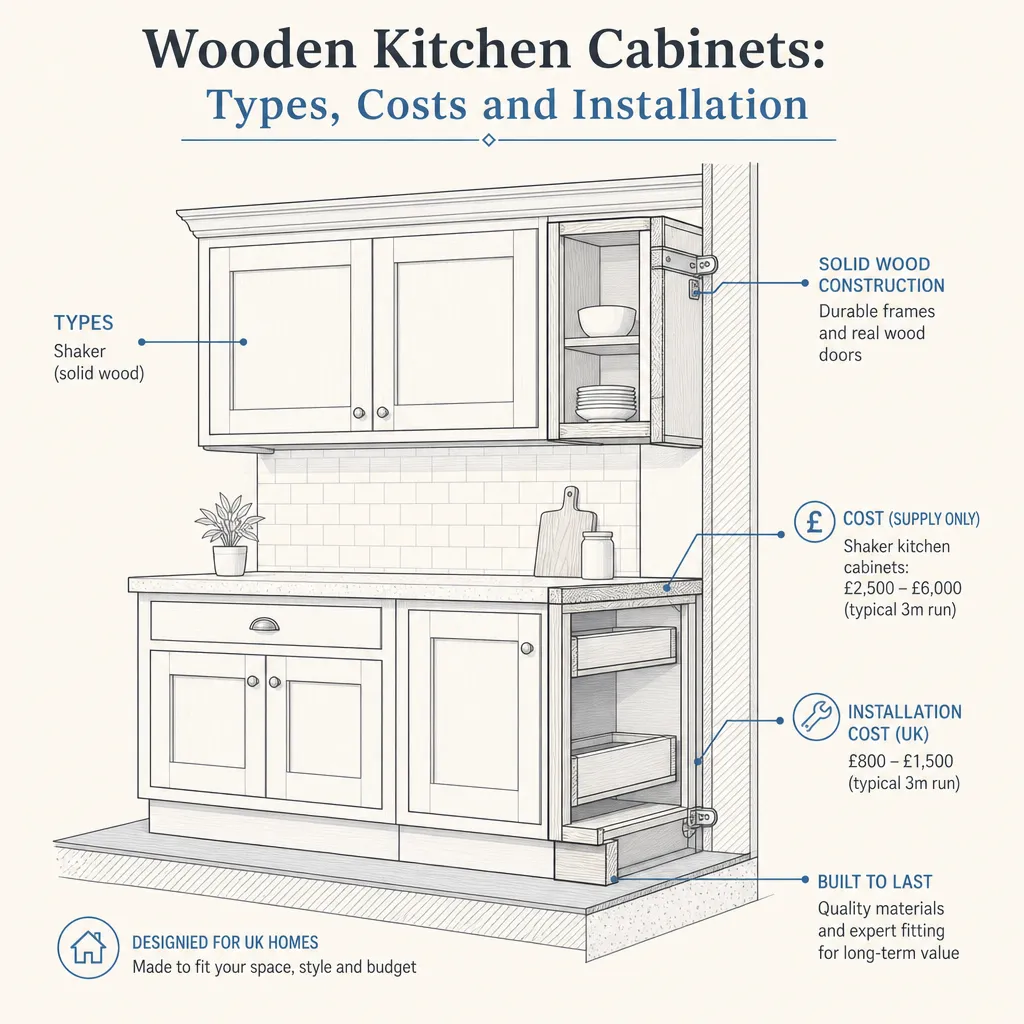
Wooden kitchen cabinets: types, costs and installation
Wooden kitchen cabinets in the UK range from around £4,000–£12,000 installed for mid-range painted shaker units to £10,000–£25,000 or more for solid hardwood kitchens.
 Improvement & Build
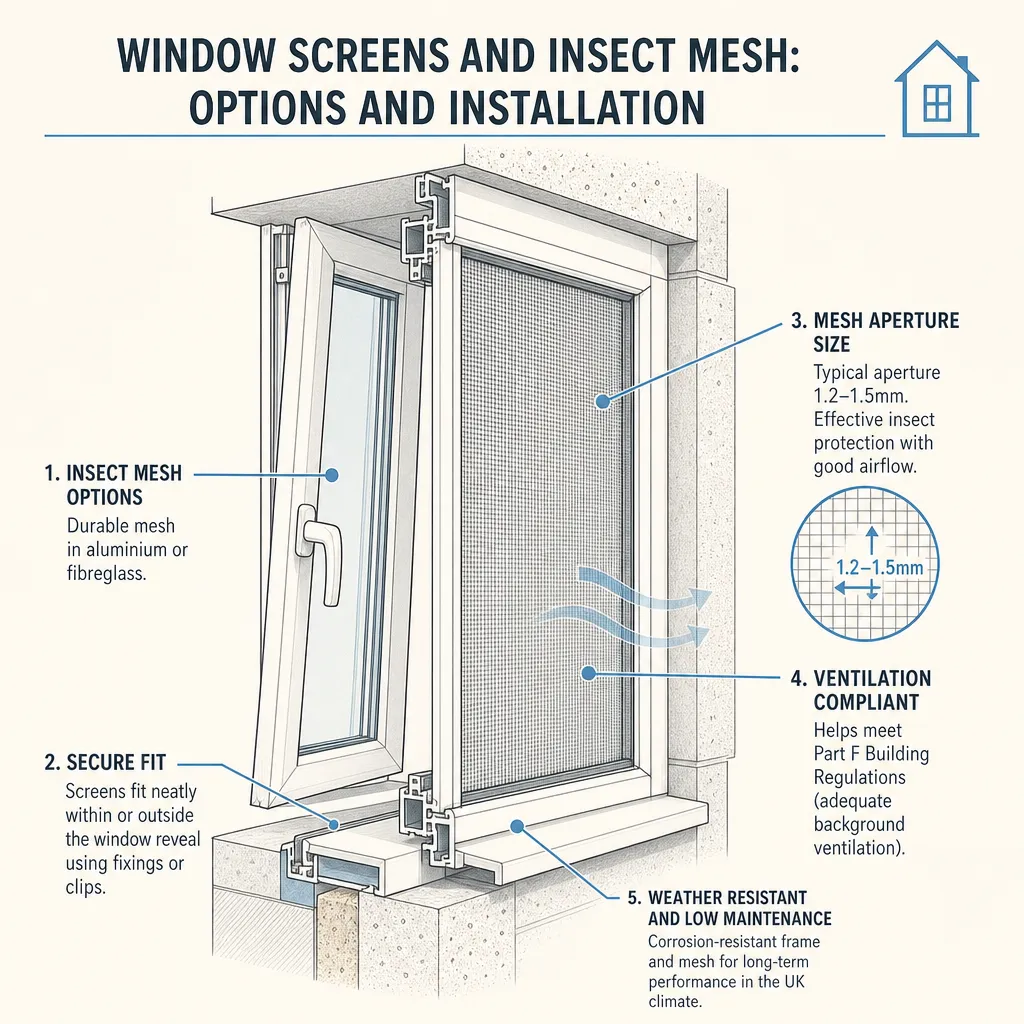
Window Screens and Insect Mesh: Options and Installation
UK window screens fall into four main types: fixed frame, roller retractable, pleated folding, and magnetic snap-fit.
 Improvement & Build
Window Replacement: Planning and Installation Considerations
Most window replacements in England fall under permitted development and do not need planning permission, though listed buildings, flats, and conservation areas are exceptions.
 Improvement & Build
Window Installation Costs: uPVC Options and Project Planning
Replacing uPVC (vinyl) windows in the UK typically costs £400–£900 per casement window installed.