Repairing Blown Double-Glazing Windows
By Housey · Last reviewed 5th of May 2026
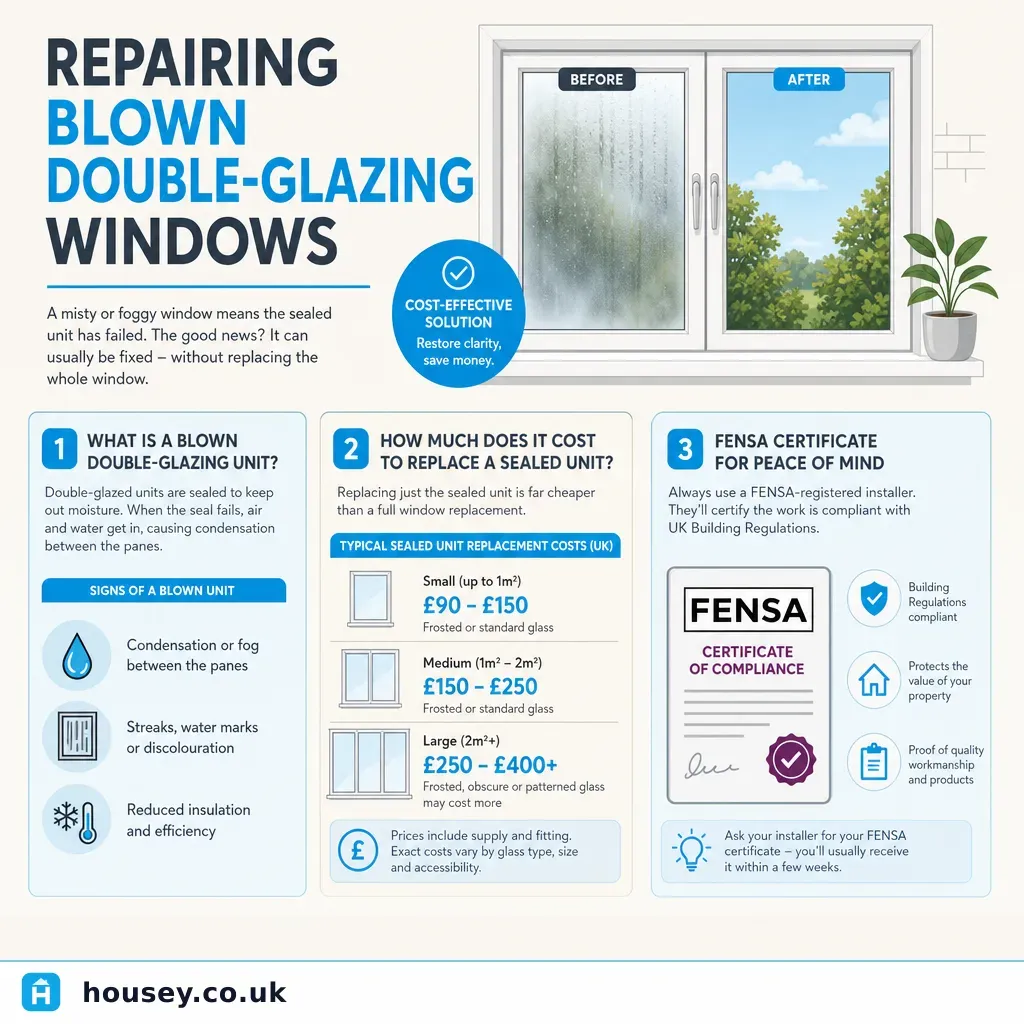
Repairing Blown Double-Glazing Windows
Double-glazed windows fail more often than most homeowners expect, and the misted or cloudy appearance between the panes is one of the most common glazing complaints in UK homes, particularly in properties refitted during the 1990s and 2000s when double glazing became widespread. Understanding whether you are dealing with a simple sealed unit failure or something more serious — and what the work costs and requires in terms of certification — helps you avoid both overpaying and underestimating the job.
Key points
- A blown double-glazed window occurs when the hermetic seal between the two glass panes fails, allowing moisture to enter the cavity between the panes
- In most cases, only the glass unit needs replacing — not the frame — at an indicative cost of £80–£200 per unit (Indicative UK costs, last reviewed 2026-05-05)
- Full window replacements including the frame must be certified under FENSA or CERTASS in England and Wales, or notified to building control — the FENSA certificate is a legal document required when you sell
- Modern sealed units carry a typical manufacturer warranty of 5–10 years on the hermetic seal
- Condensation on the outside surface of double glazing is a sign of good thermal performance, not a defect — only moisture trapped between the panes indicates seal failure
What is blown double glazing?
A standard double-glazed unit consists of two panes of glass separated by a spacer bar and hermetically sealed around the perimeter. The cavity is filled with dry air or an insulating gas, most commonly argon. When the perimeter seal degrades — due to UV exposure, frame movement, poor installation, or age — outside air and moisture enter the cavity. As temperatures change, moisture condenses on the inner glass surfaces and cannot be cleaned away.
Common causes of seal failure include:
- Age-related UV degradation of the silicone or butyl sealant
- Frame movement caused by settlement, subsidence, or thermal expansion
- Physical damage to the frame, glazing bead, or unit edge
- Water ponding in the frame rebate, accelerating sealant breakdown
Seal failure does not mean the window is structurally unsafe, but it does reduce the unit's thermal performance as the argon fill is lost.
Should you repair the sealed unit or replace the whole window?
In most cases, if the frame is sound, a sealed unit replacement is the right and more cost-effective answer. The table below covers the main scenarios.
Situation | Recommended approach | Reason |
|---|---|---|
PVC-u, timber, or aluminium frame in good condition | Replace sealed unit only | Frames often outlast units; lower cost and disruption |
Frame is warped, cracked, or letting in draughts | Full window replacement | A new unit in a damaged frame risks repeat seal failure |
Single-glazed window in an older property | Full replacement | Opportunity to upgrade thermal and noise performance |
Window in a listed building or conservation area | Consult local planning authority first | Restrictions may require like-for-like or specific glazing types |
Custom shape, large span, or unusual profile | Get a like-for-like unit quote before deciding | Bespoke units are more expensive; assess frame condition carefully |
Window is 20 or more years old | Consider full replacement | Ageing frames degrade; matching profiles becomes difficult |
What the repair work involves
A registered glazier or window installer will:
- Remove the internal glazing bead — the trim strip holding the glass unit in the frame
- Extract the blown sealed unit
- Measure and order a replacement unit — standard sizes typically take 1–2 weeks to arrive
- Return to fit the new unit, reseal the frame, and replace the bead
- Issue a FENSA certificate if the replacement also involves the frame
The fitting visit for a standard casement window usually takes 30–60 minutes. Most tradespeople carry out a measuring visit first and return when the unit is ready.
Costs for blown double glazing repair
Indicative UK costs, last reviewed 2026-05-05. Prices vary by glass specification, unit size, frame material, and location.
Work type | Typical cost range |
|---|---|
Sealed unit replacement — standard casement | £80–£200 per unit |
Sealed unit replacement — large pane or bay window section | £150–£350 per unit |
Full window replacement — PVC-u casement, supply and fit | £300–£700 per window |
Call-out or minimum labour charge | £50–£100 |
Glass specification affects cost: toughened glass (required in certain positions under Part N of the Building Regulations), laminated, acoustic, or solar control glass all cost more than standard float glass. Always obtain at least two written quotes.
Building regulations and FENSA certification
Replacing a sealed unit within an existing frame is maintenance work and does not trigger a building regulations notification. Replacing the entire window frame is a controlled fitting under:
- Part L (conservation of fuel and power) — new windows must meet minimum energy performance requirements
- Part N (safety glazing) — glazing in certain positions, such as doors, side panels, and low-level areas, must be toughened or laminated
In England and Wales, installers registered with FENSA (Fenestration Self-Assessment Scheme) or CERTASS can self-certify compliant installations without a separate building control application. If your installer is not registered with a competent person scheme, a building control application and inspection is required.
Keep your FENSA certificate. It is a legal document proving compliance and will be requested by your solicitor when you sell the property.
In Scotland, glazing work falls under Section 6 (Energy) of the Scottish Building Standards.
Red flags when getting glazing quotes
- No mention of FENSA or CERTASS registration for a full window replacement — this is a regulatory requirement in England and Wales
- Verbal-only quotes or reluctance to provide a written specification covering glass type, energy rating, and warranty
- Unusually low initial quotes followed by price escalation once work has started — always agree a full written quote before works begin
- Inability to explain what certification or completion document you will receive on completion
- Pressure to sign a contract on the day — reputable installers allow time to compare quotes
When to get professional help
Blown double glazing itself is rarely urgent, but seek professional assessment if:
- Condensation is accompanied by draughts, rattle, or visible frame movement — this may indicate a structural issue with the lintel or surrounding masonry
- You are in a listed building or conservation area — consult your local planning authority before changing glazing specifications
- The window is on a designated fire escape route — specific glazing and certification requirements apply
- There are cracks in the surrounding brickwork, render, or plasterwork — this may be a structural issue unrelated to the glazing itself
What to ask a window installer before accepting a quote
- Are you registered with FENSA or CERTASS?
- Will you supply a completion certificate on finishing the work?
- What glass specification will be used, including energy rating and safety glazing where required?
- What is the warranty on the new unit, and who backs it?
- Is the quote for the sealed unit only, or does it include frame, bead, and sealant?
- Is VAT included in the price?
- What happens if the frame is found to be damaged when the unit is removed?
How Housey can help
Housey connects you with vetted, local window and door installers who can assess blown units, provide written quotes, and certify compliant installations. Compare quotes from FENSA-registered installers before committing to any work.
Frequently asked questions
Can I replace a blown sealed unit myself?
Replacing a sealed unit within an existing frame does not require a registered installer, as it falls outside building regulations notification. However, it requires precise measurement and careful glass handling. Full window replacements in England and Wales require FENSA or building control certification, which effectively means using a registered installer.
How long does a replacement sealed unit last?
Modern sealed units typically carry a 5–10 year manufacturer warranty on the hermetic seal. With quality installation in a sound frame, a replacement unit often lasts 15–25 years before seal failure recurs. Lifespan depends on frame condition, glass specification, UV exposure, and the standard of the original fitting.
Does a blown window affect my EPC rating?
Yes. A failed sealed unit loses its argon fill and reduces the window's insulating value, which can lower a property's Energy Performance Certificate (EPC) rating. Replacing failed units with modern A-rated glazing can improve the EPC score, which matters for rental compliance and sale value.
Will my home insurance cover blown double glazing?
Most buildings insurance policies treat seal failure as gradual wear and tear, which is typically excluded. Accidental damage cover may apply if the failure resulted from a specific impact, but this is policy-specific. Check your policy wording or contact your insurer directly for clarification.
What is the difference between FENSA and CERTASS?
Both FENSA and CERTASS are government-authorised competent person schemes allowing registered window and door installers to self-certify that their work complies with Building Regulations in England and Wales. Either scheme produces a valid completion certificate. The choice of scheme is made by the installer, not the homeowner.
Sources and further reading
- Building Regulations Approved Document L: Conservation of fuel and power — GOV.UK
- Building Regulations Approved Document N: Glazing — safety in relation to impact — GOV.UK
- FENSA: Fenestration Self-Assessment Scheme — FENSA
- CERTASS: Competent person scheme for glazing — CERTASS
- Windows and glazing energy-saving advice — Energy Saving Trust
Useful next reads
 Improvement & Build
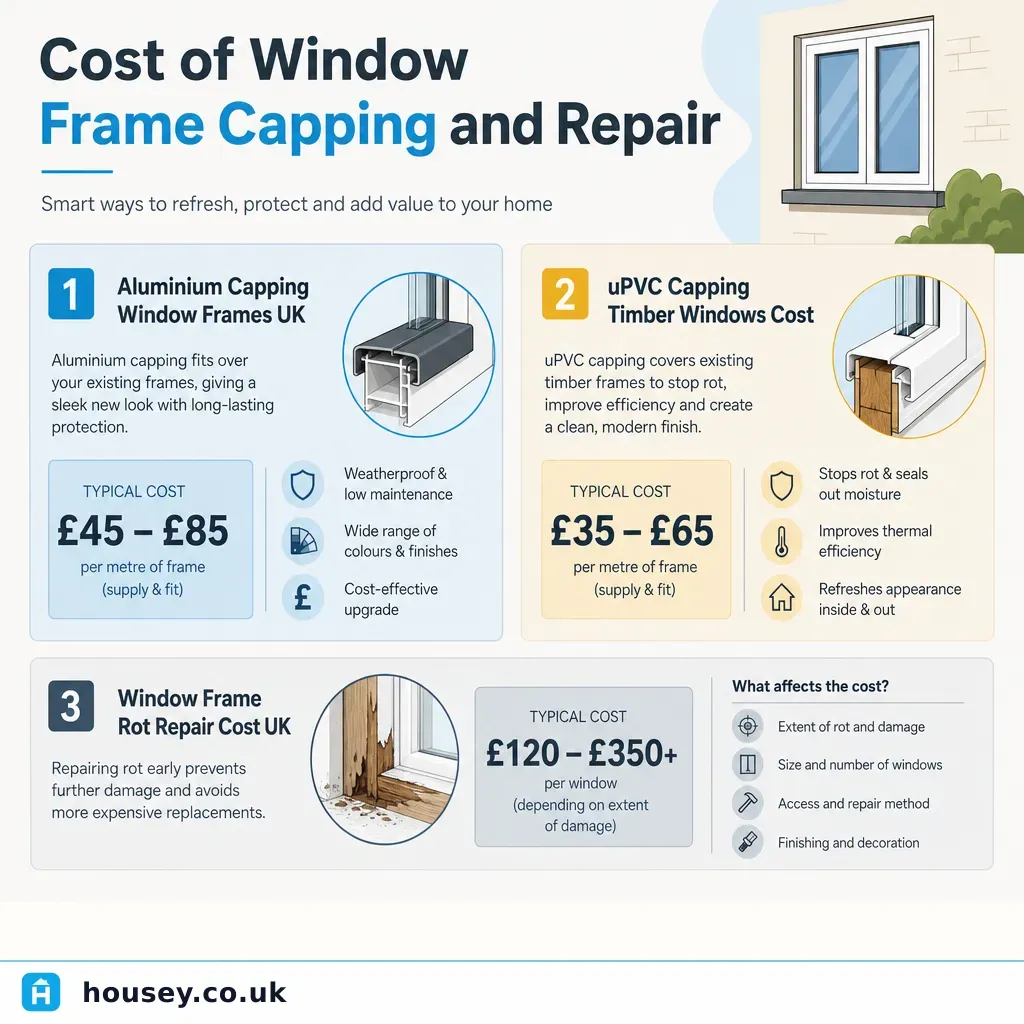
Cost of Window Frame Capping and Repair
Window frame capping uses aluminium or uPVC profiles fitted over existing timber frames to create a low-maintenance, weather-resistant finish without full replacement.
 Improvement & Build
Leaded Window Repair and Restoration Costs
Leaded window repair in the UK typically costs £150–£600 for minor re-soldering or resealing, rising to £800–£2,500+ for full panel removal and restoration.
 Improvement & Build
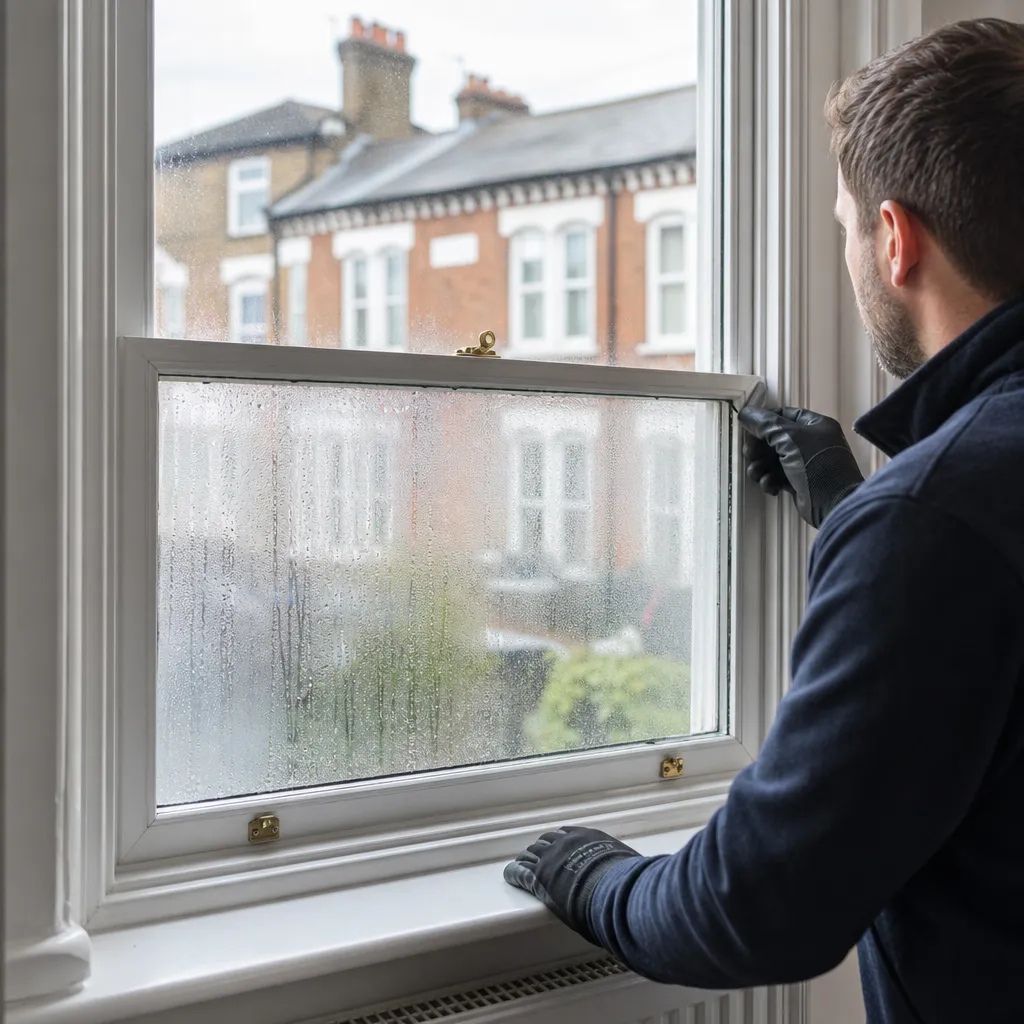
Repairing Failed Window Seals and Condensation Issues
Condensation between double-glazed panes means the hermetic seal on the insulated glass unit has failed.
 Improvement & Build
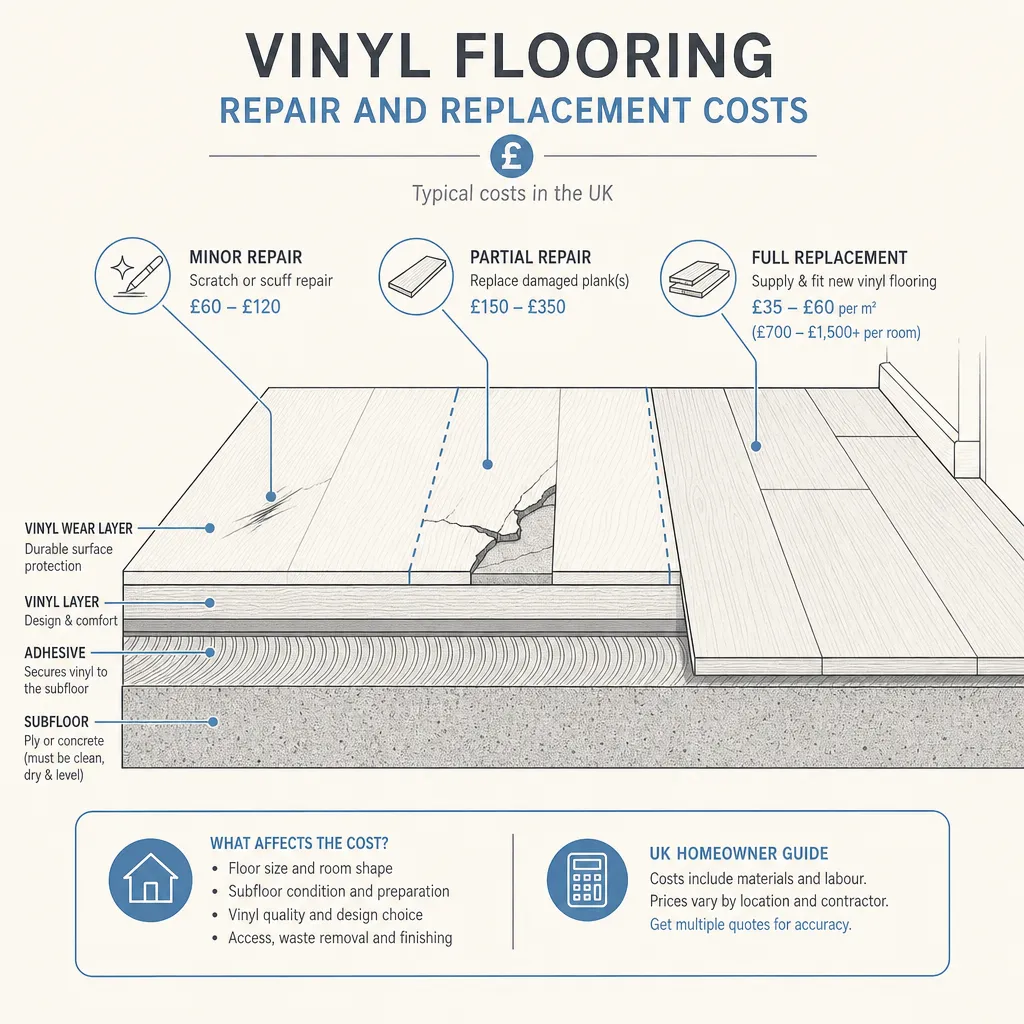
Vinyl Flooring Repair and Replacement Costs
Repairing a small area of vinyl flooring typically costs £50–£200 in the UK, while full replacement runs from £15–£35 per m² for luxury vinyl tile (LVT) plus labour of £10–£25 per m².
 Improvement & Build
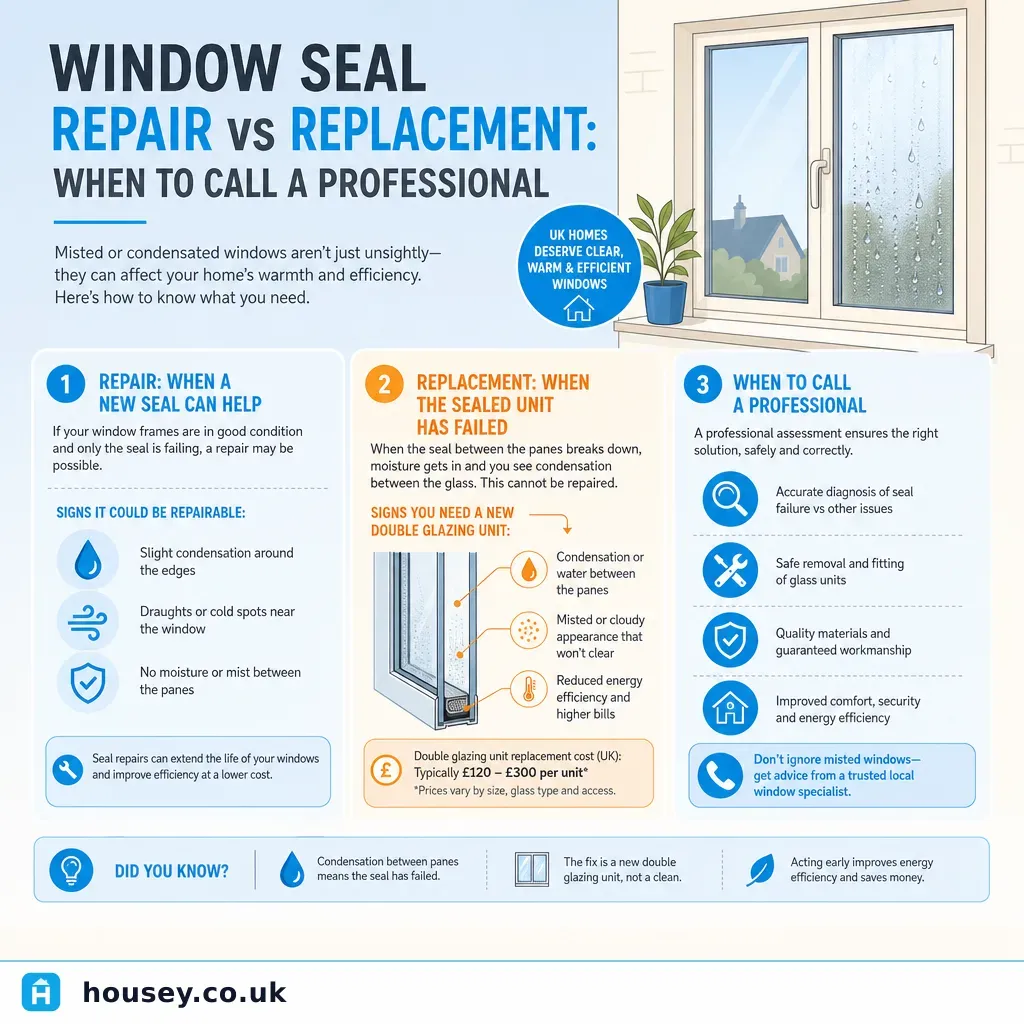
Window Seal Repair vs Replacement: When to Call a Professional
Failed window seals usually mean the double-glazed unit needs replacing — resealing a misted unit rarely works long-term.