Council for Licensed Conveyancers: Professional Standards and Regulation
By Housey · Last reviewed 25th of May 2026

Council for Licensed Conveyancers: Professional Standards and Regulation
Conveyancing in England and Wales can be carried out by two types of regulated professional: solicitors overseen by the Solicitors Regulation Authority (SRA), and licensed conveyancers overseen by the Council for Licensed Conveyancers (CLC). When you instruct a licensed conveyancer, the CLC's regulatory framework determines the standards they must meet, how your money is protected, and what to do if things go wrong. Understanding this framework helps you choose a conveyancer with confidence and know your rights throughout the process.
Key points
- The CLC was established under the Administration of Justice Act 1985 and regulates licensed conveyancers and their firms in England and Wales only.
- Licensed conveyancers are specialists: their authorisation covers property law and probate — not the full range of legal services that solicitors can provide.
- Every CLC-regulated firm must hold professional indemnity insurance and contribute to the CLC Compensation Fund, which can pay out where client money is misappropriated.
- You can check whether a conveyancer or firm is CLC-regulated using the public register on the CLC's website at clc-uk.org.
- If a firm cannot resolve your complaint within eight weeks, you can escalate to the CLC's Consumer Redress Scheme, which is free to consumers.
What the CLC regulates — and what it doesn't
The CLC sets the rules under which licensed conveyancers practise. Those rules govern professional conduct, client care standards, client money handling (held in a separate client account), required insurance, and continuing professional development.
The CLC's remit covers licensed conveyancers and their firms only — not solicitors. Solicitors who carry out conveyancing are regulated by the SRA, even if they describe themselves as conveyancing specialists. Your conveyancer's engagement letter must state who regulates them; if it does not, ask before proceeding.
The CLC does not regulate estate agents, mortgage brokers, surveyors, or any legal work outside property and probate.
Licensed conveyancer vs. solicitor: which regulatory regime applies?
Both licensed conveyancers and solicitors can legally complete the conveyancing of a residential property in England and Wales. The regulatory body you can turn to if a problem arises depends on which type of professional you instruct.
Feature | Licensed conveyancer (CLC) | Solicitor (SRA) |
|---|---|---|
Regulatory body | Council for Licensed Conveyancers | Solicitors Regulation Authority |
Scope of work | Property law and probate only | All areas of law |
Consumer compensation | CLC Compensation Fund | SRA Compensation Fund |
Complaints escalation | CLC Consumer Redress Scheme | Legal Ombudsman |
Register check | clc-uk.org | sra.org.uk |
Typical use | Residential purchases, remortgages | Any property matter including complex disputes |
Both regimes require client money to be held in a separate client account and require professional indemnity insurance.
How the CLC's client money rules protect you
Licensed conveyancing firms must keep all client money — your deposit, search fees, and completion funds — in a dedicated client account, separate from the firm's own money. The CLC's Accounts Code sets out how those funds must be managed, reconciled, and reported.
If a CLC-regulated firm misappropriates client funds, the CLC Compensation Fund may reimburse eligible consumers. Claims are assessed case by case; there is no automatic right to payment. The fund has eligibility criteria and limits, which are published on the CLC's website. This is separate from the SRA Compensation Fund, which performs a similar role for clients of solicitors.
What to do if things go wrong
If you have a complaint about a CLC-regulated conveyancer:
- Raise the complaint with the firm first. All CLC-regulated firms must have a written complaints procedure. Request a copy and use it.
- If unresolved within eight weeks, or if you remain dissatisfied, escalate to the CLC Consumer Redress Scheme. This service is free to consumers.
- The CLC can investigate, require remedial action, and award compensation.
- For complaints about solicitors, contact the Legal Ombudsman — not the CLC.
Keep copies of all correspondence, emails, and documents from the outset.
Important limitations
This article provides general information about the CLC's regulatory framework for homebuyers and movers in England and Wales. Regulatory rules, fund limits, and redress procedures can change. Always verify a conveyancer's current authorisation status on the CLC's public register before instructing them. This article does not constitute legal advice — if you have a specific concern or a formal complaint, contact the CLC Consumer Redress Scheme or seek independent legal advice.
What to ask a qualified professional
Before instructing a CLC-regulated conveyancer, ask:
- Are you and your firm currently authorised and regulated by the CLC? Can you provide your licence number?
- Who will handle my matter day-to-day, and how will they communicate with me?
- What is your written complaints procedure, and who do I contact if I am dissatisfied?
- How is client money held, and is it kept in a separate client account?
- What professional indemnity insurance does the firm hold?
- What is included in your quoted fee, and what disbursements will I be charged separately?
When to get professional help
Contact the CLC directly or seek independent legal advice if:
- A conveyancing firm cannot show proof of current CLC authorisation when asked.
- Client money appears to be unaccounted for, or you are asked to transfer funds to an unverified account — conveyancing fraud involving redirected payments is a known and serious risk; always verify bank details by telephone using a number you have obtained independently, not from an email.
- A complaint to the firm has not been acknowledged within the timescale set out in their complaints procedure.
How Housey can help
Housey connects you with CLC-regulated licensed conveyancers and SRA-regulated solicitors for residential purchases, sales, and remortgages across England and Wales. Compare quotes and verify qualifications before you commit through our find a regulated conveyancer service.
Frequently asked questions
What is the Council for Licensed Conveyancers?
The Council for Licensed Conveyancers (CLC) is the regulatory body for licensed conveyancers in England and Wales, established under the Administration of Justice Act 1985. It sets conduct and practice standards, maintains a public register of authorised individuals and firms, runs a compensation fund, and operates a consumer redress scheme for complaints.
Is a licensed conveyancer as qualified as a solicitor for buying a house?
For a standard residential purchase, a CLC-regulated licensed conveyancer is a qualified specialist in property law subject to a comparable regulatory regime. For more complex matters — involving litigation, planning disputes, or areas beyond property and probate — a solicitor with broader qualifications may be more appropriate.
How do I check whether my conveyancer is CLC-regulated?
Visit clc-uk.org and search the public register by firm name or individual. The register shows current authorisation status. You can also ask the firm for their CLC licence number, which they are required to provide on request. Do not rely on the firm's own marketing materials alone.
What happens to my money if a CLC-regulated firm becomes insolvent?
Client money must be held in a separate client account and is not available to the firm's creditors. The CLC Compensation Fund may provide redress where funds are misappropriated, subject to eligibility and limits. The CLC would work with the firm's insurer and, if necessary, appoint an intervention agent to protect ongoing client matters.
Sources and further reading
- Council for Licensed Conveyancers — official regulator — CLC
- Administration of Justice Act 1985 — legislation.gov.uk
- CLC consumer guidance and redress scheme — CLC
- SRA — solicitor and firm register — SRA
- Legal Ombudsman — Legal Ombudsman
Useful next reads
 Buying & Moving
Property Conveyancer Licensing: Professional Qualifications and Regulation
In England and Wales, conveyancing can only be carried out by authorised persons.
 Buying & Moving
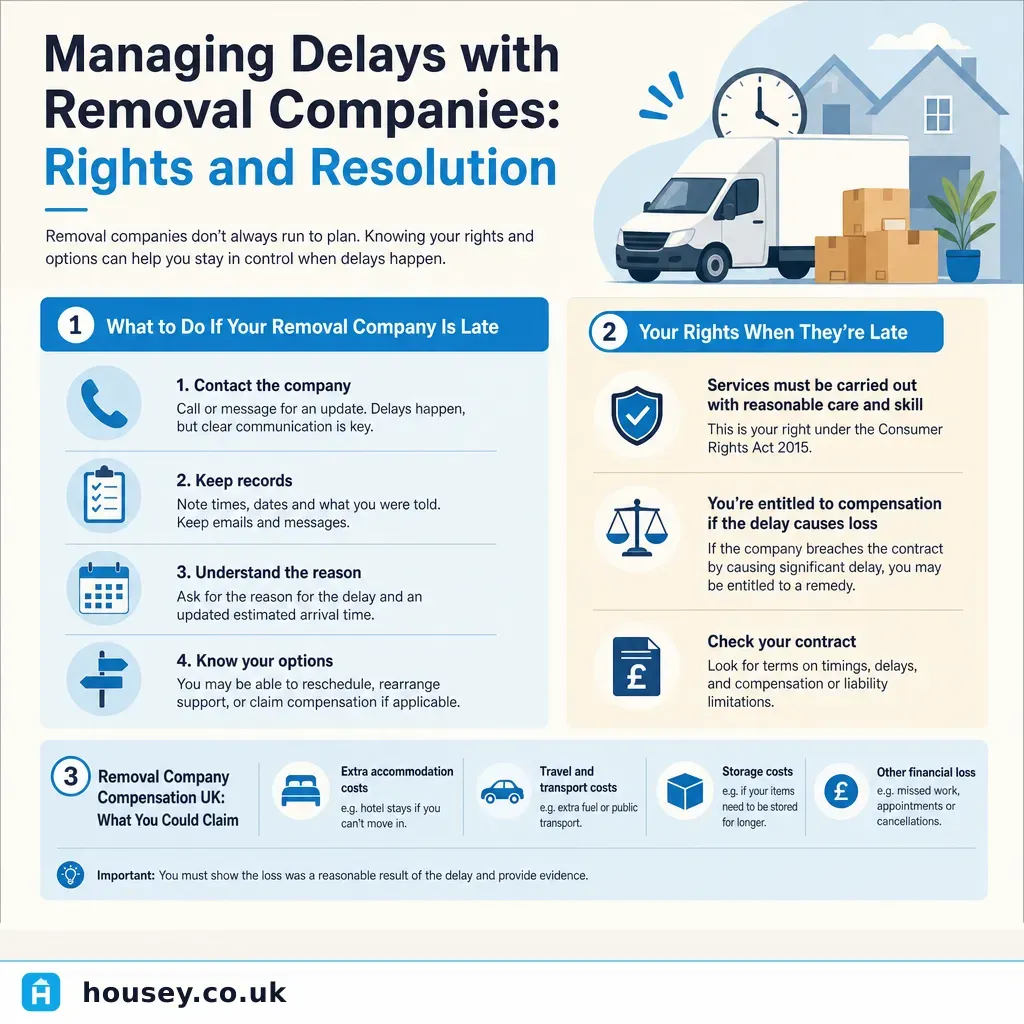
Managing Delays with Removal Companies: Rights and Resolution
If a removal company is late, your rights depend on your contract and whether the company is BAR-registered.
 Buying & Moving
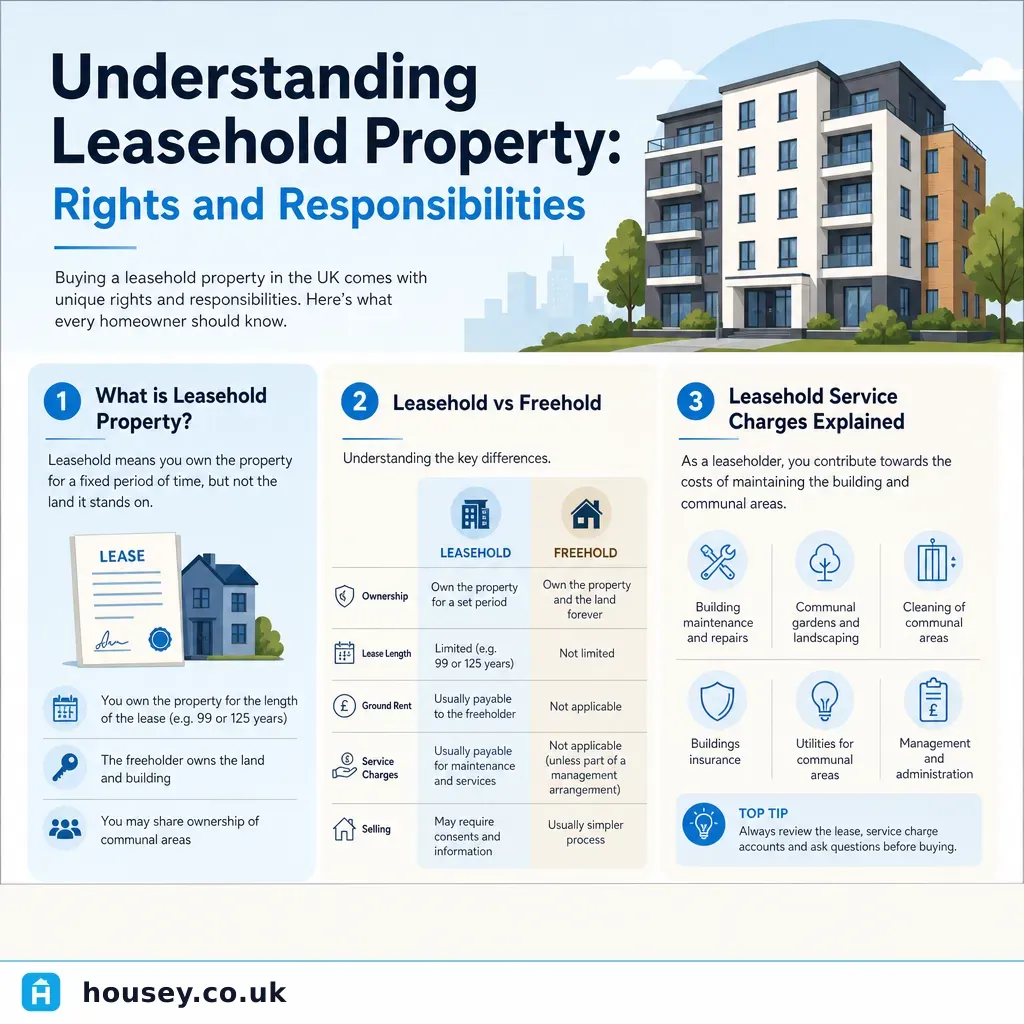
Understanding Leasehold Property: Rights and Responsibilities
Leasehold means you own a time-limited interest in a property while the freeholder owns the land and building.
 Buying & Moving
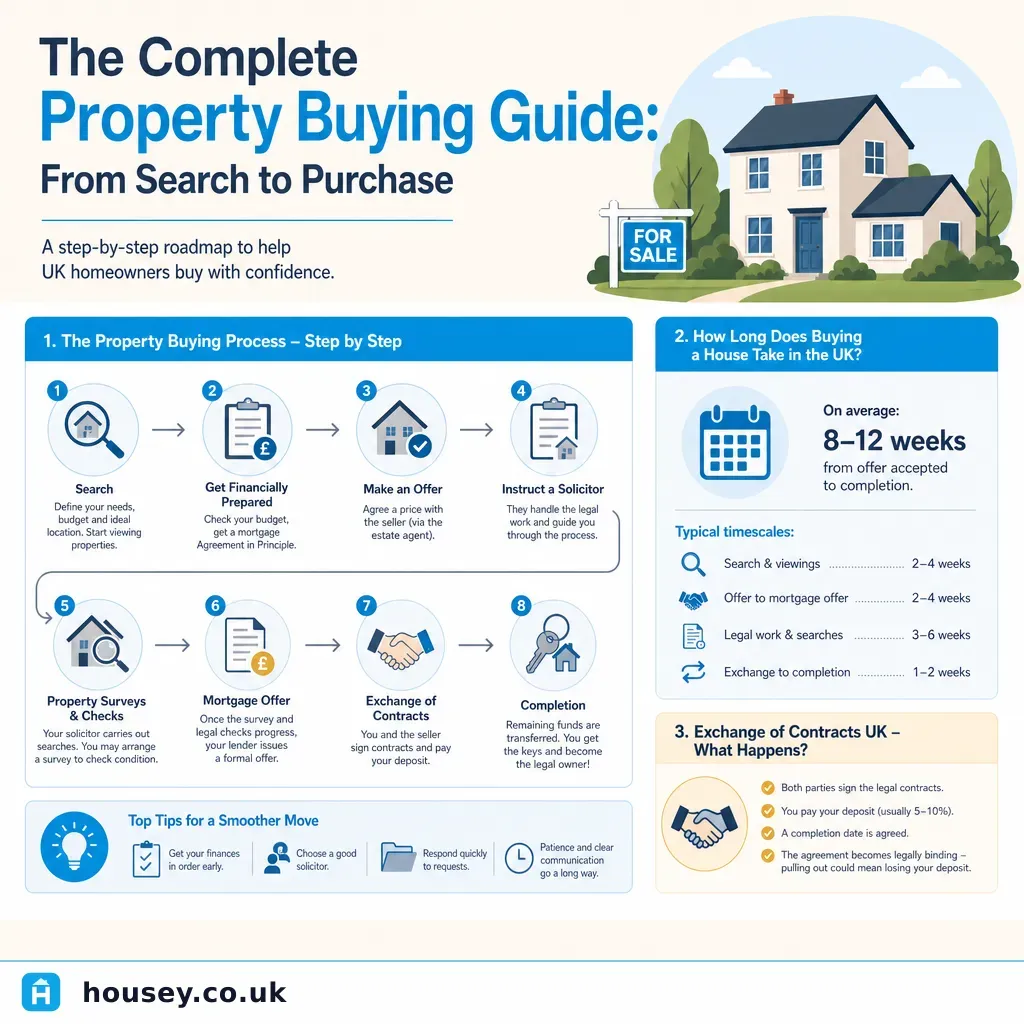
The Complete Property Buying Guide: From Search to Purchase
Buying a property in England and Wales typically takes 3–6 months from accepted offer to completion.
 Buying & Moving
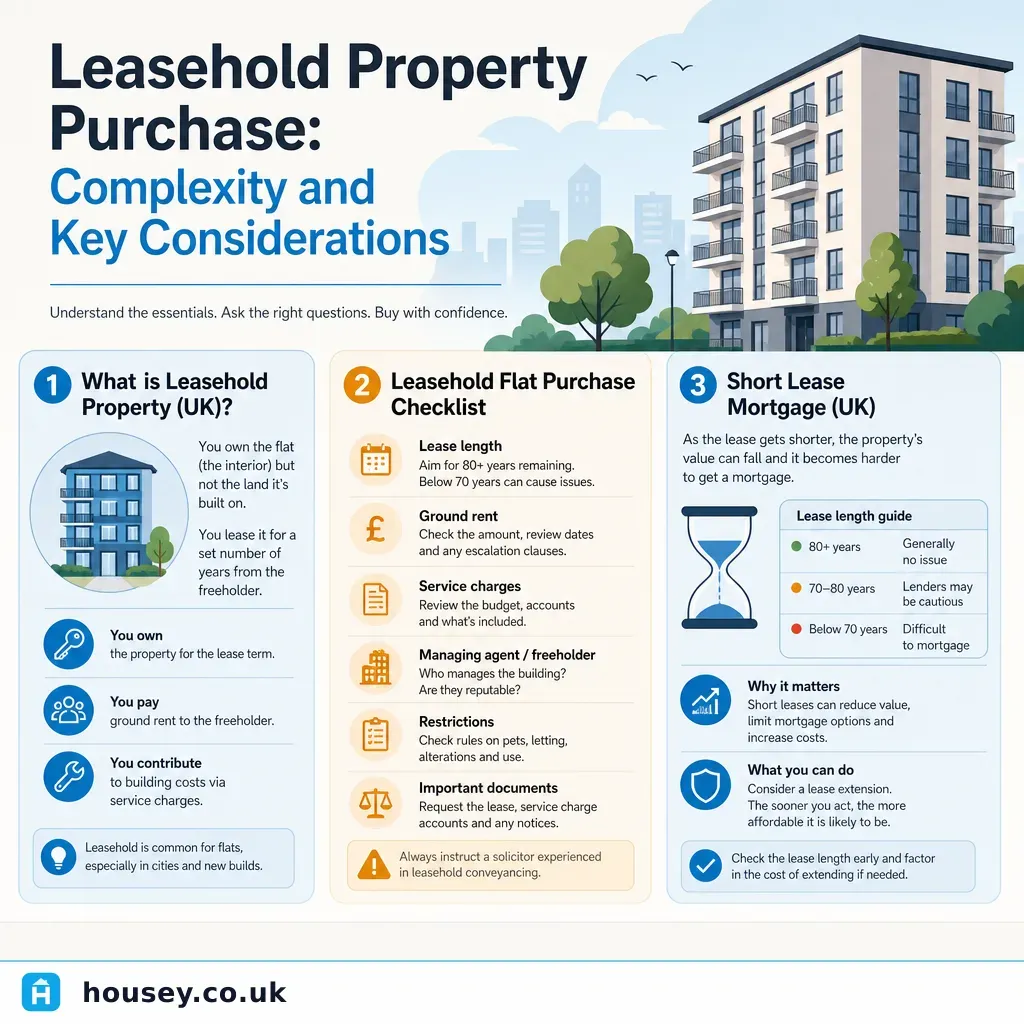
Leasehold Property Purchase: Complexity and Key Considerations
Buying a leasehold property means purchasing the right to occupy for a fixed term rather than owning the land outright.