Property Conveyancer Licensing: Professional Qualifications and Regulation
By Housey · Last reviewed 25th of May 2026

Property Conveyancer Licensing: Professional Qualifications and Regulation
When you appoint a conveyancer to handle a property purchase, sale, or remortgage, you are trusting someone with potentially the largest financial transaction of your life. Not everyone who calls themselves a conveyancer holds the same qualifications or operates under the same regulatory regime — and understanding the difference between a licensed conveyancer and a solicitor-conveyancer matters when you are comparing quotes or verifying that a firm is properly authorised to act on your behalf.
Key points
- Licensed conveyancers are regulated by the Council for Licensed Conveyancers (CLC), established under the Administration of Justice Act 1985, and must hold a CLC Conveyancing Licence to practise.
- Solicitor-conveyancers are regulated by the Solicitors Regulation Authority (SRA); their firm must also be SRA-authorised before accepting instructions.
- Conveyancing is a reserved legal activity under the Legal Services Act 2007 — only persons authorised by the CLC, SRA, or CILEx Regulation can carry it out lawfully in England and Wales.
- Both the CLC and SRA operate mandatory client accounts and compensation funds to protect consumers if a regulated firm misuses client money.
- All CLC-regulated firms must hold a minimum of £2 million professional indemnity insurance per claim.
- A conveyancer not registered with the CLC, SRA, or CILEx Regulation is not authorised to carry out reserved legal activities and should not be instructed.
Who regulates conveyancers in England and Wales?
Conveyancing is a reserved legal activity under the Legal Services Act 2007. Three approved regulators authorise conveyancers in England and Wales:
Regulator | Who they regulate | How to check |
|---|---|---|
Council for Licensed Conveyancers (CLC) | Licensed conveyancers and CLC-regulated firms | |
Solicitors Regulation Authority (SRA) | Solicitors, SRA-authorised firms, and some multi-disciplinary practices | |
CILEx Regulation | Chartered Legal Executives practising conveyancing |
Always check the relevant register before instructing anyone. If a firm or individual does not appear on a register, they are not authorised to carry out conveyancing.
What qualifications does a licensed conveyancer hold?
A licensed conveyancer has qualified through the CLC's own training pathway, independent of the Law Society and solicitor qualification route. The typical pathway involves:
- CLC Level 4 Diploma in Conveyancing Law and Practice — covering property law, land registration, mortgages, and searches.
- CLC Level 6 Advanced Diploma — required for a full Conveyancing Licence, as opposed to a Conveyancing Technician Licence.
- Two years of supervised practice before a full licence is granted.
Licensed conveyancers are property specialists — they cannot advise in other areas of law such as family, criminal, or employment. Solicitors, by contrast, hold a broader qualification through the Solicitors Qualifying Examination (SQE) (introduced September 2021) or the legacy Legal Practice Course (LPC) route.
Comparison: licensed conveyancer, solicitor, and CILEx practitioner
Feature | Licensed Conveyancer (CLC) | Solicitor (SRA) | Chartered Legal Executive (CILEx) |
|---|---|---|---|
Specialist property focus | Yes — property only | No — broad legal practice | Often specialist by practice area |
Qualification route | CLC Diploma Level 4 and 6 + supervised practice | SQE or LPC + period of recognised training | CILEx Level 3/6 + work-based learning |
Regulator | CLC | SRA | CILEx Regulation |
Client money protection | CLC Compensation Fund | SRA Compensation Fund | CILEx Compensation Fund |
Minimum indemnity insurance | £2m per claim (CLC requirement) | SRA minimum terms apply | CILEx Regulation minimum terms |
Can advise on linked legal matters (e.g. trusts, tax) | No — refer out | Usually yes | Depends on qualification |
Typical use | Straightforward residential transactions | Complex transactions and linked legal issues | Residential conveyancing within a regulated firm |
Which professional should you choose?
- Choose a licensed conveyancer if: your transaction is a straightforward residential purchase, sale, or remortgage and you want a property specialist.
- Choose a solicitor-conveyancer if: the transaction has additional legal complexity — leasehold disputes, trust arrangements, boundary issues requiring legal action, or linked tax advice.
- Ask about experience regardless of qualification route: the type of transaction handled, caseload per fee-earner, and track record matter as much as the letters after a name.
- Always verify the register before instructing, whatever title the individual uses.
- Check lender panel membership if you have a mortgage — not all conveyancers are on every lender's approved panel.
Consumer protections and compensation
Both the CLC and SRA operate compensation funds to protect consumers if a regulated firm misuses client money. These protections apply only if the conveyancer is properly regulated:
- CLC Compensation Fund: covers losses caused by a licensed conveyancer's dishonesty or failure to account for client money.
- SRA Compensation Fund: covers losses caused by dishonest or defaulting solicitors, up to a maximum payment per claim (currently £2 million for most consumer losses, as at last review — check the SRA website for current limits).
An unregulated property agent offering conveyancing services would not be covered by either scheme.
Important limitations
This article provides general information about the regulatory framework for conveyancers in England and Wales. The position differs in Scotland (regulated by the Law Society of Scotland) and Northern Ireland (Law Society of Northern Ireland). Regulation and qualification requirements can change — check with the relevant regulator for the current position. Nothing in this article constitutes legal advice.
What to ask a qualified professional
Before instructing any conveyancer, ask:
- Are you regulated by the CLC, SRA, or CILEx Regulation, and what is your firm's registration number?
- What level of professional indemnity insurance does your firm hold?
- Who will handle my matter day-to-day, and what are their qualifications and relevant experience?
- If complications arise — leasehold issues, restrictive covenants, title disputes — how will these be handled and at what additional cost?
- Is client money held in a separately designated client account?
- What is your complaints procedure if I am dissatisfied with the service?
When to get professional help
Always instruct a properly regulated conveyancer for any transaction involving a transfer of legal title or a mortgage. If you receive a quote from someone who cannot provide a CLC, SRA, or CILEx Regulation registration number, do not proceed. If a firm becomes insolvent mid-transaction, contact the relevant regulator's emergency line immediately — CLC on 0207 250 8465 or SRA on 0370 606 2555.
How Housey can help
Housey helps you find and compare regulated conveyancing professionals for property purchases, sales, and remortgages. All conveyancers listed on Housey are verified as authorised by the CLC, SRA, or CILEx Regulation before they can quote on leads.
Frequently asked questions
Is a licensed conveyancer as qualified as a solicitor for property transactions?
For property transactions, a licensed conveyancer is a specialist whose entire qualification focuses on property law and practice. A solicitor holds a broader legal qualification but may have less day-to-day property experience. Neither is automatically superior; the more important considerations are experience in your transaction type, regulatory status, and whether the firm is on your mortgage lender's approved panel.
How do I check if a conveyancer is properly regulated?
Use the CLC register at clc-uk.org, the SRA's Find a Solicitor tool at sra.org.uk, or the CILEx Regulation register at cilexregulation.org.uk. Search by firm name or individual name. If they do not appear on any of these registers, they are not authorised to carry out conveyancing in England and Wales.
What happens if my conveyancer's firm goes out of business mid-transaction?
Contact the relevant regulator immediately. Both the SRA and CLC have intervention procedures designed to protect client files and money. The relevant compensation fund may apply if client money has been misused. Notify your mortgage lender as soon as possible, as they will also have their own requirements.
Do I need a solicitor rather than a licensed conveyancer for a leasehold flat?
Both can handle straightforward leasehold transactions. However, if your purchase involves a lease extension under the Leasehold Reform Act 1967 or the Leasehold and Freehold Reform Act 2024, a leasehold dispute, or complex service charge issues, a solicitor with specific leasehold expertise may be preferable. Ask any conveyancer about their leasehold experience before instructing.
Sources and further reading
- Consumer information for home buyers — Council for Licensed Conveyancers
- Legal Services Act 2007 — legislation.gov.uk
- Find a Solicitor — Solicitors Regulation Authority
- Administration of Justice Act 1985 — legislation.gov.uk
- Consumer information — CILEx Regulation
Useful next reads
 Buying & Moving
Council for Licensed Conveyancers: Professional Standards and Regulation
The Council for Licensed Conveyancers (CLC) is the regulatory body for licensed conveyancers in England and Wales, established under the Administration of Justice Act 1985.
 Buying & Moving
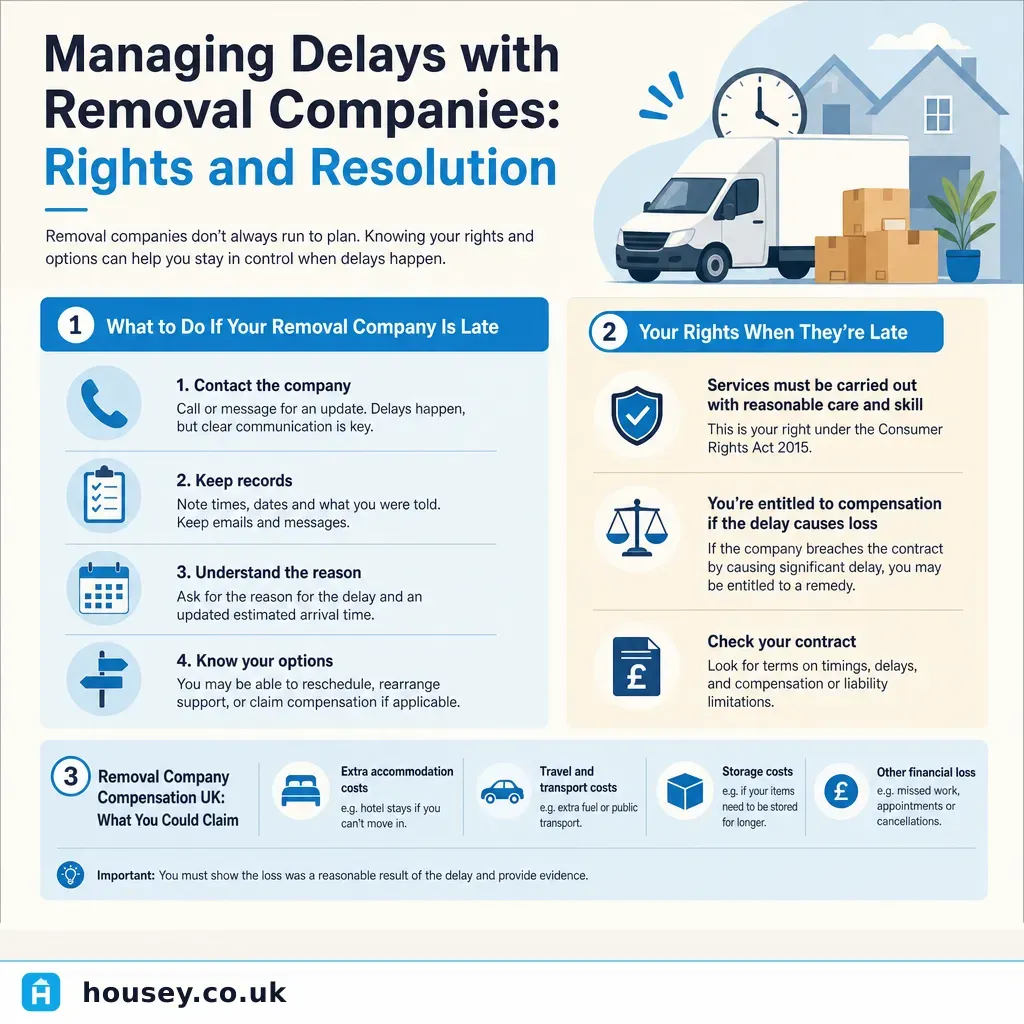
Managing Delays with Removal Companies: Rights and Resolution
If a removal company is late, your rights depend on your contract and whether the company is BAR-registered.
 Buying & Moving
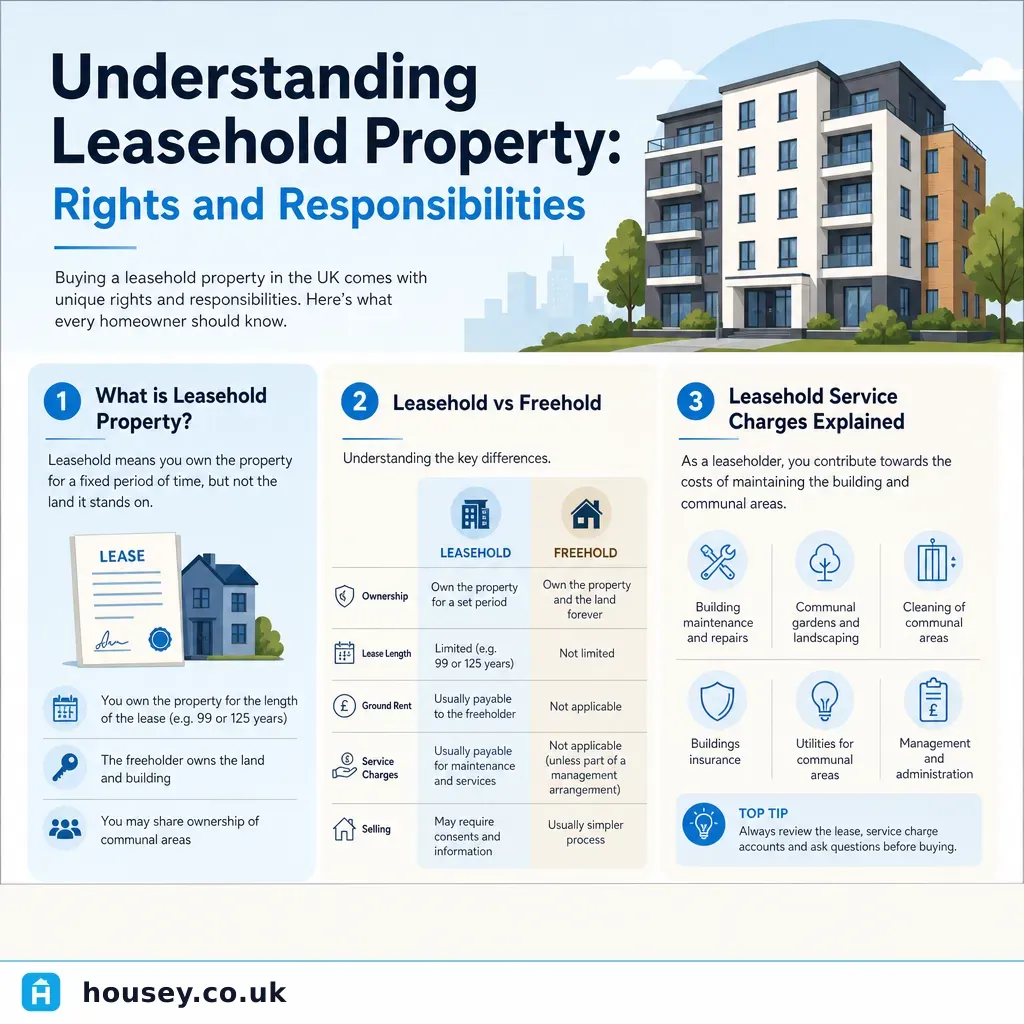
Understanding Leasehold Property: Rights and Responsibilities
Leasehold means you own a time-limited interest in a property while the freeholder owns the land and building.
 Buying & Moving
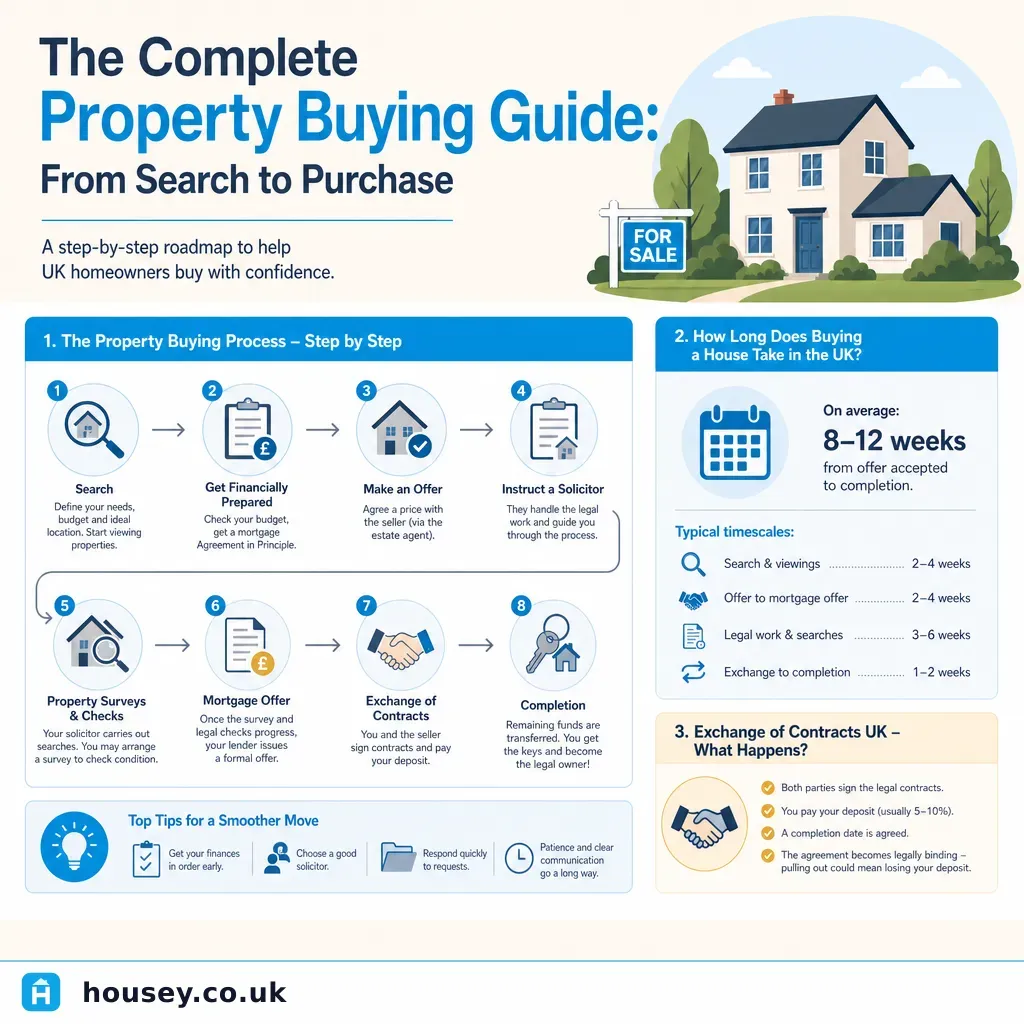
The Complete Property Buying Guide: From Search to Purchase
Buying a property in England and Wales typically takes 3–6 months from accepted offer to completion.
 Buying & Moving
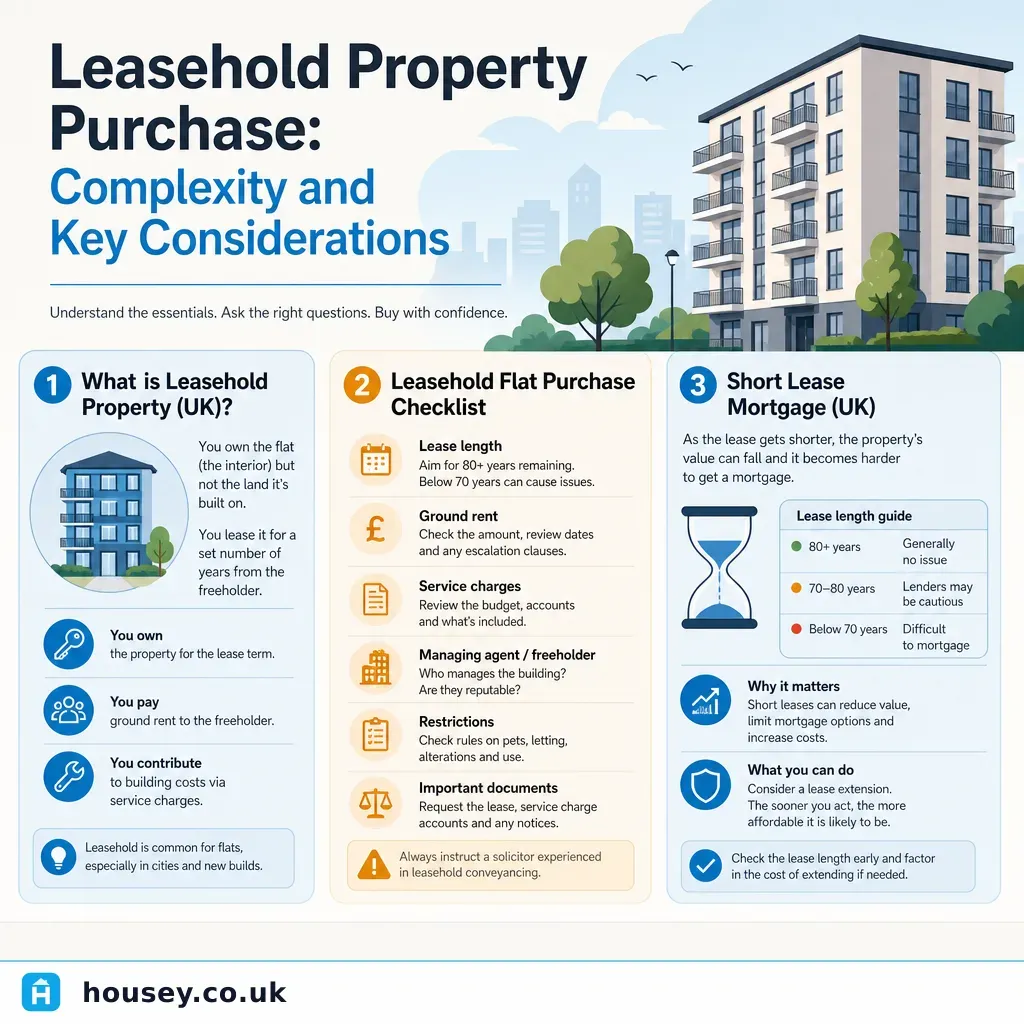
Leasehold Property Purchase: Complexity and Key Considerations
Buying a leasehold property means purchasing the right to occupy for a fixed term rather than owning the land outright.