Custom Fitted Bedrooms: Quality Carpentry and Design Solutions
By Housey · Last reviewed 24th of May 2026
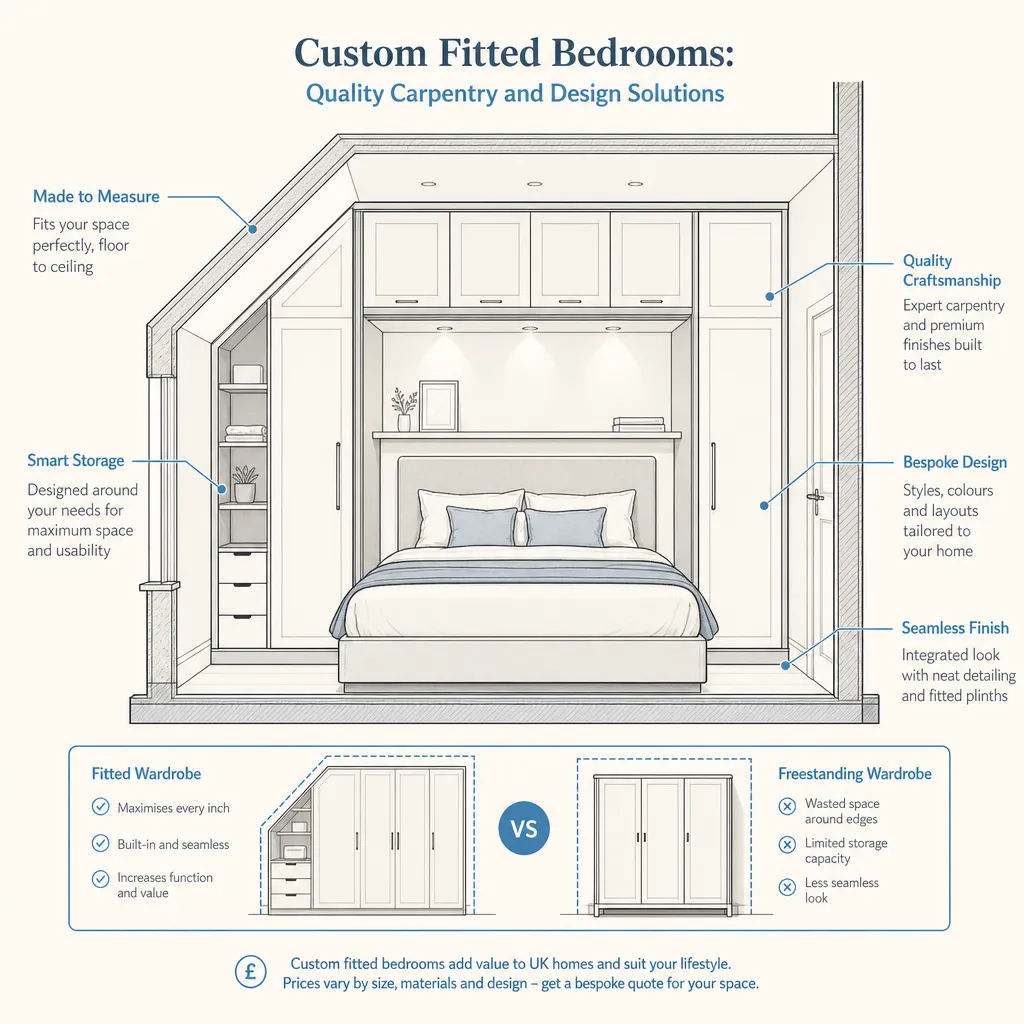
Custom Fitted Bedrooms: Quality Carpentry and Design Solutions
Fitted bedrooms come up most often when a home has an awkward alcove, a sloping ceiling, or simply not enough usable storage. Whether you are finishing a loft conversion, rationalising a box room, or upgrading a master bedroom before a sale, the decision between bespoke carpentry, a specialist fitted-furniture company, and flat-pack involves real trade-offs in quality, cost, and longevity that are worth understanding before you invite anyone to measure up.
Key points
- Bespoke fitted wardrobes are built on-site by a carpenter to your exact room dimensions; specialist fitted-furniture companies manufacture carcasses off-site and install on site — both approaches differ from flat-pack assembly in finish quality and their ability to handle irregular rooms.
- FIRA (Furniture Industry Research Association) accreditation is an independent quality benchmark for fitted furniture manufacturers — ask any company whether they hold it before signing a contract.
- Most reputable fitted bedroom companies offer guarantees of 10–25 years on carcasses and mechanisms; confirm what the guarantee covers and whether it is insurance-backed so it survives if the company closes.
- Lead times for bespoke or semi-bespoke fitted bedrooms typically run four to twelve weeks from deposit payment to installation, depending on the company, factory schedule, and design complexity.
- Planning permission is not required for fitted wardrobes in most domestic properties; if your property is listed, however, you may need listed building consent for fixed internal alterations including built-in furniture.
Fitted, freestanding, or flat-pack: which route suits you?
The three main routes to bedroom storage differ in cost, flexibility, and finish quality.
Option | Best for | Not ideal for | Typical output | Main risk if wrong |
|---|---|---|---|---|
Bespoke carpentry | Irregular rooms, sloping ceilings, listed homes, unique finishes | Budget-sensitive projects, tight timescales | Fully custom piece built to exact measurements | Higher cost if the brief changes mid-project |
Specialist fitted-furniture company | Standard room shapes, predictable timelines, design service included | Rooms with severe awkward angles or unusual heights | Pre-manufactured carcasses fitted on site | Less flexibility once manufacturing begins |
Quality flat-pack (e.g. PAX-type systems) | Rental properties, temporary solutions, tight budgets | Maximising every centimetre, premium finishes | Self-assembled units with adjustable shelving | Visible gaps at ceiling or floor, filler strips |
Fitted furniture — whether bespoke or from a specialist company — typically uses the full height and width of a wall, reaching to the ceiling to eliminate the dust-collecting ledge above freestanding wardrobes and to maximise usable hanging and shelf space.
What to consider before you design
Room dimensions and ceiling height
Ceiling heights vary considerably across UK housing stock: Victorian terraces often run 2.5–3.1 m; 1960s and 1970s semi-detached properties tend to sit at around 2.3 m; modern new-builds typically measure between 2.4 m and 2.5 m. A carpenter or designer will measure the room fully before quoting — floor-to-ceiling, wall-to-wall, and any skirting board depth that affects how carcasses sit against the wall.
Door configuration
Sliding doors suit rooms with limited swing clearance — common in loft conversion bedrooms and smaller secondary bedrooms. Hinged doors give full-width access to shelves and hanging but need approximately 500–600 mm of clear floor space in front of the wardrobe. Bi-fold doors offer a middle ground but can feel less substantial over time if the hardware is budget-grade.
Interior fittings
Consider how you actually store clothes: long hanging for dresses and suits, short hanging with a shelf above for shirts and folded items, deep drawers for knitwear, pull-out shoe racks, or integrated LED lighting. A good designer will translate a brief into a practical interior layout rather than simply filling space with shelving.
How much does a fitted bedroom cost?
Indicative UK costs, last reviewed 2026-05-24. Quotes vary significantly — always obtain at least three comparable quotes.
- Flat-pack (self-assembled): £300–£1,500 for a double bedroom, depending on the system and add-ons.
- Specialist fitted-furniture company: typically £2,000–£8,000 for a full bedroom fit-out; premium configurations with mirror doors and an integrated dressing table can exceed £12,000.
- Independent bespoke carpenter: typically £1,500–£6,000 for a run of wardrobes; highly bespoke work in solid timber or lacquered MDF can push beyond this range.
Key cost drivers include:
- Linear metres of furniture and ceiling height
- Door type and finish (painted MDF, vinyl wrap, real wood veneer, mirrored glass)
- Interior fitments: drawers, pull-out rails, LED lighting, shoe racks, soft-close mechanisms
- Preparatory work such as replastering, moving electrical sockets, or adjusting skirting boards
- Whether the carpenter supplies materials or you source them separately
Decision tree: which route suits your project?
- Choose bespoke carpentry if your room has sloping ceilings, awkward alcoves, or non-standard wall shapes — or if you want a one-of-a-kind design using specific timber species or a matched painted finish.
- Choose a specialist fitted-furniture company if you want a managed design-to-install service with a showroom to visit, a clear timeline, and a named guarantee backed by the manufacturer.
- Choose quality flat-pack if you need storage quickly, the property is a rental, or budget is the primary constraint and the room is a standard shape.
- Consult design-and-build firms if the bedroom project forms part of a wider renovation — loft conversion, extension, or whole-house refurbishment — where coordinated design and build management adds value.
- Consult architectural technologists if you need measured drawings or a technical specification — for example, for a listed building consent application or a loft conversion with restricted headroom.
- Check with your local planning authority if your property is listed, as fixed internal alterations including fitted furniture may require listed building consent before installation begins.
What to ask before accepting a quote
Before signing a contract with any fitted bedroom company or carpenter, work through this checklist:
- What is the exact scope — who moves existing furniture, and who makes good after installation (filling, painting, replacing skirting boards)?
- Are the carcasses manufactured from moisture-resistant MDF or chipboard? What is the board thickness?
- What door hardware brand is specified — how do the hinges and runners compare to alternatives at a similar price point?
- How long is the guarantee, and is it insurance-backed?
- What deposit is required, and what are the payment stages? Reputable companies rarely ask for more than 25–50% upfront.
- Will the installer relocate electrical sockets that fall behind new units — and if so, who certifies that notifiable work under Part P?
- Is VAT included in the quoted price?
- What is the lead time from deposit payment to the confirmed installation date?
When to get professional help
Fitted bedrooms are generally low-risk projects, but professional input is worth seeking in specific situations:
- Listed buildings or conservation areas: fixed furniture may need listed building consent; always check before installation begins.
- Loft conversion bedrooms: sloping ceilings and roof pitch angles often require a carpenter experienced in non-standard spaces to achieve a clean, gap-free finish.
- Electrical work behind units: if sockets need relocating or new lighting circuits are being added, this is notifiable work under Part P of the Building Regulations and must be carried out by a registered competent person.
- Structural concerns: if you want to fit furniture into a chimney breast recess or modify an alcove, confirm that no structural element is affected before chasing fixings or cutting plasterwork.
How Housey can help
If you are planning a fitted bedroom as part of a broader renovation, design-and-build firms can coordinate carpentry, electrical, and decorating work under one contract, avoiding the headaches of managing separate trades. For projects where bedroom design needs to integrate with planning drawings or permitted development documentation, architectural technologists can provide measured drawings and technical specifications to support a listed building consent application.
Frequently asked questions
Do fitted wardrobes add value to a property in the UK?
Fitted wardrobes are generally viewed positively by buyers, particularly in bedrooms where storage is limited. Estate agents describe them as a selling point rather than a precise percentage uplift, and their impact varies by property type, location, and quality of finish. A well-made fitted bedroom in a property where storage is visibly scarce is more likely to influence buyer perception than the same investment in an already well-appointed home.
How long does a fitted bedroom installation take?
Most fitted bedroom installations take one to three days on site, depending on size and complexity. Bespoke carpentry may take longer if the carpenter is building and fitting simultaneously. Lead times from signing a contract to installation beginning typically run four to twelve weeks with specialist companies, or shorter with independent carpenters who have immediate availability.
Is planning permission needed for fitted wardrobes?
Planning permission is not required for fitted wardrobes in most domestic properties in England, Scotland, or Wales — it falls within normal internal alteration works. The exception is listed buildings, where any fixed internal alteration including fitted furniture may require listed building consent from the local planning authority. Always check with your local authority if your property is listed.
Can fitted wardrobes be taken apart if I move house?
Fitted wardrobes built into alcoves or fixed to structural walls are generally considered fixtures and fittings and would normally be expected to remain with the property on sale, unless specifically agreed otherwise in the sale contract. Always clarify your intentions with your solicitor before marketing the property if you plan to remove fitted furniture.
Sources and further reading
- Planning permission: when you need it — GOV.UK
- Listed building consent guidance — Historic England
- FIRA International: furniture quality and standards — FIRA International
- Your rights when buying goods and services — Citizens Advice
Useful next reads
 Improvement & Build
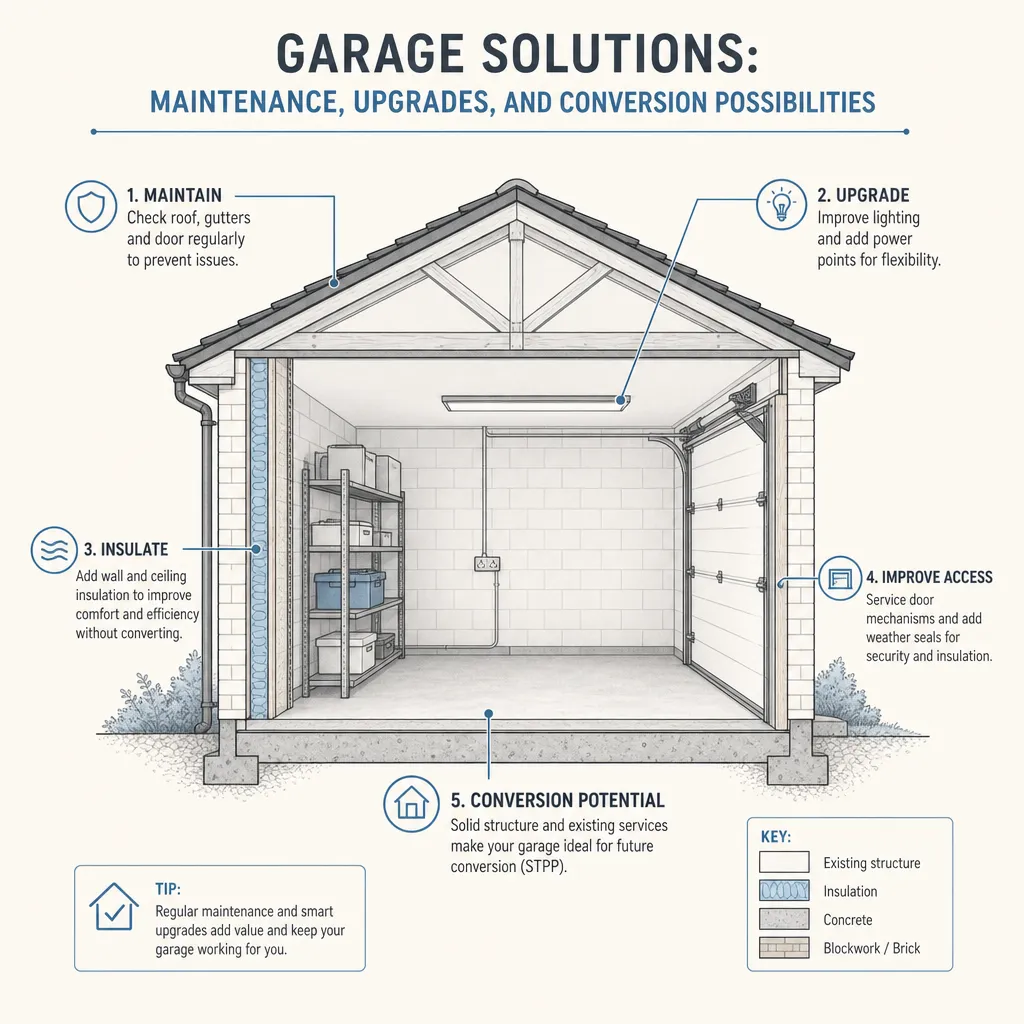
Garage Solutions: Maintenance, Upgrades, and Conversion Possibilities
Your garage can serve many functions — storage, workshop, hobby space, or a full habitable room conversion.
 Improvement & Build
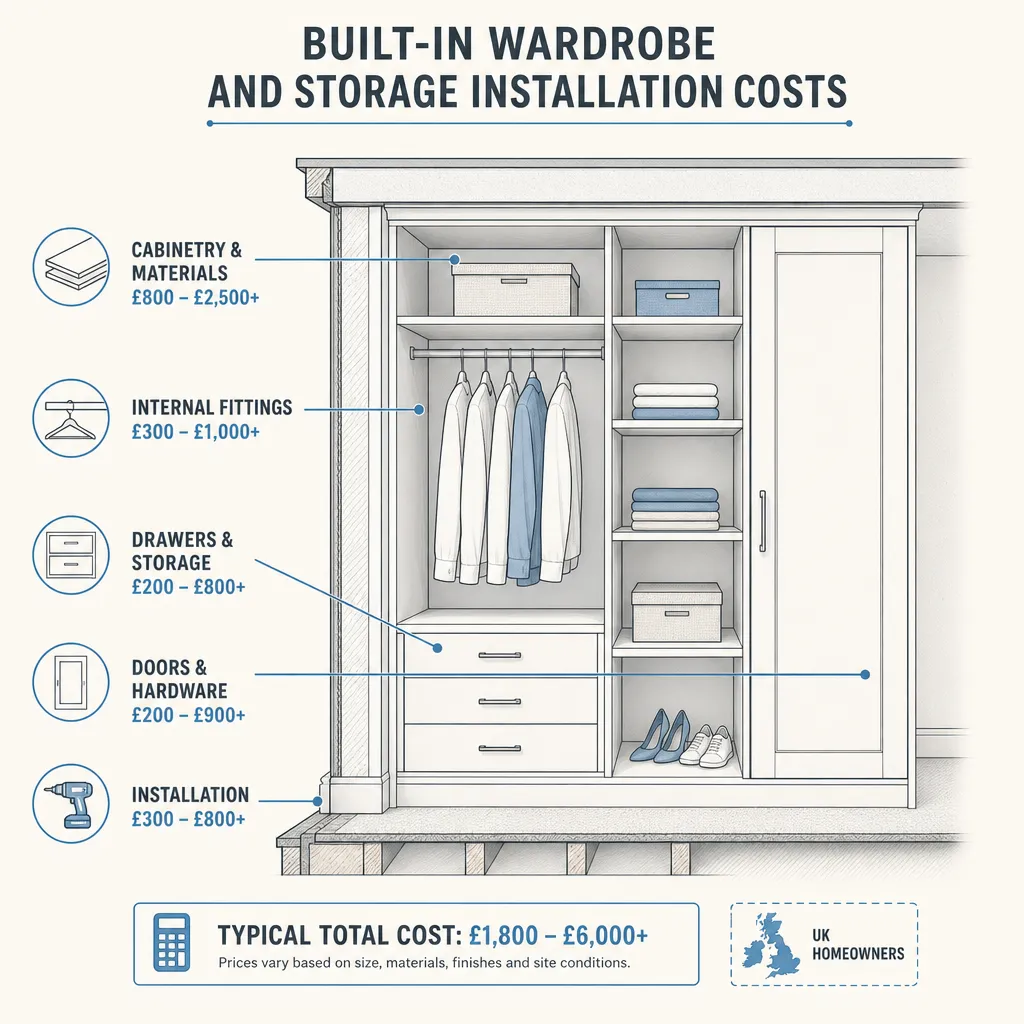
Built-In Wardrobe and Storage Installation Costs
Built-in wardrobe installation in the UK typically costs £800–£3,000 for a standard bedroom using fitted flatpack or semi-bespoke systems, and £2,500–£8,000 or more for fully bespoke carpentry.
 Improvement & Build
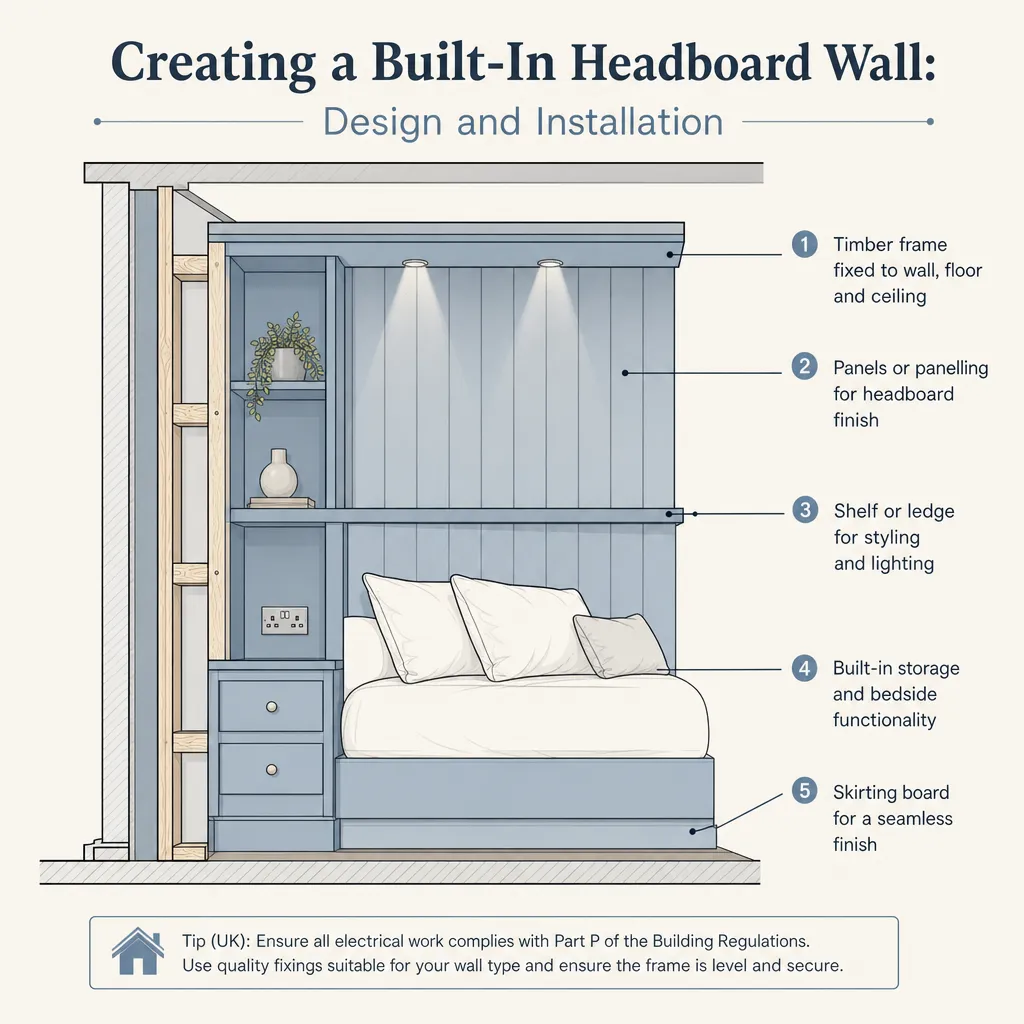
Creating a Built-In Headboard Wall: Design and Installation
A built-in headboard wall involves fixing a panelled or framed structure to the bedroom wall, typically from floor to dado height or full ceiling.
 Improvement & Build
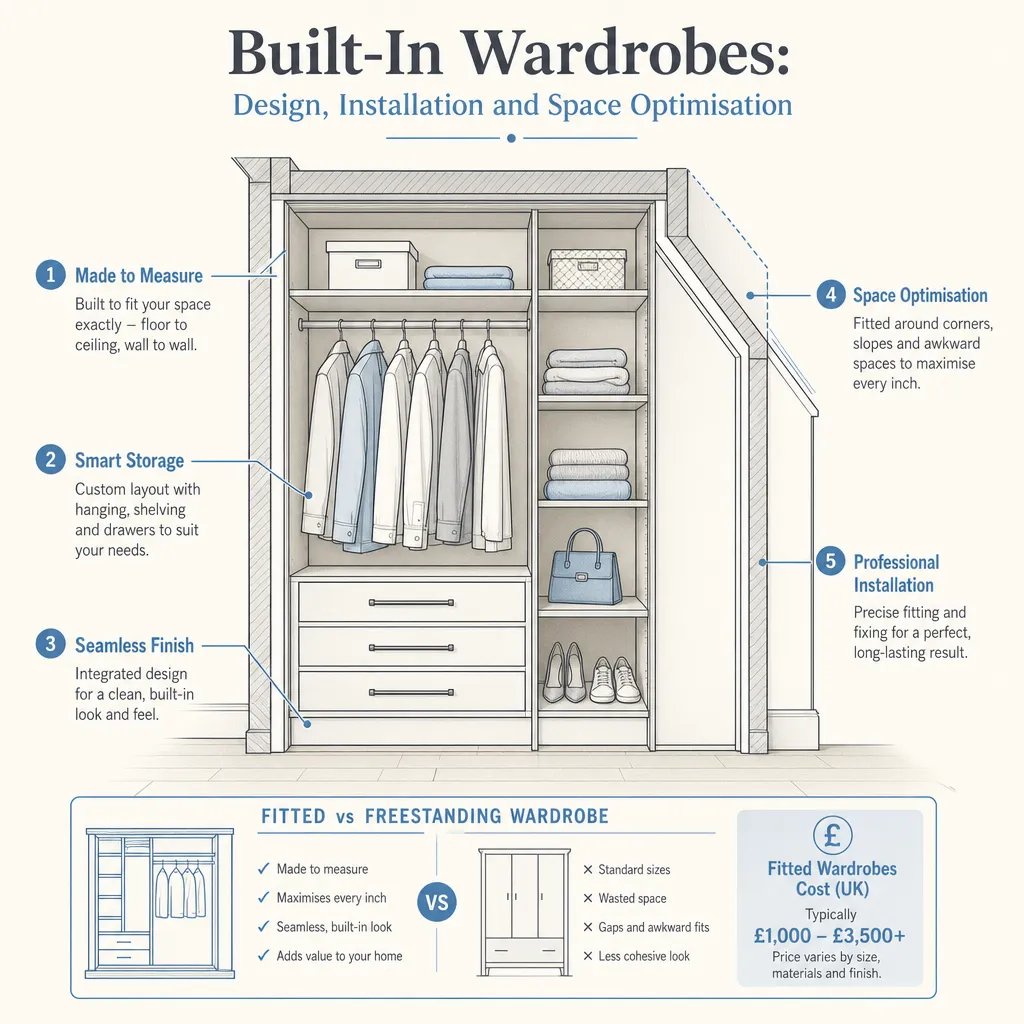
Built-In Wardrobes: Design, Installation and Space Optimisation
Built-in wardrobes are fixed storage units designed to span a wall, alcove, or recess, installed by a joiner or fitted-furniture company.
 Improvement & Build
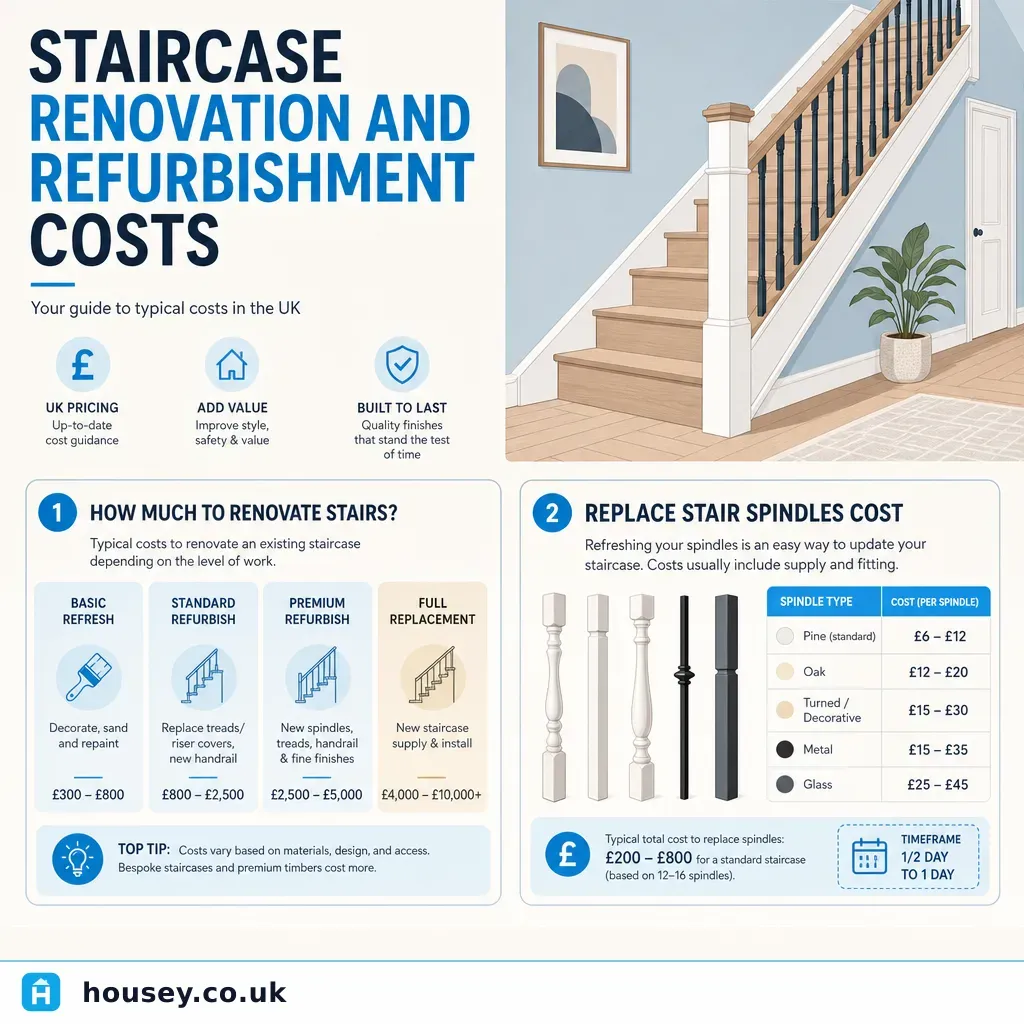
Staircase Renovation and Refurbishment Costs
Staircase renovation costs in the UK range from a few hundred pounds for cosmetic work — painting, replacing spindles, or fitting a carpet runner — to £10,000 or more for a full structural remodel with new treads and balustrade.