Garage Solutions: Maintenance, Upgrades, and Conversion Possibilities
By Housey · Last reviewed 19th of May 2026
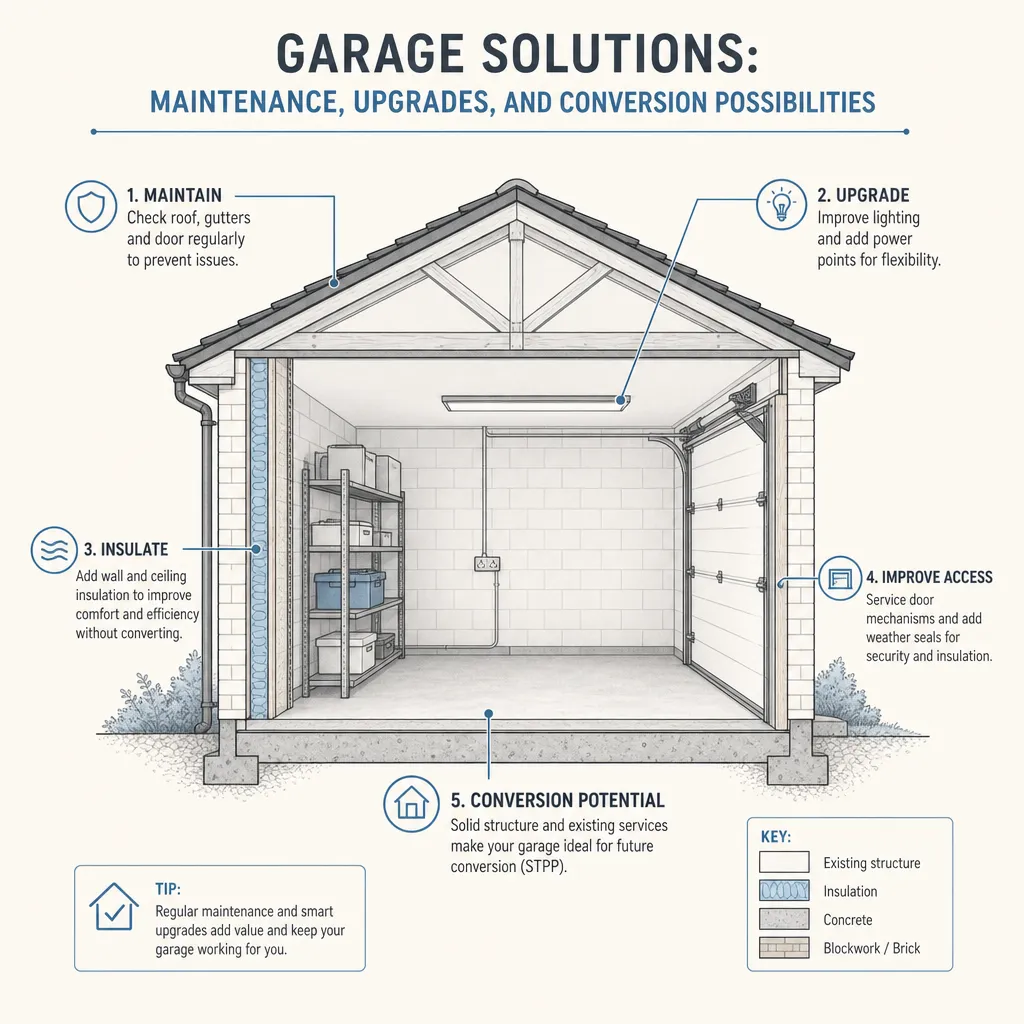
Garage Solutions: Maintenance, Upgrades, and Conversion Possibilities
For many UK homeowners, the garage is one of the least efficiently used parts of the property — a space that accumulated clutter gradually, or a structure left over from when the household owned more vehicles. Understanding what your garage can realistically become, and what maintenance it needs in the meantime, helps you make better decisions before spending money on any project. The options range from simple organisation and targeted insulation through to a full habitable conversion requiring building regulations approval.
Key points
- Integral garages with poorly insulated shared walls allow heat to escape from adjacent habitable rooms; insulating the shared wall and ceiling can reduce heating costs without triggering Building Regulations.
- Automatic sectional and roller garage doors typically last 15–25 years; annual lubrication of hinges, rollers, and springs is the most effective routine maintenance and is frequently neglected.
- Converting any part of a garage to habitable space requires Building Regulations approval in England and Wales, regardless of whether planning permission is also needed.
- Adding a new electrical circuit to a detached garage must be carried out by a Part P-competent electrician using appropriate armoured cable — this is a legal requirement in England and Wales under the Building Regulations, not an optional formality.
- Detached garage outbuildings used for storage or as a workshop generally do not require planning permission under permitted development in England, provided size and location limits under the GPDO 2015 are met.
What can you realistically do with your garage?
Most UK garages serve one of four main functions — or a practical combination. Understanding what each involves helps you prioritise where to invest.
Use | Planning permission (England) | Building regs needed | Main requirement | Key benefit |
|---|---|---|---|---|
Storage or utility space (unheated) | Usually not required | Not required for minor fit-out | Weatherproofing, security, organisation | Low cost, no compliance burden |
Workshop or hobby space (non-habitable) | Usually not required | Not required for minor works | Part P electrician for any new circuits | Practical use without structural change |
Habitable room (bedroom, home office, gym) | Usually not required for integral garages | Always required | Insulation, ventilation, damp-proof floor, fire safety | Adds certified living space; may improve saleability |
Self-contained annexe or separate dwelling | Often requires planning permission | Always required | Full conversion, drainage, separate utilities | Significant value addition; complex regulatory path |
Garage maintenance: a homeowner checklist
A well-maintained garage is cheaper to convert or upgrade later. Work through this checklist once a year:
Garage door:
Roof and gutters:
Floor and walls:
How to improve your garage without a full conversion
Not every garage needs to become a habitable room. Targeted improvements can make the space significantly more useful at far lower cost:
Storage and organisation: Wall-mounted racking, shelving, and overhead storage platforms make efficient use of vertical space. A workbench with pegboard above creates a functional workshop corner even in a modest single garage, freeing up floor space for parking or other uses.
Lighting and power: A surface-mounted LED panel or fluorescent strip fitting transforms working visibility. A dedicated circuit from the consumer unit — always installed by a Part P-qualified electrician — eliminates reliance on extension leads, which can be a fire and tripping hazard in workshop environments.
Insulation without full conversion: Fitting rigid foam insulation panels to the inside of the garage door reduces heat loss from the room above or beside. Insulating the shared wall between garage and house can reduce heating bills without triggering Building Regulations, provided the garage remains non-habitable and the insulation is on the room side of the wall.
Security: Deadbolt or multipoint locks on up-and-over doors provide a meaningful upgrade over the standard latch. Adding PIR sensors and door contacts to a whole-house alarm system extends protection to the garage without major expense.
Is a full garage conversion right for you?
A habitable conversion is worth considering when the garage is not regularly used for parking, you consistently need more living space, and the structure is integral with adequate floor-to-ceiling height. It may be less suitable when:
- The garage provides your only off-street parking and local on-street parking is limited or permit-controlled
- A detached garage conversion to a self-contained unit would require planning permission you are uncertain of obtaining
- The floor level is significantly below the rest of the house, creating drainage or step-free access challenges
For a detailed guide to planning, building regulations, and the conversion process, Housey's garage conversion specialists can help you assess what is feasible for your specific property.
When to get professional help
Consult a professional before:
- Installing any new electrical circuit — a Part P-qualified electrician is required in England and Wales
- Converting any part of the garage to habitable space — Building Regulations apply in all cases
- Altering load-bearing walls or the structural frame around the garage door opening
- Converting a garage in or attached to a listed building, or in a conservation area
How Housey can help
Whether you are planning a targeted improvement or a full habitable conversion, Housey connects you with vetted garage conversion specialists who can advise on the options, compliance requirements, and realistic costs for your property.
Frequently asked questions
Can I insulate a garage door myself?
Fitting rigid foam insulation panels to the inside of an existing up-and-over door is generally DIY-friendly and does not require Building Regulations approval, as the use of the space does not change. Proprietary kits sized for standard door openings are widely available from DIY retailers and insulation suppliers. Replacing the door unit itself warrants professional installation.
Does adding power to a detached garage need an electrician?
Yes. Any new circuit from the house consumer unit to a detached garage — whether underground in armoured cable or overhead — must be installed by a Part P-competent electrician in England and Wales. The electrician will issue an Electrical Installation Certificate confirming the work is safe and compliant with BS 7671. This is a legal requirement, not a recommendation.
Will improving my garage affect my buildings insurance?
Converting a garage to habitable space changes the property and may affect your buildings insurance. Notify your insurer before works start and again once complete. Adding high-value equipment such as a workshop fit-out or significant electrical installation may also need to be declared. Failure to notify your insurer could affect any future claim.
How do I know if my garage floor is suitable for conversion?
A building control inspector or structural engineer can assess whether the existing concrete slab is adequate for habitable use. Common problems include insufficient slab thickness, the absence of a damp-proof membrane, and localised cracking or heave. In some cases a new reinforced floor slab is required, which adds materially to overall project costs.
Sources and further reading
- Planning permission: extensions and outbuildings — GOV.UK
- Building Regulations: approved documents — GOV.UK
- Permitted development rights for householders: technical guidance — GOV.UK
- Electrical safety in the home — Electrical Safety First
Useful next reads
 Improvement & Build
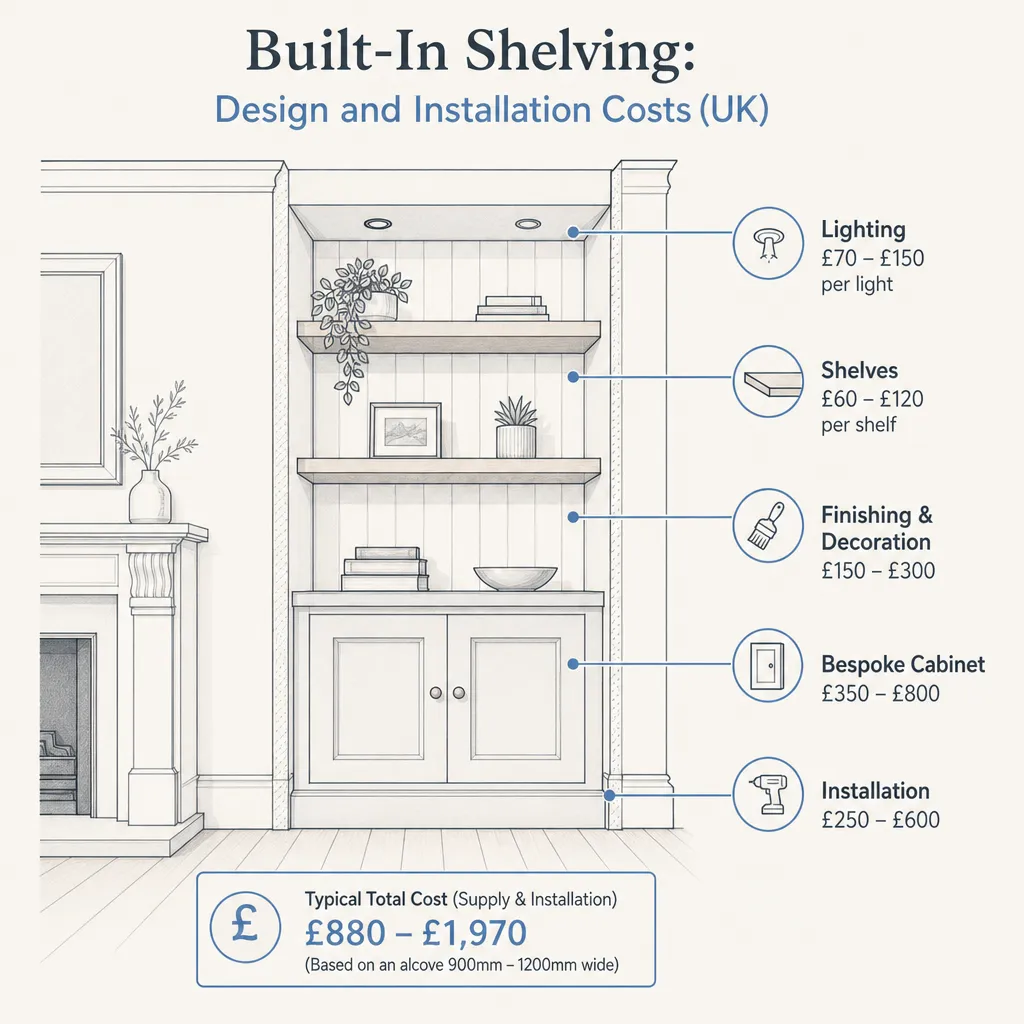
Built-In Shelving: Design and Installation Costs
Built-in shelving typically costs £400–£900 for a simple single-alcove MDF unit, rising to £1,400–£3,000 for a pair of painted alcoves with base cupboards.
 Improvement & Build
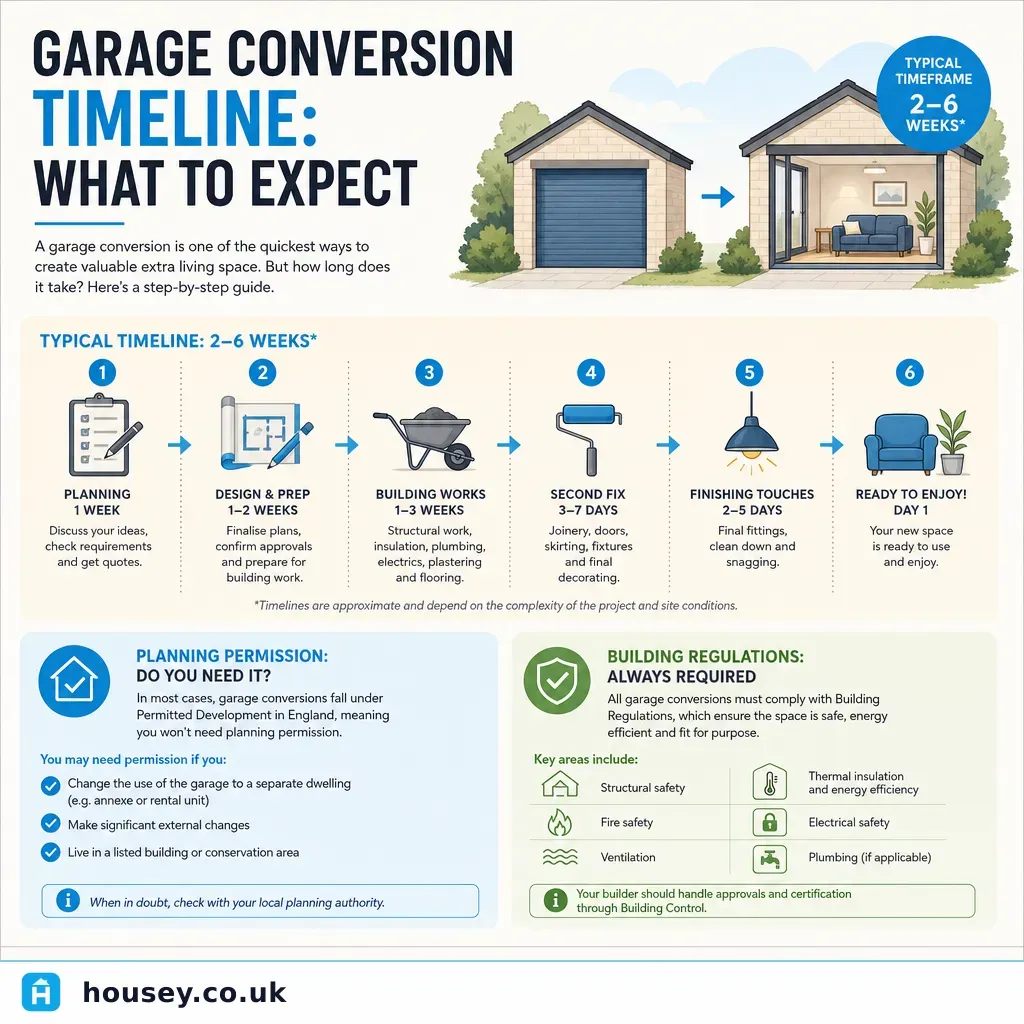
Garage Conversion Timeline: What to Expect
A straightforward attached garage conversion in England usually takes 4–8 weeks of construction, plus pre-start time for building control approval (5 working days for Full Plans).
 Improvement & Build
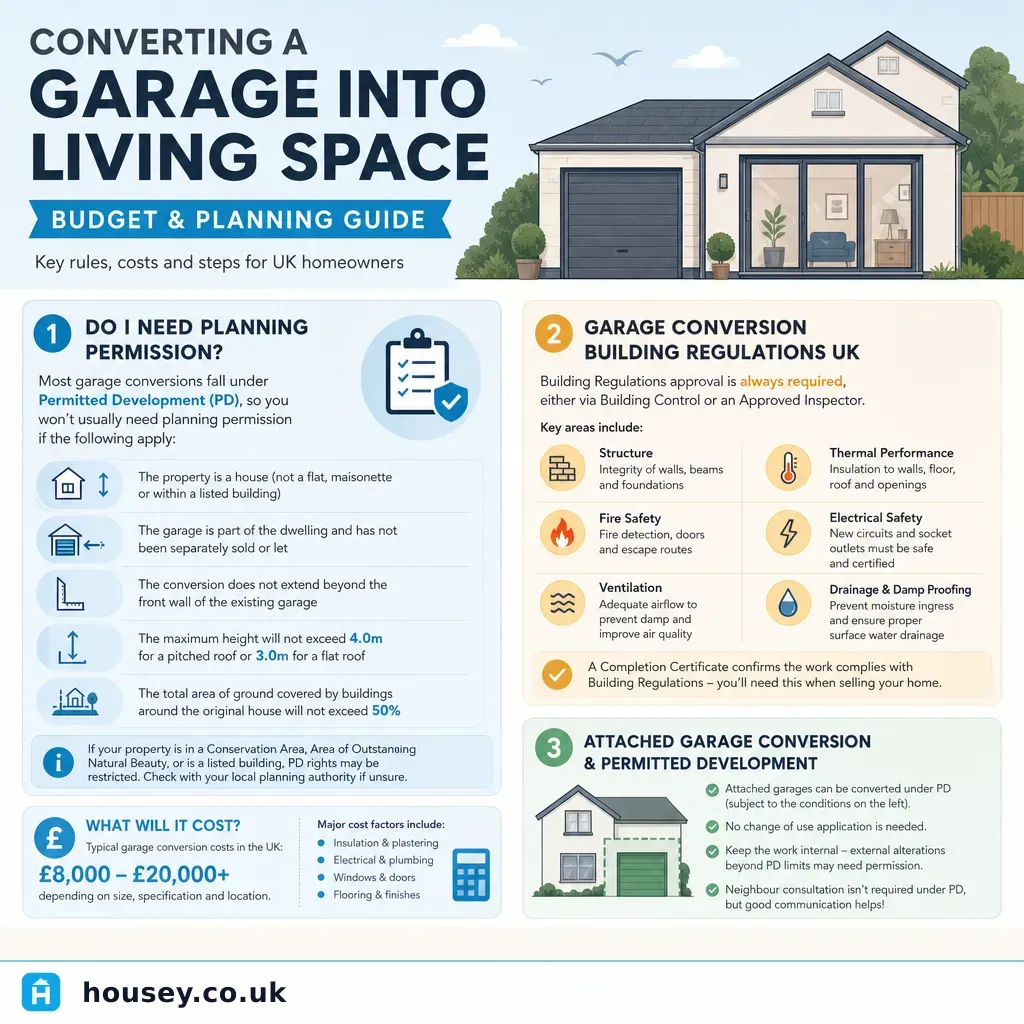
Converting a Garage into Living Space: Budget and Planning Guide
A single-garage conversion typically costs £8,000–£20,000 in the UK.
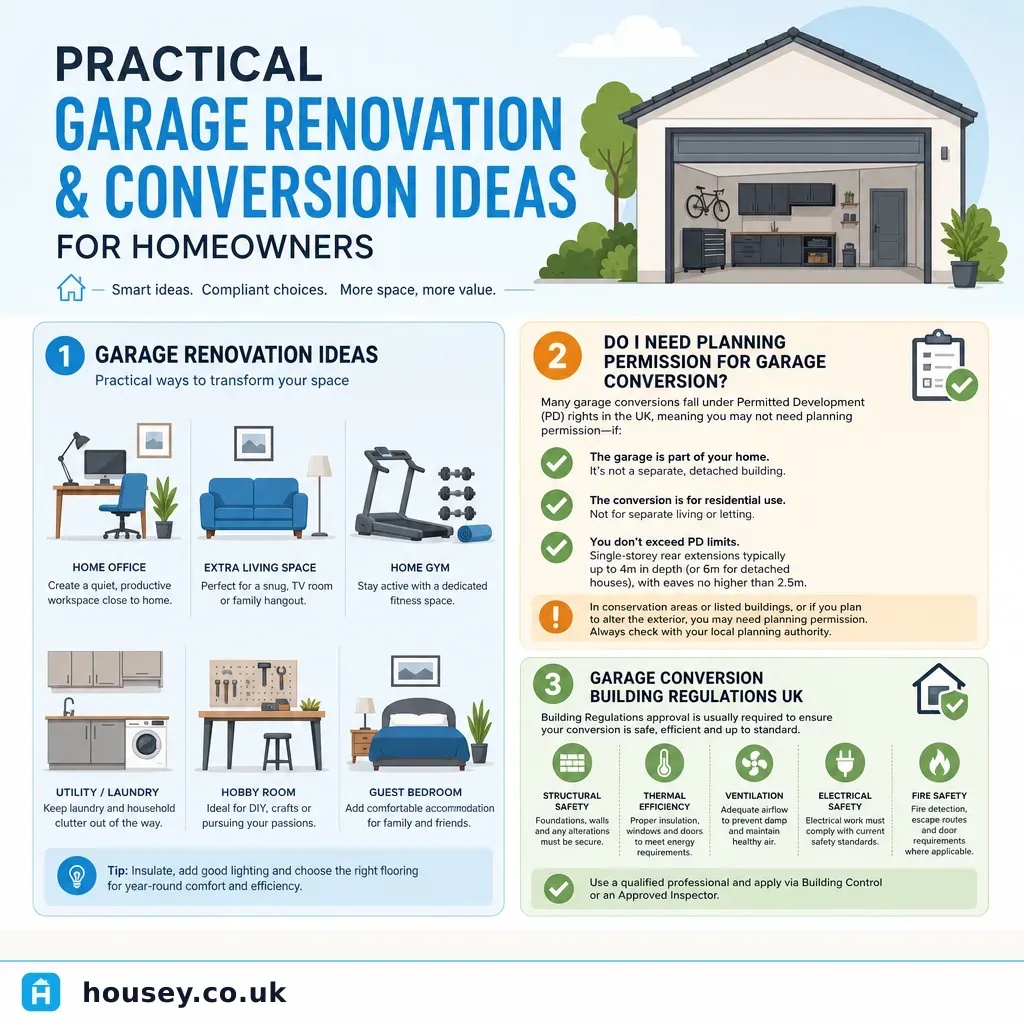 Improvement & Build
Practical Garage Renovation and Conversion Ideas for Homeowners
A full garage conversion to habitable use almost always requires Building Regulations approval in the UK, even if planning permission is not needed.
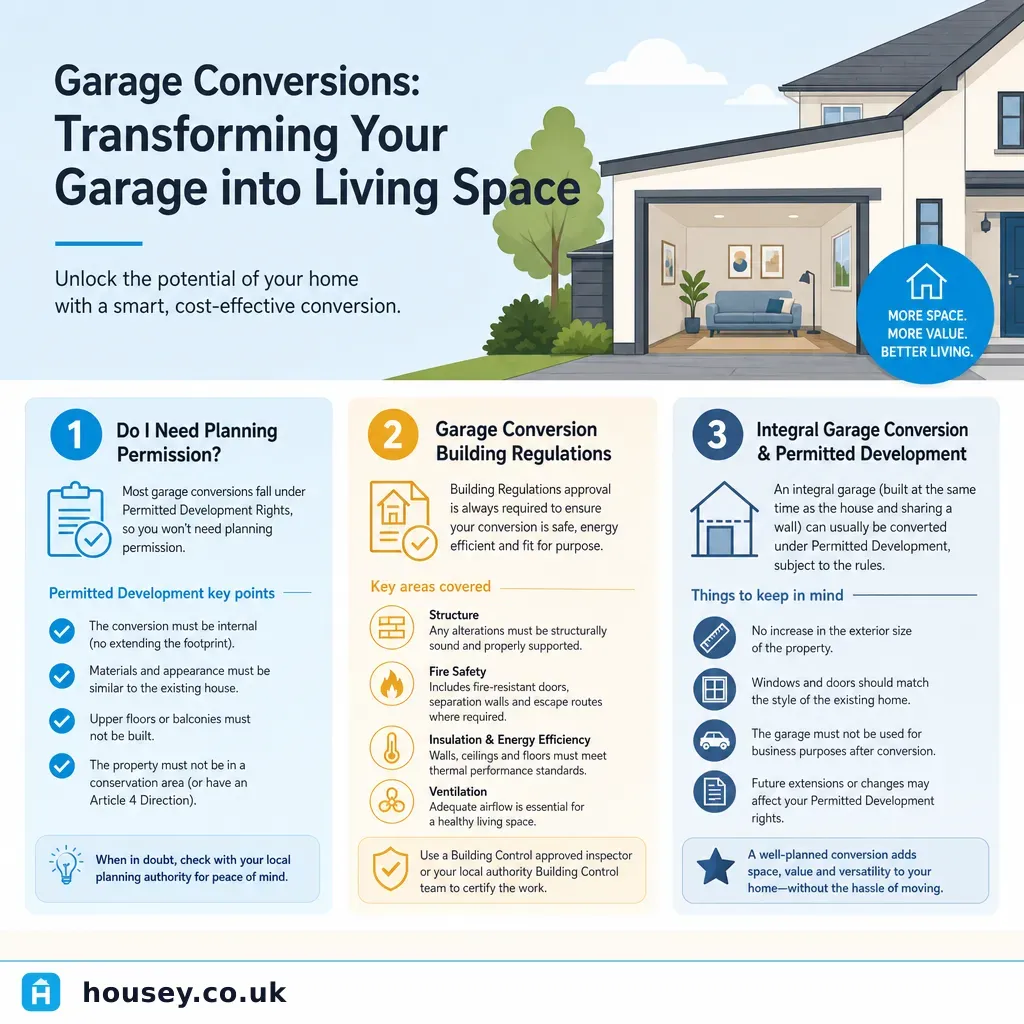 Improvement & Build
Garage Conversions: Transforming Your Garage into Living Space
Most integral garage conversions in England fall within permitted development and do not require a planning application, but Building Regulations approval is required in virtually all cases.