Demolition and Removal of a Concrete Driveway
By Housey · Last reviewed 7th of May 2026
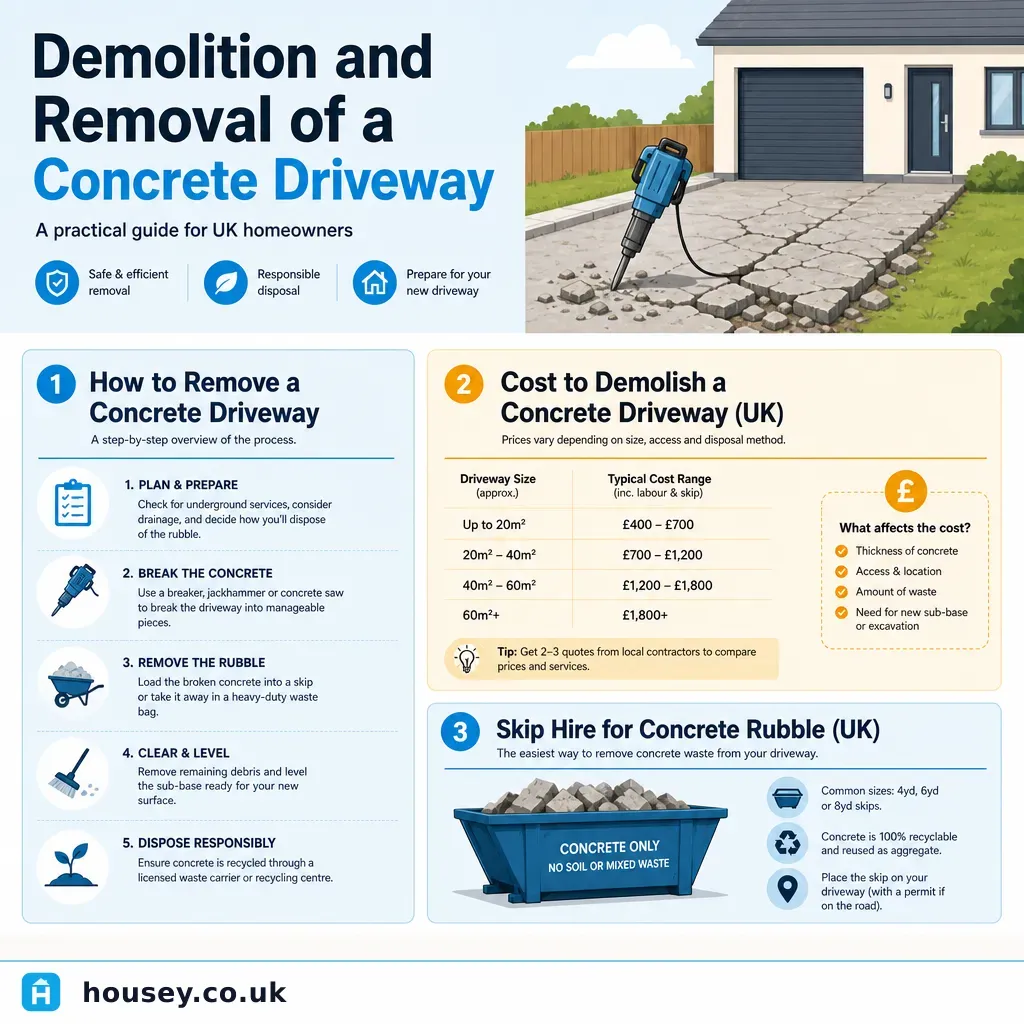
Demolition and Removal of a Concrete Driveway
Concrete driveways degrade over time — cracking, heaving, and persistent staining that no amount of cleaning or patching will fix. When repair is no longer viable, full demolition and removal is the starting point for whatever comes next, whether that is a new surface, a dropped kerb, or a landscaping project. Understanding how concrete removal works, and what it genuinely costs in the UK, helps you plan accurately and avoid being caught out by disposal fees or unexpected complications.
Key points
- Concrete driveway removal requires a breaker (electric, petrol, or pneumatic) and a skip or grab lorry; the weight of broken concrete makes hand-loading the only practical removal method once the slab is fractured.
- Indicative UK costs for removing a standard single-car driveway (approximately 20–30 m²) range from £500 to £1,500 including labour and disposal (Indicative UK costs, last reviewed 2026-05-07).
- Properties built before 2000 should be assessed for asbestos in adjacent garage structures, cement board panels, or flat-roof sheets before any demolition begins; if in doubt, arrange a survey with a licensed asbestos contractor before breaking starts.
- Replacing a driveway with an impermeable surface on a property fronting a public highway may require householder planning permission under Permitted Development rules introduced in 2008; permeable surfaces generally do not.
- The sub-base beneath the slab — typically compacted hardcore or MOT Type 1 — should be inspected and, if necessary, repaired before any new surface is laid.
How concrete driveway demolition works
Concrete driveway demolition involves breaking the slab into pieces small enough to be loaded into a skip or grabbed by a lorry. The approach depends on the slab's size, thickness, and whether it is reinforced.
Breaking methods
- Electric or pneumatic breaker: The standard tool for most residential jobs. An operative systematically breaks the slab into sections of 30–60 cm, working progressively across the drive.
- Mini-excavator with breaker attachment: Faster on larger or thicker slabs and practical where machine access is possible. Usually worth the day rate for double or triple driveways.
- Hand tools only: Only realistic for very thin, unreinforced concrete under approximately 75 mm — and even then it is slow and physically demanding work.
Once broken, rubble is loaded into a skip (typically a 6–8 yard skip for a single-car drive) or removed by grab lorry. Some contractors include a grab lorry in their quote, which avoids a separate skip hire cost and eliminates the need for a skip permit if the skip would otherwise sit on the public highway.
Reinforced concrete: Older driveways — particularly those adjacent to garages built between the 1960s and 1980s — may contain steel mesh or bar reinforcement. This adds time to the breaking process and may slightly increase disposal cost.
What does concrete driveway removal cost?
The following figures are indicative only and will vary based on location, access, slab thickness, reinforcement, and individual contractor rates.
Cost component | Indicative UK range |
|---|---|
Labour (breaking and loading) | £250–£700 |
Skip hire (6–8 yard) | £200–£450 |
Skip permit (if skip sits on public road) | £30–£100 (varies by council) |
Grab lorry (alternative to skip) | £200–£500 per load |
Sub-base repair (if needed) | £100–£400 |
Total — single-car drive (20–30 m²) | £500–£1,500 |
Indicative UK costs, last reviewed 2026-05-07. Obtain at least two itemised quotes for your specific property.
Double driveways (40–60 m²) typically cost £1,000–£2,500 or more for removal alone. Costs in London and the South East are generally higher than the ranges above.
What affects the price?
Several factors can push a quote above the typical range:
- Slab thickness: Residential concrete is usually 100–150 mm, but older or commercial-grade slabs can reach 200 mm or more. Thicker concrete takes longer to break and produces significantly more rubble by weight.
- Reinforcement: Steel mesh or rebar adds cutting time and effort, and may require angle grinders or shears in addition to the breaker.
- Restricted access: If machinery cannot access the site, all work must be done by hand, increasing labour time considerably.
- Disposal distance: Skip hire prices and haulage costs rise where the nearest licensed recycling facility is further away or where local authority permit fees are higher.
- Number of loads: Very large driveways may require two skip cycles or multiple grab runs, each adding cost.
Choosing your new surface: a comparison
Once the old concrete is out, several replacement options are available. The choice affects whether planning permission is needed, how the surface manages rainwater, and your long-term maintenance commitment.
Surface | Permeable? | Planning permission likely needed? | Typical installed cost per m² | Maintenance level |
|---|---|---|---|---|
Block paving (sand-bedded, open-jointed) | Yes | No | £80–£150 | Occasional re-sanding |
Resin-bound gravel | Yes | No | £70–£130 | Low |
Tarmac / asphalt | No | Yes (new impermeable surface) | £30–£80 | Occasional sealing |
New concrete | No | Yes (new impermeable surface) | £50–£100 | Low, but prone to cracking |
Loose gravel | Yes | No | £15–£40 | Regular raking and top-ups |
Indicative UK costs, last reviewed 2026-05-07. Planning permission requirements apply to impermeable surfaces on properties fronting a public highway. Always check with your local planning authority.
Homeowner checklist: before work begins
Use this checklist to prepare before appointing a contractor:
Red flags to watch for
- A quote that does not mention disposal costs separately — this is the most common source of unexpected extras on driveway removal jobs.
- No explanation of how rubble will leave the site, whether by skip, grab lorry, or trailer.
- Pressure to start work immediately without a written scope of works or a simple contract.
- A contractor who cannot say whether the slab is reinforced and makes no allowance for it in the price.
- A very low quote where VAT is not mentioned — confirm whether the contractor is VAT-registered if the total project value may approach the registration threshold.
- No mention of underground service checks before breaking begins.
When to get professional help
Driveway removal is generally handled by experienced groundworks or demolition contractors without the need for a separate structural professional. However, seek specialist advice before proceeding if:
- The driveway is structurally integrated with a retaining wall, a garage slab, or steps set into a slope.
- A substantial area of concrete forms part of the drainage or flood management arrangement for the property.
- Suspected asbestos materials are encountered — stop work immediately and engage a licensed asbestos contractor before anything is disturbed further.
- Underground services are discovered during breaking — stop work and contact the relevant utility immediately.
How Housey can help
If you need to find a reliable contractor for concrete removal or a full driveway replacement, Housey can connect you with local driveway installers and demolition contractors who can provide itemised quotes covering breaking, disposal, and any new surface work.
Frequently asked questions
Do I need planning permission just to remove a concrete driveway?
Generally, no — removing an existing driveway does not require planning permission. However, if you replace it with a new impermeable surface, such as concrete or tarmac, on a property fronting a public highway, permitted development rules introduced in 2008 mean you will likely need permission. Permeable alternatives such as resin-bound gravel or block paving on sand usually do not require permission.
How long does concrete driveway removal take?
A standard single-car driveway of around 20–30 m² typically takes a two-person team one full day to break up and load out. Larger drives, very thick slabs, reinforced concrete, or restricted access can extend this to two days or more. Factor in additional lead time if a skip permit from the council is needed before work can begin.
Can the broken concrete be recycled?
Yes — crushed concrete is accepted at most licensed waste recycling facilities and can be processed into recycled aggregate for use in sub-bases and fill. Ask your contractor or skip hire company whether they separate and recycle concrete. This can sometimes reduce disposal costs compared with mixed-waste skips.
What happens to the sub-base once the slab is removed?
The sub-base — usually compacted hardcore or MOT Type 1 — can often be left in place and reused if it remains stable and level. If it has shifted, been disturbed, or is contaminated, it will need to be repaired or replaced before a new surface is laid. Your new surface installer should assess sub-base condition as part of their survey and quote.
Should I use the same contractor for removal and replacement?
Many driveway installers handle both removal and replacement as a single project, which can simplify coordination and sometimes reduce overall cost. However, appointing a separate demolition contractor to clear the old slab can be cheaper if you are still deciding on the replacement material, or if there will be a gap between the two phases of work.
Sources and further reading
- Driveways and hard standing: when is permission required? — Planning Portal
- When is permission required? — GOV.UK
- Asbestos: health and safety in construction and maintenance — Health and Safety Executive
- LSBUD — check before you dig — LSBUD
Useful next reads
 Improvement & Build
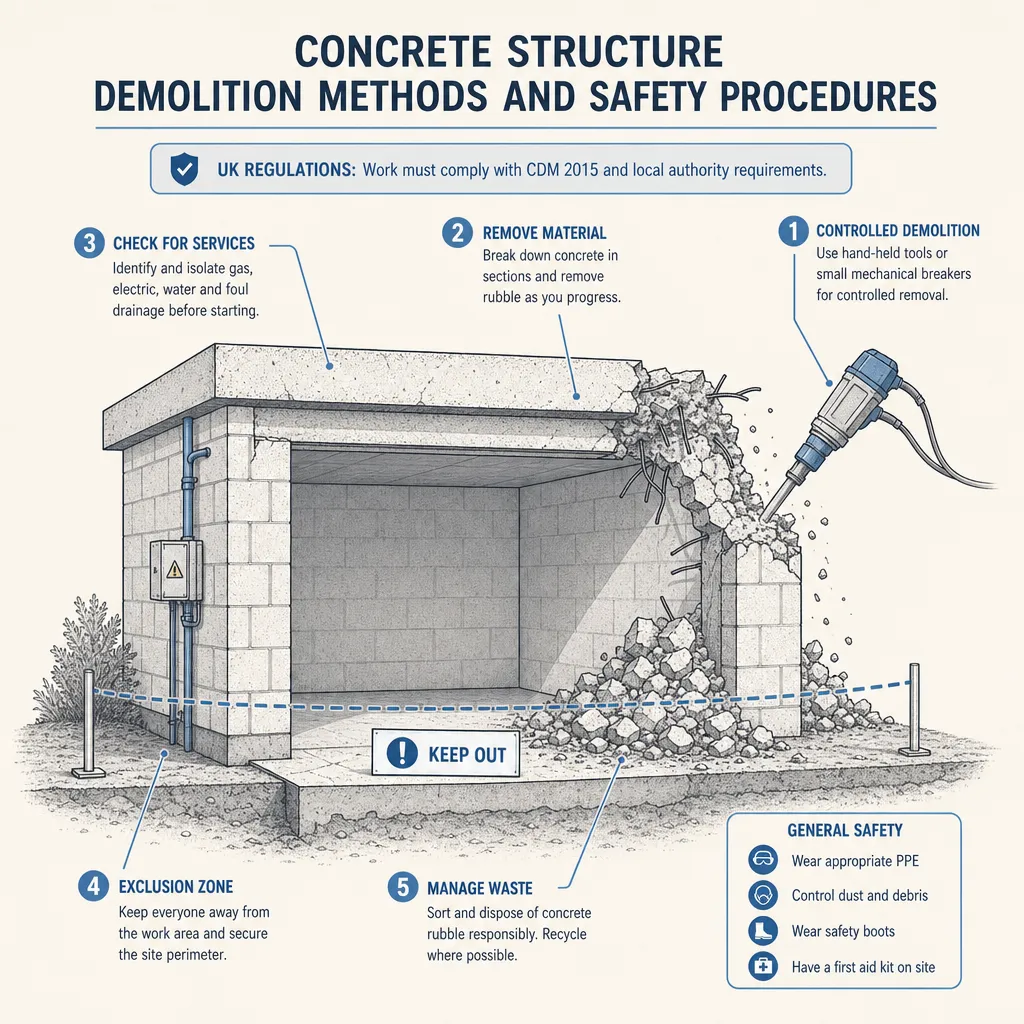
Concrete Structure Demolition Methods and Safety Procedures
Concrete structures on UK residential sites are most commonly demolished using mechanical excavators with hydraulic breaker attachments.
 Improvement & Build
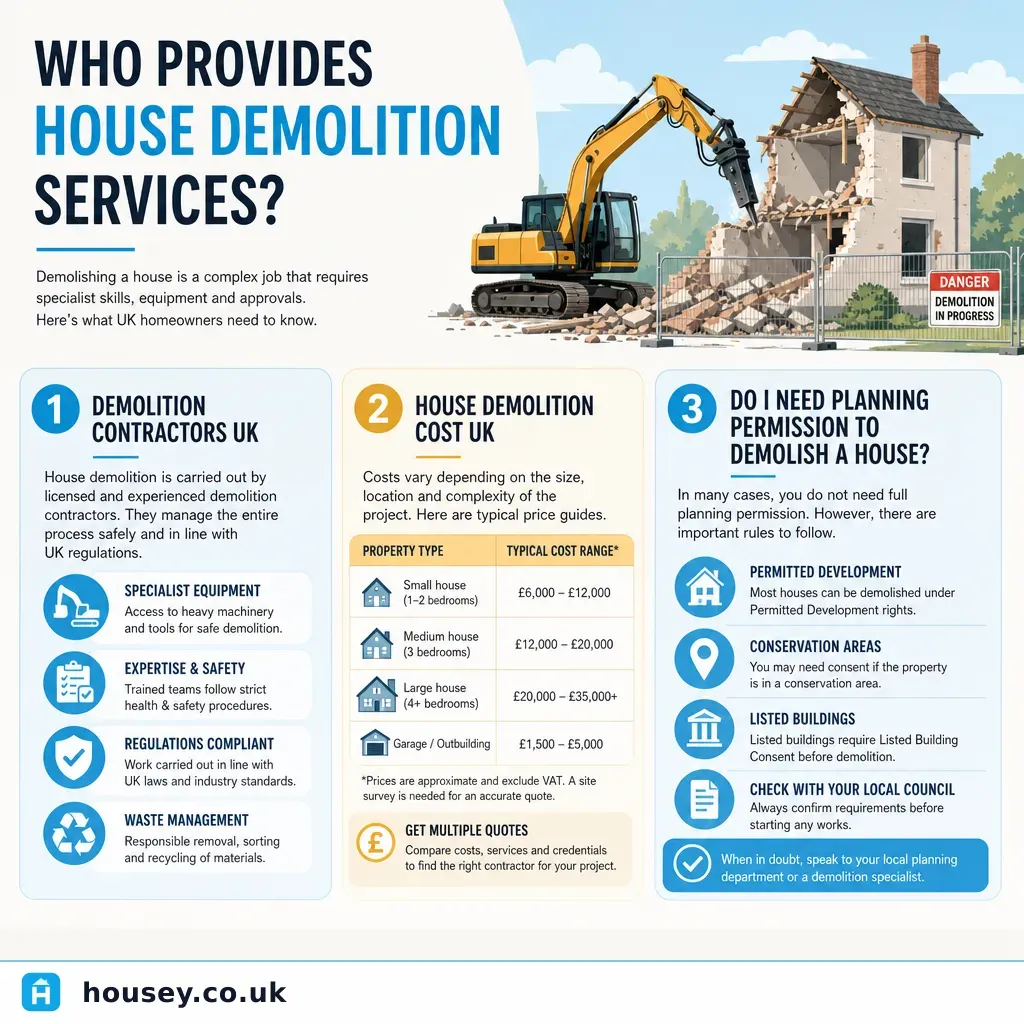
Who Provides House Demolition Services
House demolition in the UK is carried out by specialist demolition contractors, often members of the National Federation of Demolition Contractors (NFDC).
 Improvement & Build
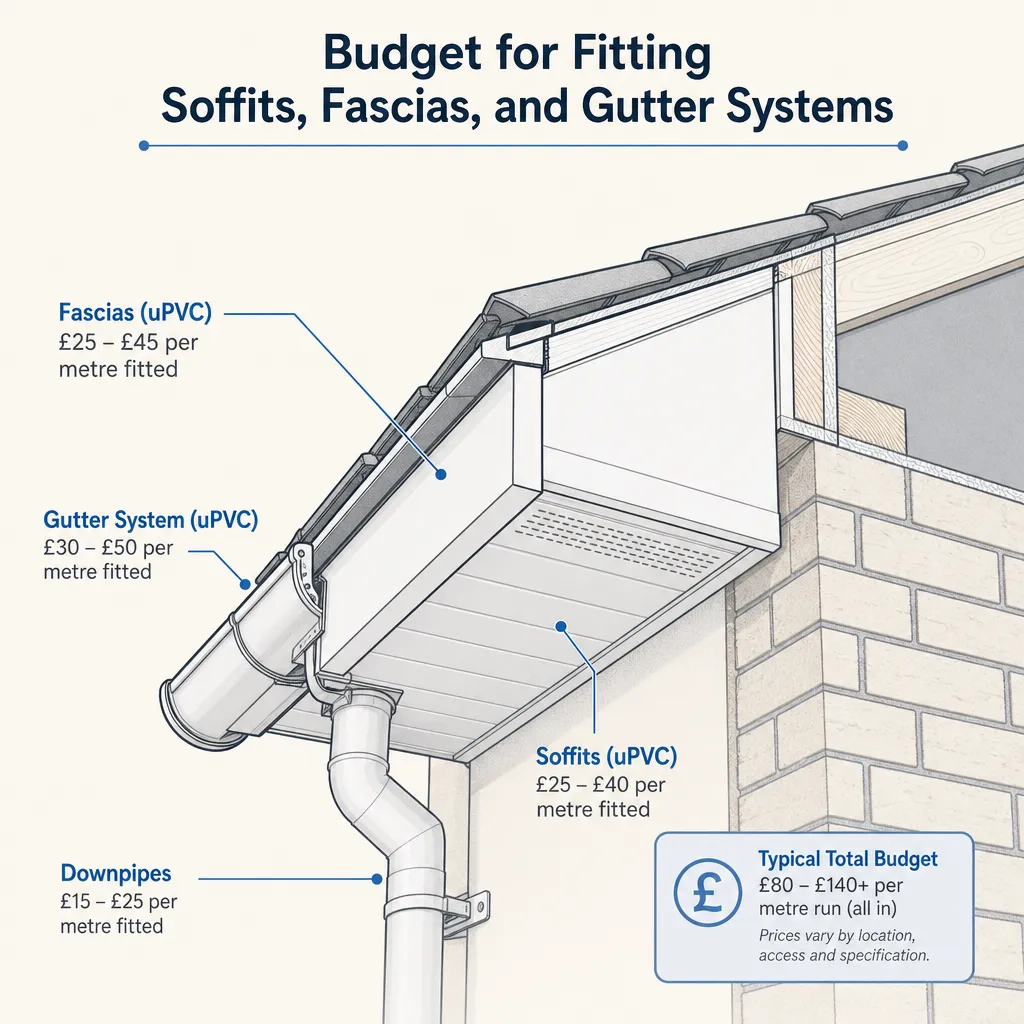
Budget for Fitting Soffits, Fascias, and Gutter Systems
Replacing soffits, fascias, and gutters on a typical UK semi-detached house costs roughly £1,500–£3,500 for uPVC, depending on property size, access, and material choice.
 Improvement & Build
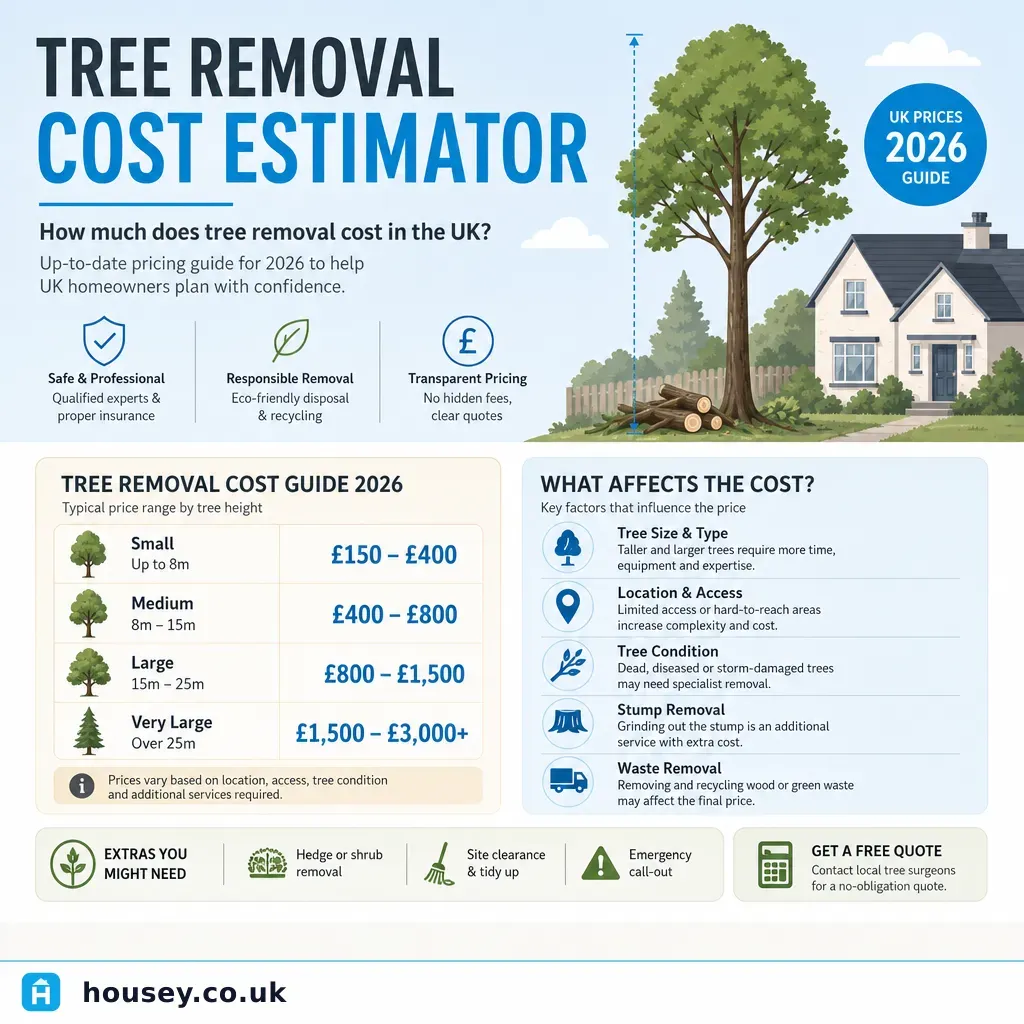
Tree Removal Cost Estimator
Tree removal in the UK costs roughly £150 to £5,000 or more, depending on the tree's height, species, access conditions, and whether stump removal is needed.
 Improvement & Build
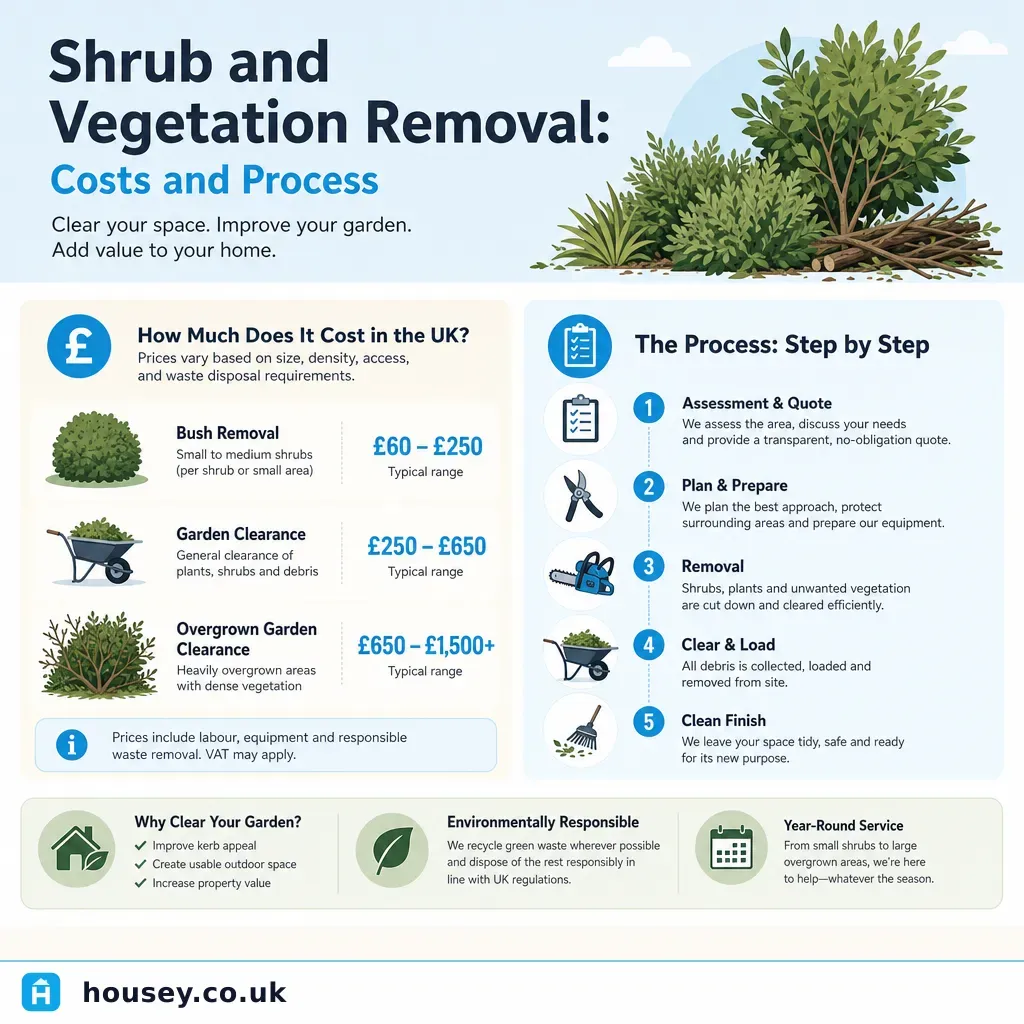
Shrub and Vegetation Removal: Costs and Process
Shrub and vegetation removal costs £50–£2,500 or more depending on area size, species involved, and whether stumps need grinding.